titanium valve
Description
Contact us: [email protected]
WhatsApp: +8613355741031
High-Performance Industrial Titanium Valves (Grade 2, 5, 7, 12)
Engineered for the World's Most Aggressive Corrosive Environments
Manufacturer: YICHOU
Official Website: www.nbyichou.com
Standard Compliance: API 6D, ASME B16.34, API 598
Availability: Forged or Investment Casting
1. Product Overview
In environments where stainless steel 316L pits and Duplex fails, YICHOU Titanium Valves offer the ultimate defense. Our titanium valves are engineered for the most aggressive corrosive media, including wet chlorine, sea brine, and oxidizing acids. By utilizing high-purity Grade 2 and Grade 7 (Palladium-stabilized) alloys, we ensure a service life that often exceeds 20 years in mission-critical applications.
Titanium's exceptional corrosion resistance stems from its stable, self-healing titanium dioxide (TiO₂) passive film. This film forms instantly in the presence of oxygen and reforms if damaged, providing continuous protection against pitting, crevice corrosion, and stress corrosion cracking. Unlike stainless steels that require chromium and molybdenum content to resist chlorides, titanium is inherently immune to chloride attack, making it the material of choice for seawater, brine, and wet chlorine services.
YICHOU combines this remarkable material with precision engineering to deliver valves that perform reliably in the harshest conditions. Whether you need a small instrument isolation valve or a large-diameter mainline butterfly valve, our titanium product line offers solutions that reduce maintenance, eliminate unplanned downtime, and lower total cost of ownership.
2. Technical Specifications
| Feature | Specification Details |
|---|---|
| Material Grades | Gr 2 (Commercial Pure), Gr 5 (Ti-6Al-4V), Gr 7 (Ti-Pd), Gr 12 |
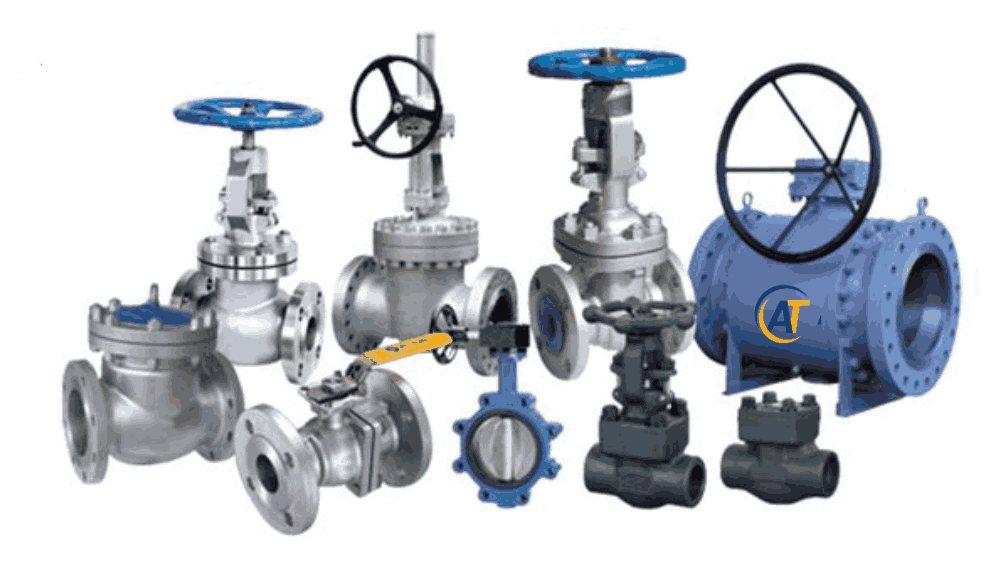
| Valve Types | Ball, Gate, Globe, Check, Butterfly, and Plug Valves |
| Size Range | 1/2" to 24" (DN15 - DN600) |
| Pressure Class | Class 150, 300, 600, 900, 1500, 2500 |
| End Connections | Flanged (RF, RTJ), BW, SW, NPT |
| Design Standards | API 6D, ASME B16.34, BS 1873, BS 1868 |
| Testing Standard | API 598 (Zero Leakage Guaranteed) |
| Temperature Range | -29°C to +300°C (-20°F to +572°F) |
| Operation | Manual (Lever, Gear), Pneumatic, Electric, Hydraulic |
3. Why Choose YICHOU Titanium Valves?
A. Advanced Metallurgy & Zero-Porosity Casting
Unlike standard foundries, YICHOU utilizes Vacuum Investment Casting (ASTM B367) and Precision Forging (ASTM B381). This ensures that the valve body is free from internal voids and gas inclusions, which are the primary causes of body-leakage under high pressure. Titanium is highly reactive at elevated temperatures and will absorb oxygen, nitrogen, and hydrogen if melted in air, leading to embrittlement and reduced corrosion resistance. Our vacuum melting process eliminates this risk, producing castings and forgings with consistent chemistry and superior mechanical properties.
Investment casting allows for complex geometries with excellent surface finish, reducing the need for machining and ensuring dimensional accuracy. For high-pressure applications requiring maximum strength, precision forging aligns the grain structure with the stress patterns, enhancing fatigue resistance and pressure-containing capability.
B. Anti-Galling Stem Technology
Titanium-to-titanium contact can lead to "galling" (seizing). This occurs because titanium has a high coefficient of friction and a tendency for adhesive wear when two similar surfaces slide against each other under load. In valves, this typically happens at the stem-to-ball or stem-to-gland interface, resulting in high operating torque and potential valve failure.
Our engineers utilize proprietary Surface Hardening Treatment on the stem and specialized PTFE/Graphite/Stellite seat inserts to ensure smooth torque and zero-seize operation over thousands of cycles. Surface hardening techniques such as thermal oxidation, nitriding, or physical vapor deposition create a hard, wear-resistant layer on the titanium substrate while maintaining the core's corrosion resistance. For dynamic sealing surfaces, we incorporate non-metallic materials like reinforced PTFE, PEEK, or graphite that provide lubrication and prevent metal-to-metal contact.
C. Superior Corrosion Resistance
Our valves form a stable, protective TiO₂ oxide film instantly upon exposure to oxygen. This film is unique among corrosion-resistant materials because it is:
-
Self-Healing: If damaged by scratching or abrasion, the film reforms immediately in the presence of water or oxygen.
-
Chemically Stable: Resistant to a wide range of acids, alkalis, and chlorides.
-
Adherent: The film is tightly bonded to the underlying metal, preventing spalling or flaking.
This provides:
-
Immunity to Pitting: Even in high-concentration chloride environments where stainless steel would fail within months.
-
Erosion-Corrosion Resistance: Stable performance in high-velocity flow systems up to 20 m/s, unlike copper-nickel alloys that suffer accelerated attack at high velocities.
-
Crevice Corrosion Resistance: Grade 7 and Grade 12 offer enhanced resistance in tight crevices where oxygen depletion might otherwise challenge the passive film.
4. Key Applications
Desalination Plants
In seawater reverse osmosis (SWRO) and thermal desalination facilities, titanium valves handle high-pressure seawater intake, brine discharge, and chemical dosing lines. Titanium's immunity to chloride attack ensures reliable operation at elevated temperatures and pressures, while its erosion resistance handles the high velocities in brine recirculation systems. YICHOU titanium ball valves are widely used for high-pressure isolation, while butterfly valves provide cost-effective flow control in large-diameter low-pressure lines.
Chlor-Alkali Industry
The production of chlorine and caustic soda involves handling wet chlorine gas, sodium hypochlorite, and hydrochloric acid at various concentrations. Titanium is virtually the only metal that resists wet chlorine attack, making it essential for valves in chlorine drying towers, compressors, and storage areas. YICHOU titanium globe valves provide precise throttling control, while check valves protect compressors from backflow.
Chemical Processing
In the production of terephthalic acid (PTA), nitric acid, and organic acids, titanium valves resist attack from oxidizing acids and chlorinated intermediates. PTA production involves high-temperature acetic acid with bromide promoters, conditions that rapidly corrode stainless steel and even high-nickel alloys. YICHOU titanium valves provide years of maintenance-free service in these aggressive environments.
Offshore Oil & Gas
Offshore platforms require valves that resist seawater corrosion while maintaining pressure integrity for fire-fighting systems, cooling water, and subsea equipment. Titanium's lightweight construction reduces topside weight, while its corrosion resistance eliminates the need for coatings or cathodic protection. YICHOU titanium check valves in fire-fighting deluge systems provide instant response and absolute reliability.
5. Quality Assurance & Documentation
Every YICHOU valve is shipped with a comprehensive Quality Data Package ensuring full traceability and verification of all critical parameters:
| Document | Description |
|---|---|
| Mill Test Certificate (MTC) | Fully traceable to the heat number (EN 10204 3.1) with complete chemical and mechanical properties |
| PMI Testing | Positive Material Identification to verify alloy chemistry on all pressure-containing components |
| NDT Reports | Radiographic (RT), Dye Penetrant (PT), and Ultrasonic (UT) as required by specification |
| Pressure Test Report | Hydrostatic and pneumatic shell/seat tests with recorded test pressures and durations |
| Dimensional Inspection Report | Verification of all critical dimensions per applicable standards |
| Visual Inspection Report | Documentation of surface finish and general workmanship |
Our quality management system ensures that every valve meets or exceeds the requirements of API 6D, ASME B16.34, and API 598. We maintain strict traceability from raw material receipt through final testing, with all records retained for a minimum of 10 years.
6. Order & RFQ Process
At YICHOU, we provide flexible manufacturing with short lead times (8-12 weeks for custom builds). Our engineering team works closely with customers to ensure the selected valve meets all application requirements, including pressure class, end connections, materials of construction, and special testing.
To receive a quote, please provide:
-
Valve Type & Size (e.g., 6" Titanium Ball Valve)
-
Pressure Rating & Media (Concentration/Temperature)
-
Material Grade (e.g., Grade 2 or Grade 7)
-
End Connections (Flanged, Butt Weld, Socket Weld, Threaded)
-
Operation Type (Lever, Gear, Pneumatic, Electric)
-
Required Certifications (NACE, PMI, NDT, etc.)
-
Quantity and Delivery Required
Send your RFQ to our sales team through www.nbyichou.com for a prompt response with pricing, delivery, and technical documentation.
7. Frequently Asked Questions (FAQ)
Q1: What is the difference between Titanium Grade 2 and Grade 7 for valve applications?
Grade 2 is commercially pure titanium with excellent corrosion resistance in oxidizing environments such as seawater, brine, and nitric acid. It is the most cost-effective choice for general service. Grade 7 contains a small addition of palladium (0.12–0.25%), which significantly enhances corrosion resistance in reducing acids and crevice conditions. For example, in boiling dilute hydrochloric acid, Grade 2 corrodes rapidly while Grade 7 performs well. Choose Grade 2 for seawater and brines; choose Grade 7 for acid service or where crevice corrosion is a concern.
Q2: How do I prevent galling in titanium valves?
Galling occurs when titanium surfaces slide against each other under load. YICHOU prevents galling through three methods: (1) surface hardening of stems using thermal oxidation or nitriding, (2) using dissimilar materials such as PTFE, PEEK, or Stellite for seats and bearings, and (3) proper lubrication during assembly. Our valves are engineered to eliminate titanium-on-titanium contact in dynamic applications, ensuring smooth operation over the valve's life.
Q3: Can titanium valves be used for chlorine service?
Yes, titanium is the preferred material for wet chlorine gas. It forms a stable passive film that resists attack by moist chlorine. However, titanium must never be used in dry chlorine gas (less than 0.2% water) as this can cause rapid, catastrophic corrosion. For dry chlorine, other materials such as Monel or certain plastics should be considered.
Q4: What is the maximum temperature for titanium valves?
The maximum recommended temperature for titanium valves depends on the grade and service conditions. For Grade 2, the typical upper limit is 300°C (572°F) in oxidizing environments. Grade 5 (Ti-6Al-4V) can be used up to 400°C (752°F) but may require consideration of oxidation resistance at higher temperatures. For specific applications, consult our engineering team for guidance.
Q5: How does titanium compare to super duplex stainless steel in seawater?
Titanium offers several advantages over super duplex in seawater: (1) complete immunity to chloride pitting and crevice corrosion, even at elevated temperatures, (2) higher erosion-corrosion resistance, and (3) no risk of hydrogen embrittlement. While super duplex has higher strength and lower initial cost, titanium's longer service life and lower maintenance often result in lower total cost of ownership for critical applications.
Q6: What NDT is typically required for titanium valves?
Common non-destructive testing for titanium valves includes: (1) visual inspection for surface defects, (2) dye penetrant testing (PT) for surface cracks, especially on welds and castings, (3) radiographic testing (RT) for internal defects in castings and welds, and (4) ultrasonic testing (UT) for wall thickness and lamination checks. PMI (positive material identification) is also standard to verify alloy chemistry.
Q7: What is the lead time for custom titanium valves?
YICHOU maintains a strategic stock of titanium ingots and bar stock, allowing us to reduce lead times significantly. For standard sizes and pressure classes, lead times are typically 8–10 weeks. For complex custom designs or special grades, lead times may extend to 12–14 weeks. Contact us with your specific requirements for an accurate delivery schedule.
Q8: Are YICHOU titanium valves available with fire-safe certification?
Yes, our ball valves can be supplied with fire-safe design per API 607 or ISO 10497. Fire-safe valves feature secondary metal-to-metal seats that provide sealing even if the soft seats are destroyed by fire. Please specify fire-safe requirements when requesting a quote.
Q9: What documentation is provided with each valve?
Every YICHOU titanium valve includes a complete documentation package: mill test certificates with heat traceability, PMI test reports, pressure test certificates, dimensional inspection reports, and NDT reports as required. All documentation is provided in electronic format, with hard copies available upon request.
Q10: How should titanium valves be stored before installation?
Titanium valves should be stored in a clean, dry environment with end covers in place to prevent ingress of dirt and moisture. While titanium does not rust, contamination by iron particles can lead to surface discoloration or, in severe cases, localized corrosion. Avoid storage near grinding operations or where iron dust may settle on the valve. For long-term storage, consider using VCI packaging.
Get in Touch with Yichou
- Email us: [email protected]
- Call us/whatsapp: +86 13355741031
- Chat with us: Live chat support available on our website
People who viewed this item also viewed