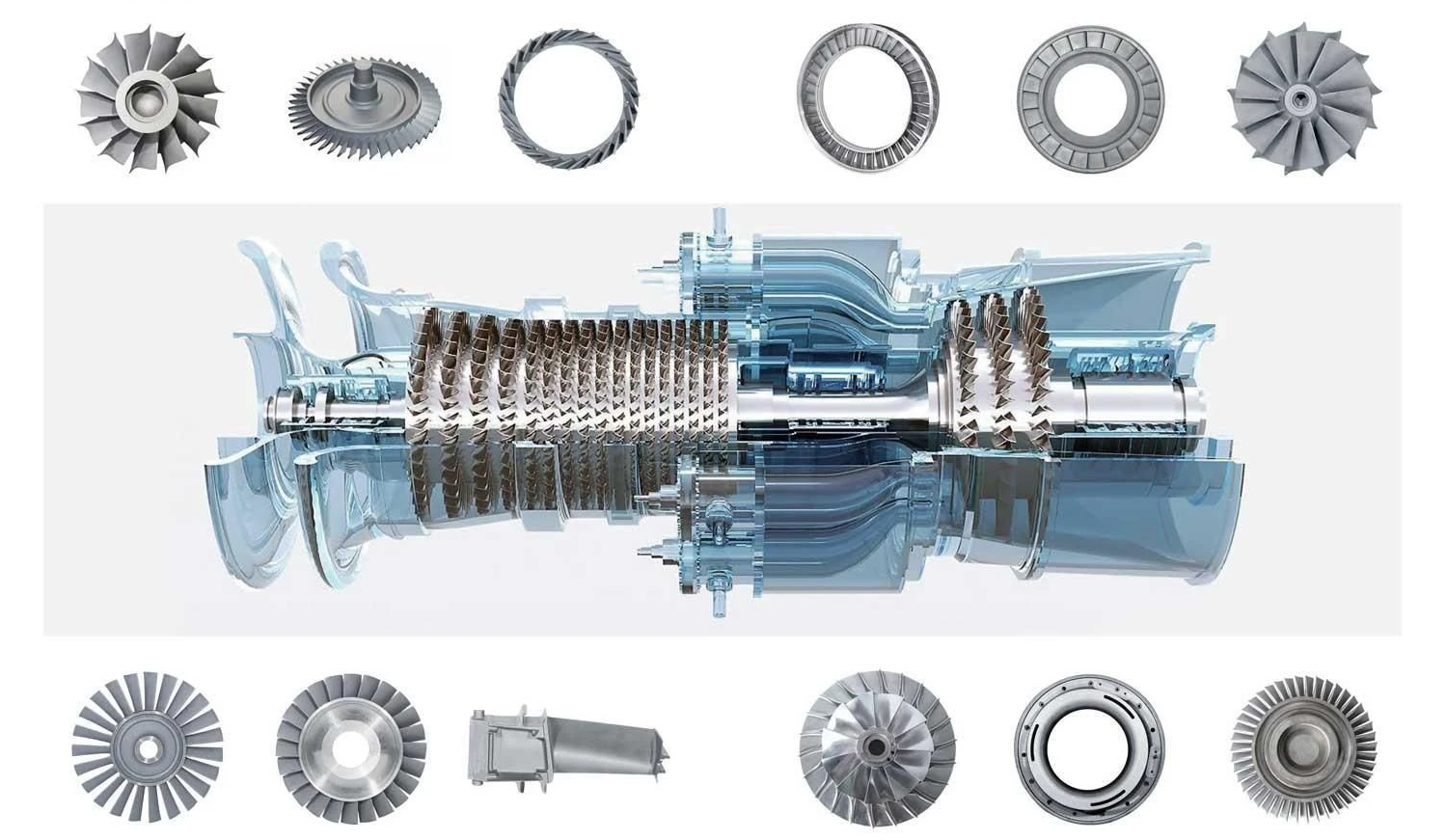
In the world of fluid handling, the impeller is undeniably the heart of the centrifugal pump. Its design, material, and manufacturing precision dictate not just flow and pressure, but the entire system's energy efficiency, reliability, and operational lifespan. While often hidden within the pump casing, this rotating component is constantly battling against the forces of cavitation, abrasion, and corrosion.
For engineers and plant managers, an impeller failure means unplanned downtime, costly repairs, and lost production. Searching for a replacement isn't just about finding a part; it's about finding a solution that offers superior wear resistance, higher efficiency, and a longer service life than the original.
As a specialized manufacturer of high-performance industrial impellers, we understand these challenges firsthand. In this comprehensive guide, we will delve deep into the critical aspects of impeller technology, from fundamental design types to advanced material science and precision manufacturing processes, empowering you to make the right choice for your most demanding applications.
1. The Three Fundamental Impeller Designs: Which One Matches Your Application?
The first and most critical step in selection is understanding the impeller's structure. The choice between closed, semi-open, and open designs is a trade-off between hydraulic efficiency and the ability to handle solids. As a full-service manufacturer, we produce all three types to cover the full spectrum of industrial applications.
Closed Impellers: The Choice for Maximum Efficiency
A closed impeller features blades sandwiched between a front and back shroud (or cover plate). This creates enclosed flow passages, which minimizes hydraulic losses and maximizes efficiency.
-
Best For: Clean, low-viscosity fluids such as清水, light oils, condensate, and chemicals. They are the standard for boiler feed pumps, pipeline boosters, and water supply systems where energy savings are paramount.
-
Manufacturing Insight: We typically manufacture closed impellers using precision investment casting to ensure smooth flow channels and consistent wall thickness, which are vital for maintaining dynamic balance at high speeds.
Semi-Open Impellers: The Versatile Performer
Semi-open impellers consist of blades attached to a back shroud but have no front shroud. The front wear plate of the pump casing acts as the stationary front wall. The gap between the blades and the wear plate is critical and often adjustable.
-
Best For: Fluids containing small amounts of solids, moderate viscosities, or applications where some clogging might occur, such as in wastewater, paper pulp, and food processing.
-
Manufacturing Insight: We often utilize multi-axis CNC machining for semi-open impellers to achieve the precise blade profile and surface finish required, while also ensuring the critical clearance dimensions are easily controllable.
Open Impellers (Vortex/Recessed): The Ultimate in Solids Handling
Open impellers have no shrouds, with blades attached directly to a central hub. A more specialized variant for slurry applications is the recessed impeller (or torque flow impeller), which is recessed into the pump casing. It creates flow by inducing a vortex, keeping most solids away from the impeller itself.
-
Best For: Highly viscous fluids, large or stringy solids, and slurries with high concentrations of fibrous materials (e.g., sludge, mining slurries, and industrial waste).
-
Manufacturing Insight: Due to the harsh environments they operate in, our open impellers for slurry service are often cast from high-chrome white iron with thickened blade leading edges to combat erosion.
| Feature | Closed Impeller | Semi-Open Impeller | Open/Recessed Impeller |
|---|---|---|---|
| Structure | Blades between front & rear shrouds | Blades on rear shroud only | Blades on hub, no shrouds |
| Efficiency | High (80% - 90%) | Medium (70% - 80%) | Low (< 70%) |
| Solids Handling | Poor | Good | Excellent |
| Typical Application | Clean water, chemicals | Wastewater, paper pulp | Slurries, sludge, mining |
2. Conquering Extreme Environments: A Guide to High-Performance Materials
Selecting the correct material is just as important as the design. The impeller must withstand not only the mechanical stresses of rotation but also the chemical and abrasive nature of the fluid. We offer a wide range of materials to match your specific needs.
Duplex Stainless Steel (2205 / 2507): The Corrosion and Chloride Champion
For applications involving seawater, brackish water, or chemical solutions with high chloride content, standard 316L stainless steel may fail due to chloride stress corrosion cracking.
-
Why Choose It: Duplex grades offer nearly double the yield strength of austenitic stainless steels and excellent resistance to pitting and crevice corrosion. 2205 is our go-to for most offshore and desalination applications, while 2507 (a super duplex) is specified for the most aggressive, high-chloride, high-temperature environments.
High-Chrome White Iron (27% - 35% Cr): The Ultimate Wear Fighter
In the mining and minerals processing industries, pumps handle slurries that act like liquid sandpaper. For these conditions, nothing beats high-chrome white iron.
-
Why Choose It: With hardness levels exceeding 600 Brinell, this material provides maximum abrasion resistance against coarse, sharp particles like those found in SAG mill discharge and cyclone feed. While it offers low impact toughness, its wear life in purely abrasive environments can be 2-4 times longer than rubber or stainless steel.
Superalloys (Monel, Inconel, Hastelloy): The Solution for Extreme Chemistry
When fluids reach high temperatures or contain highly concentrated acids, standard materials quickly degrade.
-
Why Choose It: Monel is a natural choice for handling hydrofluoric acid and alkaline environments. Inconel maintains its strength and resists oxidation at extremely high temperatures, making it ideal for power generation and thermal processing. Hastelloy is specified for its unparalleled resistance to a wide range of aggressive chemicals, including wet chlorine gas and strong oxidizing acids.
Advanced Polymers and Coatings
Sometimes, a solid metal impeller isn't the only or best answer.
-
Elastomer-Covered Impellers: For fine particle slurries combined with corrosion (like in flotation circuits), an impeller core covered in natural rubber or neoprene absorbs impact energy and resists chemical attack, often outperforming metal.
-
Ceramic and Teflon Coatings: We can apply thermal spray coatings like ceramics for extreme wear resistance or Teflon-based coatings to prevent solid buildup and enhance chemical resistance on stainless steel impellers.
3. Solving the Core Pain Points: Cavitation, Vibration, and Efficiency Loss
Even the best-designed impeller will fail prematurely if it suffers from cavitation or vibration. These are the top concerns for any pump engineer, and addressing them requires both smart design and precision manufacturing.
Combating Cavitation with Advanced Hydraulic Design
Cavitation—the formation and violent collapse of vapor bubbles in the fluid—is a leading cause of impeller damage, noise, and vibration. It occurs when the local pressure drops below the fluid's vapor pressure.
-
CFD Fluid Simulation: Before any metal is cut, our engineering team uses Computational Fluid Dynamics (CFD) to analyze flow patterns through the impeller. We optimize the blade inlet angles and leading-edge profiles to ensure a smooth pressure gradient, which significantly lowers the Net Positive Suction Head Required (NPSHr) . A lower NPSHr means the pump is less likely to cavitate, especially in high-suction lift applications.
-
Inducer Integration: For extremely low NPSH conditions, we can design impellers with integral axial-flow inducer blades upstream of the main vanes. These inducers act like a screw, gently boosting the pressure of the fluid before it enters the main impeller, effectively suppressing cavitation.
The Science of Stability: Precision Dynamic Balancing
An impeller rotating at thousands of RPMs must be perfectly balanced. Even a minute imbalance creates centrifugal forces that can rapidly destroy bearings and seals, leading to catastrophic vibration and failure.
-
ISO 1940 G1.0 / G2.5 Standards: We adhere to the strictest international standards for balancing. All our impellers undergo precision dynamic balancing on state-of-the-art equipment. For high-speed applications like boiler feed pumps or compressors, we balance to ISO 1940 G1.0, the highest grade, ensuring smooth, vibration-free operation and extended component life.
-
Correcting Unbalance: Our balancing process identifies both static and couple unbalance. We correct these by precisely removing material from designated areas on the shrouds, a process carefully controlled to never compromise the impeller's structural integrity.
Boosting Efficiency Through Surface Finish
Efficiency isn't just about the shape; it's about the surface. A rough surface creates turbulence and friction, wasting energy.
-
Investment Casting Advantage: Our investment casting process (lost-wax casting) produces impellers with an exceptionally smooth as-cast surface finish. This reduces friction losses and maintains the hydraulic profile as designed, contributing to a measurable increase in overall pump efficiency. Recent studies even show that advanced manufacturing techniques can yield up to a 15% increase in efficiency compared to traditional rough castings.
4. Beyond Replacement: Reverse Engineering and Customization Services
In many industrial plants, pumps are critical assets that must keep running. When an impeller fails, you need a solution fast. We go beyond simple replication to offer performance upgrades.
High-Precision Replacement Impellers
We specialize in manufacturing replacement impellers for a vast array of OEM pumps. Whether it's a Goulds, Sulzer, Warman, or Flowserve pump, we can produce a dimensionally identical, mechanically compatible impeller that meets or exceeds the original specifications. Our focus is on extending the Mean Time Between Failures (MTBF).
3D Scanning for Performance Upgrading
Often, the original drawings for an old pump are lost. In other cases, the OEM design may be outdated. This is where our reverse engineering capabilities shine.
-
The Process: We use portable, high-precision 3D scanners to capture the geometry of a worn or broken impeller with an accuracy of up to 0.0012". This creates a perfect 3D digital model of the part.
-
Performance Upgrading: With this digital model, we don't just copy it. Our engineers analyze the original design. Can the blade angles be tweaked for better efficiency? Can the leading edges be thickened for longer wear life? Can the material be upgraded from cast iron to duplex stainless steel? We use the scan as a baseline for creating a superior, optimized replacement part.
5. Uncompromising Quality: Our Proven Inspection Workflow
As a manufacturer, our reputation is built on the quality and reliability of every impeller that leaves our shop. Our quality control process is rigorous and data-driven, ensuring each component meets your exact specifications.
Every impeller we manufacture follows a strict multi-point inspection workflow:
-
Raw Material Verification (Chemical Analysis): We begin by verifying the chemistry of our raw castings or bar stock using an Optical Emission Spectrometer (OES) . This ensures the material grade (e.g., 316L, 2205, Cr26) meets the required standards before any machining begins.
-
Dimensional Inspection (CMM): During and after machining, critical features such as bore diameters, keyway sizes, vane angles, and overall profile are measured using a Coordinate Measuring Machine (CMM) . This guarantees that the part is geometrically accurate and will fit perfectly on the pump shaft.
-
Non-Destructive Testing (NDT): We offer various NDT methods to ensure internal and surface integrity.
-
Dye Penetrant Inspection (PT): Used to detect surface-breaking cracks or porosity on critical areas like blade fillets.
-
Magnetic Particle Inspection (MT): For ferromagnetic materials, this method reveals surface and near-surface defects.
-
Ultrasonic Testing (UT): For high-integrity castings, UT can be used to scan for internal flaws or voids.
-
-
Dynamic Balancing: As detailed earlier, every rotating impeller is dynamically balanced on our balancing machines to ISO 1940 G2.5 or G1.0 standards, and a balancing report is provided with the shipment.
-
Hydrostatic Testing: For complete pump assemblies or pressure-containing parts, we perform hydrostatic testing to verify the pressure tightness and structural integrity of the components.
Conclusion and Next Steps
Selecting the right impeller is a critical decision that impacts your entire pumping system's operating cost and reliability. By understanding the interplay between design type, material science, and manufacturing precision, you can move beyond simple replacement and towards true performance optimization.
Whether you need a high-efficiency closed impeller for a clean water application, a wear-resistant high-chrome iron impeller for the toughest slurry, or a custom-designed solution through our reverse engineering services, we have the expertise and capabilities to deliver.
Don't let a failing impeller cost you another day of lost production. [Contact our engineering team today] for a free consultation or to request a quote for your next project. Let us help you build a more efficient and reliable operation.
Frequently Asked Questions (FAQ)
Q: How can I tell if my pump's efficiency loss is due to the impeller?
A: There are several telltale signs. A gradual drop in flow rate or discharge pressure at the same motor speed is a primary indicator. Increased power consumption to maintain the same duty point is another. If you hear a change in the pump's operating noise, especially the onset of a crackling or popping sound (indicating cavitation), or feel increased vibration, these are strong signals that the impeller may be worn, damaged, or out of balance. An impeller performance test by a qualified technician can provide a definitive answer.
Q: What is the practical difference between a cast impeller and a fully machined one?
A: Most complex impellers start as a casting to achieve the basic 3D blade form. A "cast impeller" typically refers to one used with its as-cast surfaces, which may have some inherent roughness and dimensional variation. A "fully machined impeller" undergoes CNC machining on critical surfaces like the hub, shrouds, and sometimes the blades themselves. This process delivers superior dimensional accuracy, a smoother surface finish for better hydraulic efficiency, and ensures precise concentricity for dynamic balancing. Fully machined impellers are essential for high-speed, high-pressure, or mission-critical applications where absolute precision and performance are non-negotiable.
Q: We are experiencing rapid, localized wear on our impeller vanes. Is this normal?
A: Rapid, localized wear is not normal and indicates a specific problem that needs addressing. If the wear is on the leading edges, it is almost certainly due to cavitation—the fluid is vaporizing and then imploding, eroding the metal. If the wear is on the pressure side of the vanes and you are pumping an abrasive slurry, it points to excessively high flow velocities or poor flow distribution, often caused by operating the pump too far to the right of its Best Efficiency Point (BEP). We can analyze the wear patterns and recommend solutions, from a hydraulic redesign to a harder material like high-chrome iron.
Q: Can you manufacture a replacement impeller if we don't have any drawings or the original pattern?
A: Yes, absolutely. This is one of our core specializations. We use advanced 3D laser scanning technology to capture the exact geometry of your worn or broken impeller, even if it's damaged. Our engineers then use this digital data to create a precise CAD model. From there, we can manufacture a new impeller using investment casting or CNC machining, ensuring a perfect fit. This process also gives us the opportunity to slightly modify the design for improved performance or durability—a process we call "performance upgrading."
Q: What is Net Positive Suction Head (NPSH) and why should I care about it when ordering an impeller?
A: NPSH is the pressure available at the pump inlet to prevent the fluid from vaporizing. Every impeller has a required NPSH (NPSHr) which is the minimum pressure needed for it to operate without cavitation. If the NPSH available in your system (NPSHa) is lower than the impeller's NPSHr, the pump will cavitate, leading to noise, vibration, and rapid destruction of the impeller. When you order a new or replacement impeller from us, we can provide its NPSHr curve. Ensuring your system's NPSHa exceeds this value is the most critical step to ensuring a long and trouble-free service life for your new impeller.
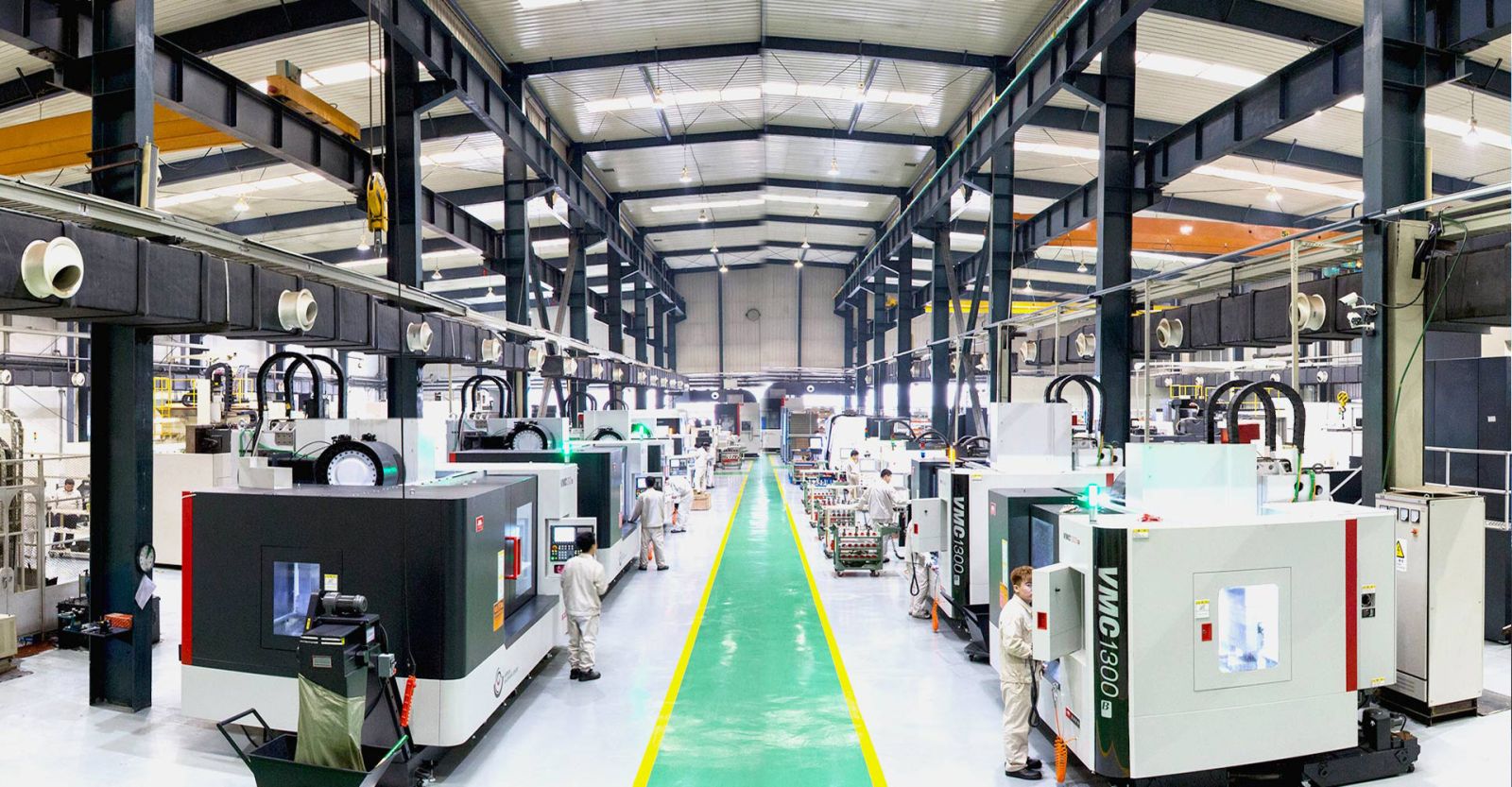
Contact us today for a competitive quote and technical support!
Let Yichou help you achieve excellence in your next project. Whether you need raw materials, custom alloy solutions, or precision-manufactured components, our team is ready to assist.
- Email us: [email protected]
- Call us/whatsapp: +86 13355741031
- Chat with us: Live chat support available on our website