Meta Description: What is 17-4 PH stainless steel? Is it easy to machine? Does it rust? YICHOU, your expert 17-4PH machining factory, answers all your questions. Learn about its properties, ASTM grades, heat treatment, and find the right alternative for your project. Get a precision quote today!
Introduction: Unlocking the Potential of 17-4 PH Stainless Steel
In the world of high-performance metals, few names command as much respect as 17-4 PH stainless steel. For engineers and designers working in aerospace, medical, oil & gas, and defense, this material is often the default choice for critical components that demand an exceptional combination of strength, corrosion resistance, and manufacturability. But what exactly is 17-4ph material? How do you unlock its full potential? And is it always the right choice for your application?
At YICHOU, we don't just machine parts; we partner with our clients to navigate the complexities of advanced materials. This ultimate guide is designed to be your comprehensive resource, answering every question you might have about 17 4 ph stainless steel—from its fundamental properties to the intricate details of machining and heat treatment. By the end, you'll know precisely why this material is so revered and how our expertise can ensure your project's success.
1. Decoding the Name: What Does "PH" Mean in Stainless Steel?
The "PH" in 17-4ph is the key to understanding this material's superpower. It stands for Precipitation Hardening.
Unlike standard austenitic stainless steels like 304 or 316, which are hardened through cold working, or martensitic steels like 410, which are hardened through quenching and tempering, precipitation hardening stainless steels undergo a unique two-stage heat treatment process:
-
Solution Treatment: The material is heated to a high temperature (around 1040°C or 1900°F) and then rapidly cooled (quenched). This results in a soft, low-strength, and ductile state known as Condition A, which is ideal for machining.
-
Aging (Precipitation Hardening): The machined part is then heated to a significantly lower temperature (typically between 480°C and 620°C / 900°F and 1150°F) and held for a set time before being air-cooled. This process precipitates fine, hard particles throughout the matrix, dramatically increasing the strength and hardness of the steel with minimal dimensional change or distortion.
This ability to be machined easily and then hardened to remarkable levels is what sets 17-4 PH stainless steel apart and makes it a favorite for complex, high-tolerance components.
2. 17-4 PH Material Properties and Specifications
Chemical Composition and Grade Designations
The name "17-4" derives from its nominal composition of 17% Chromium and 4% Nickel. The complete chemical composition (per ASTM A564) is:
| Element | Chromium (Cr) | Nickel (Ni) | Copper (Cu) | Manganese (Mn) | Silicon (Si) | Columbium & Tantalum (Cb+Ta) | Carbon (C) | Iron (Fe) |
|---|---|---|---|---|---|---|---|---|
| Weight % | 15.0 - 17.5 | 3.0 - 5.0 | 3.0 - 5.0 | 1.0 max | 1.0 max | 0.15 - 0.45 | 0.07 max | Balance |
-
Chromium (Cr): Provides the primary corrosion resistance by forming a passive oxide layer on the surface.
-
Nickel (Ni): Stabilizes the austenitic structure, enhancing toughness and corrosion resistance.
-
Copper (Cu): Plays a critical role in the precipitation hardening process, forming the strengthening particles.
-
Columbium & Tantalum (Cb+Ta): Combine with carbon to form stable carbides, preventing chromium depletion and enhancing strength.
Common standards and equivalents include:
-
UNS Number: S17400
-
ASTM Standard: ASTM A564 Grade 630 (This is the most common bar and wire specification)
-
AMS Standards: AMS 5604, AMS 5622, AMS 5643
-
European Norm (EN): 1.4542
Mechanical Properties: The Power of Heat Treatment
The mechanical properties of 17-4 PH stainless steel are not fixed; they are directly controlled by the aging heat treatment. This allows designers to tailor the material's performance to the specific needs of the application.
The most common aging conditions are:
| Condition | Aging Temperature | Typical Hardness (HRC) | Tensile Strength (MPa) | Yield Strength (MPa) | Elongation (%) |
|---|---|---|---|---|---|
| Solution Treated (Condition A) | - | ~32 HRB | 1000 | 800 | 15 |
| H900 | 900°F (482°C) | 45 HRC | 1585 | 1450 | 10 |
| H1025 | 1025°F (552°C) | 40 HRC | 1410 | 1290 | 12 |
| H1075 | 1075°F (579°C) | 36 HRC | 1240 | 1170 | 13 |
| H1150 | 1150°F (621°C) | 33 HRC | 1070 | 1000 | 14 |
This table answers common queries like *"What is the yield strength of 17-4PH stainless steel?"* and demonstrates its impressive range.
As the aging temperature increases, the strength and hardness decrease, while ductility and toughness increase. H900 offers the highest strength and is often used for structural aerospace parts, while H1150 provides a better balance of strength and corrosion resistance, suitable for marine applications.
Other Key Properties:
-
Density: 0.28 lb/in³ (7.8 g/cm³)
-
Melting Point: 2560 - 2625°F (1400 - 1440°C)
-
Magnetic Response: Yes, 17-4 PH is magnetic in all conditions due to its martensitic microstructure.
3. Machining 17-4 PH: Expert Tips from YICHOU Factory
This is where our expertise becomes your greatest asset. The question we hear most often is: "Is 17/4 pH stainless steel easy to machine?"
The answer is a resounding yes, but with a critical caveat.
17-4 PH is most efficiently machined in its Solution Treated (Condition A) state. In this state, it has a hardness of approximately B92 Rockwell (C32 equivalent is too high; Condition A is soft), making it relatively soft and ductile, similar to a harder version of 304 stainless. Attempting to machine it in any of the fully aged conditions (e.g., H900) is not recommended. The high hardness (up to 45 HRC) is extremely abrasive and will cause rapid tool wear, poor surface finish, and potential damage to the workpiece.
YICHOU's Expert Machining Guidelines:
-
Tool Selection: We exclusively use sharp, positive rake angle carbide inserts for most operations. The substrate and coating (such as TiAlN or AlCrN) are crucial for resisting the abrasive nature of the alloy and managing heat.
-
Cutting Parameters:
-
Speed (SFM): We run at moderate surface speeds. Too slow can lead to work hardening; too fast generates excessive heat.
-
Feed: We maintain a consistent and sufficiently high feed rate to ensure the tool cuts under the work-hardened layer, preventing glazing and further hardening of the material.
-
Depth of Cut: A firm depth of cut is preferred over light, "scratching" cuts.
-
-
Coolant: The use of a high-quality, high-pressure coolant is non-negotiable. It serves three vital purposes: dissipating heat, lubricating the cut, and efficiently evacuating chips.
-
Tool Path: Our CNC programmers utilize modern toolpath strategies like trochoidal milling (peel milling) to maintain constant tool engagement, reduce heat buildup, and extend tool life significantly.
By partnering with YICHOU, you leverage this deep operational knowledge. We ensure your parts are machined efficiently and accurately the first time, saving you from the costly pitfalls of trial and error.
4. Corrosion and Environmental Resistance
"Does 17/4 stainless rust?" This is a fundamental and excellent question.
The short answer is: Yes, it can, but it offers very good resistance, generally considered comparable to Type 304 stainless steel in many environments.
Its corrosion resistance is far superior to plain martensitic steels like 410 and 420 due to its higher chromium content and nickel addition. It performs well in mild atmospheres, fresh water, steam, and many chemical environments.
However, it is not as corrosion-resistant as 316 stainless steel, which contains molybdenum for enhanced resistance to pitting and crevice corrosion in chloride environments. Therefore, for severe marine or chemical processing applications, 316 may be a better choice if high strength is not required.
"What pH is bad for stainless steel?" / "What pH will corrode stainless steel?"
All stainless steels, including 17-4 PH, are vulnerable in highly acidic (low pH <1-2) and highly alkaline (high pH >12-13) environments. The passive chromium oxide layer that provides corrosion resistance can break down under these extreme conditions. For continuous service, a near-neutral pH range is safest. 17-4 PH is often chosen for its excellent resistance to stress corrosion cracking (SCC), a common failure mode for high-strength steels in corrosive environments.
5. Comparative Analysis: 17-4 PH vs. Other Grades
Choosing the right material is about understanding trade-offs. Here’s how 17-4 PH stacks up against common alternatives.
| Property | 17-4 PH (H900) | 304 Stainless | 316 Stainless | 410 Stainless |
|---|---|---|---|---|
| Tensile Strength | Very High (1585 MPa) | Medium (505 MPa) | Medium (515 MPa) | High (725 MPa tempered) |
| Corrosion Resistance | Good | Very Good | Excellent | Fair |
| Machinability (Ann.) | Good | Fair (gummy) | Fair (gummy) | Good |
| Hardenability | Excellent (Low Distortion) | Can only be work-hardened | Can only be work-hardened | Good (Oil Quench) |
| Magnetism | Yes | Typically No | Typically No | Yes |
| Cost Factor | High | Low | Medium | Low |
"What is the difference between 17-4 PH and 316 SS?"
316 SS excels in corrosion resistance, especially against chlorides. 17-4 PH provides vastly superior strength and can be heat-treated. The choice is simple: prioritize corrosion resistance (316) or prioritize strength (17-4 PH).
"What is the difference between 17-4PH and 410 stainless steel?"
410 is a low-cost, hardenable martensitic steel. It can achieve good hardness but with lower strength, significantly lower corrosion resistance, and much greater risk of distortion during its quench-and-temper heat treatment compared to the low-distortion aging of 17-4 PH.
6. Alternatives to 17-4 PH Stainless Steel
"What is the alternative to 17-4 PH stainless steel?" No material is perfect for every situation. Common alternatives include:
-
15-5 PH (UNS S15500): A very similar grade where Vanadium replaces Copper. It offers better transverse mechanical properties and is often preferred for critical aerospace components forgings.
-
13-8 Mo (UNS S13800): Offers superior toughness and stress corrosion cracking resistance compared to 17-4 PH, along with high strength. Often used in aerospace fasteners.
-
Custom 455 (UNS S45500): Can achieve even higher strength than 17-4 PH H900 and offers good corrosion resistance. Common in high-performance applications like valve components.
-
316L Stainless: The choice if corrosion resistance is the absolute primary concern and high strength is not required.
-
PH 13-8 Mo: Offers an excellent combination of high strength, toughness, and corrosion resistance.
7. Applications of 17-4 PH Stainless Steel
The unique properties of 17-4 PH make it indispensable across a wide range of industries:
-
Aerospace: Aircraft landing gear components, engine mounts, fasteners, and fittings due to its high strength-to-weight ratio.
-
Medical: Surgical instruments, orthopedic implants (often in the H1150 condition), and dental equipment because of its strength, corrosion resistance, and biocompatibility.
-
Oil & Gas: Valve trim, pump shafts, and downhole tools that must withstand high pressures and corrosive environments.
-
Defense: Firearm components (e.g., bolts, barrels), missile parts, and other military hardware.
-
General Industry: Gears, shafts, bolts, and mold tools that require wear resistance and durability.
8. Why Partner with YICHOU for Your 17-4 PH Components?
Choosing a machining partner for a sophisticated material like 17-4 PH is a critical decision. At YICHOU, we offer more than just CNC machines:
-
End-to-End Expertise: We provide comprehensive Design for Manufacturability (DFM) feedback, source the correct material condition, execute precision machining, and coordinate with trusted heat-treating partners to deliver a finished part that meets your exact specifications.
-
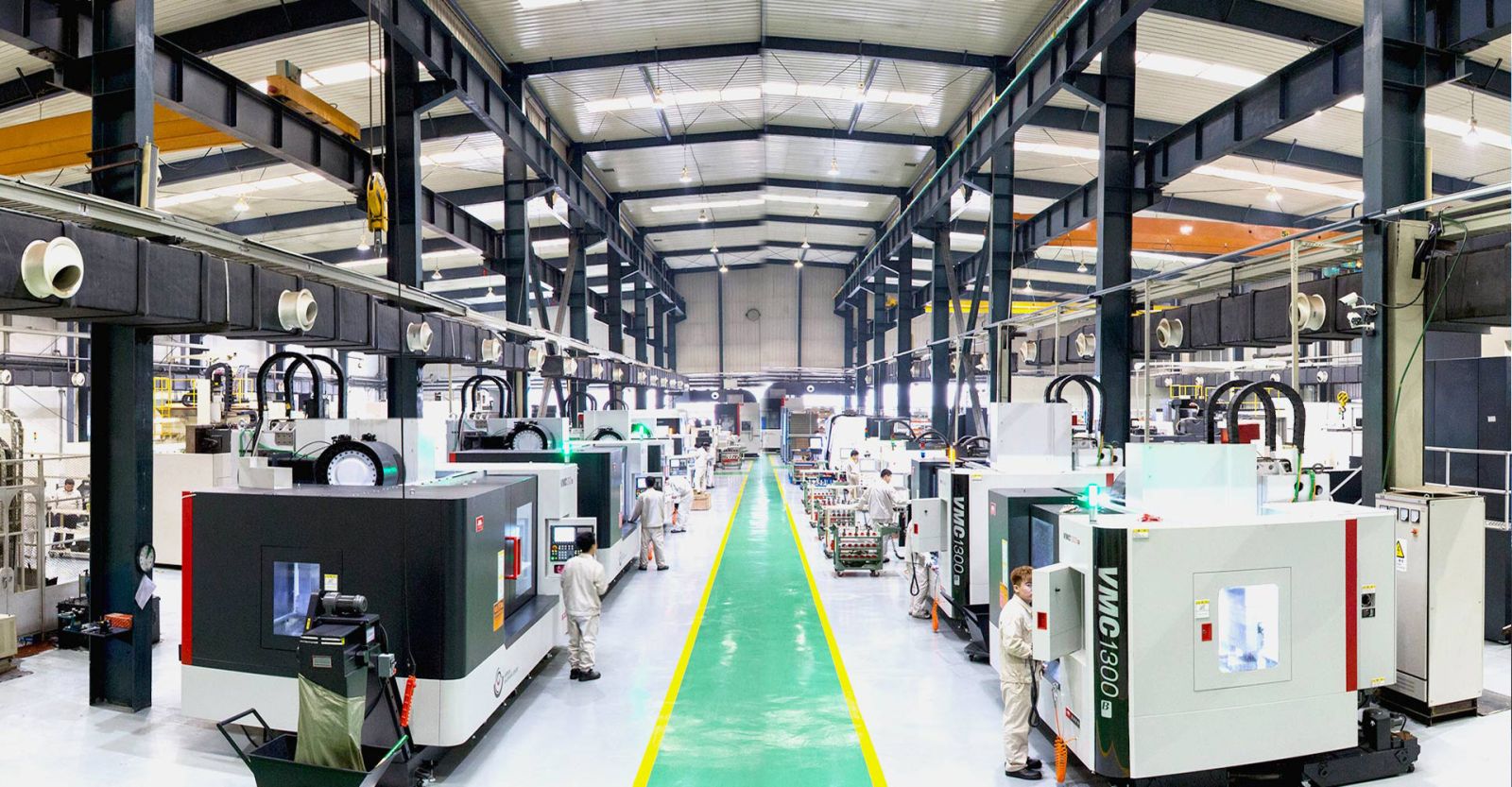
Advanced Technology: Our workshop is equipped with state-of-the-art CNC milling and turning centers, capable of handling complex geometries with tight tolerances.
-
Uncompromising Quality: Every part undergoes rigorous inspection using CMMs, optical comparators, and other metrology tools to ensure full compliance with your drawing.
-
Collaborative Partnership: We view ourselves as an extension of your team. We communicate proactively to ensure your project is on track, on budget, and meets the highest quality standards.
9. Conclusion: Is 17-4 PH the Right Choice for You?
17-4 PH stainless steel remains a premier material for applications demanding a nearly perfect marriage of high strength, good corrosion resistance, and excellent manufacturability. Its unique precipitation hardening mechanism allows for the creation of complex, high-tolerance components that can then be strengthened to remarkable levels.
Understanding its properties, heat treatment options, and machining requirements is key to leveraging its full potential. Whether you need the extreme strength of H900 or the balanced properties of H1150, this versatile alloy offers a solution.
10. Your Next Step: Contact the Experts at YICHOU
Navigating the complexities of material selection and precision machining can be daunting. You don't have to do it alone.
If you're considering 17-4 PH for your next project—or if you have an existing design you need quoted—let YICHOU be your guide. Our expertise in machining this advanced material ensures you get a high-quality, reliable component optimized for performance and cost.
FAQ
Core Identity: What is 17-4 PH Stainless Steel?
-
FAQ 1: What does "PH" mean in 17-4 PH?
-
Explain: Precipitation Hardening. It's a heat-treat process that creates super strength with minimal distortion.
-
-
FAQ 2: Is 17-4 PH stainless steel magnetic?
-
Answer: Yes. Its martensitic structure makes it magnetic in all conditions.
-
-
FAQ 3: What is the ASTM equivalent for 17-4 PH?
-
Answer: It is most commonly known as ASTM A564 Grade 630 (UNS S17400).
-
Properties & Performance: Strength and Corrosion
-
FAQ 4: What are the key properties of 17-4 PH?
-
Highlight: High strength (post-heat treat), good corrosion resistance, excellent fatigue life.
-
Include a table showing mechanical properties (Yield Strength, Tensile, Hardness) for conditions A, H900, H1150.
-
-
FAQ 5: Does 17-4 PH stainless steel rust?
-
Answer: It has good corrosion resistance, similar to 304 stainless, but is not as resistant as 316. It can rust in harsh chloride environments.
-
-
FAQ 6: What is the yield strength of 17-4 PH?
-
Reference the table. Emphasize it's tunable via heat treatment (e.g., ~1450 MPa in H900 condition).
-
Machinability: Can It Be Easily Machined?
-
FAQ 7: Is 17-4 PH stainless steel easy to machine?
-
Answer: Yes, but only in the Annealed (Condition A) state. Machining it after full aging (e.g., H900) is very difficult and not recommended.
-
-
YICHOU Expert Tip: Provide 2-3 brief best practices (e.g., use carbide tools, positive rake, high-pressure coolant).
-
FAQ 8: How do you harden 17-4 PH?
-
Explain the two-step process: 1) Solution Treatment, 2) Aging (Precipitation Hardening) at specific temps to achieve desired hardness (H900, H1150, etc.).
-
Head-to-Head: How It Compares to Other Grades
-
FAQ 9: What is the difference between 17-4 PH and 316 stainless steel?
-
17-4 PH: Superior strength & hardness. 316: Superior corrosion resistance, especially to chlorides.
-
-
FAQ 10: What is the difference between 17-4 PH and 410 stainless steel?
-
17-4 PH: Higher strength, much better corrosion resistance, less distortion during heat treat. 410: More economical, good for less demanding applications.
-
-
FAQ 11: What is the difference between 17-4 PH and 304 stainless steel?
-
17-4 PH: Can be heat treated to be 4-5 times stronger. 304: More formable and weldable, but cannot be hardened via heat treatment.
-
Applications & Alternatives
-
FAQ 12: What is 17-4 PH used for?
-
List industries: Aerospace (valves, fittings), Medical (surgical tools), Oil & Gas (pump shafts), Defense.
-
-
FAQ 13: What is a good alternative to 17-4 PH?
-
For better corrosion resistance: 15-5 PH or 316.
-
For a lower cost (when strength isn't critical): 4140 steel (plated) or 304 stainless.
-
Get in Touch with Yichou
Let Yichou help you achieve excellence in your next project. Whether you need raw materials, custom alloy solutions, or precision-manufactured components, our team is ready to assist.
- Email us: [email protected]
- Call us/whatsapp: +86 13355741031
- Chat with us: Live chat support available on our website