Introduction: The Composite Advantage in Modern Engineering
In the relentless pursuit of industrial efficiency, durability, and cost-effectiveness, engineers and designers are constantly challenged to specify materials that can withstand extreme environments without compromising structural integrity or budget. The solution often lies not in a single, monolithic material, but in an ingenious fusion of metals: the cladding plate.
At YICHOU, we are at the forefront of this advanced material technology. As a specialist manufacturer and processor of explosion-welded and roll-bonded clad plates, we empower industries worldwide to build stronger, last longer, and operate more efficiently. This definitive guide explores the depth of metal cladding technology, its applications, and why partnering with an expert processor like YICHOU is critical for your project's success.
.jpg)
Understanding the Core: Cladding vs. Plating
A common point of confusion lies in distinguishing metal cladding from metal plating. While both aim to enhance surface properties, their methods, scale, and applications are fundamentally different.
-
Metal Plating is an electrochemical process where a very thin layer (typically microns to a few millimeters) of metal (e.g., chrome, zinc, nickel) is deposited onto a substrate. It is primarily used for:
-
Decorative finishes (e.g., chrome-plated fixtures)
-
Minor corrosion resistance
-
Improving surface hardness or wear resistance
-
Enhancing electrical conductivity
-
-
Metal Cladding is a solid-state welding process that creates a metallurgical bond between two or more thicker layers of metal. The clad layer, usually 10% to 50% of the total thickness, is permanently bonded to a backing material. This process is engineered for:
-
Structural Applications: The clad layer is thick enough to contribute mechanically.
-
Severe Service Conditions: Providing robust, long-term corrosion resistance in chemical, marine, and offshore environments.
-
Cost-Savings: Combining the performance of an expensive alloy (like titanium or stainless steel) with the structural strength and economy of carbon steel.
-
In essence, plating is a surface treatment; cladding is the creation of a new, composite material.
The YICHOU Manufacturing Processes: How Clad Plates Are Born
The integrity of a clad plate hinges on the quality of the bond. YICHOU masters the two primary industrial methods:
1. Explosive Cladding (Explosion Welding)
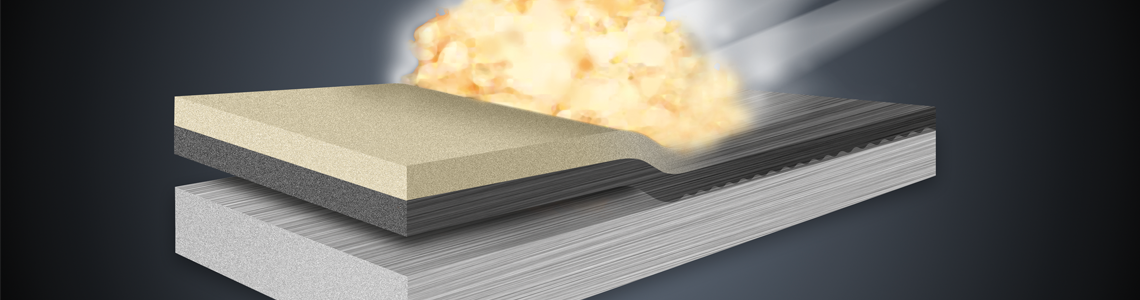
This process uses precisely controlled detonations to propel one metal plate (the cladder) at extremely high velocity across another (the base). The impact creates a high-pressure, jetting effect at the interface, ejecting impurities and forming a permanent, metallurgical bond. This method is ideal for:
-
Bonding a vast array of dissimilar metals that are otherwise incompatible.
-
Manufacturing thick plates for heavy-duty applications.
-
Achieving a wavy interface bond, known for its superior strength and resistance to fatigue.
2. Roll-Bonded Cladding
This method involves cleaning and stacking the cladding and base metals, which are then heated and passed through a rolling mill under immense pressure. The combination of heat and pressure diffusion-bonds the metals at the atomic level. This process excels in:
-
High-volume production of clad sheets and plates.
-
Creating a flat, smooth interface ideal for precise machining and forming.
-
Producing uniform bonds across large surface areas.
At YICHOU, our expertise lies in selecting and executing the optimal process for your specific material combination and final application, ensuring a bond strength that often exceeds the strength of the weaker parent metal.
Why Industry Leaders Specify Cladding Plates: The Unbeatable Advantages
The strategic use of clad plates delivers transformative benefits:
-
Unmatched Corrosion and Erosion Resistance: A thick layer of corrosion-resistant alloy (CRA) like stainless steel 316L, Duplex, or Titanium protects the structural carbon steel backbone from aggressive media—acids, caustics, saltwater, and sour gas (H2S). This drastically extends equipment lifespan.
-
Superior Structural Strength: Unlike thin coatings, the base metal (typically ASTM A516 Gr. 70 or A285 Gr. C) provides full load-bearing capacity for pressure vessels, reactors, and structural components.
-
Significant Cost Reduction: Using a solid 20mm thick titanium plate is prohibitively expensive. A 20mm clad plate with a 3mm titanium layer and a 17mm carbon steel base offers over 90% of the performance at a fraction of the cost.
-
Thermal Performance: Clad plates efficiently handle applications requiring thermal conductivity, such as heat exchangers and reactor cooling jackets.
-
Design Flexibility and Lightweighting: Engineers can design with the exact properties needed, sometimes reducing overall weight compared to solid alloy constructions.
Key Industrial Applications of YICHOU Clad Plates
Our materials are the unsung heroes inside critical equipment across global industries:
-
Oil & Gas: Offshore platform decks, pressure vessels, separators, scrubbers, and subsea piping systems handling sour, corrosive hydrocarbons.
-
Chemical & Petrochemical Processing: Reactors, distillation columns, autoclaves, and acid storage tanks where resistance to highly corrosive chemicals is paramount.
-
Power Generation: Flue Gas Desulfurization (FGD) systems, boiler components, and stack liners in fossil fuel and waste-to-energy plants.
-
Marine & Shipbuilding: Hulls for chemical tankers, components for desalination plants, and sea-water piping.
-
Pulp & Paper Industry: Digesters, bleach washers, and stock tanks exposed to corrosive chlorides and acids.
-
Architecture & Construction: While different, architectural metal cladding panels for building exteriors also rely on principles of durability and aesthetics, a market we serve with high-quality metal sheets.
YICHOU's Expertise: Your Assurance of Quality and Precision
Choosing a supplier is as critical as choosing the material. YICHOU stands apart through our commitment to excellence:
-
Material Mastery: We offer an extensive inventory of stainless steel plates for sale (304/304L, 316/316L, Duplex, Super Duplex) and are specialists in bonding exotic alloys like titanium clad plates, Nickel (Alloy 625, 825), Copper, and Zirconium.
-
Advanced Processing Capabilities: We don't just bond plates; we fabricate finished components. Our services include CNC cutting, precision machining, cold and hot forming, and welding, all performed by technicians certified to ASME and EN standards.
-
Rigorous Quality Assurance: Every clad plate undergoes stringent Non-Destructive Testing (NDT):
-
Ultrasonic Testing (UT): To meticulously map the bond integrity and ensure 100% contact.
-
Shear and Bend Testing: To mechanically verify the bond strength meets or exceeds ASTM B898 standards.
-
-
Global Certifications: Our processes and quality systems are certified to international standards, ensuring acceptance in global projects.
Frequently Asked Questions (FAQ)
Q: What does it mean when a metal is cladded?
A: It means it has been metallurgically bonded to another metal to create a composite plate that combines the best properties of both.
Q: How strong is the bond in a clad plate?
A: Exceptionally strong. The minimum shear strength required by standards is typically 140 MPa, but through our processes at YICHOU, we often achieve results far exceeding this minimum.
Q: Is metal cladding expensive?
A: The initial cost is higher than carbon steel but significantly lower than using solid alloy. The true value is in the Total Cost of Ownership (TCO)—dramatically reduced maintenance, downtime, and replacement costs make it the most economical choice for demanding applications.
Q: What is the best material for cladding?
A: There is no single "best" material. The choice depends entirely on the corrosive environment, mechanical requirements, and budget. Common choices are stainless steel for general corrosives, titanium for chlorides and oxidizers, and nickel alloys for extreme temperatures and caustics. Our engineers can help you select the optimal material.
Q: Is exterior cladding waterproof and weatherproof?
A: Yes, when designed and installed correctly, architectural metal cladding systems provide an excellent, durable, and waterproof barrier for buildings, offering both protection and modern aesthetics.
Conclusion: Partner with Precision, Build with Confidence
In a world where engineering margins are thin and failure is not an option, the strategic specification of clad plates is a mark of sophisticated design. It represents a commitment to longevity, safety, and fiscal responsibility.
At YICHOU, we provide more than just metal; we provide a engineered solution. From the initial bond to the final machined component, we are your partner in innovation.
Ready to elevate your project? Contact YICHOU today.
-
Request a Free Technical Consultation: Our engineering team is ready to discuss your application and material challenges.
-
Get a Competitive Quote: Receive a detailed quote on your cladding plate requirements within 48 hours.
-
Get in Touch with Yichou
Let Yichou help you achieve excellence in your next project. Whether you need raw materials, custom alloy solutions, or precision-manufactured components, our team is ready to assist.
- Email us: [email protected]
- Call us/whatsapp: +86 13355741031
- Chat with us: Live chat support available on our website