In the world of high-performance metals, few materials strike a balance between strength, corrosion resistance, and manufacturability as effectively as 15-5 PH stainless steel. For engineers and procurement specialists tasked with sourcing critical components for aerospace, medical, and energy applications, selecting the right material is only half the battle. The other, equally crucial half, is selecting a manufacturing partner with the expertise to machine it correctly.
At YICHOU, we specialize in the precision machining of 15-5 PH stainless steel. Our deep understanding of this alloy's characteristics, from its metallurgical behavior to its final heat treatment, allows us to produce components that meet the most stringent specifications, including AMS 5659. This guide is designed to be a comprehensive resource for anyone considering 15-5 PH for their next project.
What is 15-5 PH Stainless Steel? Decoding the Name
The name "15-5 PH" provides a direct clue to its composition and primary characteristic.
-
15-5: This refers to the approximate weight percentage of its two primary alloying elements: 15% Chromium and 5% Nickel. The chromium content is the key to its stainless, corrosion-resistant properties, forming a passive protective layer on the surface. The nickel enhances its toughness and ductility.
-
PH: This stands for Precipitation Hardening. This is the defining thermal process that elevates 15-5 PH from a good stainless steel to a great, high-strength one.
This alloy is also known by its standard designations. The most common ASTM equivalent is ASTM A564 Type 630, and its premier aerospace specification is AMS 5659. Understanding these standards is vital for ensuring material traceability and performance in critical applications.
The Precipitation Hardening Process: The Source of Strength
Precipitation hardening, also known as age hardening, is a three-stage heat treatment process that gives 15-5 PH its remarkable mechanical properties. It is a fundamental concept to grasp when designing and machining with this material.
-
Solution Treatment: The material is heated to a high temperature (around 1900°F or 1038°C). At this heat, the alloying elements (primarily copper, niobium, and tantalum) dissolve into the austenitic matrix, creating a uniform, saturated solid solution.
-
Quenching: The material is rapidly cooled, typically using water or air. This quenching process traps the alloying elements within the matrix, resulting in a soft, low-strength, and easy-to-machine martensitic structure. This is the ideal state for performing the majority of machining operations.
-
Aging (Precipitation Hardening): The machined component is reheated to a much lower temperature (typically between 900°F and 1150°F or 482°C and 621°C) and held for a specified time. During this aging process, fine, microscopic particles precipitate uniformly throughout the martensitic matrix. These particles act as obstacles to dislocation movement, dramatically increasing the strength, hardness, and yield strength of the steel without significantly sacrificing its toughness.
The specific time and temperature of the aging cycle determine the final properties. Common aging conditions include H900, H1025, and H1150, with H900 offering the highest strength and hardness.
Key Properties and Advantages of 15-5 PH
The combination of its chemistry and heat treatment gives 15-5 PH a compelling set of properties for demanding applications.
-
High Strength and Hardness: In the H900 condition, 15-5 PH can achieve a phenomenal yield strength of over 1450 MPa (210 ksi) and a Rockwell hardness of approximately HRC 44. This makes it stronger than many types of annealed tool steels.
-
Excellent Corrosion Resistance: Its 15% chromium content provides corrosion resistance comparable to Type 304 stainless steel. It resists rust effectively in a wide range of environments, from atmospheric exposure to more aggressive chemical settings.
-
Superior Dimensional Stability: A significant advantage over through-hardening steels is its minimal distortion and dimensional change during the final low-temperature aging process. This allows for precision machining in the annealed state with confidence that the final part will hold its tight tolerances after heat treatment.
-
Good Machinability: In the solution-treated condition (Condition A), 15-5 PH has a machinability rating of around 60% relative to 1212 steel. This makes it significantly easier to machine than other high-strength stainless steels like PH 13-8 Mo or maraging steels, reducing tool wear and production time.
-
Toughness: Despite its high strength, it maintains good fracture toughness and impact resistance, which is critical for dynamic load-bearing components.
-
Magnetism: Yes, 15-5 PH is magnetic in the hardened condition. This is an important consideration for applications involving sensors or where magnetic permeability is a requirement.
Common Applications: Where is 15-5 PH Used?
The unique property profile of 15-5 PH makes it the material of choice for critical components across industries.
-
Aerospace: The primary market for AMS 5659 material. Used for aircraft landing gear components, engine parts, fasteners, fittings, and actuator systems where high strength-to-weight ratio and reliability are non-negotiable.
-
Defense and Military: Applied in weapon systems, radar structures, and vehicle components that must perform under extreme stress and in harsh environments.
-
Oil and Gas: Ideal for downhole tooling, valve components, and pump shafts that require resistance to sour gas (H2S) and high-pressure erosion.
-
Medical: Used in surgical instruments, dental equipment, and implantable devices where strength, corrosion resistance, and biocompatibility are required.
-
General Industrial: Components for plastic injection molding, die-casting, and high-performance racing engines.
The YICHOU Advantage: Machining 15-5 PH with Expertise
Machining any high-strength alloy presents challenges. At YICHOU, we don't just cut metal; we engineer components. Our expertise with 15-5 PH ensures optimal results.
-
Pre-Machining in Condition A: We perform the bulk of material removal in the soft, solution-treated condition. This drastically reduces machining time, extends tool life, and allows us to achieve complex geometries with ease.
-
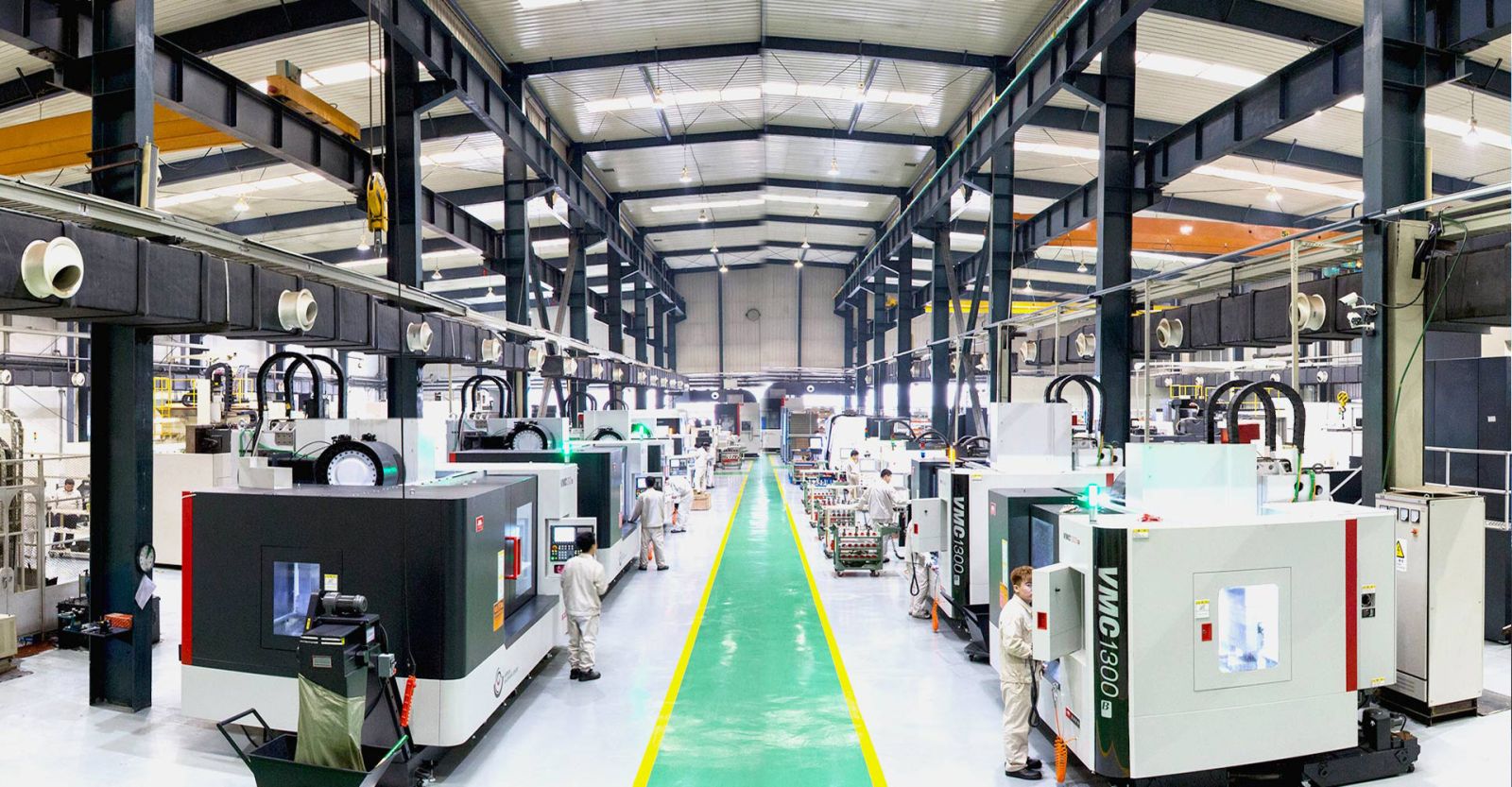
Expert Tooling and Parameters: We use state-of-the-art CNC machines and select specialized tooling geometries, substrates, and coatings optimized for stainless steels. We employ precise speeds, feeds, and coolant strategies to achieve superior surface finishes and prevent work hardening.
-
Heat Treatment Management: We have established partnerships with certified heat treatment facilities. We manage the entire process, ensuring the correct solution treatment and aging cycle (H900, H1025, etc.) is applied to meet your precise mechanical property requirements as per AMS 5659 or other specifications.
-
Secondary Operations: We provide full-service finishing, including grinding, honing, and passivation, to ensure the final component meets all cosmetic and functional requirements.
-
Quality Assurance: Every step of our process is documented. We provide material certifications and first-article inspection reports to guarantee that the parts you receive are exactly to print and specification.
Frequently Asked Questions (FAQ)
Q: What does PH stand for in stainless steel?
A: PH stands for Precipitation Hardening, the heat treatment process that gives these steels their high strength.
Q: What is the ASTM equivalent of 15-5 PH?
A: The most common ASTM specification is ASTM A564 Type 630.
Q: What is the yield strength of 15-5 PH?
A: It varies with heat treatment. For example, in the H900 condition, it is approximately 170 KSI (1170 MPa) minimum yield strength.
Q: What is the Rockwell hardness of 15-5 PH?
A: Again, it depends on the aging condition. H900 results in approximately HRC 42-48, while H1150 results in a softer HRC 33-38.
Q: Is 15-5 PH stainless steel magnetic?
A: Yes, it is magnetic in the hardened condition.
Q: Does 15-5 PH rust?
A: It offers excellent corrosion resistance comparable to standard 304 stainless steel, making it highly resistant to rust in most environments.
Q: What is the difference between 15-5 PH and 17-4 PH?
A: While similar, 15-5 PH has a modified composition (less copper) that provides better transverse toughness and more consistent mechanical properties, especially in larger cross-sections. It is often preferred for critical applications.
Q: What is IS SPH or T74 PH? Is it the same as 15-5 PH?
A: IS SPH and T74 PH are common designations for precipitation-hardening stainless steel castings. They are designed to achieve similar properties to wrought grades like 15-5 PH or 17-4 PH but are not identical. Their chemistry and properties are governed by casting specifications. YICHOU specializes in the machining of wrought bar and stock (like AMS 5659), which typically offers superior and more consistent mechanical properties than cast equivalents.
Conclusion: Partner with a Specialist
Choosing 15-5 PH stainless steel is a decision driven by a need for unparalleled performance and reliability. However, the full potential of this advanced alloy is only realized when it is machined by a partner who understands its nuances. The wrong machining approach can induce stress, cause premature tool failure, and compromise the integrity of the final part.
At YICHOU, we bridge the gap between material science and manufacturing excellence. Our dedicated focus on 15-5 PH ensures that your project benefits from our deep technical knowledge, precision machining capabilities, and rigorous quality control.
If you are designing a component that demands the perfect synergy of strength, corrosion resistance, and stability, we are here to help. Contact YICHOU today to discuss your project requirements and receive a detailed quote. Let our expertise in machining 15-5 PH stainless steel become your competitive advantage.
Get in Touch with Yichou
Let Yichou help you achieve excellence in your next project. Whether you need raw materials, custom alloy solutions, or precision-manufactured components, our team is ready to assist.
- Email us: [email protected]
- Call us/whatsapp: +86 13355741031
- Chat with us: Live chat support available on our website