Abstract: The work aims to optimize the “one mold multi-parts” casting process of titanium alloy valve body, so as to reduce the cost and ensure the quality of castings. ZTA2 titanium alloy valve body was taken as the research object. Based on the structural characteristics of valve with a wide range of thickness, technical requirements and actual production, the casting proc ess was designed combined with empirical analysis and numerical simulation technology. Parting surface and sprue were deter mined, and filler sprue was set in the hot node and isolated liquid phase area. The design of sprue was optimized and the filler channel was increased after numerical analysis on the shrinkage cavity and porosity in the casting simulation results. Ultimately, a reasonable “one mold multi-parts” open casting system was determined. In this casting system, stable pouring of each layer of castings could be effectively ensured through the reasonable design of the pouring system. An open pouring system with a cross-sectional area ratio of sprue: runner: ingate as 1:2:4 should be adopted. Titanium alloy valve can be produced by gravity casting method with a machined graphite mold and a vacuum condensing furnace under the condition of pouring temperature at 1 770 ℃ and preheating temperature of mold shell at 200 ℃. Castings obtained in this study barely have defects and the com position and mechanical properties meet the quality requirements. The results show that the numerical simulation technology used in the casting process can optimize casting process design, shorten trial production cycle and greatly improve the efficiency.
Key Words: titanium alloy valve body; numerical simulation; one mold multi-parts; casting system; process design
.jpg)
Titanium alloy is one of the most promising structural materials with high specific strength, strong corrosion resistance, good heat resistance and good casting quality. With the improvement of titanium alloy manufacturing process and the continuous reduction of raw material cost, the application field of titanium alloy is expanding, and it is widely used in weapons, electronics, chemical industry and other industrial fields [ 1-6 ]. The valve body is the main body of the valve, and the valve is the control component in the fluid conveying system. The titanium alloy valve has the characteristics of good corrosion resistance, and has gradually replaced the valve body parts of corrosion-resistant materials such as stainless steel. It is widely used in chemical industry, nuclear industry, metallurgy, petroleum, alkali and other industrial fields. However, due to the high chemical activity of titanium and titanium alloys in the molten state, the titanium alloy casting process must have its special molding materials, molding process and special melting and casting equipment [ 7-12 ]. The traditional casting process design has the problems of long trial production cycle and high trial production cost. In order to reduce the cost of titanium alloy casting process design and improve the efficiency and quality of process design, the research on the optimization design of titanium alloy casting process combined with numerical simulation technology has been widely used [ 13-22 ] : Filling the valve body casting by computer numerical simulation technology, simulating and analyzing the solidification process, and predicting the casting defects ; by optimizing the process parameters to guide the casting process optimization design.
In this paper, based on the structural characteristics and production practice of a small titanium alloy valve body, the casting process research of the valve body was carried out. According to the requirements of mass production of the casting, the casting process design research and production practice were carried out by means of machining graphite mold [23-25], "the first mock examination multiple pieces" assembly, vacuum shell furnace (200 kg) melting and gravity pouring. In the process of casting process design, based on theoretical analysis and combined with the casting numerical simulation software ProCAST, research on optimizing casting process design is carried out.
1 Structural process analysis and mold selection of parts
Fig.1 is the two-dimensional diagram of the valve body, Fig.2 and Fig.3 are the three-dimensional model of the valve body. The main structure is the rotating thin wall in the middle, the flanges on the left and right sides, and the connecting thick plate in the upper part. There is a curved circular tube between the flange and the rotating thin wall, and there is a thick wall circular plate in the middle of the rotating thin wall. The overall size of the valve body is 197 mm × 125 mm × 122 mm, the wall thickness of the valve body is 7 mm, the thickness of the flange is 18 mm, the thickness of the upper thick plate is 18 mm, the thickness of the middle thick plate is 17 mm, and the casting quality is 4.23 kg. The wall thickness of the pump body is quite different, the hot spot is obvious, and the internal cavity is large. Key parts require X-ray B-level flaw detection, and shrinkage holes, pores, and cracks are not allowed.
The material of the titanium alloy valve body is ZTA2.Due to the high chemical activity of ZTA2, severe chemical reactions occur with conventional molding materials at high temperatures. Therefore, the casting process of the titanium alloy valve body in this paper adopts vacuum shell furnace melting, gravity casting and machining graphite mold. In addition, the size of the part is small and the quality is light. Combined with the cost of manufacturing, it is necessary to consider the casting process of ' one mold and multiple parts '.
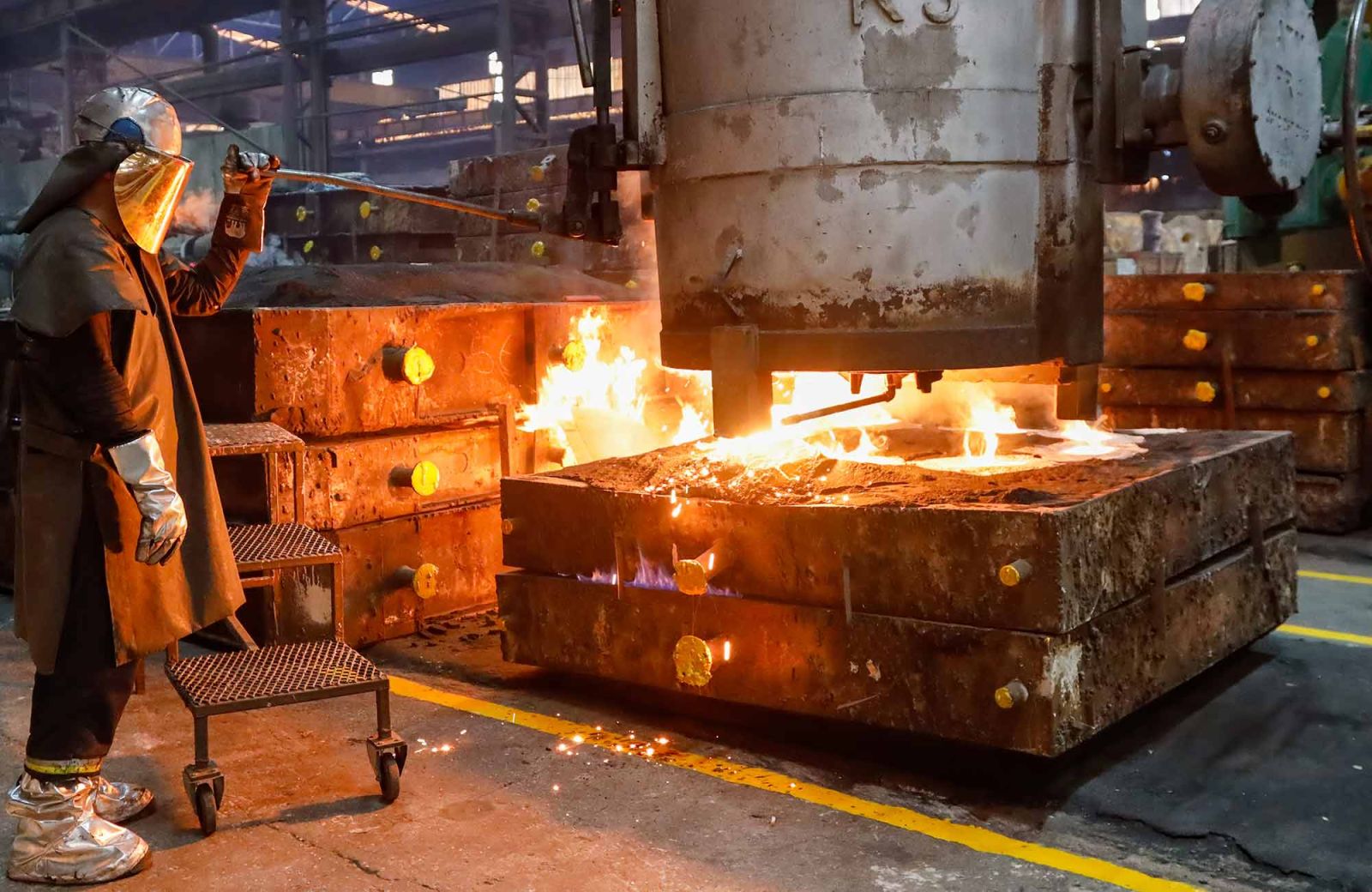
2 Numerical simulation analysis process
The working process of computer numerical simulation system generally includes the establishment of geometric model, meshing, determination of solution conditions ( initial conditions and boundary conditions ), numerical simulation, processing of calculation results and graphic display.
2.1 Three-dimensional molding
Using three-dimensional modeling software Solidworks modeling. According to the process design idea, a three-dimensional model including casting, mold, pouring and riser system is established.
2.2 Grid division
After the Solidworks modeling is completed, it is exported in parasolids format and meshed. The basis of meshing is that the mesh size is 1 / 2 ~ 1 / 3 of the minimum wall thickness.
2.3 Determination of solving conditions
In order to simulate the changes of flow field and temperature field of the casting in the process of pouring and solidification in the vacuum shell furnace, the thermodynamic calculation was carried out according to the alloy composition by using ProCAST software, and the thermal physical parameters of the material were obtained. The casting material is ZTA2, and the mold shell material is graphite. The pouring temperature is 1 770 °C, the mold shell preheating temperature is 200 °C, gravity pouring.
2.4 Simulation operation and result analysis
Perform numerical simulation calculations by running ProCAST; Analyze the filling situation of metal liquid by observing the flow patterns of metal liquid at different time periods; Analyze the solidification process of metal liquid through the solid-phase ratio during the solidification process; Analyzing Shrinkage Defects through Shrinkage Cloud Maps
3 Mold process design
3.1 Design of parting surface and core
Combined with the production requirements of the casting, the casting mold of the casting adopts a machined graphite mold. The parting forms of the machined graphite mold are various, but the following principles should be considered when determining the parting surface in production : the mold is easy to assemble and fix ; the manufacture of mould is as simple as possible ; the mold should be strong and durable, good reusability ; ensure that the core is easy to operate and the core is stable ; ensure the reasonable opening of the pouring riser system. For this reason, the upper and lower directions take the center line of the casting as the parting surface, and the core is fixed by connecting the movable block and the left and right flanges.
.jpg)
3.2 Design of gating system
The reasonable design of gating system can not only make the titanium liquid fill the mold smoothly, but also feed and adjust the temperature difference of each part of the casting, so as to realize the choice of solidification mode. The casting is a typical box shell part, the internal and external structure is complex, and the thickness is uneven. Because of the characteristics of titanium alloy, it is necessary to complete the smelting in the vacuum induction shell furnace, and it is required to complete the pouring in a short time. The superheat of titanium liquid is low. If the design of gating system is unreasonable, it is very easy to produce defects such as insufficient pouring, air entrapment, cold shut, shrinkage porosity and shrinkage cavity, so the design of gating system is very important.
3.2.1 Determination of riser
The outer structure and inner circular plate of the casting have a relatively large thickness of 18 mm, with a thin-walled thickness of only 7 mm and a thin-walled thickness of only about 1/3 of the thick wall. Moreover, the thin-walled distance is relatively long, which can easily form multiple hot nodes, which is not conducive to the sequential solidification of the casting. This study analyzes the solidification of castings without a gating system through numerical simulation. Figure 6 shows the liquid phase diagram of the casting during the solidification process. It can be observed that there are obvious isolated liquid phase zones formed in all four parts of the casting, mainly due to the thin wall that has already solidified.
Combined with the research results of numerical simulation without riser, the casting process scheme 1 of the casting was determined by taking a single casting as the research object, and the gating system of a single casting was designed. In the aspect of riser design, risers are added for four hot nodes, and ingates are added at the parting surface, and sprues and runners are designed at the corresponding positions.
.jpg)
Through the simulation analysis of the solidification process of the four risers, the isolated liquid phase region of the solidification process can be obtained, as shown in Fig.10. It can be found that according to the riser size of scheme 1, due to the narrow middle of the square plate, two hot nodes under the square plate form an isolated liquid phase zone. The point A and point B in the middle and lower part of the square plate are selected, and the temperature curve of solidification change is extracted, as shown in figure 11. From figure 11, it can be found that the temperature of point A is higher than that of point B in the early stage of solidification, and the temperature of point B is higher than that of point A in the later stage. Because point A cools down quickly and cuts off the channel of riser feeding, shrinkage cavity and porosity are generated below the square plate of the part, as shown in figure 12.
In order to solve the problem of shrinkage cavity and porosity in the lower part of the square plate, the casting process scheme 2 was developed in this study, and the feeding channel was added above the square plate and below the riser, as shown in Fig.13. The riser pouring scheme with feeding channel was simulated and analyzed, and the distribution of isolated liquid phase zone in solidification process was obtained, as shown in Fig.14. It can be found that Scheme 2 can avoid the occurrence of isolated liquid phase zone inside the casting, and the feeding channel plays a good role in feeding. In addition, the distribution of shrinkage porosity after solidification of the casting also proves this point, as shown in Fig.15.
3.2.2 Design of gating system for ' one-mold multi-piece'
The rationality of the gating system design is the key to the success of casting pouring, and comprehensive factors such as the size, weight, structure, superheat of titanium liquid, and filling speed of the casting need to be considered. The titanium alloy valve body in this study is a small part, which needs "more than one the first mock examination" when it is smelted and poured in a vacuum shell furnace. The specific number of pieces needs to comprehensively consider the total weight of molten metal in the shell furnace, the weight of a single casting and the setting of the gating system. Considering the need to complete the pouring in a short period of time, it is necessary to design a large gate cup and an open pouring system. Because the pouring process involves multiple layers of castings, in order to avoid defects such as cold shuts and air pockets, it is necessary to consider the rationality of the pouring system during pouring to avoid chaotic pouring of each layer.
.jpg)
According to the characteristics of titanium alloy casting, it is necessary to complete the pouring of the casting in a short time, and to avoid the phenomenon of pouring chaos in each layer as far as possible. The gating system adopts an open gating system as far as possible, and the cross-sectional area ratio of sprue, runner and ingate is 1 : 2 : 4. At the same time, the flow resistance section of the gating system should also be designed below the gate cup. The calculation of the flow resistance section is shown in formula ( 1 ) [ 26 ]. F resistance P = 2Gμ · ρ · t gH ( 1 ) where G is the mass of the casting ( the weight of the casting at the lower end of the blocking area plus the weight of the gating system ), kg ; μ is the flow coefficient of the ingate, for the dry type, μ is 0.4 ~ 0.6 ; ρ is the density of liquid metal, ρ = 4.5 × 10⁻³ kg / cm3 is selected for titanium alloy. t is the time of filling the cavity ; g is the acceleration of gravity, 980 cm / s2 ; hP is the casting pressure head, cm ; the F resistance is the minimum cross-sectional area, cm2, of the gating system to control the filling speed during most of the pouring period.
Considering the multiple factors such as the capacity of vacuum shell solidification furnace and sand mold making, the process of "16 pieces of the first mock examination" is selected. After the F resistance is calculated, the sectional areas of the sprue, cross sprue and inner corner channel can be determined in turn, and the casting scheme 3 of the casting can be obtained. Model the designed pouring system and conduct numerical simulation research at a pouring temperature of 1770 ℃. The specific filling process is shown in Figure 16. Through numerical simulation results, it can be found that with a reasonable design of the pouring system, the pouring process achieves layer by layer pouring.
.jpg)
4 Casting production and inspection
On the basis of the casting process design, the casting process of "the first mock examination 16 pieces" is adopted, and the casting production is carried out according to the steps of machining graphite mold manufacturing, graphite mold baking degassing group mold, casting smelting and pouring, casting cooling and quality inspection. Among them, high-quality artificial graphite blocks are selected as the raw materials for the ink type and processed by lathes, boring machines, and milling machines. Before pouring, the graphite mold is heated to 900~1000 ℃ under vacuum conditions and held for 1~4 hours to remove moisture and volatile substances from the graphite mold. After roasting and degassing, the mold is poured. The equipment for melting and pouring is a 200 kg vacuum consumable shell furnace, which starts melting when the vacuum degree inside the furnace is less than 9 Pa. After the titanium alloy ingot melts to the specified weight, immediately flip the crucible for pouring. After the casting is poured, it should be cooled in the furnace for 2 hours and discharged when the temperature drops below 300 ℃. After removing the pouring system and post-processing, a titanium alloy valve body casting was obtained.
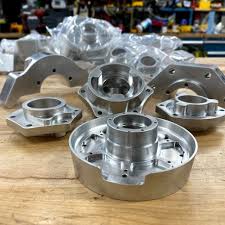
.jpg)
5 Conclusion
1 ) The titanium alloy castings of ' one mold with multiple parts ' can be produced by the way of mechanical graphite mold assembly, vacuum shell furnace melting and atmospheric pressure casting.
2 ) For the ' one mold multiple pieces ' casting process, through the reasonable design of gating system, the smooth pouring of each layer of castings in the pouring process can be effectively guaranteed. The gating system should adopt an open gating system, and the cross-sectional area ratio of sprue, runner and ingate is 1 ∶ 2 ∶ 4.
3 ) The results show that the chemical composition and mechanical properties of titanium alloy castings produced by machining graphite mold combination, vacuum shell furnace melting and normal pressure pouring meet the requirements of national standard for ZTA2. The surface and internal quality of the castings are good and meet the requirements of use.
4 ) Numerical simulation can intuitively reflect the state of the casting in the pouring process and the solidification process, and can predict the related defects. The use of numerical simulation technology in the casting process can optimize the casting process design, shorten the product trial production cycle, and greatly improve the production efficiency.
FAQ 1: What is the "One Mold Multi parts"?
Keywords: One Mold Multi parts, casting process, titanium alloy, valve body.
The "One Mold Multi parts" casting process is an innovative technique used for manufacturing titanium alloy valve bodies. It involves the simultaneous casting of multiple parts of a valve body using a single mold. This process streamlines production, reduces manufacturing time, and minimizes material wastage. The titanium alloy, known for its excellent strength-to-weight ratio and corrosion resistance, makes it a preferred choice for critical applications like valve bodies.
FAQ 2: What are the advantages of using the "One Mold Multi parts" casting process for titanium alloy valve bodies?
Keywords: advantages, One Mold Multi parts, casting process, titanium alloy, valve bodies.
The "One Mold Multi parts" casting process offers several advantages when manufacturing titanium alloy valve bodies. Firstly, it significantly reduces production time as multiple parts are cast simultaneously in a single mold. This process also ensures uniformity and dimensional accuracy among the parts, leading to better product quality. Additionally, it reduces material wastage, leading to cost savings. Moreover, the inherent characteristics of titanium alloy, such as high strength, low weight, and corrosion resistance, make the valve bodies ideal for demanding applications in various industries.
FAQ 3: How can I optimize the "One Mold Multi parts" casting process for titanium alloy valve bodies?
Keywords: optimize, One Mold Multi
To optimize the "One Mold Multi parts" casting process for titanium alloy valve bodies, several key aspects need attention. Firstly, carefully design the mold to ensure proper gating and venting, which will minimize defects and improve casting quality. Secondly, control the cooling rate during solidification to prevent shrinkage and cracking issues
How to Contact Us:
- Visit our website: https://www.nbyichou.com/
- Email us: [email protected]
- Call us/whatsapp: +86 13355741031
- Chat with us: Live chat support available on our website