A Technical Comparison of Mechanical Properties, Corrosion Resistance, and Machining Costs
1. Introduction: The High-Stakes Material Selection
In the world of engineering, the material selection phase is rarely just about picking a metal; it is a high-stakes gamble where the cost of failure is measured not in dollars, but in downtime, safety violations, and catastrophic structural failure. Whether you are designing a subsea blowout preventer for the oil and gas industry, a surgical implant for the medical field, or a turbine blade for aerospace, the choice between Stainless Steel, Titanium, and Inconel defines the project’s lifecycle.
For procurement officers and engineers currently in the Selection Phase of a 2026 project, the pressure is immense. You are often faced with a dilemma: justify the significant capital expenditure of a "superalloy" like Titanium or Inconel to your CFO, or accept the lower upfront cost of Stainless Steel while risking premature failure down the line.
At YICHOU Precision Machining & Casting, we operate at the intersection of these three materials. We understand that the equation is not simply "which metal is stronger?" but rather, "which metal provides the lowest Total Cost of Ownership (TCO) given my specific environmental stressors?" This guide serves as a technical deep-dive into the mechanical properties, thermal limits, and—perhaps most critically—the machinability and cost implications of Stainless Steel (316L), Titanium (Grade 5 / Ti-6Al-4V), and Inconel (718) .
By the end of this article, you will have the technical ammunition to justify your material selection to your stakeholders, and the confidence to know that YICHOU has the CNC machining and casting expertise to bring your design to life, regardless of how challenging the alloy is.
2. Mechanical Strength & Weight: The Performance Matrix
When an engineer asks, "How much weight can I save?" they are not asking about vanity; they are asking about inertia, fuel efficiency, and dynamic loads. The mechanical properties of these three alloys differ drastically, not just in raw strength, but in their relationship with density.
Density: The Lightweight Champion
The most immediate differentiator is density.
-
Stainless Steel (316L): Approximately 8.0 g/cm³. This is the baseline. It is heavy, which is beneficial for vibration damping but detrimental for aerospace or automotive applications.
-
Titanium (Grade 5): Approximately 4.4 g/cm³. Titanium offers the strength of steel at roughly half the weight. This specific strength (strength-to-weight ratio) is why Titanium dominates the aerospace industry. For every kilogram of steel replaced with titanium, engineers can reduce overall structural weight by nearly 50% without sacrificing load-bearing capacity.
-
Inconel (718): Approximately 8.2 g/cm³. Surprisingly, Inconel is denser than stainless steel. It does not win any weight-saving awards. Its value lies not in being light, but in maintaining its structural rigidity under extreme heat.
Tensile Strength & Specific Strength
While 316L Stainless Steel offers a solid yield strength of around 290 MPa (in its annealed state), it begins to lose its advantage when weight is factored in. Titanium Grade 5 (Ti-6Al-4V) offers a yield strength of approximately 880 MPa. When you calculate the specific strength (strength divided by density), Titanium outpaces stainless steel by a factor of nearly 3:1.
Inconel 718, through precipitation hardening (heat treatment), achieves a yield strength of up to 1,100 MPa or more. It is the strongest of the three in absolute terms. However, because it is heavy, its specific strength is only marginally better than stainless steel at room temperature. The "magic" of Inconel does not appear until we introduce heat.
YICHOU Engineering Insight:
When we work with clients in the automotive or robotics sectors, we often recommend Titanium for moving parts. The reduction in rotational mass allows for higher speeds and lower energy consumption. Conversely, for static components in high-temperature chemical plants, Inconel’s sheer brute strength is prioritized over weight.
3. Thermal Performance: Dealing with the Heat
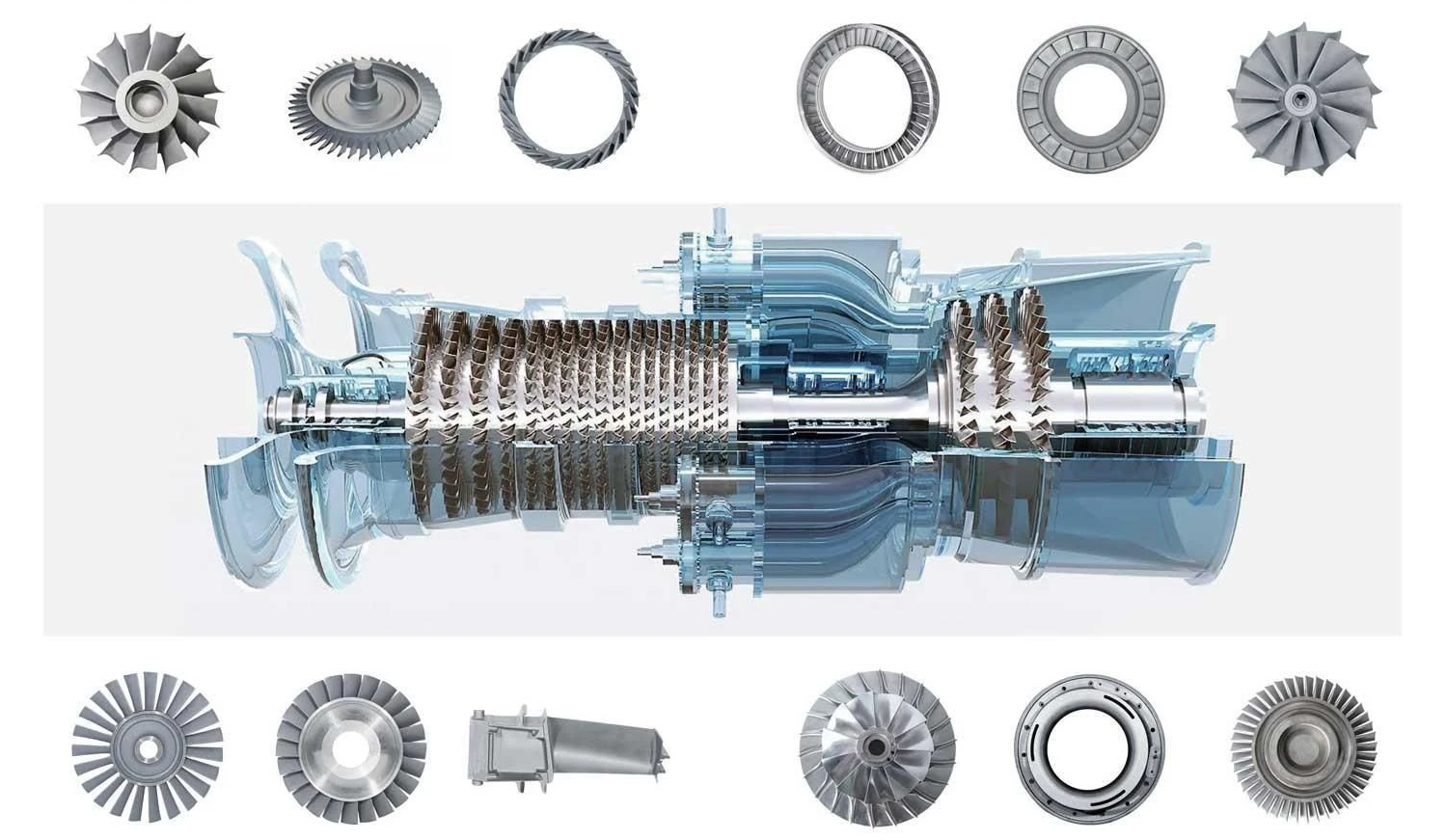
One of the most common misconceptions in material selection is the "melting point myth." Engineers often assume that if the operating temperature is below the melting point, the material is fine. In reality, creep resistance—the tendency of a solid material to deform permanently under stress over time—is the critical factor.
Stainless Steel (316L): The Low-Temperature Limit
Austenitic stainless steels like 316L are excellent up to about 450°C (842°F) . Beyond this temperature, they begin to undergo sensitization (carbide precipitation) and a rapid loss of creep strength. If your project operates consistently above 500°C, standard stainless steel is no longer a structural material; it becomes a liability.
Titanium (Grade 5): The Oxidation Barrier
Titanium maintains excellent mechanical properties up to approximately 600°C (1112°F) . However, there is a catch: Titanium is highly reactive. Above 600°C, Titanium’s affinity for oxygen becomes problematic. It begins to absorb oxygen from the atmosphere, forming an "alpha case" layer that makes the surface brittle. If your application involves sustained high temperatures in an oxidizing environment, Titanium will eventually become brittle and crack.
Inconel (718): The Superalloy
Inconel is designed for the fires. Based on a nickel-chromium matrix, Inconel 718 maintains high strength, oxidation resistance, and creep resistance up to 1000°C (1832°F) . At 700°C, where Titanium has become brittle and Stainless Steel has turned to "cheese," Inconel is still operating at 70-80% of its room-temperature strength.
YICHOU Engineering Insight:
We see this play out frequently in the aerospace and power generation industries. If your project involves turbine housings, exhaust systems, or nuclear reactors where temperatures exceed 600°C, you have no choice but to spec Inconel. Trying to "save money" with Titanium or Stainless Steel in that environment is a guarantee of failure.
4. Corrosion Resistance: Salt, Acid, and Chemicals
For applications in marine engineering, chemical processing, or subsea oil and gas, corrosion resistance often trumps raw strength. The decision here hinges on the specific chemical environment.
The Passivation Layer
All three metals rely on a passive oxide layer to prevent corrosion, but the chemistry of that layer differs dramatically.
-
Stainless Steel relies on a Chromium Oxide (��2�3Cr2O3) layer. This layer is robust in neutral and mildly acidic environments. However, it is vulnerable to chlorides (salt water). In marine environments, chloride ions can break down this layer, leading to pitting corrosion and, eventually, catastrophic crevice corrosion.
-
Titanium relies on a Titanium Dioxide (���2TiO2) layer. This is arguably the most stable passive layer in nature. Titanium is immune to seawater corrosion. It does not pit, it does not crevice corrode, and it is highly resistant to acidic environments like nitric acid and wet chlorine.
Specific Chemical Environments
-
Nitric Acid: Stainless Steel (316L) is suitable for dilute concentrations. Titanium excels due to its robust oxide layer. Inconel is rarely used in nitric acid unless high temperatures are involved.
-
Hydrochloric & Sulfuric Acid: Stainless Steel generally fails quickly in reducing acids like Hydrochloric (HCl) unless it is a high-molybdenum super-austenitic grade. Inconel 625 (a variation) and Titanium are the standard choices for handling these aggressive acids. However, Titanium is not recommended for anhydrous (dry) chlorine or concentrated sulfuric acid, where Inconel or Hastelloy may be preferred.
-
Hydrogen Sulfide (H₂S) / Sour Gas: In the oil and gas industry, this is the "killer." Stainless Steel is susceptible to Sulfide Stress Cracking (SSC). Inconel 718 is the gold standard for sour gas service due to its resistance to stress corrosion cracking.
Total Cost of Ownership (TCO) in Corrosive Environments:
If your component is submerged in seawater, the math is simple. While Titanium costs roughly 5x more upfront than 316L Stainless Steel, the stainless steel component may fail within 2-3 years due to pitting. The Titanium component will last for 25+ years. When you factor in the cost of downtime and replacement labor, Titanium is actually the cheaper material.
5. Machinability & Manufacturing Cost (The Buyer’s Concern)
This is the section that procurement officers need to present to their finance department. The material cost is only the beginning. The "machinability" of these alloys dictates lead times and unit costs.
At YICHOU, we categorize these materials by their "Gnome Factor"—a measure of how difficult they are to cut.
Stainless Steel (316L): The Baseline
Machinability Index: Moderate.
316L is the baseline. It is "gummy" and work-hardens, requiring sharp tooling and consistent feed rates, but it is forgiving. Lead times for stainless steel parts are typically the shortest. Setup is standard, and tool wear is predictable.
Titanium (Grade 5): The Springy Challenger
Machinability Index: Difficult.
Titanium’s challenge is its low thermal conductivity. Unlike steel, which dissipates heat into the chips, Titanium holds heat at the cutting edge. This causes rapid tool wear if speeds and feeds are not optimized. Additionally, Titanium has a low modulus of elasticity; it "springs" away from the cutting tool, making tight tolerances difficult without advanced fixturing.
Inconel (718): The "Nightmare"
Machinability Index: Extreme.
Inconel 718 is the king of difficult-to-machine materials. It work-hardens instantly. If your tool rubs instead of cuts, the surface becomes harder than the tool itself. It requires rigid CNC machines (preferably with high torque spindles), specialized carbide or ceramic tooling, and aggressive coolant strategies (often high-pressure through-spindle coolant).
Cost Index (Rough Estimate)
To give you a baseline for budget justification:
-
Stainless Steel (316L): 1x (Baseline)
-
Titanium (Grade 5): 4x to 6x (Material cost is higher; machining is slower)
-
Inconel (718): 8x to 12x (Material is extremely expensive, and machining cycles are 5-10x longer than stainless steel due to low cutting speeds and extensive tool wear)
YICHOU’s Value Proposition:
Most machine shops avoid Inconel and complex Titanium geometries because they lack the rigidity and tooling experience. At YICHOU, we have invested heavily in 5-axis CNC machining centers and investment casting capabilities specifically to master these alloys. When you work with us, you aren’t just buying metal; you are buying a process that guarantees that your Inconel part will meet tolerance on the first run, avoiding the massive costs of scrapped superalloy material.
6. Industry Application Guide
To simplify your selection process, here is a quick guide based on industry standards:
| Industry | Recommended Material | Why? |
|---|---|---|
| Aerospace (Airframes) | Titanium (Gr. 5) | Highest strength-to-weight ratio; fatigue resistance. |
| Aerospace (Engines) | Inconel (718) | Withstands 700°C+ temperatures in turbine sections. |
| Medical Implants | Titanium (Gr. 5 or Gr. 23) | Biocompatible; osseointegration (bonds with bone); MRI safe. |
| Marine / Subsea | Titanium (Gr. 2 or Gr. 5) | Absolute immunity to seawater corrosion; no pitting risk. |
| Oil & Gas / Sour Gas | Inconel (625/718) | Resists H₂S stress corrosion cracking; high pressure/temp. |
| Chemical Processing | Stainless Steel (316L) / Titanium | 316L for general acids; Titanium for chlorides and wet chlorine. |
| General Industrial | Stainless Steel (304/316) | Cost-effective; durable; corrosion resistant for most environments. |
7. FAQ: Engineering Deep-Dive
Q: Can I weld Titanium to Stainless Steel?
A: Not directly with conventional welding. The thermal expansion rates are vastly different, and brittle intermetallic phases form at the weld interface. If you need a hybrid structure, the standard industrial solution is explosion cladding or using a transition joint. YICHOU offers technical consulting on how to design these interfaces if your assembly requires both materials.
Q: Does Inconel 625 rust?
A: No. "Rust" refers to iron oxide. Inconel contains less than 5% iron. It does not "rust," but it can tarnish. Its nickel-chromium matrix provides superior oxidation resistance, making it appear dull or gray even in high-temperature exhaust environments, but it will not develop the red/brown flaking associated with standard steel.
Q: Why is Titanium Grade 5 (Ti-6Al-4V) so popular?
A: It is the "workhorse" alloy. It offers the best balance of strength (comparable to steel), low density, corrosion resistance, and heat treatability. While "Commercially Pure" Titanium (Gr. 2) is softer and used for corrosion-resistant vessels, Grade 5 is used for structural applications like aerospace fittings, racing connecting rods, and medical trauma plates.
Q: How do I choose between Inconel 625 and Inconel 718?
A: This is a common question.
-
Inconel 625: Better for weldability and corrosion resistance in chemical processing.
-
Inconel 718: Better for high-temperature strength (creep resistance). If you are building a jet engine or a high-pressure downhole tool that must hold a seal at 700°C, you use 718.
8. Conclusion: Beyond the Material—Choosing the Right Partner
Selecting between Titanium, Stainless Steel, and Inconel is a complex balancing act of physics, chemistry, and economics. As we have outlined:
-
Choose Stainless Steel for cost-sensitive, low-temperature, non-corrosive environments.
-
Choose Titanium when weight savings or absolute seawater corrosion resistance is required.
-
Choose Inconel when the heat is so extreme that other metals would melt or creep out of spec.
However, a specification on a drawing is only half the battle. The true success of your project depends on a manufacturing partner that understands the nuances of these superalloys. At YICHOU Precision Machining & Casting (www.nbyichou.com) , we don’t just accept orders for these difficult materials; we specialize in them.
Whether you need a complex Inconel 718 casting that requires heat treatment, a titanium aerospace component with micron-level tolerances, or a high-volume run of 316L stainless steel parts, we have the CNC machining capacity and metallurgical expertise to deliver.
Don’t let material uncertainty delay your project.
Send us your STEP files for a free Design for Manufacturing (DFM) analysis and quote.
Get in Touch with Yichou
Let Yichou help you achieve excellence in your next project. Whether you need raw materials, custom alloy solutions, or precision-manufactured components, our team is ready to assist.
- Email us: [email protected]
- Call us/whatsapp: +86 13355741031
- Chat with us: Live chat support available on our website