Direct Answer: CUAV flight controllers are a series of industrial-grade drone autopilots built upon the PX4 and ArduPilot open-source ecosystems. The core differentiator in current model selection lies in computational demand and interface generation: the V5+ series remains a performance benchmark of proven stability, the X7+ represents the pinnacle of interface-rich industrial configurations, and the V6X defines a new-generation platform with significantly enhanced processing power and higher integration.
Why, among numerous flight controller brands, do an increasing number of demanding industrial applications ultimately gravitate back toward CUAV? The explanation does not reside in the absolute superiority of any single parameter. It lies in solving the issue that troubles engineers most profoundly: making the entire process, from the initial power-up to the execution of complex missions, entirely predictable. When your equipment, carrying a laser scanner valued at tens of thousands of dollars, operates at an altitude of one hundred meters, this predictability constitutes the ultimate imperative.
This article is not a recitation of specifications. It is a resource, presented from the perspective of a procurement or research and development decision-maker, designed to resolve the central question: in 2026, precisely which CUAV flight controller enables my project to achieve operational readiness with the lowest risk, the greatest speed, and the most rational cost structure?
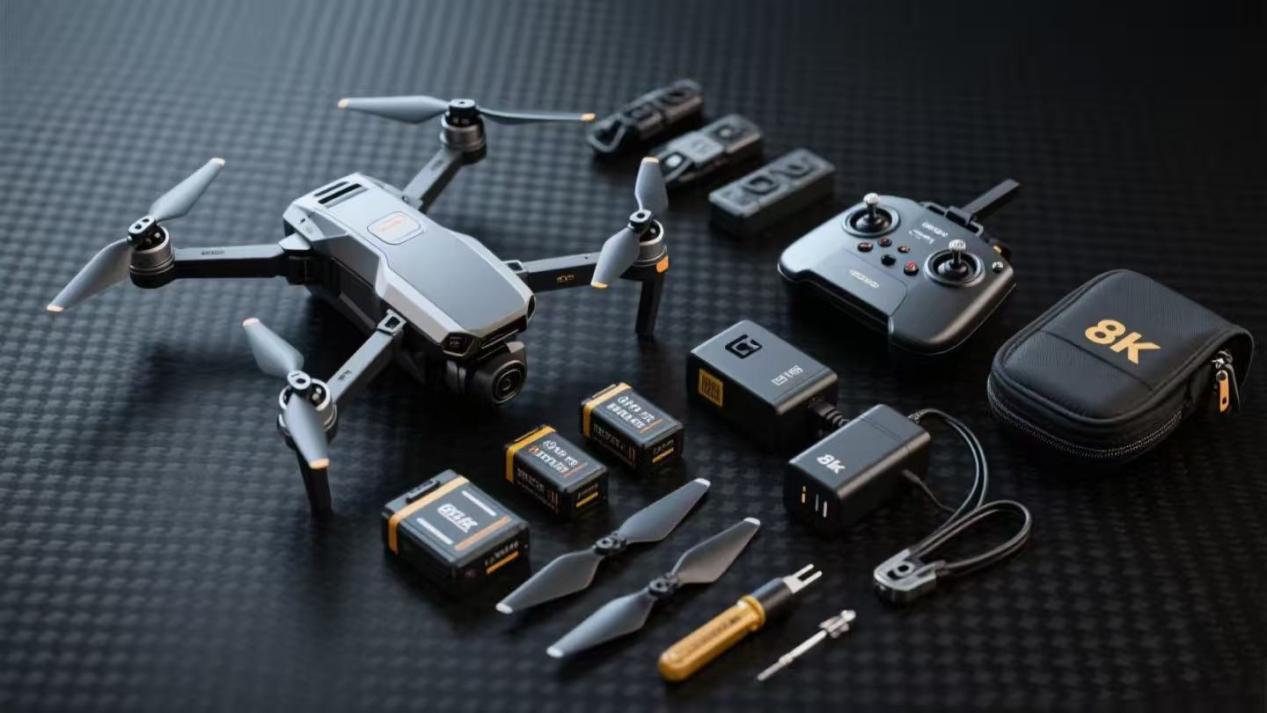
Part One: The Foundation of the CUAV Brand: Why It Is Considered the Secure Choice for Industrial Projects
Direct Answer: CUAV is a first-tier manufacturer in the open-source flight controller hardware sector, distinguished by an exceptionally low hardware failure rate and immediate, deep compatibility with both PX4 and ArduPilot firmware. It provides industrial drone operators with a professional-grade solution situated between fully proprietary development and consumer-level products, directly resolving the need for system stability without accepting vendor lock-in.
When assessing a flight controller brand, one is fundamentally evaluating the consistency of its hardware design, the traceability of its supply chain, and the credibility of its commitment to the open-source community. CUAV has established a defensible position across all three of these dimensions.
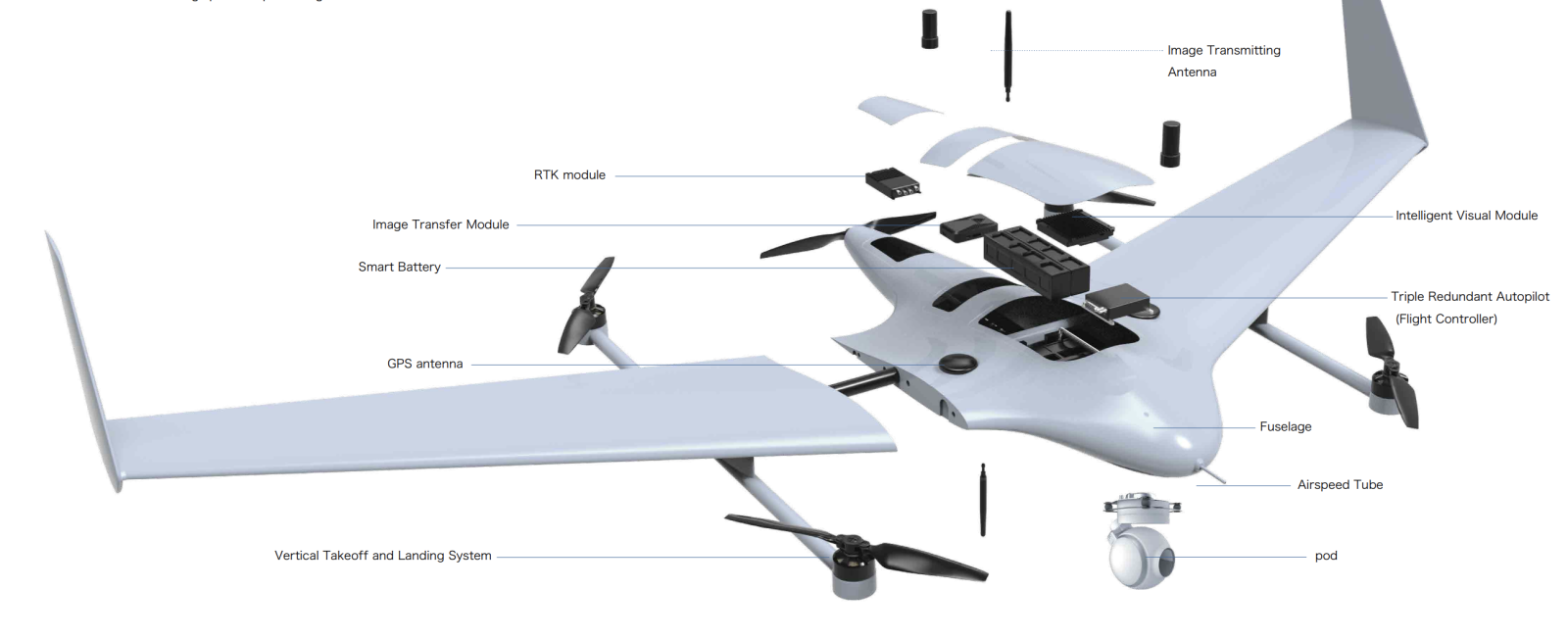
The application scope of CUAV products has long since expanded from the hobbyist domain into the deepest waters of industrial application. On long-endurance surveying drones, the V5+ series functions as a tireless navigator, delivering precise route data day after day. In vertical take-off and landing fixed-wing aircraft used for power line inspection, CUAV controllers exhibit remarkable stability while managing the aerodynamic complexities of the transition between fixed-wing and multi-rotor flight modes. In precision agriculture and digital twin data collection, where centimeter-level positioning is mandatory, its seamless integration with differential positioning systems reduces the risks of signal latency and drift to an absolute minimum.
Numerous engineers inquire about the fundamental distinction between CUAV hardware and standard Pixhawk hardware. The difference resides in the degree of adherence to industrial standards. Standard Pixhawk hardware prioritizes functional realization; CUAV flight controllers prioritize reliable operation under sustained vibration, severe temperature fluctuations, and continuous high current loads. This distinction manifests in the design of sensor redundancy, the isolation protection within the power management unit, and the locking mechanisms on connectors. Procurement decision-makers must comprehend that identical parameters on paper do not equate to identical real-world performance. The true cost differential often only becomes evident after the two-hundredth flight hour.
---
Part Two: When Selecting a CUAV Flight Controller, What Are the Five Critical Dimensions That Must Be Scrutinized?
Direct Answer: Model selection requires a rigorous evaluation across five dimensions: the type and quantity of physical interfaces, the computational power of the main processor, native hardware-level support for RTK high-precision positioning, the reliability of the companion power management unit, and whether the hardware has passed the official PX4 and ArduPilot continuous integration build tests. These factors collectively determine whether the flight controller can sustain the data throughput of your sensor payload and maintain operational stability throughout its entire service life.
Evaluating flight controller models in isolation from these five dimensions is analogous to attempting to cost a bridge without consulting the engineering drawings; it lacks any substantive meaning. We must now proceed into the logic core of the engineering decision process.
The primary consideration is interface resources, as this determines the lifecycle potential of the system. A project typically utilizes only basic channels at inception, but when later stages require the integration of obstacle-avoidance radar, an RTK base station, or a multispectral camera, the sufficiency of available interfaces directly determines retrofit costs. The CUAV V5+ provides eight to fourteen PWM outputs, fulfilling the requirements of most standard applications. When the mission expands to necessitate dual GPS modules, multiple CAN bus devices, an airspeed sensor, and several serial ports, the X7+ demonstrates its industrial-grade expandability with up to fourteen PWM outputs and a richer array of serial interfaces. This reserve capacity is not wasteful; it is a strategic provision for the future evolution of the project.
The second consideration is the computational bottleneck. The STM32F7 processor utilized in the V5+ and X7 series operates at 216 MHz with two megabytes of flash memory, handling the standard PX4 firmware with substantial margin. When you begin integrating a sophisticated companion computer, real-time video processing, or aspire to run a portion of the obstacle avoidance algorithm directly on the flight controller, the transition to the H7 processor-based V6X becomes necessary. Its computational performance is approximately doubled, creating a pathway for these data-intensive tasks. The selection criterion is whether your control loop requires a model significantly more complex than a standard PID controller.
The capability for RTK high-precision positioning constitutes another critical dividing line. All referenced CUAV flight controllers offer hardware-level RTK support; the distinction lies in the degree of implementation maturity. The V5+ series has been validated through countless field deployments and exhibits extremely high stability. The X7 and V6X series, via improved isolation design, further reduce the sensitivity to external interference affecting the magnetometer and GPS modules. For applications mandating static positioning accuracy at the centimeter level, this capability is not optional; it is a non-negotiable determinant of project success or failure.
Finally, the reliability of the power management system must be evaluated. Many unexplained crashes originate from the flight controller rebooting or sensor data corruption caused by transient voltage drops or ripple interference. CUAV's companion CAN PMU power management module functions much like establishing a pure and uninterrupted circulatory system for the drone. It provides multiple independently regulated voltage outputs and incorporates surge protection, ensuring that even when a servo stalls or a motor generates substantial back electromotive force, the power supply to the flight controller and mission payload remains clean and stable. This factor assumes paramount importance on heavy-lift, long-endurance drones.
---
.jpg)
Part Three: In-Depth Analysis of Key Models: What Are Their True Roles and Application Boundaries?
CUAV V5+: Why Does It Remain the Choice with the Highest Degree of Certainty?
Direct Answer: The V5+ is CUAV's enduring flagship flight controller, designed according to the FMUv5 standard. It features a triple-redundant inertial measurement unit architecture, a precision vibration-dampening structure, and a rich set of industrial interfaces. Its core value proposition is extreme maturity and absolute predictability; the firmware and peripheral ecosystem are in a state of high stability.
The position of the V5+ is akin to that of C30-grade concrete in the construction industry. It is not the most novel material, but engineers understand its properties with exhaustive precision, enabling them to design the most reliable structures. The three onboard IMUs provide hardware-level sensor redundancy, employing a voting mechanism to reject anomalous data points. This provides critical protection during the crucial seconds of inertial navigation when GPS signals are obstructed. Its dampening design, refined through successive iterations, effectively filters high-frequency vibrations, resulting in smoother attitude estimation and a direct improvement in the image quality of aerial surveys.
For the majority of multi-rotor surveying and inspection projects, the V5+ offers more than sufficient performance. Its interface set comfortably accommodates standard configurations, including dual GPS, optical flow, and laser rangefinders. When clients inquire why a newer model should not be selected, the response frequently points towards risk management: a system where all potential issues have been identified and resolved by the community, and where all components are consistently available, represents an immense reservoir of implicit value. Its vitality is a function of its maturity, not the superficial advancement of its specifications on paper.
CUAV V5 Nano: Who Is the Appropriate Candidate for This High-Value Flight Controller?
Direct Answer: The V5 Nano is a weight-optimized and space-constrained flight controller tailored for small wheelbase multi-rotors and weight-sensitive applications. It inherits the core hardware architecture of the V5+ but sheds a portion of the industrial interface redundancy. It trades interface count for an aggressive reduction in volume and cost, making it suitable for scenarios demanding high hardware maturity but involving a relatively simple mission payload.
The existence of the V5 Nano answers a specific question: how can one obtain the stability of the V5+ when the drone is severely weight-limited and does not require an extensive number of interfaces? CUAV refined the mature V5+ design, eliminating the multiple PWM outputs and expansion interfaces designed for large VTOL and compound-wing aircraft, and compressed the form factor to its functional minimum. It retains the field-proven IMU system and the core processor, meaning that in terms of attitude and navigation reliability, it operates at an identical level to its larger counterpart.
The typical user profile for this product includes educational and research institutions, high-end applications within the racing and freestyle drone segment, and commercial projects involving lightweight airframes carrying a single payload. The objective is to achieve a high standard of flight control within a confined space, but with limited requirements for future expandability. The rationale for selection is direct: allocate budget and weight margin to a more valuable payload, rather than paying for interface capacity that will remain unused. This represents astute engineering economics.
CUAV X7 Series: What Precisely Distinguishes the X7 from the X7+?
Direct Answer: The X7 series is the interface-maximized platform CUAV defines for industrial applications. The standard X7 provides a powerful foundation for expansion, while the X7+, as its enhanced variant, incorporates hardware-level upgrades to support multiple CAN FD buses, an Ethernet interface, and a more robust power supply system. The core selection criterion is whether there is a current or projected need for Ethernet-based large data transfer or the integration of multiple CAN FD devices.
The X7 series is, first and foremost, an interface behemoth. When the serial and CAN ports of a V5+ become saturated with connections for a laser rangefinder, an RTK base station, and camera triggering signals, the X7 appears to be just beginning its operational performance. It is engineered for authentically complex industrial systems, such as environmental monitoring drones that must simultaneously carry atmospheric sampling equipment, a multispectral camera, and a forward-facing collision avoidance radar. The underlying design logic is to provide a nearly excessive degree of bandwidth and connectivity, ensuring that data from any sensor is never lost or delayed due to a physical channel bottleneck.
What, then, accounts for the surging attention directed at the X7+? Its core upgrade lies in the introduction of an Ethernet interface and CAN FD bus support. When a standard CAN bus operating at one megabit per second proves inadequate for large file transfers, CAN FD can reach eight megabits per second, and Ethernet opens the gateway for sensor data streams at the one-hundred-megabit or even gigabit level. When your system architecture involves real-time transmission of high-resolution point cloud data, or the need to synchronize massive log files in flight, the X7+ becomes the sole key to this specific door. The buyer must judge whether their project, currently or within a two-year horizon, will cross the threshold into this reality of high-volume data transmission.
CUAV V6X: What Future Direction Does It Signify?
Direct Answer: The V6X is CUAV's next-generation, high-performance flight controller built upon the STM32H7 processor. Its computational performance is effectively doubled compared to its predecessors, and it adopts a modular, highly integrated design philosophy. Its core positioning is to provide a platform for applications requiring more sophisticated onboard processing capability, signaling an evolutionary shift from purely deterministic flight control toward integrated mission management.
The launch of the V6X does not represent a simple performance iteration. The H7 processor it employs unlocks the possibility of executing more complex control algorithms in real time. This means that a portion of the obstacle-avoidance computation or target-tracking logic, which previously had to run on a companion computer, can now be implemented directly on the low-latency flight controller. For engineers pursuing ultimate system responsiveness, this architectural shift is intensely compelling.
Concurrently, the design philosophy of the V6X tends towards integration. It resembles a modular system pre-equipped with a powerful base station, simplifying a substantial portion of the external circuit design. This permits developers constructing the next generation of drones to focus effort on differentiation at the core application layer, rather than engaging in redundant engineering of the flight control foundation. If your project entails significant custom development and requires a computation-rich, highly adaptable native platform, the V6X represents the strategic investment in future capability. It delineates the technological pathway that progresses from established maturity to managed evolution.
---
Part Four: Decision-Making in Critical Scenarios: How to Compare Models Under Specific Requirements
V5+ versus V5 Nano: What Is the Definitive Boundary Between Entry-Level and Advanced?
Direct Answer: The sole determining factor for selecting the V5+ over the V5 Nano is the requirement for interface expansion. If your application is definitively confirmed not to exceed the sensor configuration of a basic multi-rotor, the V5 Nano is fully capable of delivering flight stability at the same tier as the V5+.
This decision process must not be driven by price, but by a definitive list of physical hardware. Begin by enumerating every device that is currently confirmed for your drone, and any that may be added in the future: single or dual GPS, the presence of an optical flow module, the requirement for an airspeed sensor, how many channels are needed for camera triggering, whether the rangefinder uses a serial or I2C interface. Compare this list against the interface diagram for the V5 Nano. If the capacity is exactly sufficient or provides minimal reserve, then selecting the V5 Nano constitutes the most rational economic decision.
However, if the list reveals one or two future upgrades that remain uncertain, or if you are constructing an airframe with a wheelbase exceeding four hundred and fifty millimeters that must drive multiple servos and complex sensors simultaneously, the redundant interfaces and greater power delivery margin of the V5+ constitute the solid engineering foundation for its selection. Saving on acquisition cost should not be achieved at the expense of sacrificing the system's hardware scalability over the subsequent three months of operation.
X7 versus X7+: Under What Circumstances Is the Budget Increase to the X7+ Mandatory?
Direct Answer: The critical upgrade of the X7+ over the X7 is the inclusion of Ethernet and CAN FD bus support. The investment in the X7+ yields a tangible return only when the system link includes devices that must transmit large data streams at rates exceeding one megabit per second, or when an Ethernet interface is required for communication with a companion computer.
One may conceptualize this choice as deciding whether to construct an information superhighway for the drone. If the aircraft is solely utilized for waypoint navigation and image capture, the standard CAN bus and serial ports of the X7 function like a municipal road network and are entirely sufficient. However, if you are integrating a high-resolution scanning LiDAR that generates millions of data points per second, requiring processing by a companion computer with partial real-time data relay, the Ethernet interface of the X7+ becomes the essential data backbone.
The procurement of this model is typically not an isolated decision; it is strongly coupled with the entire mission payload architecture. When communicating with the R&D team, the core questions are: what is the data throughput of the payload, and what is the tolerance for communication latency? Only by quantifying these technical specifications can one accurately assess the return on investment for the additional budget allocated to the X7+. It represents a forward-looking technical reserve, insuring data-intensive industrial applications against future bottlenecks.
V6X versus X7+: The New-Generation Platform or the Traditional Top Specification—Which Is More Suitable for You?
Direct Answer: The comparison between the V6X and the X7+ is fundamentally a trade-off between raw computational capability and interface richness. The V6X provides superior core processing power, making it suitable for scenarios with demanding onboard algorithm requirements. The X7+ delivers industry-leading connectivity and I/O redundancy, fitting large-scale systems integrating numerous sensors. These represent peak configurations on two divergent technical pathways.
From an engineering perspective, this is a choice of system architecture. The V6X, by virtue of the H7 processor, provides ample computational headroom, enabling the implementation of more intelligent control laws, state estimators, and fault diagnostic algorithms directly on the flight controller. If your team possesses embedded development capability and plans to deeply integrate a portion of vision-based precision landing or basic tracking functionality at the flight-control level, the V6X is the more suitable native platform.
The X7+ does not challenge the limits of computation; instead, it elevates stability and connectivity to their highest expression. It is based on the mature F7 processor, and every module on this platform has undergone long-term validation. When the primary value of your drone resides in expensive, multi-function payloads, and an absolutely stable flight platform is required to protect asset safety, the redundant power supplies, multiple signal isolations, and exceptionally rich interface set of the X7+ provide the maximum reliability guarantee. This is not a contest of old versus new, but a division of specialized function.
---
Part Five: How to Construct a Complete CUAV System: Critical Accessories and Recommended Configurations
Direct Answer: A complete, commercial-grade CUAV system comprises the flight controller, a satellite positioning module, a power management unit, and an optional optical flow sensor. To ensure system reliability, utilizing the CUAV-manufactured power management unit and GPS module is strongly recommended, in order to avert power supply instability and positioning anomalies caused by third-party component incompatibility.
Procuring the flight controller is merely the initial step. Constructing a system capable of reliably delivering mission outcomes requires a thorough understanding of the cooperative dynamics among the constituent subsystems.
The CAN PMU power management module serves as the stabilizing anchor of the system. It is anything but a simple transformer; it is an intelligent node integrating voltage and current monitoring, multiple regulated power outputs, and surge protection. It communicates with the flight controller in real time via the CAN bus, enabling the flight log to record power consumption variations with precision, thus providing critical data for post-incident diagnostics. When a stalled servo induces a current surge of tens of amperes, the PMU isolates this event, safeguarding the power supply to the flight controller and companion computer against a catastrophic voltage drop. This expenditure is a necessary cost to fundamentally eliminate the risk of crashes caused by power anomalies.
Regarding satellite positioning and RTK modules, accuracy presents a tiered set of requirements. Standard GPS is suitable for basic navigation in open environments. When the mission mandates high-precision hovering and accurate return-to-home functionality, the integration of RTK differential positioning becomes a near-necessity. The CUAV RTK kit achieves deep integration from the base station to the mobile unit. What it resolves is not the binary question of capability, but the real-world performance and reliability questions such as how long this accuracy can be sustained and how many seconds are required for re-convergence after a signal interruption. For surveying applications requiring static positioning accuracy at the centimeter level, this is a non-negotiable performance dimension.
The PX4FLOW optical flow sensor functions as a navigational supplement in GPS-denied environments. Indoors, beneath bridges, or within dense urban canyons, where satellite signals are unreliable, this sensor provides velocity data by tracking ground surface texture. This data is fused with the IMU to support the critical function of maintaining a stable hover. It addresses the problem of flight capability within specialized environments.
Based on application scenarios, the configuration logic is remarkably clear. A lightweight surveying solution may consist of a V5 Nano paired with a standard GPS and a basic power module. Standard industrial tasks should select the V5+ or X7, configured with dual GPS, RTK, and the CAN PMU. For large VTOL aircraft imposing the highest demands on communication bandwidth and computational power, the X7+ or V6X, in conjunction with the CAN PMU, dual RTK, and an Ethernet payload link, constitutes the foundational elements for constructing a robust, future-proof unmanned system.
Part Six: Practical Installation and Commissioning: How to Guide the System from Hardware to the First Flight
Direct Answer: The standardized commissioning procedure encompasses interface connection verification, firmware flashing, mandatory sensor calibration, and the configuration of fundamental parameters. The overriding principle is absolute adherence to the official CUAV wiring diagrams for all connections, utilization of the latest stable release of PX4 firmware via the ground control station, and sequential execution of every calibration step without omission.
This section will bypass the specific definitions of individual pins and focus on process and risk mitigation, as the precise pin assignments must, and can only, be referenced from the official documentation corresponding to the specific model version in your possession.
During the interface connection phase, the greatest adversary is the complacency induced by industrial-grade, keyed connectors. CUAV connectors are nearly all designed to prevent reverse insertion, yet the application of force in the correct orientation must never be taken for granted. Before connection, total system power-down must be confirmed. The orientation and color of each connector plug must be verified against the wiring diagram. Pay particular attention to the termination resistors on the CAN bus; they must be correctly placed only at the extreme physical ends of the bus. Failure to do so will result in intermittent and difficult-to-trace communication errors across the entire CAN network under high data loads.
Firmware flashing is no longer a technical barrier, but version selection is a matter of informed judgment. Connect the flight controller to a computer via USB, launch PX4 ground control station software, which will automatically detect the hardware and recommend the appropriate firmware. The latest stable release version must be selected. If, and only if, you are an experienced developer and can articulate a clear rationale for using a specific development build, should that path be chosen; in all other cases, the stable release is the correct selection. The connection must remain stable throughout the flashing process.
Calibration is the essential ritual that imparts sensory perception to the flight controller. The sequence must be followed in order. First, with the airframe perfectly level, perform the accelerometer calibration. Then, orient the drone sequentially in six orthogonal directions to complete the magnetometer calibration. This is the primary safeguard against position-hold mode drift and erroneous return-to-home behavior. Horizontal level calibration is equally non-negotiable; it determines the flight controller's fundamental reference for the horizontal plane. Lastly, at the flight location, perform the ESC throttle range calibration to ensure that all motors respond to the throttle command in perfect synchrony.
Basic parameter configuration is equally significant. Before the initial test flight, the battery low-voltage failsafe and the primary loss-of-signal failsafe action must be correctly configured within the parameter table, according to the specific airframe type and propulsion configuration. The first failsafe—whether the action taken upon loss of the radio control link is to hover, return to home, or descend immediately—must be a decision based on the specific environment of the maiden flight. Every cautious check performed on the ground lays the foundation for confident risk mitigation in the air.
When a novice encounters a problem, the first action should be to immediately inspect the message panel within the ground control station. Any error will be explicitly indicated with red or yellow text. The most common root causes of installation failure can be summarized as: an incorrect firmware image has been flashed, the sensor calibration sequence is incomplete, or the SD card is not correctly formatted or is not inserted. These are not issues with the flight controller hardware; they are process execution failures. Cultivating the habit of reading every single message from the system is the journey's beginning from novice to professional.
Part Seven: Frequently Asked Questions
What is the Long-Term Operational Stability of CUAV Flight Controllers?
CUAV hardware is distinguished within the industrial drone sector by a low failure rate and high design consistency. Its stability is established upon a foundation of triple-redundant IMU architecture, rigorous power supply isolation, and effective suppression of external electromagnetic interference. Provided that installation and parameter configuration strictly adhere to the prescribed specifications, it delivers predictable control performance for long-endurance, high-value flight missions. This predictability serves as the cornerstone of the trust it has earned among professional users.
My Team Primarily Scripts Missions in ArduPilot. Does the V6X Offer Strong Support for This?
Yes, the V6X and its related hardware maintain close compatibility with the ArduPilot firmware. CUAV is responsive in providing driver-level support for its hardware, ensuring that its latest H7 computing platform can fully realize the performance of ArduPilot's advanced features. For selection purposes, you need only confirm the correct hardware target firmware version within the ground control station, which can then be loaded directly. This provides substantial flexibility for professional teams that work with both firmware ecosystems.
What Is the Most Frequently Overlooked Yet Critical Accessory During Procurement?
It is a high-quality SD memory card. All of the flight controller's logs are recorded onto this card; it is the most invaluable data source for post-incident analysis. It is recommended to select an industrial-grade, high-endurance card from the CUAV approved list, and to ensure a low-level format is performed before installation. A substandard or incorrectly formatted card can cause log write failures, resulting in the absolute disappearance of the most critical data for fault analysis. This cost of failure far exceeds the cost of a reliable card.
Is It Possible to Request a Flight Controller with a Customized Interface for a Specialized Project?
For industrial clients with production volume, CUAV typically provides a certain scope for customization evaluation. This is contingent upon the technical complexity and the projected quantity for the project. If the standard V5+ or X7+ interface configurations cannot fully satisfy your integration requirements, the formal channel is to contact YICHOU, as an authorized partner, to communicate your specific technical specifications, interface control documents, and estimated annual volume. We are able to assist in resource coordination and evaluate technical feasibility.
Part Eight: Summary and a Clear Procurement Pathway
The question we posed at the article's outset now has a framework for a clear response. Selecting a CUAV flight controller model is, fundamentally, the process of translating your project's requirements into a specific demand for interfaces, computational power, and platform maturity.
For newcomers to the industry tasked with a clearly defined, light-payload mission, the V5 Nano provides a high-reliability entry point, preserving budget allocation for more valuable sensors. For the vast majority of multi-rotor and small to medium VTOL applications, the V5+ remains the safest and most mature selection; its predictability is, in itself, a non-depreciable asset. When a project enters the complex depths of industrial application, requiring connection to a multitude of sensors and demanding an absolutely stable power and signal environment, the X7+, by virtue of its top-tier interfaces and redundant design, constitutes the platform currently capable of delivering the strongest reliability guarantees. And for teams that are pursuing technical evolution, needing to process massive volumes of data and implement more intelligent algorithms directly on the flight controller, the V6X is the future-oriented computational foundation.
The trajectory of future technology has become clearly visible. The interface abundance defined by the X7+ and the computational evolution represented by the V6X are together delineating the core blueprint for the next generation of industrial drones. Choosing them is not selecting a product; it is selecting a path of technical evolution that aligns with your strategic vision.
As a core partner of CUAV, YICHOU is committed to providing every client with clear, impartial technical support for model selection. We assist you in translating complex technical parameters into a decision-making basis that delivers genuine value to your business, and we ensure access to reliable supply and continuous service support. You need only concentrate on the innovation within your application; the stability of the hardware platform is our responsibility to safeguard.
.jpg)
Get Quote
- Email us: [email protected]
- Call us/whatsapp: +86 13355741031
- Chat with us: Live chat support available on our website