Introduction: The Final Link in the Power Chain
Every time you flip a switch, charge a device, or turn on a light, you complete a circuit that starts hundreds of miles away. But what is the critical piece of equipment that makes the final, crucial adjustment, delivering safe, usable electricity directly to your home or business? The answer is the Distribution Transformer.
Often seen as cylindrical tanks on utility poles or green boxes on street corners, these devices are the unsung heroes of the electrical grid, the "final link" in the power delivery chain. For utility engineers, procurement managers, and electrical contractors, understanding these workhorses is essential for planning, budgeting, and ensuring system reliability.
This comprehensive guide is designed to be your ultimate resource. We will demystify what a distribution transformer is, clearly differentiate it from its larger cousins, explore its types and applications, and provide actionable insights into its selection, cost, and market landscape.
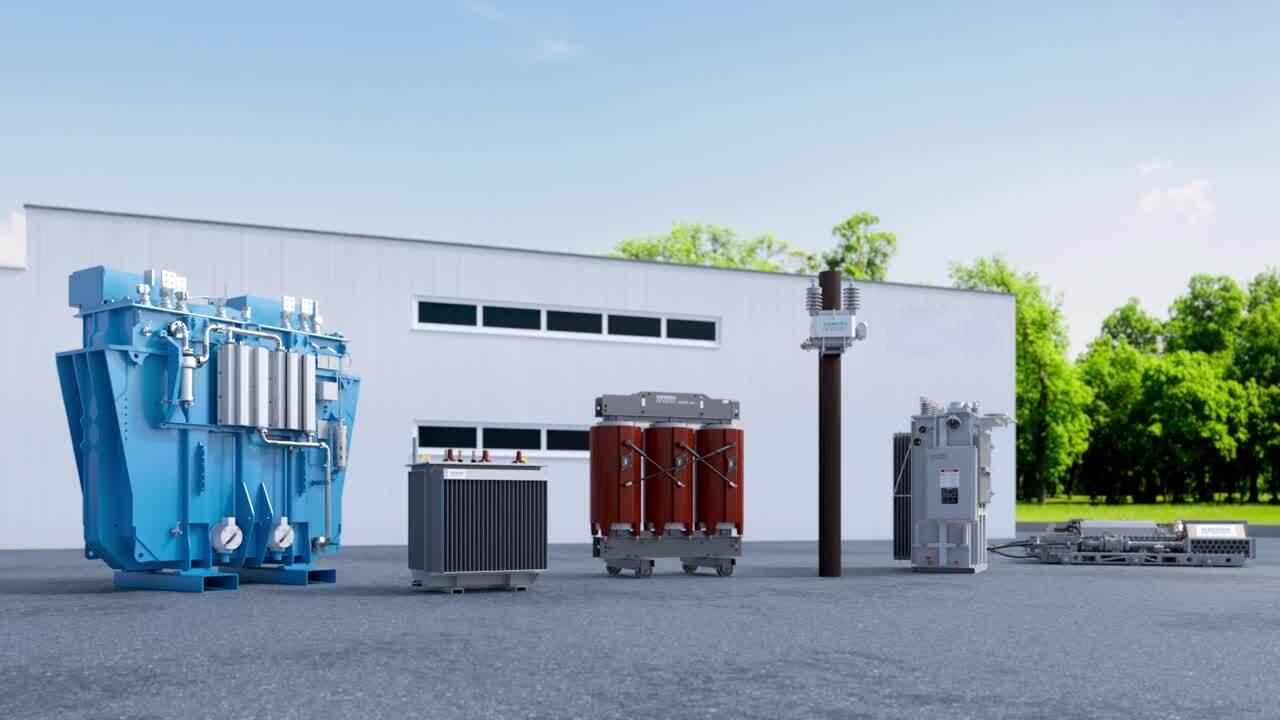
Part 1: Core Concepts: What is a Distribution Transformer?
1.1 Definition and Primary Function
A Distribution Transformer is a static electrical device that performs the final voltage transformation in the electrical power distribution system. Its core function is to step down the primary distribution voltage—typically in the range of 11 kV to 33 kV—to the low voltage levels used by end-consumers, which are 120/240 V for residential applications or 400/230 V for commercial and industrial use in many parts of the world.
So, why do we use a distribution transformer? The reasons are fundamental:
-
Safety: It isolates the high-voltage distribution lines from the low-voltage lines that enter our homes, drastically reducing the risk of electrocution and fire.
-
Voltage Appropriateness: It provides the correct voltage required by standard appliances and machinery.
-
System Management: It allows utilities to manage the distribution network in segments, improving fault isolation and overall grid stability.
1.2 The Fundamental Principle
The operating principle of a distribution transformer is the same as all transformers: electromagnetic induction. An alternating current in the primary winding creates a continuously changing magnetic field in the transformer's core. This changing magnetic field then induces a voltage in the secondary winding. The ratio of the number of turns in the primary winding to the number in the secondary winding determines whether the voltage is stepped up or down.
In the case of a distribution transformer, the secondary winding has fewer turns than the primary, resulting in a lower output voltage. This process is highly efficient, with modern units achieving efficiency levels above 97%.
1.3 What Does It Look Like? (Physical Appearance)
The appearance of a distribution transformer is a direct clue to its type and application:
-
Pole-Mounted: The most recognizable type, these are cylindrical tanks bolted to utility poles, often with a protective cover. They serve a small cluster of homes or a street.
-
Pad-Mounted: These are boxy, green, metal cabinets sitting on concrete slabs at ground level. Common in suburban areas and commercial properties, they are lockable for safety and aesthetics.
-
Underground Transformers: Designed for vaults or manholes, these serve underground distribution systems in dense urban areas.
-
Dry-Type Transformers: Found inside buildings (e.g., high-rises, hospitals, factories), these have exposed cores and windings (encased in resin or vacuum-pressure impregnated) and are designed for indoor safety.
Part 2: Key Differentiators: Distribution vs. Power Transformers
This is one of the most common sources of confusion. While both are based on the same physics, they serve distinctly different roles in the power system.
2.1 The Main Difference (A Detailed Table)
Here’s a clear breakdown in response to "What is the difference between power transformers and distribution transformers?":
| Feature | Power Transformer | Distribution Transformer |
|---|---|---|
| Function | Transmission of bulk power over long distances. | Distribution of power to end-users over short distances. |
| Voltage Level | Very High (≥ 33 kV, up to 800+ kV) | Medium to Low (≤ 33 kV down to 120/240 V) |
| Power Rating | Very High (MVA range) | Lower (kVA to a few MVA) |
| Load | Operates at or near full load consistently. | Experiences highly fluctuating loads (day/night cycles). |
| Efficiency | Maximum efficiency at or near full load. | Designed for high efficiency across a wide load range (good "all-day efficiency"). |
| Placement | Generating stations and transmission substations. | Pole-mounted, pad-mounted, and in distribution substations. |
| Size & Cost | Extremely large and expensive. | Comparatively compact and cost-effective. |
2.2 How to Tell Them Apart
"How can you tell if a transformer is a power or distribution transformer?" A simple rule of thumb: Location and Size.
If you see a massive, complex apparatus behind the high fences of a substation, with large bushings and cooling radiators, it's almost certainly a Power Transformer. If you see a smaller, self-contained unit on a pole or in a green box on your street, it's a Distribution Transformer.
2.3 Distribution Transformer vs. Current Transformer
This is another critical distinction. A Current Transformer (CT) is an instrument transformer. It is not used to power loads. Instead, it is connected in series with a power line to proportionally reduce a high current to a safe, measurable level (typically 1A or 5A) for metering and protection devices. A Distribution Transformer, on the other hand, is a power transformer that directly supplies energy to homes and businesses. They are complementary, not interchangeable.
Part 3: Types and Technology of Distribution Transformers
3.1 How Many Types Are There?
The question "How many types of distribution transformers are there?" can be answered based on different classification methods. The most common is by insulating medium:
-
Oil-Immersed Transformers: The workhorses of outdoor distribution. The core and windings are submerged in insulating oil (mineral oil or increasingly, biodegradable ester oil) which provides both insulation and cooling. They are reliable and cost-effective.
-
Dry-Type Transformers: These use air or solid cast resin as the insulating and cooling medium. They are essential for indoor applications where fire safety is paramount (e.g., high-rises, schools, hospitals) as they eliminate the risk of oil leaks and fires.
3.2 What is a "DP" Transformer?
"Why is the transformer called DP?" DP is a common industry abbreviation for Distribution Pole transformer. When someone refers to a "DP transformer," they are specifically talking about a pole-mounted distribution transformer.
3.3 What is another name for a distribution transformer?
Yes, you might hear them called by other names. The most common alternative is a Service Transformer, as it provides the final service connection to the customer.
Part 4: Performance, Lifespan, and Market Insights
4.1 Lifespan and Durability
"How long does a distribution transformer last?" A well-manufactured and properly maintained distribution transformer has a typical design life of 20 to 30 years. However, many units remain in service for 40 years or more. The actual lifespan is heavily influenced by:
-
Loading: Consistent overloading accelerates thermal aging of the insulation.
-
Maintenance: Regular testing of the insulating oil (for oil-filled units) and visual inspections are crucial for longevity.
-
Environmental Conditions: Exposure to lightning, salt air, pollution, and temperature extremes can shorten its life.
4.2 The Market Landscape
-
Market Size: The global distribution transformer market is substantial and growing, driven by grid modernization, renewable energy integration, and rising electricity demand in developing regions. It was valued at over $20 billion in 2023 and is projected to continue growing steadily.
-
US Market: The U.S. has a vast installed base, with estimates suggesting there are over 40 million distribution transformers in service across the country.
-
Key Players: The market includes global giants like ABB, Siemens, Eaton, and Schneider Electric, as well as specialized regional manufacturers. At YICHOU, we compete in this space by offering a compelling combination of robust engineering, international quality standards (IEC, IEEE), competitive pricing, and responsive customer service. We provide both oil-immersed and dry-type units tailored to our clients' specific needs.
4.3 Cost Analysis
"How much does a distribution transformer cost?" This is a complex question with no single answer, as cost depends on:
-
kVA Rating: A 25 kVA pole-top unit is far less expensive than a 2500 kVA pad-mounted unit.
-
Type: Dry-type transformers are generally more expensive than oil-immersed units of the same rating.
-
Efficiency: Higher efficiency models (e.g., Tier 3) command a premium.
-
Features: On-load tap changers (OLTC) and special coatings add cost.
As a rough guide:
-
A small 25 kVA pole-mounted transformer might cost $1,500 - $3,000.
-
A larger 500 kVA pad-mounted transformer could range from $10,000 - $25,000.
-
A 2500 kVA dry-type transformer for a high-rise building could cost $50,000+.
Part 5: Application and Selection Guide
5.1 How to Select a Distribution Transformer
Selecting the right transformer is critical for project success. Here are the key parameters to consider:
-
kVA Rating: Calculate the total connected and diversified load to determine the required capacity.
-
Primary and Secondary Voltages: Match the system voltages (e.g., 11 kV / 400-230 V).
-
Impedance: A key parameter for short-circuit current calculation and system protection coordination.
-
Insulation Type: Choose oil-immersed for standard outdoor use or dry-type for indoor, high-safety applications.
-
Efficiency Class: Opt for higher efficiency units (like Tier 2 or Tier 3) to reduce lifetime operating costs through energy savings.
-
Installation Environment: Determine if it will be pole-mounted, pad-mounted, or installed indoors.
5.2 Common Applications
Distribution transformers are ubiquitous:
-
Residential: Supplying entire neighborhoods or individual streets.
-
Commercial: Powering shopping malls, office buildings, and data centers.
-
Industrial: Serving as the main service entrance transformer for factories.
-
Renewables: Stepping up voltage from solar farms or wind turbines to connect to the distribution grid.
Comprehensive FAQ Section
-
Q: What are the first types of transformers?
-
A: The first practical transformers were developed in the 1880s by Ottó Bláthy, Miksa Déri, and Károly Zipernowsky. Their "ZBD" model was an early closed-core design that laid the groundwork for all modern distribution and power transformers.
-
-
Q: Do distribution transformers have [oil]?
-
A: Many do, specifically oil-immersed types. However, dry-type transformers do not contain any oil, using air or solid resin for insulation and cooling instead.
-
-
Q: Which type of transformer is most commonly used for power transmission and distribution?
-
A: The two most common types in the grid are Power Transformers for high-voltage transmission and Distribution Transformers for local distribution. They are the essential one-two punch for delivering electricity.
-
-
Q: Where does 70% of US electricity come from?
-
A: The U.S. energy mix is dynamic. While historically reliant on coal and nuclear, the landscape has shifted. As of recent data from the U.S. Energy Information Administration (EIA), natural gas and renewable energy sources (wind, solar, hydro) collectively make up a dominant and growing share of generation, often exceeding 70% in many regions. For the most precise and current data, the EIA website is the best resource.
-
Conclusion: Your Partner in Reliable Power Distribution
The distribution transformer is more than just a component; it is the critical endpoint of the grid, the guarantee that the immense journey of electrical power ends safely and reliably at your doorstep. Choosing the right one is an investment in the stability and efficiency of your electrical system.
In a market filled with options, the decision hinges on finding a partner that delivers not just a product, but quality, reliability, and expert support.
At YICHOU, we are dedicated to being that partner. We engineer our distribution transformers—both oil-immersed and dry-type—to the highest standards of performance and durability. Our focus is on providing tailored solutions that meet your exact specifications, backed by a commitment to customer service that ensures your project's success from initial inquiry to long-term operation.
Ready to power your community, project, or facility with confidence?
.jpg)
Get in Touch with Yichou
- Email us: [email protected]
- Call us/whatsapp: +86 13355741031
- Chat with us: Live chat support available on our website