Introduction: The Unseen Pillar of Modern Civilization
Imagine the intricate web of a modern city: hospitals saving lives, factories humming with production, data centers processing global information, and homes filled with light and comfort. Now, imagine this web going dark. The single point of failure that could lead to such a scenario often lies not with the power plants themselves, but with the silent, steadfast sentinels of the electrical grid: Power Transformers.
These are not the small boxes on utility poles. Those are their cousins, distribution transformers. Power Transformers are the colossal, multi-ton giants of the electrical world, operating behind the scenes in substations and power plants. For engineers, grid operators, and procurement managers, understanding these assets is not an academic exercise—it's critical to ensuring safety, reliability, and financial prudence.
This comprehensive guide is designed to be your definitive resource. We will demystify what a power transformer is, explore its applications, delve into its lifespan and failure modes, and provide a clear framework for selection and procurement. By the end, you will be equipped with the knowledge to make informed decisions about one of the most critical components in any power system.
Part 1: The Fundamentals: What is a Power Transformer?
1.1 Definition and Core Function
At its simplest, a Power Transformer is a static electrical device that transfers electrical energy between two or more circuits through electromagnetic induction. Its primary function is to "step-up" or "step-down" AC voltage levels.
Think of it as the grid's sophisticated traffic control system. Generating stations produce power at a medium voltage (e.g., 11-33 kV). Transmitting this power over long distances at this voltage would be incredibly inefficient due to resistive losses (I²R losses). A Power Transformer at the generation station acts as a "step-up" transformer, dramatically increasing the voltage to extremely high levels (e.g., 138 kV, 230 kV, 500 kV, or even 800 kV and above).
According to the fundamental power equation (P = VI), for a constant power (P), increasing the voltage (V) results in a decrease in the current (I). Since transmission losses are proportional to the square of the current (I²R), even a small reduction in current yields a massive saving in energy loss. This high-voltage, low-current power can then travel hundreds of miles with remarkable efficiency. At the receiving end, near cities and industrial centers, another Power Transformer "steps down" the voltage to lower levels for further distribution.
1.2 AC vs. DC: The Fundamental Principle
A question we often encounter is, "Is a power transformer AC or DC?"
The answer is absolute: Power Transformers operate exclusively on Alternating Current (AC). The principle of electromagnetic induction, which is the very foundation of a transformer's operation, requires a changing magnetic field. Direct Current (DC) is constant and does not create a changing field, so it cannot induce a voltage in the secondary winding. This is why the entire backbone of the world's electrical transmission grid is based on AC. (For DC transmission, complex converter stations are used to change AC to DC and back again).
1.3 What's Inside? The Lifeblood of Insulation and Cooling
Another common query is, "What are power transformers filled with?"
The majority of large power transformers are oil-immersed. They are not just "filled with oil"; they are meticulously engineered systems where the oil serves two critical purposes:
-
Insulation: The oil, typically highly refined mineral oil, is an excellent electrical insulator, preventing arcs and short circuits between the live components.
-
Cooling: As the transformer operates, the core and windings generate heat. The oil circulates, absorbing this heat and transferring it to the radiator fins, where it is dissipated into the atmosphere.
Alternative fluids are gaining traction for specific needs:
-
Silicone Oil: Used for better fire safety.
-
Natural Ester Fluids (Vegetable Oil): Biodegradable, have a higher fire point, and are more environmentally friendly, representing the future of "green" transformers.
For high-risk indoor applications like skyscrapers or tunnels, Dry-Type Transformers are used. These use only air or solid cast resin for insulation and cooling, eliminating the risk of oil fires or leaks entirely.
Part 2: Applications and Types: Where and How Are They Used?
2.1 Where are power transformers used?
The application of power transformers defines the structure of our electrical network:
-
Generating Stations: The first step-up point, connecting generators to the high-voltage transmission grid.
-
Transmission Substations: The hubs of the grid, where power transformers interconnect different transmission lines and step-down voltage for sub-transmission.
-
Receiving Stations: Large industrial plants (e.g., steel mills, chemical plants) and major distribution substations use them as the primary point of connection to the high-voltage grid.
2.2 Why use a power transformer?
The reasons are foundational to a modern society:
-
Efficient Long-Distance Transmission: As explained, they make cross-country power transfer economically viable.
-
Voltage Matching: They ensure voltage is at the correct level for different stages of the grid and for end-use.
-
System Isolation: They provide galvanic isolation between different voltage sections, enhancing safety and stability.
2.3 The Four Major Types of Transformers
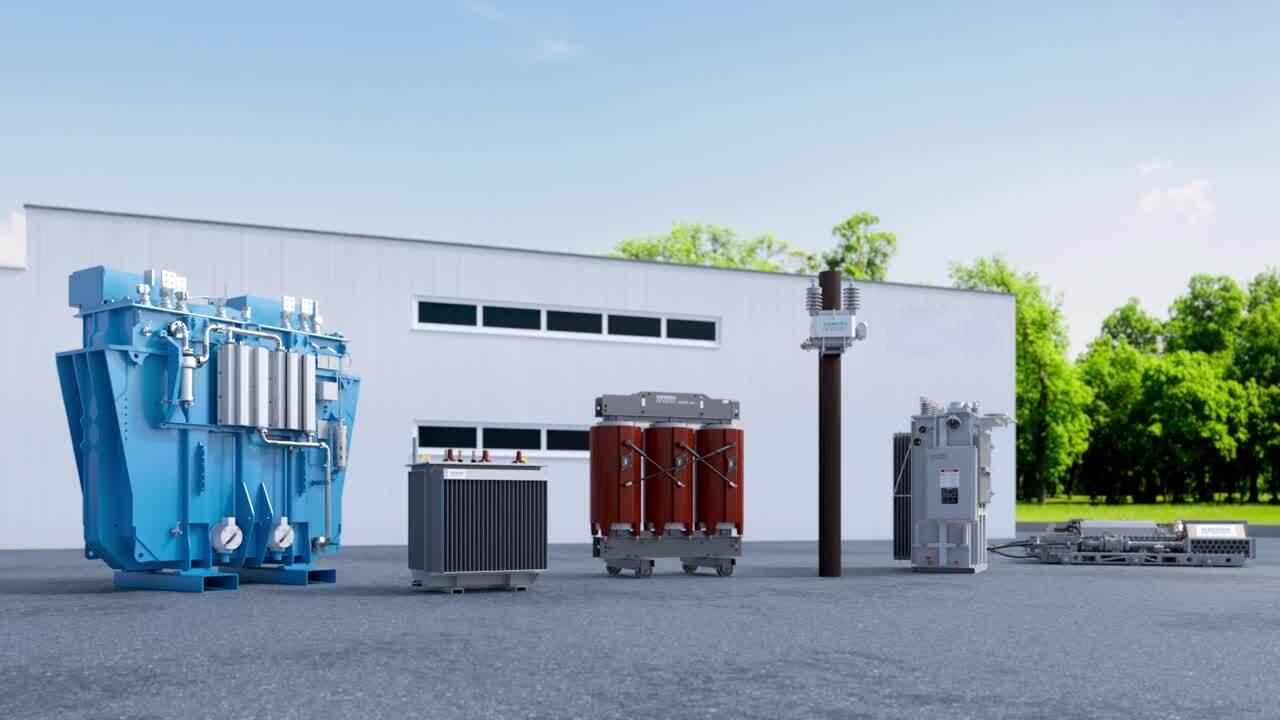
While "Power Transformer" is a specific term, it's helpful to understand its place in the broader transformer family. When people ask, "What are the three most common transformers?" or "What are four types of transformers?", they are typically referring to these:
-
Power Transformers: The focus of this article, used in transmission networks for high-voltage operation (typically ≥ 33 kV).
-
Distribution Transformers: The final link in the chain, stepping down voltage (typically ≤ 33 kV) to the level used by homes and businesses (120/240V, 400/230V).
-
Instrument Transformers: This category includes Current Transformers (CTs) and Voltage Transformers (VTs or PTs). These are not for power transfer but for accurately measuring high currents and voltages for metering, protection, and control systems.
-
Specialty Transformers: This includes auto-transformers (a single winding design), phase-shifting transformers (for controlling power flow), and converter transformers for HVDC links.
.jpg)
Part 3: Performance, Failure, and Lifespan
3.1 What is the lifespan of a power transformer?
This is one of the most critical questions for asset managers. A well-maintained power transformer has a typical design life of 25 to 40 years. However, many units continue to operate reliably for decades beyond this with proper care. The lifespan is not a fixed number; it is a function of:
-
Thermal Aging: The insulation (paper and oil) degrades with heat. Consistent overloading dramatically shortens life.
-
Electrical Stress: Transient overvoltages like lightning strikes or switching surges can damage insulation.
-
Mechanical Stress: Through-fault currents can cause physical movement and deformation of the windings.
-
Maintenance Regime: Regular oil testing, filtration, and bushing inspections are paramount to longevity.
3.2 What happens when a power transformer goes bad?
Failure is rarely sudden. Early symptoms include:
-
Dissolved Gas Analysis (DGA) Shifts: The most reliable predictive tool. Certain gases dissolved in the oil (e.g., Hydrogen, Acetylene, Ethylene) are tell-tale signs of internal faults like arcing, corona, or overheating.
-
Increased Operating Temperature: Indicative of overloading or blocked cooling paths.
-
Audible Abnormalities: Unusual humming, buzzing, or crackling sounds can signal loose components or electrical discharge.
-
Oil Leaks: A primary cause of failure, leading to reduced insulation and overheating.
3.3 What happens when a power transformer blows?
A catastrophic failure—a "blown" transformer—is a dramatic and costly event.
-
Immediate Effects: A violent explosion or fire, often caused by a pressure relief device operating or the tank rupturing due to an internal arc.
-
Consequences:
-
Widespread Power Outage: Can black out entire regions.
-
Environmental Damage: Thousands of gallons of insulating oil can spill, contaminating soil and water.
-
Massive Financial Loss: Includes the cost of the destroyed asset (often millions of dollars), replacement power costs, and fines.
-
Long Lead Time for Replacement: Procuring a new large power transformer can take 12-18 months, leading to prolonged grid instability.
-
3.4 Are old power transformers worth anything?
Yes, even at end-of-life, they hold value.
-
Scrap Value: The core is made of valuable grain-oriented silicon steel, and the windings are made of copper or aluminum.
-
Refurbishment and Resale: Some specialized companies refurbish and resell older units to markets with less demanding specifications.
-
Spare Parts: Bushings, tap-changers, and cooling equipment can be salvaged and sold.
Part 4: A Buyer's Guide: Selection, Cost, and Brands
4.1 How do you choose a transformer?
Selecting a power transformer is a complex process requiring careful consideration of dozens of parameters. Here is a simplified checklist:
-
Rating: Apparent Power (MVA), Primary and Secondary Voltages (kV).
-
Impedance: A critical parameter for short-circuit withstand.
-
Vector Group: Defines the phase relationship between windings.
-
Cooling Class: (e.g., ONAN - Oil Natural Air Natural, ONAF - Oil Natural Air Forced).
-
Tap Changer: Off-circuit or On-load (OLTC) and its range.
-
Losses: No-load loss (core loss) and load loss (copper loss), which impact operating costs.
-
Standards Compliance: IEC, IEEE, ANSI, or customer-specific standards.
4.2 Who makes power transformers? Which company is best for transformers?
The global market for power transformers is served by a mix of multinational giants and highly specialized regional manufacturers. Prominent names include ABB, Siemens, GE Grid Solutions, Toshiba, and Hyosung.
When asking "which is best," the answer is: the best manufacturer is the one that provides the optimal balance of quality, reliability, technical support, and cost-effectiveness for your specific project. At YICHOU, we position ourselves precisely in this space. We may not have the brand recognition of a century-old giant, but we compete fiercely on the quality of our engineering, the robustness of our manufacturing, and our exceptional responsiveness and value. We build transformers that meet and exceed international standards, backed by a customer-centric service model that global corporations often struggle to provide.
4.3 How much do power transformers cost?
The price range is vast, making "How much do power transformers cost?" difficult to answer directly. Key cost drivers are:
-
Power Rating (MVA): The single biggest factor.
-
Voltage Class: Higher voltage requires more extensive insulation and larger clearances.
-
Customization Level: A standard design is far less expensive than a fully custom unit.
-
Efficiency Class: Lower-loss designs (e.g., Tier 2, Tier 3) cost more upfront but save money over time.
As a rough guide:
-
A small 5 MVA unit might cost $50,000 - $100,000.
-
A large 500 MVA transmission transformer can easily cost $2 - $5 million or more.
.jpg)
Part 5: The Future and Industry Insights
5.1 What is the future of power transformers?
The future is intelligent, efficient, and green. Key trends include:
-
Digitalization and Monitoring: Integrated sensors for DGA, temperature, and vibration, feeding data into predictive maintenance platforms ("Digital Twins").
-
Higher Efficiency Standards: Global regulations are pushing for lower loss designs to reduce carbon footprint.
-
Eco-Friendly Fluids: The adoption of biodegradable ester-based insulating fluids will accelerate.
-
Grid Resilience: Designs are evolving to handle the bidirectional power flows introduced by renewable energy sources.
5.2 Where are most power transformers made?
The global supply chain is diverse. Historically, North America and Europe were dominant. Today, a significant portion of the world's manufacturing capacity is in Asia, particularly in China, South Korea, and India, driven by massive domestic demand and competitive costs. However, high-quality manufacturing still thrives in Europe and the Americas.
In response to "Are any transformers made in the USA?" – Yes, several companies, including the larger global players, maintain manufacturing facilities in the US. And to the question, "Does ABB make power transformers?" – Yes, ABB is one of the world's leading manufacturers with a global footprint of factories.
Comprehensive FAQ Section
-
Q: What type of transformer is Optimus?
-
A: A fun one! Optimus Prime is the leader of the Autobots. While he's a "Transformer" in the cinematic sense, if he were an electrical device, his strength, leadership, and versatility would make him a Power Transformer—the core of any system.
-
-
Q: What is a class 3 transformer?
-
A: This is a common point of confusion. A Class 3 transformer refers to a low-voltage, low-power transformer as defined by the National Electrical Code (NEC) for safety circuits (e.g., doorbells, thermostats). It is entirely different from the high-power Power Transformers discussed in this guide.
-
-
Q: How long does it take to replace a transformer on a powerline?
-
A: It depends on the size and location. A small pole-mounted distribution transformer can be replaced by a crew in a few hours. Replacing a large transmission-level Power Transformer is a major project. It can involve heavy cranes, specialized transport, and complex commissioning, often taking several days to weeks from start to finish.
-
-
Q: How much does a small transformer for a home cost?
-
A: This refers to a distribution transformer serving a few houses or a small transformer for a specific purpose. The unit itself might be in the $3,000 - $10,000 range, but installation and utility connection costs can add significantly to the total.
-
Conclusion: Powering Your Decisions with Confidence
The power transformer is more than just equipment; it is a long-term investment in the stability and growth of your electrical infrastructure. The decision to procure one carries weight for decades. In a landscape of global suppliers and complex technical choices, the key is to find a partner you can trust—a partner who sees your project's success as their own.
At YICHOU, we combine engineering excellence with a deep commitment to our clients. We don't just sell transformers; we deliver reliable, efficient, and tailored power solutions backed by unwavering technical support.
Facing a power transformer procurement challenge? Let's talk.
[Contact Our Engineering Experts Today] for a consultation and a competitive quote.
[Request a Full Product Catalog] to see the YICHOU difference.
YICHOU – Engineering the Core of Your Power System.
.jpg)
Get in Touch with Yichou
- Email us: [email protected]
- Call us/whatsapp: +86 13355741031
- Chat with us: Live chat support available on our website