A Practical Procurement Guide for Fleet Managers and Drone Service Providers
What Is the Actual Service Life of a Commercial Drone Smart Battery
The actual service life of a commercial drone smart battery depends on cell chemistry quality, charge and discharge management precision, operating temperature, and storage practices. High-quality LiHV cells paired with intelligent battery management systems typically deliver 300 to 500 full charge cycles before capacity degrades below 80 percent of the original specification. Beyond this threshold, the battery remains functional but may no longer support full mission duration or peak power demands.
Drone fleet operators quickly learn that manufacturer specifications on a datasheet rarely match real-world performance. The primary factors that accelerate battery aging include high-current discharge during heavy-lift operations, exposure to ambient temperatures above 35 degrees Celsius, prolonged storage at full charge, and inconsistent charging protocols across different power sources.
YICHOU addresses battery longevity through rigorous cell grading and matching processes. Each cell used in smart battery packs undergoes internal resistance testing and capacity verification before assembly. Cells are matched within 2 milliohms of internal resistance difference to ensure uniform aging across the parallel and series groups within the pack. This matching precision directly impacts cycle life consistency across entire fleets. When all batteries in a fleet age at similar rates, operators can plan replacement cycles predictably rather than dealing with unexpected failures during critical missions.
Battery management system firmware also plays an essential role. The BMS monitors individual cell voltages, pack temperature, and cumulative charge cycles in real time. If any cell drifts outside the safe operating range by more than 50 millivolts, the BMS triggers a protective cutoff and logs the event. Fleet managers using YICHOU battery analytics can review this historical data to identify usage patterns that may be shortening battery life and adjust operational protocols accordingly.
For applications involving agricultural spraying, infrastructure inspection, or long-range mapping, YICHOU offers LiHV cell configurations that extend usable capacity by approximately 5 to 10 percent over standard LiPo cells of equivalent size and weight. LiHV chemistry increases per-cell charge termination voltage to 4.35 volts compared to the 4.2 volt limit of conventional LiPo cells, achieving higher energy density without compromising cycle life when managed through proper BMS firmware. The trade-off requires compatible chargers and careful voltage monitoring, which YICHOU builds into the full power ecosystem including matched charging hubs.
Why Do Battery Charging Hubs Matter More Than the Batteries Themselves
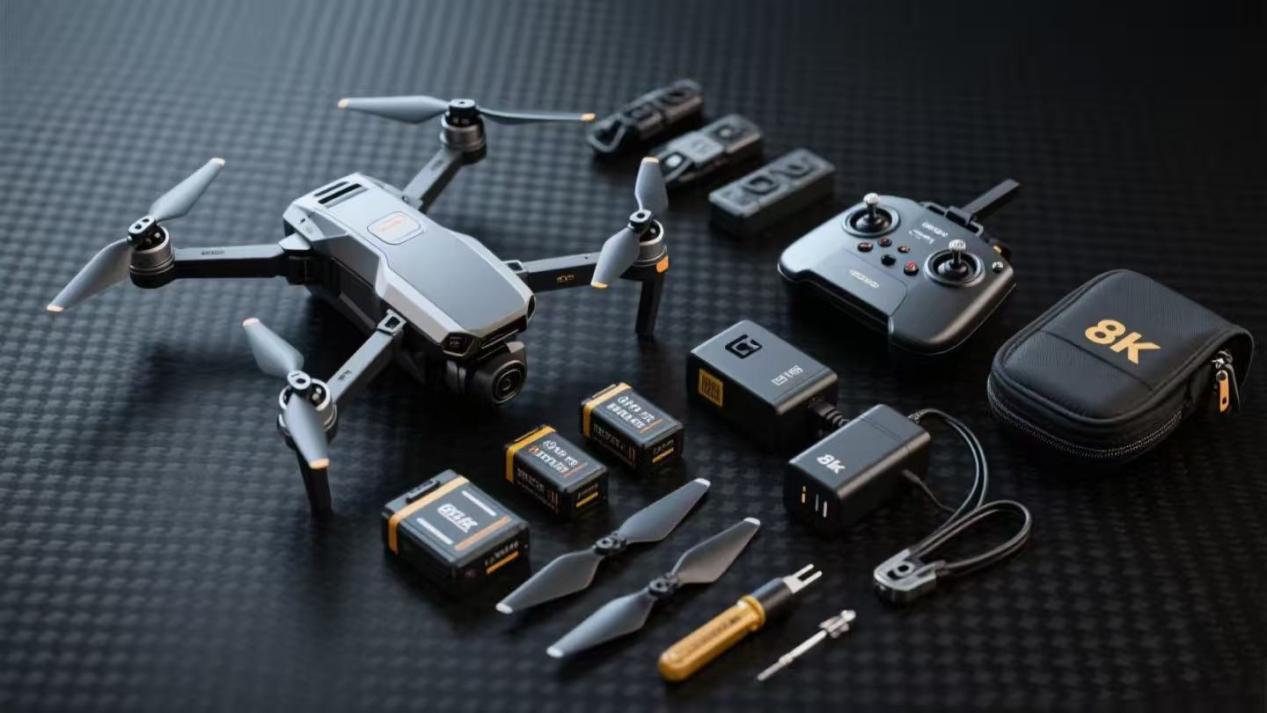
A battery charging hub sequences charging across multiple packs while applying optimized charge profiles per cell chemistry, which protects cell health and reduces operator workload compared to manual single-unit charging. In high-volume commercial drone operations, a properly designed charging hub recovers investment through labor savings and extended battery fleet lifespan.
Field operations that involve multiple drones or rapid redeployment between flights require a coordinated charging strategy. Manual battery rotation introduces several failure modes that compound over time: operators forget to swap packs at the optimal state of charge, different batteries receive inconsistent charging parameters, and packs are sometimes left fully charged overnight which accelerates electrolyte decomposition and increases internal resistance.
YICHOU charging hubs solve these operational bottlenecks through sequential intelligent charging and discharge balancing. The hub recognizes each connected battery via its onboard BMS communication protocol and applies the correct charging algorithm based on cell chemistry, current state of charge, pack temperature, and cumulative cycle count. When multiple batteries are connected simultaneously, the hub prioritizes the pack with the lowest charge state first, then moves through the queue automatically without requiring operator intervention. This eliminates the need for staff to monitor charging progress or manually swap connectors every hour.
The current generation of YICHOU charging hubs supports up to four battery channels with total output power exceeding 400 watts, enabling full recharge of four high-capacity 6S 22000mAh flight packs within 90 to 120 minutes depending on ambient conditions. Each channel operates independently, meaning one battery can charge at full current while another undergoes a maintenance cycle and a third enters storage mode preparation. For operations where time between flights is the limiting factor, this parallel architecture reduces overall turnaround time by approximately 40 percent compared to sequential single-channel charging.
A feature often overlooked during procurement is bidirectional power capability. Certain YICHOU hub models support reverse power delivery, allowing charged batteries to serve as portable power sources for field equipment such as laptops, handheld controllers, or even other batteries in emergency situations. This dual-use functionality reduces the equipment loadout for remote operations where carrying dedicated power banks adds unnecessary weight and logistical complexity.
Charging hubs also contribute to battery lifecycle tracking. Each charging session records start and end voltage, internal resistance trend data, and total energy delivered. When aggregated across a fleet, this telemetry reveals which batteries are degrading faster than expected and which operational environments correlate with accelerated wear. Procurement managers can then adjust purchase quantities and replacement schedules based on actual field data rather than manufacturer claims alone.
How Does the IATA 2025 2026 Lithium Battery Regulation Affect Procurement
The IATA Dangerous Goods Regulations mandate that lithium batteries shipped by air must be transported at a state of charge not exceeding 30 percent of rated capacity, with further documentation and packaging requirements taking effect through 2026. Suppliers lacking the logistics infrastructure to comply with these rules create downstream compliance risks for commercial drone operators who may be unable to receive replacement batteries on schedule.
International Air Transport Association regulations have fundamentally reshaped how drone batteries move through global supply chains. The 30 percent state of charge limitation applies to most lithium battery shipments classified as UN3480 or UN3481, which covers nearly all commercial drone battery packs. This requirement exists because partially charged batteries present lower thermal runaway risk during transport. A battery at 30 percent state of charge contains approximately one-third the stored energy of a fully charged pack, reducing potential incident severity in the unlikely event of a short circuit or mechanical damage.
For procurement teams, the operational implications extend beyond a simple paperwork checkbox. Suppliers must have the capability to discharge batteries to the precise 30 percent threshold before packaging, verify the state of charge through calibrated measurement equipment, and document compliance with batch traceability records. When shipments arrive at destination warehouses, receiving teams must confirm the batteries remain within the allowable charge range before releasing them into operational inventory.
YICHOU maintains compliant logistics protocols across all international shipments of lithium battery products. Battery packs destined for export undergo controlled discharge using calibrated bench equipment, with state of charge verified at the individual pack level rather than through statistical sampling alone. Each shipment includes documentation attesting to pre-shipment state of charge, packing group classification, and compliance with the latest IATA DGR edition applicable to the specific destination country and carrier requirements.
The European Union Battery Regulation adds a second layer of compliance obligations for drone operators serving EU markets. Extended Producer Responsibility provisions that became enforceable in August 2025 require battery manufacturers and importers to register with national collection schemes, fund end-of-life recycling infrastructure, and disclose carbon footprint data for each battery model placed on the market. YICHOU has established registration across major EU member states and provides customers with the compliance documentation required for customs clearance and market surveillance audits.
Beyond regulatory compliance, supply chain resilience has become a core purchasing consideration following disruptions caused by the global pandemic and subsequent geopolitical realignments. Drone manufacturers and fleet operators now evaluate potential battery suppliers based on inventory buffer capacity, production geographic diversification, and the ability to reroute shipments through alternative logistics corridors when primary trade lanes become constrained. YICHOU maintains safety stock of finished battery packs and critical subcomponents at multiple warehouse locations, enabling shipment continuity even when regional logistics networks experience temporary disruption.
The strategic question for procurement managers has evolved beyond which battery offers the best performance-to-cost ratio. The more relevant question is which supplier keeps the drone platform operational, compliant, and eligible for both government and commercial contracts. A battery that cannot be legally transported or imported offers zero operational value regardless of its technical specifications.
Can LiHV Chemistry Extend Flight Time Without Compromising Cycle Life
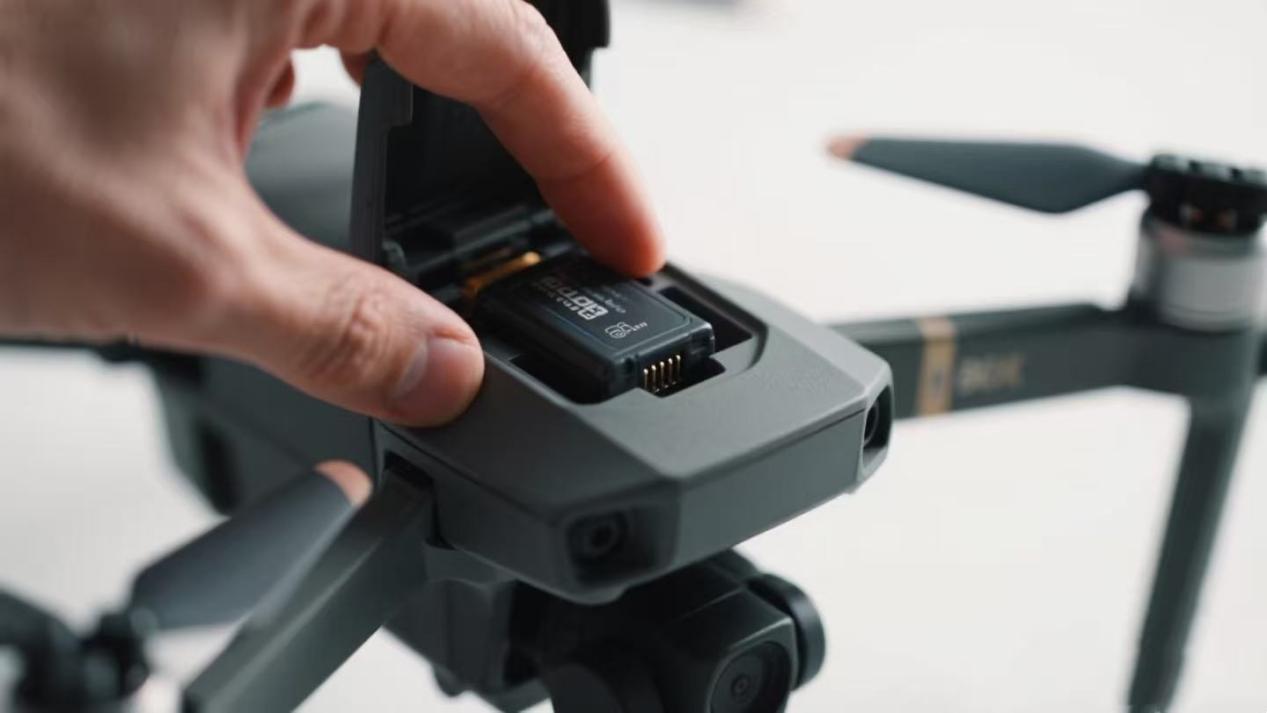
LiHV cells charge to 4.35 volts per cell versus 4.2 volts for standard LiPo cells, delivering approximately 5 to 10 percent more usable energy at the same pack weight without inherently reducing cycle life when managed through properly calibrated charging hardware. The performance benefit materializes most clearly during the first 60 percent of discharge, where higher starting voltage translates to higher motor RPM and sustained thrust.
The decision between LiPo and LiHV cell chemistry represents one of the most consequential choices in drone power system design. Standard lithium polymer batteries operate at a nominal 3.7 volts per cell with a full charge cutoff of 4.2 volts. This voltage profile has been optimized over two decades of consumer electronics and hobby applications, offering predictable performance and broad charger compatibility. LiHV cells, in contrast, modify the cathode material composition to safely accept charging to 4.35 volts while maintaining the same physical dimensions and weight envelope.
The additional 0.15 volts per cell multiplies across series cell counts. A 6S LiHV pack operates at 26.1 volts fully charged compared to 25.2 volts for an equivalent 6S LiPo. This voltage advantage of approximately 3.6 percent translates to higher motor shaft power at any given current draw. For heavy-lift industrial drones that operate near the edge of their thrust-to-weight envelope, even small voltage improvements can extend flight time by meaningful margins.
YICHOU produces both LiPo and LiHV battery configurations, allowing customers to match chemistry to mission requirements rather than accepting a one-size-fits-all approach. For applications where flight time is the primary optimization variable such as long-range linear infrastructure inspection or large-area agricultural mapping LiHV packs offer measurable operational efficiency gains. For applications where battery replacement cost and cycle life consistency take priority over marginal flight time improvements, standard LiPo configurations remain a defensible engineering choice.
The critical factor in LiHV deployment is charger compatibility. Charging a LiHV pack with a standard LiPo charger set to 4.2 volts per cell results in incomplete charging and unused capacity. Conversely, attempting to charge a LiPo pack to 4.35 volts damages the cell and may create thermal runaway conditions. YICHOU charging hubs automatically detect battery chemistry through BMS communication protocols and apply the correct charge termination voltage without requiring operator judgment or manual setting adjustments.
Cycle life degradation patterns differ subtly between the two chemistries. LiHV cells operating near their upper voltage limit experience marginally higher rates of electrolyte oxidation, which over hundreds of cycles manifests as increased internal resistance and reduced usable capacity. YICHOU BMS firmware mitigates this effect by tapering charge current during the final 10 percent of the charge cycle and by monitoring internal resistance trends to identify packs that should be rotated out of high-demand service before failure occurs in flight.
Energy density measured in watt-hours per kilogram continues to improve across both chemistries as manufacturing processes refine electrode coating uniformity and reduce inactive material mass. Current production-grade YICHOU packs achieve energy density in the range of 250 to 280 watt-hours per kilogram depending on capacity tier and cell form factor. Each incremental improvement directly reduces battery weight for a given mission energy requirement or alternatively extends flight duration without increasing takeoff mass.
What Certifications Should a Commercial Drone Battery Supplier Hold
A commercial drone battery supplier serving international markets should hold UN38.3 certification for transport safety, ISO 9001 for quality management systems, CE marking for European market access, UL compliance for North American distribution, and IEC 62133 for portable secondary cell safety standards. Suppliers unable to produce valid certificates for each of these standards expose their customers to customs delays, regulatory fines, and potential liability in the event of an incident.
UN38.3 certification forms the foundation of lithium battery transport compliance. The UN Manual of Tests and Criteria Part III Subsection 38.3 prescribes eight separate test protocols including altitude simulation, thermal cycling, vibration, shock, external short circuit, impact and crush, overcharge, and forced discharge. Each battery model must pass all tests with no leakage, no venting, no disassembly, no rupture, and no fire during or after the test sequence. YICHOU maintains current UN38.3 test reports for all battery models in the commercial product catalog, with re-testing conducted whenever cell supplier changes or manufacturing process modifications occur.
ISO 9001 certification verifies that the supplier operates under documented quality management procedures covering design control, supplier qualification, production process control, nonconforming product handling, and corrective action systems. For battery manufacturing specifically, ISO 9001 provides a framework for ensuring that each production lot meets the same performance and safety specifications as the qualification samples that passed UN38.3 testing. YICHOU maintains ISO 9001 certification with annual surveillance audits conducted by accredited third-party certification bodies.
CE marking indicates conformity with European Union requirements for product safety, electromagnetic compatibility, and environmental protection. For lithium batteries sold into EU markets, CE marking encompasses compliance with the Low Voltage Directive, the Electromagnetic Compatibility Directive, and the Restriction of Hazardous Substances Directive. YICHOU maintains technical construction files and Declaration of Conformity documentation for all battery models shipped to EU destinations.
UL certification for the North American market includes standards such as UL2054 for household and commercial batteries, UL1642 for lithium cells, and UL2089 for battery chargers. UL certification involves ongoing factory surveillance inspections in addition to initial product testing, ensuring that production units continue to match the performance and safety characteristics of the originally certified samples. YICHOU battery products carry UL certification through accredited testing laboratories with quarterly factory audits to maintain listing status.
IEC 62133 specifies requirements and tests for safe operation of portable sealed secondary lithium cells and batteries under intended use and reasonably foreseeable misuse. Compliance with IEC 62133 is a prerequisite for CE marking and is often referenced by other regional certification schemes including China Compulsory Certification and Korea Certification. YICHOU maintains IEC 62133 compliance for all production battery models.
Beyond these baseline certifications, certain markets impose additional requirements. Saudi Arabia mandates SASO certification with specific labeling and energy efficiency requirements. Japan enforces PSE certification through the Electrical Appliance and Material Safety Law. Australia and New Zealand require RCM compliance covering both electrical safety and electromagnetic compatibility. YICHOU maintains awareness of evolving regional certification requirements and provides customers with the necessary compliance documentation to facilitate smooth customs clearance in their target markets.
How Do Portable Power Stations Support Remote Drone Operations
Portable power stations provide field charging capability for drone batteries when grid power is unavailable, with modern lithium iron phosphate units delivering 1000 to 2000 watt-hours of capacity and pure sine wave AC output sufficient to operate multiple charging hubs simultaneously across a full day of flight operations. Power stations also serve as backup energy for communications equipment, laptops, and sensors in remote deployment scenarios.
Field operations in agriculture, construction surveying, wildlife monitoring, and disaster response frequently take place in locations without reliable electrical infrastructure. A drone team may operate from a vehicle parked at a rural field edge, a boat in coastal waters, or a temporary staging area in mountainous terrain. In all these scenarios, the ability to recharge flight batteries without returning to a fixed base determines how many missions can be completed per day and how many personnel must be dedicated to logistics rather than flight operations.
Lithium iron phosphate battery chemistry now dominates the portable power station market due to its combination of cycle life, thermal stability, and cost effectiveness. LiFePO4 cells routinely deliver 3000 to 4000 full charge cycles before capacity degradation reaches 80 percent, compared to 500 to 1000 cycles for conventional lithium-ion chemistries. This longevity makes power stations a capital equipment investment rather than a consumable expense, with operational lifespans measured in years rather than months.
Power station selection for drone operations should consider three primary parameters. First, continuous AC output rating determines how many charging hubs can operate simultaneously. A YICHOU four-bay charging hub drawing approximately 400 watts requires a power station with at least 500 watts of continuous AC output to account for inverter efficiency losses and startup current surge. Second, total energy capacity in watt-hours establishes how many battery charging cycles can be completed before the power station itself requires recharging. Third, recharge speed from vehicle alternators or solar panels dictates how quickly the power station can be replenished between deployment days.
YICHOU collaborates with customers to specify power station configurations matched to their operational tempo and fleet size. An agricultural drone operation flying six to eight missions per day may require 2000 watt-hours of portable power capacity plus a 200-watt solar array to maintain positive energy balance over multi-day remote deployments. A mapping team flying two to three long-endurance flights daily may operate comfortably with 1000 watt-hours and a single vehicle charging connection.
Integration with the broader power ecosystem distinguishes YICHOU from component-level battery suppliers. The same charging hubs that operate from AC grid power can also accept DC input directly from power station regulated outputs or vehicle electrical systems, eliminating the double conversion losses that occur when DC battery energy is inverted to AC only to be rectified back to DC by the charging hub. YICHOU provides guidance on direct DC-DC charging configurations that improve overall energy efficiency by 10 to 15 percent compared to AC pass-through architectures.
What Preventive Maintenance Extends Commercial Drone Battery Fleet Life
Preventive maintenance for commercial drone battery fleets includes storing packs at 3.80 to 3.85 volts per cell when not in active use, performing internal resistance checks every 20 to 30 cycles to identify degrading cells before they affect flight performance, and rotating packs through equal duty cycles to avoid concentrated wear on any single battery unit.
Storage voltage management represents the single most impactful maintenance practice for lithium polymer and LiHV battery longevity. Storing fully charged batteries at 4.2 or 4.35 volts per cell accelerates electrolyte decomposition and increases internal resistance approximately 2 to 3 times faster than storage at nominal 3.8 volts per cell. YICHOU charging hubs include a storage mode function that automatically charges or discharges connected batteries to the optimal storage voltage, then maintains that voltage with periodic micro-charging cycles that compensate for self-discharge over extended storage periods.
Internal resistance measurement provides a non-invasive window into battery health that correlates strongly with remaining useful life. As lithium cells age, internal resistance gradually increases due to solid electrolyte interface layer growth on the anode and cathode material degradation. Higher internal resistance manifests as increased voltage sag under load, reduced effective capacity during high-current discharge, and elevated operating temperatures that further accelerate aging. YICHOU recommends measuring internal resistance using the battery management system telemetry or a dedicated battery analyzer after every 20 to 30 charge cycles. Batteries exhibiting internal resistance greater than 150 percent of baseline values should be flagged for reduced-duty applications or retired from primary flight service.
Physical inspection protocols should examine battery packs for swelling or deformation, which indicates gas generation from electrolyte decomposition and represents an early warning of impending cell failure. Connector pins should be checked for corrosion, debris, or mechanical wear that could increase contact resistance and cause local heating during high-current discharge. Balance leads and main power cables should be inspected for insulation damage or conductor fatigue at stress points near connectors.
Cycle rotation discipline ensures that no single battery accumulates disproportionate wear while other packs remain underutilized. In a fleet with six active flight packs, YICHOU recommends logging each battery flight cycle count and actively rotating packs through the flight schedule to maintain similar usage levels across the fleet. This practice simplifies replacement planning because all packs approach their end-of-life threshold at roughly the same time, enabling batch procurement with volume pricing advantages and consistent logistics scheduling.
Temperature management during charging and discharging significantly influences cycle life. Charging lithium batteries at temperatures below 5 degrees Celsius or above 40 degrees Celsius accelerates degradation and may create unsafe operating conditions. YICHOU battery management systems include temperature sensors that limit or prevent charging when cell temperatures fall outside the safe operating window, but operators should also avoid exposing battery packs to direct sunlight in hot environments or allowing them to reach thermal equilibrium with cold-soaked vehicles before initiating charge cycles.
Recordkeeping practices that capture cycle count, internal resistance trends, and capacity fade measurements for each battery enable data-driven fleet management decisions. YICHOU provides battery analytics tools that aggregate this information across entire fleets, allowing procurement managers to forecast replacement requirements months in advance and adjust capital expenditure budgets accordingly. This visibility transforms battery management from a reactive process driven by unexpected failures to a proactive process based on empirical performance data.
Frequently Asked Questions About Commercial Drone Battery Procurement
What is the minimum order quantity for custom-configured smart battery packs from YICHOU
YICHOU accepts custom battery configuration orders starting at 50 units per design variant. Lower minimum quantities apply to standard catalog products, with volume pricing tiers beginning at 100 units per order.
Can YICHOU design battery packs to match specific dimensional constraints from our drone airframe
Yes. YICHOU provides custom mechanical design services based on customer-provided CAD models, STEP files, or physical dimension specifications. Custom enclosure tooling requires minimum order quantities appropriate to the tooling amortization schedule.
What is the typical lead time for production quantities of smart batteries
Standard catalog products ship within 7 to 10 working days from confirmed purchase order and payment receipt. Custom configuration orders typically require 4 to 6 weeks for design finalization, material procurement, and production scheduling.
Does YICHOU provide battery management system firmware customization
Yes. BMS communication protocols, protection threshold parameters, and telemetry reporting formats can be customized to match customer platform requirements. Firmware customization is included with custom battery development projects.
How does YICHOU handle warranty claims for commercial battery products
YICHOU provides a 12-month warranty covering manufacturing defects and premature capacity degradation exceeding 20 percent within the first 100 charge cycles. Warranty claims require return of the affected battery for failure analysis and replacement processing.
What shipping methods are available for international battery orders
YICHOU ships lithium batteries via air freight under IATA Section II and Section IB provisions depending on pack watt-hour rating, or via ocean freight for large-volume orders where transit time permits. Dangerous goods documentation and state of charge compliance are included with all shipments.
Can YICHOU supply batteries compliant with US NDAA procurement restrictions
YICHOU offers battery configurations using cells from supply chains that meet current US Department of Defense procurement guidelines for unmanned aircraft systems. Customers should specify NDAA compliance requirements during quotation to ensure appropriate component sourcing.
Does YICHOU offer sample quantities for evaluation before production orders
Yes. Evaluation samples are available for standard catalog products and for custom configurations after design approval. Sample pricing reflects the non-recurring engineering and low-volume production costs associated with small-quantity manufacturing.
What safety certifications are available for YICHOU charging hubs
YICHOU charging hubs carry CE, FCC, and UL certification for target markets. Additional regional certifications including UKCA and RCM are available based on customer destination requirements.
.jpg)
Get Quote
- Email us: [email protected]
- Call us/whatsapp: +86 13355741031
- Chat with us: Live chat support available on our website