Why Must Procurement Strategies for Specialized UAV Payloads and Compliance Accessories Undergo Fundamental Revision?
The global agricultural spraying UAV market is projected to reach USD 3.767 billion in 2026 and expand to USD 7.009 billion by 2033 at a compound annual growth rate of 9.27 percent. The counter‑UAV market, valued at USD 3.11 billion in 2025, is forecast to grow to USD 3.88 billion in 2026 and to USD 16.45 billion by 2034 at a CAGR of 19.79 percent. Demand for UAV parachute recovery systems has reached an all‑time high driven by new EASA and FAA regulatory mandates. These figures indicate that the global unmanned aerial vehicle industry is transitioning from a phase of mere flight capability to one of operational utility. For overseas procurement directors and research and development engineers, payload systems are no longer ancillary accessories but core determinants of operational legality, mission efficiency, and return on capital investment. YICHOU, as a specialized manufacturer of UAV‑dedicated payloads and safety accessories, has developed a comprehensive solution framework addressing the five most critical pain points encountered during procurement: inadequate precision, unverifiable reliability, missing compliance certifications, supply chain disruptions, and delayed technology refresh cycles.
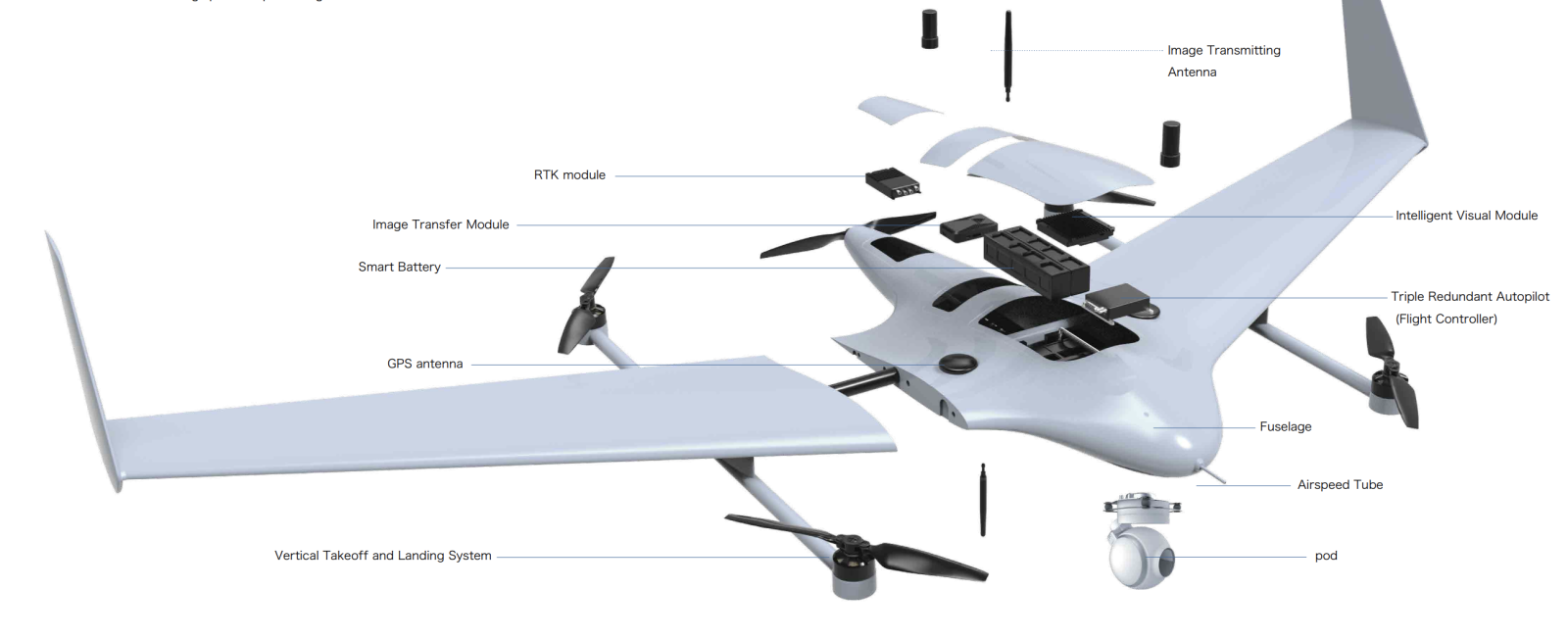
Agricultural Spraying Systems: How Does One Quantify the Actual Impact of Spray Precision on Per‑Acre Operating Cost?
Spray precision directly determines chemical consumption per unit area, thereby governing per‑acre operating expenditure. A reduction in drift rate by a single percentage point lowers pesticide cost by approximately two to three United States dollars per hectare while concurrently mitigating environmental contamination risk and regulatory compliance exposure. The performance characteristics of a high‑precision spraying system are contingent upon nozzle design, droplet size spectrum, volumetric flow control accuracy, and integration with the flight control architecture.
YICHOU supplies agricultural spraying payloads to global clientele employing centrifugal atomization technology in conjunction with a dual‑channel flow regulation architecture. Nozzle components are precision‑machined from medical‑grade 316L stainless steel on five‑axis CNC equipment, yielding micro‑metric flow channels that enable controllable droplet size distributions spanning sixty to four hundred micrometers. The flow control module implements a proportional‑integral‑derivative algorithm for real‑time closed‑loop regulation, achieving a response time within one hundred milliseconds and limiting the coefficient of variation to below five percent across application rates ranging from ten to fifty liters per hectare. Each one‑percent deviation in volumetric flow accuracy translates into approximately zero point eight zero United States dollars of incremental chemical input per acre; deployment of a high‑fidelity payload system thus reduces seasonal chemical expenditure by six to twelve dollars per acre.
For procurement teams, evaluation of spray precision should concentrate on three quantifiable metrics: drift rate below five percent as determined per ASTM E2798 methodology, volumetric coefficient of variation below five percent, and droplet size modulation coverage from sixty to four hundred micrometers. YICHOU furnishes every client with third‑party laboratory test reports substantiating the aforementioned parameters, thereby ensuring that sourcing decisions rest upon verifiable empirical data.
Robotic Manipulators and Precision Task Payloads: How Is the Structural Integrity of Lightweight Manipulators Validated Under High‑Frequency Operational Duty Cycles?
The structural reliability of lightweight UAV‑mounted manipulators subjected to high‑frequency duty cycles is governed by material selection, joint servomechanism precision, vibration attenuation algorithms, and fatigue life substantiation. Procurement stakeholders should scrutinize cycle‑endurance test data, repeatable positioning accuracy, and torque degradation profiles under extreme environmental conditions.
YICHOU manufactures UAV‑dedicated manipulator payloads incorporating carbon‑fiber‑reinforced polymer airframe members mated to aerospace‑grade 7075‑T6 aluminum alloy joint assemblies. The carbon‑fiber‑reinforced polymer exhibits a density of one point six grams per cubic centimeter and a tensile strength of one thousand eight hundred megapascals, enabling a three‑kilogram useful load capacity within a structural self‑mass of one point five kilograms. The joint servo architecture employs harmonic drive reducers coupled with brushless direct‑current motors, achieving repeatable positioning accuracy of zero point zero five millimeters, a specification requisite for contact‑based inspection, elevated sampling, and fine‑manipulation mission profiles.
Regarding structural reliability substantiation, every manipulator module undergoes five thousand full‑load operational cycles prior to factory release. The test environment simulates thermal excursions from zero to fifty degrees Celsius and relative humidity ranging from ten to ninety percent. Post‑test metrological inspection conducted on a coordinate measuring machine confirms that permissible wear remains below zero point three percent of initial dimensional values. Accelerated life testing indicates a design service life exceeding two thousand flight hours. YICHOU advises clients to require suppliers to furnish complete cycle‑test documentation during the acceptance phase and to stipulate post‑fifty‑deployment repeatable positioning accuracy as a contractual acceptance criterion. Furthermore, YICHOU provides STEP‑format three‑dimensional models to facilitate mechanical interface compatibility validation and dynamic simulation analysis during the preliminary procurement stage.
Parachute Recovery Systems and Obstacle Avoidance Modules: Which Prescriptive Compliance Requirements Do Prevailing Global Regulatory Standards Impose on UAV Safety Accessories?
Prevailing global regulatory frameworks mandate that UAV safety accessories satisfy the parachute deployment reliability criteria set forth in EASA MoC‑2511, the design and testing provisions of ASTM F3322, and the lifecycle traceability stipulations of Civil Aviation Administration of China MH/T 6140‑2026. Procurement entities must verify that accessories possess valid third‑party certifications and test documentation.
The three principal international standards governing UAV safety impose distinct yet complementary prescriptive obligations. ASTM F3322‑24 defines design, manufacturing, and testing requirements for parachute recovery systems, stipulating that such systems must reduce impact energy during loss of nominal flight stability and that test reports shall be issued by independent third‑party laboratories and made publicly accessible. EASA MoC‑2511, functioning as a compliance criterion within the Specific Operations Risk Assessment methodology, mandates autonomous deployment capability and restricts kinetic energy upon ground impact to levels permissible for overflight of personnel, with deployment reliability substantiated through multi‑scenario empirical testing. Civil Aviation Administration of China MH/T 6140‑2026, effective as of February 1, 2026, introduces the concept of a Responsible Entity, extending accountability to the parachute system designer and manufacturer, the UAV airframe integrator, and the operator, thereby establishing a lifecycle chain of responsibility and requiring preservation of critical data including production date, serial number, and design modification records.
Compliance stipulations for obstacle avoidance modules are delineated jointly by ISO 21384‑3 and the United States Federal Aviation Administration Remote Identification rule. Core performance benchmarks encompass three hundred sixty‑degree sensor coverage, obstacle detection range not less than thirty meters, and obstacle recognition rate at ten‑meter standoff distance not lower than ninety‑five percent. YICHOU safety compliance accessories encompass all aforementioned certification requirements. The company’s parachute recovery systems operate on a ballistic deployment principle, achieving full canopy inflation within zero point five seconds of activation and reducing terminal velocity to less than six meters per second. All system components fully conform to the ASTM F3322‑24 test matrix and the deployment reliability metrics of EASA MoC‑2511. The obstacle avoidance module employs a sensor‑fusion architecture integrating millimeter‑wave radar and stereoscopic vision, enabling centimeter‑grade collision avoidance in Global Positioning System‑denied environments. Each system shipment includes a third‑party certification dossier and a unique traceability identifier, through which clients may query batch‑specific design change records, manufacturing date, and inspection reports via the online traceability portal.
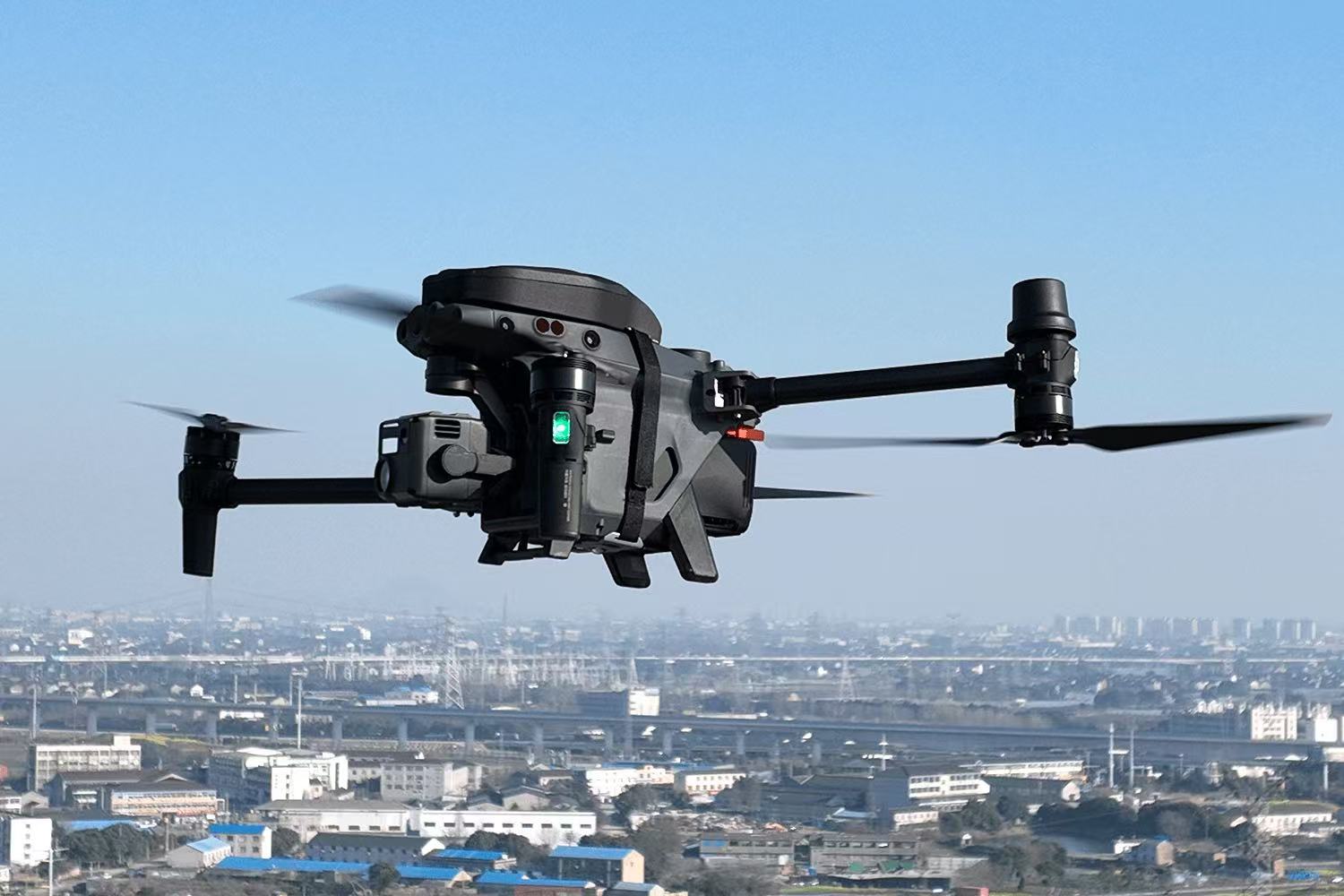
Counter‑UAV Equipment Procurement: How Do Procurement Teams Ascertain the Optimal Trade‑Off Point Between Detection Recognition Rate and False Alarm Rate?
The equilibrium between detection recognition rate and false alarm rate in counter‑UAV systems is determined by the confidence threshold settings within the multi‑sensor fusion framework. A higher recognition rate necessitates a lower threshold, which consequently admits elevated levels of spurious noise‑induced alarms, whereas a lower false alarm rate compels a higher threshold that may compromise detectability of low‑observable targets. The optimal operating point must be calibrated via receiver operating characteristic curve analysis specific to the intended deployment environment.
The global counter‑UAV market is forecast to expand from USD two point nine seven billion in 2025 to USD twenty‑six point two six billion by 2034, representing a compound annual growth rate of twenty‑seven point five two percent. Procurement demand is transitioning rapidly from governmental and defense applications to civil aviation infrastructure, energy installations, and expansive commercial complexes. YICHOU provides security service providers and infrastructure operators with multi‑layered counter‑UAV solutions compliant with international electromagnetic compatibility standards, delivering detection radii spanning five hundred meters to five kilometers. The system comprises a radio frequency spectrum monitoring module, a radar detection module, and an electro‑optical tracking module. The spectrum monitoring module covers a frequency range from twenty megahertz to six gigahertz and employs a software‑defined radio architecture capable of real‑time demodulation of proprietary protocols employed by major original equipment manufacturers including DJI and Autel, thereby enabling frequency‑hopping signal tracking. The phased‑array radar module achieves a recognition accuracy of ninety‑two percent against targets possessing a radar cross‑section of zero point zero one square meter, with a detection radius extending to eight kilometers. The multi‑source fusion algorithm integrates radar, electro‑optical, and spectral intelligence data, completing the cycle from target acquisition to countermeasure initiation within three seconds.
For procurement teams, the essential methodological approach to evaluating counter‑UAV systems entails requiring the supplier to furnish confusion matrices and receiver operating characteristic curves derived from site‑specific deployment trials. YICHOU offers all prospective clients the opportunity for pre‑deployment field testing; a minimum seventy‑two‑hour data‑acquisition period in the actual operational environment yields a comprehensive assessment report encompassing detection rate, false alarm rate, and response latency metrics. Following deployment, the system undergoes monthly online performance validation to ensure sustained model accuracy as new aircraft protocols emerge.
Custom Payload Development: How Do Manufacturers Possessing Deep Customization Capabilities Satisfy Non‑Standard Requirements While Maintaining Cost Containment?
Manufacturers endowed with substantive customization competencies satisfy non‑standard requirements within controlled cost parameters through modular platform architectures and standardized interface definitions. YICHOU maps approximately eighty percent of client‑specific customization requests to assemblies of standardized functional modules, thereby compressing the bespoke development cycle to six to eight weeks while furnishing complete STEP‑format engineering data packages, technical data packages, and test documentation.
Since 2015 YICHOU has delivered over two hundred custom payload development projects to a global client base, spanning agricultural spraying systems, robotic manipulators, aerial samplers, hyperspectral imaging gimbals, and tethered power supply modules. The foundation of the company’s customization methodology rests upon a modular platform architecture that decomposes payload systems into five discrete functional strata: the mounting interface layer, the power management module, the flight‑control communication module, the mission‑execution module, and the condition‑monitoring module. The mounting interface layer incorporates a quick‑release mechanism enabling payload substitution within five seconds while preserving repeatable positioning accuracy of zero point one millimeter. The power management module accommodates a wide input voltage range from twelve to forty‑eight volts direct current, ensuring compatibility with the power distribution buses of all prevalent UAV platforms. The flight‑control communication module exchanges attitude telemetry, state‑of‑charge data, and mission status information with the flight controller via Controller Area Network bus or MAVLink protocol. The mission‑execution module is instantiated by selecting from an existing library of functional primitives, with adaptation engineering applied as required. The condition‑monitoring module continuously logs sensor telemetry and initiates tiered protective responses upon detection of anomalous operating states.
For non‑standard payloads requiring de novo engineering, YICHOU engineering teams first perform requirements decomposition and feasibility analysis, producing a functional specification document, an interface control document, and a preliminary structural concept. Following client approval, the detailed design phase commences, employing SolidWorks for three‑dimensional modeling and finite element analysis. Prototype fabrication leverages five‑axis CNC machining centers for single‑setup completion of critical structural components, augmented by additive manufacturing for rapid iteration of non‑load‑bearing elements. Prototype testing encompasses electromagnetic compatibility, vibration exposure, thermal cycling, salt fog exposure, and ingress protection verification; all test data are archived and transferred to the client concurrently with product shipment. During the production ramp‑up phase, a lean manufacturing protocol is implemented, comprising first‑article inspection, in‑process sampling, and final‑article comprehensive testing for each production lot. For clients placing substantial volume orders, YICHOU extends tiered pricing arrangements wherein initial non‑recurring engineering charges are calculated independently, and expenditures associated with production tooling and fixturing are fully rebated upon attainment of contractually stipulated cumulative procurement quantities. This commercial structure confines the incremental unit cost of customized procurement to a premium of fifteen to thirty percent relative to standard catalog offerings for long‑term clients.
Supply Chain Stability and Lead Time Management: How Can One Mitigate the Impact of Geopolitical Volatility and Trade Policy Fluctuations on Procurement Deliveries?
Mitigation of supply chain disruption risk relies fundamentally upon the establishment of geographically diversified manufacturing capabilities, the maintenance of safety stock for critical components, and the strategic positioning of global logistics nodes. YICHOU employs a dual‑site manufacturing configuration encompassing domestic and international production facilities, a ninety‑day safety stock policy, and a cross‑regional distribution network, thereby limiting the adverse effect of policy‑driven interruptions on delivery lead times to a range of seven to ten days.
In the global trade environment prevailing since 2025, the United States has imposed incremental tariffs on Chinese‑origin UAV‑related products, while the European Union has intensified scrutiny of imported UAV accessories under the updated Conformité Européenne certification regime. YICHOU supply chain management maintains a geopolitical risk early‑warning function, conducting weekly surveillance of tariff adjustments, anti‑dumping investigations, and export control list modifications in target markets. The manufacturing footprint comprises two facilities: the primary plant located in Ningbo, Zhejiang Province, and a secondary facility situated in Haiphong, Vietnam. Both installations operate under an identical quality management system, adhere to a unified material coding schema, and follow congruent production process specifications. The Ningbo facility predominantly services clients in the Asia‑Pacific and Middle East regions, whereas the Haiphong plant addresses demand from North American and European markets. The Vietnamese facility has attained ISO 9001 certification and AS9100D aerospace quality management system accreditation and has successfully undergone rules‑of‑origin verification, qualifying for preferential tariff treatment under the Regional Comprehensive Economic Partnership framework.
Regarding critical component safety stock, YICHOU maintains a rolling inventory of not less than ninety days for four categories of material: semiconductors, actuators and motors, sensor suites, and high‑performance composite precursors. Inventory data are synchronized in real time with the enterprise resource planning system, automatically triggering replenishment orders when stock levels breach predetermined safety thresholds. Supplier management adheres to a one‑primary‑two‑alternate strategy, whereby at least three qualified vendors remain in active commercial relationship for each critical material class. In the domain of global logistics, YICHOU has established overseas warehousing facilities in Los Angeles, United States; Frankfurt, Germany; and Tokyo, Japan, enabling dispatch of standard catalog items within twenty‑four hours of order placement. Bulk procurement orders are fulfilled via a combination of maritime and air freight modalities; for instance, a forty‑foot equivalent unit container dispatched from Ningbo Port reaches a client warehouse in Los Angeles within twenty‑five days of sailing plus three days for port clearance, whereas expedited replenishment via air freight compresses the total transit interval to seven days.
For strategic clients with annual procurement volumes exceeding five hundred thousand United States dollars, YICHOU offers vendor‑managed inventory services, establishing dedicated warehousing zones proximate to client facilities. Title to consigned inventory transfers only upon withdrawal for production consumption, thereby enabling clients to optimize working capital metrics and inventory turnover ratios.
Cost Control and Lifecycle Management: How Does One Accurately Compute the Five‑Year Total Cost of Ownership for UAV Payload Systems?
The five‑year total cost of ownership comprises five constituent elements: initial procurement outlay, annual maintenance expenditures, consumable spare part consumption, upgrade and modification costs, and end‑of‑life disposal charges. YICHOU payload systems constrain five‑year total cost of ownership to a range of two point zero to two point five times the initial acquisition price, a value notably lower than the industry benchmark of three point zero to three point five times.
Procurement stakeholders evaluating total cost of ownership should focus on five cost categories: initial procurement outlay (representing approximately forty to fifty percent of total cost of ownership), annual maintenance expenditure (quarterly system calibration and sensor cleaning, averaging eight to twelve percent of procurement price per annum), consumable spare part consumption (approximately fifteen to twenty percent of procurement price), upgrade and modification costs (approximately ten to fifteen percent of procurement price), and end‑of‑life disposal charges (approximately five percent). YICHOU reduces client total cost of ownership through several deliberate measures: extension of maintenance intervals to semi‑annual cadence, lowering annual maintenance cost to five to eight percent of procurement price; provision of perpetual complimentary firmware upgrades, with new functionalities deployed via over‑the‑air updates; transparent pricing of critical spare parts augmented by volume discount structures; and a core‑component trade‑in program that credits ten to fifteen percent of replacement procurement value for returned assemblies.
YICHOU additionally offers a Device‑as‑a‑Service commercial model wherein clients remit a fixed monthly service fee in exchange for the complete hardware suite, software licenses, maintenance coverage, and annual technology refresh. Upon service contract expiration, clients may elect to renew the agreement, purchase the equipment outright, or exchange the deployed units for the latest model iteration. For clients exhibiting pronounced seasonal or intermittent operational tempo, the Device‑as‑a‑Service approach obviates substantial capital asset expenditures and transfers operational risk to the service provider.
Frequently Asked Questions
May YICHOU fabricate custom three‑dimensional mesh‑structured titanium alloy components based on client‑supplied STEP files?
Yes. YICHOU undertakes custom fabrication of three‑dimensional mesh structures based on client‑furnished STEP files, with material options encompassing titanium alloys, aluminum alloys, and stainless steels. Machining tolerance is held to plus or minus zero point zero five millimeters, and custom project delivery intervals range from six to eight weeks.
Does the YICHOU parachute recovery system hold EASA MoC‑2511 compliance certification?
Yes. The YICHOU parachute recovery system has successfully completed EASA MoC‑2511 compliance testing, demonstrating deployment reliability exceeding ninety‑nine percent and terminal velocity below six meters per second. Deliveries include third‑party certification documentation and a unique product traceability identifier.
What is the minimum order quantity for agricultural spraying payload systems, and what is the associated lead time?
For standard catalog items, the minimum order quantity is ten units, with a delivery lead time of fifteen business days. For custom‑developed projects, the minimum order quantity is fifty units, with an eight‑week delivery interval. Unit pricing scales downward in tiered fashion as cumulative procurement volume increases.
Is the counter‑UAV system interoperable with existing security management platforms?
Yes. The system provides a standard Representational State Transfer application programming interface, facilitating integration with prevalent security management platforms. Additionally, a software development kit supporting both Windows and Linux environments is available for secondary development initiatives.
Does YICHOU offer a sample evaluation program?
Yes. Clients may apply for a thirty‑day complimentary sample evaluation period. YICHOU bears the cost of round‑trip logistics and assigns a dedicated technical support engineer to oversee the evaluation process. Upon conclusion of the trial period and subsequent purchase commitment, sample freight charges may be applied as a credit against the procurement invoice.
.jpg)
Get Quote
- Email us: [email protected]
- Call us/whatsapp: +86 13355741031
- Chat with us: Live chat support available on our website