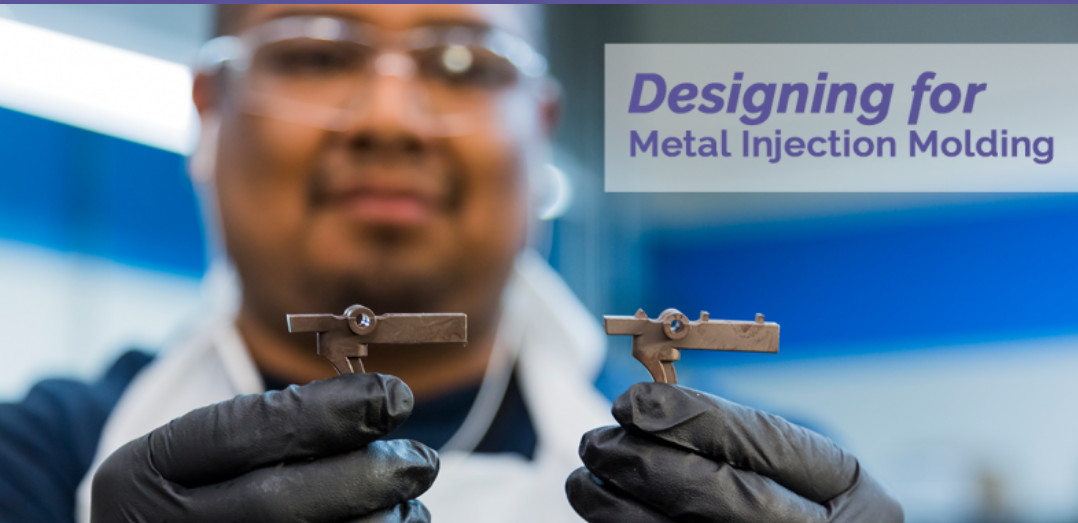
1. Introduction: Why Stainless Steel Dominates MIM
Which MIM material offers the best balance of corrosion resistance, strength, and cost? For a vast majority of precision engineering challenges across industries, the answer is unequivocally stainless steel.
Metal Injection Molding (MIM) has revolutionized the manufacturing of complex, high-volume metal components. By blending the design freedom of plastic injection molding with the strength and integrity of wrought metals, MIM produces near-net-shape parts with exceptional properties. Among the myriad of materials compatible with the MIM process, stainless steel alloys stand as the undisputed leaders, accounting for the largest share of global MIM production.
Their dominance is no accident. Stainless steels for MIM deliver an unparalleled synergy of critical attributes: excellent corrosion resistance, good mechanical strength, biocompatibility, and relative affordability. From the intricate gears in a smartwatch to the life-critical components of a surgical implant, MIM stainless steel provides a solution that traditional machining, casting, or stamping often cannot match in terms of cost, complexity, or consistency.
This ultimate guide will delve deep into the world of MIM stainless steel. We will explore the popular grades, their properties and advantages, key design principles, top applications across sectors, a detailed cost analysis, and a look at future trends. By the end, you'll have a comprehensive understanding of why and how MIM stainless steel should be your go-to for precision components.
2. Popular MIM Stainless Steel Grades Explained
Choosing the right stainless steel grade is paramount to balancing performance, environment, and budget. Here are the workhorses of the MIM industry.
2.1 316L Stainless Steel: The Corrosion-Resistant Champion
316L is the most widely used MIM stainless steel, renowned for its exceptional corrosion resistance, particularly against chlorides and acids. Its low carbon content ("L" denotes low carbon) minimizes sensitization (chromium carbide precipitation) during sintering, preserving its corrosion-fighting properties. It is also biocompatible (meeting standards like ISO 10993 and USP Class VI), exhibits non-magnetic behavior when properly sintered, and offers good toughness and ductility.
Primary Applications:
-
Medical & Dental Implants: Bone plates, orthopedic screws, dental brackets, and surgical tool components.
-
Marine & Chemical Equipment: Valves, pump impellers, and fittings exposed to seawater or aggressive chemicals.
-
Food & Beverage Processing: Nozzles, filters, and machinery parts requiring strict hygiene and easy cleanability.
-
Consumer Electronics: Watch cases, hinges, and internal components where a premium finish is required.
Typical Mechanical Properties Data Sheet:
-
Density: >7.6 g/cm³ (≥98% of theoretical density)
-
Tensile Strength: 500 - 550 MPa
-
Yield Strength (0.2% Offset): 200 - 250 MPa
-
Elongation: 40 - 50%
-
Hardness: 70 - 80 HRB
2.2 17-4PH Stainless Steel: The High-Strength Performer
17-4PH (also known as grade 630) is a precipitation-hardenable martensitic stainless steel. Its defining advantage is the ability to achieve very high strength and hardness through a relatively simple low-temperature heat treatment (aging) conducted after the sintering process. It maintains good corrosion resistance, though typically not at the level of 316L.
Key Comparison with 316L: The primary trade-off is strength versus ultimate corrosion resistance. 17-4PH can achieve tensile strengths nearly triple that of as-sintered 316L, making it ideal for structural, load-bearing parts. 316L remains the champion for highly corrosive environments or where maximum ductility is required.
Typical Mechanical Properties (After Aging):
-
Tensile Strength: 1100 - 1300 MPa
-
Yield Strength: 1000 - 1100 MPa
-
Elongation: 5 - 8%
-
Hardness: 35 - 45 HRC
2.3 Other Important Grades
-
304L: The General-Purpose Workhorse. Similar to 316L but with a lower molybdenum content, resulting in good but less robust corrosion resistance. Often selected for cost-optimized applications in benign environments, offering excellent formability and weldability.
-
440C: The Wear-Resistant Specialist. A high-carbon martensitic stainless steel capable of achieving exceptionally high hardness and outstanding wear resistance after appropriate heat treatment. Used for cutting tool inserts, bearing components, and specialized mechanical parts. Requires precise thermal processing to optimize performance.
-
Low-Alloy Steels: The Cost-Effective Alternative. While not technically stainless, grades like Fe-2Ni or Fe-8Ni are employed where corrosion resistance is a secondary concern. They provide high strength, good magnetic properties, and a significant cost advantage, frequently used in automotive and industrial applications that may subsequently be plated or coated.
3. Key Properties and Advantages of MIM Stainless Steel
The value of MIM stainless steel lies not only in the alloy but in how the process enhances its inherent capabilities.
-
High Density: MIM parts consistently achieve 98-99% of theoretical density. This near-full density is critical for attaining optimal mechanical properties, reliable corrosion resistance, and hermeticity, rivaling the performance of wrought materials.
-
Superior Corrosion Resistance: The high density and homogeneous, fine-grained microstructure prevent the interconnected porosity that acts as a primary corrosion pathway in other powder processes. Standard 316L MIM parts reliably pass over 96 hours of neutral salt spray (ASTM B117) testing, meeting the requirements for most demanding applications.
-
Excellent Mechanical Properties: MIM properties effectively bridge the gap between casting and machining. They offer better strength, ductility, and consistency than most investment castings, and provide properties comparable to wrought materials at a fraction of the cost for complex geometries.
-
Comparative Analysis: MIM strength and ductility typically exceed those of investment casting. While parts machined from bar stock may exhibit slightly higher properties in one direction (anisotropic), MIM delivers isotropic properties—uniform strength in all directions—due to its homogeneous structure.
-
-
Exceptional Surface Finish: As-sintered surfaces can achieve 32 micro-inches (0.8 µm Ra) or better. This reduces the need for secondary finishing operations in many applications and provides an ideal substrate for plating, painting, or polishing. Intricate details, logos, and surface textures are replicated with high fidelity.
4. Design Considerations for MIM Stainless Parts
To fully leverage the benefits of MIM, designing for manufacturability (DFM) is essential.
-
Wall Thickness Recommendations: Uniform wall thickness is ideal for consistent sintering. The typical range is 0.5mm to 10mm. While very thin walls (<0.3mm) are possible, they present challenges; very thick sections (>15mm) can lead to distortion or densification issues. Gradual transitions using fillets are crucial.
-
Tolerance Capability: MIM is a net-shape process with excellent repeatability. Standard linear tolerances are ±0.3% to ±0.5% of the nominal dimension. Critical features can often be held to ±0.05mm with stringent process control. Relationships between features molded in the same die, like concentricity, are typically excellent.
-
Feature Size Limitations:
-
Minimum hole diameter: Approximately 0.1mm for through-holes. Blind holes have practical limits on depth-to-diameter ratio.
-
Internal threads: Can be molded in-place for larger sizes, but tapping after sintering is more common for precision threads.
-
Draft angles: While not always absolutely required, a 0.5° to 2° draft significantly aids part ejection and extends tool life.
-
-
Key DFM Tips:
-
Avoid abrupt changes in cross-section to prevent stress concentrations during molding and sintering, which can lead to cracks.
-
Incorporate radii and fillets generously. Sharp interior corners inhibit powder flow during molding and act as stress risers.
-
Design for uniform binder removal. Ensure all part sections allow for efficient catalytic or thermal debinding, avoiding drastic transitions from very thick to very thin walls.
-
Consider sintering support. Large, flat areas are prone to warpage; designing slight crowns or strategic support geometries is crucial.
-
.jpg)
5. Top Applications Across Industries
The versatility of MIM stainless steel is demonstrated by its widespread adoption in these critical sectors.
5.1 Medical & Dental
-
Surgical Instruments: Scissor components, stapler parts, laparoscopic tool jaws. Benefits: part consolidation, sterilizability, cost-effectiveness at volume.
-
Orthopedic Implant Components: Brackets for knee & hip replacements, spinal fusion device parts, anchors for bone screws. 17-4PH and 316L are dominant. Benefits: biocompatibility, high strength, and the ability to create porous surfaces for osseointegration.
-
Dental Orthodontics: Brackets, clasps, and archwire components. Benefits: high precision, excellent as-sintered finish for patient comfort, and efficient volume production.
5.2 Automotive
-
Fuel Injection Systems: Nozzles, plungers, and sensor rings. Benefits: high-pressure resistance, corrosion resistance against modern biofuels, and high-volume capability.
-
Sensor Housings & Components: Parts for ABS, TPMS, and transmission sensors. Benefits: dimensional stability, controllable magnetic properties (with specific alloys), and durability.
-
Turbocharger Components: Variable geometry vane arms and actuator parts. Benefits: high-temperature resistance (especially with 17-4PH), creep resistance, and complex shape capability.
5.3 Consumer Electronics
-
Smartphone Hinges & Connectors: Complex, miniaturized, high-strength components for foldable phones. Benefits: exceptional strength-to-size ratio, excellent fatigue life, and precision.
-
Wearable Device Cases & Mechanisms: Watch cases, buckle mechanisms, camera actuator parts. Benefits: unparalleled design freedom, premium aesthetic quality, and corrosion resistance from perspiration.
-
Connectors & Sockets: High-precision electrical/electronic components. Benefits: good conductivity with plating, ability to achieve spring properties (with 17-4PH).
5.4 Industrial Equipment
-
Valve & Pump Components: Impellers, valve bodies, seats, and fittings. Benefits: excellent corrosion/erosion resistance, ability to form complex internal flow paths, and wear resistance (with grades like 440C).
-
Firearm Components: Triggers, safeties, sight components. Benefits: high-volume precision manufacturing, high strength, and durability.
-
Locking Mechanisms: High-security lock tumblers and internal parts. Benefits: superior wear resistance, and the ability to cost-effectively incorporate intricate, proprietary security features.
6. Cost Analysis: When to Choose MIM Stainless Steel
MIM is characterized by a high initial tooling investment but a very low per-part cost. Its economic advantage becomes overwhelming within its optimal production window.
-
Cost Comparison vs. Traditional Machining:
-
Machining: Has low to zero upfront tooling cost but a high per-part cost due to significant material waste (buying bar stock) and extensive machine time. The cost per part remains relatively constant regardless of volume.
-
MIM: Requires a high initial tooling cost (comparable to precision plastic injection molds), but the per-part cost drops dramatically at scale. The break-even point with CNC machining can be as low as 5,000-10,000 pieces for a moderately complex component.
-
Visualizing the Economics: Imagine a graph with Quantity on the X-axis and Cost per Part on the Y-axis. The "Machining" line is a flat, high line. The "MIM" line starts high at low quantities (due to tooling amortization) and curves down sharply, crossing below the machining line at the break-even point and continuing to fall.
-
-
Economic Production Volume: The true sweet spot for MIM is 10,000 to 1,000,000+ parts per year. For lower volumes, machining or metal 3D printing may be more suitable. For extremely high volumes (e.g., automotive stampings), other processes might compete but sacrifice geometric complexity.
-
Tool Life & Per-Piece Cost Calculation: A properly designed and maintained MIM tool can often produce over one million parts. The simplified per-piece cost formula is:
Cost per Part = (Tooling Cost / Total Production Volume) + (Material Cost per Part) + (Processing Cost per Part)
As the production volume increases, the tooling cost fraction diminishes rapidly, making MIM the ultimate cost-saving technology for complex metal parts at scale.
7. FAQs About MIM Stainless Steel
-
"Can MIM stainless steel be welded?" Yes, but with specific considerations. MIM parts can be successfully welded using TIG, laser, or resistance welding techniques. The homogeneous, fine-grained structure often yields more predictable and sound welds compared to castings. However, welding will always affect the heat-affected zone (HAZ). Post-weld heat treatment is typically required for precipitation-hardenable grades like 17-4PH to restore properties.
-
"What is the maximum size for MIM stainless parts?" While technological advances continually push boundaries, a practical upper limit for a single, integrated MIM component is approximately 100-150mm in the longest dimension and 100-250 grams in mass. Larger assemblies are successfully created by joining multiple MIMed components.
-
"How does MIM stainless compare to investment casting?" MIM offers superior precision, finer feature detail, better as-sintered surface finish, and higher mechanical property consistency for parts typically under 100 grams. Investment casting is generally better suited for very large parts (>500g) and certain high-temperature alloys. MIM requires little to no draft and holds significantly tighter tolerances.
-
"What surface treatments are available?" All common surface enhancements are applicable: Passivation (standard for maximizing corrosion resistance), electroplating (Ni, Cr, Cu, Au), black oxide, PVD coatings (TiN, CrN for wear resistance), vibratory polishing, bead blasting, and painting.
8. Future Trends in MIM Stainless Technology
-
New Material Development: Active research is focused on developing next-generation stainless steel alloys specifically optimized for the MIM process. This includes duplex stainless steels for a superior strength-corrosion balance, and novel bio-absorbable iron-based alloys for next-generation medical implants that dissolve safely in the body.
-
Improved Sintering Techniques: The advent of advanced sintering furnaces with ultra-precise atmosphere and temperature control enables even better mechanical properties and microstructural consistency. The adoption of continuous debinding and sintering lines increases throughput and reduces energy consumption.
-
Sustainability Advances: The industry is focusing on sustainable practices, including increased use of recycled metal powder feedstocks, optimization of process energy efficiency, and the development of new binder systems derived from bio-based or more environmentally benign sources.
9. Conclusion and Next Steps
Metal Injection Molding of stainless steel represents a fundamental shift in manufacturing philosophy. It successfully delivers unmatched geometric complexity, superior material performance, and compelling production economics in a way no other process can match for medium-to-high volume precision metal components.
Whether your priority is the exceptional biocompatibility and corrosion resistance of 316L, the formidable strength of 17-4PH, or the cost-effectiveness of low-alloy steels, MIM provides a proven, reliable, and scalable pathway from prototype to high-volume production.
The core advantages are clear and compelling: Near-full density, excellent and isotropic properties, outstanding corrosion resistance, high dimensional precision, and significant cost savings at production volume.
Is your component design the ideal candidate for MIM stainless steel? Our engineering team specializes in evaluating challenging designs and transforming them into production-ready, cost-optimized MIM solutions. We provide expert guidance through every stage, from initial DFM analysis to full-scale manufacturing.
Contact us today for a free, confidential design-for-MIM review and a detailed project quotation. To further empower your design process, download our comprehensive MIM Design Guide for an in-depth look at best practices and technical specifications.
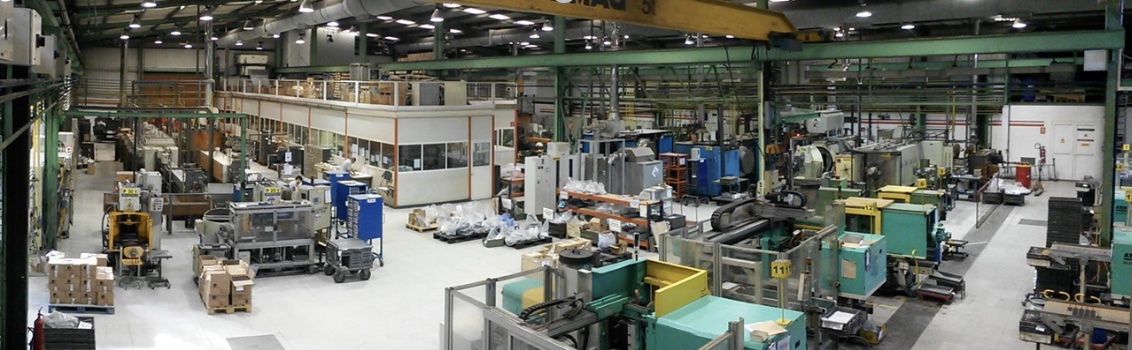
Contact YICHOU for Custom MIM Solutions
For high-quality Metal Injection Molding solutions tailored to your industry, contact YICHOU today. Whether you need prototypes or high-volume production, our MIM technology will deliver exceptional results.
GET QUOTE
- Visit our website: https://www.nbyichou.com/
- Email us: [email protected]
- Call us/whatsapp: +86 13355741031
- Chat with us: Live chat support available on our website