Executive Summary
Multi-axis CNC machining represents the pinnacle of precision manufacturing capability, enabling the production of complex geometrically intricate components that would be impossible to manufacture using conventional machining methods. As industries ranging from aerospace and medical devices to automotive and energy generation demand increasingly sophisticated components, understanding multi-axis CNC machining capabilities becomes essential for engineers, procurement specialists, and product designers seeking optimal manufacturing solutions. This comprehensive guide explores the technical foundations, capabilities, applications, and selection criteria for multi-axis CNC machining services, providing the knowledge necessary to make informed sourcing decisions for precision component requirements.
The evolution from manual machining through single-axis CNC to today’s sophisticated multi-axis machining centers mirrors the increasing complexity of modern product designs. Where early CNC machines could only move cutting tools in three linear axes, contemporary machining centers incorporate rotary axes that position workpieces at any orientation, enabling complete machining of highly complex parts in single setups. This capability dramatically reduces lead times, improves dimensional accuracy by eliminating multiple setup errors, and reduces production costs by minimizing manual handling and auxiliary operations.
Understanding multi-axis machining enables specification of appropriate manufacturing methods for specific applications, optimization of part designs for manufacturable efficiency, and selection of suppliers with capabilities matched to project requirements. Whether producing aerospace structural components requiring hundreds of operations, medical implants demanding micron-level precision, or automotive dies requiring complex 3D surfaces, the principles explored in this guide apply to ensure successful project outcomes.
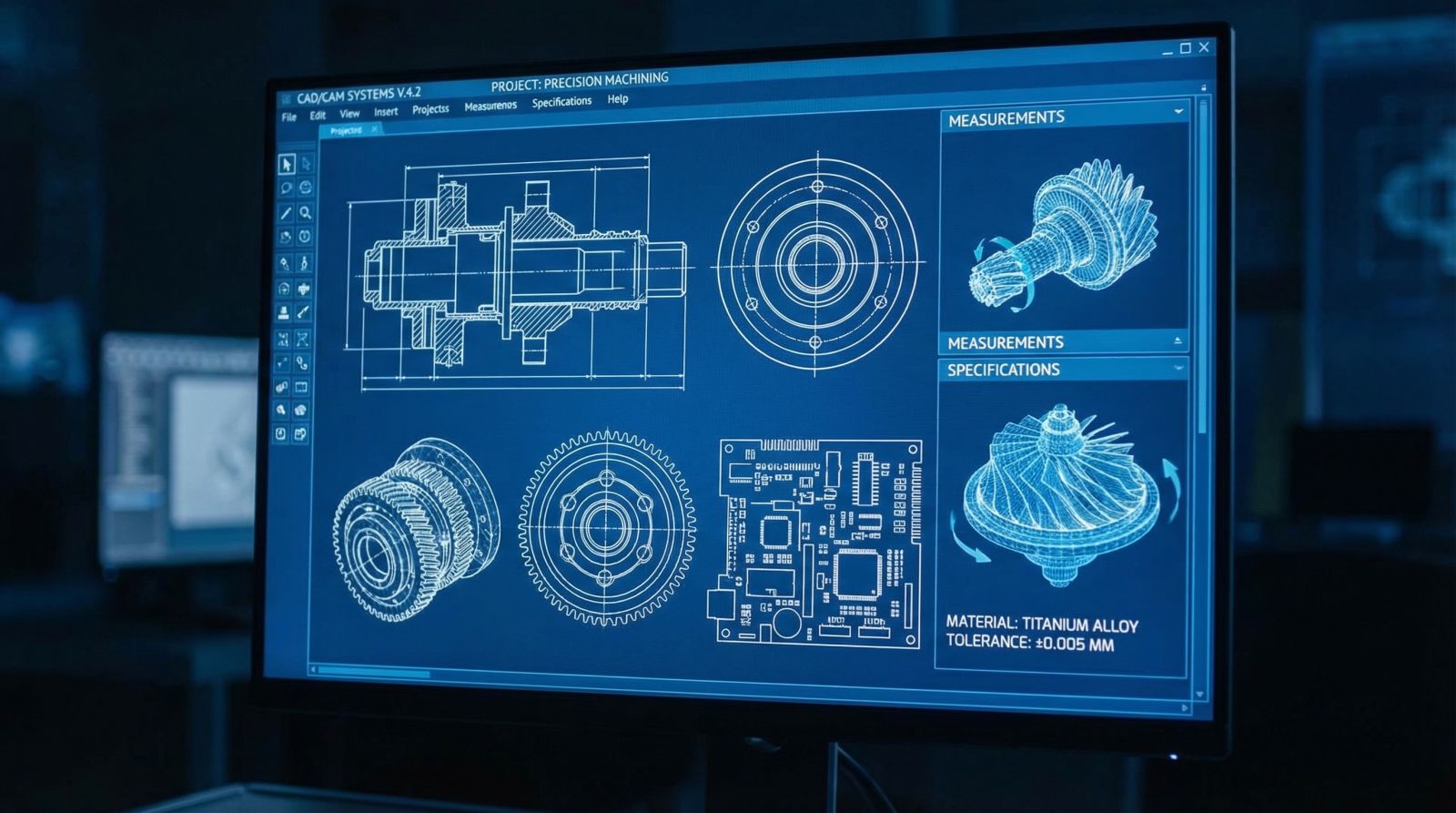
1. Fundamentals of CNC Machining Axes
1.1 Understanding Linear and Rotary Axes
CNC machining terminology describes machine capability in terms of axes, each representing a direction of motion available to either the cutting tool or the workpiece. Linear axes, designated X, Y, and Z, represent motion in three perpendicular directions, with X typically representing horizontal movement, Y representing horizontal movement perpendicular to X, and Z representing vertical movement. Together, these three linear axes enable the tool to reach any point within a three-dimensional workspace.
Rotary axes add rotational motion to linear axes, enabling orientation of the workpiece or tool at any angle. Standard designations include A (rotation around X axis), B (rotation around Y axis), and C (rotation around Z axis). Machines may incorporate one or more rotary axes, with configurations ranging from simple 3-axis machines to sophisticated 5-axis machining centers capable of positioning workpieces at any orientation while maintaining continuous cutting capability.
The distinction between machine configurations affects both capability and application. Some machines configure rotary axes in the table, tilting the workpiece to present different surfaces to a stationary vertical spindle. Others configure rotary axes in the spindle, allowing the tool itself to tilt and present cutting edges at various angles. Both configurations achieve similar positioning capability, though each offers specific advantages for particular part geometries and production scenarios.
1.2 Three-Axis CNC Machining Fundamentals
Three-axis CNC machining represents the foundation of modern computer-controlled manufacturing, providing movement in three linear axes without rotary positioning capability. This configuration suits simple geometric parts that can be completely machined from a single orientation, including prismatic parts with pockets, holes, and flat surfaces. Most CNC machining centers regardless of axis configuration can operate in 3-axis mode, making this the most universally available machining capability.
Three-axis machining offers advantages in simplicity, cost, and speed for appropriate applications. Machines typically cost less than multi-axis alternatives, and programming is relatively straightforward compared to complex multi-axis tool paths. For high-volume production of simple parts, 3-axis machines often achieve faster cycle times than would be possible with unnecessary rotary axis motion.
Limitations of 3-axis machining become apparent for complex parts requiring features on multiple surfaces. Such parts require multiple setups, with the workpiece removed, repositioned, and re-indexed between operations. Each setup introduces positioning errors, increases handling time, and requires additional tooling. For complex parts, these limitations often justify investment in multi-axis capability despite increased machine complexity and cost.
1.3 Four-Axis CNC Machining Capabilities
Four-axis CNC machining adds a single rotary axis to the three linear axes, typically enabling rotation around the vertical (Z) axis. This configuration, often described as 3+1 axis machining, allows the workpiece to be indexed to different angles while the tool machines one surface, then repositioned for machining of adjacent surfaces. Between machining operations, the rotary axis positions the workpiece, but cutting occurs only while the three linear axes move.
This configuration proves particularly valuable for cylindrical parts with features on curved surfaces. The rotary axis enables turning-like operations while maintaining the continuous control of CNC machining, allowing production of parts with precise helical features, Acme threads, and complex cylindrical geometries. Aerospace components including ducting, fuel system fittings, and structural brackets often utilize 4-axis capability for efficient production.
Four-axis machining significantly reduces setup requirements compared to 3-axis operations for appropriate parts. Where a part might require three or four separate setups on a 3-axis machine, a 4-axis machine might complete the same part in one or two setups. This reduction decreases handling, improves accuracy, and shortens production cycles. However, the remaining limitations for truly complex geometries often justify progression to 5-axis capability.
2. Five-Axis CNC Machining: The Pinnacle of Precision Manufacturing
2.1 Understanding Five-Axis Machining Concepts
Five-axis CNC machining combines three linear axes with two rotary axes, enabling the workpiece to be positioned at any orientation while maintaining continuous machining capability. This positioning flexibility allows cutting tools to approach workpieces from any direction, accessing complex geometries without the limitations imposed by fixed-orientation machining. The result is capability for producing components of extraordinary complexity in single setups, dramatically reducing production time and improving dimensional accuracy.
The mathematical relationship between five axes enables the tool to maintain optimal orientation relative to the workpiece surface throughout complex tool paths. For contoured surfaces, five-axis machining keeps the cutting tool perpendicular to the surface, maintaining consistent cutting conditions and surface finish regardless of surface curvature. This capability proves essential for aerodynamic components where surface accuracy directly affects performance, including turbine blades, impellers, and aerodynamic structural members.
Five-axis machining requires sophisticated programming and machine control, with tool path calculations involving complex trigonometric transformations. The machine controller must coordinate all five axes simultaneously, maintaining precise relationships between axes throughout the motion. This complexity demands specialized expertise and represents one of the significant considerations when evaluating five-axis machining capabilities.
2.2 Five-Axis Machine Configurations
Five-axis machining centers employ various configurations optimizing different aspects of capability. Table-table configurations position the workpiece on a tilting table while the spindle remains vertical, suitable for larger workpieces where table rigidity supports heavy parts. This configuration provides excellent chip flow and cooling access for many operations.
Head-head configurations incorporate a tilting spindle head, allowing the tool itself to tilt while the table remains horizontal. This configuration suits production of complex parts requiring access from multiple directions while maintaining stable workpiece support. The horizontal table provides excellent workholding flexibility and simplifies loading of heavy workpieces.
Hybrid configurations combine elements of both approaches, offering optimized solutions for specific application requirements. Some machines incorporate articulated heads providing extreme tilting capability for deep cavity access, while others emphasize high-speed operation for efficient production of simpler geometries. Understanding these configuration differences enables appropriate selection of machine capability for specific part requirements.
2.3 Simultaneous Five-Axis Machining Benefits
Simultaneous five-axis machining, where all five axes move continuously throughout the cutting operation, provides capabilities impossible with indexed or sequential multi-axis approaches. Complex surfaces can be machined in single operations, with the tool maintaining optimal orientation throughout the entire contour. This continuous operation eliminates the marks and inconsistencies that can occur when tools retract and re-engage during multi-index operations.
Single-setup production represents perhaps the most significant benefit of simultaneous five-axis machining. Complex components that might require dozens of setups on 3-axis machines can often be completed entirely in one setup on five-axis equipment. Each eliminated setup removes handling time, eliminates positioning errors, reduces tooling requirements, and improves dimensional consistency. The resulting productivity improvements often justify five-axis investment despite higher equipment costs.
Surface finish quality benefits significantly from five-axis machining, as tools can maintain consistent engagement with workpieces throughout contoured surfaces. The ability to keep tools perpendicular to surfaces throughout tool paths produces superior finishes compared to approaches where tools must reach into cavities at unfavorable angles. For applications requiring both complex geometry and excellent surface quality, five-axis machining often represents the only practical manufacturing approach.
3. Applications Across Industries
3.1 Aerospace Component Manufacturing
The aerospace industry represents the largest and most demanding market for five-axis CNC machining, with applications spanning structural components, engine parts, and flight control systems. Aerospace components frequently feature complex aerodynamic surfaces, intricate cooling passages, and stringent dimensional requirements that demand five-axis capability for efficient production. The weight reduction imperative in aerospace design drives selection of complex geometries achievable only with multi-axis machining.
Turbine engine components including blades, vanes, combustor liners, and shrouds require five-axis capability for their complex 3D surfaces and internal cooling passages. These components operate in extreme temperature environments, requiring precise dimensional control and surface finish to ensure reliable performance. Five-axis machining enables production of these complex geometries while meeting the stringent quality requirements aerospace applications demand.
Structural aerospace components including wing ribs, fuselage frames, and control surface supports combine structural efficiency with manufacturing practicality. These components often feature varying cross-sections, lightening holes, and complex mating surfaces requiring five-axis capability for efficient production. The high value of aerospace components justifies investment in sophisticated manufacturing approaches, making aerospace a primary driver of five-axis machining capability development.
3.2 Medical Device and Implant Manufacturing
Medical device manufacturing increasingly relies on five-axis CNC machining for production of implants, surgical instruments, and diagnostic equipment. Medical applications demand exceptional surface finish, tight tolerances, and biocompatible materials, all achievable through precision five-axis machining. The growing demand for personalized medical solutions drives adoption of five-axis capability for custom implant production.
Orthopedic implants including hip stems, knee components, and spinal devices require complex geometries that match patient anatomy or optimize biomechanical performance. Five-axis machining enables production of these custom geometries while maintaining the surface quality and dimensional accuracy necessary for long-term implant performance. The sterile requirements of medical device manufacturing align well with the controlled environment capabilities of precision machining facilities.
Surgical instruments including retractors, drills, and specialized cutting tools benefit from five-axis machining’s capability for complex geometries and excellent surface finish. These instruments must function precisely in demanding surgical environments while withstanding repeated sterilization cycles. Five-axis machining produces instruments meeting these rigorous requirements efficiently and repeatably.
3.3 Automotive and Motorsports Applications
Automotive industry applications for five-axis machining range from prototype development through production tooling to premium component manufacturing. The fast-paced automotive development cycle benefits from five-axis capability for rapid production of complex prototype components, enabling design validation before committing to production tooling. Speed to market represents a critical competitive factor in automotive design.
Motorsports applications push five-axis machining capabilities to extremes, with components requiring the absolute maximum performance achievable within regulations. Aerodynamic elements, suspension components, and engine parts for racing applications demand complex geometries and exceptional quality. The high value of racing success justifies investment in the most sophisticated manufacturing approaches available.
Production tooling for automotive mass production utilizes five-axis machining for complex die and mold surfaces. The dies forming automotive body panels require complex 3D surfaces optimized for both aerodynamic styling and manufacturing practicality. Five-axis machining efficiently produces these complex surfaces while maintaining the precision necessary for consistent panel production.
3.4 Energy and Industrial Applications
Energy generation and industrial equipment applications include turbine components for power generation, pump and valve components for oil and gas, and specialized machinery requiring complex geometries. These applications often involve demanding materials including stainless steels, exotic alloys, and high-temperature materials that challenge machining capability. Five-axis machining enables production of these challenging components while maintaining required quality.
Steam turbine and gas turbine components for power generation represent demanding five-axis applications, with blades, nozzles, and diaphragms requiring complex aerodynamic surfaces and internal cooling passages. These components must withstand extreme temperatures and stresses while maintaining precise dimensions throughout their operational lives. Five-axis machining provides the capability to produce these sophisticated components reliably.
Pump and valve components for oil and gas applications frequently require five-axis capability for complex port geometries, unique sealing surfaces, and high-precision mating features. The demanding environments in which these components operate require exceptional quality and reliability, achievable through precision five-axis machining. Downtime in oil and gas production represents enormous costs, making component reliability paramount.
4. Technical Considerations and Best Practices
4.1 Machine Rigidity and Dynamics
Machine rigidity fundamentally affects achievable precision and productivity in multi-axis machining. Rigid machine structures minimize deflection under cutting forces, maintaining accurate tool positions throughout operations. Modern five-axis machining centers incorporate massive cast iron or polymer concrete structures, finite element optimized geometries, and extensive ribbing to maximize rigidity within available envelope constraints.
Dynamic performance including acceleration capability and contouring accuracy affects productivity and precision, particularly for complex tool paths with frequent direction changes. High dynamic performance enables faster cycle times without sacrificing accuracy, as machines can maintain programmed paths despite the inertial forces encountered during rapid acceleration. Advanced control systems including feedforward algorithms and adaptive filtering help machines achieve their full dynamic potential.
Thermal stability represents an increasing concern as machining speeds increase and tolerances tighten. High-speed cutting generates significant heat in spindles, bearings, and workpieces, with resulting thermal expansion affecting dimensional accuracy. Sophisticated cooling systems, thermal deformation compensation algorithms, and environmental controls help manage these effects in precision five-axis applications.
4.2 Tooling Considerations for Multi-Axis Machining
Multi-axis machining imposes unique tooling requirements compared to conventional machining, beginning with tool length considerations. Five-axis positioning often requires longer tools to reach into cavities and complex geometries, with resulting increased deflection affecting dimensional accuracy. Tool design must balance reach requirements with rigidity, often incorporating specialized geometries optimized for multi-axis applications.
Tool holder systems for five-axis machining emphasize precision and balance at operating speeds. HSK shrink-fit holders provide excellent repeatability and rigidity, while specialized multi-axis holders address the unique requirements of tilted-spindle operations. Dynamic balancing becomes increasingly important as spindle speeds increase, with unbalanced tool assemblies causing vibration that degrades surface finish and accelerates bearing wear.
Cutting tool selection for five-axis applications must account for the varied engagement conditions encountered as tool orientation changes throughout tool paths. Unlike conventional machining where tool engagement remains constant, five-axis operations may encounter varying chip loads, tool angles, and cutting depths as the tool relates to workpiece surfaces. Tool materials and geometries must be selected to handle this variability while maintaining acceptable tool life.
4.3 Programming and Simulation
Five-axis CNC programming requires specialized expertise and sophisticated software tools compared to three-axis programming. The complex relationship between tool orientation and workpiece surface demands careful planning to avoid collisions between tool, workpiece, workholding, and machine components. Collision detection and avoidance represent critical capabilities for safe five-axis operations.
CAM software for five-axis machining provides sophisticated tool path calculation capabilities, optimizing tool paths for surface finish, cycle time, and machine capability. Advanced software incorporates collision avoidance, smooth acceleration profiling, and automatic optimization of cutting conditions. Post-processing generates machine-specific code accounting for the unique kinematics of specific machine configurations.
Simulation and verification before machining provides essential confidence in program correctness, identifying potential collisions, singularities, and out-of-tolerance conditions before they cause problems in production. Sophisticated verification systems simulate the entire machining process, including axis motions, tool changes, and work handling, ensuring that programs execute as intended. This verification proves particularly valuable for expensive materials where program errors could result in significant material waste.
5. Selecting a Multi-Axis Machining Supplier
5.1 Capability Assessment Criteria
Selecting appropriate multi-axis machining suppliers requires systematic evaluation of their capabilities relative to specific project requirements. Machine envelope determines the maximum part size a supplier can accommodate, while axis configuration affects the complexity of geometries producible. Understanding how these factors align with project requirements enables appropriate supplier selection.
Accuracy and repeatability specifications indicate the dimensional control achievable by supplier equipment. For demanding applications, capability studies documenting actual performance provide more meaningful information than specifications alone. These studies demonstrate supplier ability to produce parts within required tolerances consistently over production volumes.
Quality certifications including ISO 9001, AS9100 for aerospace applications, and ISO 13485 for medical applications indicate systematic quality management. While certification alone does not guarantee quality performance, certified suppliers have demonstrated systematic approaches to quality management and continuous improvement.
5.2 Capacity and Lead Time Considerations
Production capacity assessment must consider both machine availability and throughput capability. Understanding supplier load levels and lead times ensures that production schedules align with project requirements. For time-sensitive programs, identifying suppliers with available capacity prevents delays that could affect program schedules.
Turnaround capabilities for prototype and low-volume requirements differ from production capacity, as suppliers may prioritize different work types differently. Understanding how suppliers manage these different requirement types ensures appropriate expectations for project phases. Some suppliers specialize in prototype work, offering rapid turnaround but higher per-part costs, while others focus on production volumes with corresponding efficiency advantages.
Supply chain integration capabilities affect overall project logistics, with some suppliers offering complete solutions including material procurement, heat treatment, surface treatment, and final inspection. These integrated suppliers simplify procurement logistics while potentially offering cost advantages through process optimization and reduced handling.
5.3 Technical Expertise and Communication
Engineering support capability distinguishes excellent suppliers from adequate ones, with responsive technical communication enabling successful project execution. Suppliers who actively engage in design for manufacturability discussions can often identify improvements that reduce cost or improve quality without compromising function.
Documentation practices indicate organizational discipline and quality system effectiveness. Understanding what documentation suppliers provide, including inspection reports, process records, and certification documentation, ensures that required records will be available for customer review or regulatory compliance.
References from similar applications provide confidence in supplier capability for specific requirement types. Speaking with existing customers about their experiences provides insights unavailable from supplier presentations alone. Questions about quality performance, responsiveness, and problem resolution reveal how suppliers perform under real-world conditions.
6. Future Trends in Multi-Axis Machining
6.1 Advanced Machine Technologies
Machine tool technology continues advancing, with developments in linear motor drives, magnetic bearing spindles, and artificial intelligence improving capability. Linear motors eliminate mechanical transmission losses, enabling faster acceleration and positioning accuracy measured in nanoseconds. Magnetic bearing spindles operate without mechanical contact, reducing wear and enabling ultra-high speeds for specialized applications.
Artificial intelligence and machine learning increasingly influence five-axis machining, with systems optimizing cutting parameters in real-time, predicting tool wear before failures occur, and automatically adjusting processes for variations in materials or conditions. These intelligent systems promise productivity improvements and quality enhancements while reducing reliance on operator expertise.
Additive manufacturing integration represents an emerging trend, with hybrid machines combining additive and subtractive capabilities. These machines can build complex geometries through additive processes then finish to precise tolerances through machining, combining the design freedom of additive manufacturing with the precision of machining. This capability proves particularly valuable for aerospace and medical applications.
6.2 Automation and Lights-Out Manufacturing
Automation continues advancing toward fully lights-out manufacturing, with robotic workhandling, automated tool management, and unmanned operation becoming increasingly common. These capabilities address labor cost and availability concerns while enabling competitive production in high-wage regions. The trend toward automation drives investment in compatible equipment and systematic processes.
Flexible manufacturing systems incorporating multiple machines, automated transport, and integrated management systems optimize production efficiency across varied part types. These systems can respond dynamically to changing production requirements, reallocating work across available resources to maintain throughput despite variations in demand or mix.
Digital connectivity enables remote monitoring and management of machining operations, with real-time visibility into production status, quality metrics, and equipment health. This connectivity supports rapid response to emerging issues while enabling continuous improvement through comprehensive data analysis.
7. Ningbo Yichou Industrial: Your Multi-Axis Machining Partner
For companies seeking precision multi-axis CNC machining services backed by comprehensive capabilities and quality systems, Ningbo Yichou Industrial Co., Ltd offers the expertise and infrastructure necessary to meet your most demanding requirements. With extensive experience serving customers across aerospace, medical, automotive, and industrial sectors, we have developed the capabilities, processes, and quality systems that the most demanding applications require.
Our multi-axis machining capabilities include:
Advanced 5-Axis Machining Centers: We maintain a fleet of sophisticated 5-axis machining centers from leading manufacturers, providing capabilities for the most complex component requirements. Our equipment features high-speed spindles, linear motor drives, and advanced control systems enabling exceptional precision and productivity.
Comprehensive Machining Capacity: Our facility provides 3-axis, 4-axis, and 5-axis capabilities, enabling selection of the most appropriate approach for each project’s specific requirements. We optimize manufacturing methods to balance capability requirements with production efficiency, providing cost-effective solutions without compromising quality.
Quality System Excellence: We maintain ISO 9001:2015 certification and can provide AS9100D compliant quality systems for aerospace applications. Our comprehensive quality processes ensure consistent performance from first article through production lots, with complete documentation and traceability.
Engineering Support: Our experienced engineering team provides design for manufacturability feedback, helping customers optimize part designs for efficient production. We collaborate from initial concept through production release, ensuring that designs achieve both functional and manufacturing excellence.
Complete Production Solutions: Beyond machining, we offer integrated services including heat treatment, surface treatment, quality inspection, and final assembly. Our one-stop approach simplifies procurement logistics while ensuring quality accountability throughout production.
We welcome inquiries from companies seeking a multi-axis machining partner capable of meeting their most demanding precision component requirements. Our team provides responsive technical support, competitive quotations, and the manufacturing expertise your applications demand.
Contact Information:
Website: www.nbyichou.com Email: [email protected] WhatsApp: +86 13355741031
Conclusion
Multi-axis CNC machining provides capabilities essential for producing the complex components modern industries demand. Understanding the fundamentals of axis configurations, the benefits and applications of five-axis machining, and the criteria for selecting appropriate suppliers enables informed decisions that optimize manufacturing outcomes. As component complexity continues increasing and tolerance requirements tighten, multi-axis machining capability becomes increasingly essential for competitive manufacturing.
The selection of multi-axis machining suppliers significantly affects project success, making careful evaluation of capabilities, capacity, and technical expertise essential. Suppliers demonstrating systematic quality management, responsive engineering support, and proven track records in demanding applications provide the confidence necessary for successful long-term partnerships.
For companies seeking a multi-axis machining partner with proven capabilities across aerospace, medical, automotive, and industrial applications, Ningbo Yichou Industrial stands ready to support your precision component requirements. Contact us today to explore how our multi-axis machining capabilities can support your manufacturing success.
Keywords: Multi-Axis CNC Machining, 5-Axis CNC Machining, CNC Machining Services, Precision Manufacturing, 3-Axis Machining, 4-Axis Machining, Five-Axis Machining Centers, CNC Milling, Complex Geometry Machining, Aerospace Machining, Medical Device Machining, Automotive Machining, CNC Machining Supplier, Precision Component Manufacturing
Related Services: 5-Axis CNC Machining | CNC Milling | CNC Turning | Multi-Axis Machining | Quality Inspection | Prototype Machining | Production Machining | Heat Treatment | Surface Finishing
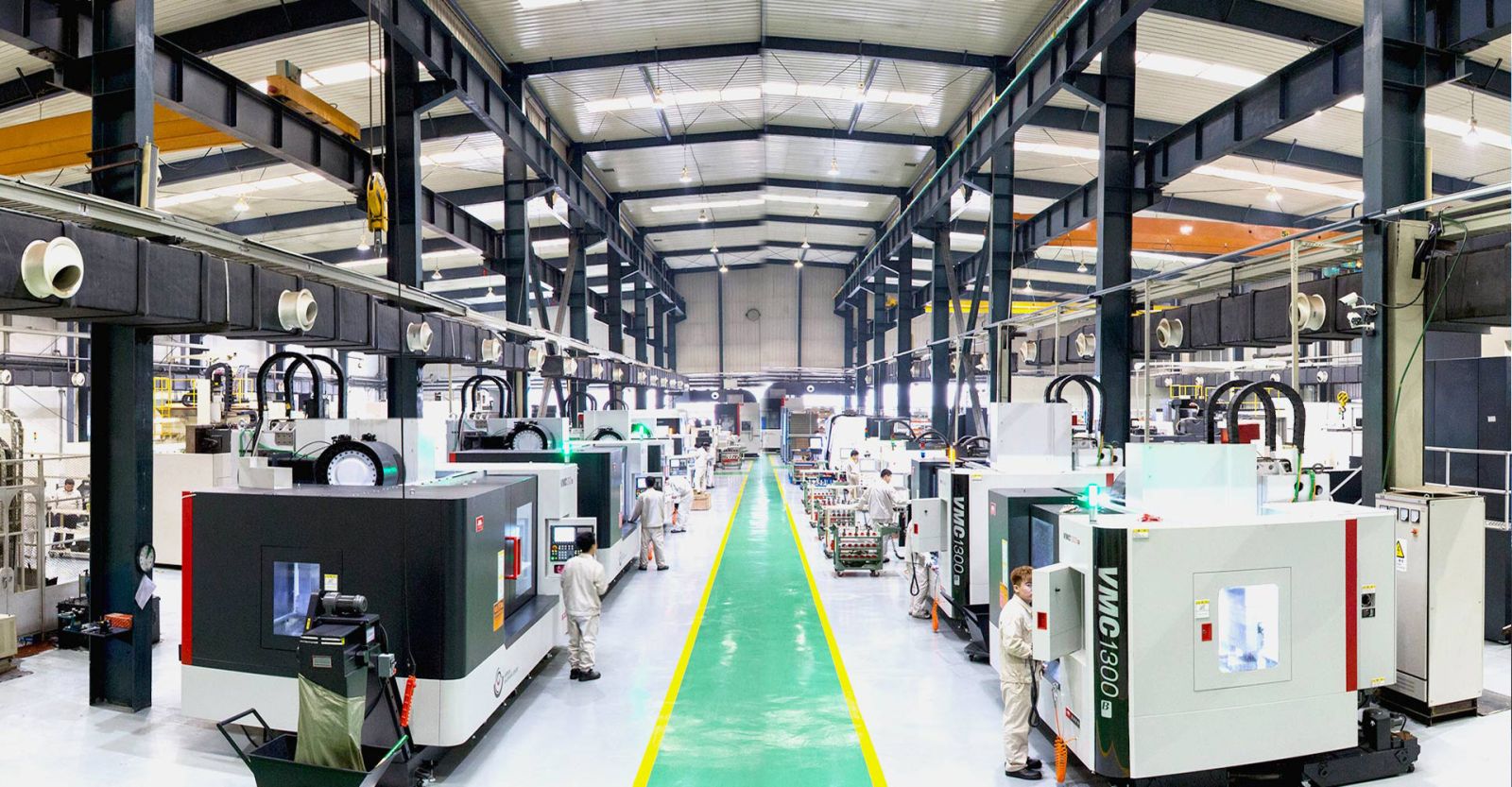
Contact us today for a competitive quote and technical support!
Let Yichou help you achieve excellence in your next project. Whether you need raw materials, custom alloy solutions, or precision-manufactured components, our team is ready to assist.
- Email us: [email protected]
- Call us/whatsapp: +86 13355741031
- Chat with us: Live chat support available on our website