Table of Contents
-
Introduction
-
PEEK Injection Molding vs. CNC Machining – Which One is Right for Your Project?
-
Addressing the Stress – The Importance of Post-Machining Annealing
-
How We Optimize Manufacturing to Lower Your PEEK Material Costs
-
Industry-Specific Standards & Contamination Prevention
-
Conclusion & Call to Action
Introduction
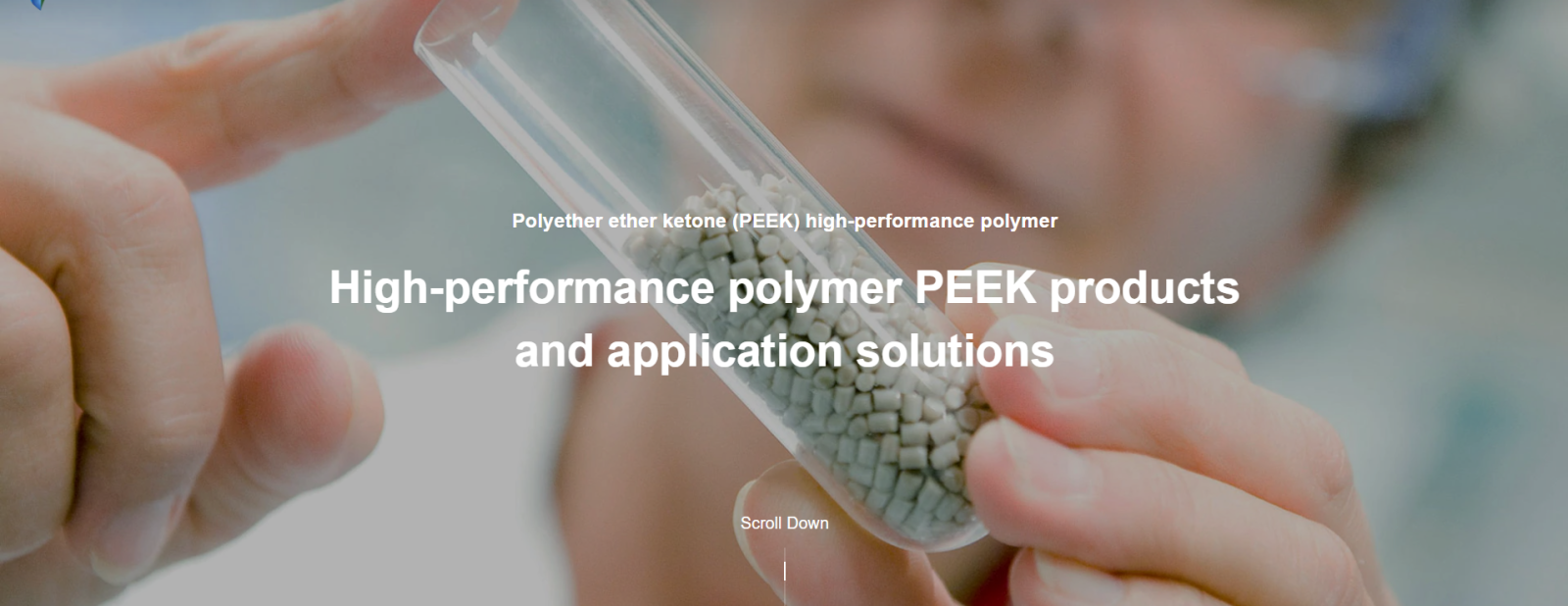
PEEK (polyether ether ketone) is widely regarded as the "king of polymers" – a semi-crystalline, high-performance thermoplastic that delivers exceptional thermal stability (continuous service up to 260°C/500°F), chemical resistance, and mechanical strength that rivals many metals. It's the material of choice for aerospace components, medical implants, semiconductor manufacturing equipment, and oil & gas seals where failure is not an option.
The problem? PEEK is expensive – typically $80–150 per kg for standard grades, and $300–600+ for certified aerospace or medical grades. And it's notoriously difficult to process without the right expertise. Poor thermal management during machining can cause surface degradation or warping. Improper injection molding parameters lead to voids, low crystallinity, or dimensional drift.
This guide cuts through the noise. Whether you're an engineer, procurement manager, or product designer, we'll walk you through the critical decisions that determine whether your PEEK project succeeds on cost, quality, and timeline.
Section 1: PEEK Injection Molding vs. CNC Machining – Which One is Right for Your Project?
One of the first questions we hear from customers: "Should I machine or mold my PEEK parts?" The answer depends entirely on your volume, geometry, and tolerance requirements.
PEEK CNC Machining
Best for: Prototypes, low-to-medium volumes (1–500 parts), complex geometries, and ultra-tight tolerances (±0.02–0.05 mm).
CNC machining offers exceptional dimensional control and design flexibility. Multi-axis milling and turning can produce intricate features without the need for expensive tooling. However, machining PEEK requires specialized knowledge – the material's low thermal conductivity means heat builds up rapidly during cutting, which can cause surface whitening, carbonization, or softening if temperatures exceed 250°C.
Key considerations:
-
Tool wear is significant, especially with carbon-fiber or glass-fiber reinforced grades (tool life can drop 50–70% compared to unfilled PEEK)
-
Sharp, wear-resistant tooling is essential – PCD (polycrystalline diamond) tools offer the best surface finish and tool life; TiAlN-coated carbide is a strong alternative
-
Proper chip evacuation and coolant/air blast are critical to prevent melting and deformation
PEEK Injection Molding
Best for: High-volume production (500+ parts), consistent repeatability, and lower per-part costs.
Injection molding becomes cost-effective when the initial tooling investment is amortized across large production runs. It also reduces material waste compared to machining – but the process window is narrow.
Critical parameters:
-
Melt temperature: 370–400°C (depending on grade and filler)
-
Mold temperature: 160–200°C – higher mold temperatures promote higher crystallinity, which is essential for mechanical performance
-
Drying: PEEK must be dried at 150°C for 3–4 hours before processing. Even <0.02% moisture can cause hydrolytic degradation, leading to bubbles, splay, or brittleness
-
Residence time: Keep under 30 minutes to prevent thermal degradation
Quick Comparison Table
| Factor | CNC Machining | Injection Molding |
|---|---|---|
| Best Volume | Prototype to low-medium | Medium to high-volume |
| Lead Time | Fast (days to weeks) | Longer (tooling fabrication) |
| Tooling Cost | Low (fixtures only) | High (mold steel) |
| Unit Price | Higher (material waste + machining time) | Lower (economies of scale) |
| Design Flexibility | High – complex geometries | Limited by mold design |
| Dimensional Tolerance | ±0.02–0.05 mm | Typically ±0.05 mm (~±0.002 in) |
Engineering takeaway: If you're unsure which path suits your project, our engineering team offers a free DFM (Design for Manufacturability) review. We'll evaluate your CAD files and recommend the optimal approach – sometimes a combination of both molding and machining delivers the best results for complex assemblies.
Section 2: Addressing the Stress – The Importance of Post-Machining Annealing
This is one of the most overlooked – and most critical – aspects of PEEK manufacturing.
Why annealing matters: PEEK accumulates internal stress during both extrusion (when rods or sheets are formed) and heavy machining. As material is removed, these stresses redistribute. What appeared stable can warp, shift, or crack – sometimes immediately, sometimes days or weeks later.
Without proper annealing, tight-tolerance components are at serious risk. Features may shift out of position during cutting. Surface finish may degrade. And parts that pass initial inspection may fail dimensional verification later, leading to scrap, rework, or field failures.
How We Handle It
At our facility, annealing is not an afterthought – it's integrated into our manufacturing workflow:
-
Pre-machining annealing: Most PEEK stock arrives with residual stress from the extrusion process. We anneal at 200°C for 1–2 hours in a controlled environment before any cutting begins.
-
Intermediate annealing: For parts requiring extended machining cycles or complex geometries, we may incorporate additional annealing steps to maintain tight tolerances and flatness.
-
Post-machining stabilization: Final stress relief ensures dimensional stability under thermal load – critical for applications in aerospace engines, semiconductor vacuum chambers, or medical sterilization cycles.
What this means for you: When you source from us, you're not just getting a part that looks right out of the machine. You're getting a component engineered to stay right over its entire service life.
Section 3: How We Optimize Manufacturing to Lower Your PEEK Material Costs
PEEK is expensive. That's simply the reality. But smart manufacturing can dramatically reduce how much you pay per finished part.
For CNC Machining
The biggest cost driver in machining is material waste – the "buy-to-fly" ratio. Complex geometries machined from solid rod or sheet can remove 50–70% of the starting material, turning expensive PEEK into costly chips.
Our approach:
-
Near-net-shape roughing: We use optimized toolpaths to rough out parts close to final dimensions, reducing scrap
-
Smart nesting: For sheet and plate stock, we strategically arrange multiple parts to maximize material utilization
-
Stock selection: We help you choose the most economical starting form (rod, sheet, or near-net shapes) for your geometry
For Injection Molding
Molding inherently produces less scrap than machining – but poor design can still generate waste.
Our approach:
-
Advanced runner design: Optimized flow channels reduce runner scrap without compromising fill quality
-
Hot-runner systems: Insulated nozzles rated above 400°C eliminate runner waste entirely for high-volume production
-
Process stability: Scientific molding principles ensure each shot is consistent, minimizing rejects from warpage, voids, or dimensional drift
A Word on DFM
One of the most effective cost-control tools is Design for Manufacturability – and it needs to happen before tooling is cut or machining begins.
DFM for high-performance plastics like PEEK is far more complex than for commodity resins. Semi-crystalline materials exhibit shrink behavior tied directly to crystallinity, cooling rates, and packing pressure. Reinforced grades introduce additional variables like fiber orientation and anisotropic shrinkage.
Our DFM process addresses:
-
Gate placement for balanced flow at elevated melt temperatures
-
Uniform wall thickness to promote consistent cooling and reduce warping
-
Draft angles that account for fiber interaction in reinforced grades
-
Material behavior simulations (mold flow analysis) before production starts
The result? Fewer tool iterations, faster time-to-market, and lower overall program costs.
Section 4: Industry-Specific Standards & Contamination Prevention
Different industries demand different levels of purity, traceability, and regulatory compliance. We've built our quality systems to meet the most stringent requirements.
Medical & Semiconductor Focus
Contamination is not acceptable – whether it's particulates in a semiconductor cleanroom or extractables in an implantable device.
-
Dedicated tooling: Our PEEK machining and molding equipment is dedicated to high-performance polymers, preventing cross-contamination from other materials
-
Strict cleaning protocols: Parts are ultrasonically cleaned using isopropanol or DI water to remove particulates and machining residue. We avoid solvents like acetone or MEK that can attack surface layers
-
Cleanroom capabilities: We offer cleanroom manufacturing for applications where airborne particulates are unacceptable
Certifications & Traceability
-
ISO 9001 and ISO 13485 (medical device) quality management systems
-
Full material traceability: Every batch is documented with Certificates of Conformance (CoC), including material certifications, lot numbers, and test reports
-
Compliance: Our materials meet FDA, USP Class VI, and RoHS standards where applicable
Grade selection matters:
-
Medical-grade PEEK (e.g., PEEK-OPTIMA, Zeniva): ISO 10993 biocompatible, sterilizable, radiolucent (X-ray/MRI/CT transparent)
-
Semiconductor-grade PEEK (e.g., TECAPEEK CMP, SD): Low outgassing, static-dissipative, formulated for high-purity environments
-
Aerospace-grade: Certified to AS9100, with documented traceability for critical safety components
.jpg)
Conclusion & Call to Action
Manufacturing PEEK components requires a rare combination of material science expertise, precision engineering, and process discipline. Whether your project demands tight-tolerance CNC machining, high-volume injection molding, or a hybrid approach, partnering with a manufacturer that understands both technologies gives you the flexibility to move seamlessly from prototyping to mass production.
What sets us apart:
-
Dual capability – we offer both CNC machining and injection molding under one roof
-
Integrated annealing for dimensional stability
-
DFM engineering review before production starts
-
Industry-specific quality standards (medical, aerospace, semiconductor)
-
Full material traceability and certification
Ready to start your next PEEK project?
Upload your 3D CAD files (STEP/IGS preferred) for a free DFM review and a competitive quote – typically within 24 hours.
GET QUOTE
- Email us: [email protected]
- Call us/WhatsApp: +86 13355741031
- Chat with us: Live chat support available on our website