The Heart of the Tool: Why Chambers Are More Than Just Metal Boxes
Picture this: a leading-edge 300mm wafer sits inside a multi-million-dollar etch tool. The process recipe is flawless, the gases are ultra-pure, and the plasma ignites. Yet, the yield monitor shows inconsistent results across the wafer. After days of costly downtime and diagnostics, the root cause is traced not to software or sensors, but to a microscopic deviation in the chamber wall's flatness, causing a non-uniform electric field. This scenario, more common than many realize, underscores a fundamental truth in semiconductor manufacturing: the tool chamber is not a passive container; it is the active, precision-engineered "reactor core" where physics, chemistry, and nanometer-scale artistry converge.
For equipment OEMs and fab engineers, the chamber is the critical interface between their advanced process technology and the physical world. Its design, material integrity, and manufacturing precision are the unsung heroes of process stability, mean time between failures (MTBF), and ultimately, die yield. A flaw in a chamber component can cascade into particle contamination, vacuum leaks, plasma instability, or thermal gradient issues—each costing thousands of dollars per hour in lost production.
This guide is designed for the professional buyers, procurement specialists, and engineers who source these vital components. We will dissect the anatomy of semiconductor chambers, explore the rigorous manufacturing journey from raw metal to validated assembly, and directly address the key pain points that keep you and your teams awake at night. We focus on the three pillars of vacuum subsystem architecture: the Process Chambers (Etch, CVD, PVD), the central Transfer Chambers, and the critical interface Load Lock Chambers.
Anatomy of a Semiconductor Chamber: Key Components and Critical Requirements
Understanding the chamber's components is the first step to appreciating the manufacturing challenges involved. Each part has a distinct function and a set of exacting specifications.
A. The Main Chamber Body: Foundation of Vacuum Integrity
The chamber body is the primary vacuum vessel. Its selection and fabrication set the stage for everything else.
-
Material Selection: Aluminum vs. Stainless Steel
-
Aluminum (e.g., 6061-T6, 6082): The preferred choice for most process and all transfer chambers due to its excellent combination of properties.
-
Why it's used: High strength-to-weight ratio, superior thermal conductivity for heat dissipation, excellent machinability, and non-magnetic properties (critical for processes using magnetic fields). Its natural oxide layer offers decent corrosion resistance.
-
Manufacturing Challenge: Aluminum is "gummy" and can weld to cutting tools. Achieving a mirror-finish on large internal surfaces requires specialized tooling, coolants, and machining strategies to prevent smearing and ensure a particle-free, easily cleanable surface.
-
-
Stainless Steel (e.g., 316L, 304L): Used in applications demanding extreme corrosion resistance or higher strength.
-
Why it's used: Exceptional resistance to aggressive chemistries (e.g., high-temperature halogen gases), superior stiffness, and high polishability. Often used for liners, gas distribution systems, and components in very harsh environments.
-
Manufacturing Challenge: It work-hardens during machining, demanding sharp, rigid tooling and precise parameters. Its lower thermal conductivity can lead to heat concentration and distortion during welding if not meticulously controlled.
-
-
-
Precision Machining Imperatives:
-
Flange Flatness and Sealing Surfaces: Metal Seal (CF, ISO-K) and elastomer O-ring grooves must be machined to micron-level flatness. Any deviation can cause catastrophic vacuum leaks. This requires large-format, high-precision vertical or horizontal machining centers with exceptional geometric accuracy.
-
Internal Cooling Channels (Jackets): Many chambers have complex internal passages for temperature-control fluids. These are often drilled or milled into the chamber walls and then sealed with welded plugs or special cover plates. Ensuring these channels are leak-tight, free of internal debris, and hydraulically efficient is a non-negotiable requirement.
-
Dimensional Stability: A chamber must maintain its precise geometry under thermal cycling and vacuum pressure differentials (from atmosphere to 10<sup>-9</sup> Torr). This requires not just precise machining but also knowledge of stress-relieving heat treatments and thermal expansion coefficients.
-
B. Critical Internal Components (The "Wear Parts" & Precision Electrodes)
These components face the full brunt of the process environment and are key to performance.
-
Showerheads / Gas Diffusers: This is often the most complex single part in the chamber.
-
Function: To distribute process gases with absolute uniformity across the wafer plane. It also often serves as the RF electrode.
-
Manufacturing Everest: It is a thick plate, often 400-600mm in diameter, penetrated by thousands of micro-holes (0.1mm - 1.0mm diameter). The consistency, straightness, and surface finish of each hole are critical. A single blocked or misshapen hole can create a process defect streak. This demands advanced deep-hole drilling (EDM or micro-drilling) and sophisticated metrology. Furthermore, the face exposed to plasma is typically coated with a protective ceramic (like Yttria) via plasma spray, which must be uniform and adhere perfectly without clogging the holes.
-
-
Electrodes & Heater Pedestals / Wafer Chucks:
-
Function: To hold the wafer (often electrostatically) and provide precise thermal control or RF bias.
-
Manufacturing Complexity: These are multi-material, multi-function assemblies. They incorporate:
-
Embedded Cooling Channels: For precise temperature control, often in complex spiral or zoning patterns.
-
High-Tolerance Machining: The wafer-facing surface requires better than 5-micron flatness and a super-fine finish.
-
Material Integration: May combine an aluminum body, stainless steel fluid connections, and ceramic insulating elements or electrostatic clamping electrodes.
-
-
-
Focus Rings & Edge Rings (Process Kits):
-
Function: To tune the plasma density and etch/deposition profile at the wafer's edge, maximizing usable die area.
-
Material & Precision: Made from specialized materials like Silicon Carbide (SiC), Quartz, or high-purity Alumina. These materials are notoriously difficult to machine—hard, brittle, and prone to chipping. Achieving their intricate profiles with tight dimensional and concentricity tolerances requires diamond tooling, vibration-dampened machines, and expert craftsmanship.
-
-
Liners & Shields (Consumables):
-
Function: To protect the expensive main chamber walls from process by-product deposition. They are sacrificial, regularly replaced parts.
-
Manufacturing Blend: These are often hybrid fabrications. The main body might be formed from sheet metal (stamping, bending), while critical features—mounting points, gas injector ports, alignment notches—are precision machined. They are then treated with hard, plasma-resistant coatings like anodized aluminum or sprayed ceramics. Speed, cost-effectiveness, and repeatability are key here, alongside precision.
-
.png)
Addressing OEM Pain Points: How Expert Manufacturing Solves Your Biggest Problems
As a procurement professional, your goal is to mitigate risk and ensure supply chain reliability. Here’s how partnering with a manufacturer that understands these pain points translates to tangible value.
Pain Point 1: "We experience vacuum leaks and downtime, leading to costly tool interrupts."
-
The Root Cause: Imperfections in weld seams, machining defects on sealing surfaces, or trapped contaminants.
-
The Manufacturing Solution:
-
Advanced Welding Expertise: Utilization of automated orbital TIG and Electron Beam (EB) welding in controlled environments. EB welding, in particular, offers deep, narrow, and extremely clean welds with minimal heat input, drastically reducing distortion and the risk of future leaks.
-
Comprehensive Leak Testing: Every chamber and critical sub-assembly undergoes Helium Mass Spectrometer Leak Testing. The standard is stringent, often targeting leak rates below 1x10<sup>-9</sup> atm-cc/sec—equivalent to losing a grain of sand in volume over 30 years. Testing is performed at various stages to catch issues early.
-
Cleanliness Protocol: Implementing a "clean as you go" philosophy, with dedicated cleanrooms for final assembly and packaging, ensures no particles or organics are present to compromise seals.
-
Pain Point 2: "Our process results show non-uniformity (Within-Wafer, Wafer-to-Wafer), impacting yield."
-
The Root Cause: Micro-scale variations in chamber geometry, surface finish, or component alignment.
-
The Manufacturing Solution:
-
Ultra-Precision Machining & Grinding: For critical surfaces like the wafer chuck mounting platform or showerhead mating face, standard milling isn't enough. Precision grinding and honing are employed to achieve sub-micron flatness (< 0.001mm) and ultra-low surface roughness (Ra < 0.4µm). This ensures perfect, repeatable alignment of internal components.
-
Metrology-Driven Manufacturing: Using high-precision Coordinate Measuring Machines (CMM) and laser trackers to map the entire chamber volume during machining, not just single features. This guarantees that the relationship between every port, flange, and internal mount is within spec, ensuring geometric uniformity that translates to process uniformity.
-
Pain Point 3: "Chamber components degrade too fast in harsh plasma environments, increasing consumables cost and unscheduled maintenance."
-
The Root Cause: Material erosion, corrosion, or coating delamination from exposure to high-energy plasma and reactive chemistries.
-
The Manufacturing Solution:
-
Specialized Surface Engineering Portfolio:
-
Hard Anodizing (Type III): Creates a thick, wear-resistant aluminum oxide layer on aluminum parts, improving erosion resistance.
-
Plasma Spray Ceramic Coatings (Al₂O₃, Y₂O₃, Yttria): Applied to critical components like showerheads and liners. A expert manufacturer controls coating thickness, porosity, and adhesion strength to maximize component lifetime.
-
Electroless Nickel Plating (ENP): Provides a hard, uniform, corrosion-resistant barrier on steel and aluminum, excellent for fluid passages and sealing surfaces.
-
-
Pain Point 4: "We need a supplier who can handle complex assemblies and provide value beyond part fabrication."
-
The Root Cause: Managing multiple vendors for parts, coating, and assembly introduces logistical complexity and integration risk.
-
The Manufacturing Solution:
-
Vertical Integration & Cleanroom Assembly: A true partner offers "Ready-to-Install" modules. This means they manage the entire flow: machining, cleaning, coating, kitting, and final assembly in a controlled cleanroom environment (ISO Class 7 or better). They perform functional tests (e.g., dry cycling of mechanisms, pneumatic checks) before shipment, reducing your integration time and risk.
-
Pain Point 5: "Managing lead times, quality consistency, and scaling from NPI to HVM is a constant challenge."
-
The Root Cause: Inadequate manufacturing infrastructure, lack of process control, or siloed operations.
-
The Manufacturing Solution:
-
Dedicated NPI & HVM Lines: Separate, flexible cells for New Product Introduction allow for rapid prototyping and engineering collaboration. Once qualified, production transitions to dedicated high-volume lines optimized for throughput and repeatability.
-
Statistical Process Control (SPC): Implementing real-time SPC on critical dimensions (e.g., hole diameters, flange flatness) allows for proactive process adjustment, ensuring every part, from the first to the thousandth, is identical.
-
Robust Quality Management System (QMS): Certification to ISO 9001 and industry-specific standards like AS9100 or Nadcap (for special processes like welding) is a baseline. It provides the framework for traceability, corrective action, and continuous improvement.
-
The Fabrication Journey: From Raw Material to Validated Chamber
A transparent process builds trust. Here is the typical journey a precision chamber undergoes:
-
Collaborative Design & Material Selection: The journey begins long before the first cut. Engineering teams review drawings for manufacturability (DFM), suggesting optimizations for cost, lead time, or performance. The optimal material grade and pre-condition (e.g., stress-relieved plate) are selected.
-
Rough Machining & Stress Relieving: Large sections of material are removed to form the basic shape. The part then undergoes a stress-relieving heat treatment to remove internal stresses induced during initial forging/rolling and rough machining. This is crucial for long-term dimensional stability.
-
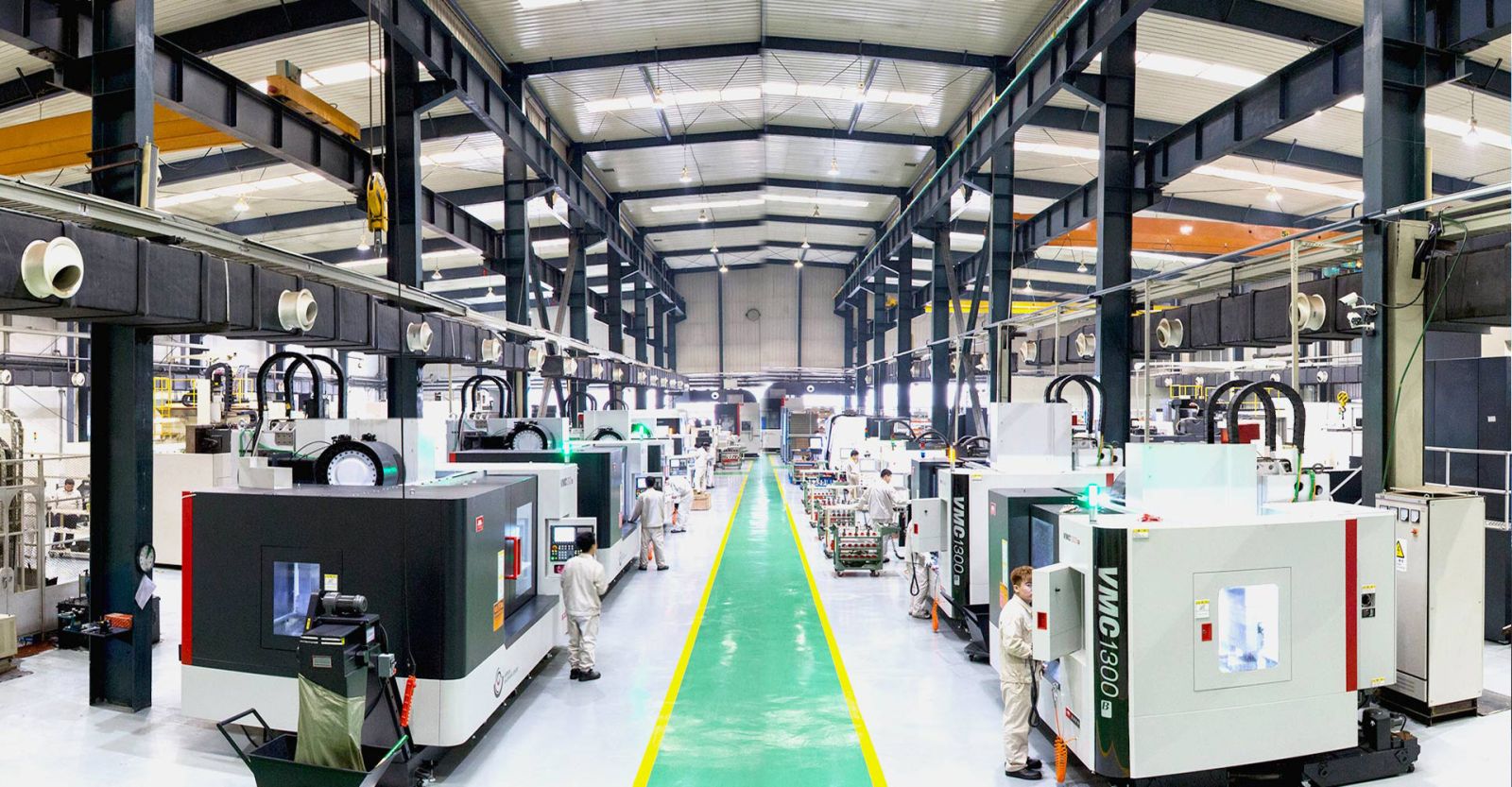
Precision 5-Axis CNC Machining: The core of fabrication. Modern 5-axis machining centers allow complex geometries (like angled ports, internal cavities, and contoured surfaces) to be machined in a single setup, ensuring unmatched accuracy. High-pressure coolant systems manage heat and evacuate chips.
-
Welding & Joining: Qualified welders (following strict procedures) join sub-components, install cooling channel plugs, and attach ports. Post-weld, the assembly often undergoes another stress relief cycle.
-
Secondary Finishing & Surface Treatment: All sealing surfaces receive their final finish via grinding or precision boring. The part is then cleaned and sent for its specified surface treatment (anodizing, plating, coating).
-
Stringent Quality Inspection: The part is thoroughly inspected. CMMs verify every critical dimension. A white light interferometer or profilometer measures surface roughness. Most importantly, it undergoes a full helium leak check.
-
Cleanroom Assembly & Final Testing: In a controlled environment, technicians wearing proper cleanroom attire assemble components, install seals, and integrate purchased items (like viewports or sensors). A final leak check and often a functional test are performed before the chamber is bagged in clean, static-safe packaging for shipment.
Case Study Spotlight: Turning Challenges into Reliable Performance
Project: High-Volume Manufacturing of a 300mm CVD Showerhead
-
OEM Challenge: Needed a supplier capable of producing thousands of complex, yttria-coated aluminum showerheads annually with consistent gas distribution performance (< 2% variation) and zero particulate shedding.
-
Our Solution:
-
Process Development: Engineered a custom, multi-stage EDM drilling process for the 5,000+ micro-holes, ensuring perfect hole straightness and surface finish.
-
SPC Implementation: Monitored critical hole diameter and position in real-time, with automated tool wear compensation.
-
Coating Integration: Established an on-site, controlled plasma spray coating cell with in-line thickness and adhesion testing.
-
Cleanroom Kitting: Assembled the coated showerhead with its dedicated ceramic insulators and gaskets in a cleanroom, shipping it as a validated kit.
-
-
OEM Result: Achieved a 40% reduction in incoming inspection failures, eliminated a major source of process variation, and secured a sole-source contract for the product lifecycle.
Partnering for Precision and Performance
In the high-stakes world of semiconductor fabrication, the chamber is where your process intellectual property meets physical reality. The choice of a manufacturing partner is therefore not merely a procurement decision; it is a strategic investment in tool reliability, yield optimization, and total cost of ownership.
The right partner acts as an extension of your engineering team, bringing deep material science knowledge, mastery of extreme precision machining, and a relentless focus on solving the core pain points of vacuum integrity, process uniformity, and component lifetime. They transform your complex designs into reliable, high-performance hardware that operates flawlessly on the fab floor, shift after shift.
Ready to discuss how a precision manufacturing partnership can de-risk your next chamber project and elevate tool performance?
Contact us today for a competitive quote and technical support!
- Email us: [email protected]
- Call us/whatsapp: +86 13355741031
- Chat with us: Live chat support available on our website