.jpg)
Introduction: Where Excellence Meets the Sky
In the rarefied world of aerospace engineering, where every gram counts and failure is not an option, the quest for perfection in component manufacturing is relentless. At the intersection of metallurgical science, precision engineering, and relentless quality control lies a manufacturing art form that has become indispensable to modern aviation and space exploration: aerospace investment casting. This sophisticated process, perfected by leading aerospace casting manufacturers, enables the creation of components so complex and reliable that they withstand the brutal extremes of hypersonic speeds, cosmic radiation, and atmospheric re-entry temperatures that would vaporize ordinary metals.
As humanity pushes further into the final frontier—from next-generation commercial aircraft reducing carbon emissions to spacecraft destined for lunar bases and Martian exploration—the components enabling these marvels are increasingly born from the ancient art of casting, now elevated to microscopic precision through modern technology. This comprehensive guide delves deep into the world of aerospace investment casting, exploring why this centuries-old technique, refined with space-age innovations, remains the manufacturing method of choice for the most demanding applications known to engineering. We’ll examine the intricate process, critical applications, stringent quality paradigms, and why partnering with expert aerospace casting manufacturers isn’t just a procurement decision, but a fundamental safety and performance imperative.
Section 1: Understanding Aerospace Investment Casting – The Art of the Hollow Form
Aerospace investment casting, also known as lost-wax casting or precision casting, is a manufacturing process that produces metal components with exceptional dimensional accuracy, complex internal geometries, and superior surface finishes. Unlike conventional machining that removes material, or forging that deforms it, investment casting builds components from the inside out, enabling forms that would be impossible or prohibitively expensive to create through other means.
The fundamental principle is elegant in its simplicity yet complex in execution: create a precise wax model of the desired part, encase it in a ceramic shell, melt away the wax to leave a perfect cavity, then pour molten metal into that cavity. What sets aero investment casting apart from general industrial casting is the extraordinary level of control exercised at every stage—from the purity of alloys and precision of wax patterns to the thermal dynamics of the ceramic mold and the rigorous post-casting validation.
The history of investment casting stretches back over five millennia, with early examples found in ancient Mesopotamian artifacts. However, its transformation into aerospace investment casting began during World-War II, driven by the urgent need for high-performance turbine blades in early jet engines. These components required complex cooling channels within thin airfoil structures—a challenge perfectly suited to the lost-wax process. Today, the legacy continues as aerospace casting manufacturers utilize computerized design, simulation, and robotics to push the boundaries of what’s possible.
The competitive advantages are numerous:
-
Design Freedom: Complex internal passages, undercuts, and thin-walled sections (as thin as 0.5mm) are achievable, enabling integrated designs that reduce assembly parts and potential failure points.
-
Material Versatility: The process accommodates virtually any alloy that can be melted and poured, including notoriously difficult-to-machine nickel-based superalloys, titanium, and cobalt alloys essential for high-temperature applications.
-
Superior Metallurgy: Directional solidification and single-crystal growth techniques, pioneered in investment casting, allow control of grain structures to maximize creep resistance and thermal fatigue life.
-
Economic Efficiency: For medium-to-high volume production of complex parts, investment casting often proves more cost-effective than machining from solid billets, with significantly less material waste.
Section 2: Critical Applications – Where Precision Takes Flight
The true testament to aerospace investment casting lies in its applications—components that operate in the most punishing environments imaginable. From commercial airliners to deep-space probes, cast parts are ubiquitous and mission-critical.
Gas Turbine Engines: The Heart of Modern Aviation
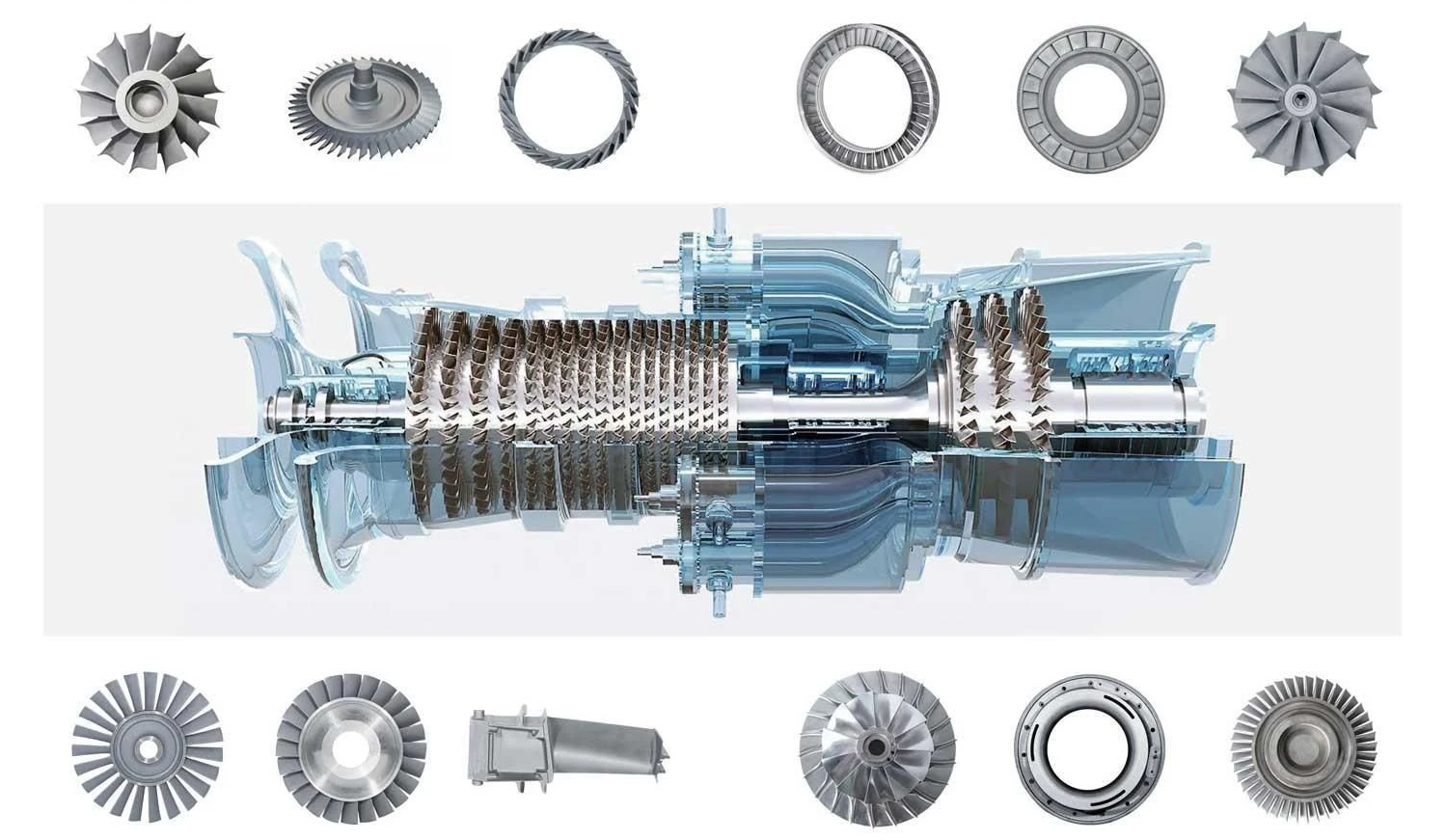
The largest application segment, turbine engines, might contain hundreds of investment-cast parts. Leading aerospace casting manufacturers produce:
-
Turbine Blades and Vanes: These airfoils endure centrifugal forces exceeding 10,000 times their weight while operating hundreds of degrees above the alloy's melting point, thanks to intricate internal cooling channels cast directly into the component. Single-crystal blades, with no grain boundaries to weaken the structure, represent the pinnacle of this technology.
-
Combustors and Nozzles: Complex, thin-walled structures that must maintain integrity while containing controlled explosions and directing superheated gases.
-
Structural Frames and Housings: Lightweight yet rigid components that form the engine's skeleton.
Airframe and Structural Components
Beyond engines, investment casting contributes significantly to airframe weight reduction and performance:
-
Flight Control Actuation Systems: High-strength brackets, levers, and housings for ailerons, rudders, and flaps.
-
Landing Gear Components: Critical parts like trunnions and braces that absorb tremendous impact forces.
-
Structural Brackets and Fittings: Complex-shaped components that interface between major assemblies, often optimized through topological design to use minimal material.
Space and Defense Systems
Here, performance margins are even narrower, and reliability is paramount:
-
Rocket Engine Components: Thrust chambers, injector plates, and turbopump parts that handle cryogenic and hypergolic fuels.
-
Missile Guidance and Control Sections: Hermetic housings for sensitive electronics.
-
Satellite Structures: Lightweight, dimensionally stable frames and supports that survive launch vibrations and thermal cycling in vacuum.
Emerging Frontiers
-
Additive-Enhanced Casting: Using 3D printing to create ceramic molds or wax patterns with previously impossible complexity.
-
Hybrid Structures: Cast components designed to integrate with composite materials in next-generation airframes.
-
Reusable Space Vehicle Components: Parts designed for multiple atmospheric re-entries with minimal inspection and refurbishment.
Section 3: The Manufacturing Process Deconstructed – A Symphony of Precision
The journey from digital model to flight-ready component involves a meticulously choreographed sequence of steps, each critical to the final part's integrity. Leading aerospace casting manufacturers have transformed this art into a data-driven science.
Step 1: Design and Pattern Tooling
It begins with the component design, often optimized using Finite Element Analysis (FEA) and Computational Fluid Dynamics (CFD) to balance strength, weight, and function. From this digital model, a precision mold (die) is machined, typically from aluminum or steel. This die will produce the wax patterns—positive replicas of the final part, complete with allowances for metal shrinkage.
Step 2: Wax Pattern Production and Assembly
Molten wax is injected under pressure into the die, creating precise patterns. For components with internal cavities, ceramic cores (which will later dissolve) are placed in the die first. Multiple wax patterns are then assembled onto a central wax "tree," creating a cluster that allows multiple parts to be cast simultaneously—crucial for efficiency and consistent thermal conditions.
Step 3: Ceramic Shell Building (The Investment)
The wax cluster undergoes a series of dipping and coating processes:
-
Prime Coat: A fine ceramic slurry captures every detail of the wax surface.
-
Stucco Coating: Coarse ceramic particles are applied to build thickness and strength.
-
Drying: Controlled humidity and temperature environments cure each layer.
This cycle repeats 5-12 times until a robust ceramic shell, typically 5-15mm thick, envelops the wax cluster. The name "investment casting" derives from this "investing" of the pattern in ceramic.
Step 4: Dewaxing and Firing
The shell is placed in a high-temperature autoclave or furnace, where the wax melts and runs out (the "lost wax"), leaving a perfect negative cavity. The ceramic shell is then fired at temperatures up to 1100°C (2000°F) to burn out any residual wax, sinter the ceramic for strength, and bring it to the optimal temperature for metal pouring.
Step 5: Melting and Pouring
This is where metallurgical excellence takes center stage. Pre-alloyed ingots, with chemistry verified by spectrometry, are melted in vacuum or controlled-atmosphere furnaces. Vacuum melting is particularly crucial for reactive alloys like titanium and for minimizing gas porosity. The molten metal, often superheated to ensure fluidity, is poured into the preheated ceramic mold. Advanced techniques include:
-
Directional Solidification: The mold is withdrawn from the furnace through a gradient, controlling the solidification direction to create columnar grain structures.
-
Single Crystal Growth: A spiral selector allows only one crystal to grow into the component, eliminating grain boundaries entirely.
Step 6: Shell Removal, Finishing, and Inspection
Once cooled, the ceramic shell is mechanically and chemically removed. The cast parts are cut from the central tree using high-precision saws or abrasive wheels. Then begins extensive finishing: heat treatment to optimize mechanical properties, hot isostatic pressing (HIP) to eliminate internal microporosity, precision machining of critical interfaces, surface treatments (like aluminide coatings for oxidation resistance), and non-destructive testing (NDT).
Section 4: The Manufacturer's Imperative – Why Expertise Cannot Be Compromised
In an industry where a single component failure can have catastrophic consequences, choosing your aerospace casting manufacturer is perhaps the most critical decision in the supply chain. Not all foundries are created equal, and the distinctions between commercial-grade and aerospace-grade manufacturers are profound.
Technical Expertise and Metallurgical Mastery
Aerospace alloys are unforgiving. Inconel 718, René 108, Ti-6Al-4V—these materials demand precise control over melting parameters, solidification rates, and heat treatment cycles. Expert manufacturers maintain deep metallurgical staff who don't just follow specifications but understand the underlying material science. This knowledge enables problem-solving when anomalies occur and allows for collaborative development with customers on new alloys or applications.
Integrated Process Control and Traceability
From the moment raw material enters the facility to the shipment of finished parts, every parameter is logged and linked to a unique component serial number. This traceability is non-negotiable and mandated by certifications like AS9100. Modern foundries employ Manufacturing Execution Systems (MES) that track furnace temperatures, pour times, operator identities, and inspection results for every batch. In the event of an in-service issue, this allows for precise forensic analysis and targeted recalls if necessary.
Advanced Process Development Capabilities
Leading manufacturers invest significantly in R&D, exploring frontiers like:
-
Simulation-Driven Design: Using software like ProCAST or MAGMASOFT to simulate mold filling, solidification, and stress development before any metal is poured, dramatically reducing development time and trial costs.
-
Automation and Robotics: For repetitive tasks like shell dipping or finishing, ensuring consistency and freeing skilled technicians for higher-value oversight.
-
In-Process Monitoring: Real-time sensors in furnaces and pouring systems that can detect deviations and trigger automatic corrections or stoppages.
Scalability and Supply Chain Security
Aerospace programs last decades. Manufacturers must demonstrate financial stability, long-term capacity planning, and multi-source material agreements to ensure they can support production from initial low-rate builds through peak demand, potentially spanning 30-50 years for a successful aircraft program.
Section 5: Quality Assurance – The Invisible Shield
Quality in aerospace casting isn't a department; it's a culture permeating every action. The assurance protocols are multilayered, redundant, and often exceed regulatory requirements.
Certification Foundation: AS9100 and NADCAP
-
AS9100: The aerospace-specific quality management system standard. It builds upon ISO 9001 with additional requirements for risk management, configuration control, and on-time delivery performance.
-
NADCAP (National Aerospace and Defense Contractors Accreditation Program): Often called "certification on steroids," NADCAP provides special process accreditations for specific techniques like heat treating, welding, and non-destructive testing. Achieving NADCAP accreditation involves rigorous audits by industry-expert auditors.
The Inspection Arsenal: Seeing the Unseeable
-
Dimensional Inspection: Coordinate Measuring Machines (CMM) with micron-level accuracy verify every critical dimension against the digital model. Optical scanning creates full 3D maps for complex geometries.
-
Non-Destructive Testing (NDT):
-
X-Ray Radiography: Reveals internal defects like porosity, shrinkage, or inclusion.
-
Fluorescent Penetrant Inspection (FPI): Detects surface-breaking cracks.
-
Computed Tomography (CT): Creates cross-sectional 3D images, allowing virtual "dissection" of a part without touching it—invaluable for inspecting internal channels.
-
-
Metallurgical and Mechanical Testing: Samples from each heat (melt batch) undergo destructive testing: tensile strength, creep resistance, fatigue cycles, and microstructural analysis.
Statistical Process Control (SPC)
Instead of merely inspecting finished parts, SPC involves continuously monitoring process variables (e.g., wax injection temperature, slurry viscosity, furnace atmosphere) to predict and prevent deviations before they produce non-conforming parts. Control charts and capability indices (Cp, Cpk) quantify process stability and predictability.
The Human Factor: Culture of Quality
Ultimately, systems are run by people. Top manufacturers foster a culture where every employee is empowered and expected to stop production if they suspect a quality issue. Continuous training, cross-functional quality circles, and transparent reporting of near-misses create an environment where excellence is habitual.
Conclusion: Casting the Future of Aerospace
Aerospace investment casting stands as a testament to human ingenuity—a millennia-old craft continuously reinvented to meet the ever-more-demanding challenges of flight and space exploration. As we look toward a future of sustainable aviation, hypersonic travel, and interplanetary colonization, the components enabling these leaps will increasingly rely on the precision, material versatility, and design freedom that only advanced investment casting can provide.
The journey from concept to flight-ready casting is complex, requiring not just advanced equipment but profound expertise, disciplined processes, and an uncompromising culture of quality. This is why selecting the right aerospace casting manufacturer is a strategic partnership that extends far beyond a simple supplier relationship. It is a collaboration built on shared commitment to innovation, safety, and pushing the boundaries of the possible.
At the heart of every roaring turbine, every smooth flight control input, and every successful rocket ignition, there lies a story of precision—of molten metal shaped by human expertise into forms that conquer gravity and explore the cosmos. That is the silent, essential promise of aerospace investment casting: turning visionary designs into reliable reality, one precise component at a time.
Ready to Elevate Your Aerospace Program with Precision-Cast Components?
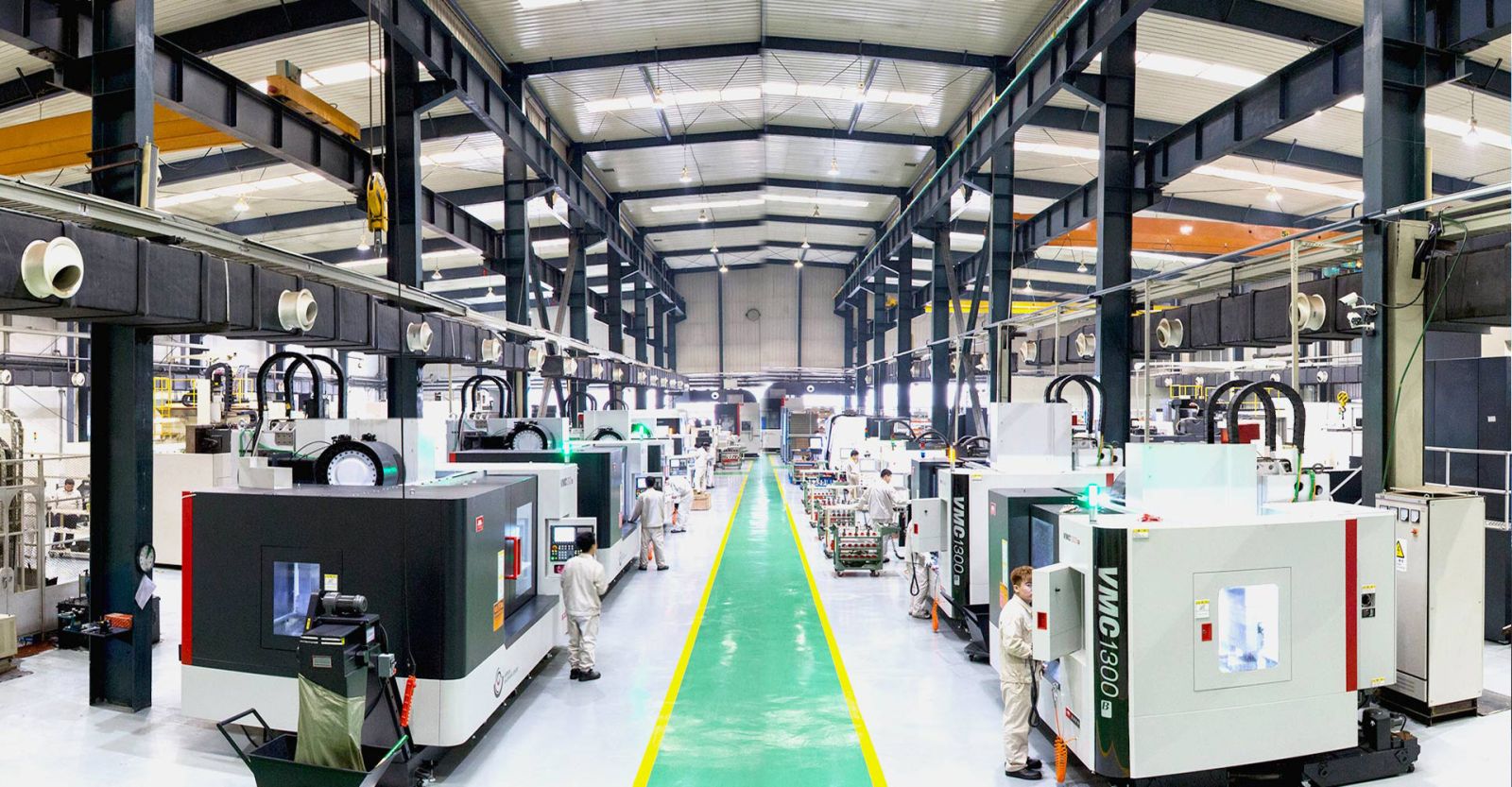
As a leading aerospace investment casting manufacturer with decades of expertise, we partner with OEMs to transform challenging designs into flight-proven reality. Our vertically integrated facilities, AS9100 and NADCAP accredited processes, and metallurgical mastery ensure components that meet the highest standards of performance and reliability.
Contact our engineering team today for a confidential design-for-manufacturability consultation, or request a quote for your next project. Let's discuss how our aero investment casting capabilities can optimize your components for weight, performance, and total lifecycle cost.
Explore our technical whitepapers, material compatibility guides, and case studies on our website, or schedule a virtual tour of our advanced foundry facilities.
Get Quote
- Visit our website: https://www.nbyichou.com/
- Email us: [email protected]
- Call us/whatsapp: +86 13355741031
- Chat with us: Live chat support available on our website