Why Forged Grade 2 and Grade 7 Titanium Valves are the Gold Standard for Corrosive Media
Author: YICHOU Valve Engineering Division
Official Website: www.nbyichou.com
-
Primary: Titanium Ball Valve Manufacturer China, ASTM B367 C2 Valve, Seawater Resistance Check Valve, Grade 7 Titanium Globe Valve.
-
Secondary: Titanium Valve Price, API 6D Titanium Valve, Chlorine Resistant Valves, Forged Titanium Valve vs Cast, Titanium Galling Solution.
1. Introduction: The Strategic Role of Titanium in Flow Control
In the high-stakes arenas of chemical processing, offshore oil and gas, and desalination, the cost of unplanned downtime is not merely an inconvenience—it is a financial catastrophe. With downtime costs frequently exceeding $10,000 per hour, the specification of a simple valve can have a massive impact on the balance sheet. For decades, engineers have relied on stainless steels, only to witness the insidious failure mode of pitting and crevice corrosion when exposed to chlorides.
While standard stainless steel 316L relies on a chromium oxide layer, it is vulnerable to attack in high-chloride environments, particularly above 60°C (140°F). Titanium, however, operates in a different league. It is a "must-have" when:
-
Temperatures exceed 100°C in seawater: At these temperatures, the risk of crevice corrosion for stainless steel and even super duplex becomes unacceptably high. Titanium remains passive.
-
High-concentration chlorides are present: In services like wet chlorine gas, bleach, or chlorinated brines, titanium is virtually the only economically viable metal that offers immunity.
-
Erosion-corrosion is a concern: Titanium's tenacious oxide film protects it from mechanical wear caused by high-velocity abrasive media.
At YICHOU, we understand that a valve is more than a component; it is a reliability center. Our mission is to bridge the gap between raw metallurgical science and field performance. We engineer zero-leakage titanium ball, check, and butterfly valves that do not just meet specifications—they outlast the competition by decades.
2. Customer Pain Points: What Procurement Engineers Ask
In our years of collaboration with global procurement teams, certain technical questions recur. Here is how YICHOU addresses the three most critical pain points in titanium valve selection.
Q1: Cast vs. Forged Valve Bodies—Which is Superior?
This is the foundational question of valve manufacturing. At YICHOU, we utilize both processes strategically, but understanding the difference is key to application success.
Technical Depth:
Forging involves the mechanical deformation of titanium at high temperatures. This process refines the grain structure and eliminates internal porosity. For high-pressure gas applications or severe service conditions, a forged body using grades like F2 or F5 is non-negotiable. The wrought structure offers superior strength and integrity against blow-out.
Casting allows for complex geometries, such as those found in large gate or check valves, at a more cost-effective price point. However, it is critical to note the designation. Cast titanium grades use the prefix "C" (e.g., C-3, C-8).
A common point of confusion is the difference between cast and wrought grades. For example, a piping spec may call for wrought Grade 2, but the valve supplier offers a cast C-3 body. Is this acceptable? Yes, and here is why: cast Grade C-3 (UNS R50550) is essentially the cast equivalent of wrought Grade 2. The C-3 grade actually has a slightly higher yield strength (approximately 35% higher) to accommodate the pressure-temperature rating of the casting, while offering identical corrosion resistance. At YICHOU, we ensure that the chosen casting grade (C-2, C-3, C-8) is perfectly matched to the intended service, guaranteeing that you get the performance of Grade 2 or 7 even in a cast form.
Q2: Why is my Titanium Valve "Galling"?
The Problem:
Titanium is an "adhesive" metal. Under load, with insufficient lubrication, titanium-on-titanium contact in moving parts—such as the interface between a rotating ball and its stem, or a stem and its packing gland—can seize. This phenomenon, known as galling, leads to high torque and catastrophic failure of the valve operator.
The YICHOU Solution:
We never rely on bare titanium-to-titanium contact in dynamic applications. Our engineering team solves this through two distinct methods:
-
Surface Hardening: We employ specialized surface treatments (such as thermal oxidation or nitriding) on the stem to create a hard, wear-resistant layer without compromising the core's corrosion resistance.
-
Dissimilar Materials: We strategically use PTFE (Teflon) liners, Stellite (cobalt-based alloy) hard-facing on seat faces, or specially engineered PEEK inserts. This ensures that while the pressure-containing parts are titanium, the moving contact surfaces are non-metallic or hardened to eliminate the risk of seizing.
Q3: Which Grade for Brine vs. Oxidizing Acids?
Selecting the wrong grade of titanium can be as damaging as selecting stainless steel.
-
Grade 2 (Commercially Pure): This is the workhorse for standard applications. If you are handling seawater, brackish water, or most brine solutions up to elevated temperatures, Grade 2 offers the best balance of cost and performance. Its resistance to erosion-corrosion is unmatched in these environments. In seawater, Grade 2 exhibits a corrosion rate of less than 0.05 mm per year, essentially negligible over the valve's design life.
-
Grade 7 (Palladium-Stabilized): When the media shifts from oxidizing to mildly reducing, or when crevice corrosion is a risk (e.g., under gaskets or in thread connections), Grade 7 is the gold standard. The addition of 0.12% to 0.25% palladium dramatically enhances the stability of the passive film.
Data-Driven Selection:
Consider the difference in a 5% boiling hydrochloric acid solution:
-
Titanium Grade 2: Corrosion rate > 10 mm/year (unacceptable).
-
Titanium Grade 7: Corrosion rate 0.18 mm/year (serviceable).
This data clearly illustrates why Grade 7, while more expensive, is essential for acid-chloride environments. For oxidizing acids like nitric acid, Grade 2 performs excellently, but for reducing conditions where the oxide film may be challenged, the palladium content in Grade 7 provides a safety margin.
3. Technical Deep-Dive: Material Specifications & Compliance
To specify a YICHOU titanium valve, engineers demand compliance with international standards.
Material Standards:
-
Bodies:
-
ASTM B367 (Castings): We supply Gr. C-2, C-3, and C-8 (Pd-stabilized) for complex body geometries. These grades ensure sound castings with mechanical properties suited for valve pressure classes.
-
ASTM B381 (Forgings): We utilize Gr. F-2, F-5, and F-7 for high-integrity stems, balls, and forged body valves. Forgings provide directional grain flow that enhances toughness in high-stress areas.
-
-
Trim (Stems/Balls): Sourced to ASTM B348 specifications, ensuring traceability from ingot to finished component. This standard covers titanium and titanium alloy bars and billets, guaranteeing consistent chemistry and mechanical properties.
Corrosion Resistance Mechanics:
Titanium's performance hinges on its native TiO₂ (titanium dioxide) passive film. This oxide layer is unique because it is "self-healing" in the presence of oxygen or water. If scratched, the film instantly reforms. This gives titanium a distinct hydraulic advantage. Unlike copper-nickel alloys, which suffer from erosion-corrosion at high velocities, titanium is immune to erosion-corrosion up to flow velocities of 20 m/s and beyond. This makes it ideal for pump isolation and throttling services where high turbulence is expected. The film also provides exceptional resistance to pitting and crevice corrosion in chloride environments, even at elevated temperatures up to 250°C in some services.
Compliance:
All YICHOU titanium valves are designed and tested to meet:
-
API 6D: For pipeline valves, ensuring shell integrity and seat leakage standards. This includes requirements for fire-safe design and anti-static devices where specified.
-
ASME B16.34: For pressure-temperature ratings and flange dimensions. This standard defines the wall thickness and pressure class ratings that guarantee safe operation under designated conditions.
-
NACE MR0175/ISO 15156: For sour service environments containing H₂S, where sulfide stress cracking (SSC) is a risk. Titanium's resistance to SSC makes it suitable for aggressive oil and gas production.
4. Key Valve Types and Their Industrial Applications
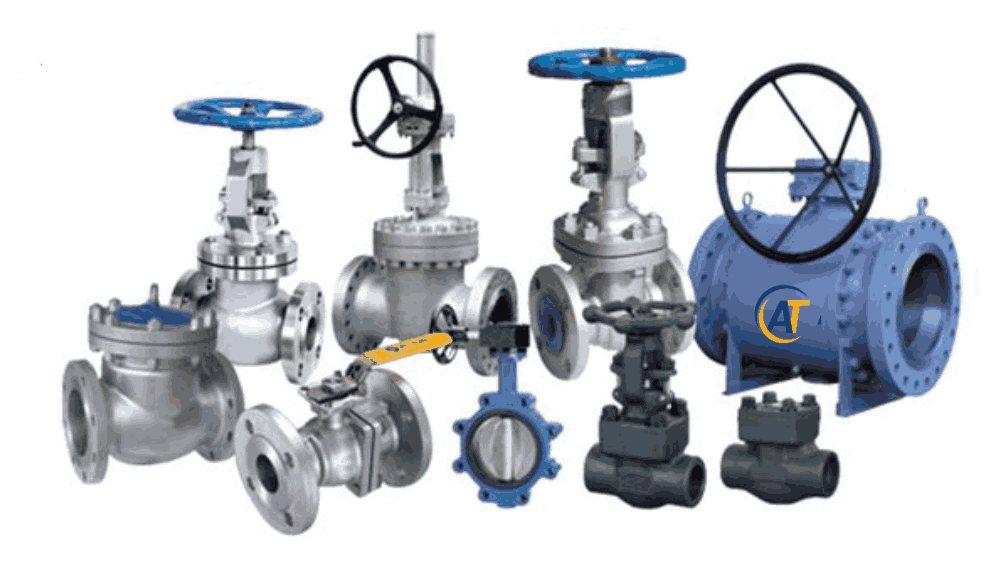
YICHOU manufactures a full range of titanium valves, each engineered for specific flow control challenges.
Titanium Ball Valves: The Gold Standard for Shut-Off
In desalination plants (SWRO), the rapid shut-off capability of a ball valve is critical for isolating high-pressure pumps. Our full bore (full port) design minimizes pressure drop and protects the passive layer by reducing turbulence. Available in floating and trunnion-mounted designs, these valves are the primary choice for chlorine injection and brine lines. The floating design is suitable for smaller diameters and lower pressures, while trunnion-mounted versions with reduced operating torque are used for larger sizes and high-pressure applications. All ball valves feature blowout-proof stems and anti-static devices as standard, ensuring safety in hazardous areas.
Titanium Check Valves: Protecting Critical Assets
In chlor-alkali electrolysis cells, backflow can cause explosive reactions. Our titanium wafer and swing check valves provide instant, reliable closure to prevent reverse flow of mercury or caustic solutions, leveraging the material's immunity to both chlorine and caustic attack. Wafer check valves offer a compact, lightweight solution for tight spaces, while swing check valves provide low-pressure drop and are ideal for larger pipelines. Spring-assisted designs ensure rapid response even in vertical installations, preventing water hammer and protecting upstream equipment.
Titanium Butterfly Valves: Lightweight, Large-Diameter Solutions
For shipboard cooling systems and offshore platform seawater lift pumps, weight is a primary concern. Titanium's density is 4.51 g/cm³, roughly 40% lighter than steel and 60% lighter than cupro-nickel. Our concentric and double-eccentric butterfly valves reduce structural load on piping systems while providing bubble-tight shut-off in diameters up to DN1200 and beyond. Concentric designs are cost-effective for general service, while double-eccentric (high-performance) designs minimize seat wear and are suitable for higher pressures and temperatures. The lightweight nature of titanium also simplifies installation and reduces the need for heavy supports.
5. Manufacturing Excellence at YICHOU
The journey from titanium sponge to a finished valve is fraught with metallurgical pitfalls. YICHOU's manufacturing excellence ensures these pitfalls are avoided.
Vacuum Melting & Casting:
Titanium is highly reactive at high temperatures. If melted in air, it absorbs oxygen and nitrogen, becoming brittle and unweldable. We utilize vacuum arc remelting (VAR) or induction melting in a vacuum to produce castings (ASTM B367) that are chemically pure and free of gas porosity, ensuring excellent weldability for joint integrity. This process also allows precise control of alloying elements, such as palladium in Grade 7, to achieve the desired corrosion resistance. After casting, all components undergo heat treatment to relieve residual stresses and optimize mechanical properties.
Precision Machining:
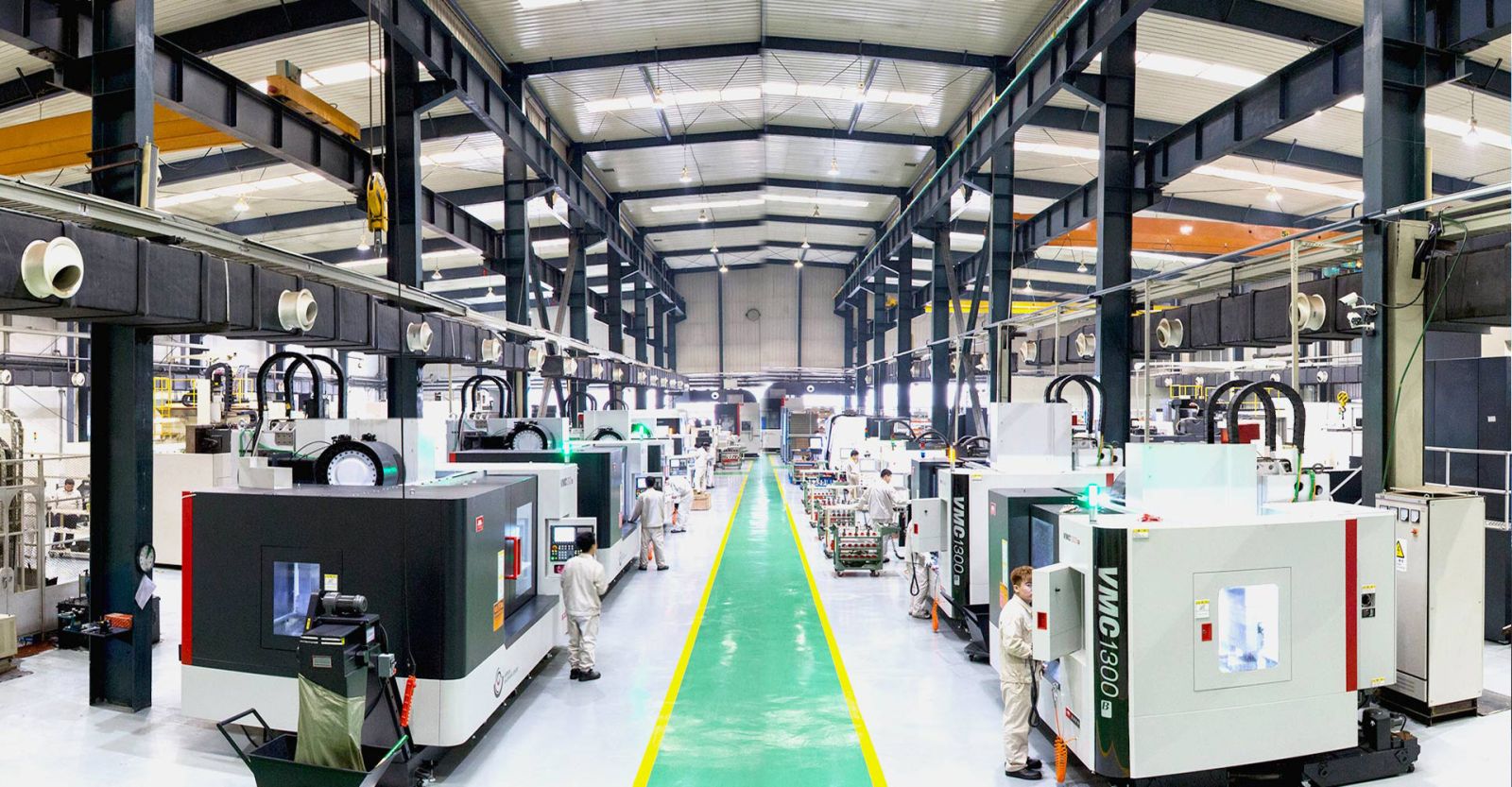
Achieving a Class VI (bubble-tight) shut-off requires perfection in the mating of the ball and seat. Our CNC machining centers hold tolerances of ±0.01 mm on critical sealing diameters. This precision ensures that the soft seat (PTFE/PEEK) deforms just enough to seal, but not so much that it extrudes. For metal-seated valves required in high-temperature or abrasive services, lapping and polishing achieve mirror finishes that guarantee zero leakage even after many cycles.
Testing Protocols:
Every valve leaving the YICHOU factory is a certified piece of equipment:
-
Shell & Seat Pressure Tests (API 598): Rigorous hydrostatic testing to verify the pressure-containing integrity of the body and the sealing capability of the seats. Shell tests are conducted at 1.5 times the rated pressure, while seat tests verify bi-directional sealing.
-
Positive Material Identification (PMI): We do not rely on paperwork alone. We use handheld XRF analyzers to verify the chemistry of the titanium, guaranteeing you receive Grade 2 or Grade 7, and not a low-cost substitute. This is especially critical for Grade 7, where the palladium content must be confirmed.
-
Dye Penetrant Testing (PT): Critical welds and castings undergo PT inspection to detect micro-surface cracks that could lead to premature failure. This non-destructive examination is essential for validating the integrity of components subjected to cyclic loading.
6. Sourcing Intelligence: Total Cost of Ownership (TCO)
For procurement managers, the decision to invest in titanium is a financial model, not just a technical one.
Initial Investment vs. Lifecycle Cost:
Yes, the initial purchase price of a titanium valve is higher than 316L or even duplex. However, the calculation does not end there.
-
A 316L stainless steel valve in a seawater service might last 2 to 3 years before pitting requires replacement.
-
A super duplex valve may extend that to 5 to 8 years, but still faces limitations in higher temperatures or chlorides.
-
A YICHOU titanium valve in the same service consistently lasts 15+ years with zero maintenance.
When you factor in the cost of replacement parts, labor for change-out, and the astronomical cost of plant downtime, titanium delivers a negative total cost of ownership (TCO) within the first maintenance cycle. For example, a chemical plant that replaces a 316L valve every three years at a cost of $5,000 per replacement (including labor) spends $25,000 over 15 years. A titanium valve costing $15,000 installed once results in a net saving of $10,000, not including avoided downtime.
Lead Time Management:
We understand that project delays are expensive. Unlike suppliers who wait for raw material orders, YICHOU maintains a strategic stock of certified titanium ingots. This allows us to reduce typical industry delivery times from 20 weeks to just 8–10 weeks, ensuring your project stays on schedule. Our inventory includes common sizes of Grade 2 and Grade 7 bar stock and castings, enabling rapid response to urgent requirements.
Global Logistics:
Based in Ningbo, we leverage the port of Shanghai for global export. Each high-value valve is protected with maritime-grade packaging—including VCI (vapor corrosion inhibitor) bags and desiccants for sea freight—to ensure it arrives in the same pristine condition it left our factory. For air freight, we use robust wooden crates that meet ISPM-15 standards. All shipments include comprehensive documentation, including material test reports, pressure test certificates, and PMI reports, to facilitate customs clearance and client acceptance.
7. Conclusion: Engineering the Zero-Corrosion Future
In the battle against corrosion, incremental improvements are not enough. The engineer's guide to the future is written with materials that render corrosion irrelevant. At YICHOU, we bridge the gap between raw titanium and finished high-performance flow control solutions. Whether it is the workhorse reliability of forged Grade 2 for seawater or the palladium-enhanced resilience of Grade 7 for aggressive acids, YICHOU valves are engineered to be the last valve you ever need to install in that line.
Our commitment extends beyond the product. We offer technical support throughout the specification process, helping you select the right grade, trim, and design for your unique application. With decades of combined experience in titanium metallurgy and valve engineering, our team is your partner in achieving zero-corrosion operations.
Equip your next project with the gold standard.
Request our 2026 Titanium Valve Technical Catalog or get an instant RFQ
Contact us today for a competitive quote and technical support!
Let Yichou help you achieve excellence in your next project. Whether you need raw materials, custom alloy solutions, or precision-manufactured components, our team is ready to assist.
- Email us: [email protected]
- Call us/whatsapp: +86 13355741031
- Chat with us: Live chat support available on our website