Introduction
In demanding industrial processing, a minor failure in your ventilation or exhaust system can cost thousands of dollars per hour in unexpected downtime. When a critical fan stops, production lines halt, safety risks escalate, and maintenance teams scramble for solutions. Yet many plant managers and procurement professionals still struggle with one fundamental question: Should I choose a standard industrial centrifugal fan or a specialized high pressure centrifugal blower?
As a direct centrifugal fan manufacturer working with global clients across mining, cement, chemical processing, and pneumatic conveying industries, we have seen the same costly mistakes repeated year after year. Engineers spec fans based on incomplete data. Procurement teams accidentally buy from trading companies instead of real factories. And operations suffer from premature bearing failures, excessive vibration, and unplanned shutdowns.
This comprehensive guide breaks down the engineering essentials, operational challenges, and factory-direct procurement strategies you need. Whether you are an HVAC engineer designing a dust collection system, a maintenance manager replacing a failed blower, or a procurement officer sourcing for a new plant expansion, you will walk away with actionable knowledge to make the right decision.
Part 1: Centrifugal Fan vs. Blower – Understanding the Technical Differences
Before diving into selection criteria, we must clarify a confusion that persists even among experienced engineers. Many use "fan" and "blower" interchangeably, but the technical distinction directly impacts system performance.
Airflow Mechanics and Pressure Classification
Centrifugal fans (also called centrifugal blowers) operate by accelerating air radially outward through an impeller. The key differentiator is the pressure-to-volume ratio:
-
Low-pressure centrifugal fans: Typically generate static pressures below 700 Pa (2.8 inches WG). Used for general ventilation, cooling towers, and air circulation in open spaces.
-
Medium-pressure centrifugal blowers: Operate between 700 Pa and 3,000 Pa (12 inches WG). Common in HVAC systems, fume exhaust, and light material handling.
-
High pressure centrifugal blowers: Exceed 3,000 Pa and can reach up to 15,000 Pa (60 inches WG) or more. These are required for pneumatic conveying, fluidized bed systems, industrial drying, and heavy dust collection.
Many buyers searching for "industrial blower fans" actually need the high-pressure category but lack the technical vocabulary. If your application involves pushing air through long ductwork, filters, cyclones, or dense materials, you almost certainly need a genuine high pressure centrifugal blower, not a standard ventilation fan.
Impeller Blade Configurations – The Heart of Performance
As a manufacturer, we produce three primary blade types, each solving different operational challenges:
Backward-curved blades: The most energy-efficient design, typically achieving 80-85% static efficiency. These are ideal for clean air applications like HVAC, drying systems, and combustion air supply. They have a non-overloading power curve, meaning motor overload is unlikely even if the system resistance drops unexpectedly.
Forward-curved blades: Also known as squirrel cage blowers. They deliver high airflow at low pressure but have lower efficiency (55-65%). Common in residential furnaces, air handling units, and low-noise applications. For heavy industrial use, forward-curved blades are rarely the right choice.
Radial blades (straight or radial tip): The workhorse for harsh environments. Radial blades generate the highest pressure but at lower efficiency (65-75%). Their rugged design resists material buildup and handles dust-laden, abrasive, or sticky airstreams. For pneumatic conveying, wood dust collection, or cement plant applications, radial blade fans are standard.
When buyers search for "high pressure centrifugal fan," they almost always need a robust radial or backward-curved design with heavy-duty construction. Understanding this distinction prevents the common mistake of purchasing an underbuilt fan that fails within months.
Part 2: Why High-Pressure Applications Fail – Engineering Pain Points Exposed
After analyzing thousands of replacement fan orders, we have identified three failure patterns that account for over 80% of premature breakdowns in high pressure centrifugal blowers.
Failure Pattern 1: Bearing Overheating and Premature Wear
In high pressure operation, the impeller exerts tremendous radial and axial loads on bearings. Standard bearings designed for low-pressure fans will overheat within weeks when subjected to continuous 24/7 high static pressure duty.
The real cause: Many buyers purchase fans based only on airflow (CFM) and ignore the radial force calculation. At 10,000 Pa pressure, the side load on bearings can exceed 500 kg, requiring specially selected heavy-duty spherical roller bearings with high-temperature grease and proper cooling paths.
Our factory solution: We exclusively use SKF, FAG, or NSK bearings with calculated L10 life exceeding 50,000 hours under maximum operating conditions. Additionally, our bearing housings feature cast iron construction with external cooling ribs and optional temperature sensors for predictive maintenance.
Failure Pattern 2: Dynamic Imbalance and Catastrophic Vibration
Even a perfectly balanced impeller at rest can become dangerously unbalanced at operating speed if the shaft, bearing housing, or baseplate lacks sufficient stiffness. High pressure fans spin at speeds up to 3,600 RPM, and any imbalance translates into vibration that destroys bearings, loosens fasteners, and cracks welds.
The hidden danger: Many suppliers perform single-plane balancing only. For high-pressure blowers with wide impellers, two-plane (dynamic) balancing per ISO 1940 grade G2.5 or better is mandatory. Yet many trading companies skip this step entirely, selling off-the-shelf units that vibrate immediately upon startup.
Our factory solution: Every impeller we manufacture undergoes precision dynamic balancing on Schenck or CEMB balancing machines to ISO 1940-1 Grade G2.5 as a minimum, with Grade G1.0 available for critical applications. We also balance complete rotating assemblies including shaft and cooling fan. Our test reports are included with every shipment.
Failure Pattern 3: Erosion, Corrosion, and Material Fatigue
High-pressure fans often handle gas streams containing dust, chemicals, or elevated temperatures. Standard carbon steel impellers erode rapidly. One cement plant client replaced their fan every six months before switching to our abrasion-resistant design.
Material selection guide:
| Gas Condition | Recommended Material | Coating/Treatment |
|---|---|---|
| Clean air, ambient temp | Carbon steel Q235/A36 | Standard paint |
| Mild dust, <80°C | Carbon steel + Hardox 400 liner | Wear plates |
| High dust, abrasive | AR400/AR500 steel or Chrome carbide overlay | Tungsten carbide spray |
| Corrosive fumes, <150°C | Stainless steel SUS304 / 316L | No coating needed |
| High temp 350°C | Carbon steel with Inconel cladding | Thermal barrier |
| Explosive gas | Carbon steel + ATEX construction | Copper beryllium spark-proof |
Buyers searching for "industrial centrifugal fan" for chemical or mining applications must verify that the manufacturer offers full material traceability and custom fabrication. We maintain mill certificates for all steel coils and perform hardness testing on wear components.
Part 3: Critical Selection Factors for International Procurement Managers
When evaluating centrifugal fan manufacturers, professional buyers should request documentation on these five key parameters. Trading companies rarely provide complete data.
1. Performance Curve at Operating Conditions
A reputable manufacturer will supply a certified fan performance curve showing volume vs. static pressure at specified RPM and air density. Verify that your required operating point falls within the high-efficiency zone (typically 75-85% of peak efficiency). Avoid fans sized at the extreme ends of the curve where efficiency drops below 60%.
2. Factory Dynamic Balancing Report
Demand a copy of the balancing certificate showing residual unbalance in grams or grams-mm, along with balancing speed and tolerance grade (ISO 1940 G2.5 or G1.0). For high-pressure blowers over 7,500 Pa, insist on G2.5 minimum.
3. Material Certificates and Traceability
For stainless steel or abrasion-resistant applications, require EN 10204 3.1 or 3.2 mill certificates. Many trading companies claim "304 stainless" but deliver 201 grade with inferior corrosion resistance.
4. Motor and Drive Specifications
High-pressure fans require motors with adequate service factor (1.15 minimum). Verify that the motor meets your local voltage and frequency (230/460V 60Hz for North America, 380/415V 50Hz for Europe/Asia). For ATEX zones, confirm motor certification matches the hazardous area classification (Zone 1, Zone 2, or Division 1/2).
5. Lead Time and Spare Parts Availability
Direct manufacturers typically offer 25-45 day lead times for custom-built fans. Trading companies often quote 15 days but deliver lower-quality stock units. Ask about spare parts availability: bearings, shaft seals, and impellers should be stockable for at least 10 years.
Part 4: Why Partner Directly with a Centrifugal Fan Manufacturer
Search data shows "centrifugal blower manufacturer" and "centrifugal fan manufacturers" receive over 800 monthly searches globally. Yet many buyers inadvertently work with intermediaries. Here is why going direct to the factory floor matters.
Cost Efficiency Without Middleman Markups
Trading companies typically add 30-50% margins above the factory price. For a 10,000industrialcentrifugalfan,thatmeanspaying10,000industrialcentrifugalfan,thatmeanspaying13,000 to $15,000 for the exact same product. Direct manufacturer pricing eliminates these markups, freeing budget for premium features like ATEX motors or stainless steel construction.
Engineering Support Tailored to Your System
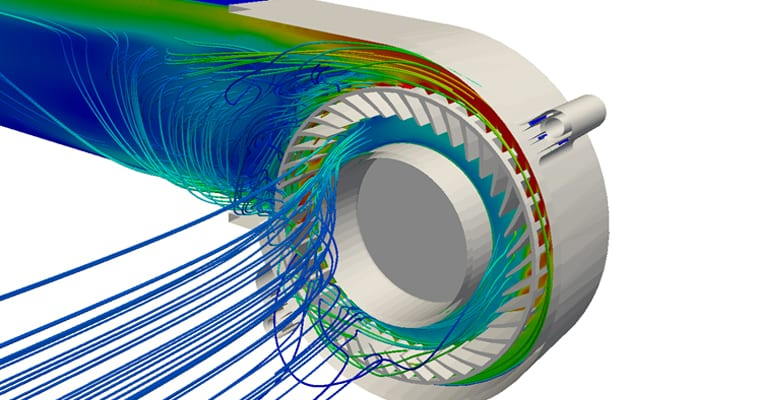
No two industrial applications are identical. A direct manufacturer provides in-house engineering to customize inlet/outlet flange orientations, drain ports, access doors, and baseplate configurations. We have performed CFD (computational fluid dynamics) simulations for clients with complex duct layouts, optimizing fan placement to reduce pressure drop by 18% in one chemical plant.
Quality Control and Full Transparency
When you buy direct, you visit our factory or receive real-time production updates. We share welding procedure specifications (WPS), non-destructive testing (NDT) reports, and vibration analysis logs. Trading companies cannot provide this visibility because they do not control production.
One recent client from a food processing plant requested full documentation for their FDA audit. As a direct manufacturer, we supplied all material certificates, surface finish measurements, and sanitary weld inspection reports within 24 hours.
(1).png)
Part 5: Real-World Application Guide by Industry
To help you connect theory to practice, here is how high pressure centrifugal blowers are applied across major industries.
Cement and Mining – Dust Collection and Pneumatic Conveying
Challenge: Highly abrasive dust (silica, clinker, coal) erodes fan impellers rapidly. Bearing failures occur every 3-6 months with standard fans.
Our Solution: Radial blade impellers fabricated from AR400 abrasion-resistant steel with chrome carbide weld overlay. Housing lined with 10mm replaceable wear plates. Shaft seals with pressurized air purge to keep dust out of bearings.
Result: A cement plant in Vietnam extended fan life from 4 months to 28 months after switching to our heavy-duty design, reducing annual maintenance costs by $47,000.
Chemical Processing – Corrosive Fume Exhaust
Challenge: Hydrochloric acid, chlorine, or sulfur dioxide gases corrode carbon steel within weeks. Standard stainless 304 also shows pitting in high-chloride environments.
Our Solution: SUS316L stainless steel impeller and housing with electropolished finish. Optional PTFE coating for extreme acid resistance. Explosion-proof motor for flammable vapor extraction.
Result: A specialty chemical manufacturer in Germany achieved 5+ years of trouble-free operation with our ATEX-certified high pressure fan, compared to 8-month replacements previously.
Power Generation – Forced Draft and Induced Draft Fans
Challenge: High temperatures (up to 350°C) and fly ash contamination. Fan shafts require cooling and bearings need high-temperature grease.
Our Solution: Air-cooled bearing housings with cast iron cooling fins. Heat slingers on the shaft to block radiant heat transfer. Inconel 625 overlay on impeller leading edges for erosion resistance.
Result: A biomass power plant reduced unscheduled downtime by 83% after installing our custom-engineered induced draft fan.
Part 6: Certification and Compliance – What Global Buyers Must Verify
International buyers searching for "centrifugal fan manufacturers" should demand these certifications. Absence of any is a red flag.
ISO 9001:2015 – Quality management system covering design, production, and testing. Verify the certificate is current and includes your specific fan type.
AMCA 210/300 – Air performance testing laboratory certification. Fans tested to AMCA standards have reliable published curves. Many uncertified suppliers inflate performance data.
ISO 1940-1 Dynamic Balancing – As discussed earlier, this is non-negotiable for high pressure blowers.
ATEX 2014/34/EU – For explosive atmospheres (gas or dust). Verify the fan itself is ATEX-certified, not just the motor. Many suppliers only provide an ATEX motor on a non-ATEX fan casing, which violates regulations.
CE Marking – Required for European Union. Includes Low Voltage Directive, Machinery Directive, and EMC compliance.
UL/cUL Listing – For North American electrical installations. Many buyers mistakenly accept "CE only" for US projects, but local inspectors will reject uncertified equipment.
As a direct manufacturer holding all these certifications, we provide the complete compliance package with every international shipment.
Part 7: Sizing and Selection – Step-by-Step Worksheet
Use this systematic approach when specifying your industrial centrifugal fan.
Step 1 – Define Operating Conditions
-
Airflow required: ______ CFM or m³/h
-
Static pressure at fan outlet: ______ Pa or inches WG
-
Air temperature: ______ °C or °F
-
Altitude above sea level: ______ meters
-
Gas composition: clean / light dust / heavy dust / corrosive / explosive
Step 2 – Calculate Density Correction Factor
For temperatures above 40°C or altitudes above 500 meters, fan performance must be corrected. The correction factor = (actual density / standard density). Our engineering team performs this calculation automatically when you provide operating conditions.
Step 3 – Select Fan Type
-
Clean air, high efficiency → Backward-curved
-
Dusty air, abrasive → Radial blade or radial tip
-
Low noise, high volume → Forward-curved (rare in industrial)
Step 4 – Determine Motor Power
Using the corrected performance point, calculate required shaft power then add 15% service factor. Oversizing motors beyond 25% wastes energy; undersizing causes overheating and trips.
Step 5 – Verify Sound Levels
High pressure fans generate 85-105 dBA at 1 meter. For occupied areas, specify a silencer or acoustic enclosure. We provide octave band data for all models.
Part 8: Maintenance and Troubleshooting – Extend Fan Life
Even the best industrial blower fans require proper maintenance. Implement these practices to achieve 20+ years of service life.
Weekly inspection – Listen for unusual bearing noise or vibration. Check belt tension (for belt-drive units) and lubricate grease fittings if the fan operates in high-temperature environments.
Monthly inspection – Measure vibration velocity (mm/s RMS) on bearing housings. Trending upward indicates developing imbalance or bearing wear. Our recommended alarm threshold is 4.5 mm/s.
Quarterly inspection – Inspect impeller for erosion or material buildup. For radial fans handling dust, even 1mm of asymmetrical buildup causes imbalance. Clean with compressed air or soft brushes – never hammer directly on the impeller.
Annual inspection – Remove the inlet cone and inspect shaft seal condition. Check bearing housing oil level (for oil-lubricated units). Perform in-situ dynamic balancing if vibration exceeds 7.0 mm/s.
Common pitfalls to avoid:
-
Never operate a high pressure fan with closed dampers on the inlet – this causes surge and potential impeller failure.
-
Do not use standard grease in high-temperature bearings above 120°C; specify high-temperature polyurea or synthetic grease.
-
Avoid welding repairs on cracked impellers without dynamic rebalancing – small repairs create large imbalance.
Part 9: Case Study – How Direct Sourcing Solved a Critical Failure
A food ingredient manufacturer in the United States operated three pneumatic conveying systems for moving flour and starch. Their existing high pressure centrifugal blowers, purchased through a trading company, failed every 11 months on average. Each failure required 4 days of production loss and $18,000 in emergency repair costs.
After contacting us directly, we performed a root cause analysis. The trading company had supplied fans with:
-
Single-plane balanced impellers only
-
Standard carbon steel instead of abrasion-resistant 400 Brinell material
-
Underrated bearings (L10 life of only 18,000 hours)
-
No ATEX compliance despite flour dust explosion risk
We engineered a replacement solution with:
-
ISO 1940 G1.0 dynamic balancing (twice the precision of G2.5)
-
AR450 wear plate on impeller and housing liner
-
Heavy-duty SKF Explorer bearings with L10 life of 85,000 hours
-
Full ATEX dust certification (Zone 22)
Results after 18 months of operation:
-
Zero unscheduled downtime on all three fans
-
Bearing vibration levels remain below 2.5 mm/s (well within good condition range)
-
Estimated annual savings: 67,000inlostproduction+67,000inlostproduction+22,000 in repair costs
-
ROI achieved within 7 months of installation
The client now specifies direct manufacturer sourcing for all their industrial blower fans across five facilities nationwide.
Conclusion: Selecting the Right Industrial Centrifugal Fan
Choosing between a standard industrial centrifugal fan and a specialized high pressure centrifugal blower requires balancing three factors: technical performance, environmental resilience, and manufacturer credibility.
Key takeaways:
-
Understand your pressure requirement – if exceeding 3,000 Pa, you need a true high pressure blower with heavy-duty bearings and dynamic balancing.
-
Verify the manufacturer's certifications – ISO 9001, AMCA, ISO 1940, and applicable ATEX/UL are non-negotiable.
-
Demand material traceability – mill certificates and wear resistance data prevent early failure in abrasive or corrosive conditions.
-
Avoid trading company markups – direct factory sourcing saves 30-50% while providing engineering support.
-
Implement proactive maintenance – vibration monitoring and regular inspections extend fan life from months to decades.
Call to Action
Looking for a reliable, certified, and cost-effective centrifugal blower manufacturer for your next project?
Our engineering team specializes in heavy-duty industrial centrifugal fans and high pressure blowers for the most demanding environments – cement, mining, chemical processing, power generation, pneumatic conveying, and dust collection.
What we provide:
-
Factory-direct pricing with full documentation
-
ISO 1940 G2.5 or G1.0 dynamic balancing on all rotating assemblies
-
Custom materials: AR abrasion-resistant steel, stainless 304/316L, high-temperature alloys
-
ATEX, CE, UL, and AMCA compliance as required
-
Lead times from 25 days for custom designs
-
Global shipping with export packaging
Get Quote
- Visit our website: https://www.nbyichou.com/
- Email us: [email protected]
- Call us/whatsapp: +86 13355741031
- Chat with us: Live chat support available on our website