The AI computing wave is hitting a thermal wall. As AI GPUs push beyond 600 W per chip and EV superchargers target 600 kW power levels, traditional air cooling systems have become inadequate for managing the extreme heat flux densities generated by modern hardware. The industry has turned to liquid cooling, but the battle is no longer about design alone — it‘s about metallurgy. The question confronting thermal engineers today is whether to build advanced heat sinks from copper or aluminum. While aluminum dominates conventional applications, oxygen-free copper is emerging as the material of choice for high-performance cooling plates tasked with dissipating heat flux exceeding 100 W/cm².
This article examines the engineering case for copper in advanced heat sinks, exploring thermal conductivity metrics, micro-channel fabrication challenges, vacuum diffusion bonding processes, and real-world applications in AI data centers and EV supercharging infrastructure.
.jpg)
1. Thermal Conductivity Showdown: Oxygen-Free Copper vs. Standard Aluminum Alloys
When selecting materials for heat sinks, thermal conductivity serves as the primary metric determining a cold plate‘s ability to extract heat from a high-power component. The difference between copper and aluminum is stark.
The Quantitative Divide
Oxygen-Free High-Conductivity Copper — specifically grades such as C10200 and OFHC (Oxygen-Free High-Conductivity) copper with a minimum copper content of 99.95% — exhibits thermal conductivity values ranging from 391 to 401 W/m·K depending on specific alloy composition and temperature conditions. Standard C103 oxygen-free copper registers approximately 393 W/m·K at room temperature. By contrast, Aluminum 6061-T6, the most common grade used in machined heat sinks, has a thermal conductivity of approximately 167 W/m·K. Copper therefore offers a thermal conductivity advantage of roughly 2.3 to 2.4 times that of 6061 aluminum.
Why This Multiplier Matters Under High Heat Flux
The engineering implication of this difference becomes critical at high power densities. Aluminum cold plates perform adequately for heat flux levels up to about 20–30 W/cm². But when GPU TDP exceeds 500 W or power electronics push beyond 100 W/cm², aluminum‘s lower conductivity creates a bottleneck: heat cannot move rapidly enough from the component interface into the coolant fluid, leading to elevated junction temperatures and subsequent thermal throttling.
Micro-channel cold plates operating at heat flux above 100 W/cm² require thermal conductivity approaching 400 W/m·K to maintain junction temperatures within safe operating limits. This is where copper‘s superior bulk conductivity directly translates into lower thermal resistance and higher sustained performance.
Volumetric Heat Capacity: An Overlooked Advantage
Beyond steady-state conductivity, copper offers superior volumetric heat capacity — approximately 3.45 J/cm³·K compared to aluminum‘s 2.42 J/cm³·K. This difference provides meaningful transient thermal performance benefits. During sudden power spikes — such as an AI inference burst or the initial ramp of an EV supercharger — copper absorbs more thermal energy before its temperature rises. This buffer effect prevents instantaneous junction temperature excursions that would otherwise trigger throttling or, in extreme cases, cause immediate damage.
Beyond Bulk Conductivity: Interface Effects
Bulk material conductivity tells only part of the story. The thermal interface between the heat sink and the component — whether a GPU die or an IGBT module — imposes additional resistance. Copper‘s higher thermal conductivity reduces the sensitivity to interface imperfections. A 10% variation in interface contact resistance produces a smaller absolute temperature penalty with a 400 W/m·K base material than with a 167 W/m·K base material. For mission-critical applications such as AI server racks and EV fast-charging infrastructure, the 2.3× conductivity multiplier is not a marginal improvement — it is the difference between meeting thermal specifications and failing them.
2. Micro-Channel Cooling Plate Fabrication: The Precision Machining Challenge
A cold plate is only as effective as its internal flow geometry. The transition from conventional liquid cooling to advanced thermal management requires micro-scale flow channels that maximize heat transfer surface area while maintaining acceptable hydraulic pressure drop.
Defining the Micro-Channel Regime
The hydraulic diameter of a flow channel determines its thermal and fluid-dynamic behavior. Industry practice defines three regimes:
-
Conventional channels: > 3 mm hydraulic diameter
-
Mini-channels: 0.5 – 3 mm
-
Micro-channels: 0.1 – 0.5 mm
For applications with heat flux exceeding 100 W/cm², micro-channels with dimensions in the 0.15–0.5 mm range are essential. At these scales, the heat transfer coefficient can reach 15,000–40,000 W/m²·K, compared with 3,000–8,000 W/m²·K for mini-channels and just 800–2,000 W/m²·K for conventional channels.
CNC Machining of Micro-Channels: The Copper Advantage
Fabricating channels as narrow as 0.2 mm with fin walls of similar thickness requires ultra-high-speed CNC milling using multi-axis equipment. Modern 5-axis CNC milling machines can achieve dimensional tolerances as tight as ±0.01 mm. However, material choice critically influences the achievable geometry.
Copper offers superior machinability for micro-channel applications. Its ductility allows clean micro-slot cutting with minimal tool deflection, producing burr-free channel walls that maintain uniform cross-sections along the entire flow path. Aluminum, while easier to machine at macro scales, exhibits greater tool deflection during micro-milling operations due to its lower stiffness-to-weight ratio. This deflection leads to channel width variations and surface finish irregularities — both of which create localized flow disturbances and degrade thermal performance.
The channel aspect ratio — channel height relative to width — is another critical parameter. Copper‘s favorable machinability supports aspect ratios up to 10:1 or higher in micro-channel geometries, maximizing wetted surface area within a given cold plate footprint. Aluminum’s machinability limits practical aspect ratios to approximately 5:1 before tool deflection or chip evacuation becomes problematic.
Surface Finish Effects on Thermal and Hydraulic Performance
The internal surface finish of micro-channels significantly affects both heat transfer and pressure drop. Copper‘s machinability produces average surface roughness (Ra) values of 0.4–0.8 µm under proper cutting conditions. Aluminum, due to built-up edge formation during micro-milling, often yields Ra values of 1.2–2.5 µm. Rougher surfaces increase the friction factor and pressure drop by 15–30% for a given channel geometry, requiring higher pump power to maintain the same flow rate.
Fluid Dynamic Optimization and Pressure Drop Management
Pressure drop scales inversely with the fourth power of hydraulic diameter — halving the channel diameter increases pressure drop by a factor of 16. Micro-channel cold plates therefore impose significant pumping power requirements. Copper‘s superior thermal conductivity reduces the required channel density for a given thermal load: fewer channels are needed because each channel performs more heat transfer. This allows engineers to adopt moderately larger channel dimensions while still meeting thermal targets, reducing pressure drop and pump power consumption.
Computational Fluid Dynamics (CFD) simulation is essential for optimizing the trade-off between thermal performance and hydraulic penalty. Modern design workflows use CFD to model flow distribution, hot-spot temperatures, and pressure drop before any metal is cut. Copper‘s material properties enable greater flexibility in this optimization space: the higher conductivity relaxes constraints on channel geometry, allowing designs that balance pressure drop and heat transfer more effectively than aluminum-based alternatives.
Alternative Fabrication Routes
For ultra-fine micro-channels below 0.2 mm, chemical etching or electrical discharge machining (EDM) may be preferred over CNC milling. Chemical etching produces stress-free channels with excellent uniformity but limited depth. EDM offers high precision but slower throughput. For most production applications involving channels down to 0.2 mm, high-speed CNC milling remains the most cost-effective approach, particularly when paired with copper‘s favorable machinability characteristics.
3. Vacuum Diffusion Bonding Copper: Achieving Leak-Free, Atomic-Level Joins
Fabricating a micro-channel cold plate is a two-stage process: first, the flow channels are machined into the base plate; second, a cover plate must be joined to seal the channels and complete the cooling circuit. The joining method determines the cold plate‘s leak integrity, structural strength, and thermal performance.
The Fundamental Limitation of Brazing
Traditional vacuum brazing has long been the default joining method for cold plates. A lower-melting-point filler metal — typically a silver-based alloy — is introduced between the plates and melted in a vacuum furnace, forming a joint upon solidification.
For micro-channel cold plates, brazing presents severe limitations. The molten filler metal can flow into channels as narrow as 0.2 mm, partially or completely obstructing the flow path. Even when channel obstruction is avoided, brazed joints contain residual flux and metallurgical voids that create localized thermal resistance. These defects interrupt the heat flow path and degrade overall cold plate performance.
Furthermore, brazed joints typically achieve only 60–80% of base metal strength and thermal conductivity due to the presence of the filler material‘s distinct properties. For applications demanding absolute reliability — such as direct-to-chip cooling in AI server racks — these compromises are unacceptable.
Vacuum Diffusion Bonding: Solid-State Metallurgy
Vacuum diffusion bonding offers a fundamentally superior approach. The process involves stacking the machined plates under precisely controlled pressure within a vacuum furnace, heating them to a temperature below the base material‘s melting point but high enough to enable atomic diffusion across the interface. Under conditions of approximately 600 °C, 20 MPa pressure, and 60 minutes duration, atoms from both plates migrate across the interface, forming a solid-state joint with no filler material.
The key parameters for diffusion bonding are:
-
Temperature: Typically 60–80% of the base material‘s absolute melting point. For copper (melting point 1083°C), this corresponds to approximately 600–800°C.
-
Pressure: Sufficient to bring surfaces into intimate atomic contact without plastic deformation
-
Time: Sufficient for complete atomic interdiffusion across the interface
-
Vacuum: Typically below 10⁻⁴ torr to prevent surface oxidation
When properly optimized, vacuum diffusion bonding produces joints with properties — mechanical strength, thermal conductivity, electrical conductivity — that closely match those of the parent base metal. The process achieves recrystallization-free atomic-level bonding of bulk copper at 600°C for 60 minutes, with properties virtually identical to the base material.
Process Window and Defect Avoidance
The diffusion bonding window for copper is relatively wide compared to aluminum. Temperature deviations of ±20°C or pressure variations of ±5 MPa still produce acceptable joints with >95% of base metal strength. For aluminum, the window is narrower due to its tenacious oxide layer: temperatures must exceed 500°C under high vacuum, and surface preparation (chemical or plasma etching) is mandatory to disrupt the Al₂O₃ layer.
Common defects in diffusion bonding include incomplete bonding at channel edges, interfacial voids, and grain boundary diffusion porosity. Copper‘s high ductility allows the applied pressure to plastically deform surface asperities, filling microscopic gaps and minimizing void formation. For micro-channel cold plates, this translates into leak rates below 1×10⁻⁹ Pa·m³/s — effectively hermetic for liquid cooling applications.
Why Copper Excels in Diffusion Bonding
Copper‘s face-centered cubic crystal structure and high diffusivity make it an ideal material for vacuum diffusion bonding. Aluminum, while also bondable, presents greater challenges due to its tenacious surface oxide layer (Al₂O₃), which must be thoroughly removed or disrupted before diffusion bonding can proceed. Copper‘s native oxide is more readily reduced in vacuum, enabling more consistent, higher-quality bonds.
For applications requiring the highest reliability — AI server racks with 120 kW power densities, EV inverters subject to continuous thermal cycling, aerospace power electronics — vacuum diffusion bonding of copper represents the state of the art.
4. Application Case Studies: AI Data Centers vs. EV Supercharging
The material choice between copper and aluminum depends on the specific application‘s thermal requirements, weight constraints, and cost targets. Two contrasting case studies illustrate the decision framework, followed by a brief third case from industrial power electronics.
Case A: AI Data Center Server Liquid Cooling
The Thermal Challenge
NVIDIA‘s Blackwell architecture exemplifies the extreme power densities confronting AI data centers. The RTX Pro 6000 Blackwell workstation GPU carries a TDP of 600 W for the standard version, with a 512-bit memory interface and 96 GB of GDDR7 memory. At the server rack level, power densities now approach or exceed 50–100 kW per rack.
Direct-to-chip (D2C) liquid cooling has become the enabling technology for these densities. Coolant flows directly through cold plates mounted on GPUs, ASICs, and CPUs, extracting heat before it enters the server‘s air-cooled environment.
Why Copper Wins
AI server racks operate under continuous high load with frequent power spikes during inference and training operations. Copper‘s 2.3× thermal conductivity advantage over aluminum directly translates into lower junction temperatures and sustained performance without throttling.
Systematic evaluations of aluminum‘s corrosion behavior in modern data-center coolant chemistries reveal pronounced differences in susceptibility depending on surface treatment and coolant formulation. While aluminum can function as a substitute under controlled conditions, copper remains the corrosion-resistant baseline. For mission-critical racks where downtime costs millions per hour, the reliability premium for copper is easily justified.
Typical Implementation
A copper micro-channel cold plate for a 600 W GPU might feature 0.2 mm channels with 0.2 mm fins, vacuum diffusion bonded to a cover plate. Surface treatments such as electroless nickel plating protect against galvanic corrosion when the cold plate interfaces with aluminum components elsewhere in the coolant loop. The bonded assembly undergoes pressure testing beyond 10 bar and leak testing to ensure reliability.
Case B: EV Supercharging Infrastructure
The Thermal Challenge
Ultra-fast EV charging is pushing beyond 400 kW toward 600 kW. A demonstration station in Chibi, China, equipped with liquid-cooled ultra-fast chargers, delivers a theoretical maximum output of 600 kW per gun, achieving charging speeds of 1 second per kilometer and completing a vehicle charge in under 5 minutes.
The power electronics within these chargers — including AC-DC converters, DC-DC converters, and IGBT modules — generate extreme heat flux during the 10-minute ultra-fast charging window. Simultaneously, battery thermal management systems must maintain pack temperatures within safe limits to prevent thermal runaway.
Copper-Aluminum Hybrid Solutions
Unlike AI servers, EV applications place significant weight constraints on every component. Copper‘s density (8.96 g/cm³) is approximately 3.3 times that of aluminum (2.70 g/cm³), making all-copper solutions less attractive for weight-sensitive vehicle-mounted applications.
The optimal solution for EV charging infrastructure is typically a hybrid approach:
-
Copper cold plates directly on IGBT modules and high-power diodes, where localized heat flux is highest
-
Aluminum radiators and coolant distribution components, where lower heat flux and weight savings are paramount
Managing Galvanic Corrosion
Mixing copper and aluminum in the same coolant loop introduces galvanic corrosion risk. When dissimilar metals are electrically connected in the presence of an electrolyte (the coolant), the less noble metal — aluminum — corrodes preferentially.
Effective mitigation strategies include:
-
High-purity electroless nickel plating on internal copper channel surfaces
-
Corrosion-inhibited coolants (glycol-water mixtures with specialized inhibitors)
-
Dielectric isolators at fluid fittings to break electrical continuity
The Verdict for EV Applications
For on-board battery cooling plates, where weight is critical and heat flux is moderate, aluminum remains competitive. For supercharging station power electronics, where localized heat flux is extreme and weight is less constrained, copper micro-channel cold plates are preferred. The decision requires careful engineering trade-off analysis for each specific application.
Case C: Industrial Power Electronics (Electrolyzers and High-Power Drives)
Beyond AI and EVs, industrial power converters for electrolytic hydrogen production and large variable-frequency drives generate steady-state heat fluxes of 80–120 W/cm² on IGBT and IGCT modules. These systems operate continuously for years in harsh environments with minimal maintenance. Copper cold plates with vacuum diffusion bonded joints provide the long-term corrosion resistance and fatigue life required for 20-year industrial service intervals, where a single field failure can cost hundreds of thousands of dollars in downtime.
.jpg)
5. Engineering Reference Matrix: Copper vs. Aluminum Liquid Cold Plates
| Property / Feature | Oxygen-Free Copper (C10200 / OFHC) | Aluminum (Al 6061-T6) | Engineering Impact on Liquid Cooling |
|---|---|---|---|
| Thermal Conductivity (W/m·K) | 391 – 401 | ~167 | Copper enables ~2.3× higher steady-state heat transfer; critical above 100 W/cm² heat flux |
| Volumetric Heat Capacity (J/cm³·K) | ~3.45 | ~2.42 | Copper absorbs more thermal energy during power spikes, reducing transient temperature rise |
| Density (g/cm³) | 8.96 | 2.70 | Copper is 3.3× heavier; weight-sensitive applications may require hybrid designs |
| Machinability Rating | ~20% of free-cutting brass | ~100–150% of free-cutting brass | Aluminum is easier and faster to machine; copper requires specialized tooling and lower feed rates |
| Micro-Channel Aspect Ratio Limit | ~10:1 or higher | ~5:1 | Copper enables taller, narrower channels for increased surface area |
| Typical Surface Roughness Ra (µm) | 0.4–0.8 | 1.2–2.5 | Smoother copper channels reduce pressure drop by 15–30% for same geometry |
| Surface Oxide | CuO/Cu₂O (reducible in vacuum) | Al₂O₃ (tenacious, difficult to remove) | Aluminum oxide complicates brazing and diffusion bonding; requires aggressive fluxing |
| Vacuum Diffusion Bonding | Excellent — produces base-metal-strength joints | Moderate — surface oxide requires special preparation | Copper diffusion bonding achieves atomic-level joints; aluminum requires oxide disruption |
| Brazing Compatibility | Excellent — accepts multiple filler metals | Good — requires flux or vacuum brazing | Both materials can be brazed; copper offers wider process latitude |
| Corrosion Resistance (distilled water) | Excellent — forms protective patina | Poor — rapidly corrodes in pure water | Aluminum requires corrosion-inhibited coolant or surface treatment |
| Galvanic Compatibility | Cathodic (noble) | Anodic (active) | Mixing Cu and Al in same loop requires isolation or corrosion inhibitors |
| Relative Material Cost | ~4–6× aluminum | Baseline | Copper premium justified by thermal performance in high-heat-flux applications |
The matrix summarizes key differences between OFHC copper and 6061-T6 aluminum for micro-channel cold plate applications.
6. Economic and Lifecycle Considerations for Volume Production
While the thermal case for copper is clear, cost-sensitive projects must weigh material premium against performance requirements. This section provides a framework for that trade-off.
Material Cost Multipliers
Raw copper costs approximately 4–6 times more than aluminum per unit mass. For a given cold plate volume, copper‘s higher density (3.3×) amplifies the mass difference, making the raw material cost per part roughly 13–20 times higher for copper than aluminum. However, raw material is only one component of total cost. Machining time for copper is longer due to slower feed rates, and tooling wear is higher, adding 20–40% to machining cost compared to aluminum.
Total Cost of Ownership (TCO) Analysis
For high-reliability applications, the TCO picture shifts. A copper cold plate may cost 3–5× more upfront than an aluminum equivalent, but its superior thermal performance can allow lower pump power, smaller radiator surface area, and reduced throttling losses. More critically, in AI server racks where a 1% performance throttling translates into millions of dollars of lost compute revenue annually, the upfront premium for copper is recouped in weeks or months.
For industrial power electronics with 20-year design lives, the corrosion resistance of copper eliminates the risk of premature aluminum failure due to coolant degradation, avoiding expensive field replacements.
When Aluminum Remains the Correct Choice
Aluminum cold plates are still the appropriate choice for:
-
Applications with heat flux below 30 W/cm²
-
Weight-constrained portable or automotive systems with moderate thermal loads
-
Single-use or short-lifetime products (consumer electronics, low-cost inverters)
-
Systems where coolant is carefully controlled and regularly maintained
For any application exceeding 50 W/cm² steady-state or 100 W/cm² peak, the engineering justification for copper becomes compelling.
7. High-Conversion FAQ Segment (Targeting Featured Snippets & Long-Tail Voice Search)
Q1: What are the primary challenges when sourcing materials for heat sinks in liquid cooling systems?
The primary challenges are balancing thermal performance against weight and cost, managing galvanic corrosion risks when mixing copper and aluminum in the same loop, ensuring hermetic sealing of coolant channels under high operational pressures, and maintaining micro-channel integrity during the joining process. For high-heat-flux applications above 100 W/cm², thermal conductivity often dictates material choice regardless of weight or cost considerations.
Q2: Why is vacuum diffusion bonding copper superior to vacuum brazing for GPU cold plates?
Vacuum brazing introduces a lower-melting-point filler metal that can spill into and clog micro-channels as narrow as 0.2 mm. Even when channel obstruction is avoided, brazed joints contain residual flux and metallurgical voids that create localized thermal resistance. Vacuum diffusion bonding uses no filler metal whatsoever. Under vacuum, pressure, and elevated temperature, atoms migrate across the interface, creating a solid-state joint with properties matching the base metal — and zero risk of channel contamination.
Q3: How can manufacturers prevent galvanic corrosion in copper-aluminum mixed fluid loops?
Prevention requires a multi-layered approach: apply high-purity electroless nickel plating or passivated coatings to internal copper channel surfaces; specify corrosion-inhibited coolants such as glycol-water mixtures with specialized inhibitors designed for mixed-metal systems; implement dielectric isolators at fluid fittings to break electrical continuity between copper and aluminum components; and establish regular coolant maintenance schedules to monitor inhibitor depletion and fluid conductivity.
Q4: Can aluminum cold plates handle the heat flux from next-generation AI GPUs?
Aluminum cold plates are adequate for GPU TDPs up to approximately 200–300 W. For 500 W+ GPUs such as NVIDIA‘s Blackwell-class parts, the 167 W/m·K thermal conductivity of aluminum becomes a limiting factor. At heat flux exceeding 100 W/cm², the temperature rise from the component junction through an aluminum cold plate into the coolant is substantially higher than with copper, leading to thermal throttling or reduced component lifetime. Copper cold plates are strongly preferred for high-end AI training and inference hardware.
Q5: What is the typical lead time for custom copper micro-channel cold plates?
Prototype quantities typically require 10–15 days for micro-channel designs, including CNC machining and vacuum diffusion bonding. Production quantities may have similar per-unit lead times once tooling is established, though batch processing can reduce cycle times. An additional 3–5 days should be allocated for design for manufacturing (DFM) evaluation and engineering consultation prior to production.
Q6: Does copper‘s higher density ever disqualify it from use in liquid cooling applications?
Yes, in weight-critical aerospace or portable electronics applications, copper‘s 3.3× density penalty can be prohibitive. For these cases, engineers may use aluminum with advanced surface enhancements (e.g., micro-ribs, pin-fin arrays) to partially close the thermal gap, or adopt hybrid designs with copper only at the hottest interface. However, for stationary applications such as AI data centers and ground-based EV charging stations, density is rarely the limiting factor — thermal performance dominates.
Conclusion & Call to Action
The engineering choice between copper and aluminum for advanced heat sinks ultimately depends on the specific thermal requirements of the application. For conventional electronics with heat flux below 30 W/cm², aluminum offers a cost-effective, lightweight solution. But for AI server racks exceeding 100 W/cm² and EV superchargers pushing toward 600 kW, oxygen-free copper‘s 391–401 W/m·K thermal conductivity is not a marginal improvement — it is the enabling factor that separates functional systems from thermally throttled failures.
Copper micro-channel cold plates fabricated through vacuum diffusion bonding represent the current state of the art in liquid cooling technology. The atomic-level joints eliminate the reliability concerns and thermal barriers inherent to brazing, while copper‘s 2.3× conductivity advantage over aluminum delivers sustained performance under the most demanding thermal loads.
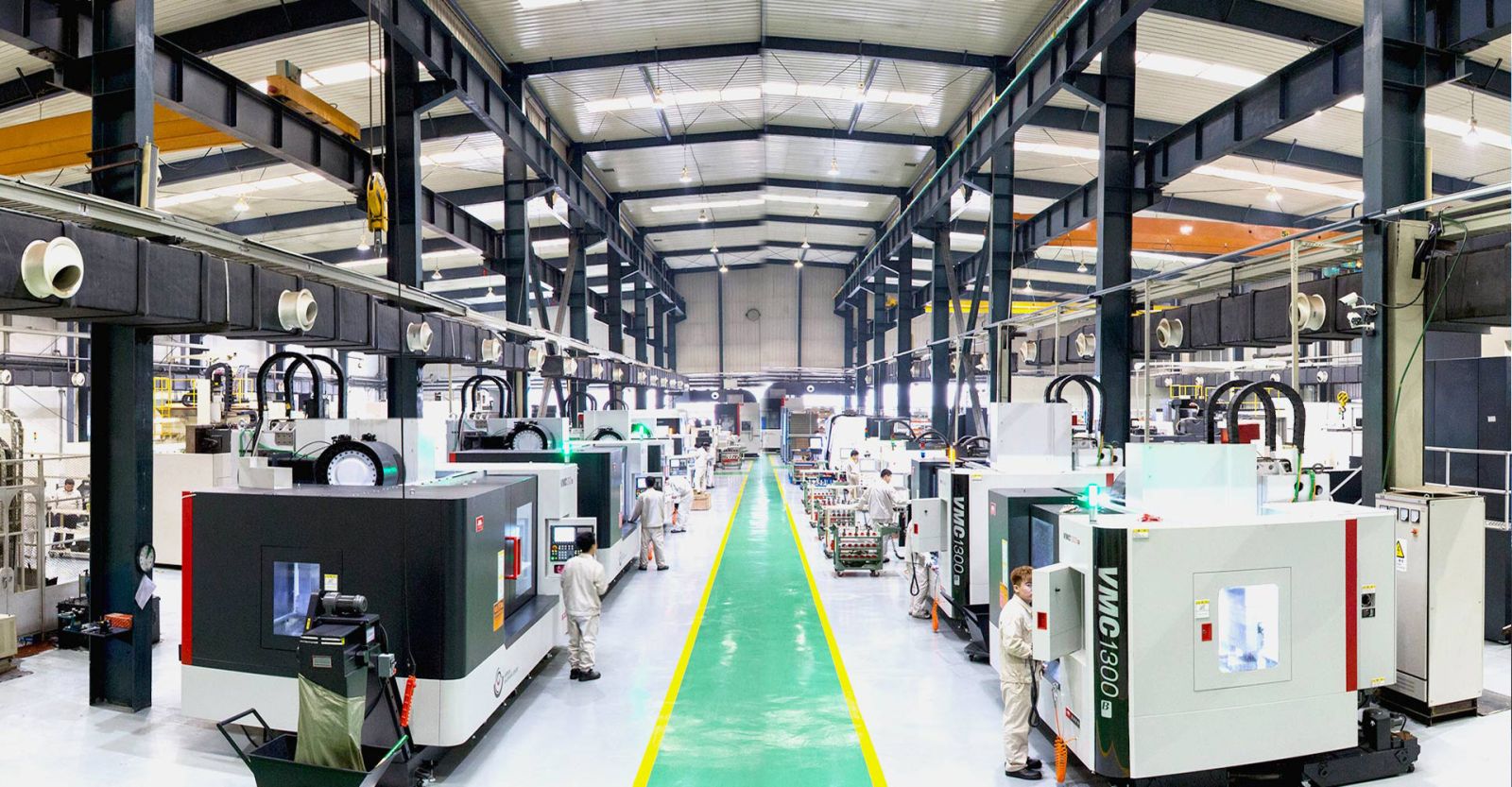
YICHOU combines high-speed micro-CNC machining capabilities with state-of-the-art vacuum diffusion bonding infrastructure. The company‘s expertise spans material selection, precision fabrication, and quality assurance for mission-critical cooling applications in AI data centers, EV powertrains, and industrial power electronics.
Struggling with high heat flux on your next-generation AI server block or EV inverter chassis? Upload your .STEP file to YICHOU for a complete thermal design for manufacturing (DFM) evaluation and a precision manufacturing quote within 24 hours.
This guide is intended for engineering professionals. Thermal design decisions should be validated through CFD simulation and prototype testing for each specific application.
Get Quote
- Visit our website: https://www.nbyichou.com/
- Email us: [email protected]
- Call us/whatsapp: +86 13355741031
- Chat with us: Live chat support available on our website