Meta Description: A complete engineering guide to 40Cr steel. Discover its composition, hardness, AISI 5140 equivalent, uses, and how professional processors like us machine this versatile alloy steel for superior parts.
Introduction: The Workhorse Alloy Steel
In the world of manufacturing and engineering, material selection is the cornerstone of performance, durability, and cost-effectiveness. Among the plethora of alloy steels available, one designation frequently surfaces in specifications for demanding components: 40Cr steel. This medium-carbon chromium steel has earned its reputation as a reliable and versatile workhorse, bridging the gap between plain carbon steels and more expensive high-alloy grades.
But what exactly is 40Cr steel? In essence, it is a Chinese GB standard (GB/T 3077) alloy structural steel. The name itself is a code: "40" indicates a nominal carbon content of approximately 0.40%, and "Cr" signifies the intentional addition of chromium as the primary alloying element. This simple yet effective combination imparts a significantly better hardenability, strength, and wear resistance compared to standard carbon steels like C40 or 1045, while remaining more economical than steels with complex alloy mixes.
This guide will serve as your comprehensive resource on 40Cr steel. We will delve into its chemical heart, explore its mechanical soul, map its global equivalents, and examine its ideal applications. Furthermore, as a professional metal processing manufacturer, we will share critical insights into machining and heat-treating 40Cr to unlock its full potential, helping you understand why partnering with an expert processor is key to achieving part excellence.
1. Decoding the Composition: The Chemistry of 40Cr Steel
The performance of any steel is dictated by its chemical composition. 40Cr's balanced recipe is designed for a favorable response to heat treatment, yielding a good combination of strength, toughness, and wear resistance.
The standard chemical composition as per GB/T 3077 is outlined in the table below:
Table 1: Chemical Composition of 40Cr Steel (GB/T 3077)
| Element | Composition Range (%) | Role & Effect |
|---|---|---|
| Carbon (C) | 0.37 – 0.44 | The primary hardening element. Provides base strength and hardness. The ~0.40% content ensures good hardenability without excessive brittleness. |
| Silicon (Si) | 0.17 – 0.37 | A deoxidizer during steelmaking. Increases strength and elastic limit. |
| Manganese (Mn) | 0.50 – 0.80 | Increases hardenability, strength, and hardness. Counteracts sulfur's negative effects. |
| Chromium (Cr) | 0.80 – 1.10 | The key alloying element. Dramatically improves hardenability—allowing thicker sections to be hardened through. Enhances wear resistance, corrosion resistance (slightly), and high-temperature strength. |
| Phosphorus (P) | ≤ 0.035 | An impurity. Kept low as it reduces ductility and toughness (causes "cold brittleness"). |
| Sulfur (S) | ≤ 0.035 | An impurity. Kept low as it harms ductility and weldability (causes "hot shortness"). Higher levels are only acceptable if improved machinability ("free-machining" grades) is required. |
| Nickel (Ni) | ≤ 0.30 | A residual element in this grade. |
| Copper (Cu) | ≤ 0.30 | A residual element. |
This composition places 40Cr in the family of chromium alloy steels. The chromium content, while not high enough to classify it as stainless steel (which requires >10.5% Cr), is sufficient to profoundly impact its hardenability curve. This means that when heated and quenched, the steel transforms to a harder microstructure (martensite) to a greater depth than a plain carbon steel of similar carbon content would.
2. Mechanical Properties & Performance Characteristics
The true value of 40Cr is realized after heat treatment. In its "as-rolled" or "annealed" condition, it is relatively soft and machinable. The magic happens through quenching and tempering (Q&T).
-
Typical Hardness:
-
Annealed state: Approximately 180 – 220 HB (Brinell Hardness). This is the ideal condition for machining.
-
After Quenching & Tempering: Hardness can range from 200 HB to over 300 HB, depending on the tempering temperature. A common tempered hardness for structural components is 240-280 HB. For reference, this is roughly equivalent to 25-30 HRC (Rockwell C scale).
-
-
Key Mechanical Properties (After Q&T):
-
Tensile Strength (Rm): 980 – 1130 MPa
-
Yield Strength (Rp0.2): ≥ 785 MPa
-
Elongation (A): ≥ 9%
-
Impact Toughness (KU2): ≥ 47 J
-
Why are these properties important? The high yield strength (785 MPa minimum) means components can withstand significant loads without permanent deformation. The good elongation and impact values indicate that it retains a degree of toughness, resisting crack propagation under sudden shock—a critical balance not always found in very high-strength steels.
3. 40Cr Steel Equivalents: A Global Cross-Reference
One of the most common questions engineers and purchasers ask is: "What is 40Cr equivalent to?" This is crucial for global sourcing, design validation, and material substitution. Below is a comprehensive equivalence table.
Table 2: 40Cr Steel International Equivalents
| Standard | Grade / Designation | Closest Equivalent | Note |
|---|---|---|---|
| ISO | 41Cr4 | Direct Equivalent | International standard designation. |
| AISI / SAE (USA) | 5140 | Direct Equivalent | The most widely recognized AISI equivalent. Sometimes compared to 5140H for guaranteed hardenability. |
| DIN / EN (Germany/EU) | 41Cr4 (1.7035) | Direct Equivalent | European standard, identical to ISO. |
| JIS (Japan) | SCr440 (SCr440H) | Very Close Equivalent | Japanese standard. Slightly different impurity limits, but functionally interchangeable for most applications. |
| GB (China) | 40Cr | Original Grade | The subject of this guide. |
| BS (UK) | 530M40 | Close Equivalent | British standard. |
| ASTM A29 (USA) | 5140 | Direct Equivalent | Same as AISI/SAE. |
Important Note on "C40": A frequent point of confusion arises with "C40" or 1.0511 steel. This is a plain medium carbon steel (nominally 0.40% C) with no significant chromium addition. It is not equivalent to 40Cr. C40 has much lower hardenability and strength. Its closer AISI equivalent would be 1040 or 1045. Always verify the full specification.
4. Primary Applications: Where is 40Cr Steel Used?
40Cr's balanced properties make it a top choice for a vast array of medium-to-high stress components, particularly those requiring a combination of wear resistance, fatigue strength, and core toughness.
-
Automotive Industry: A major consumer of 40Cr/5140 steel.
-
Critical Shafts: Crankshafts, camshafts, axle shafts, propeller shafts.
-
Gears & Sprockets: Transmission gears, differential gears, timing sprockets.
-
Fasteners & Bolts: High-strength bolts, studs, and connecting rods.
-
-
General Machinery & Equipment:
-
Spindles and Mandrels: For machine tools, lathes, and mills.
-
Pins and Axles: Heavy-duty pivot pins, kingpins, and axles.
-
Die Blocks and Tools: For plastic molds and lower-stress tooling applications.
-
Machine Components: Connecting rods, piston rods, and other stressed parts in hydraulic and pneumatic systems.
-
-
Agricultural & Construction Machinery: Gears, shafts, and linkages that endure shock loads and abrasive environments.
The unifying theme across these applications is the need for a material that is strong enough to handle the load, hard enough to resist wear, yet tough enough to survive impact. 40Cr, properly heat-treated, fulfills this triad of requirements economically.
5. Head-to-Head Comparisons: 40Cr vs. Other Steels
Understanding how 40Cr stacks up against similar materials clarifies its niche.
-
40Cr vs. 42CrMo (4140 / 1.7225): The Molybdenum Factor
This is a crucial comparison. 42CrMo contains molybdenum (Mo) in addition to chromium.-
Impact: Molybdenum enhances hardenability even further than chromium alone and significantly improves high-temperature strength and temper resistance (resistance to softening during tempering).
-
Result: 42CrMo can achieve higher strengths, especially in larger cross-sections, and is better suited for components exposed to elevated temperatures. It is generally stronger and tougher than 40Cr but also more expensive.
-
Verdict: Use 40Cr for general high-strength applications at ambient temperatures. Choose 42CrMo for larger parts, higher strength requirements, or applications involving slight heating.
-
-
40Cr vs. CR-V (Chromium-Vanadium, e.g., 6150):
CR-V steels (like AISI 6150) add vanadium, which forms fine carbides.-
Impact: Vanadium refines the grain structure, improving fatigue strength and toughness. It is often used for high-stress springs and tools.
-
Verdict: 40Cr is a more general-purpose structural steel. CR-V steels are often chosen for applications where cyclic loading (fatigue) is the primary concern.
-
-
CR vs. HR Steel (In Context):
This refers to the mill processing condition, not the grade.-
Cold Rolled (CR): Has a smoother surface finish, tighter dimensional tolerances, and is slightly harder due to work hardening. Often used for parts where appearance and precision are key before final heat treatment.
-
Hot Rolled (HR): Has a mill scale, wider tolerances, and is softer in the as-delivered state. It is typically more economical and is the standard starting condition for parts that will be fully machined and heat-treated.
-
For 40Cr: It is commonly supplied as hot-rolled round bars or forgings, which are then machined and heat-treated to final specification.
-
6. Processing 40Cr: Machining and Heat Treatment Expertise
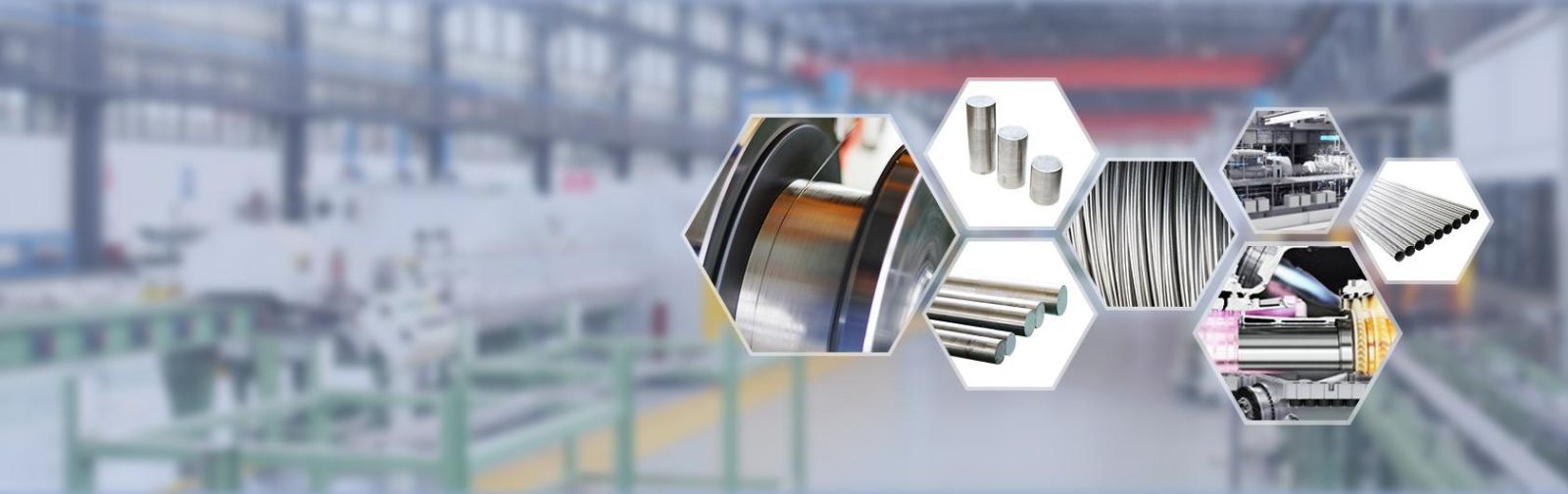
This is where the role of a professional metal processor becomes paramount. At [Your Company Name], we don't just supply material; we transform it into high-performance components.
A. Machinability of 40Cr:
In its annealed state (~180-220 HB), 40Cr has fair to good machinability. It is tougher than low-carbon steels but machines more cleanly than sticky, low-alloy steels. Recommendations:
-
Cutting Tools: Use sharp, positive-rake geometry carbide inserts or coated grades (TiN, TiAlN).
-
Speeds & Feeds: Moderate surface speeds with consistent feed rates to manage heat and work hardening.
-
Coolant: Use ample coolant to dissipate heat, improve tool life, and achieve better surface finishes.
B. The Critical Role of Heat Treatment:
Heat treatment is non-negotiable for achieving 40Cr's design properties.
-
Quenching: The component is heated to approximately 850°C and rapidly cooled in oil (for moderate sections) or polymer. This produces a very hard but brittle martensitic structure.
-
Tempering: The quenched part is reheated to a specific temperature (e.g., 400°C - 600°C), held, and then air-cooled. This relieves internal stresses and transforms the microstructure to a tough "tempered martensite," achieving the desired balance of strength and ductility. The final hardness and strength are directly controlled by the tempering temperature.
C. Welding and Fabrication:
40Cr is weldable with precautions due to its hardenability.
-
Preheat to 150-250°C is often necessary.
-
Use low-hydrogen electrodes (E7018) or equivalent filler wires.
-
Post-weld heat treatment (stress relieving or full re-quench & temper) is strongly recommended, especially for critical components, to restore properties in the Heat-Affected Zone (HAZ).
Our Technical Expertise:
As specialists in precision machining and thermal processing, we manage this entire journey. We:
-
Source certified 40Cr material.
-
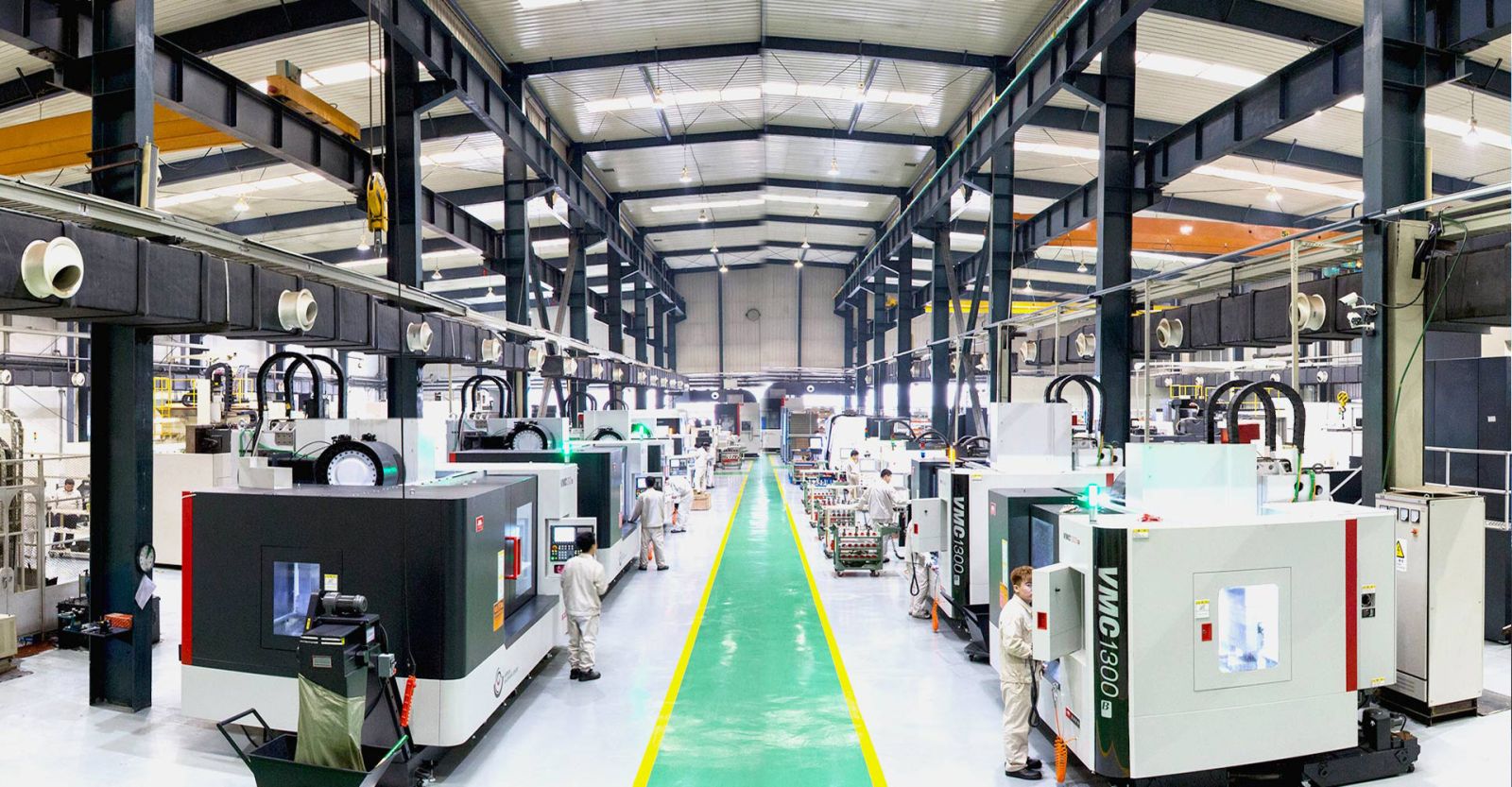
Perform precision CNC machining on state-of-the-art equipment in the annealed condition.
-
Utilize our controlled atmosphere heat treatment furnaces to execute precise quenching and tempering cycles tailored to your part's function.
-
Conduct final finishing (grinding, shot peening) and quality inspection (hardness testing, dimensional verification).
This integrated capability ensures your 40Cr components are not just "cut from bar stock," but are engineered for optimal performance from the inside out.
7. Frequently Asked Questions (FAQ)
Q1: What does "40Cr" literally mean?
A: In the Chinese GB standard, "40" denotes a carbon content of about 0.40%. "Cr" indicates it is a chromium-alloyed steel, with chromium content between 0.80-1.10%.
Q2: What is the typical hardness of heat-treated 40Cr?
A: After quenching and tempering, hardness typically ranges from 240 to 280 HB (approx. 25-30 HRC), though it can be adjusted higher or lower via tempering temperature.
Q3: Is 40Cr stainless steel?
A: No. Stainless steels contain a minimum of 10.5% Chromium to form a passive corrosion-resistant layer. 40Cr has only ~1% Cr, which improves hardenability and some oxidation resistance but does not make it "stainless."
Q4: Which is better, 40Cr or 42CrMo?
A: "Better" depends on the application. 42CrMo (4140) is generally stronger, especially in larger sections, and has better high-temperature properties due to molybdenum. 40Cr (5140) is a cost-effective, high-strength alloy for general applications at ambient temperatures. For most standard shafts and gears, 40Cr is perfectly adequate and more economical.
Q5: What is CR4 steel?
A: CR4 is a Chinese GB standard for cold-rolled steel sheet/plate (GB/T 5213). It refers to a drawing quality classification, not a specific chemical grade like 40Cr. It is a different categorization system altogether.
Q6: Is C40 (1.0511) equivalent to EN8?
A: Yes, they are very similar. Both C40 (1.0511) and EN8 (1.0503, 080M40) are plain medium carbon steels with approximately 0.40% carbon and no significant alloying additions. Remember, neither is equivalent to 40Cr, which contains chromium.
Conclusion: Partnering for Performance with 40Cr Steel
40Cr steel stands as a testament to intelligent engineering: a modest alloy addition that yields a significant leap in performance. Its widespread use from automotive drivetrains to industrial machinery is a direct result of its excellent hardenability, strength-to-toughness balance, and cost-effectiveness.
However, the inherent potential of 40Cr is only fully realized through expert processing. The journey from raw bar stock to a reliable, high-strength component demands precision machining, controlled heat treatment, and rigorous quality assurance.
This is where we provides critical value. We are more than a machine shop; we are your partner in material performance. Our deep understanding of metallurgy, combined with advanced machining and in-house heat treatment capabilities, allows us to deliver 40Cr components that meet not just print dimensions, but the exact performance specifications your application demands.
Ready to leverage the strength of 40Cr steel for your next project?
Contact our engineering team today for a consultation. Let us help you select the right material, define the optimal heat treatment, and manufacture components with the precision and reliability that defines professional-grade manufacturing.
Contact us today for a competitive quote and technical support!
Let Yichou help you achieve excellence in your next project. Whether you need raw materials, custom alloy solutions, or precision-manufactured components, our team is ready to assist.
- Email us: [email protected]
- Call us/whatsapp: +86 13355741031
- Chat with us: Live chat support available on our website