Direct Answer Block: FRP centrifugal fans and exhaust fans provide chemical processing facilities with a ventilation solution that remains structurally intact in environments where stainless steel deteriorates within 18 to 24 months. Independent testing confirms that FRP fans maintain operational efficiency above 90 percent after 1000 hours of continuous exposure to corrosive gases while metal alternatives experience efficiency losses exceeding 38 percent over the same period. The inherent material properties of fiberglass-reinforced plastic eliminate the need for repeated coating applications and enable mean time between failures that extends from 4 months to 17 months in typical industrial corrosive applications.
Chemical processing plants, wastewater treatment facilities, and semiconductor manufacturing operations face a persistent and costly challenge that engineering teams have been dealing with for decades. Metal ventilation equipment installed in corrosive environments begins degrading from the very first moment airflow containing acids, alkalis, or salt compounds moves through the system. Protective coatings wear thin, microscopic breaches form, and structural deterioration accelerates until the fan assembly becomes a catastrophic liability rather than a functional asset. The replacement cycle repeats itself year after year, consuming maintenance budgets and forcing unplanned production interruptions that disrupt operations and strain supplier relationships.
Fiberglass-reinforced plastic fan technology addresses this fundamental problem at the material level rather than relying on surface treatments that inevitably fail. The glass fiber reinforcement embedded within thermosetting resins creates a continuous barrier against corrosive penetration without the vulnerabilities associated with metallic substrates. Unlike painted or galvanized steel surfaces where scratches and imperfections expose the underlying material to chemical attack, FRP construction ensures that even complex geometries such as impeller blades and housing contours maintain uniform protection throughout their service life. This material science approach transforms ventilation system reliability from a recurring operational headache into a predictable and manageable aspect of facility maintenance planning. For procurement officers at YICHOU, this translates directly into reduced total cost of ownership and predictable capital expenditure forecasting.
.jpeg)
What Makes FRP Fans Fundamentally Different from Coated Metal Ventilation Equipment
Direct Answer Block: FRP fans incorporate corrosion resistance directly into their material composition through glass fiber reinforcement embedded within thermosetting resin matrices, eliminating dependence on applied coatings that eventually fail. Metal fans rely on surface treatments such as epoxy or polyurethane layers that develop microscopic breaches when exposed to continuous corrosive airflow, allowing chemical compounds to reach and degrade the metallic substrate beneath the protective barrier.
The distinction between built-in corrosion resistance and applied protection defines the entire operational experience of industrial ventilation systems operating in harsh chemical environments. Metal fan manufacturers apply coatings that provide temporary defense against corrosive compounds, but these surface treatments face constant assault from high-velocity airflow carrying acids, solvents, and moisture. Daily exposure creates conditions where coating integrity deteriorates even without visible damage, and once a breach occurs, the corrosion process accelerates rapidly. The underlying steel or aluminum material reacts with corrosive agents, producing pitting, flaking, and structural weakening that compromises the mechanical balance and aerodynamic performance of the entire assembly. This often leads to imbalance-induced vibration which further shortens bearing life and increases energy consumption.
FRP fans engineered by YICHOU approach the corrosion challenge differently by constructing every component that contacts the airstream from materials inherently immune to chemical degradation. The fiberglass-reinforced plastic matrix combines high-strength glass fibers with corrosion-grade vinyl ester or polyester resins, creating a homogeneous structure that resists attack from hydrochloric acid, sulfuric acid, sodium hydroxide, and organic solvents without requiring sacrificial coatings or periodic reapplications. This material composition maintains its mechanical properties across operating temperature ranges from negative 20 degrees Celsius to positive 80 degrees Celsius, with custom resin formulations extending the upper limit to 120 degrees Celsius for specialized applications. The smooth molded surfaces of FRP components reduce friction losses by approximately 14 percent compared to fabricated metal housings, while the non-conductive nature of the composite material prevents galvanic corrosion when handling electrolyte-rich airstreams.
Engineering teams evaluating ventilation solutions for chemical processing, wastewater treatment, or semiconductor fabrication must understand that coating failure represents an inevitable outcome rather than a product defect. The question is not whether coated metal fans will eventually corrode, but rather how quickly the degradation will occur and what operational consequences will follow. FRP technology eliminates this uncertainty by removing the metallic substrate entirely from the corrosion equation. The result is equipment that maintains dimensional stability within 0.03 millimeter tolerance across extreme operating ranges and delivers consistent airflow performance throughout a service life that extends beyond 10 to 15 years in acid and alkali environments with routine bearing care. YICHOU’s manufacturing process ensures that the resin-to-glass ratio is optimized to prevent micro-cracking and delamination, two common failure modes in poorly manufactured composite equipment.
How Much Does Corrosion Actually Cost Your Operation Over a Five-Year Period
Direct Answer Block: Facilities operating coated steel exhaust fans in corrosive environments spend approximately 4800 dollars annually on maintenance compared to 1200 dollars for equivalent FRP installations, representing a 75 percent reduction in recurring maintenance expenditure. The mean time between failures for FRP fans reaches 17 months in typical chemical processing applications, whereas coated steel alternatives require intervention every 4 months on average, leading to substantial differences in both direct repair costs and indirect production downtime expenses.
Procurement professionals and engineering managers who focus exclusively on initial equipment purchase prices overlook the financial impact that accumulates over the operational lifetime of industrial ventilation systems. The true cost of ownership extends far beyond the invoice amount and includes categories of expenditure that continue accruing long after the installation is complete. Understanding these hidden costs provides decision-makers with the analytical framework needed to justify investments in higher-quality equipment that delivers superior long-term value.
Maintenance labor and replacement parts consume the most visible portion of the total cost of ownership for ventilation systems operating in corrosive environments. When metal fans require recoating or component replacement every 4 to 6 months, maintenance teams divert resources from preventive work to emergency repairs, disrupting scheduled activities and creating overtime expenses. FRP fans eliminate the recoating requirement entirely and extend the interval between interventions to more than 16 months on average. The annual maintenance expenditure differential of 3600 dollars per fan accumulates to 18000 dollars over a typical 5-year capital planning horizon, representing a significant operational savings that directly improves facility financial performance. For a plant operating 10 or more exhaust systems, this differential quickly reaches six-figure savings over a standard depreciation cycle.
Production downtime generates costs that frequently exceed the direct maintenance expenses by substantial margins. When a critical exhaust fan fails unexpectedly, the affected production line or process area must suspend operations until repairs are completed. Chemical processing facilities, semiconductor fabs, and wastewater treatment plants measure downtime costs in thousands of dollars per hour, making the reliability advantages of FRP fans particularly valuable in continuous operations. The 17-month mean time between failures achieved by FRP installations compared to the 4-month interval typical of coated steel alternatives translates to approximately 4 unplanned outages avoided per year per fan assembly. Multiplying this reduction across multiple ventilation units operating throughout a facility reveals that improved reliability delivers financial benefits that dwarf the initial equipment cost differential.
Energy consumption represents another category where FRP fans provide measurable operating cost advantages. Test data indicates that FRP centrifugal units reduce energy consumption by 18 to 22 percent compared to metal alternatives achieving equivalent airflow volumes. This efficiency improvement results from several factors: the smooth molded surfaces that minimize friction losses, the optimized blade geometries refined through computational fluid dynamics analysis, and the lighter weight construction that reduces rotational inertia and motor loading. Over a 10-year operational lifespan, the cumulative energy savings from a single FRP fan can equal or exceed the entire initial purchase price of the equipment. YICHOU provides performance curve validation to ensure that the specified fan operates at the Best Efficiency Point (BEP) for your specific system resistance, avoiding the common pitfall of installing fans that operate outside their optimal range and waste electricity.
What Should Procurement Teams Verify Before Selecting an FRP Fan Supplier
Direct Answer Block: Procurement teams evaluating FRP fan suppliers should verify material compliance with ASTM D4167 standards for fiber-reinforced thermoset plastic fan construction and require performance testing documentation aligned with AMCA 210 and ISO 5801 protocols. Supplier qualification should include confirmation of in-house mold-making capability, minimum factory size of 2000 square meters, and average lead times of 15 to 30 days for bulk orders as indicators of production infrastructure maturity and supply chain reliability.
The selection of an FRP fan supplier requires a structured evaluation framework that extends beyond price comparisons and catalog specifications. Industrial buyers who rely solely on product listings without conducting deeper supplier assessments risk operational disruptions from quality inconsistencies, delivery delays, or performance shortfalls that emerge after installation. YICHOU has developed its manufacturing and quality systems specifically to address the procurement concerns that engineering and sourcing teams face when specifying corrosion-resistant ventilation equipment for mission-critical applications.
Material integrity and engineering compliance form the foundation of any supplier evaluation process. The FRP shell construction should utilize UV-stabilized resin systems with minimum wall thickness ranging from 4 to 7 millimeters depending on the fan size and operating pressure requirements. Thinner shells compromise structural rigidity during continuous operation, particularly in high-humidity zones where material properties may shift under environmental loading. Verification should extend to motor specifications, including IP ratings of IP55 or higher for protection against dust and water ingress, impeller balancing certification according to ISO 21940 G6.3 or better tolerances, and salt spray resistance documentation confirming minimum 500 hours of exposure capability for coastal or marine installations. YICHOU maintains full material traceability and provides test reports covering shell hardness, resin content analysis, and corrosion resistance validation upon request. Without in-house mold capability, a supplier cannot effectively control the critical exothermic curing process that determines the structural integrity of the fan housing.
Production infrastructure indicates a supplier's ability to deliver consistent quality across multiple orders and respond to changing customer requirements. In-house mold-making capability ensures design fidelity and accelerates iteration cycles when custom configurations are needed. A minimum factory size of 2000 square meters typically correlates with stable output capacity and adequate inventory buffers to absorb supply chain fluctuations. Bulk order lead times averaging 15 to 30 days suggest mature production planning processes, while shorter windows may indicate subcontracting practices that introduce additional quality and timeline risks. YICHOU's manufacturing facility incorporates precision molding equipment, automated lamination lines, and climate-controlled curing areas that maintain consistent production conditions regardless of seasonal variations. This level of vertical integration ensures that YICHOU is not reliant on third-party fabricators who may cut corners on resin quality or glass fiber layup schedules.
Quality assurance practices provide the most reliable indicator of a supplier's commitment to delivering equipment that performs as specified. Beyond formal certifications such as ISO 9001, buyers should seek evidence of systematic QA procedures, including vibration testing during final assembly, aerodynamic balancing of impellers, dielectric strength verification on motor windings, and pre-shipment inspection rights with third-party verification access. Transactional metrics, including on-time delivery performance, response time to technical inquiries, and reorder frequency among existing customers, serve as valuable proxies for operational reliability. YICHOU conducts comprehensive performance testing according to ISO 5801 standards, vibration analysis per ISO 14694 specifications, and salt spray corrosion testing aligned with ASTM B117 protocols on production units before shipment authorization. We encourage customers to witness these tests virtually or in person to validate the aerodynamic performance and mechanical runout of their specific fan prior to crating.
How Do Different FRP Fan Configurations Address Specific Application Requirements
Direct Answer Block: FRP centrifugal fans generate static pressures up to 50 inches water gauge, making them suitable for complex ductwork systems in chemical processing and wastewater treatment applications, while FRP axial exhaust fans deliver higher airflow volumes at lower pressures, ideal for general ventilation and cooling requirements. Configuration selection depends on system pressure requirements, airflow volume targets, and the specific corrosive compounds present in the operating environment.
Industrial ventilation applications demand different fan configurations based on the unique characteristics of each facility and process. Understanding the performance capabilities of centrifugal and axial designs enables engineering teams to specify equipment that delivers optimal efficiency and reliability for their specific operating conditions. YICHOU manufactures both FRP centrifugal fans and FRP exhaust fans, providing customers with configuration flexibility to address diverse application requirements.
FRP centrifugal fans excel in applications requiring higher static pressure generation to overcome resistance from extended ductwork, filtration systems, or scrubber equipment. The centrifugal design changes airflow direction within the housing, creating pressure differentials that push gases through complex ventilation networks. These fans achieve static pressures ranging from 800 to 4000 Pascals, with maximum capacities reaching 50 inches water gauge in specialized configurations. Operating efficiency peaks between 82 and 87 percent for optimized centrifugal designs, compared to 45 to 50 percent for axial configurations moving equivalent airflow volumes. Chemical processing plants, semiconductor wet process exhaust systems, and wastewater treatment odor control applications benefit from centrifugal fan installations where system resistance demands higher pressure capability. YICHOU offers backward-inclined impeller designs specifically for dirty or particulate-laden airstreams to prevent material buildup and maintain balance over time.
FRP axial exhaust fans prioritize airflow volume over pressure generation, making them well-suited for applications such as general plant ventilation, cooling equipment exhaust, and greenhouse or agricultural ventilation systems. Axial designs move air parallel to the shaft axis, generating higher cubic feet per minute ratings at lower static pressures, typically below 4 inches water gauge. These fans deliver rapid air exchange in large open spaces and require less motor horsepower for equivalent airflow volumes compared to centrifugal alternatives. The lighter construction of FRP axial fans reduces structural loading on walls and roofs, while the inherent corrosion resistance ensures long-term reliability in humid or chemically aggressive environments. For applications requiring high-volume, low-speed (HVLS) air movement, YICHOU can engineer axial solutions that minimize noise while maximizing air change rates.
Customization options extend the applicability of FRP fan technology to specialized operating conditions. Variable frequency drive compatibility enables precise airflow modulation across 40 to 115 percent of design capacity without efficiency penalties, allowing facilities to adjust ventilation rates based on process demand or occupancy patterns. Explosion-proof motor packages with ATEX or IECEx certification address safety requirements for hazardous zone operations where flammable gases or vapors may be present. Inlet and outlet silencers reduce noise levels to meet workplace exposure limits, while epoxy topcoats and stainless steel shaft sleeves provide additional protection for extreme service conditions. YICHOU engineers work directly with customer technical teams to develop customized FRP fan solutions that integrate seamlessly with existing ductwork, electrical infrastructure, and control systems. Our ability to modify flange patterns and overall dimensions ensures that a YICHOU FRP fan can serve as a direct drop-in replacement for a failing metal fan without requiring costly ductwork modifications.
Which Industries Rely Most Heavily on FRP Ventilation Technology and Why
Direct Answer Block: Chemical processing, wastewater treatment, and semiconductor manufacturing facilities represent the largest application segments for FRP fan technology due to continuous exposure to corrosive gases including hydrogen sulfide, hydrochloric acid vapors, and solvent emissions that degrade metal ventilation equipment within months. These industries require airflow stability to maintain process consistency, meet environmental compliance standards, and protect worker safety in corrosive operating environments.
The adoption of FRP fan technology varies significantly across industrial sectors based on the severity of corrosive conditions and the operational consequences of ventilation system failure. Industries where unplanned downtime carries substantial financial penalties or where regulatory compliance demands consistent airflow performance have led the transition from metal to composite ventilation equipment. Understanding these industry-specific requirements helps procurement teams evaluate whether FRP technology represents a necessary investment or an optional upgrade for their particular applications.
Chemical processing plants operate under some of the most demanding corrosive conditions found in industrial ventilation applications. Process exhaust streams contain acids, alkalis, solvents, and reactive compounds that attack metal fan components through multiple degradation mechanisms. Sulfuric acid vapors from pickling operations, hydrochloric acid emissions from chlorination processes, and organic solvent exhaust from coating lines each present unique corrosion challenges that FRP materials address through inherent chemical resistance. The ability to maintain consistent static pressure and airflow volumes ensures that scrubber systems and emission control equipment continue meeting environmental permit requirements without performance drift caused by corrosion-related impeller deterioration. YICHOU’s vinyl ester resin formulations are specifically engineered to withstand the oxidative nature of bleach plant exhaust and chlorine dioxide environments common in pulp and paper and chemical manufacturing.
Wastewater treatment facilities combine corrosive chemical exposure with high humidity and biological activity, creating an environment that accelerates metal fan deterioration beyond typical industrial rates. Hydrogen sulfide concentrations in headworks and primary treatment areas corrode steel components rapidly, while the constant presence of moisture prevents protective oxide layers from forming on stainless steel surfaces. FRP fans installed in odor control systems, sludge processing areas, and chemical feed rooms maintain structural integrity and aerodynamic performance despite continuous exposure to these aggressive conditions. The extended equipment life and reduced maintenance requirements translate directly to operational budget stability for municipal and industrial wastewater treatment operations. Access to rotating elements is critical in these environments, and YICHOU designs split-housing centrifugal fans that allow for inspection of the impeller without removing the fan from the ductwork.
Semiconductor manufacturing facilities face corrosion challenges from process exhaust streams containing silanes, acids, and specialty chemicals used in wafer fabrication. Beyond the direct corrosion concerns, semiconductor operations impose additional requirements for contamination control that favor FRP fan technology. Metal fans operating in corrosive environments can generate metallic particulates as surface degradation occurs, introducing contamination risks to cleanroom environments where even trace metal ions compromise product quality. FRP construction eliminates this particle generation pathway while providing the corrosion resistance needed for wet process exhaust and chemical delivery system ventilation. The dielectric properties of FRP materials also prevent static discharge concerns in environments where flammable gases or sensitive electronic equipment may be present. YICHOU ensures that all fans for this sector undergo a triple-cleaning and packaging protocol to eliminate any risk of cross-contamination upon arrival at the fab.
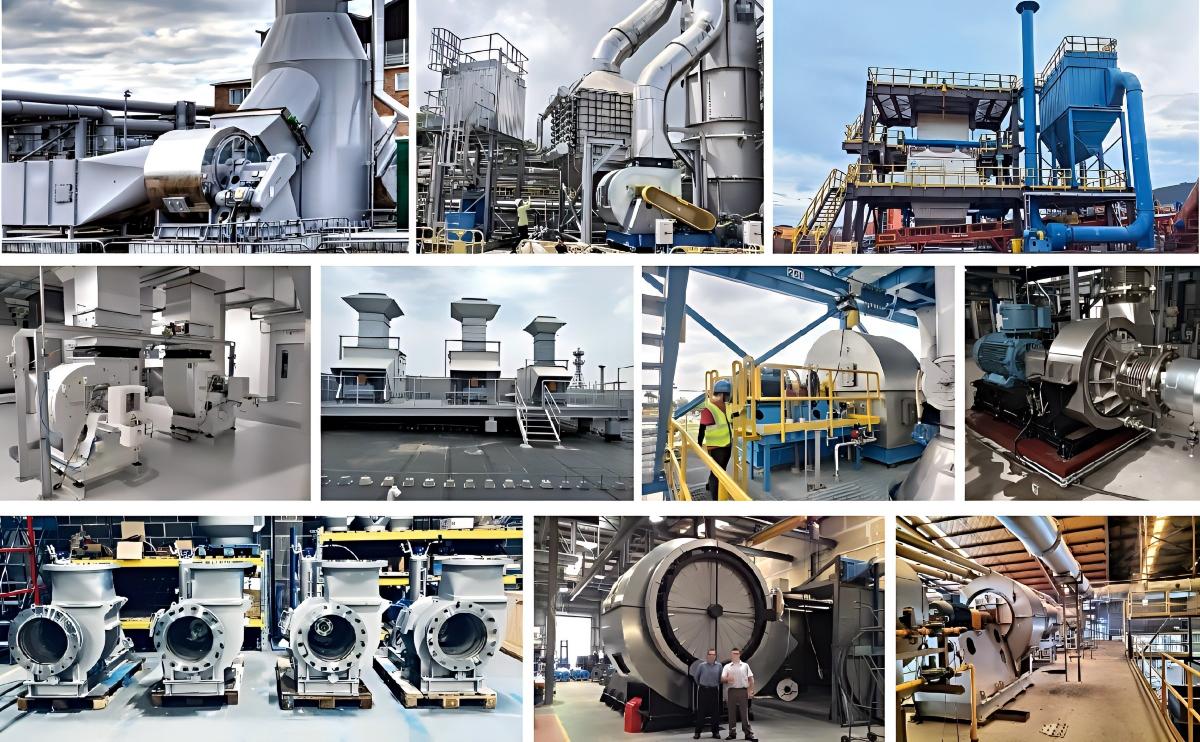
What Documentation and Certifications Should Accompany an Industrial FRP Fan Purchase
Direct Answer Block: Industrial FRP fan purchases should include material certification against ASTM D4167 specifications for fiber-reinforced thermoset plastic fan construction, performance test reports aligned with AMCA 210 and ISO 5801 standards, and vibration analysis documentation meeting ISO 14694 or ISO 2372 requirements. Salt spray testing records per ASTM B117 provide additional verification for installations in coastal or highly corrosive environments.
Procurement documentation serves multiple purposes beyond simple transaction records. Proper certification packages provide engineering teams with validation that equipment meets design specifications, enable maintenance personnel to plan service intervals based on component ratings, and create auditable records for regulatory compliance and quality management systems. YICHOU maintains comprehensive documentation practices that support customer requirements across these diverse use cases.
Material certification establishes the foundation of quality verification for FRP fan assemblies. ASTM D4167 provides the industry standard specification for centrifugal and axial fans and blowers with airstream components fabricated from fiber-reinforced thermoset plastics for corrosion resistance. This standard establishes minimum construction requirements and provides a common basis for determining safe operating speeds across different fan sizes and configurations. Certification documentation should identify the specific resin system used in construction, including whether vinyl ester, polyester, or specialized chemical-resistant formulations were applied based on the intended operating environment. Glass fiber specifications, including E-glass or S-glass designations and reinforcement orientation, should be documented to support mechanical property verification. YICHOU includes Barcol hardness test results with every shipment to verify proper resin cure.
Performance testing documentation confirms that manufactured equipment achieves the airflow and pressure ratings specified during the selection process. AMCA 210 and ISO 5801 testing protocols establish standardized methods for measuring fan performance, enabling accurate comparison between different manufacturers and models. Test reports should include full performance curves showing cubic feet per minute or cubic meters per hour airflow versus static pressure across the intended operating speed range. Additional data points, including power consumption, brake horsepower requirements, and sound pressure levels at specified distances, provide complete characterization of installed performance expectations. YICHOU provides performance documentation for each production unit, ensuring that delivered equipment matches the specifications reviewed during the procurement process.
Vibration and balancing documentation addresses mechanical reliability concerns that directly impact equipment longevity and maintenance requirements. Impellers balanced to ISO 21940 G6.3 or better tolerances minimize bearing loads and reduce the likelihood of fatigue-related failures during continuous operation. Vibration testing according to ISO 14694 for industrial fans or ISO 2372 for general rotating machinery confirms that assembled units meet established limits across the full operating speed range. These measurements become particularly important for FRP fans where the composite material properties differ from metal fan behavior and require specific validation approaches. YICHOU performs this balancing on a precision dynamic balancer and supplies the signed balance certificate with the final documentation package.
What Questions Should Procurement Teams Ask When Evaluating FRP Fan Proposals
The following questions represent the critical inquiries that engineering and procurement professionals should address when evaluating FRP fan suppliers and technical proposals. These questions, derived from decades of industrial ventilation experience across chemical processing, wastewater treatment, and semiconductor manufacturing applications, identify the key factors that determine long-term equipment performance and total cost of ownership.
Does the supplier maintain in-house mold-making and composite fabrication capabilities, or do they rely on subcontracted manufacturing that introduces quality and timeline risks? Suppliers with internal production infrastructure can respond more quickly to custom design requirements and maintain tighter control over material quality and process consistency throughout the manufacturing cycle. YICHOU controls the entire process from mold design to final assembly within a single facility, eliminating the finger-pointing that occurs when coatings, castings, and assembly are sourced from different vendors.
What specific resin system does the supplier recommend for the intended operating environment, and can they provide chemical compatibility data for the exact compounds present in the process exhaust stream? Vinyl ester resins offer superior acid resistance compared to standard polyester formulations, while specialized additives address specific challenges such as UV degradation, flame spread resistance, or elevated temperature exposure. YICHOU maintains a chemical resistance database to cross-reference specific process chemicals with the optimal resin formulation.
Can the supplier provide performance curves measured according to AMCA 210 or ISO 5801 standards rather than calculated values derived from impeller geometry alone? Measured performance data accounts for real-world factors including housing losses, inlet conditions, and manufacturing tolerances that calculated curves cannot fully predict. YICHOU’s AMCA accredited laboratory testing ensures that the fan you specify is the fan you receive.
What vibration and balancing standards does the supplier apply to production units, and can they provide test reports documenting conformance for each shipped fan assembly? G6.3 balancing tolerance represents industry best practice for industrial fan applications, while G2.5 tolerance may be appropriate for higher-speed or precision applications. YICHOU’s standard is G6.3 with G2.5 available as an upgrade for critical installations.
Does the supplier offer explosion-proof motor configurations with appropriate certifications for hazardous location installations, and can they integrate these requirements without affecting delivery timelines or cost structures? ATEX, IECEx, or local certification markings should match the specific zone classifications applicable to the installation location. YICHOU partners with world-class motor manufacturers to provide certified hazardous-duty motors as a factory-installed option.
What documentation package accompanies each shipment, including material certifications, performance test reports, vibration analysis records, and installation, operation, and maintenance manuals? Comprehensive documentation supports commissioning activities, regulatory compliance requirements, and future maintenance planning. YICHOU provides a digital data book that includes all relevant certifications and a 3D model file for integration into customer facility BIM systems.
How does the supplier handle warranty claims and technical support for international customers, including response time commitments and parts availability for warranty service? Warranty terms that extend beyond the industry-standard 12-month period indicate manufacturer confidence in product durability and performance consistency. YICHOU offers a 24-month warranty on FRP structural components and maintains a global network of service partners to support rapid response.
YICHOU welcomes these inquiries and maintains dedicated engineering support resources to address technical questions during the procurement process. The company's manufacturing facility integrates composite fabrication, machining, and assembly operations under one roof, providing customers with single-source accountability for quality and delivery performance. Technical documentation packages include material certifications, performance test reports, and vibration analysis records that validate equipment conformance to specified requirements.
The transition from metal to FRP ventilation equipment represents a strategic decision that affects facility operations, maintenance planning, and capital expenditure allocation over extended time horizons. Organizations that evaluate this decision based on total cost of ownership rather than initial purchase price consistently identify FRP technology as the economically optimal solution for corrosive industrial ventilation applications. YICHOU stands ready to support this transition with engineering expertise, manufacturing capability, and ongoing technical support that ensures customer success throughout the equipment lifecycle. By choosing a YICHOU FRP fan, procurement teams are not just buying a piece of equipment; they are investing in 15 years of operational peace of mind in the harshest environments known to industrial ventilation.
.jpg)
Get Quote
- Visit our website: https://www.nbyichou.com/
- Email us: [email protected]
- Call us/whatsapp: +86 13355741031
- Chat with us: Live chat support available on our website