90% of High-End Equipment Failures Trace to Material Errors Why Niobium Delivers Tenfold Service Life
When a multi million dollar aircraft engine returns for premature overhaul, when a critical nuclear reactor component develops cracks at one third of its intended design life, or when precision medical devices inexplicably fail within sterile environments, most engineers instinctively scrutinize design blueprints, question machining tolerances, or doubt operational protocols. Yet a repeatedly validated fact persists: 90 percent of high end equipment failures originate not in design deficiencies but in erroneous material selection.
This is not exaggeration. Under extreme operating conditions, conventional stainless steel loses strength at elevated temperatures, standard alloys dissolve rapidly in corrosive media, and traditional materials succumb to fatigue fracture under cyclic stress. Each material failure translates into millions in downtime losses, irreversible project delays, and in some instances, incalculable safety hazards.
Niobium metal represents the pivotal answer to this predicament. As a strategic rare metal, niobium and its alloys are progressively supplanting traditional materials in aircraft engines, nuclear power plants, superconducting magnets, and high end heating elements. With service lives exceeding conventional materials by a factor of ten or more, niobium is fundamentally redefining material selection standards for extreme operational environments.
This article systematically explains from an engineering practice perspective how niobium resolves material failure challenges in high end equipment, and when you should consider it for your next project.
What You Will Learn in This Article
-
The five critical material misconceptions that cost millions
-
How niobium outperforms tantalum, titanium, zirconium, and nickel across four key dimensions
-
Real engineering data behind 1700 degree Celsius turbine blade operation
-
Why less than five percent of suppliers can process niobium reliably
-
Your procurement checklist for niobium materials
The Hidden Cost of Material Misapplication
The fundamental cause of high end equipment failure frequently resides not in design flaws but in the irreconcilable contradictions between material properties and operational requirements. When the service environment exceeds the performance boundaries of conventional materials, failure becomes inevitable. Engineers most commonly encounter five critical misconceptions when selecting materials.
Misconception One Underestimating High Temperature Degradation
Above 600 degrees Celsius, the yield strength of ordinary stainless steel plummets to less than one third of its room temperature value. Aircraft engine turbine blades operate at temperatures routinely exceeding 1000 degrees Celsius. At such temperatures, the vast majority of metallic materials enter an accelerated creep stage, grain boundary sliding induces dimensional instability, and catastrophic failure ensues.
Niobium possesses a melting point of 2468 degrees Celsius. Niobium based alloys retain over sixty percent of their room temperature strength at 1200 degrees Celsius, a performance metric that even nickel based superalloys struggle to achieve.
Misconception Two Ignoring Long Term Corrosive Attack
The corrosive environments within chemical reaction vessels, offshore platforms, and nuclear evaporators may appear moderate. However, when calculated on an annual basis, even 316L stainless steel will eventually suffer perforation leakage due to chloride induced pitting or intergranular corrosion.
Niobium exhibits nearly inert chemical stability in most inorganic and organic acids. In strongly oxidizing environments, the dense niobium pentoxide passivation film formed on its surface effectively impedes the inward diffusion of corrosive agents. This self healing passive layer distinguishes niobium from conventional corrosion resistant alloys.
Misconception Three Overlooking Fatigue Life Under Cyclic Loading
Many engineers focus solely on static strength parameters while overlooking the dynamic loads that equipment endures during actual operation including vibrations, thermal cycling, and pressure pulsations. The fatigue strength of traditional materials after ten to the power of seven cycles typically decays to less than forty percent of the initial value.
Niobium strengthened INCONEL 718 alloy maintains a fatigue strength exceeding 350 MPa after ten to the power of seven cycles at a high temperature of 650 degrees Celsius. This fatigue resistance translates directly into extended maintenance intervals and reduced lifecycle costs.
Misconception Four Pursuing High Strength at the Expense of Toughness
High strength steels possess considerable hardness but their fracture toughness generally falls below 50 MPa times square root meter. Once a microcrack initiates, it propagates rapidly to critical dimension, often with catastrophic consequences.
By forming nano scale precipitates that pin dislocations, niobium achieves high strength while simultaneously enhancing fracture toughness to a range of 100 to 200 MPa times square root meter. This combination elegantly resolves the traditional dichotomy between strength and toughness.
Misconception Five Disregarding Supply Chain Stability
Certain high performance materials, despite impressive parameter specifications, source from only a handful of global suppliers with lead times frequently exceeding six months. Furthermore, they exhibit extreme sensitivity to processing parameters where minor deviations render entire batches unusable.
Responsible niobium suppliers maintain comprehensive production capabilities spanning from raw material melting to finished components, ensuring consistent quality and controllable delivery schedules.
What Exactly Is Niobium Metal
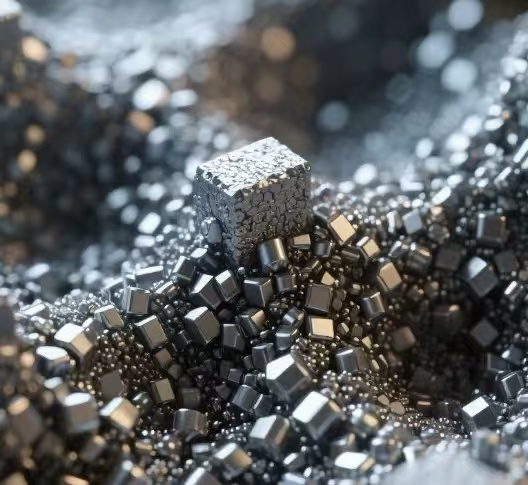
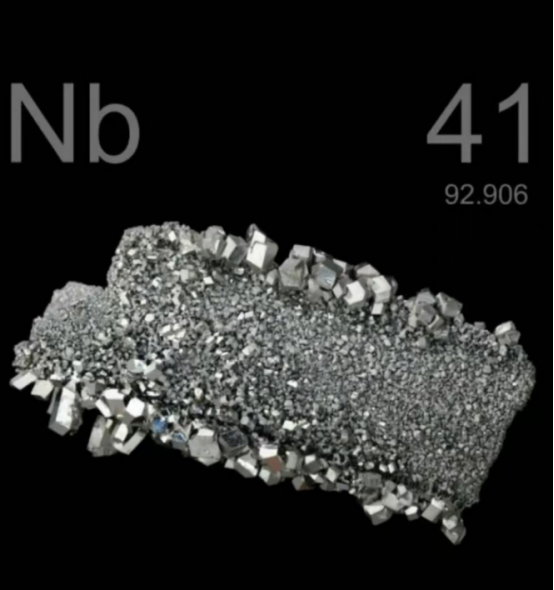
Niobium is a refractory rare metal exhibiting a silvery gray luster, designated by the elemental symbol Nb and atomic number 41, positioned in group 5, period 5 of the periodic table. It occurs naturally primarily in the minerals columbite and pyrochlore, with approximately ninety percent of global reserves concentrated in Brazil.
The distinctiveness of niobium resides in its simultaneous integration of four principal characteristics: high temperature resistance, corrosion resistance, moderate density, and high biocompatibility. This composite performance advantage is exceptionally rare within the domain of metallic materials.
Temperature Resistance
Niobium has a melting point of 2468 degrees Celsius, ranking sixth among all metals, surpassed only by tungsten, rhenium, tantalum, molybdenum, and osmium. More critically, the strength retention capability of niobium alloys at elevated temperatures significantly exceeds comparable materials.
Taking niobium tungsten molybdenum zirconium alloy as an illustration, at 800 degrees Celsius its tensile strength remains at 348 MPa with elongation exceeding thirty six percent. Even at the extreme temperature of 1400 degrees Celsius, its tensile strength still measures 190 MPa. This means niobium alloy components can sustain loads continuously within temperature regimes where most metals have either softened or liquefied.
Corrosion Resistance
Niobium demonstrates exceptional chemical inertness to nearly all inorganic and organic acids at ambient temperature. Its corrosion resistance mechanism parallels that of tantalum, relying on a dense, self healing passive film of niobium pentoxide that arrests corrosive reactions.
In strongly oxidizing environments, the corrosion resistance of niobium surpasses even that of tantalum. In extreme media such as hydrofluoric acid and hot concentrated sulfuric acid, the corrosion rate of niobium is markedly lower than that of stainless steels and titanium alloys. This characteristic establishes niobium as the preferred material for chemical process equipment, nuclear evaporators, and acid pickling tanks.
Moderate Density for Lightweighting
Niobium possesses a density of 8.57 grams per cubic centimeter. This is nearly half that of tantalum at 16.6 grams per cubic centimeter, and substantially lower than tungsten at 19.3 and molybdenum at 10.2.
In aircraft engine and spacecraft structural components, every kilogram of weight reduction yields significant fuel savings and payload enhancement. The specific strength of niobium alloys at temperatures exceeding 1200 degrees Celsius surpasses that of all traditional superalloys, a conclusion corroborated by research findings from Oak Ridge National Laboratory.
Biocompatibility
Niobium is non toxic, non irritating, and non allergenic to human tissue, exhibiting superior osseointegration and soft tissue compatibility compared to titanium alloys. Niobium coated implantable devices have achieved clinical application in orthopedics and dentistry, where their resistance to physiological corrosion ensures that implant performance remains undegraded over decades within the human body.
How to Choose Among Tantalum Niobium Zirconium Titanium and Nickel
When confronted with selecting among these five commonly utilized specialty metals, procurement decisions frequently become mired in a quagmire of parameters. The following comparison guides your decision.
Temperature Capability
Nickel based alloys have an upper limit of approximately 1050 degrees Celsius. Titanium alloys are restricted to roughly 600 degrees Celsius. Zirconium alloys reach about 800 degrees Celsius. Tantalum and niobium can both exceed 1200 degrees Celsius.
Corrosion Resistance
Tantalum is the unequivocal champion of corrosion resistance but commands a substantial cost premium. Niobium approximates tantalums performance in oxidizing environments at a lower price point. Titanium offers optimal cost effectiveness in seawater and chloride containing environments. Nickel demonstrates stability in alkaline media.
Density for Weight Sensitive Applications
Titanium is the lightest at 4.5 grams per cubic centimeter, followed by zirconium at 6.5, niobium at 8.57 occupies an intermediate position, nickel is slightly heavier at 8.9, and tantalum is the heaviest at 16.6.
Cost Perspective
Nickel is the least expensive, titanium and zirconium follow, niobium is higher, and tantalum is the highest. A comprehensive evaluation reveals that when equipment confronts the triple challenge of high temperature, severe corrosion, and lightweighting requirements simultaneously, niobium constitutes virtually the sole option capable of balancing performance and cost.
Quick Selection Guide
Choose nickel based alloys for moderate temperature alkaline service where cost is primary. Choose titanium for seawater and marine applications. Choose zirconium for acetic acid and mild reducing environments. Choose tantalum when budget allows no compromise on corrosion resistance. Choose niobium when you need high temperature capability above 1000 degrees Celsius, corrosion resistance in oxidizing acids, or the best balance of performance and cost.
Why Niobium Alloy Is Indispensable for Aircraft Engines
The aircraft engine is acclaimed as the jewel of industrial manufacturing. Its turbine blades and combustor components must operate continuously for thousands of hours subjected to the scouring of combustion gases at temperatures exceeding 1700 degrees Celsius. This operating regime imposes nearly insurmountable demands on materials.
The temperature capability limit of traditional nickel based superalloys resides approximately between 1050 and 1100 degrees Celsius. Exceeding this threshold necessitates reliance on intricate film cooling architectures and thermal barrier coatings, a compromise that augments manufacturing complexity and sacrifices aerodynamic efficiency.
Niobium alloys fundamentally breach this bottleneck. Niobium possesses a melting point of 2468 degrees Celsius. Even accounting for the melting point depression associated with alloying, the temperature capability of niobium based superalloys surpasses that of the most advanced nickel based single crystal superalloys by a minimum of forty eight percent.
Breakthrough Validation from Space Station Research
A landmark experiment recently concluded aboard the Chinese space station has generated considerable reverberation within the global aerospace community. Scientists capitalized on the microgravity environment of space to successfully fabricate niobium alloys meeting the stringent criteria required for industrial application. Fan blades manufactured from this alloy demonstrated the capacity to withstand sustained scouring by combustion gases exceeding 1700 degrees Celsius.
This breakthrough signifies a quantum leap in supersonic cruise capability and thrust to weight ratio achievable for next generation fighter aircraft, predicated on the principle that higher turbine inlet temperatures directly correlate with enhanced thermal efficiency and augmented specific thrust.
The Strengthening Mechanism
The central role of niobium in aircraft engines is also manifested in its alloy strengthening mechanisms. In INCONEL 718, the most widely utilized superalloy, the niobium content of 4.75 to 5.5 percent is responsible for the precipitation of nano scale gamma double prime phase. This ordered body centered tetragonal precipitate strongly pins dislocation motion at temperatures below 650 degrees Celsius, enabling the alloy to retain fatigue strength exceeding 350 MPa after ten to the power of seven cycles.
Concurrently, niobium suppresses the premature precipitation of deleterious delta phase, stabilizing grain size within an optimal range of 50 to 80 microns. This ensures that the alloy retains no less than ninety five percent of its initial strength following long term thermal aging exposures extending up to 1000 hours.
Why Niobium Is Non Negotiable in Nuclear Power and Superconductivity
Within the two technologically intensive sectors of nuclear power and superconducting magnets, the status of niobium is virtually unassailable. This irreplaceability stems not from commercial promotion but from intrinsic physical properties.
Nuclear Fuel Cladding
The thermal neutron absorption cross section of niobium is merely 1.15 barns, significantly lower than that of stainless steels and zirconium alloys. This characteristic ensures that employing niobium for encapsulating nuclear fuel does not squander valuable neutron flux.
Furthermore, the oxide film generated by niobium in high temperature high pressure water and liquid metal coolants is dense and stable, effectively preventing the egress of fission products. China has achieved the inaugural application of high purity niobium foil for irradiation surveillance tubes within the nuclear power sector, addressing a prior domestic technological void.
Superconducting Magnets for Nuclear Fusion
The ITER project requires the generation of magnetic fields measuring tens of Tesla to confine plasma at temperatures of hundreds of millions of degrees Celsius. Conventional electromagnets are fundamentally incapable of this task.
Niobium titanium alloy and niobium tin compound are currently the only two materials that have achieved commercial application as ductile low temperature superconductors. The critical transition temperature of niobium titanium alloy is 9.5 Kelvin, and its transport current density in a 5 Tesla magnetic field can surpass 100,000 amperes per square centimeter. Crucially, this material exhibits no degradation of superconducting properties during repeated bending and winding procedures.
Superconducting Radiofrequency Cavities
High purity niobium cavities employed in particle accelerators exhibit exceptionally low surface resistance at liquid helium temperatures, facilitating the transfer of microwave energy to the accelerating particle beam with near zero loss. Such superconducting cavities impose extraordinarily stringent purity requirements on niobium, stipulating a residual resistivity ratio exceeding 300 and demanding rigorous control over grain size and crystallographic texture.
Why the Barrier to Niobium Processing Is So High
The superlative performance characteristics of niobium constitute a double edged sword. While conferring exceptional high temperature and corrosion resistance, these same properties impose formidable technical barriers to melting and fabrication. This is the fundamental reason why the number of global suppliers capable of consistently delivering high quality niobium materials is limited.
Barrier One Melting and Purification
The melting point of niobium approaches 2500 degrees Celsius. At such temperatures, its affinity for interstitial elements including oxygen, nitrogen, and hydrogen is extraordinarily potent. Impurity concentrations measured in mere parts per million can precipitate a precipitous decline in ductility.
Consequently, the melting of niobium must be conducted under high vacuum or high purity inert gas protection, typically employing a duplex or even triplex process comprising electron beam melting followed by vacuum arc remelting. Crude niobium ingots may require two or three remelting cycles to reduce interstitial impurities to below 50 parts per million. The capital investment and energy consumption associated with this process are substantial.
Barrier Two Plastic Deformation Processing
Although niobium possessing a body centered cubic crystal structure is inherently ductile, its processing window is extremely narrow. Excessive temperature induces grain coarsening and surface oxidation, while insufficient temperature results in work hardening and cracking.
The deformation resistance of high temperature alloys such as niobium tungsten molybdenum zirconium is several times greater than that of ordinary steel, necessitating large tonnage forging presses and highly experienced process engineering teams to achieve stable production.
Barrier Three Welding and Machining
Welding of niobium must be executed under inert gas shielding. Both the weld zone and the heat affected zone exhibit extreme susceptibility to contamination. Even minor lapses can result in welding porosity and cracking.
Machining of niobium presents its own set of challenges due to its pronounced tendency to gall and adhere to cutting tools. Specific tool materials and cooling lubrication strategies are requisite to achieve acceptable surface finishes.
What to Look for When Procuring Niobium Materials
Despite dealing with ostensibly the same niobium materials, disparities in quality and service levels among different suppliers ultimately translate into profound differences in client project timelines and cost management. Astute procurement managers recognize that selecting the correct supplier is more critical than negotiating marginal price reductions.
Qualification and Certification
The aerospace and nuclear sectors enforce stringent supplier qualification protocols. Absence of the requisite certifications renders a suppliers products ineligible for inclusion in procurement lists from the outset.
Qualified suppliers maintain ISO 9001 Quality Management System certification and AS9100 Aerospace Quality Management System certification. Product traceability extends to chemical composition and mechanical property test records for each individual heat lot, satisfying the requirements of NADCAP special process accreditation.
Inspection Capability
The value proposition of niobium materials is inextricably linked to purity and microstructure, parameters indiscernible through visual examination alone. A responsible supplier provides for each shipment comprehensive inspection reports either third party certified or generated by an accredited in house laboratory.
Such reports should encompass full chemical composition analysis, mechanical properties at ambient and elevated temperatures, ultrasonic flaw detection, and metallographic microstructural ratings. A properly equipped testing center includes ICP optical emission spectrometers, carbon sulfur analyzers, universal materials testing machines, scanning electron microscopes, and ultrasonic flaw detectors.
Customization Capability
Standardized mill forms are frequently ill suited to the complex structural requirements of high end equipment. Clients require suppliers possessing the capability to design and manufacture customized niobium components.
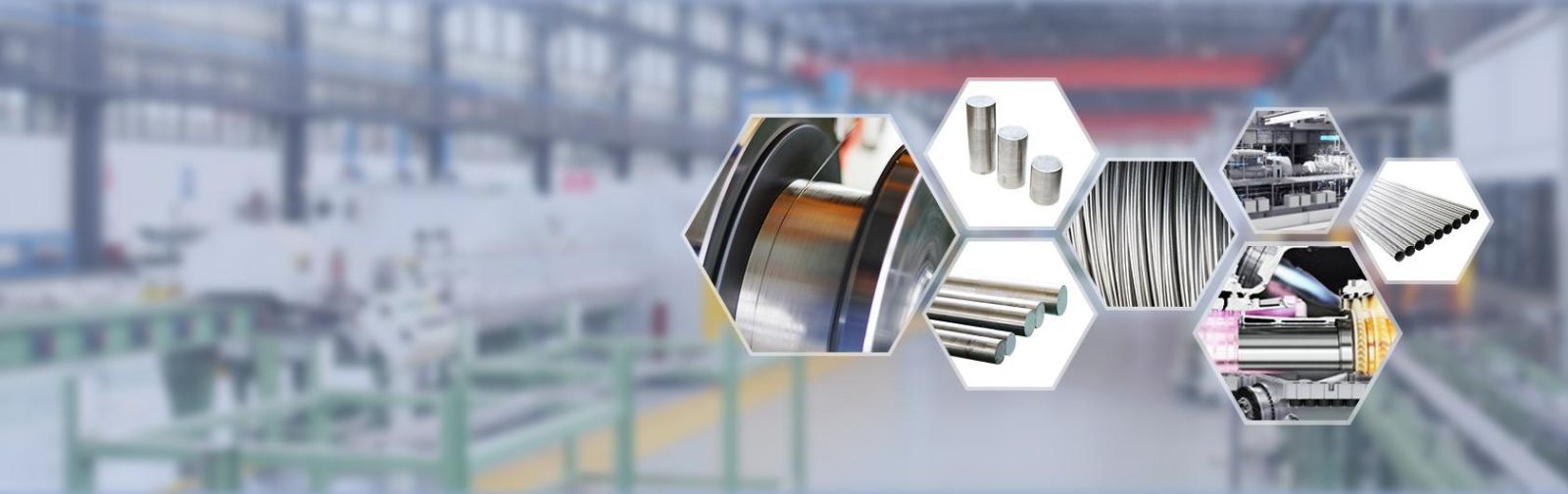
Engineering teams at capable suppliers undertake process review and manufacturability analysis based on client provided 3D models. Through integrated processes encompassing forging, rolling, machining, welding, and surface treatment, they deliver niobium based components ready for immediate assembly, substantially compressing the clients supply chain lead time.
Delivery Commitment
The rare metals market is subject to pronounced volatility driven by international market dynamics and geopolitical considerations. Certain trading entities may withhold inventory or unilaterally revise pricing upwards when market conditions appreciate.
Manufacturers rather than pure trading companies maintain stable raw material reserves and autonomous production capacity. Upon execution of a contract, both delivery schedule and pricing are firmly locked and will not be unilaterally altered in response to market fluctuations.
Frequently Asked Questions About Niobium Material Procurement
Can niobium alloy complex shaped parts be custom machined according to CAD drawings
Yes. Qualified suppliers possess comprehensive in house capabilities spanning from billet forging to precision CNC machining. Clients may submit STEP or IGES format 3D models for customization. Technical teams complete process evaluation and provide feedback on feasibility and quotation within 48 hours.
What certifications are required for niobium alloys intended for aircraft engine applications
Suppliers of aerospace grade niobium alloys must hold AS9100 Aerospace Quality Management System certification. Products must undergo mechanical property testing and metallographic evaluation in accordance with AMS specifications, and full lot traceability from raw material to finished product must be implemented.
What are the minimum wall thickness and maximum achievable length for niobium tubes
Seamless niobium tubes are available with minimum wall thickness of 0.5 millimeters and outer diameter tolerance controlled within plus or minus 0.03 millimeters. Maximum length depends on the specific combination of diameter and wall thickness, typically not exceeding 6 meters. Non standard specifications can be subject to further engineering assessment.
Does niobium undergo oxidation during prolonged high temperature service
Niobium initiates oxidation in air at temperatures exceeding 300 degrees Celsius, with the process accelerating markedly above 400 degrees Celsius. In engineering practice, protective measures such as siliconizing surface treatments or the application of oxidation resistant coatings are employed to form a silicide protective layer. This enables niobium alloys to operate stably for hundreds of hours in oxidizing environments exceeding 1600 degrees Celsius.
Are sample trials and small volume orders accepted
Yes. Responsible suppliers accept both sample evaluations and small volume production orders. Minimum order quantity for niobium bars and plates is typically weight based, while customized niobium components are assessed on a per piece basis. The typical lead time for technical coordination and production preparation during the trial phase ranges from two to four weeks.
How can one verify the authenticity and purity of niobium material
Authenticity verification can be conducted via density measurement and spectroscopic analysis. Pure niobium possesses a density of 8.57 grams per cubic centimeter, whereas tantalum measures 16.6. Although visually similar, the density differential is pronounced. Purity assessment requires inductively coupled plasma or glow discharge mass spectrometry analysis to quantify interstitial element content. Total oxygen, nitrogen, and hydrogen content in high purity niobium should be maintained below 200 parts per million.
Does the supplier provide niobium titanium alloy superconducting wire
Many suppliers provide niobium titanium alloy billet and rod feedstock. The wire drawing and heat treatment processes required to produce finished superconducting wire are performed by specialized superconductor wire manufacturers. Qualified niobium suppliers provide raw materials compliant with applicable industry standards and collaborate with clients on optimization of subsequent process parameters.
Summary When Should You Specify Niobium
For equipment operating above 800 degrees Celsius or in aggressive oxidizing acids, niobium is not merely an option but often the only engineering solution that balances performance and cost. The tenfold service life improvement over conventional materials translates directly into reduced maintenance frequency, lower lifecycle costs, and enhanced system reliability.
The five scenarios where niobium delivers maximum value are:
Aircraft engine components requiring sustained operation above 1100 degrees Celsius
Nuclear reactor components demanding low neutron absorption and high temperature corrosion resistance
Chemical process equipment handling oxidizing acids at elevated temperatures
Superconducting magnets and radiofrequency cavities for particle accelerators
Medical implants requiring long term biocompatibility and corrosion resistance
When evaluating niobium suppliers, prioritize those with demonstrated melting and processing capabilities, full quality management certifications, in house testing laboratories, and a track record of stable delivery. The modest premium for qualified supply is trivial compared to the cost of field failures, production delays, or safety incidents.
Get Quote
- Visit our website: https://www.nbyichou.com/
- Email us: [email protected]
- Call us/whatsapp: +86 13355741031
- Chat with us: Live chat support available on our website