Cooling the Future:
Subtitle: Overcoming the Thermal Wall: How Silicon Carbide Enhances Power Density and System Reliability
1. Introduction: The Thermal Crisis in High-Power Electronics
The landscape of power electronics is undergoing a seismic shift. Across the automotive and telecommunications industries, silicon-based semiconductors are rapidly being replaced by wide bandgap materials—specifically Silicon Carbide (SiC) and Gallium Nitride (GaN). In electric vehicle (EV) traction inverters, SiC MOSFETs enable higher switching frequencies and lower losses, translating directly to extended driving range. In 5G infrastructure, Massive MIMO (Multiple-Input Multiple-Output) antennas and Remote Radio Units (RRUs) demand unprecedented power handling in compact form factors.
However, this leap in semiconductor performance has created a new bottleneck: thermal management. As power densities escalate, the heat generated per square centimeter is pushing traditional cooling solutions to their breaking point.
Conventional aluminum and copper heat sinks, long the workhorses of thermal management, are reaching their physical limits. While they offer decent thermal conductivity, their fundamental material properties create two critical problems when paired with next-gen semiconductors:
-
Thermal Saturation: At the elevated operating temperatures common in SiC devices (often exceeding 200°C junction temperature), the thermal performance of aluminum begins to degrade.
-
CTE Mismatch: Perhaps more critically, the Coefficient of Thermal Expansion (CTE) mismatch between silicon carbide chips and metal heat sinks introduces severe reliability risks.
Enter Silicon Carbide Heat Sinks. Not merely as an alternative, but as the premier thermal management material for 2025 and beyond. At YICHOU (www.nbyichou.com), we engineer SiC components that don't just dissipate heat—they solve the system-level reliability puzzle that defines next-generation power electronics.
This blog explores why SiC heat sinks are no longer a luxury, but a necessity for engineers designing EV inverters and 5G base stations who are hunting for "system-level efficiency" rather than just lowest cost.
2. Thermal Conductivity: SiC vs. The Competition
When thermal management engineers evaluate materials, thermal conductivity (k) expressed in W/m·K is typically the first specification they examine. But raw numbers only tell part of the story.
The High-Temperature Advantage
At room temperature, copper boasts exceptional thermal conductivity (~400 W/m·K), while aluminum follows (~200-240 W/m·K). Silicon carbide, depending on purity and manufacturing method, typically ranges from 180-270 W/m·K—competitive, but not obviously superior at first glance -2.
The real differentiation emerges at elevated temperatures. As power modules heat up during operation, aluminum and copper experience significant thermal conductivity degradation due to increased phonon scattering. SiC, however, maintains its thermal performance far more effectively at high temperatures. This means that at the actual operating conditions of an EV inverter (often 80°C to 125°C baseplate temperatures), SiC's effective thermal conductivity can match or exceed that of metals.
The TBR Challenge: Surface Matters
However, thermal engineers know a crucial truth: bulk conductivity is meaningless if the interface fails. Even with SiC's excellent导热率 (thermal conductivity), a large Thermal Boundary Resistance (TBR) between the chip and heat sink can cripple overall performance.
This is where surface engineering becomes critical. The interface between the semiconductor and the heat sink is typically filled with Thermal Interface Materials (TIM)—greases, gels, or pads designed to fill air gaps caused by surface roughness.
YICHOU addresses this through precision surface finishing. Our manufacturing process achieves exceptional surface flatness and minimal roughness on SiC heat sinks. Why does this matter? A flatter surface requires significantly less TIM to fill microscopic valleys. Since TIM materials typically have thermal conductivity an order of magnitude lower than bulk solids, minimizing TIM thickness directly reduces interface resistance.
Engineers evaluating SiC heat sinks must look beyond bulk conductivity numbers and demand data on surface flatness. At YICHOU, we achieve mirror-like finishes that enable direct contact approaches and ultra-thin bondlines, ensuring that SiC's inherent thermal conductivity translates to actual junction-to-case thermal resistance improvements.
3. CTE Matching: The Secret to Long-Term Reliability
If thermal conductivity drives initial material selection, Coefficient of Thermal Expansion (CTE) matching determines long-term reliability. This is arguably the most compelling technical argument for SiC heat sinks in high-reliability applications like automotive and telecommunications infrastructure.
The Physics of Failure
Every material expands when heated and contracts when cooled. The rate of this expansion is quantified as CTE, expressed in parts per million per degree Kelvin (ppm/K). When two materials with different CTEs are bonded together—such as a SiC chip attached to a copper heat sink—temperature changes induce mechanical stress at the interface.
Consider the numbers:
-
Silicon Carbide (SiC) chip: CTE ≈ 4.0 ppm/K
-
Gallium Nitride (GaN) chip: CTE ≈ 3.5-5.0 ppm/K (orientation-dependent)
-
Copper heat sink: CTE ≈ 16.7 ppm/K
-
Aluminum heat sink: CTE ≈ 23.1 ppm/K
This dramatic mismatch creates a fundamental reliability problem. During operation, EV inverters experience relentless thermal cycling—acceleration heats the module, deceleration cools it. Each cycle subjects the solder attachment layer to shear stress. Over thousands of cycles, this stress causes "solder creep" —progressive deformation and eventual cracking of the solder joint -3-5.
The SiC Solution
A SiC heat sink, with its CTE of approximately 4.0 ppm/K, nearly perfectly matches the semiconductor device itself. When chip and heat sink expand and contract in unison, the solder layer experiences dramatically reduced stress.
Research has demonstrated the complexity of thermal stress in die-attach structures. Finite element analysis reveals that CTE mismatch isn't simply a binary issue between chip and heat sink—the interaction between the solder layer and all adjacent materials creates complex stress patterns, including "stress recovery peaks" during temperature ramp-up that can accelerate fatigue failure -5-8. By bringing the heat sink CTE into alignment with the chip, system designers eliminate one of the primary drivers of this stress accumulation.
This matching delivers tangible reliability benefits:
-
Prevention of solder layer delamination
-
Reduced risk of solder fatigue cracks
-
Extended power cycling lifetime
-
Ability to withstand wider temperature swings
Validation Through Testing
For automotive applications, this isn't theoretical. YICHOU's SiC heat sinks are engineered to withstand the punishing thermal cycling requirements of AEC-Q101 and similar automotive qualification standards. In thermal cycling tests ranging from -40°C to 150°C—the typical range specified for automotive power modules—CTE-matched assemblies demonstrate significantly slower crack propagation in joint areas compared to mismatched material combinations -10.
The conclusion is clear: for applications where reliability matters—and in EVs and 5G infrastructure, reliability is paramount—CTE matching isn't optional. It's the difference between a system that lasts years and one that fails prematurely.
.jpg)
4. Lightweighting for 5G and EV Efficiency
Beyond thermal and reliability performance, SiC heat sinks offer a transformative advantage in two applications where weight is critical: 5G infrastructure and electric vehicles.
The Density Advantage
The math is straightforward:
-
Copper density: 8.96 g/cm³
-
Aluminum density: 2.70 g/cm³
-
Silicon Carbide density: ~3.2 g/cm³
Compared to copper, SiC is approximately 65% lighter. Compared to aluminum, SiC is slightly denser, but this comparison fails to account for the thermal performance difference. When sized for equivalent thermal performance, SiC heat sinks can often be smaller and thinner than aluminum alternatives, potentially achieving net weight savings even compared to aluminum.
5G Infrastructure: Weight Matters
5G base stations face unique installation constraints. Small cells are frequently mounted on existing infrastructure—utility poles, building facades, and streetlights. Each mounting location has strict weight limits. Excessive weight increases installation complexity, structural reinforcement costs, and even wind loading concerns.
By specifying SiC heat sinks, system integrators can reduce the thermal management system weight by 60% or more compared to copper-based designs. This weight reduction simplifies installation, reduces structural requirements, and enables deployment in locations that would otherwise be inaccessible.
EV Applications: Every Gram Counts
In electric vehicles, weight reduction translates directly to range extension. Every kilogram saved reduces energy consumption across the driving cycle.
But there's a more subtle benefit: power density. EV inverter packaging space is extremely constrained. Engineers are continuously seeking ways to pack more kilowatts into smaller volumes—expressed as power density in kW/L or kW/kg.
SiC's high thermal conductivity enables more aggressive heat extraction from a given surface area. This means that for the same power dissipation, a SiC heat sink can be physically smaller than an aluminum equivalent. Alternatively, for the same physical envelope, a SiC heat sink enables higher power output.
For traction inverter designers, this translates to:
-
Smaller, lighter inverter packages
-
More flexible placement within the vehicle
-
Reduced unsprung mass in wheel-motor applications
-
Extended vehicle range through weight savings
The combination of weight reduction and volume reduction makes SiC heat sinks uniquely suited to the EV industry's relentless pursuit of efficiency and compact design.
5. Advanced Machining: From Concept to Micro-Channels
Silicon Carbide presents a manufacturing paradox: it offers exceptional hardness and thermal properties, but those same properties make it notoriously difficult to machine. SiC's hardness approaches that of diamond, making conventional machining impractical.
Yet modern thermal management demands increasingly complex geometries. To maximize heat transfer surface area within confined volumes, engineers specify:
-
High-aspect-ratio fin arrays
-
Dense pin-fin structures
-
Micro-channel cold plates
-
Integrated fluid passages
The YICHOU Manufacturing Edge
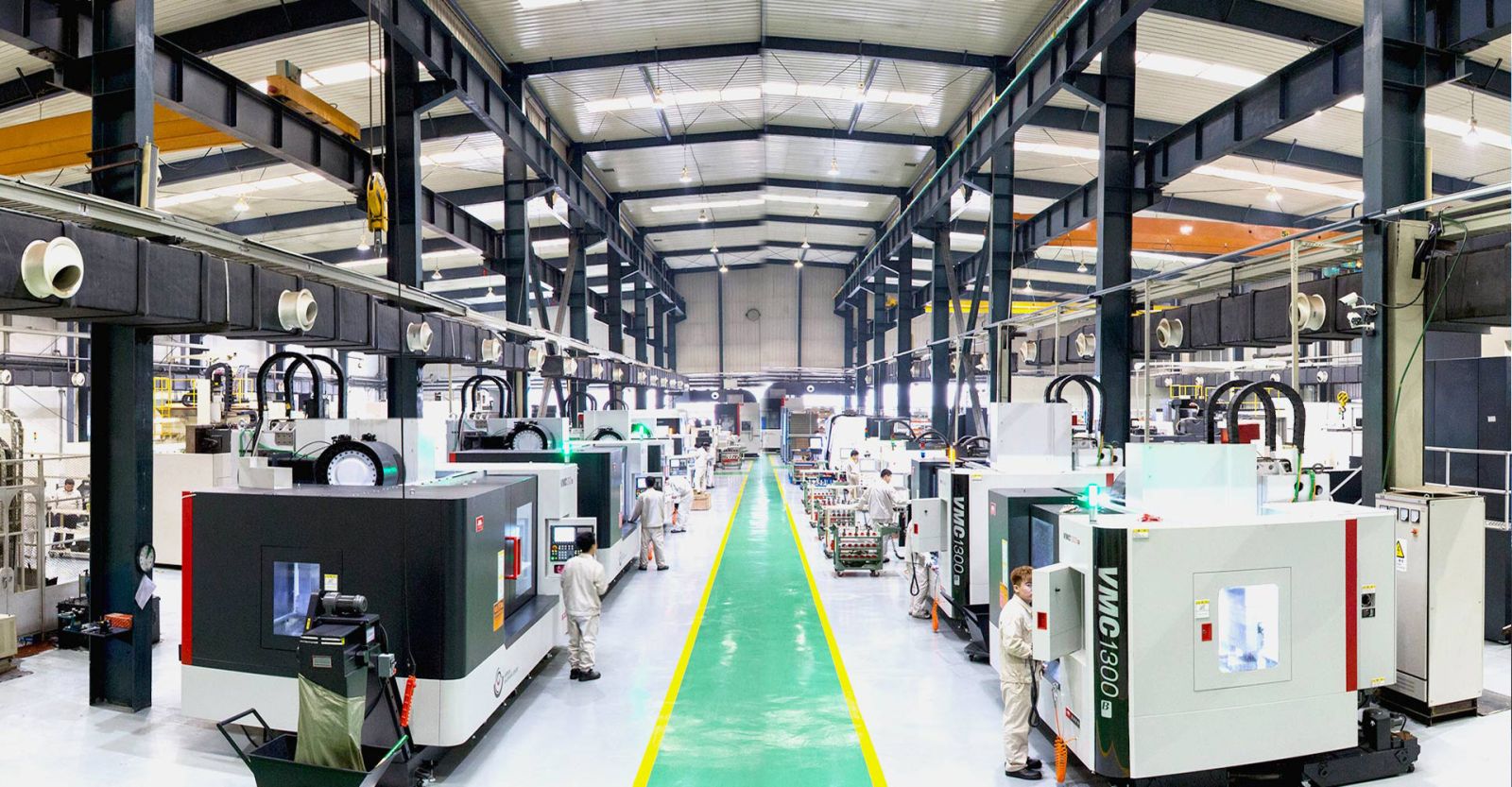
At YICHOU, we've invested in advanced manufacturing capabilities specifically developed for hard ceramics. Our approach combines multiple technologies to transform SiC's brittleness into precisely engineered components.
Precision Diamond Machining: We utilize CNC equipment equipped with diamond tooling capable of cutting sintered SiC to tolerances measured in microns. This enables the creation of thin-fin structures that maximize surface area while maintaining structural integrity.
Ultrasonic Machining: For complex internal geometries and micro-channel features, ultrasonic machining provides the ability to create intricate passages without inducing micro-cracks that could compromise long-term reliability.
Surface Finishing: As discussed earlier, surface finish directly impacts thermal interface resistance. Our lapping and polishing processes achieve surface finishes that minimize TIM requirements and optimize heat transfer.
Custom Solutions for Demanding Applications
Every thermal management challenge is unique. YICHOU works directly with engineering teams to develop custom SiC heat sink solutions optimized for specific applications:
-
Liquid-Cooled Cold Plates: For high-power EV inverters, we manufacture SiC cold plates with integrated micro-channel structures that maximize convective heat transfer to liquid coolants.
-
Pin-Fin Arrays: For forced-air cooled 5G RRUs, our precision-machined pin-fin arrays dramatically increase surface area within confined enclosures.
-
Integrated Assemblies: We can combine SiC heat sinks with other materials to create multi-material thermal management solutions that optimize both thermal performance and cost.
Our engineering team speaks the language of thermal management—we understand that geometry is as important as material properties in achieving optimal system performance.
6. FAQ: Engineering Questions Answered
Q: Is SiC significantly more expensive than copper? Shouldn't I just use more copper for the same price?
A: This is the most common question, and it misses the point of Total Cost of Ownership (TCO) . While SiC material cost per kilogram is indeed higher than copper, comparing raw material costs ignores system-level economics. Consider:
-
SiC heat sinks can be smaller and lighter, reducing surrounding structural requirements
-
CTE matching eliminates solder fatigue failures, reducing warranty and field service costs
-
Higher efficiency reduces energy consumption and cooling requirements
-
Extended system lifetime improves end-user economics
When evaluated on TCO rather than upfront component cost, SiC frequently proves more economical than traditional materials.
Q: Can SiC heat sinks be integrated into existing power module designs?
A: In most cases, yes. YICHOU offers both standard form factors and custom designs. For engineers evaluating drop-in replacements, we can match existing footprint dimensions while delivering the thermal and CTE benefits of SiC. For new designs, we recommend engaging early in the development process to optimize the heat sink geometry for your specific power module layout.
Q: What is the typical lead time for custom SiC prototypes at YICHOU?
A: Prototype lead times vary based on complexity, but we typically deliver custom SiC heat sink samples within 4-6 weeks of design finalization. Our engineering team works closely with customers to streamline the design-for-manufacturability process, ensuring that prototypes accurately represent production-ready components.
Q: Does YICHOU provide thermal simulation support?
A: Absolutely. We partner with customers during the design phase, providing material property data and design guidance for thermal FEA simulations. For qualified projects, we can perform thermal-mechanical co-simulation to validate CTE matching benefits and optimize heat sink geometry for specific application requirements.
Q: What quality certifications does YICHOU hold?
A: YICHOU is ISO 9001 certified and RoHS compliant, ensuring that our manufacturing processes meet international quality and environmental standards -2. For automotive applications, we follow PPAP (Production Part Approval Process) protocols and can provide relevant documentation for customer qualification programs.
7. Conclusion: Engineering the Next Generation of Power
The transition to wide bandgap semiconductors—SiC and GaN—represents one of the most significant technology shifts in power electronics history. But semiconductors alone don't determine system performance. The packaging and thermal management surrounding these devices ultimately dictate real-world reliability, efficiency, and power density.
Silicon Carbide heat sinks address the fundamental limitations of traditional materials:
-
✓ Thermal conductivity that holds up at elevated operating temperatures
-
✓ CTE matching that eliminates solder fatigue and extends system lifetime
-
✓ Lightweighting that enables new applications and improves efficiency
-
✓ Advanced geometries that maximize heat transfer in compact spaces
At YICHOU, we've spent years perfecting the manufacturing processes required to transform SiC's theoretical advantages into practical, reliable components. Our heat sinks are engineered for the specific demands of EV inverters, 5G infrastructure, and other high-reliability power electronics applications.
The question for thermal management engineers is no longer whether SiC heat sinks make technical sense—they clearly do. The question is how quickly your organization can capture the system-level benefits they enable.
Ready to Optimize Your Thermal Design?
Don't let thermal management limit your next-generation power electronics. Whether you're developing a traction inverter for the next EV platform or a compact 5G RRU, YICHOU's SiC heat sink solutions can help you achieve your performance, reliability, and weight targets.
Download our SiC Thermal Properties Whitepaper for detailed material data, CTE curves, and thermal conductivity measurements across temperature ranges.
Request a custom quote for your specific application. Our engineering team is ready to collaborate on your thermal management challenges.
Contact us today for a competitive quote and technical support!
Let Yichou help you achieve excellence in your next project. Whether you need raw materials, custom alloy solutions, or precision-manufactured components, our team is ready to assist.
- Email us: [email protected]
- Call us/whatsapp: +86 13355741031
- Chat with us: Live chat support available on our website