[Abstract] The main principles and characteristics of additive manufacturing technologies in the aerospace field were described. The applications and development trend of 3D printing technology in the aerospace field were analyzed.
[Keywords] three dimensional printing; metal printing; aerospace
1 Demands and opportunities of additive manufacturing in aerospace field
Additive manufacturing technology has shown itself as a new manufacturing method completely different from traditional manufacturing technology in the aerospace field, which has profoundly affected the product design, manufacturing and assembly of the aerospace industry. This technology is not only used as a rapid prototyping technology to save money and time, but also can directly manufacture parts and repairs.
The aerospace industry needs to continuously develop stronger, lighter and durable components, and additive manufacturing technology can provide new possibilities to meet these requirements and challenges, especially in the design and manufacture of aerospace components.
-
- Design requirements
The aerospace industry needs to continuously lighten various components while improving the specific strength of component materials to improve fuel efficiency in flight, and to meet the requirements of safety and reliability. Therefore, aerospace designers need to minimize the material usage of each component as much as possible, which will increase the complexity of design in terms of structure, function, and performance.
① Structural design
The design feature of complex structures is the use of unconventional external shapes to provide good mechanical performance with minimal mass. Compared with traditional manufacturing processes, the layered manufacturing method of additive manufacturing technology makes it more versatile in the manufacturing of structurally complex components, and has advantages in subsequent optimization and manufacturing.
Usually, the multi-scale hierarchical architecture of lattice and lattice within aerospace components can be obtained through topology optimization algorithms. Utilize software such as Materialize and Netfabb to optimize structural design and find an optimal solution in multi-scale design methods and multi physical quantity simulations. This will make it possible to reduce component materials and weight, while maintaining or even improving the mechanical properties of the components。
② Functional complexity
Functional design is mainly reflected in the complexity of functions, that is, integrating the functionality of multiple parts into a single component (multifunctional component), including functions that traditionally do not belong to that component.
Some structural components in the aerospace industry can be used as ducts, such as airfoils or turbine blades embedded in cooling channels. As shown in Figure 1, a Ti-6Al-4V material airfoil ( built-in cooling channel ) printed using laser metal deposition technology ( LMD ).
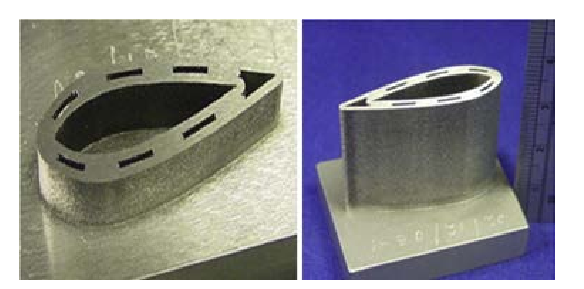
Fig. 1 Airfoil with embedded cooling channel (Ti-6AI-4V)
③ Performance requirements
The complexity of performance is reflected in the change of material properties in parts, which includes multi-material design and functionally graded materials. Adjusting the mechanical properties of parts is closely related to metal 3D printing technology, such as powder bed melting technology. Changing the particle size and distribution of metal powder used in it can change the density and corresponding performance of parts. The quality of hardness, fatigue strength and surface finish of parts can be adjusted by controlling the process parameters of printing technology.
.jpg)
The design for traditional manufacturing and assembly operations will be simplified, resulting in sacrificing part performance. However, additive manufacturing can be freely formed and assembly can be reduced through component integration. It can also reduce material waste and, unlike traditional manufacturing, additive manufacturing reduces or even eliminates the demand for molds, allowing for small-scale production and the production of parts that require fast turnaround time.
The use of additive manufacturing technology can achieve the integration of aerospace components, making functional integration and achieving higher reliability and performance components possible. Unlike traditional complex aerospace components that contain multiple simple parts, additive manufacturing can integrate multiple simple parts into a whole and achieve functional integration, without the occurrence of fasteners such as welding, bolts, and assembly, which will reduce the cost of inspecting, processing, and maintaining components.
② Material cost control
One important reason for the high manufacturing costs of aerospace components is the buy to fly ratio, which is defined as the weight ratio between raw materials and the final component weight. The flight to purchase ratio of aerospace components (such as turbine blades) with large envelope volume to volume ratio is as high as 15-20:1. In these cases, utilizing the manufacturing capability of 3D printing free form can significantly improve material usage and manufacturing costs, and reduce the purchase to flight ratio to close to 1:1. For the powder bed process, compared to traditional milling, the waste generated is about 5%, while traditional milling can generate up to 95% of the waste.
The aerospace industry needs high-performance metals, such as titanium alloys, aluminum alloys, and special steels. Taking titanium alloy as an example, it has excellent properties such as high specific strength, wide temperature range and high corrosion resistance. Now, additive manufacturing technology can print more and more excellent materials and apply them to aerospace parts. Norsk Titanium has developed additive manufacturing titanium equipment and can provide aerospace-grade structural titanium metal parts.
.jpg)
③ Small batch production and turnover time
Compared to mass production, additive manufacturing technology is more cost-effective in small-scale production and customized component manufacturing. This technology can manufacture tests and replace parts according to requirements for rapid delivery and installation. This can reduce downtime and related costs. At the same time, this technology can manufacture the required components in different places, rather than being concentrated in a single manufacturing factory. This will also reduce transportation and storage costs.
In short, due to the characteristics of aerospace parts themselves, such as complex geometry ( functional integration ) and large envelope volume-volume ratio ( thin-walled structure ), and the characteristics of manufacturing aerospace parts, such as high purchase and flight ratio, the additive manufacturing technology is very suitable for the manufacturing of aerospace parts.
2 Additive manufacturing technology in the field of aerospace
In general, 3D printing technology applied in the field of aerospace can be divided into metal printing and non-metal printing. Metal printing mainly includes directed energy deposition ( DED ) and powder bed fusion ( PBF ). Non-metal printing mainly includes light curing ( SLA ), fused deposition modeling ( FDM ) and three-dimensional printing ( 3DP ). As shown in Figure 2, the technical application of 3D printing technology in the aerospace field is summarized.
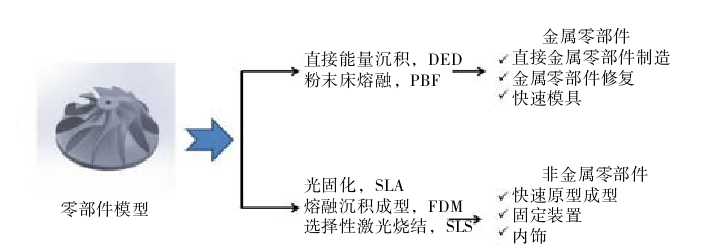
Fig.2 3D printing technology in aerospace field
2.1 Metal 3D printing technology
Direct energy deposition ( DED ) and powder bed fusion ( PBF ) are two kinds of 3D printing technologies commonly used in aerospace field. Direct energy deposition ( DED ) usually includes laser technology deposition ( LMD ), laser engineered net shaping ( LENS ), electron beam welding ( EBW ) and arc additive manufacturing ( WAAM ). Powder Bed Melting ( PBF ) includes Selective Laser Melting ( SLM ), Electron Beam Melting ( EBM ) and Direct Metal Laser Sintering ( DMLS ).
Direct energy deposition ( DED ) works by depositing the melted material at a specific location to create a part. The manufacturing process is usually in an inert atmosphere, as shown in Figure 3. Direct energy deposition uses focused energy ( laser beam, electron beam or arc, etc. ) to partially melt raw materials ( powder or wire ) and build three-dimensional solid parts. There are many metal materials that can be used for direct energy deposition, such as titanium, aluminum and its alloys, stainless steel and chromium-nickel-iron alloys. These materials are widely used in aerospace. Compared with powder bed melting technology, direct energy deposition technology can use multi-axis deposition ( such as additional substrate rotation axis ) and multi-material transport ( such as multi-powder hopper ) in the printing process, so that complex geometric parts with unsupported structures can be manufactured, such as thin-walled structures. Similarly, direct energy deposition can be used to prepare parts of functionally graded materials because its multi-powder hopper stores different materials.
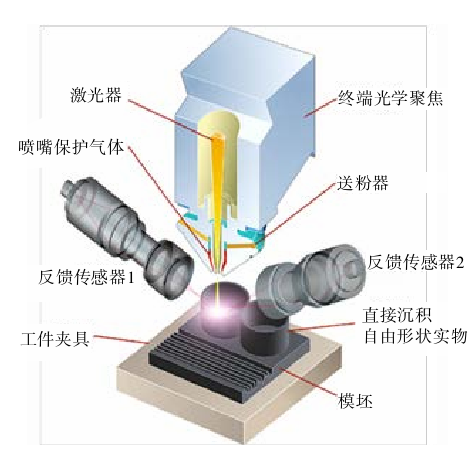
Fig. 3 Schematic diagram of direct energy deposition technology
Different from direct energy deposition technology, 3D printing technology based on powder bed melting is to spread a layer of metal powder on the working substrate, and selectively melt the powder with a focused energy source ( laser beam or electron beam ). When a layer is formed, the leveling roll is then spread with a layer of new powder, so that three-dimensional parts are repeatedly created, as shown in Figure 4. In order to prevent powder oxidation, selective laser melting SLM and direct metal laser sintering DMLS are usually protected in inert atmosphere, while electron beam melting EBM is protected in vacuum environment.
The metal materials that can be used in powder bed melting technology are usually stainless steel, tool steel, titanium and titanium alloys, nickel based alloys, and some aluminum alloys. A key advantage of powder bed melting technology compared to direct energy deposition technology is that it can provide support structures during the printing cantilever and bottom cutting processes, while the printed components have high geometric accuracy (± 0.05mm) and high fidelity detail features due to the small size of the melt pool (approximately 1mm diameter).
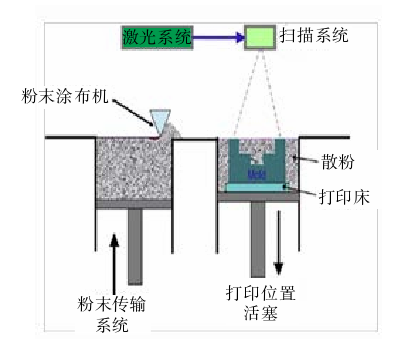
Fig. 4 Schematic diagram of powder bed melting technology
2.2 Non-metallic 3D printing technology
The most relevant non-metallic printing technologies for aerospace include selective laser sintering ( SLS ), stereolithography ( SLA ) and fused deposition modeling ( FDM ), which can be applied in areas such as rapid prototyping and direct manufacturing of molds and components.
Selective laser sintering ( SLS ) is a powder bed melting technology that uses a laser energy source to melt polymer powder. In aerospace applications, SLS is mainly used for rapid prototyping of non-functional parts and direct manufacturing of non-critical components.
Stereolithography, also known as photocuring, is a method of creating a three-dimensional entity using a luminescent device ( laser or digital light processing ). The device illuminates and solidifies the liquid photosensitive polymer resin layer by layer according to the special software slice. In aerospace, SLA is mainly used in rapid prototyping such as accessories, mold preparation and direct manufacturing of interiors.
Fused Deposition Modeling ( FDM ), also known as material extrusion molding, is the most commonly used 3D printing technology on the market. In the aerospace industry, high-strength materials ( such as ULTEM ) have been used to print parts instead of traditional metal parts to reduce weight and turnaround time for parts maintenance. NASA 's Mars rover uses about 70 production-grade thermoplastic parts. Because of its light weight, it is durable enough to withstand the harsh test of space.
3 Application and trend of additive manufacturing in aerospace field
In recent years, the advantages and characteristics of material-structure integrated net forming of complex structural metal components based on additive manufacturing technology have provided a new technical approach for the design and manufacture of aerospace high-performance components.
According to the Wohlers Report, a global authoritative development report on 3D printing, 3D printing technology has developed into a key core technology to enhance aerospace design and manufacturing capabilities. Its proportion in industrial applications is second only to the automotive industry and consumer / electronics, accounting for 14.7 %. The application of additive manufacturing in the aerospace field is mainly due to its significant benefits in lightweight and integrated forming of complex structures.
3.1 Application at home and abroad
The most typical application of additive manufacturing parts in aerospace is GE 's use of 3D printing technology to produce nozzles. GE affirms that the nozzle geometry of this structure can only be manufactured by 3D printing technology. It integrates up to 260 parts of the original nozzle into 20 parts, which greatly reduces the design and manufacturing costs, and the weight is 25 % lighter than the previous traditional nozzle, and the combustion efficiency is increased by 30 %. As shown in Fig.5
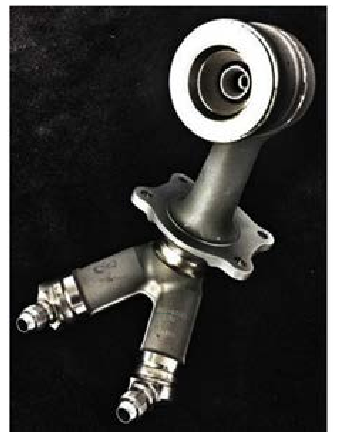
Fig.5 GE nozzle ( General Aviation and EOS )
At this stage, additive manufacturing technology is mainly used in the aerospace field in the following aspects : First, 3D printing technology is widely used in the production and manufacturing of civil aviation aircraft parts. Boeing has used 3D printing technology to print and manufacture more than 300 different aircraft parts, including complex cold air ducts. By 2017, Boeing has more than 50,000 3D printed aircraft parts, and the titanium alloy structural parts printed by Directed Energy Deposition 3D have obtained FAA certification. Airbus successfully manufactured more than 1,000 parts using FDM printing technology and ULTEM materials by combining 3D printing giant Stratasys, and applied cabin luggage racks to passenger aircraft such as A380.This material and the process of 3D printing aircraft ventilation ducts passed the FAA certification in 2015.
Secondly, additive manufacturing technology can be applied to UAV manufacturing. In 2011, engineers at the University of Southampton in the United Kingdom used 3D printing technology to create the entire drone, marking the drone manufacturing into the era of 3D printing.
Thirdly, metal 3D printing can be applied in the repair of aerospace components. Metal 3D printing can repair damaged and expensive components instead of scrapping and replacing them, greatly reducing costs. The basic principle of 3D printing technology for repair is to use a laser beam to generate metallurgical bonding between the damaged surface of the component (substrate) and the added repair material (metal powder) [14]. Meanwhile, compared to traditional repairs, the low input heat of 3D printing results in less thermal impact around the substrate, resulting in less deformation. This makes 3D printing suitable for manufacturing thin-walled structures, such as wing beams.
China has also successfully applied the 3D printing technology independently developed in China in aerospace manufacturing. Northwestern Polytechnical University has produced a titanium alloy wing beam with a length of 5m by laser printing of titanium alloy. At the same time, it has used 3D printing technology to manufacture the central wing beam of the C919 large aircraft in conjunction with the Commercial Aircraft Corporation of China, as shown in Figure 6, and passed the performance test of the Commercial Aircraft Corporation. ; academician Wang Huaming 's team of Beijing University of Aeronautics and Astronautics successfully manufactured the largest large-scale integral titanium alloy aircraft main bearing structure in China. It took the lead in breaking through the exciting processing technology, equipment and application technology of difficult-to-machine and large-scale complex integral key parts such as titanium alloy and ultra-high-strength steel in the world. According to the team of Professor Luigi Benfratello of Turin University of Technology, China 's FC-31 is the first fighter to use 3D printing technology to manufacture the integration of the wing and the middle of the fuselage. More than 100 parts of the aircraft are manufactured by 3D printing.
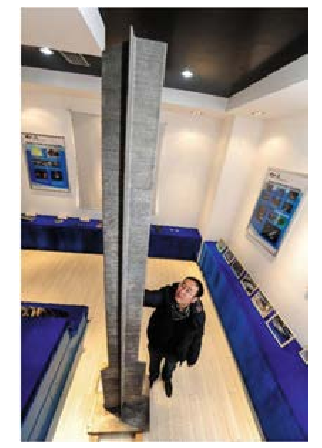
Fig. 6 C919 central wing beam
In addition, China Aerospace Science and Technology Group has developed a multi-laser 3D printer, which has successfully printed the optical titanium alloy lens bracket of spaceborne equipment. A certain type of solid rocket motor ignition device shell was manufactured by 41 Institute of the Sixth Institute of Aerospace Science and Technology Group using 3D printing technology, and the feasibility and stability of the technology were verified by the ground test of the engine. This is also the first successful application of 3D printing technology in solid rocket motor in China.
.jpg)
3.2 Development trend
With the development of additive manufacturing technology, it occupies a more important position in the aerospace field. However, the strict requirements for safety and reliability in the aerospace industry have always been an insurmountable red line, and additive manufacturing requires time to prove its sufficient safety and reliability. Therefore, the aerospace industry has put forward higher requirements for additive manufacturing technology.
The first is the process optimization of mechanical properties and stability. Additive manufacturing must be controlled and a real-time detection system must be established because of its anisotropy caused by manufacturing methods and internal stress caused by drastic changes in temperature in a small range. Secondly, the function of additive manufacturing and subtractive manufacturing is integrated. In this regard, the National Additive Manufacturing Innovation Center in Xi 'an has developed the equipment of additive and subtractive integrated machine, which can not only meet the needs of complex structure and high-precision parts, but also improve the manufacturing flexibility and the apparent performance of parts. Finally, the realization of metal 3D printing in space can use space microgravity to perfectly spheroidize metal powder and reduce the cost of 3D printing powder. At the same time, it can repair spacecraft in situ and reduce space launch.
4 Conclusion
Additive manufacturing has become one of the core technologies in the field of intelligent manufacturing and has attracted widespread attention worldwide. Through the research and application of 3D printing technology in the aerospace field at home and abroad, it has great advantages in complex structure, integrated manufacturing, lightweight design, cost reduction and shortening the development cycle. It has become the preferred manufacturing scheme for large-size and complex customized parts.
Therefore, the use of aerospace high-end manufacturing industry to promote the role of new technology, vigorously develop 3D printing technology, accelerate the research and development of high-performance, low-cost 3D printing technology, research and development of related materials, integration of printing equipment and the development of relevant standards, to enhance the manufacturing level of aerospace.
Get Quote
- Visit our website: https://www.nbyichou.com/
- Email us: [email protected]
- Call us/whatsapp: +86 13355741031
- Chat with us: Live chat support available on our website