Meta Description: Struggling with premature spindle failures or inconsistent tolerances from suppliers? This engineer-focused guide covers material grades, heat treatment traps, critical tolerances, and the exact questions to ask before you issue that PO.
Slug: axle-spindle-buyers-guide-materials-tolerances-suppliers
Introduction: When a $200 Part Takes Down a $200,000 Machine
If you are reading this, you are likely not shopping for a spindle. You are shopping for uptime.
Procurement managers and design engineers in heavy equipment, commercial vehicle, and industrial automation sectors share a common frustration: axle spindles and precision shaft components are deceptively simple in appearance but brutally unforgiving in application. A single dimensional deviation of a few microns on a bearing journal, or a material batch with the wrong grain structure, does not just cause a “fit issue.” It causes premature bearing seizure, unexpected fatigue fractures, and unplanned downtime that costs far more than the component itself.
This guide cuts through generic marketing language. We will examine the metallurgical realities of spindle performance, the specific tolerances that matter, and the procurement criteria that separate reliable manufacturing partners from order-takers.
1. The Functional Reality: What Your Spindle Actually Endures
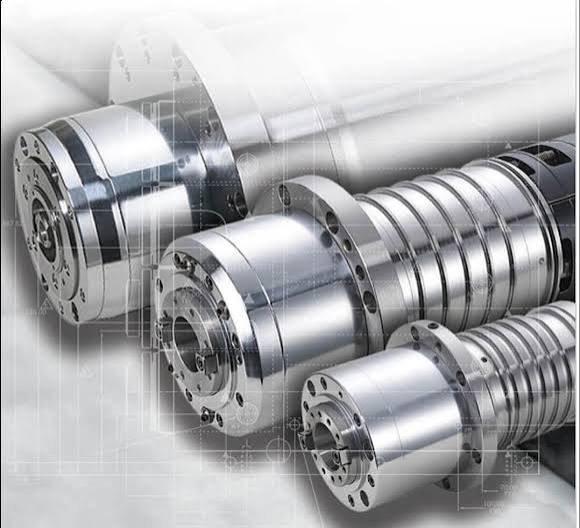
An axle spindle is the stationary shaft extending from the axle housing onto which the wheel hub, bearings, and brake assembly mount . Its job is not merely to hold parts in place. It must:
-
Support the full weight of the vehicle or equipment while transferring loads from the hub to the suspension.
-
Maintain precise bearing preload under dynamic radial and axial forces.
-
Resist bending moments that attempt to flex the spindle with every rotation.
In heavy-duty applications—agricultural trailers, commercial trucks, mining haulers—the spindle is the last line of defense between controlled motion and catastrophic wheel separation. When quality is compromised, the failure mode is rarely graceful.
2. Material Selection: The Grade Determines the Failure Mode
The single most consequential decision in spindle procurement is the steel grade. Generic “high-strength steel” specifications are insufficient. Here is what the grades actually mean in practice.
SAE 1045 / C45E: The Baseline
Medium carbon steel used in standard trailer axles and lighter truck applications. It offers acceptable load capacity, is widely available, and is cost-effective . However, it has limited fatigue resistance under high cyclic loading. Use this grade only if your application is genuinely light-to-medium duty and cost is the dominant constraint.
SAE 4140 / 42CrMo4: The Workhorse for Commercial Trucks
The addition of chromium and molybdenum significantly improves fatigue life without requiring a larger section size . European axle manufacturers have relied on 42CrMo4 for decades precisely because it allows lighter spindles without sacrificing load capacity. For most commercial truck and industrial machinery applications, 4140 represents the optimal balance of performance and cost.
SAE 4340 / 34CrNiMo6: When Failure Is Not an Option
Nickel-chromium-moly steel capable of achieving tensile strengths of 1,400–1,800 MPa when properly heat treated . This grade appears in mining vehicles, heavy haulage, military axles, and high-performance applications where standard grades are simply insufficient. Caution: 4340 is significantly more difficult to weld and machine. If your supplier claims to offer 4340 spindles at prices comparable to 4140, verify the material certificates before proceeding.
3. The Heat Treatment Trap: Why Hardness Alone Means Nothing
Many suppliers advertise “induction hardened” bearing journals as a quality differentiator. This is table stakes, not a competitive advantage. What matters is the depth and consistency of the hardened case and the resulting core toughness.
The hidden failure mechanism: A spindle can pass a surface hardness test at 58 HRC and still fail prematurely if the transition zone between the hardened case and the ductile core is too abrupt. This creates a stress concentration that initiates transverse internal cracking under cyclic loading . Proper normalizing and controlled heat treatment cycles are essential to refine grain size and ensure ductility in the core .
What to demand from your supplier:
-
Heat treatment procedure specification with temperature ranges and soak times.
-
Case depth measurement reports (not just surface hardness).
-
For critical applications, microstructure photos confirming uniform grain size.
4. Tolerances That Matter: Beyond the General Tolerance Block
General tolerance notes on drawings (“±0.2 mm unless otherwise specified”) are a recipe for assembly problems. For axle spindles, the following features require explicit, tightened tolerances:
| Feature | Standard Precision | Severe-Duty Recommendation |
|---|---|---|
| Bearing journal diameter | ±0.05 mm | ±0.03 mm |
| Bearing journal width | ±0.10 mm | ±0.05 mm |
| Seal journal diameter | ±0.05 mm | ±0.03 mm |
| Brake flange bolt holes | ±0.10 mm | ±0.05 mm |
Source: industry procurement data for custom axle spindles .
Surface finish is equally critical. Bearing journals require a finish of 0.4–0.8 µm Ra. Rougher surfaces accelerate bearing wear and generate heat that degrades lubricant film strength . If your supplier cannot provide profilometer readings for the bearing seats, the quality system is incomplete.
5. Forged vs. Turned from Bar: The Structural Integrity Difference
A spindle machined from solid bar stock can meet dimensional specifications. It will not, however, match the fatigue life of a forged component.
Forging aligns the grain flow of the steel with the contour of the finished part. This directional grain structure resists crack propagation far better than the random grain orientation of bar stock. For any spindle subjected to bending fatigue—which is essentially all of them—forged blanks are the correct starting point.
This does not mean every supplier must operate a forging press in-house. But your supplier must have a qualified, traceable forging source and should be able to provide grain flow documentation for critical applications.
6. Supplier Vetting: The Questions That Expose Weaknesses
When evaluating a potential manufacturing partner, generic ISO certificates are necessary but insufficient. Ask these specific questions:
On quality control:
-
“What is your CMM inspection frequency—first article, in-process, or lot sampling?”
-
“Do you perform ultrasonic testing for internal defects on 4340 grades?”
-
“Can you provide material certificates traceable to the heat lot?”
On engineering capability:
-
“Will you review my drawing for manufacturability before quoting, or quote exactly as drawn?”
-
“What is your process for flagging tolerance stack-up issues that could affect bearing preload?”
On production reality:
-
“What is your actual lead time for a new custom spindle—not the sales estimate, but the production planning figure?”
-
“At what order volume does your pricing structure change?”
Suppliers who answer these questions with specifics rather than vague assurances are the ones worth your time.
7. Standard vs. Custom: A Decision Framework
Choose standard off-the-shelf spindles when:
-
Your load ratings and mounting dimensions match an existing catalog item.
-
Time-to-first-article is measured in days, not weeks.
-
The application is non-critical or low-cycle.
Choose custom manufacturing when:
-
You require non-standard bearing combinations or mounting geometries.
-
Your application involves loads that standard grades cannot safely carry.
-
You need specific material certification or traceability that off-the-shelf suppliers cannot provide.
A competent custom manufacturer will provide FEA validation for critical designs and will flag potential issues in your drawing before cutting steel—not after .
8. Conclusion: Buy the Process, Not the Part
An axle spindle is not a commodity. It is a precision component whose failure mode ranges from inconvenient to catastrophic. The difference between a reliable supply chain and a recurring maintenance headache lies not in the price per unit, but in the supplier’s discipline regarding material traceability, heat treatment control, and dimensional verification.
Ready to evaluate your current spindle specification against these criteria?
[Upload your drawing for a no-obligation manufacturability review →]
Our engineering team will return specific feedback on material selection, tolerance feasibility, and potential cost optimizations within 2 business days.
Get in Touch with Yichou
- Email us: [email protected]
- Call us/whatsapp: +86 13355741031
- Chat with us: Live chat support available on our website