Breaking the Blind Hole Bottleneck: Advanced Power Skiving and Machining Strategies for High‑Precision Internal Splines
Introduction: The Nightmare of the Internal Blind Hole
The electrification of transportation and the rapid advancement of robotics are fundamentally reshaping the mechanical engineering landscape. Next‑generation electric vehicle (EV) e‑axles and robotics reduction gears—particularly high‑torque RV drives and harmonic drive systems—demand exceptionally compact, power‑dense layouts that integrate high‑precision internal gears and internal splines directly into unitary housing structures. This architectural approach, while optimal for weight reduction and system rigidity, creates a formidable manufacturing paradox.
Machining internal splines inside a blind hole or up against a tight shoulder represents one of the most persistent engineering bottlenecks in precision manufacturing. Traditional gear shaping (shaping machines) operates through a painfully slow reciprocating motion—each cutting stroke followed by a non‑productive return stroke—and is notoriously prone to cutter deflection, particularly in deep, small‑diameter applications. The inherent flexibility of long, slender shank tools introduces progressive bending moments that manifest as tapered spline profiles: wider at the entrance, narrower at the bottom.
Broaching, the conventional high‑speed alternative for internal splines, presents an even more fundamental incompatibility: the tool cannot physically pass through a blind cavity. This eliminates broaching as a viable option entirely, leaving manufacturers with a stark choice between slow, tolerance‑compromised shaping or prohibitively slow electrical discharge machining (EDM) processes that leave problematic recast layers and struggle with dimensional stability.
The modern solution to this engineering paradox lies in Power Skiving—a continuous, high‑speed machining process that YICHOU has mastered to deliver the ultra‑fast throughput of broaching alongside the continuous‑indexing precision required to meet strict international gear standards including AGMA Class 12 and DIN Q4. This article dissects the mechanical intricacies of power skiving technology, the specific strategies required to conquer blind hole geometries, and the quality assurance frameworks that position YICHOU as an advanced Tier‑1 gear and spline manufacturing vendor.
1. Power Skiving Defined: The Mechanics of Continuous High‑Speed Spline Cutting
Power skiving—also known as gear skiving or scudding—represents a paradigm shift in internal gear manufacturing. Unlike traditional single‑stroke shaping, power skiving services leverage continuous rotational synchronization between the cutter spindle and the workpiece spindle, oriented at a precisely defined intersection angle (Σ). This kinematic arrangement produces a highly efficient axial sliding cutting motion that enables internal splines to be cut at speeds 5× to 10× faster than traditional shaping while effortlessly maintaining high‑tolerance internal spline machining standards.
The process combines elements of both gear hobbing and shaping: the tool continuously meshes with the workpiece in a generative cutting action, removing material from the tooth flanks while both components rotate in synchronized motion. This continuous chip removal capability, combined with processing speeds that surpass forming methods and greater flexibility than generative methods, makes power skiving uniquely suited to modern high‑volume production environments.
The Intersection Angle (Σ): How Tool Inclination Dictates Chip Thickness and Surface Quality
The intersection angle between the tool axis and the workpiece axis is the defining geometric parameter in power skiving kinematics. This angle, typically ranging from 15° to 25° depending on the application, determines the effective rake angle, cutting velocity, and—critically—the thickness and morphology of the chips produced during cutting.
When the intersection angle is properly optimized, the cutting edge engages the workpiece with a favorable effective rake angle that reduces cutting forces and promotes efficient chip formation. However, power skiving kinematics are characterized by strongly varying effective rake and clearance angles throughout the cut cycle, making tool design and process parameter selection exceptionally challenging. The effective rake angle and clearance angle continuously change as the tool rotates through the mesh, requiring sophisticated mathematical modeling to ensure consistent cutting conditions.
The chip thickness in power skiving is a function of both the intersection angle and the feed rate per workpiece revolution. Unlike shaping, where chip thickness is largely determined by the mechanical stroke, power skiving allows engineers to precisely control chip load through feed rate optimization while maintaining the high cutting speeds that drive productivity. This flexibility enables the use of multi‑cutting strategies—roughing passes with aggressive chip loads followed by finishing passes with minimal chip thickness—to achieve superior surface quality while maximizing material removal rates.
Continuous Indexing vs. Reciprocating Shaping: Eliminating Idle Strokes for Faster Production Cycles
The productivity gap between power skiving and traditional shaping is rooted in a fundamental kinematic difference: shaping operates through an oscillating stroke movement—a downstroke that carries out the cut followed by a non‑productive return stroke. This reciprocating action means that up to 50% of the cycle time is consumed by idle motion.
Power skiving eliminates this inefficiency entirely. The continuous rotational motion of both the tool and workpiece means that cutting occurs during every revolution, with no idle strokes or non‑productive movement. The result is a process that is typically 2 to 3 times more productive than gear shaping, with production‑level implementations achieving productivity gains of up to 15× compared to shaping in high‑volume settings.
For internal ring gears—the most common application in EV e‑axle production—the efficiency gap is particularly pronounced. A traditional shaping operation on an internal ring gear might require 8 minutes of cycle time; the same component produced through power skiving can be completed in 90 seconds. When scaled to annual production volumes exceeding 500,000 units, this efficiency differential becomes the difference between profitable manufacturing and operational insolvency.
Furthermore, power skiving offers significant advantages in process integration. Gear machining operations that require nine separate setups on conventional equipment can be consolidated into a single setup on an integrated mill‑turn center equipped with power skiving capability. Total processing time drops from approximately 40 minutes using conventional methods to just 10 minutes with power skiving.
Machine Rigidity Requirements: Why True Power Skiving Requires Heavy‑Duty Multi‑Axis CNC Turn‑Mill Centers
Power skiving imposes extraordinary demands on machine tool rigidity. The process generates significant cutting forces due to the high spindle speeds and continuous material removal—forces that would cause unacceptable vibration and deflection in lighter‑duty equipment.
True power skiving capability requires heavy‑duty multi‑axis CNC turn‑mill centers with several critical attributes:
Spindle Synchronization Precision: The cutter spindle and workpiece spindle must maintain exact rotational synchronization throughout the cutting cycle. Any deviation in synchronization—even microsecond‑scale timing errors—manifests as pitch error, profile distortion, or surface finish degradation. Advanced CNC systems with closed‑loop feedback and high‑resolution encoders are essential.
Structural Rigidity: The machine structure must withstand the high cutting forces without deflection. This requires massive cast‑iron bases, precision‑ground guideways, and thermally stable designs that minimize thermal drift. Thermal expansion during warm‑up periods can scrap the first several parts of a production run if the machine lacks adequate thermal compensation.
High‑Speed Spindle Capability: Power skiving cutters operate at significantly higher rotational speeds than shaping tools. Spindles must deliver high torque at these elevated speeds while maintaining runout within tight tolerances.
Multi‑Axis Interpolation: The complex kinematics of power skiving require simultaneous control of multiple axes—typically including X, Y, Z, and at least one rotary axis. Integrated mill‑turn centers with Y‑axis capability and full 5‑axis interpolation are the minimum requirement for true power skiving.
Advanced machine platforms developed specifically for power skiving represent significant capital investments—often costing 40% more than equivalent shaping machines—but the total cost of ownership over a 5‑year production horizon typically favors power skiving when output volume and quality requirements are properly considered.
2. Defeating the Blind Hole: Chip Evacuation and Tool Collision Strategies
The single greatest risk when executing blind hole internal gear cutting options is chip nesting at the bottom of the cavity. Without a properly designed clearance groove—a runout undercut at the base of the blind hole—chips generated during cutting become trapped in the confined space, where they are repeatedly compressed by the advancing tool.
This chip accumulation creates a cascade of destructive effects:
-
Tool Damage: Compressed chips act as an abrasive slurry, rapidly wearing the carbide cutting edges. In severe cases, trapped chips can cause catastrophic tool fracture.
-
Surface Quality Degradation: Chips trapped between the tool and the freshly machined tooth surface scratch and gouge the spline flanks, destroying surface finish and dimensional accuracy.
-
Tool Deflection: The buildup of chip material exerts additional radial forces on the tool, causing deflection that manifests as taper, runout error, and profile distortion.
-
Thermal Damage: Chips carry significant heat away from the cutting zone. When chips are trapped and cannot evacuate, this heat is transferred back into the workpiece, potentially causing thermal distortion or metallurgical damage.
YICHOU solves this challenge through a comprehensive strategy combining optimized clearance groove design, advanced coolant delivery, and intelligent tool path programming.
Calculating the Minimum Runout Groove: Designing Undercuts That Protect Structural Integrity and the Tool
The clearance groove—also known as a runout undercut or chip relief groove—is a recess machined at the base of the blind hole that provides space for the tool to traverse the full spline length without bottoming out, while simultaneously providing a collection and evacuation zone for chips.
For small module splines (Module 0.5–1.5), YICHOU recommends a minimum runout clearance groove width of 3.5 mm. For larger industrial modules (Module 2.0–4.0), a clearance of 5.0 mm or greater is required to ensure adequate chip evacuation and tool clearance.
The groove geometry must be carefully optimized to balance several competing requirements:
-
Width: Sufficient to accommodate the tool over‑travel and provide chip accumulation volume
-
Depth: Adequate to ensure the tool does not contact the bottom of the bore, but shallow enough to preserve structural integrity
-
Corner Radius: Generous radii reduce stress concentrations that could compromise component strength under cyclic loading
For designs where structural constraints preclude the recommended clearance groove dimensions, YICHOU's engineering team can pivot to alternative strategies including ultra‑precise multi‑axis micro‑shaping or specialized hard‑milling processes. However, these alternatives typically involve longer cycle times and higher tooling costs, making the clearance groove approach the preferred solution whenever design flexibility allows.
Chip Breaker Geometry: Utilizing Variable‑Rake Carbide Tooling to Prevent Continuous Stringy Chips
In blind hole machining, chip morphology is a critical success factor. Long, stringy chips are particularly dangerous because they tend to wrap around the tool, accumulate at the bottom of the bore, and resist evacuation. The ideal chip is short, tightly curled, and easily carried away by coolant flow.
YICHOU addresses this challenge through variable‑rake carbide tooling with engineered chip breaker geometries. The chip breaker—a recess or groove on the rake face of the cutting tool—controls chip formation by inducing controlled plastic deformation that breaks the chip into manageable segments.
The effective rake angle in power skiving varies continuously throughout the cut cycle due to the process kinematics. Variable‑rake tool designs compensate for this variation by providing different rake angles at different positions on the cutting edge, ensuring consistent chip formation throughout the engagement. This approach:
-
Prevents Continuous Chips: The variable rake geometry promotes chip breaking rather than continuous chip formation, eliminating the long stringy chips that cause nesting
-
Reduces Cutting Forces: Optimized rake angles reduce the specific cutting energy, lowering tool temperatures and extending tool life
-
Improves Surface Finish: Consistent chip formation reduces vibration and chatter, producing superior surface quality
Advanced coatings—including TiAlN (Titanium Aluminum Nitride) and Altensa—are applied to the carbide substrates to further enhance tool life and performance in difficult‑to‑machine materials.
Multi‑Pass Roughing and Finishing Cycles: Relieving Thermal Stress in Tough Alloys
Tough alloys—including 4140, 8620H, 18CrNiMo7‑6, and 42CrMo4—present additional challenges for blind hole spline machining. These materials generate significant heat during cutting, and the confined geometry of a blind hole limits heat dissipation.
YICHOU employs multi‑pass roughing and finishing cycles to manage thermal stress and prevent distortion:
Roughing Passes: Aggressive material removal with higher chip loads and lower cutting speeds. Multiple roughing passes distribute the thermal load across the cycle, preventing excessive temperature rise in any single pass. This approach also allows the workpiece to cool between passes, reducing thermal distortion.
Finishing Passes: Light cuts with optimized cutting parameters to achieve final dimensions and surface finish. The reduced chip load in finishing passes generates less heat, preserving dimensional stability and surface quality.
Coolant Strategy: High‑pressure through‑spindle coolant is essential for blind hole machining. The coolant performs multiple functions:
-
Chip Flushing: High‑velocity coolant flow carries chips out of the blind cavity
-
Heat Removal: Coolant absorbs and carries away cutting heat
-
Lubrication: Reduces friction between the tool and workpiece, lowering cutting forces and temperatures
-
Tool Protection: Prevents chip welding and built‑up edge formation
The combination of multi‑pass strategies and aggressive coolant delivery enables YICHOU to machine blind hole internal splines in tough alloys with consistent quality and predictable dimensional outcomes, even in components with depth‑to‑diameter ratios that would challenge conventional approaches.
3. Achieving AGMA Class 12 / DIN Q4 Precision Standards
Quality assurance managers in aerospace, automotive, and defense sectors demand quantifiable proof of manufacturing capability. The precision thresholds established by AGMA (American Gear Manufacturers Association) and DIN (Deutsches Institut für Normung) provide the objective benchmarks against which gear and spline quality is measured.
AGMA quality grades range from Q3 to Q15, with higher numbers indicating greater precision. DIN quality grades operate on the opposite scale: DIN 1 through DIN 4 represents the highest precision levels, typically reserved for master gears, while DIN 5 through DIN 6 applies to precision production gears.
Achieving AGMA Class 12 or DIN Q4 precision represents the upper echelon of production gear manufacturing capability—a threshold that YICHOU routinely meets through the combination of advanced power skiving technology, rigorous process control, and comprehensive inspection protocols.
Comparative Process Capability: Internal Gear & Spline Quality by Process
| Quality Parameter | Traditional Gear Shaping | Wire EDM (Slow‑Wire) | YICHOU Precision Power Skiving |
|---|---|---|---|
| Achievable Precision Tier | AGMA Class 8–9 (DIN Q7–Q8) | AGMA Class 10 (DIN Q6) | AGMA Class 12+ (DIN Q4–Q5) |
| Cycle Time per Part | High (Slow mechanical stroke) | Extremely High (Slow electrical erosion) | Extremely Low (Continuous high‑speed mesh) |
| Blind Hole Compatibility | Feasible (Requires large runout clearance) | Impossible (Requires complete through‑hole) | Excellent (Optimized for tight structural shoulders) |
| Surface Roughness (Rₐ) | ≈ 1.6 – 3.2 μm | ≈ 0.8 – 1.2 μm (Leaves recast layer) | ≤ 0.4 – 0.8 μm (Mirror finish, grinding often unnecessary) |
— The above performance figures represent typical outcomes from YICHOU’s production‑validated process parameters across thousands of internal spline orders.
The surface finish capability of YICHOU's power skiving process deserves particular attention. Achieving Rₐ ≤ 0.4 μm—a mirror‑like finish—eliminates the need for secondary grinding operations in many applications. This represents a significant cost and time savings, as grinding is typically one of the most expensive and time‑consuming gear finishing processes.
The precision advantage of power skiving over wire EDM is equally significant. While wire EDM can achieve reasonable dimensional accuracy, the recast layer left on the machined surface compromises fatigue strength and must typically be removed through secondary operations. Power skiving produces a clean, work‑hardened surface with no recast layer, preserving the material's mechanical properties.
Distortion Management: Controlling Pitch Error and Profile Distortion During Heat Treatment
Internal gears are exceptionally sensitive to "unroundness" warping during case hardening. The geometry of an internal spline—with its thin wall sections alternating with thick tooth roots—creates differential thermal expansion and contraction during heat treatment that can distort the profile beyond acceptable limits.
YICHOU addresses this challenge through a multi‑pronged approach:
Pre‑Heat Treat Stress Relief: Components undergo stress‑relief annealing cycles before the final heat treatment. This relieves residual stresses from the machining process that might otherwise contribute to distortion during hardening.
Cryogenic Quenching Protocols: Controlled cooling rates during quenching minimize thermal gradients that cause distortion. Cryogenic treatments—cooling to sub‑zero temperatures—complete the martensitic transformation and stabilize the microstructure, reducing the risk of subsequent dimensional change.
Distortion‑Resistant Steels: Premium alloy steels including 18CrNiMo7‑6 and 42CrMo4 offer superior hardenability and distortion resistance compared to conventional gear steels. These materials, while more expensive, provide the dimensional stability required for AGMA Class 12 precision.
Post‑Hardening Finishing: For ultra‑critical applications, YICHOU applies a final post‑hardening power skiving or hard‑honing pass. This corrective operation removes any micro‑warping introduced during heat treatment, restoring the spline to its original geometry and precision.
Custom Spline Profiles: From ANSI to DIN and Beyond
Modern transmission designs frequently call for spline profiles that deviate from standard specifications. Whether the design dictates ANSI B92.1 (Involute Splines), DIN 5480, ISO 4156, or customized non‑standard pressure angles (20°, 30°, 37.5°, 45°), YICHOU collaborates directly with world‑class tool manufacturers to design custom‑profile solid carbide skiving matrix cutters.
The tool design process involves:
-
Profile Definition: Exact spline geometry is defined from customer specifications
-
Interference Analysis: The tool geometry is checked for interference with the workpiece geometry throughout the cut cycle
-
Angle Optimization: Rake angles, clearance angles, and wedge angles are optimized for the specific material and geometry
-
Verification: The tool design is verified through 1:1 mating profile simulation before manufacturing
This collaborative approach ensures that every custom spline profile is machined with perfect geometric fidelity, regardless of how specialized the specification.
4. High‑Conversion FAQ Segment (Targeting Powertrain Procurement Leads)
Q1: What is the minimum clearance groove required for YICHOU to power skive an internal blind spline?
A: For small module splines (Module 0.5–1.5), we ideally look for a minimum runout clearance groove width of 3.5 mm. For larger industrial modules (Module 2.0–4.0), a clearance of 5.0 mm or greater is recommended. If your design cannot accommodate this undercut due to structural load limits, our engineering team can pivot to ultra‑precise, multi‑axis micro‑shaping or specialized hard‑milling processes. However, these alternatives involve longer cycle times and higher costs, so we recommend consulting with our engineering team during the design phase to optimize the geometry for manufacturability.
Q2: How does YICHOU control total pitch error and profile distortion during post‑machining heat treatment?
A: Internal gears are highly sensitive to "unroundness" warping during case hardening. We mitigate this through pre‑heat treat stress‑relief cycles, cryogenic quenching protocols, and by utilizing premium distortion‑resistant steels like 18CrNiMo7‑6 or 42CrMo4. For ultra‑critical applications, we apply a final post‑hardening power skiving or hard‑honing pass to correct any micro‑warping. This multi‑stage approach ensures that our components maintain AGMA Class 12 / DIN Q4 precision through the entire manufacturing process, not just in the as‑machined condition.
Q3: Can you source custom spline cutters to match obsolete or highly customized international spline profiles?
A: Yes. Whether your design dictates ANSI B92.1 (Involute Splines), DIN 5480, ISO 4156, or customized non‑standard pressure angles (20°, 30°, 37.5°, 45°), YICHOU collaborates directly with world‑class tool manufacturers to design custom‑profile solid carbide skiving matrix cutters, ensuring a perfect 1:1 mating profile verification. Our tool design process includes full interference analysis, angle optimization, and simulation verification before manufacturing begins.
Q4: What materials can YICHOU machine using power skiving?
A: Power skiving is suitable for a wide range of materials, including alloy steels (4140, 8620H, 18CrNiMo7‑6, 42CrMo4), carbon steels, stainless steels, non‑ferrous metals (aluminum, brass), and certain plastics. For hardened materials up to HRC 38–45, we employ specialized carbide tooling and optimized cutting parameters to maintain precision and tool life.
Q5: How does power skiving compare to broaching for internal spline production?
A: Broaching offers excellent productivity for through‑hole splines but is impossible for blind holes because the broach tool must pass completely through the workpiece. Power skiving provides comparable productivity to broaching while being fully compatible with blind hole geometries. Additionally, power skiving offers greater flexibility for design changes—broaching tools are dedicated to a single geometry, while skiving cutters can be more easily adapted to different profiles.
Q6: What surface finish can YICHOU achieve with power skiving?
A: YICHOU's precision power skiving consistently achieves surface roughness Rₐ ≤ 0.4–0.8 μm—a mirror finish that often eliminates the need for secondary grinding operations. This compares favorably to shaping (Rₐ ≈ 1.6–3.2 μm) and wire EDM (Rₐ ≈ 0.8–1.2 μm with recast layer issues).
Q7: What quality inspection capabilities does YICHOU offer?
A: YICHOU operates advanced coordinate measuring machines (CMM) with specialized gear‑checking software capable of measuring all critical gear parameters including profile deviation, lead deviation, pitch error, radial runout, and surface finish. All measurements are performed in a temperature‑controlled inspection laboratory to ensure accuracy and repeatability.
Conclusion & Call to Action (The Tier‑1 RFQ Collector)
High‑precision power skiving is not a process that can be improvised with general‑purpose equipment. It requires specialized heavy‑duty multi‑axis CNC turn‑mill centers, advanced synchronization software, engineered carbide tooling with optimized chip breaker geometries, and deep metallurgical expertise to manage heat treatment distortion.
YICHOU integrates all of these capabilities under one unified facility:
-
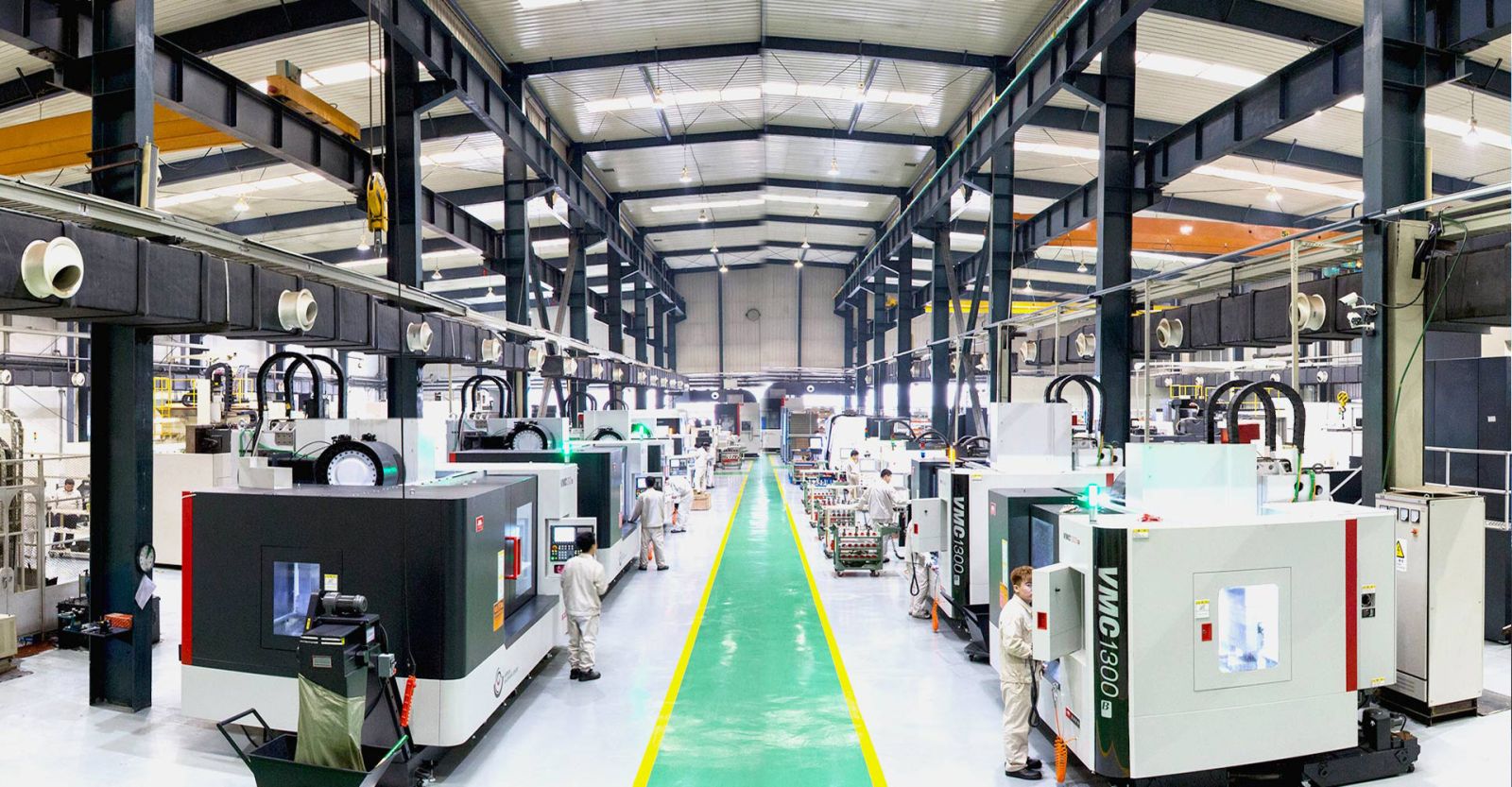
Advanced 5‑Axis Gear‑Milling Centers: Purpose‑built for power skiving with the rigidity and synchronization precision required for AGMA Class 12 accuracy
-
Coordinate Measuring Machine (CMM) Gear‑Checking: Comprehensive inspection capability for all gear quality parameters
-
Specialized Thermal Processing: In‑house heat treatment with cryogenic quenching and distortion management protocols
-
Engineering Collaboration: Direct access to application engineering for design optimization and tool development
This single‑source capability eliminates the coordination challenges, quality inconsistencies, and logistical delays that plague multi‑vendor supply chains.
Struggling to find a reliable manufacturing vendor who can cut internal blind hole splines without chipping tools or failing index tolerance inspections? Stop settling for slow, low‑tolerance shaping alternatives. Upload your transmission assembly prints, 3D .STEP models, and exact spline specifications to YICHOU's drivetrain engineering office today for an immediate technical review and production quote. Our engineering team will analyze your design for manufacturability, recommend optimal clearance groove geometries, specify appropriate tooling, and provide a firm production timeline—all within 48 hours of receiving your complete documentation.
Contact YICHOU Drivetrain Engineering: [Insert Contact Information]
YICHOU — Precision Gear and Spline Manufacturing for the Next Generation of Mobility
Get Quote
- Visit our website: https://www.nbyichou.com/
- Email us: [email protected]
- Call us/whatsapp: +86 13355741031
- Chat with us: Live chat support available on our website