Introduction: The Heartbeat of Fluid Machinery
Every industrial pump, marine propulsion system, and hydraulic turbine relies on one critical component to function: the impeller. As the beating heart of fluid machinery, impellers and propellers operate in some of the most unforgiving industrial environments on Earth. Tasked with moving thousands of gallons of fluid per minute, these components are constantly subjected to high-speed rotational stress, hydrodynamic cavitation, and aggressive chemical or galvanic corrosion.
For pump designers, marine procurement managers, and maintenance engineers, a pivotal decision early in the design phase dictates the entire lifecycle of the equipment: Should you specify stainless steel or bronze?
This is not a question of which metal is inherently "better." It is a question of which alloy possesses the specific combination of mechanical strength, corrosion resistance, and hydraulic stability required for your specific application environment. Choosing between these two heavyweights isn't just about upfront raw material costs. It directly impacts your component's operational lifespan, maintenance intervals, and the fundamental hydraulic performance of your entire system.
Let's break down the engineering reality of custom-engineered impellers to help you make the optimal choice for your application.
Chapter 1: The Head-to-Head Comparison – Stainless Steel vs. Bronze
Selecting the right alloy requires balancing physical mechanical properties against the specific chemistry of the fluid being pumped. Below is a direct industrial comparison between high-grade Stainless Steel and Marine-Grade Bronze.
Physical and Mechanical Properties Comparison
| Engineering Property | Stainless Steel | Marine Bronze |
|---|---|---|
| Tensile Strength | Exceptional (80,000–135,000 psi) | High (26,000–85,000 psi) |
| Hardness (Brinell) | 148–201 BHN | 60–163 BHN |
| Cavitation Resistance | Outstanding due to superior surface hardness | Very Good with self-healing oxide layer |
| Marine Corrosion Resistance | Risk of pitting/crevice corrosion if stagnant | Superior in moving seawater |
| Anti-Biofouling Properties | None; requires protective coatings | Excellent; natural copper ion release |
| Machinability (CNC Milling) | Challenging; work-hardens quickly | Excellent; lower tool wear and faster cycle times |
| Overall Cost Efficiency | Higher initial tooling and machining cost | More cost-effective for complex geometries |
| Galvanic Compatibility | May cause galvanic corrosion when paired with copper alloys in seawater | Compatible with most marine metals |
Understanding the Numbers
The tensile strength difference is substantial. Stainless steel's higher yield strength means it can withstand extreme rotational velocities and hydraulic shock without permanent deformation. This makes it the preferred choice for high-pressure systems, deep-well pumps, and applications involving significant mechanical stress.
However, strength alone doesn't tell the whole story. The hardness differential—with stainless steel measuring up to 201 BHN compared to bronze's 163 BHN—directly correlates with resistance to abrasive wear and particle impingement. In applications where sand, grit, or other suspended solids are present, this hardness advantage translates directly to longer service life.
Chapter 2: The Case for Stainless Steel – Maximum Strength and Grit Resistance
When your application involves high-pressure systems, aggressive chemical slurries, or industrial wastewater loaded with abrasive suspended solids, stainless steel impeller manufacturing is the gold standard.
Superior Mechanical Properties
Stainless steel's high yield strength makes it capable of handling extreme rotational velocities and hydraulic shock without yielding or deforming. Its superior surface hardness offers unmatched resistance to particle impingement, making it ideal for mining, oil and gas, and heavy industrial chemical processing.
In high-speed applications where hydrodynamic cavitation is a risk, stainless steel offers superior resistance to surface fatigue. The combination of hardness and toughness means that even under sustained cavitation conditions, stainless steel impellers maintain their dimensional integrity far longer than softer materials.
Erosion-Corrosion Defiance
Industrial environments often combine chemical attack with mechanical wear—a particularly destructive combination known as erosion-corrosion. Stainless steel's passive chromium oxide layer provides excellent protection against chemical attack, while its hardness resists the mechanical removal of this protective film.
This dual protection makes stainless steel the material of choice for:
-
Mining dewatering pumps handling abrasive slurries
-
Chemical processing pumps moving corrosive fluids with suspended solids
-
Oil and gas production pumps exposed to sour service conditions
-
High-temperature applications where bronze would soften or degrade
Advanced Stainless Steel Grades for Impellers
Not all stainless steels are created equal. For demanding impeller applications, several grades deserve consideration:
316L Stainless Steel
The workhorse of the stainless steel family, 316L offers excellent corrosion resistance and good mechanical properties. Its low carbon content minimizes the risk of sensitization during welding, making it suitable for fabricated impeller designs.
Duplex Stainless Steel
Combining the best of austenitic and ferritic microstructures, duplex stainless steels offer roughly double the yield strength of 316L while maintaining excellent corrosion resistance. This makes them ideal for high-pressure, high-stress impeller applications.
Super Duplex Stainless Steel
For the most demanding applications—deep-water pumps, high-temperature chemical processing, and extreme pressure systems—super duplex grades like SAF 2507 offer unmatched performance. These alloys combine exceptional strength with outstanding resistance to pitting and crevice corrosion.
Chapter 3: The Case for Bronze – The Sovereign of Marine and Desalination Fluids
For seawater applications, brackish water pump systems, and CNC machined propellers, bronze—specifically Nickel-Aluminum Bronze—remains virtually undefeated. No other material combines its unique set of properties for marine service.
Anti-Biofouling Properties
Perhaps bronze's most underappreciated advantage is its natural resistance to marine growth. Bronze releases trace copper ions into the surrounding water, creating a microenvironment that prevents the attachment and growth of marine organisms like barnacles, algae, and mussels.
This biological resistance is critical because biofouling destroys pump efficiency. Even a thin layer of marine growth on impeller surfaces disrupts the carefully engineered hydraulic profiles, reducing flow rates and increasing energy consumption. While stainless steel impellers can be coated with anti-fouling paints, these coatings degrade over time and require periodic reapplication—an ongoing maintenance cost that bronze eliminates.
Superior Seawater Resilience
In moving seawater, bronze forms a tough, protective copper oxide film that self-heals if scratched. This offers unparalleled protection against chlorination and pitting where stainless steel might succumb to crevice corrosion.
The mechanism is elegant: when bronze is exposed to seawater, a complex patina forms on the surface. This patina consists primarily of cuprous oxide and cuprous chloride, which provide a stable, adherent barrier against further corrosion. If this film is damaged—by abrasive particles or mechanical impact—it rapidly reforms, restoring the protective layer.
Self-Healing Oxide Layer
The self-healing nature of bronze's oxide layer is particularly valuable in impeller applications. Impellers are constantly exposed to turbulent flow, cavitation bubbles, and suspended particles that can damage surface films. With stainless steel, such damage can initiate pitting corrosion that propagates beneath the surface. With bronze, surface damage is rapidly repaired by the formation of new oxide, preventing localized attack.
Galvanic Considerations
One critical factor in marine applications is galvanic compatibility. Historical testing has shown that while stainless steel offers superb corrosion resistance in isolation, bronze parts in a system with stainless steel can be severely damaged by galvanic corrosion. This compatibility issue makes careful system-level material selection critical. If your pump system includes both materials, proper electrical isolation and cathodic protection strategies must be implemented.
Chapter 4: The Critical Engineering Mistake – When Material Choice Goes Wrong
Perhaps the most important lesson in material selection comes from documented industrial failures where the "obvious" material choice led to catastrophic results. These case studies underscore the importance of holistic engineering analysis.
The Case of the Mis-Selected Impeller
In one notable industrial pump failure, a vertical turbine pump failed just 40 days after commissioning. The "upgraded" impellers were made from stainless steel, replacing the original bronze design. On paper, this appeared to be an improvement—stainless steel offers higher strength and hardness. In practice, the pump failed catastrophically.
The Geometry Reality
While the geometry was reportedly unchanged, comprehensive reverse engineering analysis revealed considerable differences in the vane shape at the inlet and outlet of the stainless steel impellers compared to the original bronze ones. This geometry discrepancy wasn't intentional—it resulted from differences in the manufacturing process and subtle variations in casting and machining.
The critical insight: when you change materials, you change manufacturing processes, which can change the final geometry even when you're trying to replicate the original design. Stainless steel's different casting behavior, different shrinkage rates, and different machining characteristics all contribute to final geometry differences.
The Hydraulic Consequences
The pump with the stainless steel impeller produced a "flat" region on the head-flow curve near the duty point. This unstable curve shape allowed the pump to "hunt" across this area, generating severe vibration that contributed to the mechanical failure.
Furthermore, the stainless steel impeller consumed more brake horsepower and required a higher minimum submergence level to prevent cavitation. The original bronze impellers were hydraulically stable at the site's conditions; the stainless steel replacements were not.
The Outcome
The facility ultimately reverted to the original bronze impellers to ensure stable operation and reliability. This case study underscores that the manufacturing process and hydraulic design must go hand-in-hand. Even with advanced 5-axis CNC machining, if the geometry isn't perfectly matched to the hydraulic system, the pump will fail.
Lessons Learned
This failure case teaches several critical lessons:
-
Material changes are not drop-in replacements. Even when geometry specifications appear identical, subtle manufacturing variations can significantly impact performance.
-
Hydraulic design must consider material properties. The same geometry in different materials will behave differently due to differences in surface finish, dimensional stability, and damping characteristics.
-
Proven designs should be replicated precisely. If a bronze impeller design has performed reliably for years, switching to stainless steel requires comprehensive re-engineering and testing, not just material substitution.
-
The cost of failure far exceeds the cost of proper material selection. Forty days of operation followed by catastrophic failure represents enormous economic loss—far more than the incremental cost of making the right choice initially.
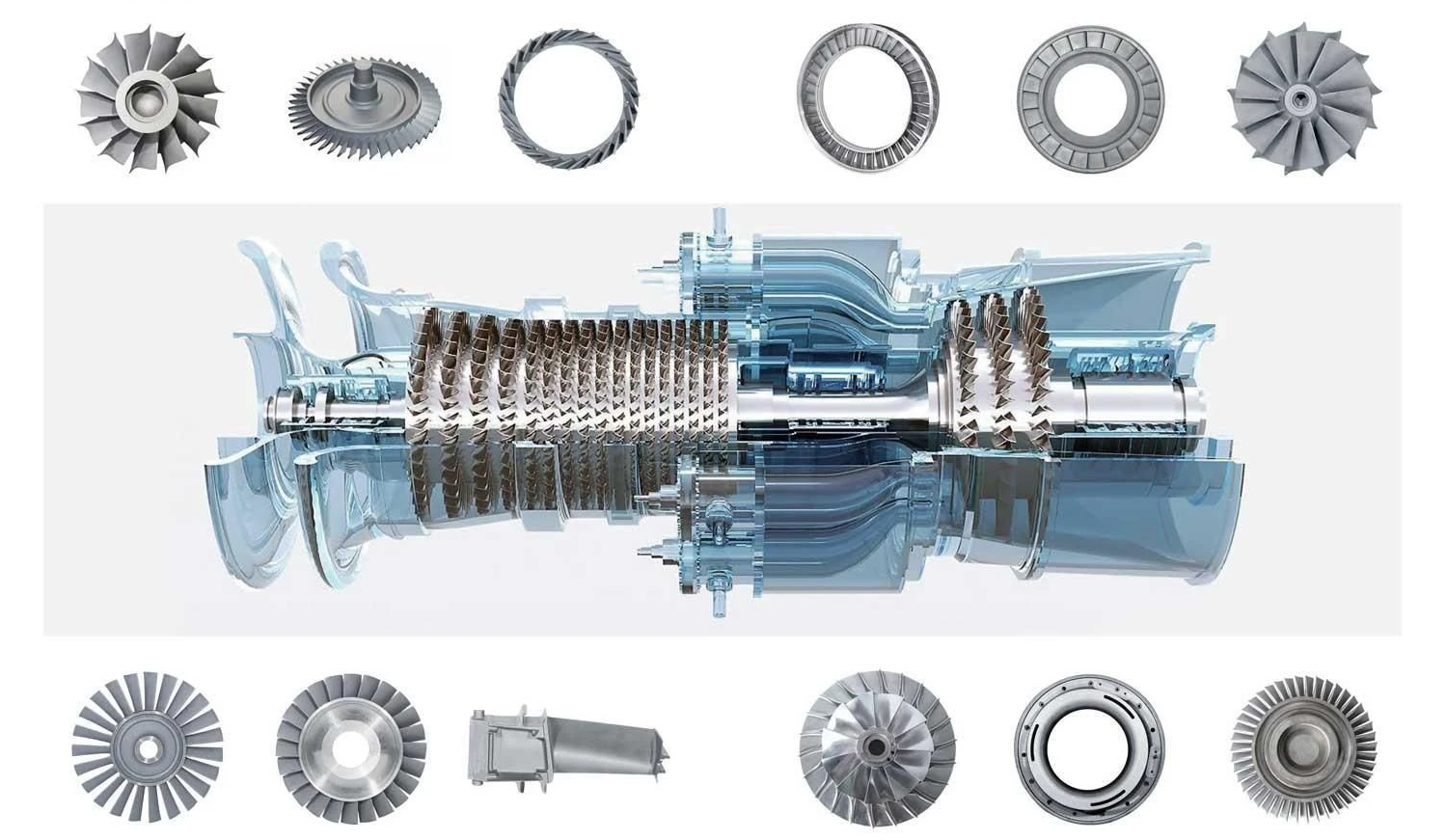
Chapter 5: Manufacturing Considerations – From Precision Casting to Final CNC Machining
Material choice doesn't just dictate performance; it fundamentally alters the manufacturing workflow. Achieving strict dynamic balance and optimal surface roughness (Ra 0.8 μm or better) requires an integrated manufacturing ecosystem.
The Complete Manufacturing Flow
The production of high-precision impellers follows a well-defined sequence:
text
Raw Alloy Ingot
    ↓
Precision Investment Casting (Near-Net Shape)
    ↓
Heat Treatment (if required)
    ↓
5-Axis CNC Machining
    ↓
Dynamic Balancing
    ↓
Quality Inspection and Testing
    ↓
Final Assembly and Coating (if required)
Investment Casting Advantages
The quality of the raw casting is paramount for both materials. Lost wax investment castings are superior to all other impeller casting methods for several reasons:
-
Superior surface finish: Lost wax castings yield smooth surfaces that promote higher hydraulic efficiency.
-
Better dimensional accuracy: Complex vane geometries can be cast closer to final dimensions.
-
No core shifts: Unlike sand castings, investment castings eliminate core shift problems that cause void areas and rough surfaces.
-
Higher efficiency: Smoother surfaces and more accurate geometries mean less turbulence and better energy efficiency.
The smoother castings promote higher efficiency. Better efficiency means less horsepower, so energy is saved throughout the equipment's operational life.
Stainless Steel Machining Challenges
Because stainless steel work-hardens rapidly under a cutting tool, machining structural blades requires specialized approaches:
-
Ultra-rigid CNC setups: The machine tool must have sufficient rigidity to prevent deflection and chatter.
-
Specialized cutting tools: Diamond-coated or ceramic tooling is often required to maintain acceptable tool life.
-
Slower feed rates: Stainless steel requires significantly slower machining speeds than bronze to prevent work-hardening and tool failure.
-
Careful coolant management: Proper cooling and chip evacuation are essential to prevent localized heating and work-hardening.
Typical CNC machining for 316L stainless steel impellers operates at relatively conservative parameters. The material's toughness and work-hardening characteristics mean that cycle times are longer and tool costs are higher than for bronze.
Bronze Machining Advantages
Bronze, conversely, allows for faster material removal rates, enabling tighter tolerances on intricate, heavily skewed blade profiles:
-
Lower cutting forces: Bronze is softer and more ductile, requiring less cutting force.
-
Reduced tool wear: The machinability of NAB makes it easier to achieve complex geometries.
-
Higher feed rates: Production throughput can be significantly higher.
-
Better surface finish: Bronze tends to produce excellent surface finishes with standard tooling.
The machinability advantage translates directly to cost savings and faster delivery times for bronze impellers.
Quality Control and Dynamic Balancing
Regardless of material, final impeller quality depends on rigorous inspection and testing:
Dimensional Inspection
Coordinate measuring machines (CMM) verify that all critical dimensions, vane profiles, and surface finishes meet specifications. Tolerances of ±0.001 inches are standard for high-precision impellers.
Dynamic Balancing
High-speed impellers must be dynamically balanced to minimize vibration. Unbalanced impellers cause premature bearing failure, seal leakage, and reduced pump efficiency. Modern balancing machines can detect imbalances measured in fractions of a gram.
Hydrostatic Testing
For critical applications, impellers may undergo hydrostatic testing to verify structural integrity under operating pressures.
Chapter 6: Application-Specific Recommendations
When to Choose Stainless Steel
Stainless steel is the optimal choice when:
-
Abrasive solids are present. Mining slurries, wastewater grit, and other suspended particles will rapidly wear softer bronze impellers.
-
High pressures and speeds are involved. Deep-well pumps, high-head systems, and high-speed applications require stainless steel's superior strength.
-
Aggressive chemicals are handled. Strong acids, chlorides (in certain conditions), and other corrosive fluids favor stainless steel.
-
Temperature is elevated. Stainless steel maintains its strength and corrosion resistance at higher temperatures than bronze.
-
Fluid chemistry requires it. Some process fluids are incompatible with copper alloys.
Ideal Applications:
-
Mining dewatering pumps
-
Chemical processing pumps
-
Oil and gas production pumps
-
High-pressure boiler feed pumps
-
Wastewater treatment pumps handling abrasive grit
-
Industrial cooling water pumps with high chlorine levels
When to Choose Bronze
Marine bronze is the optimal choice when:
-
Seawater or brackish water is the fluid. Bronze's corrosion resistance in moving seawater is unmatched.
-
Biofouling is a concern. Natural copper ion release eliminates the need for anti-fouling coatings.
-
The design is proven. If a bronze impeller design has demonstrated reliability, switching materials requires careful validation.
-
Complex geometries are required. Bronze's machinability allows for intricate vane shapes.
-
Galvanic compatibility is important. Bronze plays well with other marine metals when properly designed.
Ideal Applications:
-
Marine propulsion systems
-
Shipboard pumps
-
Desalination plant pumps
-
Offshore platform pumps
-
Fish farm water circulation
-
Brackish water treatment pumps
-
Coastal cooling water pumps
Hybrid Approaches and Exceptions
Some applications benefit from hybrid approaches:
Coated Stainless Steel
For applications requiring both mechanical strength and biofouling resistance, stainless steel impellers can be coated with anti-fouling materials. This approach provides the strength of stainless steel with some of bronze's biological advantages, though coatings require periodic maintenance.
Bronze with Stainless Steel Shafts
A common compromise is to use bronze impellers with stainless steel shafts. This combination provides the corrosion and biofouling resistance of bronze at the impeller, where it matters most, while using stainless steel for the structural shaft.
Ceramic Coatings
Some advanced applications use ceramic coatings on stainless steel to provide additional wear resistance and corrosion protection.
Chapter 7: Long-Term Cost Analysis
Initial Costs vs. Lifecycle Costs
Material selection decisions based solely on initial raw material costs are shortsighted. The total cost of ownership includes:
-
Initial purchase cost: Material + manufacturing + testing
-
Installation cost: Shipping, handling, installation
-
Operating cost: Energy consumption, which depends on hydraulic efficiency
-
Maintenance cost: Scheduled maintenance, cleaning, inspection
-
Replacement cost: Frequency of replacement due to wear or failure
-
Downtime cost: Lost production, labor costs, emergency shipping
Cost Comparison Examples
High-Speed Industrial Pump (5,000+ RPM)
| Cost Factor | Stainless Steel | Bronze |
|---|---|---|
| Initial Material Cost | Higher | Lower |
| Manufacturing Cost | Much Higher (machining difficulty) | Lower |
| Energy Efficiency | Comparable | Comparable if properly designed |
| Maintenance Frequency | Lower (greater wear resistance) | Higher |
| Replacement Frequency | Much Lower | Higher |
| Downtime Risk | Lower | Higher |
Marine Pump (Seawater Service)
| Cost Factor | Stainless Steel | Bronze |
|---|---|---|
| Initial Material Cost | Higher | Lower |
| Manufacturing Cost | Much Higher | Lower |
| Corrosion Resistance | Good (but risk of pitting) | Excellent |
| Biofouling Protection | None (requires coatings) | Excellent (natural) |
| Maintenance Frequency | Higher (coating renewal) | Lower |
| Replacement Frequency | Higher (pitting risk) | Lower |
| System Compatibility | Poor with copper alloys | Good |
Real-World Lifecycle Economics
In a typical marine application, the lifecycle cost analysis often favors bronze despite its higher initial material cost. Consider:
-
A bronze impeller may cost 20% more in raw material but lasts 2-3 times longer in seawater service.
-
Bronze eliminates the need for periodic anti-fouling coating renewal—a significant maintenance expense.
-
Bronze's superior corrosion resistance means fewer emergency repairs and less unplanned downtime.
In abrasive industrial applications, the opposite is true. The higher initial cost of stainless steel is justified by dramatically extended service life and reduced maintenance frequency.
Chapter 8: Advanced Manufacturing Capabilities for Both Materials
Near-Net Shape Investment Casting
Both stainless steel and bronze impellers benefit from precision investment casting. This process starts with a wax pattern that is coated in ceramic. After the wax is melted out, the ceramic shell is filled with molten metal. The result is a casting that requires minimal machining to achieve final dimensions.
Advantages of Investment Casting for Impellers:
-
Complex geometries: Intricate vane shapes can be cast with high fidelity.
-
Excellent surface finish: Reduces the need for grinding and polishing.
-
Dimensional accuracy: Close tolerances reduce final machining requirements.
-
Material efficiency: Near-net shape means less material waste.
-
Mechanical properties: Controlled solidification produces consistent microstructure.
5-Axis CNC Machining Capabilities
Modern 5-axis CNC machining centers enable the production of extremely complex impeller geometries:
Simultaneous 5-Axis Machining
The workpiece can be positioned and machined in any orientation, allowing access to complex vane surfaces without multiple setups.
Blisk Manufacturing
For integrally bladed impellers (blisks), 5-axis machining can produce the entire component from a single blank of material.
Dynamic Grinding
Advanced grinding processes can achieve surface finishes below Ra 0.4 μm, critical for high-performance hydraulic applications.
High-Speed Machining
Modern machine tools and tooling enable faster material removal rates while maintaining precision.
Quality Assurance and Testing
Leading manufacturers employ comprehensive quality assurance programs:
-
Incoming material certification verifying chemistry and mechanical properties.
-
Process monitoring throughout casting and machining.
-
NDT (non-destructive testing) including dye penetrant, magnetic particle, and ultrasonic inspection.
-
Coordinate measuring to verify all critical dimensions.
-
Dynamic balancing to ensure vibration-free operation.
-
Hydrostatic testing for critical applications.
Chapter 9: Common Questions and Concerns Addressed
What about pitting corrosion in stainless steel?
This is a legitimate concern. Stainless steel relies on its passive chromium oxide layer for corrosion protection. In stagnant seawater, or in crevices where oxygen is depleted, this passive layer can break down, leading to pitting. However, proper alloy selection—such as using duplex or super duplex grades—significantly reduces this risk. Regular maintenance and proper system design also help prevent pitting.
Does bronze suffer from galvanic corrosion?
Bronze is generally compatible with other marine metals, but galvanic corrosion can occur when bronze is coupled with more noble metals like stainless steel in seawater. Electrical isolation between dissimilar metals is essential. Plastic or rubber isolators should be used at all contact points between bronze impellers and stainless steel shafts or housings.
How do I know if my application has cavitation issues?
Cavitation typically manifests as pitting on the impeller surface, noise, and vibration. It occurs when localized pressure drops below the vapor pressure of the fluid, causing bubbles to form and collapse near the impeller surface. Both stainless steel and bronze can suffer from cavitation damage, but stainless steel's higher hardness provides better resistance.
Can I switch from bronze to stainless steel without redesigning?
The documented case study mentioned earlier shows this is risky. Material changes affect manufacturing processes, which can change geometry. Even if geometry remains identical, different materials have different damping characteristics, surface finishes, and thermal properties. If you're considering a material change, consult with pump engineers and consider prototype testing before full-scale implementation.
Which material is more environmentally friendly?
Both materials have environmental considerations. Bronze's biofouling resistance eliminates the need for anti-fouling paints, which may contain toxic compounds. Stainless steel requires energy-intensive production and may require periodic coating renewal. From a lifecycle perspective, bronze often has lower environmental impact in marine applications due to longer service life and reduced maintenance requirements.
What is the typical lead time for custom impellers?
Lead times vary depending on material, complexity, and quantity:
-
Bronze impellers: 4-8 weeks for custom designs
-
Stainless steel impellers: 6-12 weeks due to more challenging machining
-
Quantity: Prototypes ship faster than large production runs
-
Casting vs. machined from solid: Castings typically have shorter lead times than machining from billet material
Chapter 10: Making the Final Decision
Decision Matrix
| Factor | Weight | Stainless Steel | Bronze |
|---|---|---|---|
| Seawater corrosion | High | 2 | 5 |
| Biofouling prevention | High | 1 | 5 |
| Abrasion resistance | High | 5 | 3 |
| Cavitation resistance | High | 5 | 4 |
| High strength requirement | High | 5 | 3 |
| Complex geometry requirement | Medium | 3 | 5 |
| Cost sensitivity | Medium | 3 | 5 |
| Proven design retention | High | 2 | 5 |
| Temperature resistance | Medium | 5 | 3 |
| Chemical compatibility | Variable | Varies | Varies |
Selection Flowchart
Step 1: Identify the fluid
-
Seawater or brackish water? → Consider bronze strongly
-
Freshwater with abrasives? → Consider stainless steel strongly
-
Chemical process fluid? → Consult chemical compatibility charts
Step 2: Consider the environment
-
Marine environment? → Bronze advantage
-
Mining/industrial environment? → Stainless steel advantage
-
Stagnant or flowing? → Flowing favors bronze's self-healing oxide; stagnant favors stainless steel
Step 3: Evaluate existing design
-
Is there a proven bronze design? → Replicate it exactly, don't switch materials arbitrarily
-
Is there a proven stainless steel design? → Use it as-is
-
New design? → Evaluate both materials based on application
Step 4: Analyze lifecycle costs
-
Initial cost (stainless steel generally higher)
-
Maintenance cost (bronze generally lower in marine; stainless steel generally lower in abrasive environments)
-
Replacement cost (shorter for bronze in abrasive; shorter for stainless steel in seawater)
-
Downtime cost (varies by application)
Final Recommendation
Select Stainless Steel when:
-
Abrasive solids are present in the fluid
-
High pressures and rotational speeds are required
-
The fluid contains aggressive chemicals that attack copper alloys
-
Temperature exceeds bronze's operating limits
-
Your application is land-based industrial processing
Select Marine Bronze when:
-
The application involves seawater, brackish water, or desalination
-
Biofouling is a significant concern
-
You have a proven bronze design that has performed reliably
-
Galvanic compatibility with other system components is important
-
Your application is marine, offshore, or coastal
Conclusion: Match the Alloy to Your Fluid Dynamics
There is no universally "superior" metal—only the correct material for your fluid medium. Specifying the wrong alloy leads to premature cavitation failure, unplanned downtime, and costly emergency retrofits. The decision between stainless steel and bronze is not a simple one, but understanding the trade-offs, application requirements, and manufacturing implications will guide you to the right choice.
Remember the key lessons from industry experience:
-
Material changes affect hydraulic performance. Even when geometry appears identical, different materials behave differently in service.
-
Proven designs should be preserved. If a bronze impeller has performed reliably for years, don't switch to stainless steel without thorough engineering analysis and testing.
-
Total lifecycle cost matters more than initial price. Consider maintenance, energy consumption, replacement frequency, and downtime costs.
-
Manufacturing capability matters. Not all suppliers can machine stainless steel impellers to the required tolerances. Verify capability before specifying challenging materials.
-
System compatibility matters. Consider galvanic corrosion when mixing materials in the same fluid system.
Whether you need a single prototype for a custom marine thruster or low-volume production for a rugged line of chemical processing pumps, our specialized bronze impeller OEM service and stainless steel machining divisions are engineered to deliver. We understand that a material change is a hydraulic change—and we're here to ensure your pump operates with maximum stability, efficiency, and lifespan.
Contact our engineering team today to discuss your specific application requirements. We'll help you select the optimal material, design the ideal geometry, and manufacture your impellers to the highest precision standards. Your pump's performance and reliability depend on getting this decision right.
Get Quote
- Visit our website: https://www.nbyichou.com/
- Email us: [email protected]
- Call us/whatsapp: +86 13355741031
- Chat with us: Live chat support available on our website