Target Keywords: Commercial Energy Storage System (C&I BESS), Liquid-Cooled Battery Cabinet, BESS Safety Certifications (UL 9540), Battery Storage ROI.
Target Audience: EPC contractors, factory owners, solar project developers, procurement managers.
1. Introduction: The New Frontier of Commercial Energy Management
The global energy landscape is undergoing a seismic shift. For commercial and industrial (C&I) entities—from manufacturing plants and data centers to large-scale retail operations—energy is no longer merely a utility bill to be managed; it has become a strategic asset. The rapid expansion of renewable energy sources, coupled with increasing grid instability and volatile electricity tariffs, has propelled the Commercial Energy Storage System (C&I BESS) from a niche technology to a core component of modern infrastructure.
For engineering, procurement, and construction (EPC) contractors, system integrators, and procurement managers, the mandate is clear: integrate energy storage to ensure resilience, optimize energy costs, and meet sustainability goals. However, the path to procurement is fraught with complexity. The market is flooded with vendors offering varying specifications, and the consequences of a poor choice extend far beyond a simple budget overrun. A suboptimal battery energy storage system can lead to catastrophic safety failures, premature degradation that destroys projected investment returns, and costly operational downtime.
The challenge lies in the fact that a BESS is not a commodity like a steel beam or a wire harness. It is a sophisticated electrochemical asset. When sourcing these systems, decision-makers must look beyond the initial capacity (kWh) and power (kW) ratings. The true differentiators—the factors that determine whether a project is a success or a liability—are often buried in the details of thermal management architecture, safety certifications, and lifecycle economics.
This guide serves as a technical roadmap for the discerning B2B buyer. We will dismantle the four most critical pillars of the sourcing decision: the non-negotiable standards of safety, the decisive battle between Liquid-Cooled Battery Cabinet technology and traditional air cooling, the practical realities of system integration, and the hard math of Return on Investment (ROI). By the end of this article, you will have the framework necessary to evaluate suppliers with confidence, ensuring your project is built for long-term profitability and operational excellence.
2. Safety First: Navigating Thermal Runaway and Fire Suppression
If there is one aspect of a BESS that cannot be compromised, it is safety. For procurement managers and EPCs, the safety architecture of a system is the primary determinant of insurability, permitting speed, and public perception. The chemistry that gives lithium-ion batteries their high energy density—specifically nickel manganese cobalt (NMC) or lithium iron phosphate (LFP)—also introduces a physical vulnerability: the risk of thermal runaway.
Thermal runaway is a chain reaction within a battery cell where an increase in temperature causes further temperature increases, often leading to the release of flammable gases, intense heat, and fire. While the industry has made significant strides in cell chemistry (LFP is inherently more stable than NMC), no lithium-based system is entirely immune to abuse conditions. Therefore, a buyer’s focus must be on how the system prevents, detects, contains, and suppresses such events.
Beyond the Label: Multi-Level Protection Architecture
A truly safe Commercial Energy Storage System is defined by its layers of defense. When evaluating a potential supplier, you must look for evidence of a multi-level safety strategy that spans from the cell to the enclosure.
-
Cell-Level Safety (The Foundation): The journey to safety begins with the quality of the cell itself. Reputable manufacturers use Grade A prismatic LFP cells. These cells are characterized by their high purity materials, precise assembly, and low self-discharge rates. The first line of defense is a high-quality Battery Management System (BMS) . This is the brain of the battery. A sophisticated, three-tier BMS (Cell, Module, and Rack level) monitors voltage, current, and temperature at the most granular level. It is responsible for balancing cells to prevent overcharging or deep discharging—the two primary triggers for early degradation and thermal events.
-
Module-Level Isolation: In the event that a single cell fails, the system must be designed to contain that failure. Look for modules with physical barriers and fire-resistant materials between cells. This isolation prevents a single faulty cell from propagating heat to its neighbors, stopping a potential thermal runaway event in its infancy.
-
Active Fire Suppression Systems: The industry standard has moved beyond simple aerosol generators. The current gold standard for active fire suppression in high-value C&I BESS enclosures is the use of perfluorohexanone (FK-5-1-12) . This agent is a clear, odorless liquid that is stored under pressure. When discharged, it vaporizes, absorbing heat and interrupting the combustion process on a molecular level without damaging the surrounding electronic equipment (unlike water or dry powder). A robust system will feature a network of detection tubing (often linear heat detection) that ruptures upon extreme heat, delivering the suppressant directly to the source of the thermal event.
The Critical Standards: UL 9540 and UL 9540A
For a procurement manager, safety isn't just about features; it’s about verifiable compliance. In the North American market and increasingly globally, two certifications are the non-negotiable benchmarks for a Liquid-Cooled Battery Cabinet or any BESS.
-
UL 9540: This is the standard for Energy Storage Systems and Equipment. It is the overarching system-level certification. It evaluates the complete energy storage system (batteries, BMS, PCS, thermal management, and fire suppression) as an integrated unit. A UL 9540 listing is often a mandatory requirement for local fire marshals to grant installation permits. Without it, your project may face significant delays or be impossible to insure.
-
UL 9540A: While UL 9540 tests the system, UL 9540A is a specific test method for evaluating thermal runaway fire propagation in battery systems. This test is critical because it quantifies what happens if a cell goes into thermal runaway. It measures cell-level characteristics, module-level propagation, and the composition of vented gases. A system that has passed UL 9540A provides the data necessary for engineers to design the building and spacing requirements (ES-1 or ES-2 separation distances) and gives insurers confidence in the system’s ability to contain a failure.
When sourcing, demand to see the UL 9540A test report. A supplier who cannot provide this is asking you to assume a risk that should rightfully be theirs to manage. Safety certifications are not a cost; they are the price of admission for a serious industrial project.
3. Thermal Management: The Decisive Factor—Liquid Cooling vs. Air Cooling
After safety, the single most significant factor influencing the performance, lifespan, and efficiency of a BESS is thermal management. The relationship between temperature and battery health is linear and unforgiving: for every 10°C increase in average operating temperature, the lifespan of a lithium-ion cell can be cut in half.
Temperature directly impacts the rate of unwanted chemical reactions inside the cell, leading to faster capacity fade, increased internal resistance, and ultimately, a shorter cycle life. Furthermore, temperature gradients—the difference in temperature between the hottest and coolest cell in a string—are equally damaging. If one cell is consistently warmer than its neighbors, it will degrade faster, becoming a bottleneck that limits the entire string’s usable capacity.
This brings us to the central engineering choice in modern BESS design: Liquid-Cooled Battery Cabinet vs. Air-Cooled.
Air Cooling: The Traditional Approach
Air cooling uses fans to circulate air across the battery modules. This is often accomplished through forced convection, where the air is cooled by a compressor-based air conditioner (HVAC unit) before being pushed through the racks.
Pros:
-
Lower Initial Cost (CAPEX): The technology is mature, and the components (fans, ducts, standard HVAC units) are readily available, resulting in a lower upfront purchase price.
-
Simplicity: For smaller systems or those operating in mild, consistent climates, the design is straightforward and easy to service.
Cons:
-
Poor Temperature Uniformity: Air is a poor conductor of heat. As air travels through a cabinet, it absorbs heat, becoming progressively warmer. This creates a significant temperature gradient between the cells near the air inlet (cool) and those near the outlet (warm).
-
Lower Energy Density: Air cooling requires significant internal space for airflow channels and larger footprint HVAC units. This results in a lower overall energy density (kWh per square foot) for the system.
-
Higher Auxiliary Consumption: To achieve adequate cooling in high-temperature environments or under heavy load, the fans and compressors must work hard, consuming a significant percentage of the energy the system is supposed to be storing and dispatching.
Liquid Cooling: The Engineering Evolution
Liquid cooling utilizes a coolant (typically a water-glycol mixture) circulated through cooling plates that are in direct contact with the battery modules. This closed-loop system transfers heat from the cells to a remote chiller unit, which then rejects the heat to the ambient air.
Pros:
-
Precise Temperature Control ($\pm 2°C$): This is the standout feature. A high-quality liquid-cooled system can maintain all battery cells within a remarkably tight temperature range (e.g., 25°C ± 2°C). This near-uniform temperature profile eliminates hot spots, maximizing the usable life of every cell in the array.
-
Higher Energy Density: Because liquid is a far more efficient heat transfer medium than air, the spacing between modules can be reduced. This allows for more battery capacity to be packed into a smaller, more compact outdoor cabinet, a critical advantage for space-constrained commercial sites.
-
Lower Auxiliary Power Consumption: While it uses a pump, a liquid-cooled system is generally more energy-efficient than a comparably sized air-cooled system, especially in high-ambient-temperature environments (e.g., desert climates). The system’s “parasitic load” is often 30-40% lower, meaning more of the stored energy is available for sale or site use, directly improving the ROI.
-
Superior Sealing and Contamination Protection: Liquid-cooled cabinets can be sealed to a higher IP (Ingress Protection) rating (e.g., IP55 or higher) compared to air-cooled systems, which require vents and louvers. This protects sensitive electronics from dust, salt mist, and humidity—a critical factor for installations in industrial zones or coastal areas.
Cons:
-
Higher Initial Cost (CAPEX): The more complex hydronic components (pumps, pipes, chillers, coolant) result in a higher upfront purchase price compared to a basic air-cooled system.
Which Should You Choose?
The choice is not one-size-fits-all; it depends on your specific project parameters.
-
Choose Air Cooling if: Your project is a small-scale system (under 200 kWh) in a temperate climate (e.g., Northern Europe, parts of Canada), the project budget is extremely constrained on a CAPEX basis, and you have ample physical space for a larger enclosure.
-
Choose a Liquid-Cooled Battery Cabinet if: Your project demands high cycle life (over 6,000 cycles), is located in a hot or variable climate (e.g., Middle East, Southeast Asia, Southern US), has a limited footprint, or is a large-scale commercial or industrial installation where maximizing usable energy and longevity is paramount to the business case.
For most serious C&I applications today, Liquid-Cooled Battery Cabinet technology is the default choice. The incremental upfront cost is quickly amortized by lower operating expenses, longer system lifespan, and higher usable energy throughput over the system’s life.
.jpg)
4. System Integration & Ease of Installation: Minimizing On-Site Complexity
In the world of EPC and industrial projects, time is money. On-site labor, especially skilled electrical and mechanical commissioning labor, is one of the most expensive line items in a project budget. A BESS that arrives as a collection of disparate components—battery racks, a separate inverter skid, a standalone controller, and a field-assembled HVAC system—is a recipe for budget overruns and schedule delays.
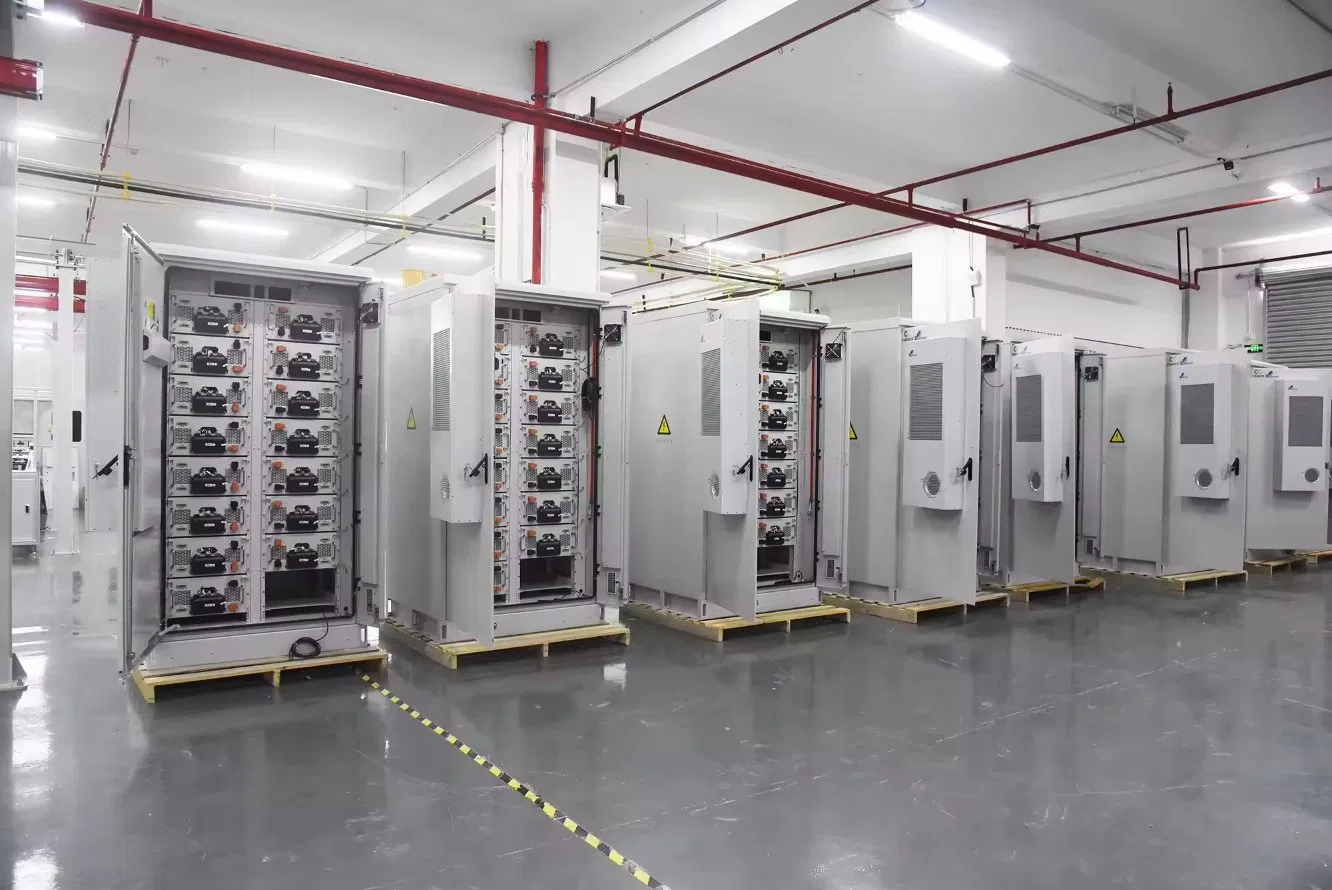
The modern standard for a Commercial Energy Storage System is the All-in-One, Pre-Assembled Outdoor Cabinet.
The Power of Pre-Assembly
A superior product is one that is designed, assembled, and factory-tested as a complete unit before it ever leaves the manufacturing facility. This integrated approach offers several significant advantages for the buyer:
-
Reduced On-Site Labor: Instead of requiring a team of electricians and engineers to wire a half-dozen separate pieces of equipment, the installation team simply needs to place the single cabinet on a prepared concrete pad, connect it to the AC grid or solar PV combiner panel, and run communication cables.
-
Plug-and-Play Commissioning: The phrase “Plug-and-Play” has become a buzzword, but in the context of BESS, it signifies a system that is pre-configured. The battery management system (BMS) is already integrated with the power conversion system (PCS) and the energy management system (EMS). The communications protocols (Modbus, CANbus) are pre-validated. This drastically reduces the time spent on-site troubleshooting integration errors, which are a common source of delays.
-
Factory Testing & Quality Assurance: When components are assembled in the field, the quality of the installation depends on the skill of the local subcontractor. When assembled in a controlled factory environment, the entire system undergoes rigorous integrated testing, including full-power run tests, thermal cycle tests, and safety function verification. This ensures the system arrives in a known, working state, significantly reducing the risk of “infant mortality” failures post-installation.
The Role of the Smart EMS
Integration extends beyond physical hardware. The intelligence of the system—the Energy Management System (EMS)—is the software that determines your ROI. A sophisticated EMS is not merely a monitoring platform; it is the algorithm that dictates when the battery charges and discharges based on real-time conditions.
For EPCs and project developers, the critical question is: How does this system interact with the rest of the microgrid?
Look for a supplier whose EMS is designed for complex commercial scenarios. It must offer:
-
Solar PV Smoothing: Seamless integration with existing or new solar arrays to reduce the “duck curve” ramp rates and mitigate over-voltage issues on the grid.
-
Peak Shaving (Demand Charge Management): The ability to automatically discharge during a facility’s peak demand periods, reducing the demand charges that often constitute 30-50% of a commercial electric bill.
-
Diesel Generator (Genset) Integration: For off-grid or backup applications, the EMS must be able to work in parallel with diesel generators to improve fuel efficiency (by allowing the genset to run at its optimal load) and provide seamless islanding in the event of a grid outage.
-
Grid Services: The ability to respond to utility signals for frequency regulation or demand response programs, unlocking additional revenue streams.
A system that is difficult to integrate with existing site infrastructure will add hidden costs. Prioritize suppliers that offer a fully integrated cabinet and a proven, flexible EMS.
5. Calculating ROI: Degradation, Cycle Life, and Warranties
For any B2B buyer, the final arbiter of a purchasing decision is the financial model. A BESS is a capital investment, and its success is measured by its ability to generate a positive return over its operational lifetime. This is where the technical details discussed earlier—cell quality and thermal management—converge into hard financial metrics.
Many buyers fall into the trap of comparing quotes solely on the basis of the price per kilowatt-hour ($/kWh). This is a dangerous oversimplification. A cheaper system with poor thermal management and inferior cells will degrade faster, requiring replacement far sooner and delivering far less usable energy over its life than a more robust, albeit initially more expensive, system.
To accurately assess ROI, you must evaluate three core metrics: Cycle Life, Depth of Discharge (DoD), and Warranty Terms.
Cycle Life and Grade A Cells
The cycle life of a battery is the number of complete charge and discharge cycles it can perform before its capacity falls below a certain threshold (typically 80% of its original capacity).
The foundation of a long cycle life is the use of Grade A prismatic LFP cells. Grade A cells are manufactured with the highest quality control standards, ensuring uniform internal resistance and minimal impurities. These cells can achieve 6,000 to 8,000 cycles at a 1C rate, and up to 10,000 cycles at lower rates.
In contrast, lower-grade cells (often sold into the secondary market) may exhibit a much shorter cycle life (3,000–4,000 cycles) and suffer from accelerated calendar aging. A system designed for a 15-year project life must be built on a cell foundation capable of delivering 6,000+ cycles.
Depth of Discharge (DoD)
DoD refers to how much of the battery’s rated capacity is actually used. A 100 kWh battery with a 90% DoD means that 90 kWh of energy is available for use.
The relationship between DoD and cycle life is inverse. A battery that is regularly discharged to 100% will have a shorter cycle life than one that is limited to 90% or 80% DoD. Reputable manufacturers will provide a cycle life curve that shows expected cycles at varying DoD levels.
When evaluating a system, it is critical to ask:
-
Is the advertised capacity “nameplate” capacity or “usable” capacity?
-
What DoD is assumed in the stated cycle life?
-
How does the system’s thermal management (e.g., liquid cooling) enable a higher usable DoD without compromising lifespan?
A Liquid-Cooled Battery Cabinet enables a system to safely achieve a higher usable DoD (e.g., 95%) consistently because it maintains uniform cell temperatures, preventing localized over-stress.
Decoding the Warranty
The warranty is the manufacturer’s commitment to the system’s performance. However, warranties are complex legal documents with conditions. A procurement manager must look beyond the headline “10-Year Warranty” and analyze the fine print.
Key questions to ask:
-
What is the End-of-Warranty Capacity? A good warranty guarantees that after 10 years or a specified number of cycles, the system will retain at least 80% of its initial usable capacity. Some lower-tier suppliers may guarantee only 70% or 60%.
-
What are the Operating Conditions? The warranty is usually conditional. It will specify an acceptable ambient temperature range (e.g., 0°C to 45°C). If the system is installed in a hot environment without adequate thermal management (e.g., an air-cooled system struggling in a desert), the warranty could be voided.
-
Throughput Clauses: Many warranties include an energy throughput clause (e.g., a maximum total MWh that can be cycled through the system). Exceeding this throughput, even within the 10-year period, can void the warranty. Ensure the throughput allowance aligns with your intended usage model.
-
Response Time: For industrial operations where downtime is critical, what is the manufacturer’s guaranteed response time for warranty claims? Do they have a local service presence, or will you be waiting weeks for a technician from overseas?
Calculating True ROI:
A simple equation to consider when comparing quotes is the Levelized Cost of Storage (LCOS) . LCOS accounts for the total cost of ownership (CAPEX + OPEX) divided by the total energy throughput over the system’s lifetime.
-
System A (Low CAPEX, Air-Cooled): $80,000 initial cost. 4,000 cycles @ 85% DoD. Total throughput = 340,000 kWh. LCOS ≈ $0.235/kWh.
-
System B (Liquid-Cooled Battery Cabinet): $100,000 initial cost. 8,000 cycles @ 95% DoD. Total throughput = 760,000 kWh. LCOS ≈ $0.132/kWh.
Even though System B costs 25% more upfront, its LCOS is 44% lower, making it the far more profitable investment.
6. Conclusion & Strategic Call to Action
Sourcing a Commercial & Industrial Battery Energy Storage System is a high-stakes decision that balances technical performance, financial viability, and long-term operational safety. As we have outlined, the path to a successful project lies in moving beyond superficial metrics like initial capacity and focusing on the foundational elements that define a system’s true value.
To recap, your sourcing checklist must include:
-
Safety: Do not compromise. Verify UL 9540 system-level certification and demand to see UL 9540A thermal runaway propagation test reports. Confirm the use of a multi-level suppression system, ideally with perfluorohexanone (FK-5-1-12).
-
Thermal Management: For most modern C&I projects, a Liquid-Cooled Battery Cabinet is the superior choice. It offers the precise temperature control, higher energy density, and lower auxiliary consumption required to maximize system lifespan and ROI, especially in demanding climates.
-
Integration: Prioritize a fully integrated, all-in-one outdoor cabinet that arrives pre-wired, pre-assembled, and factory-tested. This reduces on-site labor, simplifies commissioning, and mitigates project risks.
-
Financial Validation: Evaluate the long-term economics using metrics like cycle life, DoD, and Levelized Cost of Storage (LCOS). Scrutinize warranty terms for capacity retention, throughput allowances, and service commitments to ensure the asset performs as promised over its 10- to 15-year life.
The energy storage market is maturing, and the gap between market-leading technology and basic commodity products is widening. By applying this framework to your procurement process, you can confidently select a partner and a system that delivers not just energy, but a tangible competitive advantage.
Ready to Deploy a High-Performance Commercial Energy Storage System?
We understand that every project is unique, with specific load profiles, space constraints, and financial targets. Our team of energy storage engineers specializes in designing and manufacturing fully integrated, liquid-cooled BESS solutions that meet the rigorous demands of EPCs and industrial clients worldwide.
Don’t rely on speculation to build your business case.
Contact us today for a free system simulation and ROI analysis report tailored to your specific project parameters. Let us show you how the right BESS can transform your energy infrastructure from a cost center into a strategic asset.
.png)
Get in Touch with Yichou
- Email us: [email protected]
- Call us/whatsapp: +86 13355741031
- Chat with us: Live chat support available on our website