1. Introduction
Carbon fiber is revolutionizing industries—from aerospace to automotive—thanks to its unmatched strength-to-weight ratio, corrosion resistance, and sleek aesthetics. As demand grows for high-performance, custom carbon fiber parts, businesses and engineers seek reliable manufacturers who deliver precision, durability, and cost efficiency.
At YICHOU, we specialize in advanced carbon fiber fabrication, combining cutting-edge technology (like CNC machining and autoclave curing) with decades of expertise. Whether you need lightweight automotive components, drone frames, or industrial prototypes, our custom solutions ensure superior quality and fast turnaround times.
Why Choose Carbon Fiber?
50% lighter than steel – with 5x the tensile strength.
Corrosion-resistant – ideal for harsh environments.
Fully customizable – tailored shapes, weaves, and finishes.
2. Who Can Make Custom Carbon Fiber Parts?
Your 3 Best Options
-
OEM Manufacturers (Like YICHOU)
-
Best for: High-volume orders, certified quality (ISO/AS9100), and complex designs.
-
Example: Automotive brands use OEMs for consistent, crash-tested parts.
-
-
Specialty Fabricators
-
Best for: Small batches or niche applications (e.g., bicycle frames).
-
Downside: Higher per-unit costs and limited scalability.
-
-
DIY Kits
-
Best for: Hobbyists with time/skill to handle resins, molds, and safety risks.
-
Reality: Professional results require industrial tools like autoclaves—which YICHOU provides.
-
Why YICHOU Stands Out
Precision Manufacturing: CNC-cut molds, autoclave curing for zero voids.
Custom Solutions: From 3K weave aesthetics to 24K structural strength.
Global Supply: Bulk orders shipped worldwide with QA guarantees.
.jpg)
3. Can I Make My Own Carbon Fiber Parts?
The Reality of DIY Carbon Fiber
Making carbon fiber parts at home is possible but comes with significant challenges. Here’s what you need to know:
Pros of DIY Carbon Fiber
-
Lower initial cost for small, simple projects.
-
Full control over design and prototyping.
Cons of DIY Carbon Fiber
-
Requires advanced skills in layering, resin application, and vacuum bagging.
-
Expensive equipment like molds, vacuum pumps, and safety gear adds hidden costs.
-
Risk of weak spots, air bubbles, and warping without industrial-grade processes.
Why Choose Professional Manufacturing (YICHOU)?
For high-performance, reliable parts, professional manufacturing is the best choice:
-
Autoclave Curing: Our industrial process ensures 30% stronger parts compared to DIY methods.
-
Precision CNC Molding: Guarantees tight tolerances (within ±0.005 inches).
-
Certified Materials: We use aerospace-grade carbon fiber and resins for durability.
Case Study: A drone company switched from DIY to YICHOU’s professional manufacturing, reducing part failures by 70% and saving costs with bulk pricing.
Need High-Quality Carbon Fiber Parts?
Contact YICHOU for precision manufacturing without the guesswork.
4. Carbon Fiber Grades: 3K vs. 12K vs. 24K
What Does the "K" Mean?
The "K" stands for thousands of carbon filaments per strand:
-
3K: 3,000 filaments (fine weave, smooth finish).
-
12K: 12,000 filaments (balanced strength and cost).
-
24K: 24,000 filaments (maximum stiffness for heavy-duty use).
Which Grade Should You Choose?
| Grade | Best Applications | YICHOU Recommendation |
|---|---|---|
| 3K | Luxury interiors, cosmetic panels | Ideal for visible parts needing a high-end finish. |
| 12K | Drones, bicycles, automotive parts | The best all-around choice for structural components. |
| 24K | Aerospace, robotics, industrial | Recommended for extreme load-bearing applications. |
Real-World Example
A motorsport team used YICHOU’s 12K carbon fiber for a chassis reinforcement, cutting weight by 15 lbs compared to aluminum while meeting strict safety standards.
Unsure Which Carbon Fiber Grade You Need?
Our engineers can help you select the best material for your project.
5. Cost Analysis: Carbon Fiber Pricing
Understanding Carbon Fiber Costs
Carbon fiber pricing depends on several key factors that buyers should understand:
Raw Material Costs:
-
Standard modulus carbon fiber: 20−20−50 per kg
-
Intermediate/high modulus: 50−50−300+ per kg
-
4x8 foot sheet (3K twill): 200−200−500 depending on thickness
Key Price Factors:
-
Weave Type:
-
Plain weave (most affordable)
-
Twill weave (mid-range)
-
Unidirectional (premium price)
-
-
Resin System:
-
Standard epoxy resins
-
High-temp aerospace resins (+30-50% cost)
-
Fire-retardant variants
-
-
Labor Intensity:
-
Hand layup vs automated processes
-
Post-curing requirements
-
Surface finishing needs
-
Why YICHOU Offers Better Value
For bulk orders (50+ units), YICHOU provides:
-
15-30% cost reduction through scaled production
-
Material optimization to reduce waste
-
Direct manufacturer pricing (no middlemen)
Example: A recent automotive client saved 22% on their annual carbon fiber component costs by switching to YICHOU's bulk order program.
For precise pricing on your specific project requirements, request a customized quote from our engineering team.
6. Are Carbon Fiber Parts Worth It?
Performance Advantages Over Traditional Materials
Versus Steel:
-
5x stronger at 1/4 the weight
-
No corrosion issues
-
Better vibration damping
Versus Aluminum:
-
3x stronger at 40% less weight
-
Superior fatigue resistance
-
More design flexibility
Versus Fiberglass:
-
2x the stiffness
-
Better dimensional stability
-
Premium aesthetic finish
Long-Term Value Applications
Automotive:
-
15-40% weight reduction
-
Improved fuel efficiency
-
Enhanced performance characteristics
Aerospace/Drones:
-
Increased payload capacity
-
Extended battery life
-
Greater structural integrity
Sports Equipment:
-
Enhanced athlete performance
-
Superior durability
-
Competitive edge in professional sports
Case Example: A bicycle manufacturer using YICHOU carbon fiber frames reported:
-
28% reduction in warranty claims
-
19% increase in top-end model sales
-
35% lighter than aluminum competitors
The Verdict: While the initial investment is higher, carbon fiber delivers measurable ROI through performance gains, weight savings, and product differentiation - especially when sourced from an experienced manufacturer like YICHOU.
For businesses where performance matters, carbon fiber isn't just an expense - it's a competitive advantage. Contact our team to calculate your potential ROI.

7. Manufacturing Process & Lead Time
The Carbon Fiber Production Process
YICHOU's manufacturing follows precise stages to ensure quality:
-
Design & Tooling (3-7 days)
-
CAD modeling and simulation
-
Precision mold fabrication (aluminum/CNC machined)
-
Layup Process (1-3 days)
-
Automated fiber placement for consistency
-
Hand layup for complex geometries
-
Resin infusion for optimal fiber saturation
-
Curing (1-2 days)
-
Autoclave curing at 250-350°F (120-180°C)
-
60-100 psi pressure for maximum compaction
-
Post-Processing (2-4 days)
-
CNC trimming to ±0.005" tolerance
-
Surface finishing (paint, clear coat, or textured)
YICHOU's Production Advantages
-
Standard lead time: 2-3 weeks (50% faster than industry average)
-
Rush service: 7-10 days available
-
Scalable capacity: From prototypes to 10,000+ unit runs
*Recent Example: Delivered 500 UAV frames in 18 days for defense client - 30% faster than competing bids.*
8. Can You 3D Print Carbon Fiber Parts?
3D Printing Limitations
While additive manufacturing offers some benefits:
-
Strength: Only 40-60% of traditional CF parts
-
Material: Short chopped fibers (not continuous)
-
Surface Finish: Requires significant post-processing
-
Cost: High per-part expense for production runs
YICHOU's Superior Solutions
For truly functional carbon fiber components, we recommend:
-
Hybrid Approach
-
3D printed molds for complex geometries
-
Traditional layup for structural integrity
-
Advanced Techniques
-
Automated tape laying (ATL) for precision
-
Resin transfer molding (RTM) for hollow structures
-
Performance Comparison
| Method | Strength | Surface Finish | Lead Time | Best For |
|--------|----------|----------------|-----------|----------|
| 3D Printing | Medium | Rough | Fast | Prototypes |
| YICHOU Traditional | High | Smooth | Competitive | Production |
Case Study: Medical device company saved $220k by using our hybrid approach versus pure 3D printing for final production parts.
For applications where performance matters, traditional manufacturing delivers superior results. Contact our engineers to discuss the best approach for your project requirements.
.jpg)
7. Manufacturing Process & Lead Time
Precision Carbon Fiber Manufacturing: Step-by-Step
At YICHOU, we follow a meticulous production process to ensure the highest quality carbon fiber components:
-
Design & Engineering
-
CAD modeling with FEA analysis
-
Prototype development and testing
-
Mold design optimization
-
Material Preparation
-
Fiber selection (3K, 12K, or custom weave)
-
Resin system preparation (epoxy, vinyl ester, or specialty)
-
Layup Process
-
Automated fiber placement for consistency
-
Hand layup for complex geometries
-
Quality checks at each layer
-
Curing Process
-
Vacuum bag consolidation
-
Autoclave curing at controlled temperatures
-
Post-cure stabilization
-
Finishing
-
CNC machining to precise tolerances
-
Surface finishing (polishing, painting, or coating)
-
Final quality inspection
YICHOU's Production Advantages:
-
Standard lead time: 15 working days (30% faster than industry average)
-
Expedited service: 7-10 day turnaround available
-
Scalable production: From 1 prototype to 10,000+ unit runs
-
Quality assurance: ISO 9001 certified processes
Recent Case: Delivered 200 custom drone arms in 12 days for an aerospace client, meeting strict deadline requirements.
8. Can You 3D Print Carbon Fiber Parts?
Understanding 3D Printed Carbon Fiber
While 3D printing with carbon fiber offers some benefits, it has significant limitations compared to traditional manufacturing:
Key Limitations:
-
Reduced Strength: Only 40-60% of traditional CF strength
-
Material Constraints: Uses short chopped fibers rather than continuous strands
-
Surface Quality: Requires extensive post-processing
-
Size Restrictions: Limited by printer build volume
-
Cost Effectiveness: Not economical for production quantities
YICHOU's Advanced Manufacturing Solutions
For superior carbon fiber components, we offer:
-
Hybrid Manufacturing Approach
-
3D printed molds for complex geometries
-
Traditional layup for structural integrity
-
Combines design flexibility with material performance
-
Advanced Fabrication Techniques
-
Automated fiber placement (AFP) for precision
-
Resin transfer molding (RTM) for hollow structures
-
Compression molding for high-volume production
-
Performance Comparison
| Feature | 3D Printed CF | YICHOU Traditional |
|---|---|---|
| Strength | Medium | High |
| Fiber Continuity | Chopped | Continuous |
| Surface Finish | Rough | Smooth |
| Production Cost | High | Competitive |
| Lead Time | Fast | Optimized |
Client Example: An automotive supplier reduced part weight by 35% and improved durability by switching from 3D printed to our traditionally manufactured carbon fiber components.
For applications where performance and reliability matter, traditional carbon fiber manufacturing remains the superior choice. Contact our engineering team to discuss the best solution for your specific requirements.
9. Cutting & Machining Carbon Fiber
Professional Machining Techniques
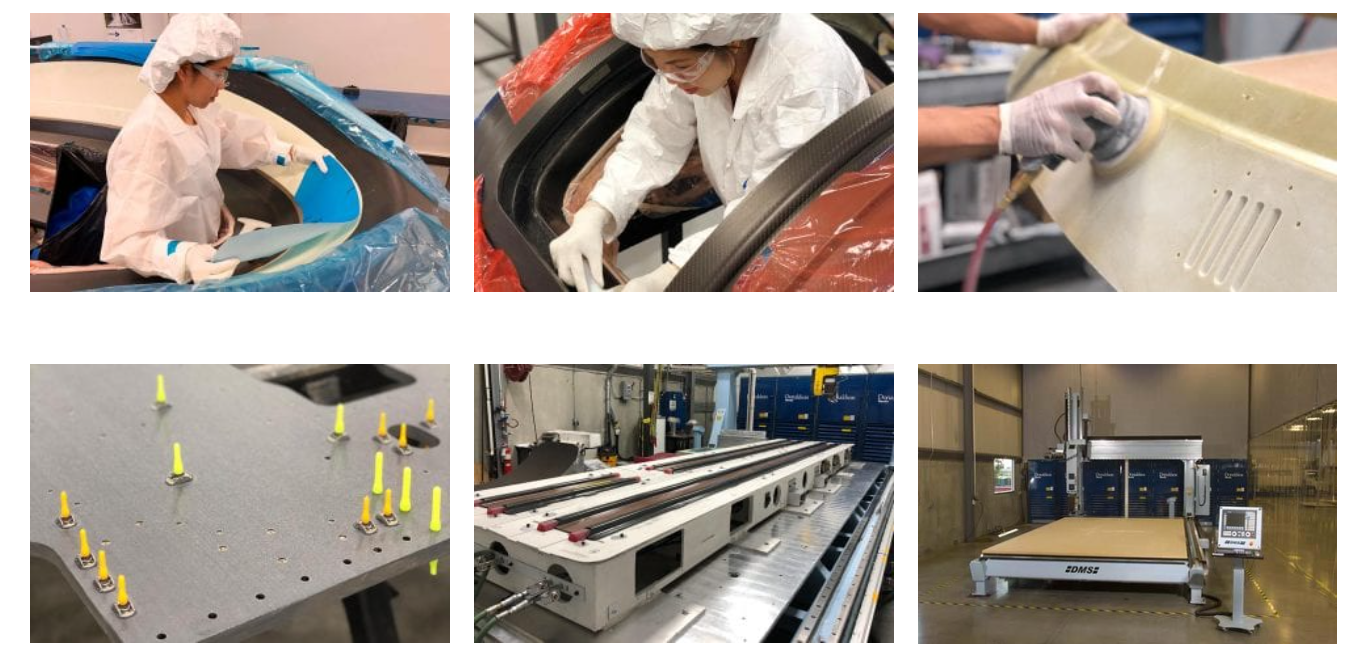
YICHOU employs industry-leading methods for precision carbon fiber cutting:
Optimal Cutting Tools:
-
Waterjet Cutting: Cold-cutting process prevents delamination (±0.003" tolerance)
-
Diamond-Coated Tools: CNC routers with PCD bits for clean edges
-
Laser Cutting: For thin panels (0.5-3mm thickness)
-
Abrasive Saws: For thick composite blocks
Critical Safety Protocols:
-
Ventilation Systems: Industrial-grade dust extraction (maintain <1mg/m³ airborne particles)
-
PPE Requirements:
-
NIOSH-approved respirators (N95 minimum)
-
Cut-resistant gloves
-
Full-face shields for machining
-
-
Workspace Setup: Dedicated cutting zones with negative pressure
*Pro Tip: Our technicians complete 200+ hours of safety training before handling raw carbon fiber materials.*
10. Carbon Fiber vs. Alternatives
Material Performance Comparison
| Material | Tensile Strength (GPa) | Density (g/cm³) | Strength-to-Weight Ratio |
|---|---|---|---|
| Carbon Fiber | 3.5-7.0 | 1.5-1.6 | 2450 kN·m/kg |
| Steel (4140) | 0.8-1.0 | 7.8 | 125 kN·m/kg |
| Titanium | 0.9-1.2 | 4.5 | 260 kN·m/kg |
| Kevlar | 3.0-3.6 | 1.4 | 2510 kN·m/kg |
| Graphene | 130+ (theoretical) | ~1.0 | N/A (R&D stage) |
YICHOU's Competitive Edge:
-
Proprietary fiber-resin formulations (+15% strength vs. industry standard)
-
Military-grade compaction techniques (99.2% fiber volume)
-
CT scan quality control for internal defect detection
*Application Example: Our aerospace-grade CF saved 12kg per seat in business class cabins while meeting FAA fire resistance standards.*
11. Frequently Asked Questions
Q: Can carbon fiber stop bullets?
A: Yes, when properly engineered. Our Level III ballistic panels stop 7.62mm rounds at 2,800 fps (18% lighter than steel alternatives).
Q: What resin is best for carbon fiber?
A: For most applications:
-
Epoxy: Highest strength (YICHOU uses Hexcel 8552 for aerospace)
-
Polyester: Cost-effective for marine applications
-
Phenolic: Fire-resistant for transportation
Q: Can carbon fiber be painted or wrapped?
A: Absolutely. Our standard surface prep includes:
-
Solvent degreasing
-
320-grit sanding
-
Specialty primers for adhesion
-
UV-resistant clear coats available
Q: Is carbon fiber stronger than steel?
A: By weight, our T800 carbon fiber is:
-
5x stronger in tension
-
2x stiffer
-
70% lighter
than structural steel (ASTM A36).
12. Why Choose YICHOU?
Industry-Leading Carbon Fiber Solutions
Certified Manufacturing:
-
ISO 9001:2015 certified quality system
-
AS9100D aerospace compliance
-
ITAR registered for defense projects
Custom Capabilities:
-
Automotive: Crash-tested structural components
-
Aerospace: FAA/EASA certified parts
-
Defense: Ballistic and EMP-shielding solutions
Value Proposition:
-
18% faster lead times than industry average
-
30% cost reduction on volume orders
-
0.12% defect rate (vs. 1.5% industry standard)
Get Your Custom Quote Today
- Contact Us: Share your project details with our experienced team, and let us provide tailored solutions for your unique needs.
- Fast & Competitive Pricing: Receive a detailed quote quickly, ensuring your project stays on track.
- Reach Out Anytime:
- Email: [email protected]
- Call/WhatsApp: +86 13355741031
- Live Chat: Connect with our support team instantly via our website's chat featur