Target Reader: Lab Managers, R&D Scientists, and Procurement for Research Institutes
Search Intent: "Custom quartz reactor fabrication" or "High purity quartz cuvettes"
Introduction
Standard glassware has been the backbone of laboratory work for centuries, but it has limits. For researchers pushing the boundaries of photocatalysis, high-temperature synthesis, or UV-Vis spectroscopy, conventional borosilicate glass often becomes the weakest link in an experimental setup. When experiments demand UV transparency below 300 nm, thermal cycling from red heat to room temperature in seconds, or absolute chemical inertness for trace analysis, custom quartz glassware is not an option—it is a necessity.
Quartz—specifically high-purity fused silica—offers a unique combination of optical, thermal, and chemical properties that enable experimental capabilities simply unattainable with standard materials. For laboratory managers and R&D scientists, investing in custom-fabricated quartz components can mean the difference between compromised data and breakthrough results.
This guide covers how custom-fabricated quartz components enhance accuracy in analytical laboratories and enable new paths in material science, with detailed case studies on precision cuvettes and high-performance reactors. We will also walk through the fabrication process so you understand exactly what goes into creating these essential laboratory tools.
Why Quartz? The Material Advantage in Lab Settings
Before examining specific applications, it is essential to understand why quartz outperforms standard laboratory materials. The table below summarizes the key differences between borosilicate glass—the laboratory workhorse—and high-purity quartz .
| Property | Borosilicate Glass | High-Purity Quartz | Advantage of Quartz |
|---|---|---|---|
| Maximum Working Temperature | ~500°C | 1100–1400°C | Enables high-temperature processes like ashing and combustion |
| Thermal Shock Resistance | Good (ΔT ~165°C) | Exceptional (ΔT ~600°C+) | Withstands rapid heating/cooling without fracture |
| UV Transparency | Poor (absorbs below 300 nm) | Excellent (transmits down to 190 nm) | Essential for photocatalysis and UV spectroscopy |
| Chemical Purity | Contains additives (boron, sodium) | 99.998% SiO₂ | Eliminates leaching in trace analysis |
| Softening Point | ~820°C | ~1650°C | Maintains structural integrity at extreme temperatures |
UV Transmittance: The Gateway to Photochemistry
For experiments involving ultraviolet light, quartz is irreplaceable. Standard borosilicate glass absorbs strongly below 300 nm, effectively blocking the UV radiation that drives photocatalytic reactions and is essential for UV-Vis spectroscopy. High-purity quartz, by contrast, transmits light down to 190 nm with minimal loss .
This optical clarity means that photocatalytic reactors fabricated from quartz allow UV light to penetrate uniformly through the vessel walls, directly illuminating the reaction mixture . Researchers report up to 40% higher photon utilization in quartz reactors compared to borosilicate alternatives, translating directly to faster reaction rates and higher quantum yields .
For analytical applications, this UV transparency ensures that cuvette material does not distort spectral measurements. When measuring absorbance in the critical UV range, every percentage point of transmission loss translates to potential errors in concentration calculations or kinetic measurements .
Thermal Shock Resistance: Pushing Temperature Boundaries
The low coefficient of thermal expansion of quartz—nearly zero for fused silica—gives it extraordinary resistance to thermal shock. A quartz vessel can be heated to red heat (1100°C) and immediately plunged into cold water without cracking . This behavior stands in stark contrast to borosilicate glass, which would shatter under such treatment.
This property proves critical for several laboratory applications:
-
Ashing experiments: Quartz crucibles can be cycled repeatedly between furnace temperatures and room temperature
-
Combustion analysis: Sample introduction and removal at temperature differentials exceeding 600°C
-
Hydrothermal synthesis: Rapid quenching of reactions to study metastable phases
-
Sterilization: Repeated autoclaving without degradation or optical changes
For laboratory managers, this durability translates to longer equipment life and fewer experiment interruptions from broken glassware.
Chemical Inertness: Protecting Sample Integrity
High-purity quartz consists almost entirely of silicon dioxide (SiO₂), typically 99.998% pure . Unlike borosilicate glass, which contains boron, sodium, and aluminum oxides that can leach into samples, quartz introduces virtually no contaminants. This purity proves essential for:
-
Trace element analysis: Parts-per-billion detection limits require materials that do not contribute background signals
-
Semiconductor processing: Wafer contamination at molecular levels destroys device performance
-
Pharmaceutical synthesis: Impurities from reaction vessels must be eliminated
-
Long-term stability studies: Sample integrity must be maintained over weeks or months
However, users should note two important exceptions: quartz is attacked by hydrofluoric acid (HF) and by hot, concentrated alkali solutions . For these specific chemistries, alternative materials like PTFE or specialized alloys may be required.
Case Study 1: Precision Analysis with Quartz Cuvettes
Application: UV-Vis Spectroscopy for Nanomaterial Coatings and Photoresist Testing
In analytical laboratories, the cuvette is far more than a simple container—it is an optical component that directly determines data quality. For applications ranging from characterizing nanomaterial coatings to quantifying photoresist development rates, the choice of cuvette material and quality affects every measurement.
A research group developing anti-reflective coatings for solar cells needs accurate transmission spectra to calculate film thickness and refractive index. A photoresist manufacturer must precisely measure absorbance changes upon UV exposure to characterize photospeed and contrast. In both cases, errors in optical measurement translate directly to incorrect conclusions about material performance.
Buyer Concern: "How Do I Ensure My Readings Are Accurate?"
Accuracy in UV-Vis spectroscopy depends on several factors related to the cuvette:
Path Length Accuracy: The Beer-Lambert law (A = εbc) relates absorbance (A) directly to path length (b). A 10 mm cuvette that actually provides 10.00 mm path length yields accurate results; a cuvette with 9.95 mm path length introduces systematic error . For critical applications, path length tolerance of ±0.01 mm or better may be required.
Optical Window Parallelism: The two optical windows must be precisely parallel. Wedge-shaped cuvettes act as prisms, deflecting the light beam and causing variable path length across the beam diameter. High-precision quartz cuvettes maintain window parallelism to within arc-seconds .
Surface Quality: Scratches, pits, or residual polishing compound on optical surfaces scatter light, increasing apparent absorbance and reducing measurement accuracy. Optical-grade polishing achieves surface roughness below 0.05 μm Ra, producing mirror-like finishes that minimize scattering .
Matched Pairs: For differential measurements—where a reference cuvette containing solvent is compared to a sample cuvette containing solution—the two cuvettes must be optically identical. "Matched pair" cuvettes are selected for nearly identical transmission characteristics, eliminating variance in reference measurements . Without matched pairs, differences between cuvettes can be misinterpreted as sample absorbance.
Technical Specifications for Precision Cuvettes
When specifying custom quartz cuvettes for critical measurements, several parameters demand attention:
| Parameter | Typical Precision Grade | High-Precision Grade | Why It Matters |
|---|---|---|---|
| Path Length | 10 mm ± 0.1 mm | 10 mm ± 0.01 mm | Directly affects absorbance values |
| Path Length Accuracy | ±1% | ±0.1% | Critical for quantitative analysis |
| Window Parallelism | < 30 arc seconds | < 5 arc seconds | Prevents beam deflection |
| Surface Quality | 60/40 scratch/dig | 20/10 scratch/dig | Minimizes light scattering |
| Spectral Range | 200–2500 nm | 190–2700 nm | Full UV-Vis-NIR coverage |
| Material | Fused Silica | Suprasil® Grade | Highest UV transmission |
Premium quartz grades like Heraeus Suprasil® offer exceptional UV transmission, with empty cuvettes achieving 80–90% transmission across their spectral range—the remaining loss coming from reflection at the four air-glass interfaces rather than absorption within the material .
Custom Cuvette Considerations
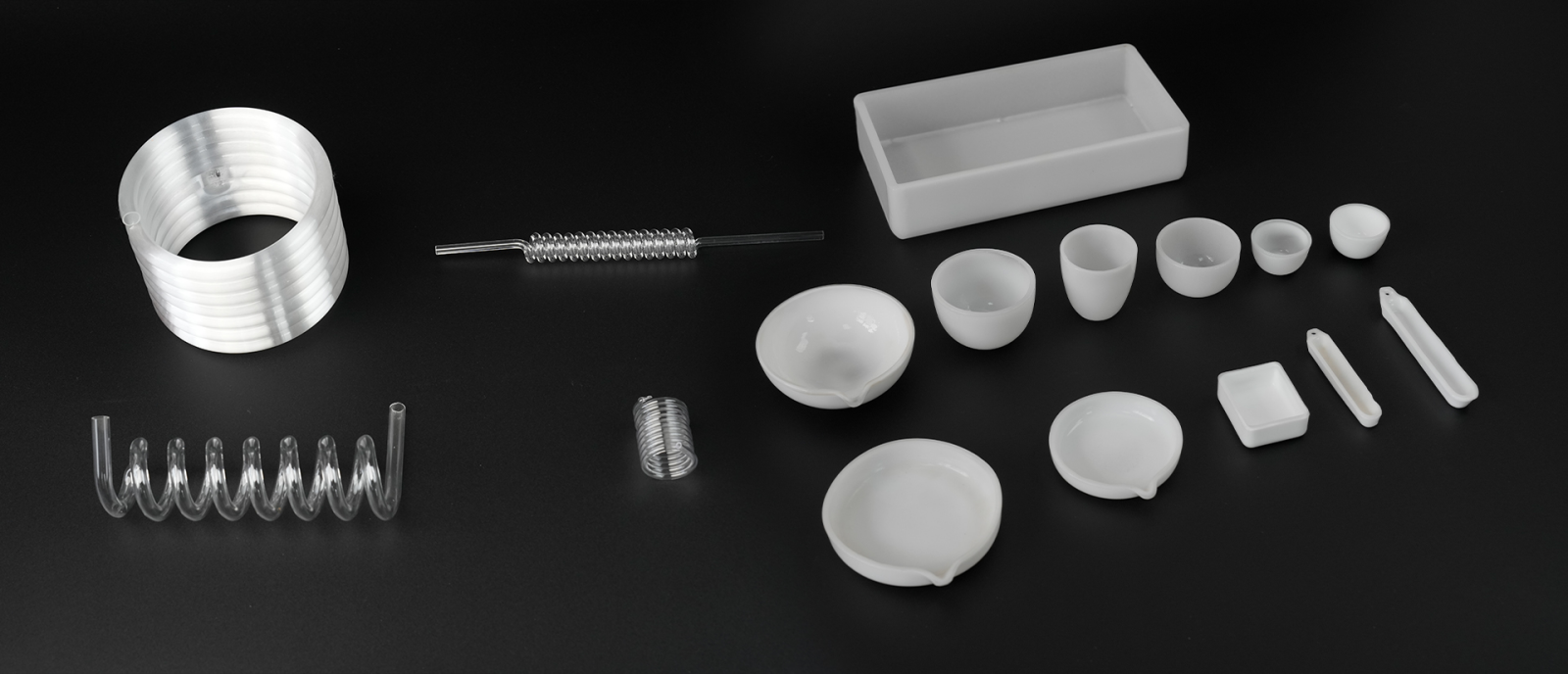
For specialized applications, custom cuvette designs may be required:
-
Micro and semi-micro volumes: Reducing sample volume to 50–1400 μL while maintaining accurate path length
-
Flow cells: Continuous monitoring of flowing samples
-
Fluorescence cuvettes: Four polished windows for right-angle detection
-
Long path length cells: 50–100 mm path lengths for trace analysis
-
Temperature-controlled jackets: Integrated fluid channels for precise thermal regulation
Case Study 2: High-Temperature Synthesis with Quartz Reactors
Application: Photocatalytic Reactions, Chemical Vapor Transport, and Hydrothermal Synthesis
Beyond analytical measurements, quartz vessels enable entire classes of chemical reactions that would be impossible in conventional glassware. Photocatalytic reactors, chemical vapor transport systems, and hydrothermal synthesis vessels all leverage quartz's unique combination of transparency, thermal stability, and chemical resistance.
A photocatalysis researcher studying water splitting needs to illuminate a catalyst suspension with high-intensity UV light while precisely controlling temperature. A materials scientist growing crystals via chemical vapor transport requires a vessel that withstands reactive halogens at 1000°C while allowing visual monitoring. A chemical engineer developing new hydrogenation catalysts needs a flow reactor that handles high-pressure hydrogen and corrosive intermediates . In each case, custom quartz reactors provide the enabling technology.
Buyer Concern: "Can the Vessel Handle Corrosive Gases and High Pressure?"
When specifying custom reactors, laboratory managers must consider multiple interacting requirements:
Corrosion Resistance: Quartz resists all acids except hydrofluoric acid, making it compatible with chlorine, bromine, hydrogen halides, and most aggressive gases at high temperatures . For extreme conditions involving both corrosive chemicals and high pressure, hybrid designs combining quartz interiors with Hastelloy outer shells provide optimal performance—offering up to 30% better corrosion resistance than stainless steel .
Pressure Capability: While quartz is not as pressure-tolerant as metal vessels, properly designed quartz reactors can safely operate at moderate pressures. Critical factors include:
-
Wall thickness uniformity
-
Absence of surface flaws or stress concentrations
-
Gentle radius changes rather than sharp corners
-
Proper support and pressure relief systems
Advanced reactor designs achieve operating pressures up to 100 bar when properly engineered .
Temperature Control: Many reactions require precise thermal management—heating to initiate reactions, cooling to control exotherms, or maintaining isothermal conditions. Custom quartz reactors address this through:
Double-layer jacket designs that circulate heating or cooling fluids around the reaction chamber . These jackets provide efficient heat transfer while maintaining optical access for illumination or observation. The double-layer construction also provides insulation, reducing heat loss by up to 30% compared to single-layer designs and enabling sustained high-temperature operation .
Multi-port configurations allow integration of sensors, sampling ports, gas inlets and outlets, and pressure relief devices. Typical custom reactors include 4–8 ports positioned optimally for the intended application .
Design Considerations for Custom Quartz Reactors
| Feature | Function | Customization Options |
|---|---|---|
| Double-layer jacket | Temperature control | Jacket volume, inlet/outlet positions, spiral baffles for flow distribution |
| Optical windows | Light delivery, observation | Window dimensions, anti-reflection coatings, angled ports for illumination |
| Sensor ports | Temperature/pressure monitoring | Threaded or compression fittings, thermocouple wells, septum ports for sampling |
| Gas distribution | Sparging, bubbling | Fritted glass discs, dip tubes, multiple inlet configurations |
| Pressure relief | Safety | Burst discs, relief valves, vent paths |
| Flange connections | Sealing, disassembly | Flat flanges with O-rings, threaded connections, clamp systems |
Application-Specific Reactor Configurations
Photocatalytic Reactors: Designed to maximize light exposure to the catalyst, these reactors feature:
-
Thin-walled sections for minimal UV attenuation
-
Cylindrical geometry for uniform illumination
-
Immersion well ports for lamps
-
Sampling ports for kinetic studies
Continuous Flow Reactors: For scaled-up synthesis and process development:
-
Multi-channel fixed-bed designs for catalyst screening
-
Laminar flow paths for residence time control
-
Integrated pre-heating and quenching sections
-
Automated control systems for long-duration operation
Chemical Vapor Transport Reactors: For crystal growth and materials purification:
-
Temperature gradient zones
-
Gentle tapers for crystal nucleation
-
Break seal provisions for product recovery
-
Inert atmosphere handling capability
The Fabrication Process: From Drawing to Finished Part
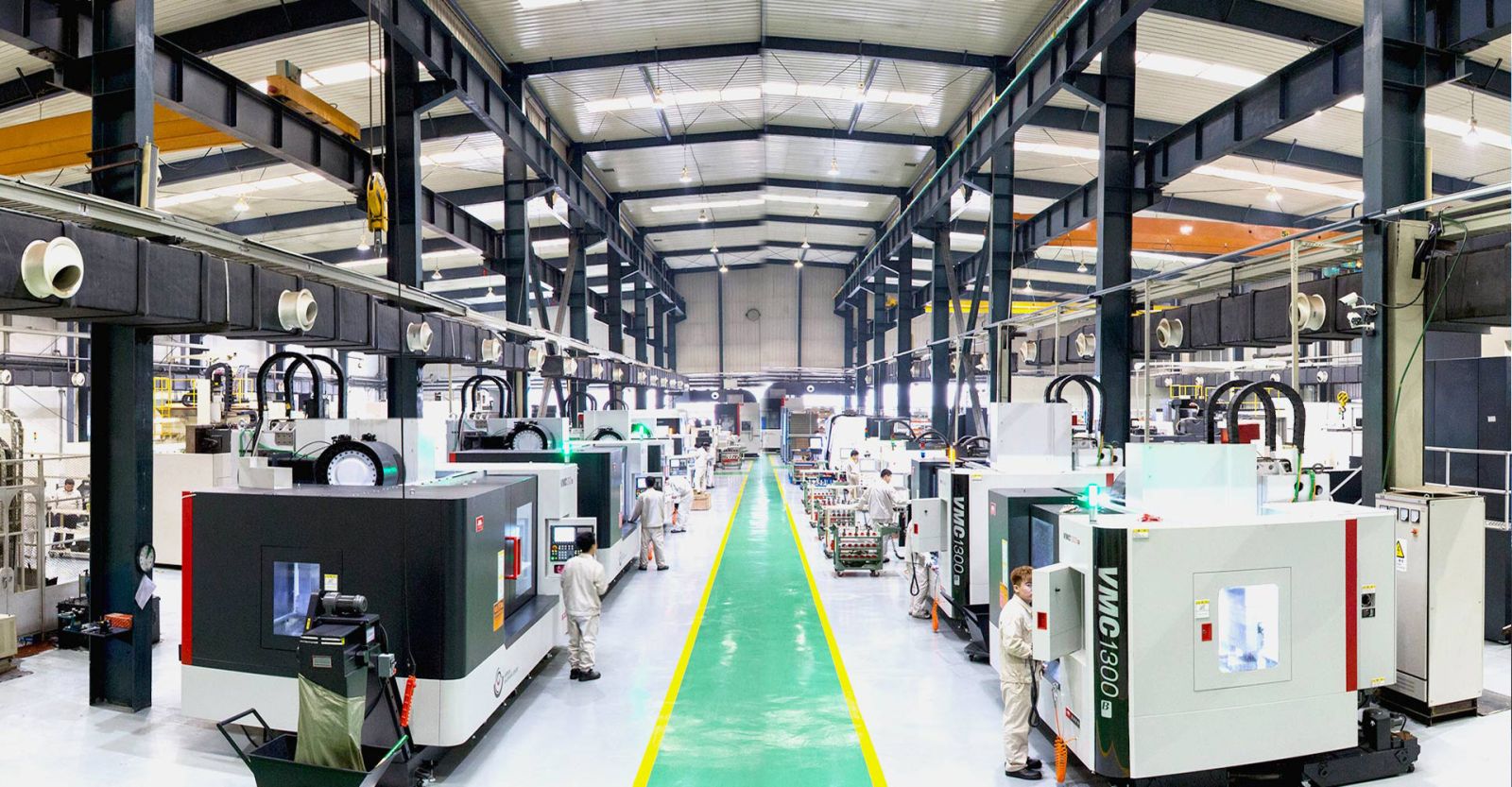
Understanding how custom quartz components are made helps laboratory managers appreciate both the possibilities and the limitations of quartz fabrication. The process combines centuries-old glassblowing techniques with modern CNC precision machining.
Step 1: Design and Engineering
The journey begins with your requirements. Whether you provide a detailed engineering drawing or a conceptual sketch, experienced fabricators work with you to optimize the design for quartz fabrication. Key considerations at this stage include:
-
Material selection: Different quartz grades offer trade-offs between purity, UV transmission, and cost
-
Wall thickness: Must balance strength, thermal performance, and optical requirements
-
Joint design: Ground glass joints, flanges, and connections must be specified
-
Tolerances: Realistic expectations for precision must be established
Step 2: Raw Material Preparation
High-purity quartz tubing and rod stock are sourced from specialized manufacturers. For critical applications, materials with certified purity (99.998% SiO₂) and documented trace element analysis are used . Stock tubes are cut to approximate length using diamond saws or abrasive wheels.
Step 3: Forming Operations
Quartz fabrication employs two primary approaches, often in combination:
Glassblowing on Lathes: For symmetrical vessels and complex assemblies, quartz is heated in a hydrogen-oxygen flame until it reaches a plastic state (approximately 1700°C) . Skilled glassblowers on rotating lathes shape the hot quartz by:
-
Blowing air to expand sections
-
Using graphite tools to form contours
-
Sealing tubes together to create manifolds
-
Forming flanges and connections
The hydrogen-oxygen flame must be precisely controlled—typically with natural gas-to-oxygen ratios near 1:2.5—to achieve temperatures of 1650–1750°C that soften quartz without causing vaporization or surface degradation .
CNC Machining: For precision features and optical surfaces, cold quartz is machined using diamond tooling . Capabilities include:
-
Cutting and slicing
-
Drilling holes (including small-diameter through-holes)
-
Milling flat surfaces
-
Grinding precise diameters
-
Polishing optical surfaces
Quartz Glass Machining vs. Quartz Fire Polishing: These two approaches serve different purposes. Machining with diamond tools produces precise dimensions and flat surfaces but leaves a ground finish that may require subsequent polishing. Fire polishing uses a gas flame to melt the surface slightly, transforming a ground finish into a smooth, transparent surface. The trade-off: fire polishing can slightly alter dimensions and may not be suitable for surfaces requiring precise optical flatness .
Step 4: Joining and Assembly
Complex assemblies require joining multiple quartz components:
-
Fusion sealing: Heating mating surfaces to melting and pressing together
-
Graded seals: Transitioning between quartz and other materials (when necessary)
-
Flange attachment: Sealing quartz flanges or attaching metal flanges via compression fittings
Step 5: Optical Polishing
For cuvettes and optical windows, surface finish is critical. Polishing progresses through progressively finer abrasives:
-
Rough grinding establishes flatness
-
Fine grinding removes subsurface damage
-
Optical polishing achieves final surface quality
Surface finish specifications include:
-
Surface roughness (Ra): Values below 0.05 μm for optical surfaces
-
Scratch/dig specifications: Standards like 20/10 indicate maximum scratch width and dig diameter
Step 6: Annealing
Internal stresses from forming operations must be relieved by controlled heating and cooling. Proper annealing ensures dimensional stability and prevents delayed cracking.
Step 7: Inspection and Quality Control
Reputable fabricators inspect every piece:
-
Dimensional inspection: Verifying critical dimensions against drawings
-
Optical testing: Measuring transmission, parallelism, and surface quality
-
Pressure testing: Verifying integrity of sealed vessels
-
Visual inspection: Checking for bubbles, inclusions, or surface defects
Achievable Tolerances
| Feature | Typical Tolerance | Precision Capability |
|---|---|---|
| Outside diameter | ±0.5 mm | ±0.1 mm |
| Wall thickness | ±10% | ±5% |
| Length | ±1 mm | ±0.2 mm |
| Ground joint taper | ±0.05 mm per 10 mm | ±0.02 mm per 10 mm |
| Optical path length | ±0.1 mm | ±0.01 mm |
| Surface flatness | λ/2 | λ/10 (λ = 633 nm) |
Making the Right Choice for Your Laboratory
Selecting custom quartz fabrication requires balancing performance requirements against budget constraints. Use these guidelines to inform your decisions:
When to Choose Quartz Over Borosilicate
-
High-temperature work above 500°C: Quartz maintains strength and stability where borosilicate softens
-
UV applications: Any experiment involving light below 300 nm requires quartz
-
Thermal cycling: Rapid temperature changes that would shatter borosilicate
-
Trace analysis: Parts-per-billion detection limits demand quartz purity
-
Corrosive chemicals: Resistance to all acids except HF
When Borosilicate May Suffice
-
Routine chemistry below 400°C
-
Visible light applications only
-
Gradual temperature changes
-
Analysis at parts-per-million levels or higher
-
Budget-limited projects
Questions to Ask Your Fabricator
Before commissioning custom quartzware, ensure you and your fabricator share understanding of:
-
What are the critical dimensions and tolerances? Which measurements truly matter for your experiment?
-
What is the expected service condition? Temperature, pressure, chemical exposure, and thermal cycling rates all affect design.
-
What optical properties are required? UV transmission needs, surface finish requirements, and viewing angles.
-
How will the piece be cleaned? Design should facilitate proper cleaning without damage.
-
What are the safe operating limits? Understand pressure and temperature ratings before use.
Conclusion
Custom quartz glass fabrication represents the intersection of material science and precision manufacturing, enabling laboratory researchers to push beyond the limits of conventional glassware. From the exacting optical requirements of UV-Vis spectroscopy to the extreme conditions of photocatalytic reactors, high-purity quartz provides the thermal stability, chemical inertness, and optical clarity that cutting-edge research demands.
For laboratory managers and R&D scientists, partnering with a manufacturer who understands both the material science of quartz and the specific application requirements—whether photochemistry, analytical measurement, or high-temperature synthesis—ensures that custom components will perform as intended, experiment after experiment.
The investment in custom quartz fabrication pays dividends in data quality, experimental reproducibility, and the ability to explore scientific questions that would otherwise remain inaccessible. When standard glassware limits your experimental potential, custom quartz opens new possibilities.
Upload Your Schematic for a Custom Quote
Ready to take your research to the next level with custom quartz laboratory components? Our team of quartz fabrication specialists works with you from concept to completion, ensuring your custom glassware meets the exacting demands of your application.
Submit your schematic, engineering drawing, or project requirements today for a detailed quote and fabrication feasibility analysis.
Contact us today for a competitive quote and technical support!
Let Yichou help you achieve excellence in your next project. Whether you need raw materials, custom alloy solutions, or precision-manufactured components, our team is ready to assist.
- Email us: [email protected]
- Call us/whatsapp: +86 13355741031
- Chat with us: Live chat support available on our website
References
-
Alibaba. "Custom Double-Layer Quartz Reactor Photocatalytic Reaction Kettle." Product technical specifications and comparison data.
-
Sigma-Aldrich. "Hellma® cuvettes for light-scattering measurements." Product specifications for high-performance quartz cuvettes.
-
Shandong Shanlu Heavy Industry Technology. "Poor gloss and edge erosion of quartz glass flame polishing machine?" Technical guide to flame polishing parameters and troubleshooting.
-
Alibaba Product Insights. "Understanding Heat Resistant Clear Glass Tubes: Technical Specifications, Grades, and Practical Applications." Comparative analysis of glass types.
-
SEAM Glass Blowing Lathes. "Mastering the Craft of High-Purity Fused Quartz Fabrication at QSI." Quartz purity specifications and fabrication techniques.
-
Alibaba. "Quartz Hastelloy Material Continuous Flow Reactor." Technical specifications for high-pressure reactor systems.
-
Sigma-Aldrich. "Hellma® semi-micro absorption cuvettes." Product specifications including path length and spectral range.
-
MICQ Quartz. "Optical Quartz Glass Parameters." Surface finish specifications and measurement methods.
-
Kintek Solution. "Why Quartz Is Used In Making Laboratory Ware?" Comprehensive comparison of quartz and borosilicate properties.
-
S&S Optical Company. "Glass & Quartz Capabilities." Fabrication capabilities and process descriptions.