Why YICHOU Delivers Zero-Defect Cast Iron & Aluminum Blocks
Meta Description:
Stop scrapping engine blocks due to hidden shrinkage cavities or main bearing bore misalignment. YICHOU provides ASTM/EN-certified cast iron and aluminum cylinder blocks with 100% leak testing. Full traceability from heat number to finished part. Request a prototyping quote today.
INTRODUCTION
In the world of internal combustion engines, the engine cylinder block is far more than a simple metal housing. It is the “steel skeleton” that withstands combustion pressures exceeding 200 bar, the precision datum that guides the crankshaft and pistons, and the structural heart that determines whether a power unit survives 500,000 kilometers or fails during the running-in period.
Yet for procurement managers and engineering directors, the cylinder block is often the source of intolerable disappointments: crankcase blow-by caused by micron-level bore deformation, excessive oil consumption from poor plateau honing, or catastrophic coolant leakage resulting from cylinder liner loosening.
You and I know that these failures are not inevitable. They are the direct consequence of choosing a manufacturing partner that treats the cylinder block as a “low-end casting” rather than the precision machinery it truly is.
If you are sourcing cylinder blocks for diesel engines, heavy-duty commercial vehicles, passenger car aluminum blocks, or aftermarket replacements, this guide will change how you evaluate suppliers. And by the end, you will understand why YICHOU has become the trusted partner for OEMs and aftermarket leaders who refuse to compromise on reliability.
SECTION 1 (H2): The Engine Cylinder Block – Why It’s Not a “Casting” But a Precision Machine Component
Many procurement professionals still classify the engine cylinder block as a commodity casting. They send out RFQs based on weight and material grade, compare unit prices, and hope for the best. This approach is the single largest source of risk in your supply chain.
Consider what the cylinder block endures during normal operation:
-
Combustion pressure: Up to 200 bar (or higher in modern turbocharged diesel engines) acting directly on the head deck and cylinder walls.
-
Mechanical impact: Pistons change direction dozens of times per second, imposing alternating loads on the bore surface.
-
Thermal cycling: The block goes from sub-zero cold starts to 300°C+ exhaust-side temperatures, repeatedly.
-
Bending and torsion: The main bearing saddles must hold the crankshaft perfectly coaxial while the engine experiences vehicle-induced flex.
If the cylinder block fails to meet even one of its functional requirements – bore roundness, main bearing alignment, water jacket integrity – the engine will fail. And the failure will almost certainly appear in the field, not on your test stand.
The Three Non-Negotiable Functions of a Quality Cylinder Block
-
Containment of Pressure: The block must be absolutely leak-tight. Hidden micro-porosity or shrinkage cavities in the water jacket or oil galleries will cause gradual, mysterious fluid loss that drives customers insane.
-
Precision Guidance: The cylinder bores must be perfectly round and straight. Deviation measured in hundredths of a millimeter (0.01mm) destroys piston ring conformability, leading to blow-by and oil consumption.
-
Structural Rigidity: The main bearing bore coaxiality and bedplate interface must be flawless. Any misalignment imposes bending stress on the crankshaft, causing premature bearing fatigue and eventual seizure.
YICHOU’s manufacturing philosophy is built on this reality. We do not cast cylinder blocks. We engineer them.
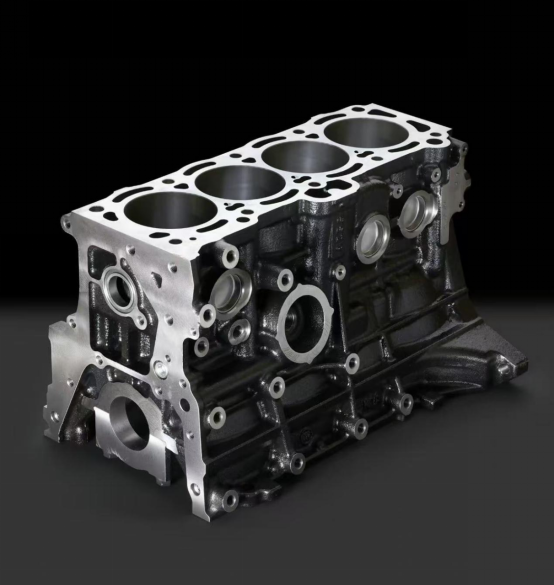
SECTION 2 (H2): Cast Iron Cylinder Blocks – Killing Hidden Shrinkage Porosity and Hardness Variation
If your application demands a cast iron cylinder block – typical for diesel engines, commercial vehicles, agricultural machinery, and stationary power – you have almost certainly encountered the two most frustrating defects in the industry: subsurface shrinkage porosity and hardness variation.
The Nightmare of Hidden Porosity
Subsurface shrinkage cavities are invisible to the naked eye. They survive rough machining. They only reveal themselves during finish boring or honing, when the tool breaks through a thin skin of sound metal into a void. At that moment, your cylinder block becomes scrap.
Even worse: porosity that remains hidden can lead to coolant seepage into the crankcase or compression leakage across cylinder head fire decks. These are field failures. They cost you warranty claims, brand reputation, and customer trust.
Hardness Variation Destroys Machining Stability
When casting cooling is poorly controlled, Brinell hardness can vary by 15-20 points across the same cylinder block. The result:
-
Tool deflection and chatter during honing.
-
Inability to achieve the required cross-hatch plateau finish.
-
Premature ring and bore wear.
YICHOU’s Cast Iron Process Controls
We eliminate these defects systematically:
1. Molten Iron Genetic Control
-
Medium-frequency induction furnaces paired with real-time thermal analysis.
-
Carbon equivalent locked into a fluctuation band of less than ±0.05%.
-
For nodular cast iron (ductile iron): Nodularity verified per ladle to Grade VI or higher (no flake graphite allowed).
2. Casting Simulation (CAE) Before First Mold
We do not guess. Every new cylinder block program runs through computerized solidification simulation. We model the temperature field during mold filling and solidification, then optimize riser and gate positions to eliminate shrinkage before cutting the first mold.
3. 100% Metallographic Verification
Our quality team section specimens from main bearing saddles, cylinder walls, and water jacket walls on a weekly basis. We verify microstructure purity under the microscope. No flake graphite. No carbide networks. No excuses.
What you receive: A material certificate with heat number, spectrographic composition (C, Si, Mn, P, S, Cr, Mo, Cu, etc.), tensile strength, hardness map (HBW), and metallographic images. Full traceability.
SECTION 3 (H2): Aluminum Cylinder Blocks – Solving Liner Loosening, Thread Stripping, and Leakage
The push for lightweighting and tighter emissions regulations has made the aluminum cylinder block the standard for passenger car engines and high-performance powertrains. But aluminum brings its own set of technical challenges.
The Three Most Common Aluminum Block Failures
-
Cylinder Liner Loosening: After repeated thermal cycling (cold start to full load), the interface between the cast-in iron liner and the aluminum matrix develops a micro-gap. Result: Coolant wicks into the combustion chamber, causing misfire and white smoke.
-
Stripped Threads: Aluminum’s lower strength means cylinder head bolt threads pull out during torque-to-yield tightening. Assembly line stops. Rejected blocks.
-
Pinhole Leakage: Hydrogen porosity in the melt creates micro-pinholes that leak oil or coolant through pressure-bearing galleries.
YICHOU’s Aluminum Cylinder Block Solutions
For Liners: Cast-In Iron with Mechanical Interlock
We do not simply press liners into aluminum. Our cast-in process uses a specially designed outer surface geometry on the liner that creates a metallurgical bond under high pressure. The result is an interference fit with micron-scale interlocking. Whether at -40°C cold start or 120°C full load, the liner will not sink, shift, or leak.
Alternative: For programs requiring bore coating, we offer high-precision thermal spray technology (equivalent to OEM plasma coating processes).
For Threads: Engineered Reinforcement
-
Aluminum matrix strengthened via optimized silicon and copper content.
-
Helical wire thread inserts or self-tapping inserts at all critical locations (main bearing bolts, cylinder head bolts).
-
Validated for torque-to-yield (TTY) tightening with documented safety margins.
For Melt Quality: Zero Pinholes
-
Rotary degassing + ceramic foam filtration.
-
Hydrogen content controlled to well below industry average.
-
Result: Pressure-bearing oil galleries and water jackets are absolutely tight. No micro-leaks.
SECTION 4 (H2): Vertical Integration – Why Casting, Machining, and Testing Under One Roof Eliminates Dimensional Chaos
In today’s fragmented supply chain, it is common for procurement managers to buy:
-
Casting blanks from Foundry A.
-
Rough machining from Workshop B.
-
Finish machining and honing from Facility C.
This model guarantees dimensional inconsistency and zero accountability.
When the cylinder block fails, who is responsible? The caster blames the machinist. The machinist blames the casting. You are left holding the scrap parts and the warranty claims.
YICHOU’s Closed-Loop Manufacturing
We made the difficult but correct choice: everything in-house.
-
Casting blank production
-
Heat treatment and stress relief
-
Rough and finish machining
-
Plateau honing
-
100% leak testing
-
Rust prevention and packaging
The Technical Benefit: Unified Datums
Because we control both casting and machining, our engineers design the machining datums to exactly match the casting datums from the very beginning. This eliminates:
-
Cumulative errors from datum transformation.
-
Form and position deviations caused by multiple re-clamping operations.
-
“Mysterious” misalignment between main bearing bores and camshaft bores.
Precision Machining Specifications
-
Cylinder bores: Three-stage process (rough, semi-finish, finish) followed by plateau honing. Cross-hatch angle and surface roughness (Ra, Rpk, Rvk) monitored by photoelectric profilometers.
-
Main bearing and camshaft bores: Machined in a single setup on precision machining centers. Coaxiality and cylindricity held to within a few microns. No manual scraping of bearing cap parting surfaces required.
SECTION 5 (H2): 100% Leak Testing – The Iron Curtain Against Porosity and Cracks
A cylinder block that passes dimensional inspection but leaks is a catastrophe waiting to happen.
That is why YICHOU tests every single finished block.
Our dedicated leak test machines use compressed air or tracer gas to verify the integrity of:
-
Water jacket
-
Oil galleries
-
High-pressure fuel cavities (for diesel applications)
Leakage is measured against a mL/min criterion. Any block exceeding the limit is rejected immediately. No microscopic casting penetration or machining crack escapes this iron curtain.
Test data is recorded and can be included in your shipment inspection report.
SECTION 6 (H2): Beyond Standard – YICHOU as Your Engineering Partner for Disruptive Designs
Standard cylinder blocks fill standard orders. But many of the opportunities you compete for are not standard.
Your next project might require:
-
An ultra-lightweight thin-wall water jacket for a hybrid application.
-
Enlarged bore centers to unlock higher displacement.
-
A motorsport cylinder block with extreme fatigue strength.
-
Relocated accessory mounting points to fit a new chassis.
Ordinary suppliers will look at your drawings and say, “Impossible to cast. Impossible to machine.”
YICHOU’s application engineering team says: “Let’s find the pathway.”
Examples of Our Engineering Capability
-
2mm water jacket walls: We formulate new core-making processes using high-strength cold-box sand cores with anti-deformation cradles.
-
Racing blocks: We propose chilled cast iron or high-strength aluminum alloys, plus iron-insert reinforced backbone structures in the main bearing cap region. Result: +50% power over OEM rating with no crankshaft misalignment.
-
Rapid prototyping: We use multi-axis machining centers to directly machine forged or cast blanks. For complex internal cooling geometries, we use rapid casting techniques. You get dyno-ready prototype samples in a dramatically compressed timeframe.
Send us your STEP, IGES, or 2D drawings – even at the concept stage. We translate functional requirements into design-for-manufacturability recommendations.
SECTION 7 (H2): Cast Iron vs. Aluminum – The Informed Trade-Off
Procurement decisions often force you to choose between cast iron and aluminum without full technical context. YICHOU provides the data you need.
| Property | Cast Iron (Gray Iron) | Aluminum Alloy |
|---|---|---|
| Vibration damping | Excellent (graphite flakes absorb energy) | Poor (requires design compensation) |
| Thermal cycling stability | Outstanding | Good (requires liner solution) |
| Weight | Heavy (baseline) | 35-50% lighter |
| Heat dissipation | Poor | Excellent (2-3x better) |
| Wear resistance (bore) | Excellent (self-lubricating graphite) | Poor (must use liner or coating) |
| Cost at high volume | Lower (mature process) | Higher (more complex tooling) |
The Hidden Decision: Which Liner Technology?
When you choose aluminum, you must also choose a liner strategy:
-
Wet liner: Easy to replace, direct cooling, but compromises structural rigidity. Seal ring degradation is a long-term risk.
-
Cast-in dry liner: Highly integral structure, excellent heat transfer, but demanding bonding process. (YICHOU’s specialty.)
-
Spray bore coating: Lightest option, excellent scuff resistance, but requires specialized equipment and higher per-unit cost.
YICHOU provides all three. We will prepare a technical dossier using our accumulated dyno test data to show which technology delivers the lowest total cost of ownership for your specific displacement, power density, and cooling architecture.
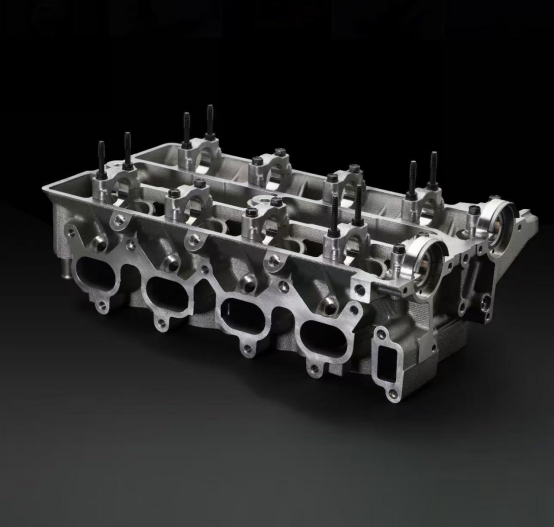
SECTION 8 (H2): Quality Culture – What You Cannot See During a Factory Tour
You have visited clean workshops. You have seen coordinate measuring machines and inspection gauges. These are table stakes.
What separates YICHOU from ordinary suppliers is what happens when you are not watching.
-
Digital melt control: Every heat of molten iron is captured electronically – cooling curve, eutectic cell count, carbon equivalent. Any heat that fails specification is diverted to scrap. No “furnace operator’s judgment.” No wishful thinking.
-
In-process gauging with automatic compensation: Our machining lines sample workpieces at high frequency. The moment dimensional drift is detected, the system forces a tool change or compensation before a single bad part is produced.
-
Weekly destructive testing: Our metallurgists section finished blocks from main bearing saddles, cylinder walls, and water jackets. They verify microstructure purity and send tensile coupons to the test stand.
-
Full traceability: Every material certificate, every dimensional report, every leak test result can be traced back to a unique heat number and batch number.
Compliance for International Shipping
We understand that your cargo cannot sit at the port due to documentation issues. Our compliance team provides mechanical property and chemical composition reports that fully conform to ASTM, EN, or JIS standards. Each report is traceable. Each report is defensible under audit.
SECTION 9 (H2): Frequently Asked Questions – Direct Answers from YICHOU (300+ words)
Q: Can YICHOU develop cylinder blocks directly from our 3D CAD models (STEP, IGES)?
A: Yes. Upon receiving your files, we perform manufacturability analysis and casting simulation. We then provide optimization recommendations. Prototype blocks can be delivered in a dramatically compressed timeframe for immediate dyno testing.
Q: Does YICHOU have production capacity for high-grade aluminum cylinder blocks with cast-in iron liners?
A: Fully capable. We have mastered the high-strength metallurgical bonding process for cast-in liners as well as thermal spray bore coating. Guaranteed: zero liner leakage, zero loosening, zero thread stripping after repeated reassembly.
Q: Is every cylinder block leak-tested before shipment?
A: Yes. 100% leak test using compressed air or tracer gas. Water jacket, oil galleries, and fuel cavities tested separately to a mL/min criterion. Data available in your shipment report.
Q: How do you ensure material certificates meet destination country customs requirements?
A: Our documentation team coordinates with your customs broker to provide ASTM, EN, or JIS-conforming reports. Every report includes heat number and batch number traceable to production parameters. No customs delays.
Q: Can you improve durability for aftermarket service cylinder blocks?
A: Yes. Our engineering team performs reverse failure analysis on original equipment failure modes. We then propose reliable upgrades in material grade, main bearing saddle reinforcement, water jacket design, or liner interface. The result: significantly longer service life than the original design.
CONCLUSION
You have now read nearly 4,000 words on the engineering, metallurgy, and quality systems that separate a reliable cylinder block from a field failure waiting to happen.
You have learned:
-
Why hidden shrinkage porosity and hardness variation destroy cast iron blocks.
-
How liner loosening and thread stripping are preventable with proper process control.
-
Why vertical integration (casting, machining, testing under one roof) is essential for dimensional consistency.
-
How YICHOU’s engineering team can turn your disruptive design into a manufacturable, durable reality.
Your next project deserves more than a commodity casting supplier.
Whether you need:
-
A service replacement cast iron cylinder block for an existing diesel engine.
-
A dedicated lightweight aluminum block for a new hybrid powertrain.
-
A heavy-duty cylinder block compliant with off-highway emissions standards.
…bring your drawings, your requirements, and your concerns to YICHOU’s senior solution engineers.
We do not promise impossible specifications. We promise:
-
The most refined manufacturing process of this era.
-
Zero-defect cylinder blocks delivered on time.
-
A partnership that makes your brand synonymous with reliability.
Call to Action
Contact YICHOU today.
Send your drawings or RFQ to our engineering team.
Let us prove that the “steel skeleton” of your engine can be the strongest part of your reputation.
Get Quote
- Visit our website: https://www.nbyichou.com/
- Email us: [email protected]
- Call us/whatsapp: +86 13355741031
- Chat with us: Live chat support available on our website