1. Introduction
In the realm of national security, the difference between mission success and failure often rests on the reliability of sophisticated machinery. Unlike commercial products, defense platforms—nuclear submarines, fighter aircraft, and advanced radar systems—operate at the extremes of human engineering. They must withstand immense pressure, incredible G-forces, and volatile thermal shifts. Manufacturing the components for these platforms presents a unique set of challenges, primarily because of their sheer size and the unforgiving materials from which they are made.
This is the domain of heavy-duty machining. It is the industrial capability to manipulate and finish large metal components with tolerances measured in microns, despite their tonnage. For decades, manufacturing large-scale defense components relied on manual techniques and massive casting operations. However, the modern battlefield demands a new level of precision.
At Ningbo Yichou, we have positioned ourselves at the forefront of this evolution. Our investment in advanced defense manufacturing equipment and our expertise in large component machining allow us to support the critical infrastructure required for naval dominance and aerospace superiority. This article explores the complexities of heavy machinery military applications and how digital innovation is reshaping the production of the world's most formidable defense systems.
2. Examples of Large Defense Components
The term "large component" in defense manufacturing covers a vast array of geometries and functions. These are not just big blocks of metal; they are highly engineered structures that form the backbone of military hardware. Here are some critical examples that require specialized heavy equipment machining defense strategies:
-
Submarine Pressure Hull Sections: These are the critical modules that must withstand the crushing pressures of deep-sea operations. They require machining of huge cylindrical sections and hemispherical domes with absolute precision to ensure structural integrity under extreme stress.
-
Naval Gun Mounts: The mounts for naval artillery require complex, oddly-shaped steel castings. These components must house intricate gearing and hydraulic systems while providing a stable platform for accurate fire.
-
Missile Canisters: These are essentially precision pressure vessels used for storing and launching missiles. They can reach heights of over 10 meters and require incredibly tight control of internal diameter and ovality to ensure safe and reliable missile ejection.
-
Aircraft Wing Spars: As the primary structural members of an aircraft wing, spars run the length of the wing and bear the brunt of the flight loads. Machining these from large aluminum or titanium forgings requires machines with extensive axis travel and the ability to manage significant material removal without inducing stress.
-
Radar Structures: Modern radar systems, particularly those with large arrays, require extremely rigid and dimensionally stable support structures. The mounting points for antenna elements must be machined to exacting standards to maintain the electrical performance of the system across wide temperature ranges.
3. Advanced Heavy Machinery: The Nine-Axis Leap Forward
To meet the demands of these monumental components, the defense industry is moving beyond standard 3-axis milling. Recent innovations in defense manufacturing equipment have led to the development of multi-tasking machines that can perform the work of several traditional machines in a single setup.
One of the most significant advancements is the nine-axis six-link intelligent milling-boring machining center. Originally developed to solve the complex manufacturing challenges of deep-sea equipment, this class of machinery represents a paradigm shift.
Capabilities of Modern Heavy Machinery:
-
Heavy-Duty CNC Six-Axis Heads: These heads provide the flexibility to approach a workpiece from virtually any angle, which is essential for machining complex contours on submarine bulkheads or naval propeller blades without repositioning the massive part.
-
Machine Vision Measurement Systems: By integrating optical measurement, the machine can "see" the component. It automatically measures stock allowance, identifies reference points, and adjusts the machining path in real-time to account for casting variations or part settling.
-
Contour Machining Integration: Complex aerodynamic and hydrodynamic shapes are no longer a bottleneck. The machine's control system seamlessly handles the transition between roughing and finishing passes on complex 3D surfaces.
-
Digital Twin Simulation: Before a single chip is cut, the entire machining process is simulated in a virtual environment. This validates tool paths, checks for collisions, and optimizes cycle times, ensuring that the launch to production is flawless and without costly errors.
4. Benefits of Modern Heavy Machinery
The transition from traditional manual methods and basic CNC machining to these advanced, multi-axis systems yields quantifiable improvements in the defense supply chain. The data from the implementation of these technologies, particularly in deep-sea equipment manufacturing, speaks for itself.
-
2x Production Efficiency Improvement: By combining milling, boring, and probing operations on a single machine, parts no longer need to travel between different workstations. This drastically reduces lead times for critical components like submarine pressure hull sections.
-
5x Accuracy Improvement in Opening/Beveling: Preparing large plates for welding (creating bevels and openings) has traditionally been a manual process using flame cutting, which introduces heat distortion and roughness. Modern machining centers perform these operations with cutter precision, ensuring perfect fit-up for subsequent welding, a critical factor in pressure hull integrity.
-
Transition from Manual Flame Cutting to Fully Digital Machining: The digitization of this process eliminates reliance on operator skill for critical geometry. Parts are now produced directly from 3D models, ensuring repeatability and adherence to strict defense standards.
-
Cross-Sector Applicability: While born from the needs of deep-sea equipment, these capabilities are directly transferable to aerospace structural components and ground vehicle armor, making them a versatile asset for the military industrial base.
5. Material Challenges in Large Components
Machining a large defense component is as much a battle with metallurgy as it is with geometry. The materials specified for military use are chosen for their strength and survivability, but these same properties make them incredibly difficult to cut.
-
Large Titanium Forgings: Titanium offers an exceptional strength-to-weight ratio, crucial for aircraft and submarines. However, it has poor thermal conductivity and a tendency to work-harden. Machining large titanium forgings requires high-pressure coolant systems and rigid setups to prevent chatter and tool failure.
-
Heavy Plate Fabrication: High-strength steels used in missile canisters require significant power to cut. The residual stresses in these heavy plates can cause the part to distort during machining if not properly managed.
-
Stress Relief Requirements: Large welds and heavy material removal introduce significant internal stresses. Components often require intermediate stress relief heat treatment cycles to stabilize the part before final finishing. This requires careful coordination between the machine shop and the heat treatment facility.
-
Handling and Fixturing: How do you hold a 10-meter-long wing spar or a 50-ton submarine section without causing deflection? Custom, complex fixtures are required. These fixtures must support the part without damping vibration or obstructing the cutting tool's access.
6. Quality Control for Large Parts
Verifying the accuracy of a massive component is a challenge in itself. You cannot simply place a submarine hull section on a standard coordinate measuring machine. Instead, defense manufacturers rely on a suite of portable and integrated technologies:
-
Portable CMM Measurements: Articulated measuring arms allow inspectors to probe key features on the shop floor, right next to the machine.
-
Laser Tracking Systems: For components larger than 10 meters, laser trackers are the gold standard. These devices track a reflector moved by an operator, building a 3D map of the part's geometry with high accuracy over long distances. This is essential for verifying the alignment of long missile canister assemblies or submarine sections.
-
NDT Integration: Non-destructive testing is integrated into the quality workflow to ensure the material integrity of these expensive and critical components. This includes ultrasonic testing for wall thickness or dye penetrant for surface cracks.
7. Case Application: Deep-Sea Equipment Manufacturing
The ultimate test of large component machining capability can be seen in the manufacturing of deep-sea equipment, specifically underwater vehicle pressure cabins.
Traditionally, the fabrication of these cabins was a bottleneck technology. It involved heavy plate rolling, extensive manual welding, and post-weld machining to clean up critical sealing surfaces. The risk of distortion was high, and the cycle times were long.
With the implementation of advanced nine-axis machining centers, this process has been revolutionized:
-
Digital Manufacturing Implementation: The finished geometry of the cabin is now machined from a near-net shape forging or fabricated weldment. The digital twin ensures that the complex port openings and sealing surfaces are machined in the correct stress-relieved state.
-
Breakthrough in Bottleneck Technologies: By using machine vision to map the raw part and adaptive machining to cut the final profile, manufacturers have achieved a breakthrough in reliability and depth rating for these underwater vehicles. The precision of the machined surfaces ensures that seals function perfectly, keeping electronics and personnel safe at extreme depths.
8. Ningbo Yichou's Heavy Machining Capabilities
At Ningbo Yichou, we understand that defense contractors need partners who can handle the heavy lifting of manufacturing with the precision of a jeweler. Our approach to heavy equipment machining defense is built on four pillars:
-
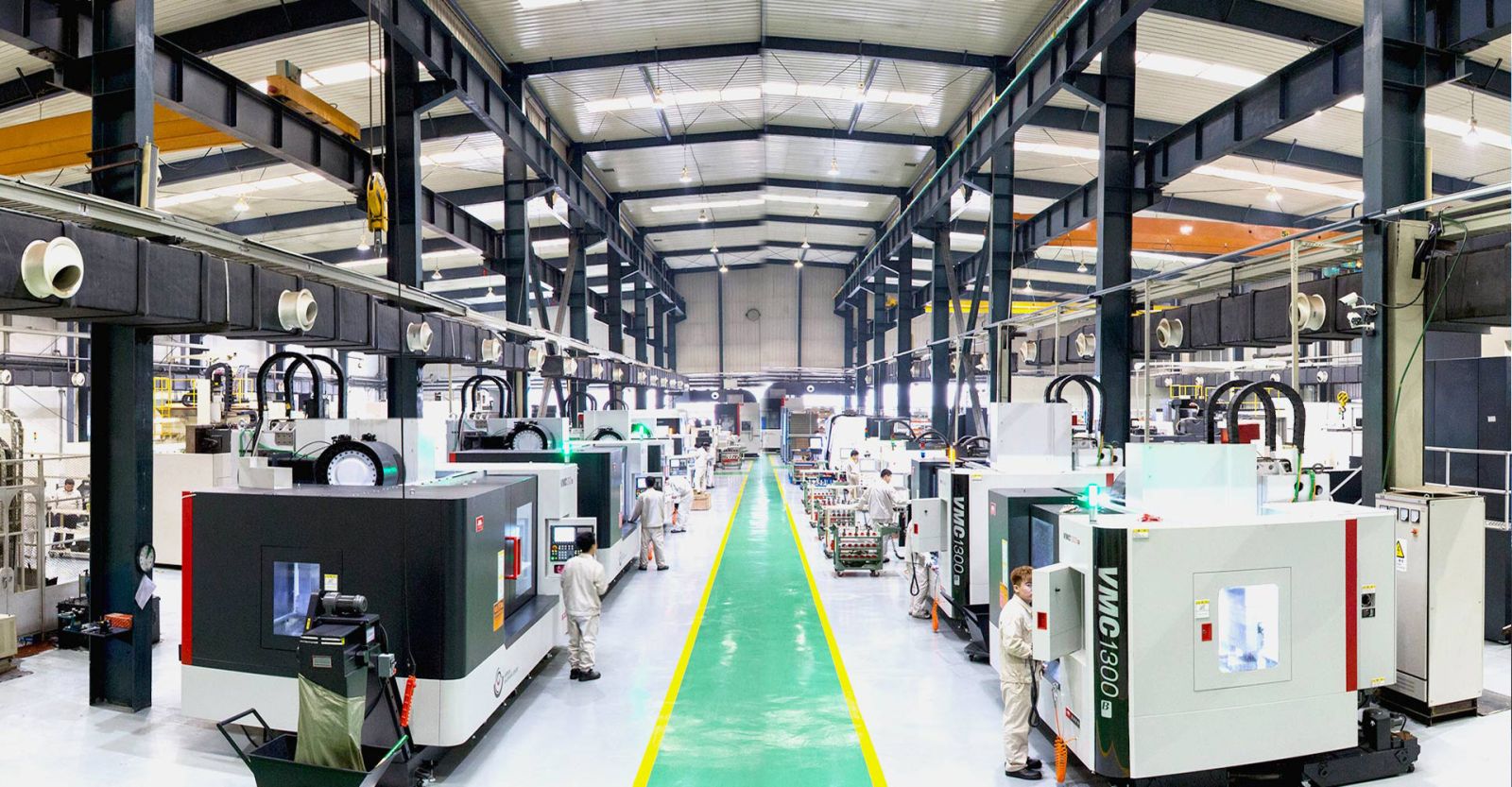
Large CNC Equipment: Our facility is equipped with large-format boring and milling machines capable of accommodating the outsized dimensions of naval and aerospace components. This in-house capacity ensures we control the quality and timeline of every project.
-
Experienced Operators: We employ skilled machinists who understand the nuances of difficult materials like titanium and high-strength steel. Their expertise in setup and tooling optimization is critical to achieving the required surface finishes and tolerances.
-
Complex Fixture Design: We design and fabricate custom work-holding solutions that keep large parts stable and accessible during multi-axis machining operations.
-
Coordination with Heat Treatment: We manage the entire process chain, coordinating rough machining, stress relief, and final finishing to ensure the long-term dimensional stability of your most critical components.
9. Conclusion
The defense of nations relies on the strength and precision of their hardware. As threats evolve and platforms become more advanced, the manufacturing technologies behind them must also advance. Heavy-duty machining is no longer just about removing large amounts of metal; it is about the intelligent, digital, and precise manipulation of high-performance materials.
From the depths of the ocean in a submarine pressure hull to the high-altitude stresses on an aircraft wing spar, the components machined today determine the performance of the fleet tomorrow. The integration of digital twins, machine vision, and multi-axis technology ensures that these massive components are built right the first time.
If your defense program requires large component machining for naval, aerospace, or ground-based systems, partner with a team that has the equipment and expertise to deliver.
Contact Ningbo Yichou today to discuss your heavy-duty machining requirements.
Contact us today for a competitive quote and technical support!
Let Yichou help you achieve excellence in your next project. Whether you need raw materials, custom alloy solutions, or precision-manufactured components, our team is ready to assist.
- Email us: [email protected]
- Call us/whatsapp: +86 13355741031
- Chat with us: Live chat support available on our website