Introduction
The relentless pursuit of speed, efficiency, and reliability in aerospace and defense has always been fundamentally constrained by one critical factor: materials. At the heart of every jet engine, rocket motor, and missile system lies a class of engineering marvels known as superalloys. These materials operate where conventional metals would soften, oxidize, or creep within minutes. They endure rotational speeds measured in thousands of revolutions per minute, gas temperatures that exceed their own melting points (thanks to sophisticated cooling systems), and operational lifetimes that can span decades in commercial aviation or mere minutes in hypersonic missiles—but minutes of extreme, unparalleled stress.
Why does high-temperature performance matter so profoundly? In a jet engine, every 100°C increase in turbine inlet temperature translates to approximately 10-15% more thrust or a corresponding improvement in fuel efficiency. For commercial airlines, this means lower operating costs and reduced carbon emissions. For military aircraft, it means greater thrust-to-weight ratios, higher speeds, and enhanced maneuverability. In missile technology, the ability to withstand thermal extremes directly correlates with range and speed; hypersonic vehicles traveling at Mach 5+ experience skin temperatures that can exceed 1000°C, while their propulsion systems face even more punishing conditions. Rocket nozzles must endure combustion temperatures that can reach 3300°C—far beyond the capability of any metallic alloy to withstand without active cooling or ablative protection.
At Ningbo Yichou, we understand that the performance of these critical components depends not only on the metallurgy of the alloys themselves but also on the precision with which they are machined and the reliability of the supply chain that delivers them. Our comprehensive capabilities in supplying and machining high-temperature alloys position us as a trusted partner to aerospace and defense contractors worldwide. This blog post explores the fascinating world of high-temperature alloys, their applications in next-generation propulsion, and the specialized expertise required to transform these difficult-to-machine materials into mission-critical components.
What Are High-Temperature Alloys?
High-temperature alloys, commonly referred to as superalloys, are a distinct class of metallic materials engineered to maintain their mechanical properties, surface stability, and corrosion resistance at temperatures exceeding 540°C (1000°F). Unlike conventional steels or aluminum alloys that rapidly lose strength as temperatures rise, superalloys retain significant load-bearing capacity at fractions of their absolute melting points. This exceptional performance stems from their complex microstructures, which combine a stable austenitic matrix with carefully precipitated strengthening phases.
Nickel-Based Superalloys
Nickel-based superalloys represent the most widely used and versatile family of high-temperature materials, dominating applications from turbine blades to rocket engine components. The choice of nickel as a base element is no accident: nickel possesses an austenitic face-centered cubic structure that remains stable from cryogenic temperatures all the way to its melting point, with no disruptive phase transformations. This structure also exhibits excellent ductility and toughness, making it amenable to processing and fabrication.
The most famous member of this family is Inconel 718, which accounts for approximately 50% of all superalloys used in aerospace applications . Its nominal composition of approximately 53% nickel, 19% chromium, 19% iron, with additions of niobium, molybdenum, and titanium, creates a material that is precipitation-hardenable through the formation of gamma-double-prime (Ni₃Nb) phases. This strengthening mechanism allows Inconel 718 to maintain tensile strengths exceeding 1300 MPa at room temperature and retain useful strength up to 700°C . The alloy's exceptional creep rupture strength, fatigue resistance, and weldability make it indispensable for jet engine turbine disks, compressor components, and rocket motor casings.
Beyond Inconel, the nickel-based family includes specialized alloys such as Waspaloy, developed in the 1960s specifically for turbine disk applications and offering improved strength at intermediate temperatures through higher aluminum and titanium content. René 88, René 104, and other "René" alloys represent successive generations of powder metallurgy superalloys developed for the most demanding rotating applications in modern high-bypass turbofan engines. Haynes 230, with its high chromium and tungsten content, provides exceptional oxidation resistance and thermal stability for combustion chamber components and afterburner liners.
Cobalt-Based Alloys
While less common than nickel-based variants, cobalt-based superalloys occupy critical niches where their unique properties justify the premium. Cobalt retains its strength to higher absolute temperatures than nickel and exhibits superior hot corrosion resistance, particularly in environments contaminated with sulfates and chlorides. The most prominent cobalt-based alloy, Haynes 188, combines cobalt with nickel, chromium, and tungsten to deliver outstanding creep strength and oxidation resistance up to 1095°C. L-605 (also known as Haynes 25) offers similar properties and finds applications in turbine vanes, combustion liners, and afterburner components.
Cobalt-based alloys excel in wear applications at elevated temperatures, where their tendency to form abrasive oxide scales actually protects against metal-to-metal contact. This property makes them valuable for high-temperature bearings, seals, and bushings in auxiliary power units and gearbox assemblies.
Iron-Nickel Based Alloys
Bridging the gap between conventional stainless steels and true nickel-based superalloys, iron-nickel alloys such as A-286 and Incoloy 907 offer intermediate temperature capability at reduced cost. A-286, containing approximately 25% nickel and 15% chromium, remains precipitation-hardenable through titanium and aluminum additions and finds widespread use in turbine frames, casings, and bolting applications where temperatures do not exceed 700°C. These alloys are often selected for their combination of fabricability, weldability, and resistance to stress-accelerated grain boundary oxidation.
Operating Temperature Capabilities
Modern superalloys demonstrate remarkable temperature capabilities that have evolved dramatically since the dawn of the jet age. Early superalloys in the 1940s operated at approximately 700°C. Today's most advanced nickel-based superalloys, particularly those processed through single-crystal casting techniques, can operate at metal temperatures approaching 1100°C—and this is before accounting for sophisticated thermal barrier coatings that allow gas temperatures to exceed 1800K (approximately 1527°C) at turbine inlets. The continuous evolution of alloy chemistry, processing techniques, and coating systems has enabled turbine entry temperatures to increase by an average of 2-4°C per year over the past six decades—a testament to the materials science community's relentless innovation.
Applications in Defense and Aerospace
The applications of high-temperature alloys span virtually every corner of modern aerospace and defense systems, from the fan blades at the front of a commercial turbofan to the exhaust nozzles of afterburning military engines and the throats of solid rocket motors. Understanding these applications requires appreciation of the distinct requirements each component faces.
Jet Engine Turbine Blades and Vanes
Turbine blades operate in the most demanding environment of any rotating machinery: they spin at thousands of revolutions per minute, experience centrifugal stresses that can reach 30,000 times the force of gravity, and are immersed in combustion gases that can exceed their melting temperature by hundreds of degrees. The materials used for these components represent the pinnacle of superalloy metallurgy.
Inconel 718 remains widely used for turbine disks and cooler-section blades, but the hottest stages require more advanced alloys such as René 88, René N5, and CMSX-4 single-crystal alloys. These materials derive their exceptional high-temperature strength from carefully controlled microstructures that eliminate grain boundaries—the weak points where creep damage and crack initiation typically occur. Single-crystal turbine blades, first introduced in the 1980s and now standard in virtually all large commercial and military engines, contain no grain boundaries at all. They are cast as individual crystals oriented precisely along the direction of maximum stress, maximizing creep resistance and fatigue life.
The development of these alloys required revolutionary advances in foundry technology. Directional solidification furnaces, in which the molten alloy is withdrawn slowly from a hot zone to create aligned columnar grains, gave way to complex thermal management systems capable of growing single crystals by competitive grain selection through a spiral selector. Today's most advanced blades combine single-crystal structures with complex internal cooling passages, themselves cast using ceramic cores that must be chemically leached out after solidification.
Engine Casings, Combustion Chambers, and Rings
While rotating components receive the most attention, static structures within the engine face their own challenges. Combustion chambers must withstand thermal cycling, high-pressure loads, and corrosive combustion products while maintaining dimensional stability. Waspaloy and Haynes 230 are frequently specified for these applications due to their exceptional oxidation resistance and thermal stability . Waspaloy, with its carefully balanced aluminum and titanium content, forms a protective aluminum oxide scale that resists spallation even under rapid thermal cycling.
Engine casings and rings require materials that combine moderate high-temperature strength with good weldability and fabricability. Inconel 718 again dominates this space, often supplied in forged ring forms that are machined to final dimensions. The rings must maintain roundness and dimensional accuracy under thermal and mechanical loads while providing mounting surfaces for stators, seals, and bearing supports.
Missile Components
Missile systems present a unique combination of requirements: they must survive extreme thermal environments during launch and flight, often with minimal weight penalty, but their operational lifetimes are measured in minutes rather than thousands of hours. This allows the use of alloys that might be unsuitable for long-term commercial service but offer exceptional short-term performance.
Inconel 625 finds extensive application in missile airframes, control surfaces, and propulsion components due to its excellent strength-to-weight ratio and resistance to high-temperature oxidation . Unlike Inconel 718, which achieves its strength through precipitation hardening, Inconel 625 relies primarily on solid-solution strengthening from molybdenum and niobium. This gives it exceptional weldability and fabricability while maintaining useful strength up to 1000°C. For missile applications, these properties allow the fabrication of complex structures that must survive the thermal pulse of high-Mach flight while maintaining aerodynamic stability.
Nozzle throats and exit cones face even more extreme conditions, with combustion temperatures that can exceed 3000°C in solid rocket motors. Here, traditional superalloys yield to specialized materials such as C-103, a niobium-based alloy containing hafnium and titanium, which offers excellent high-temperature strength and can be protected by oxidation-resistant coatings . For the most demanding applications, carbon-carbon composites and refractory metal alloys provide the necessary thermal protection, though at significantly higher cost and manufacturing complexity.
Rocket Nozzles and Thrust Chambers
Liquid rocket engines combine the thermal challenges of combustion with the structural demands of high-pressure operation. The Space Shuttle Main Engine's nozzle, for example, operated at combustion chamber pressures exceeding 3000 psi while withstanding exhaust temperatures above 3300°C—conditions that would vaporize most metallic materials in seconds. To survive, rocket designers employ either regenerative cooling, in which cryogenic fuel circulates through passages in the nozzle wall before injection, or ablative cooling, in which the nozzle material sacrificially erodes to carry away heat.
Inconel 718 and 625 find extensive application in regeneratively cooled nozzles, where their high strength and fabricability allow the manufacture of thin-walled structures with integral cooling channels. These components are often fabricated through advanced techniques such as electroforming, laser powder bed fusion, or brazing of formed sheet metal assemblies. The cooling channels must maintain precise dimensions and flow characteristics while withstanding the pressure differential between the coolant and the combustion chamber.
Case Study: CJ-1000A Engine Development and Thermal Barrier Coating Innovation
The development of the CJ-1000A engine, China's first high-bypass turbofan engine designed for large commercial aircraft, illustrates the critical role of advanced materials and coatings in pushing the boundaries of propulsion technology. This engine program represents a multi-decade investment in indigenous aerospace capability, with particular emphasis on the high-temperature materials that determine overall engine performance.
A key innovation in the CJ-1000A program involves the development of GH4738 alloy multilayer gradient composite sheets for combustion chamber applications. GH4738, a nickel-based superalloy similar to Waspaloy, offers an exceptional combination of high-temperature strength, oxidation resistance, and fabricability that makes it ideal for the complex sheet metal structures required in annular combustors. The combustion chamber must contain and stabilize a continuous flame while withstanding intense thermal radiation from the flame front and convective heating from combustion gases exceeding 2000°C.
The gradient composite sheet concept represents a sophisticated approach to thermal management that goes beyond simple material selection. By constructing the combustion chamber wall from multiple layers of GH4738 with carefully engineered interfaces, designers can optimize the thermal and mechanical performance in ways impossible with monolithic structures. The gradient refers to the gradual transition in properties—thermal conductivity, coefficient of thermal expansion, and mechanical strength—from the hot side to the cool side of the wall. This gradation minimizes thermal stresses that would otherwise lead to cracking and fatigue failure.
Even more significant is the application of 8YSZ (8 wt% yttria-stabilized zirconia) thermal barrier coatings with engineered nano-scale porosity. 8YSZ has emerged as the industry standard for thermal barrier coatings due to its low thermal conductivity, high coefficient of thermal expansion (closely matching underlying superalloys), and exceptional phase stability at operating temperatures. The addition of yttria stabilizes the zirconia in its tetragonal phase, preventing the destructive phase transformations that would otherwise occur during thermal cycling.
The innovation in the CJ-1000A application lies in the precise control of porosity at the nanometer scale. Traditional thermal barrier coatings contain porosity that improves thermal insulation but can also provide pathways for oxygen penetration and reduce mechanical durability. By engineering the porosity at the nanoscale—creating pores just tens of nanometers in diameter with controlled morphology and distribution—developers can achieve the best of both worlds: maximum thermal resistance with minimal penalty in mechanical properties and oxidation protection.
The results of this approach are dramatic: the 8YSZ coating with nano-scale porosity delivers a 40% improvement in thermal insulation efficiency compared to conventional thermal barrier coatings. This means that for a given coating thickness, the temperature drop across the coating increases by 40%, allowing either higher turbine inlet temperatures for the same metal temperature or reduced cooling air requirements for the same turbine inlet temperature. The program reports that this coating technology enables turbine inlet temperatures exceeding 1800K (approximately 1527°C), a threshold that places the CJ-1000A firmly in the company of Western engines such as the GE90 and Trent series.
The implications extend beyond raw performance. Higher turbine inlet temperatures translate directly to improved thermal efficiency and specific fuel consumption, critical factors for commercial aviation where fuel represents a significant portion of operating costs. For a long-haul aircraft powered by CJ-1000A engines, a 1% improvement in specific fuel consumption can translate to millions of dollars in fuel savings over the aircraft's lifetime, not to mention corresponding reductions in carbon emissions. The coating technology developed for the CJ-1000A thus represents not merely a technical achievement but a significant step toward more sustainable aviation.
Machining Challenges and Solutions for Superalloys
If superalloys are difficult to produce, they are equally challenging to machine. The same properties that make them valuable in service—high strength at elevated temperatures, low thermal conductivity, and resistance to deformation—create extreme difficulties during machining. Understanding these challenges is essential for any manufacturer seeking to produce high-quality components from these materials.
Work Hardening
Nickel-based superalloys exhibit rapid and aggressive work hardening during machining. As the cutting tool passes through the material, it induces plastic deformation in the surface layers, causing dislocations to multiply and interact. This strain-hardened layer can achieve hardness values 30-50% higher than the bulk material, creating a self-defeating cycle: the hardened surface accelerates tool wear, which increases cutting forces, which generates more heat, which further hardens the material.
The practical implications are significant. Unlike machining steel, where depth of cut can be relatively light, machining superalloys requires maintaining a minimum chip thickness sufficient to cut beneath any previously work-hardened layer. Light finishing passes, far from improving surface finish, can actually degrade it by rubbing against the hardened surface without achieving true cutting. Experienced machinists must plan operations to ensure that each cut removes material from virgin, unhardened metal.
Poor Thermal Conductivity
Superalloys typically exhibit thermal conductivities one-third to one-fifth that of conventional steels. This property, beneficial for thermal barrier coatings and turbine blade temperature management, becomes a liability during machining. The heat generated by plastic deformation and friction at the cutting interface cannot conduct rapidly into the workpiece or chip. Instead, it concentrates at the tool tip, where temperatures can exceed 1000°C even with aggressive cooling.
These extreme temperatures accelerate all the common tool wear mechanisms: diffusion wear, in which tool material dissolves into the chip; oxidation wear, in which the tool reacts with atmospheric oxygen; and plastic deformation, in which the tool tip literally softens and flows under pressure. Carbide tools that might last hours machining steel can wear out in minutes on superalloys. Ceramic and cubic boron nitride tools offer improved performance but at significantly higher cost and with greater sensitivity to process interruptions.
High Cutting Forces
The high strength of superalloys at elevated temperatures means that cutting forces remain high even under conditions that would soften conventional materials. These forces impose severe loads on machine tools, workholding fixtures, and cutting tools alike. The combination of high forces and high temperatures creates a uniquely challenging machining environment that demands exceptional machine rigidity and power.
Ningbo Yichou's Specialized Machining Techniques
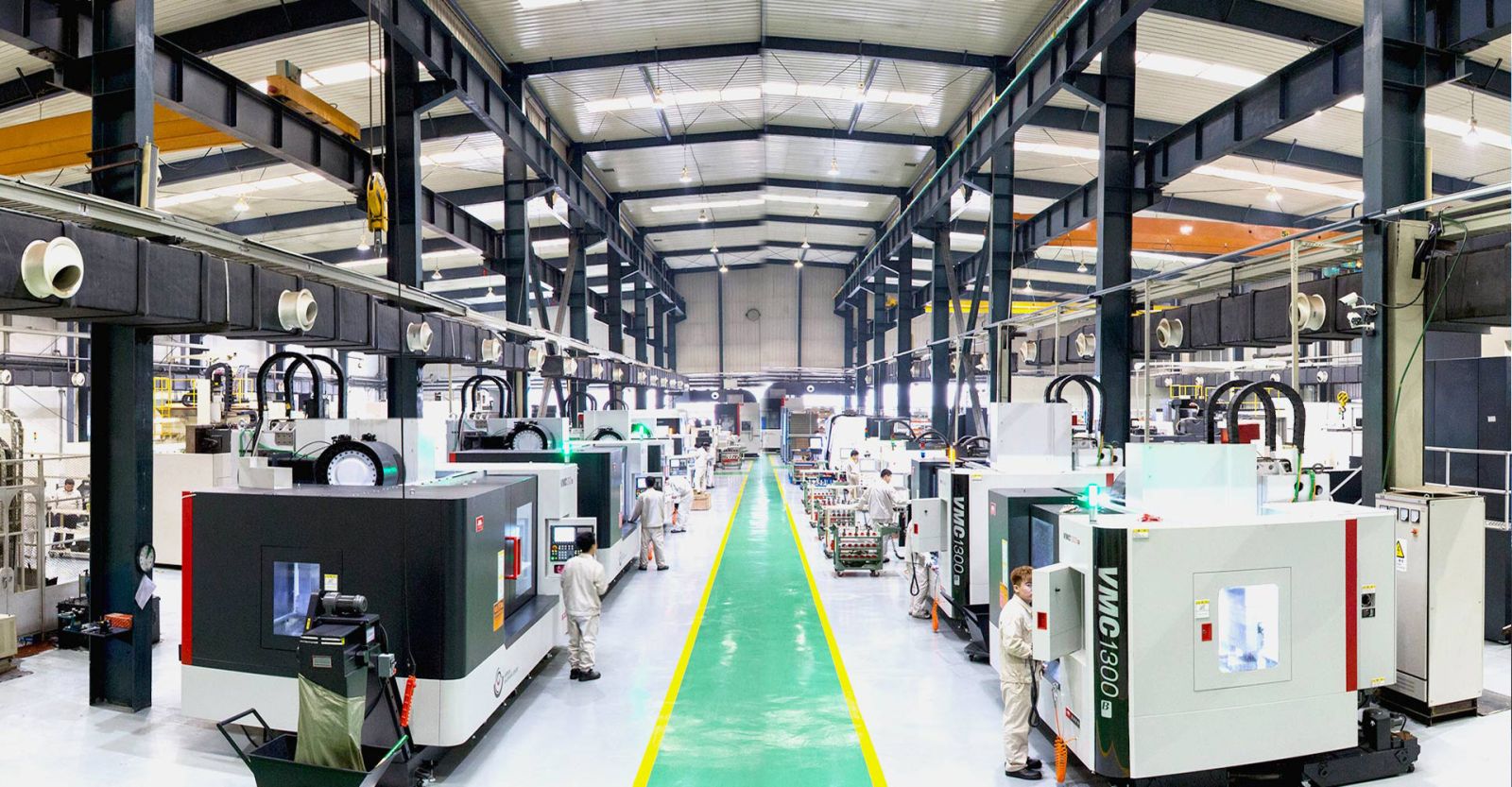
At Ningbo Yichou, we have developed comprehensive expertise in addressing these challenges through a combination of advanced equipment, optimized processes, and skilled craftsmanship.
Our approach begins with rigid setups that minimize vibration and deflection during cutting. Vibration is particularly destructive when machining superalloys because the intermittent tool engagement it causes can initiate micro-cracking in both tool and workpiece. We employ heavy-duty machine tools with robust spindles and toolholding systems, combined with workholding fixtures designed to support components rigidly without inducing distortion. For thin-walled components such as engine casings and rings, this often requires custom fixtures that support the part over its entire surface rather than relying on point clamping.
Tool geometries are optimized specifically for superalloy applications, incorporating features that differ significantly from those used for conventional materials. Positive rake angles reduce cutting forces by promoting shear rather than compression, while generous edge honing strengthens the cutting edge against the high pressures involved. Chip control geometries are carefully designed to produce chips that curl and break cleanly, preventing the long, stringy chips that can tangle around tools and fixtures.
High-pressure coolant systems play a crucial role in our machining processes. By delivering coolant at pressures exceeding 1000 psi directly to the cutting interface, we can penetrate the vapor barrier that typically forms at high cutting speeds and provide effective lubrication and cooling where it matters most. This high-pressure approach not only extends tool life but also improves surface integrity by reducing thermal damage to the machined surface.
Perhaps most importantly, our team includes experienced machinists who understand the unique behavior of superalloys. They recognize the subtle cues—changes in cutting sound, chip color and shape, surface appearance—that indicate developing problems and can adjust parameters in real-time to maintain optimal conditions. This expertise, accumulated over years of working with these demanding materials, represents a capability that cannot be replicated by equipment alone.
Recent advances in machining technology continue to expand the boundaries of what is possible with superalloys. Laser-assisted turning, for example, uses a high-power laser to locally heat and soften the workpiece immediately ahead of the cutting tool, reducing cutting forces by up to 69% and improving tool life by 46% . While not yet widely adopted in production, such hybrid processes point toward future capabilities that will make superalloy machining more efficient and economical.
Material Sourcing Capabilities
The foundation of any successful superalloy component is the material from which it is made. Ningbo Yichou maintains comprehensive sourcing capabilities that ensure our customers receive material meeting the most demanding specifications, with full traceability and certification.
We supply both domestic and imported superalloys, recognizing that different applications and customer preferences require different sources. Domestic Chinese superalloys have matured significantly over the past two decades, with producers such as Fushun Special Steel, Baosteel Special Materials, and Angang Steel Company developing capabilities that rival international standards. These domestic sources offer advantages in lead time, cost, and supply chain security that make them attractive for many applications.
For programs requiring Western-sourced materials, we maintain relationships with leading international producers and can supply alloys conforming to AMS, ASTM, and proprietary specifications. This dual-sourcing capability provides our customers with flexibility and risk mitigation, allowing them to qualify materials from multiple sources while maintaining consistent quality.
Every shipment of superalloy material includes comprehensive mill certifications documenting chemical composition, mechanical properties, and processing history. These certifications provide traceability from the finished component back to the original melt, a requirement for virtually all aerospace and defense applications. For critical components, we can arrange additional testing and inspection, including third-party verification by recognized agencies.
Material is available in multiple forms to suit different manufacturing processes. Bar stock, both hot-rolled and forged, serves applications ranging from simple turned parts to complex machined components. Plate and sheet materials support fabrications such as combustion chamber liners, exhaust components, and heat shields. Forgings, whether closed-die or open-die, provide near-net shapes that minimize machining and reduce material consumption. For each form, we maintain appropriate inventories and can arrange just-in-time delivery to support lean manufacturing operations.
Quality Control and Assurance
Quality assurance for superalloy components extends far beyond simple dimensional checking. The critical nature of aerospace and defense applications demands comprehensive verification at every stage of manufacturing.
Dimensional inspection at Ningbo Yichou employs coordinate measuring machines (CMM) capable of verifying complex geometries with micron-level accuracy. For each component, we develop inspection programs that verify all critical features against engineering drawings, with statistical process control applied to identify trends before they produce non-conforming parts. First article inspection reports provide complete documentation of dimensional conformance for initial production runs, supporting customer qualification and approval processes.
Surface integrity verification is equally important, particularly for components that will experience cyclic loading at elevated temperatures. Machining-induced surface damage—micro-cracks, residual tensile stresses, white layers, and re-cast material—can serve as initiation sites for fatigue failure, drastically reducing component life. Our processes are designed to minimize these effects, and we verify surface condition through appropriate techniques including surface roughness measurement, microstructural examination of representative samples, and, where specified, non-destructive testing methods such as fluorescent penetrant inspection and eddy current testing.
First article inspection reports provide comprehensive documentation covering material certification, dimensional results, and process parameters. These reports serve as the foundation for production approval and provide a baseline against which ongoing production can be compared.
Conclusion
High-temperature alloys stand as unsung heroes of modern aerospace and defense, enabling propulsion systems that would have seemed like science fiction just generations ago. From the Inconel 718 turbine disks spinning in commercial airliner engines to the C-103 rocket nozzles powering spacecraft beyond our atmosphere, these remarkable materials make possible the performance that society now takes for granted.
The evolution of superalloys continues unabated. New alloy compositions, processing techniques, and coating systems push operating temperatures ever higher while extending component life and reducing weight. Programs like the CJ-1000A engine development demonstrate that the pace of innovation remains rapid, with advanced thermal barrier coatings enabling turbine inlet temperatures that would have seemed impossible when the first jet engines took to the sky.
Yet even the most advanced alloy is worthless if it cannot be transformed into finished components with the precision and quality that mission-critical applications demand. This is where Ningbo Yichou's expertise becomes essential. Our comprehensive capabilities—from material sourcing through precision machining to quality assurance—provide our customers with a single source for their most demanding superalloy components. We understand that the parts we produce may fly in aircraft carrying hundreds of passengers, power missiles protecting national security, or enable spacecraft reaching for the stars. That understanding drives everything we do.
We invite you to partner with Ningbo Yichou for your critical superalloy components. Whether you require simple turned parts or complex machined assemblies, whether your material requirements call for domestic or imported alloys, whether your volumes are prototype quantities or full-rate production—our team stands ready to support your success. Contact us today to discuss your requirements and discover how our expertise in high-temperature alloys can enable your next-generation propulsion systems.
Contact us today for a competitive quote and technical support!
Let Yichou help you achieve excellence in your next project. Whether you need raw materials, custom alloy solutions, or precision-manufactured components, our team is ready to assist.
- Email us: [email protected]
- Call us/whatsapp: +86 13355741031
- Chat with us: Live chat support available on our website