Meta title: Heat Treatment Services: A Procurement Guide for Buyers
Meta description: A buyer-focused guide to heat treating services: how to specify hardness, avoid distortion claims, audit suppliers, and source precision heat-treated parts from YICHOU.
Introduction: The Problem Is Not Heat Treatment. It Is Buying Heat Treatment Blind.
Most procurement professionals in industrial manufacturing learn heat treatment the hard way.
A CNC-machined batch of 4140 shafts arrives from the machine shop looking perfect. Drawings call for "heat treat to 28–32 HRC." The purchase order goes to a local heat treater. Three weeks later, the parts come back—hard, yes, but also warped beyond the ±0.05 mm straightness requirement, with a dark oxide scale that requires an extra grinding operation nobody budgeted for. The machine shop blames the heat treater. The heat treater blames the material. The buyer owns the problem.
This guide is written for that buyer. It covers what heat treatment actually does, how to write a specification that protects your tolerances, what questions separate a capable heat treating partner from a furnace with a phone number, and how YICHOU's integrated machining-plus-heat-treatment workflow eliminates the most expensive failure mode in outsourced thermal processing: nobody owning the dimensional result.
Quick answer: Heat treatment services alter the mechanical properties of metal components through controlled heating and cooling. For procurement teams, the critical specification elements are material grade, target hardness range, case depth (if applicable), dimensional tolerance after treatment, and the governing standard. The most common sourcing failure is separating heat treatment from machining without a defined distortion allowance and verification protocol.
1. What Heat Treatment Actually Does (And Why Your Drawing Needs More Than "HRC")
Heat treatment of metals is a controlled thermal cycle—heating, soaking, and cooling—that changes a part's internal microstructure without changing its external shape. It balances hardness against toughness, relieves residual stresses from machining or welding, and prepares material for either final service or subsequent finishing operations.
For procurement, the practical takeaway is simpler: heat treatment is a dimensional risk event. Every thermal cycle moves metal. The question is whether that movement is planned for.
1.1 The Four Processes That Drive Most Purchase Orders
| Process | What It Does | Procurement Relevance |
|---|---|---|
| Annealing / Normalizing | Softens metal, refines grain, relieves stress | Usually done before final machining; if your supplier skips this, warpage shows up later |
| Quench & Temper | Hardens through the section, then reduces brittleness | The workhorse spec for 4140, 4340, and similar alloy steels |
| Case Hardening (Carburizing) | Hard surface, tough core | Standard for gears, splines, and wear surfaces in 8620 / 20CrMnTi |
| Nitriding / Induction | Surface hardness with minimal distortion | The choice when post-treatment grinding is not in the budget |
1.2 The Hardness vs. Toughness Trade-Off Your Engineering Team Already Knows
A 58 HRC part is not "better" than a 32 HRC part. It is different. High hardness resists wear but increases brittleness. The procurement implication: never accept a hardness value without a corresponding tempering specification. A quenched-and-untempered part may hit the hardness number on the certificate and still fail catastrophically in service.
2. How to Write a Heat Treat Specification That Protects You
A complete heat treat specification on a purchase order or drawing should state: (1) material grade, (2) process name, (3) hardness range with tolerance, (4) case depth for surface treatments, (5) post-treatment dimensional requirements, and (6) the governing standard (e.g., AMS 2759, ASTM A255).
2.1 The Six-Line Specification Template
Use this on your next RFQ. It costs nothing and prevents most disputes:
1. Material: AISI 4140, certified mill test report required
2. Process: Quench and Temper
3. Hardness: 28–32 HRC, tested per ASTM E18
4. Case depth: N/A (through-hardened)
5. Post-treatment tolerance: Straightness ≤0.05 mm over 200 mm; no scale permitted on mating surfaces
6. Governing standard: AMS 2759/1, pyrometry per AMS 2750
The two lines most buyers omit—post-treatment tolerance and scale condition—are the two that generate the most rework claims.
2.2 What "Heat Treat Specifications" Actually Control
A specification is not a wish list. It is a contract. If your PO says "heat treat per drawing" and the drawing says "harden," you have purchased an argument, not a process.
Procurement checklist before RFQ release:
-
Is the material grade explicitly stated, with an accepted alternative range if mill availability is a risk?
-
Is the hardness a range, not a single number?
-
For case-hardened parts: is effective case depth defined, or only "case harden"?
-
Is the allowable distortion stated as a measurable geometric tolerance?
-
Who performs final hardness verification—the heat treater, your receiving inspection, or both?
3. The Distortion Problem: Why "Send It Out for Heat Treat" Fails
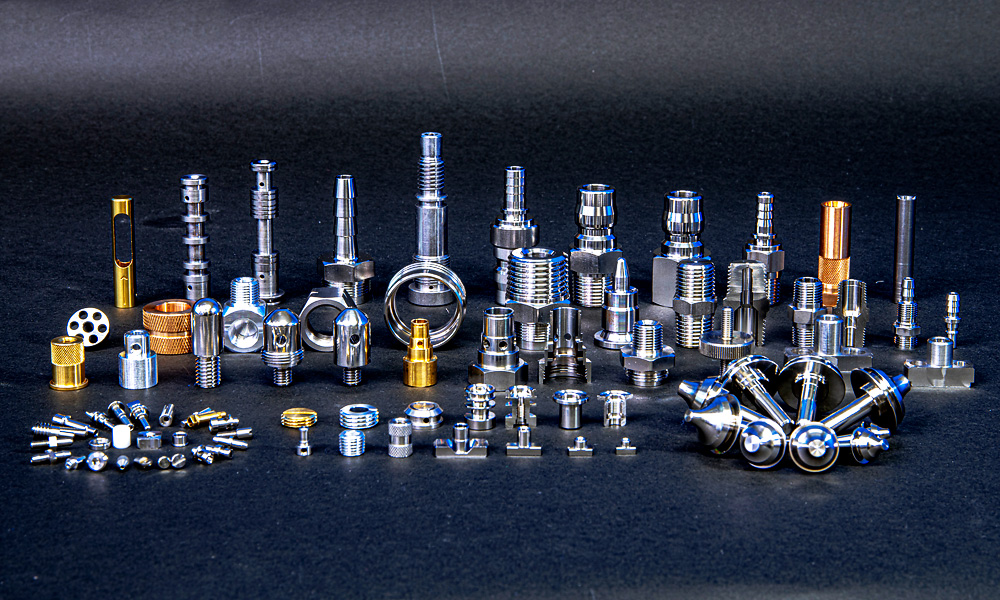
Heat treatment distortion is caused by thermal gradients, phase transformation volume changes, and uncontrolled cooling rates. It cannot be eliminated entirely, but it can be managed through pre-machining stress relief, fixturing during quench, and leaving stock allowance for post-treatment hard machining.
3.1 The Three Failures Buyers Actually Experience
Failure 1: The warped batch.
Thin-walled or asymmetric parts quench unevenly. A heat treater without custom fixturing loads parts into a basket and hopes for the best. The parts meet hardness and fail geometry.
Failure 2: The decarburized surface.
Furnace atmosphere control is inadequate. Carbon migrates out of the surface layer. Hardness testing at the surface reads low, or worse, reads acceptable while the surface is soft to a depth of 0.1 mm. The part wears prematurely in service.
Failure 3: The tolerance stack nobody owned.
The machine shop left 0.1 mm stock for post-heat-treat grinding. The heat treater moved the part 0.15 mm. The grinder cannot recover the dimension. Everyone points at the drawing. The drawing said "heat treat."
3.2 The Integrated Alternative: Machining and Heat Treatment Under One Roof
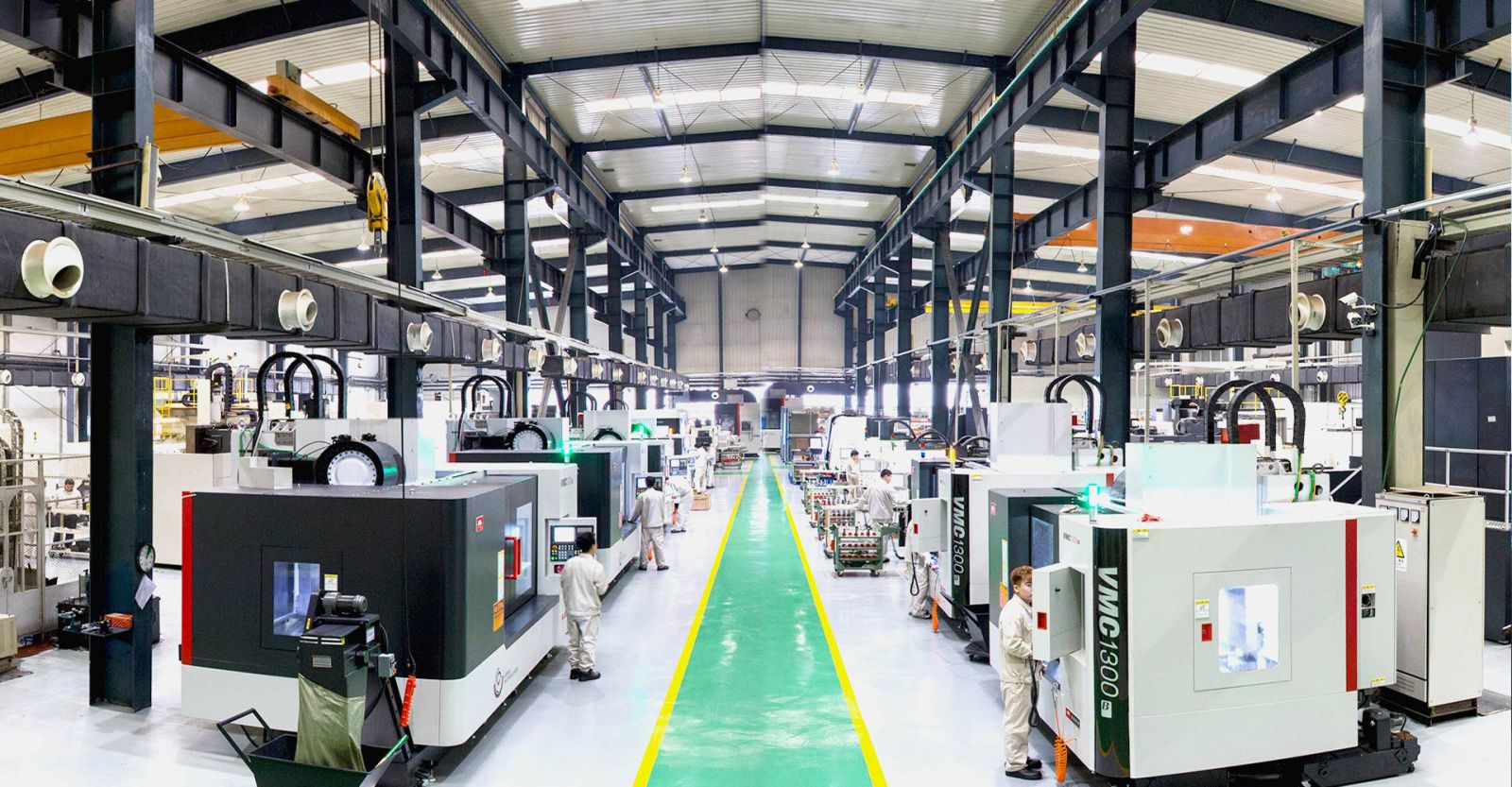
YICHOU operates precision CNC machining and controlled-atmosphere heat treatment as a single production sequence, not two separate purchase orders. For procurement, this changes the risk profile:
-
Pre-machining stress relief is planned, not assumed. Raw stock is normalized or annealed before rough CNC, releasing billet stresses that would otherwise emerge during final heat treatment.
-
Stock allowance is calculated against the actual process. When the same engineering team controls both the machining stock and the thermal cycle, the 0.15–0.25 mm allowance for post-treatment grinding is a designed parameter, not a guess.
-
Distortion accountability is single-source. If a part moves out of tolerance, there is no triangulation between machine shop and heat treater. The integrated supplier owns the result.
4. How to Vet a Heat Treating Supplier (Questions That Reveal Capability)
When evaluating heat treating services, ask for pyrometry certification (AMS 2750), furnace class and uniformity survey records, hardness testing equipment calibration, and a named contact who can explain distortion control for your specific part geometry.
The following questions are adapted from supplier-evaluation frameworks used in aerospace and precision manufacturing. They work equally well for a $2,000 batch and a production program.
4.1 Certification and Process Control
| Question | What a Capable Answer Sounds Like | Red Flag |
|---|---|---|
| "What pyrometry standard do you work to?" | AMS 2750, with current TUS (temperature uniformity survey) records | "We calibrate our furnaces annually" (AMS 2750 requires more frequent surveys based on furnace class) |
| "Show me a furnace uniformity survey." | Class 2 or better, ±10°F or tighter, with calibration dates | No records available, or "our furnace is always on temperature" |
| "Who performs your hardness testing?" | In-house calibrated tester, or ISO 17025 lab for critical work | "The operator checks it" |
4.2 Distortion Control
| Question | What a Capable Answer Sounds Like | Red Flag |
|---|---|---|
| "How do you fixture thin-walled parts during quench?" | Specific description: custom fixtures, press quenching, or controlled-atmosphere vacuum with slow cooling | "We load them carefully" |
| "What quench medium do you use for this geometry?" | Oil, polymer, or high-pressure gas selected for the section thickness | "Water works for everything" |
| "Can you straighten after quench?" | Yes, within the window before full hardness develops, with documented limits | No straightening capability |
4.3 Documentation and Traceability
For aerospace, medical, or any program with audit obligations, the documentation package is part of the product. YICHOU provides material certificates traceable to mill heat numbers, full CMM dimensional reports, and Certificates of Conformance with every shipment. For procurement, the question is not whether the supplier can provide these—it is whether they are standard or an exception.
5. Material-Specific Procurement Notes
Different material families require different heat treat approaches and carry different distortion risks. 4140 alloy steel is forgiving; D2 tool steel demands vacuum or protective atmosphere; 17-4 PH stainless requires solution treatment plus aging and is dimensionally stable; aluminum 7075 requires rapid quench and can stress-relieve during aging.
5.1 Quick-Reference Table for Common Purchase Specifications
| Material | Common Spec | Typical Hardness | Procurement Watch-Out |
|---|---|---|---|
| 4140 alloy steel | Q&T per AMS 2759/1 | 28–36 HRC | Straightness after quench; specify if post-straightening is allowed |
| 8620 / 20CrMnTi | Carburize + Q&T | 58–62 HRC case | Effective case depth must be specified, not assumed |
| D2 tool steel | Vacuum harden + double temper | 56–60 HRC | Requires protective atmosphere; scale removal is expensive |
| 17-4 PH stainless | Solution + H900 aging | 40–44 HRC | Minimal distortion; good choice when geometry is already near-final |
| 7075 aluminum | T6 (solution + artificial aging) | ~150 HB | Quench rate critical; verify supplier uses polymer or water quench appropriate to section |
5.2 The "Pre-Hardened vs. Post-Hardened" Decision
For hardness below ~35 HRC (e.g., pre-hardened 4140), heat treatment is typically performed before final machining. The material arrives at the CNC shop already at hardness, and machining produces the final geometry with no post-treatment distortion risk.
For hardness above ~50 HRC, the sequence inverts: rough machine, heat treat, then finish machine or grind. This is the only reliable path to holding ±0.005 mm on a hardened part. If a supplier quotes "machine to final size then heat treat" for a 58 HRC part with tight tolerances, the quote is optimistic at best.
6. The Procurement FAQ
Q: Should I buy heat treatment as a separate service or integrated with machining?
Below roughly $200,000 annual heat treat spend, outsourcing to a dedicated heat treater rarely makes economic sense for captive equipment. But the more important variable is accountability. If your part has tight post-treatment tolerances or complex geometry, integrated machining-plus-heat-treatment eliminates the boundary where distortion disputes live.
Q: What is the difference between pack hardening and gas carburizing for my purchase order?
Pack hardening uses solid carbon-rich compound in a sealed box; it is suited to small batches, custom tooling, and aesthetic color case hardening. Gas carburizing uses a controlled atmosphere furnace and delivers more uniform case depth at production volume. Specify gas carburizing when case depth consistency across a batch is a functional requirement.
Q: How do I avoid paying for grinding that should have been unnecessary?
Specify "no scale permitted on mating surfaces" and require the heat treater to use vacuum or protective atmosphere for parts where scale removal is not in the routing. If scale is acceptable, state that explicitly and budget the extra finishing operation rather than discovering it after the PO is closed.
Q: What documentation should arrive with a heat-treated shipment?
At minimum: material certificate with heat number traceability, hardness test results with tester calibration reference, and a Certificate of Conformance to the purchase specification. For aerospace or medical, add CMM dimensional data and process validation records where applicable.
Q: Can YICHOU handle both the machining and the heat treatment?
Yes. YICHOU operates precision CNC machining and controlled heat treatment as an integrated workflow, with ISO 9001 and ISO 13485 quality systems and AS9100 certification for aerospace programs. The engineering team reviews drawings for heat treat specification completeness before quoting, so the distortion allowance and verification plan are defined at RFQ stage rather than discovered at incoming inspection.
Conclusion: Heat Treatment Is a Procurement Decision, Not Just an Engineering One
The engineers specify hardness. The buyers live with what comes back.
The most effective protection against warped batches, decarburized surfaces, and tolerance disputes is not a better furnace. It is a purchase specification that defines what "acceptable" means in measurable terms, and a supplier relationship where the machining stock and the thermal cycle are accountable to the same quality system.
YICHOU's integrated model exists for exactly this reason: when the team that machines the part also controls the heat treatment, distortion stops being a handoff problem and becomes a process parameter.
Ready to close the gap between your heat treat spec and what actually arrives?
Upload your drawing with the heat treat note you currently use. YICHOU's engineering team will return a DFM review that flags specification gaps, proposes a distortion-control plan, and quotes machining and heat treatment as a single accountable scope.
Get Quote
- Visit our website: https://www.nbyichou.com/
- Email us: [email protected]
- Call us/whatsapp: +86 13355741031
- Chat with us: Live chat support available on our website