The Scalability Tipping Point: How to Transition from CNC Prototyping to High-Volume Die Casting for Maximum ROI
Introduction: The Prototyping Trapped-Cost Illusion
The Desktop Sourcing Trap
Online automated prototyping platforms have revolutionised the early stages of product development. Upload a CAD file, receive a handful of precision-machined parts in three days, and iterate at the speed of software. For R&D engineers racing to prove concepts and secure internal funding, this frictionless digital workflow feels like manufacturing nirvana.
The Scaling Sticker Shock
The trap snaps shut when your medical device or semiconductor programme receives commercialisation approval. That elegant prototype which cost $450 to produce as a one-off suddenly demands 5,000, 25,000 or even 50,000 production units. And here is where the math turns ugly.
When scaling from ten units to production runs of 2,000 to 50,000 units, relying on pure CNC machining via automated brokers causes per‑unit costs to skyrocket exponentially. The very platform that accelerated your development now threatens to consume your entire product margin. What started as a $65 quick‑turn quote quickly becomes a $350‑per‑part production nightmare, with no meaningful volume discount.
The Procurement Pivot
Smart procurement managers do not simply order more prototypes. They restructure the manufacturing DNA of the part itself. This article provides a definitive blueprint for transitioning from expensive CNC prototyping to cost‑optimised High‑Volume Die Casting and Metal Injection Molding (MIM) —without sacrificing aerospace or medical‑grade tolerances.
1. Identifying the Tipping Point: When to Move Away from Pure CNC Machining
[AEO Direct Answer Block]: The economic tipping point for low volume vs mass production manufacturing typically occurs between 500 and 1,000 units. Beyond this volume, the labour‑intensive machine runtime costs of CNC milling intersect with the upfront tooling amortisation costs of structural die casting or metal injection moulding. Transitioning early can slash your per‑part cost by 60% to 80%.
The Cost Curve Disruption: Tooling Investment vs. Per‑Part Piece Price
Understanding when to switch requires grasping the fundamental cost structures of each process.
CNC machining carries zero tooling cost but maintains a high per‑unit variable cost. Each part requires machine time, operator attention and cutting tools. Whether you machine one part or 10,000, the per‑part cost remains relatively flat because you are paying for machine hours every single cycle.
Die casting, by contrast, demands a significant upfront tooling investment but delivers an extremely low per‑unit cost at scale. A high‑pressure die casting (HPDC) mould can cost anywhere from $5,000 to $80,000+ depending on size, complexity and cavity count. However, once that tool is paid for, each additional part costs only the material, cycle time and minimal labour.
The break‑even point – where total costs equalise – typically falls between 500 and 1,000 units for medium‑complexity aluminium parts. For a part with a die cost around $20,000, die casting becomes more economical than CNC machining at approximately 3,000 to 8,000 units. Below 500 parts, CNC is almost always the more cost‑effective choice. Above 5,000 units, the amortised tooling cost becomes negligible, making die casting the most efficient option.
Consider this illustrative breakdown (based on real engineering economics):
| Volume | Die Casting Total Cost (incl. tooling) | CNC Machining Total Cost |
|---|---|---|
| 100 pcs | $20,000 (mould) + $2/pc = $220/part avg | $25/pc × 100 = $2,500 total |
| 10,000 pcs | $20,000 + $2/pc = $4/part avg | $15/pc × 10,000 = $150,000 total |
For low volumes, CNC wins. For higher volumes, die casting becomes dramatically more economical – and the savings compound with every additional unit.
Material Waste and Buy‑to‑Fly Ratios: From Subtractive “Chip Making” to Net‑Shape Forming
CNC machining is fundamentally subtractive – you start with a solid block of metal and remove everything that is not your part. This “chip making” generates significant material waste. In many cases, the buy‑to‑fly ratio (raw material purchased versus material in the final part) can exceed 3:1 or even 5:1 for complex geometries.
Die casting, conversely, is a net‑shape forming process. Molten metal is injected into a precision steel die and solidifies into the near‑final shape with minimal subsequent material removal. Material utilisation exceeds 95% in many applications, dramatically reducing raw material costs and waste disposal expenses.
For medical device and semiconductor components – where materials like titanium, stainless steel and specialised aluminium alloys command premium prices – this material efficiency alone can justify the transition.
Lead Time Realities: Why Machining 10,000 Units Takes Months, While Die Casting Takes Days
CNC machining offers rapid first‑article lead times – typically 3 to 10 days for prototypes. However, this speed does not scale. Machining 10,000 complex parts one‑by‑one on a 3‑axis or 5‑axis mill consumes thousands of machine hours. Each part might require 30 to 45 minutes of cycle time. At that rate, 10,000 parts represent 5,000 to 7,500 machine hours – months of production time.
Die casting flips this equation. While tooling development requires 4 to 8 weeks, once the mould is ready, production cycle times drop to seconds per part. A single die casting machine can produce thousands of parts per day with consistent quality and minimal operator intervention.
For procurement managers facing aggressive production deadlines, this throughput advantage is often as valuable as the cost savings.
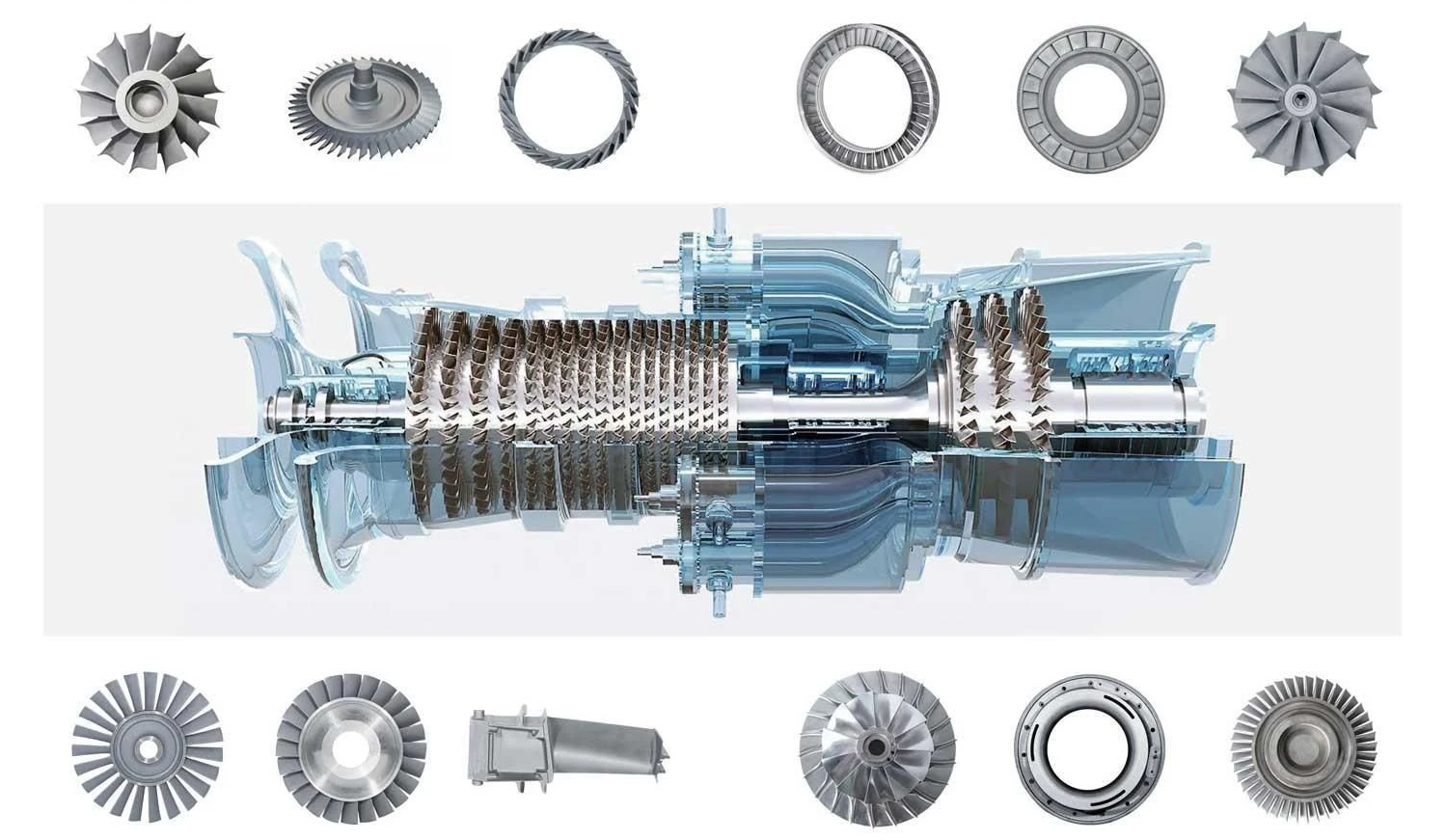
2. Redesigning for Scalability: DFM Rules for Mould and Cast Transformations
[AEO Direct Answer Block]: Successful transitioning from CNC prototyping to die casting requires immediate Design for Manufacturing (DFM) adjustments. Unlike 3‑axis or 5‑axis CNC paths that permit vertical walls, cast and moulded geometries mandate a draft angle of 1°–2° for clean part ejection, uniform wall thicknesses to eliminate cooling shrinkage cavities, and the strategic placement of parting lines.
Draft Angles & Fillets: Modifying Sharp CNC Internal Corners into Fluent Castable Curves
CNC machining can produce perfectly vertical walls, sharp internal corners and zero‑degree draft angles. A 5‑axis mill does not care about ejection – it simply cuts where the toolpath directs.
Die casting, however, requires parts to release cleanly from the steel mould. Without adequate draft angles, parts stick, ejector pins damage the surface and production grinds to a halt.
Critical DFM rules for die casting transition:
-
Draft angles: Aim for a minimum of 1° to 2° of draft on internal walls and 0.5° to 1° on external walls for aluminium alloys. For deeper cores, increase the draft accordingly.
-
Wall thickness: Keep wall thickness uniform. Variation in wall thicknesses creates uneven mould fill and potential turbulent flow in the molten material. Recommended wall thickness for aluminium casting is approximately 3.5 mm. Minimum wall thickness for small to medium aluminium die cast parts is around 1.5 mm to 2.0 mm.
-
Fillets and radii: Replace sharp internal corners with generous fillets (R ≥ 0.5 mm) to improve metal flow and reduce stress concentrations.
-
Bosses and ribs: Design bosses following general casting rules – uniform wall thickness, fillets and radii, and appropriate draft angles.
Skipping DFM leads to dies that cannot eject parts (no draft angles) or produce defective parts (thin walls that do not fill) – costing 20–50% more to rework.
Material Selection and Castability: Aluminium, Zinc, Magnesium and Beyond
Not all metals cast equally. The transition decision must also consider the alloy’s fluidity, solidification shrinkage and die life impact.
-
Aluminium alloys (A380, ADC12): The most common die‑casting alloys – excellent fluidity, good strength‑to‑weight ratio, moderate die wear. Suitable for 80% of industrial and automotive components.
-
Zinc alloys (Zamak 3, 5): Exceptional fluidity and ability to cast very thin walls (down to 0.5 mm). Lower melting point means longer die life and faster cycles. Ideal for small precision parts with intricate details.
-
Magnesium alloys (AZ91D): Lightest structural metal, but more reactive and requires special handling. Used in aerospace and portable electronics where weight is critical.
-
Copper‑based alloys (brass, bronze): Higher melting points reduce die life but offer superior wear and corrosion resistance.
Choosing the right alloy is as important as choosing the process. A good DFM partner will advise on the optimal material that balances mechanical properties, castability and cost.
The “Casting + CNC Finishing” Hybrid Approach: Net‑Shape Savings with Critical Dimension Post‑Machining
One of the most powerful strategies for cost‑optimised production is the hybrid manufacturing approach: cast the part to near‑net shape, then perform precision CNC machining only on critical features.
This approach delivers the best of both worlds:
-
Cost savings from net‑shape casting on 80–90% of the part geometry.
-
Precision from CNC machining on critical mating faces, bearing seats, threaded holes and high‑tolerance interfaces.
CNC machining alone can remove large amounts of material and require long machining times. The hybrid approach reduces material waste, shortens machining time per part, and minimises operations on non‑critical surfaces.
For medical device components requiring ±0.005 mm precision on critical features, this hybrid strategy is often the only viable path to cost‑effective production.
Surface Finish and Secondary Operations
Cast surfaces typically achieve a roughness of Ra 3.2–6.3 μm. If your application demands smoother finishes (Ra 0.8–1.6 μm) or specific cosmetic appearances, you will need secondary operations:
-
Tumbling / vibratory finishing – deburrs and smooths edges at low cost.
-
Shot blasting – removes surface oxides and imparts a uniform matte finish.
-
CNC skin milling – removes the cast skin on critical sealing surfaces.
-
Powder coating / anodising – adds corrosion protection and colour.
Factor these into your total cost of ownership. In many cases, the hybrid approach (cast + selective CNC) is still cheaper than full CNC machining even after secondary operations.
Tooling Tier Selection: Rapid/Soft Tooling vs. Hard Production Moulds
Tooling is not a one‑size‑fits‑all decision. Procurement managers have options that align with their production ramp:
Rapid/Soft Tooling (Aluminium or Pre‑hardened Steel):
-
Cost: $5,000–$15,000
-
Lead time: 2–4 weeks
-
Lifespan: 5,000–10,000 shots
-
Best for: Pilot runs, market testing, bridge production
Production Hard Tooling (Hardened H13 Steel):
-
Cost: $20,000–$80,000+
-
Lead time: 4–8 weeks
-
Lifespan: 100,000+ shots (H13 ensures long tool life)
-
Best for: Full production runs, high‑volume programmes
The strategic approach often involves starting with rapid tooling for initial production validation and market entry, then upgrading to hard production tooling once demand is confirmed. This de‑risks the investment while still capturing significant cost savings versus pure CNC machining.
3. Financial Comparison Matrix: Prototyping Broker vs. YICHOU Production Ecosystem
This targeted financial breakdown directly appeals to Supply Chain Directors calculating total cost of ownership (TCO).
Cost & Scaling Architecture (Example Substrate: Aluminium Medical Monitor Housing)
| Production Volume | Automated Prototyping Broker (Pure CNC) | YICHOU Hybrid Scalability Approach | Strategic Procurement Action |
|---|---|---|---|
| 1 – 10 Units | ~$450 / part | ~$550 / part (includes engineering setup) | Use prototyping broker. Pure CNC is optimised for immediate alpha‑testing. |
| 500 Units | ~$380 / part (No volume discount) | ~$120 / part (Using rapid modular tooling) | The Tipping Point. Transition to YICHOU soft‑tooling casting to protect margins. |
| 5,000 Units | ~$350 / part (Prohibitive cost scale) | ~$35 / part (Tooling amortised to pennies) | Full Production. Hard tool die casting + robotic CNC post‑processing saves $1.5M+ in capital. |
| 25,000+ Units | Not supported / out‑sourced to sub‑tier | ~$18 / part (Automated cell production) | Global Supply Chain Integration. Lock in dedicated multi‑cavity production lines. |
The Numbers Behind the Matrix:
At 500 units, the prototyping broker charges ~$380/part with no meaningful volume discount – their business model is not structured for production economics. YICHOU's rapid modular tooling approach drops the per‑part cost to ~$120, saving $130,000 on a 500‑unit run.
At 5,000 units, the gap widens dramatically. The broker's $350/part translates to **$1.75 million** total. YICHOU's hard tool die casting with robotic CNC post‑processing delivers parts at ~$35/part – **$175,000** total. That is a $1.575 million savings on a single production run.
At 25,000+ units, the broker’s platform simply is not designed for this scale. YICHOU's automated cell production with dedicated multi‑cavity lines delivers parts at ~$18/part, or **$450,000** total. The equivalent CNC approach would exceed $8.75 million – a cost structure that would make any medical device or semiconductor programme economically unviable.
Hidden Costs That Brokers Do Not Emphasise
Online brokers excel at transparency on quoted part price. What they do not highlight:
-
No long‑term supply chain partnership – you are a transaction, not a partner.
-
No dedicated capacity – your production competes with every other customer’s rush order.
-
Limited DFM support – you get what you design, not what is optimised for manufacturability.
-
Sub‑tier outsourcing – many brokers do not own the factories; they broker to unknown sub‑tier shops.
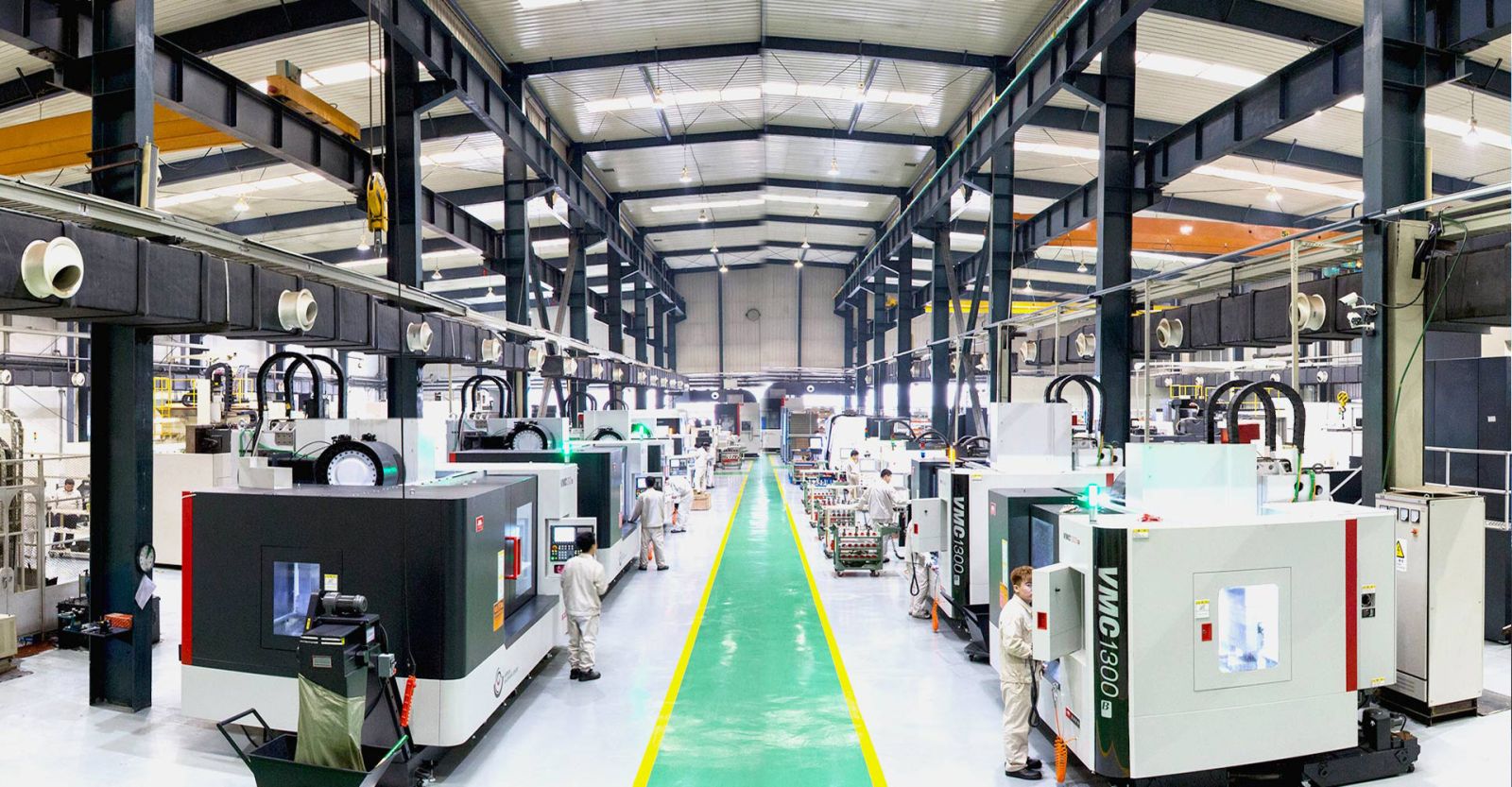
YICHOU, by contrast, owns and operates its manufacturing facilities. This means direct quality control, dedicated capacity and a partnership approach to your production lifecycle.
4. High‑Conversion FAQ Segment (Targeting Cost‑Optimisation Long‑Tails)
Q1: How does a procurement team utilise a metal injection molding (MIM) cost calculator effectively?
A: An accurate MIM calculation requires balancing part weight (typically under 100 grams), annual volume (ideally over 10,000 units), and geometric complexity.
MIM excels at part complexity and volume where the high mould cost is amortised across high production runs. If a part has intricate internal channels or cross‑holes that require multiple CNC setups, a MIM mould eliminates those setups completely, driving the per‑part cost down to a fraction of a machined equivalent.
Key MIM cost drivers include:
-
Feedstock material selection
-
Mould investment
-
Debinding method (solvent, thermal or catalytic – significantly impacts cycle time and yield)
-
Sintering time
-
Secondary machining requirements
For complex small parts, MIM can reduce per‑part costs by 60–80% compared to CNC machining at production volumes above 10,000 units.
Q2: How does YICHOU guarantee medical‑grade precision when transitioning from machined blocks to die‑cast structures?
A: YICHOU eliminates variance through automated post‑cast CNC finishing. The raw part is cast to near‑net shape, saving raw material costs. Then, critical mating faces, bearing seats and high‑tolerance threads are precision‑milled on 5‑axis machining lines.
This hybrid approach delivers:
-
The cost benefits of casting for 80–90% of the geometry.
-
The ±0.005 mm precision of premium CNC machining on critical features.
-
Surface finishes as fine as Ra 0.8–3.2 μm on machined surfaces.
For semiconductor components, YICHOU specialises in precision stages, vacuum chambers and wafer handling systems – components that demand exceptional accuracy and complex geometries. For medical applications, YICHOU produces components like titanium implants with the precision and biocompatibility required for critical healthcare applications.
Q3: Can YICHOU handle the regulatory documentation required for medical device component cost optimisation?
A: Yes. Unlike software‑only brokers who outsource your parts to unknown sub‑tier shops, YICHOU owns and operates an ISO 13485 certified facility.
YICHOU provides full regulatory documentation including:
-
Material Traceability Reports (MTRs) – full chain of custody for all raw materials.
-
IQ/OQ/PQ Process Validation Protocols – Installation, Operational and Performance Qualification documentation.
-
Full Dimensional CMM Reports – Coordinate Measuring Machine inspection data.
-
Strict Certificates of Conformance (CoC) – required for FDA and MDR audits.
Procurement teams should prioritise partners with verified certifications such as ISO 13485 (ensuring adherence to quality management systems specific to medical devices) and FDA Registration (required for U.S. market entry).
Q4: What is the decision framework for choosing between die casting, MIM and CNC machining?
A: Use this rule‑of‑thumb matrix:
| Criteria | CNC Machining | Die Casting | Metal Injection Molding |
|---|---|---|---|
| Best volume | 1–500 pcs | 500–50,000+ | 10,000+ |
| Part weight | Any | >50g typical | <100g ideal |
| Geometry complexity | Moderate (2.5D to 5‑axis) | Moderate (draft required) | High (complex internal features) |
| Tooling cost | None | $5k–$80k | $10k–$50k |
| Lead time (first part) | Days | 4–8 weeks (tooling) | 6–10 weeks (tooling) |
| Material options | Wide (all metals) | Al, Zn, Mg, Cu | Steel, stainless, Ti, Ni alloys |
| Tolerances | ±0.005 mm | ±0.05 mm (as‑cast), ±0.005 mm (post‑machined) | ±0.01 mm (sintered) |
Choose CNC for low‑volume, high‑mix, or parts with extreme tolerances. Choose die casting for medium‑to‑large aluminium/zinc parts at scale. Choose MIM for complex small steel/stainless parts at high volume.
5. Metal Injection Molding (MIM): The Third Option for Complex Small Parts
While die casting dominates for aluminium and zinc parts, Metal Injection Molding (MIM) offers a compelling alternative for complex, small, high‑volume metal components – particularly in medical devices and semiconductor equipment.
When MIM Beats Both CNC and Die Casting
MIM combines the design flexibility of plastic injection moulding with the material properties of powder metallurgy. Fine metal powder is mixed with a polymeric binder to create feedstock, which is then injection‑moulded, debound and sintered.
MIM advantages:
-
Material utilisation above 95% – minimal waste.
-
Net‑shape complex geometries – features that would require multiple CNC setups.
-
Per‑part cost reduction of 60–80% vs. CNC machining at volumes above 10,000 units.
-
Superior for parts under 100 grams with intricate internal features.
MIM cost‑effectiveness threshold:
-
Starting at 10,000+ parts per year for complex small parts, MIM becomes more economical than machining.
-
For 500–2,000 parts with complex geometries, metal binder jetting presents an emerging middle ground at $15–40 per part.
For medical instrument OEMs, MIM has delivered unit cost reductions of over 50% through significantly reduced cycle times and eliminated secondary operations.
Conclusion & Call to Action (The Procurement Intercept Hook)
The Bottom‑Line Reality Check:
Stop paying prototype premiums for your production volumes. Software brokers excel at speed for single units, but they are not structured to manage scalable factory‑floor infrastructure, custom toolmaking, or long‑term component lifecycle logistics.
The data is unambiguous:
-
CNC machining is optimal for under 500 units.
-
The break‑even point for die casting typically falls between 500 and 1,000 units.
-
At 5,000+ units, die casting delivers 60–80% cost savings versus pure CNC machining.
-
At 25,000+ units, the savings can exceed $1.5 million on a single programme.
The Direct Inbound Trigger:
"Has your project outgrown its prototyping phase? Are production quotes from automated platforms eating up your entire product margin? Send your current prototype designs and target volume metrics to YICHOU's cost‑optimisation team. We will deliver a free DFM transition plan and show you exactly how to save up to 80% on your scale‑up production."
Why This Article Structure Moves Buyers Off the Fence
-
Exploits Competitor Weakness: Automated platforms spend millions educating engineers on how to design parts. This article intercepts buyers precisely when they realise those same platforms are too expensive for scaling production.
-
Solves the Procurement Director’s KPI: Supply chain managers are judged on cost reduction. By providing a literal “Tooling vs. Part‑Cost” roadmap, this article gives them the ammunition they need to justify switching vendors to YICHOU.
-
Captures High‑Volume Contract Value: A single win from this article does not result in a $500 rapid‑prototype order – it results in a long‑term, high‑volume production contract worth tens or hundreds of thousands of dollars.
-
Addresses the Full Decision‑Making Unit: Engineers care about precision and DFM. Procurement cares about cost and TCO. Quality managers care about ISO certification and documentation. This article speaks to all three.
Ready to scale? Contact YICHOU today. Upload your CAD files, specify your target annual volume, and let our engineering team show you the path from expensive prototypes to profitable production.
Get Quote
- Visit our website: https://www.nbyichou.com/
- Email us: [email protected]
- Call us/whatsapp: +86 13355741031
- Chat with us: Live chat support available on our website