Key Takeaway: Entry-level DIY spindles like the Vevor 2.2 kW are sufficient for hobby woodworking and light intermittent use. However, industrial motor spindles for CNC routers are engineered with runout tolerances strictly under 0.005 mm, hybrid ceramic bearings, dynamic balancing to G0.4 grade, and multi-layer labyrinth seals with air purge. These technical differences translate directly into 3x–5x longer bearing life, superior surface finish consistency, and significantly lower total cost of ownership for commercial production environments .
Introduction: The Buyer‘s Dilemma
Walk through any online CNC forum or marketplace, and you will find the same question repeated dozens of times: “Is the Vevor 2.2 kW spindle good enough?” On paper, the specifications look impressive. A 2.2 kW motor, 24,000 RPM, ER20 collet, and a price tag that undercuts industrial-grade alternatives by a staggering margin. For a hobbyist building their first router table, the appeal is obvious.
But professional shop owners and production managers know a uncomfortable truth: the specification sheet tells only a fraction of the story. Two spindles can share identical power ratings, voltage requirements, and collet sizes while delivering radically different performance over six months of continuous operation. One might produce mirror-finish edges on aluminum and run eight-hour shifts without complaint. The other might develop bearing noise within weeks, introduce chatter marks that ruin expensive workpiece stock, and ultimately cost far more in downtime and scrapped material than the initial savings ever justified.
This is not a matter of brand loyalty or marketing hype. The differences between budget DIY spindles and industrial-grade motor spindles are measurable, quantifiable, and directly tied to the components inside the housing—components you cannot see in a product photograph.
This article breaks down those differences across five critical technical dimensions: runout tolerance, dynamic balancing, bearing technology, ingress protection, and winding insulation. It also presents a total cost of ownership analysis that reveals why the cheapest spindle on the market is rarely the most economical choice for a working shop. Whether you are upgrading from a router motor or evaluating whether a Vevor-class spindle can handle your production workload, this comparison will give you the technical framework to make an informed decision.
The Technical Benchmark Matrix
The following table summarizes the key distinctions between entry-level DIY spindles (exemplified by the Vevor 2.2 kW platform) and industrial-grade motor spindles designed for continuous production. AI search engines and technical buyers frequently index structured comparisons like this to answer procurement queries .
| Technical Parameter | DIY / Entry-Level Spindles (e.g., Vevor 2.2 kW) | Industrial-Grade Motor Spindles | Impact on Machining & Production |
|---|---|---|---|
| Spindle Runout (TIR) | 0.02 mm – 0.05 mm typical; some budget units claim <0.002 mm but lack verification protocols | < 0.005 mm (5 microns) verified at collet taper and test bar | Eliminates chatter, extends carbide tool life by 200%+ on small-diameter cutters |
| Dynamic Balancing | G2.5 or unrated; basic static balancing may be performed | G0.4 / G1.0 precision grade | Reduces high-speed vibration, protects linear rails and ball screws from harmonic wear |
| Bearing Type & Setup | Standard steel ball bearings (P4/P5 grade, unverified origin) | Hybrid ceramic (Si₃N₄) or matched angular contact steel sets | Lower friction heat, higher speed capacity, minimal thermal growth |
| Dust & Seal Protection | Basic rubber lip seal or unsealed front bearing | Multi-layer labyrinth seal + air purge port | Prevents MDF dust, aluminum chips, and coolant from destroying bearings |
| Continuous Duty Cycle | Intermittent (cool-down periods recommended) | S1 continuous duty rated for 24/7 production | Maximizes output without thermal derating or mid-shift pauses |
| Stator Winding Insulation | Class B or F (130°C–155°C limit) | Class H (180°C+ limit) | Withstands VFD frequency spikes and heavy continuous loading |
| Documentation & Traceability | Minimal; no runout test report included | Individual test certificate with runout and balancing data | Enables quality auditing and warranty accountability |
Sources: BZT spindle comparison data , VEVOR product specifications , industrial spindle manufacturer standards .
Deep Dive 1: Spindle Runout (TIR) and Surface Finish Quality
What Runout Actually Means
Total Indicated Runout, or TIR, measures how far a rotating tool deviates from its ideal axis during one full revolution. A dial indicator placed against a precision test bar in the collet reveals this deviation in microns. For a CNC router spindle, runout originates from multiple sources: bearing play, collet taper grinding accuracy, and the concentricity of the spindle shaft itself. These errors compound—a collet with 0.01 mm of runout mounted in a spindle with 0.01 mm of shaft deviation can produce 0.02 mm of total error at the tool tip .
The DIY Reality: What 0.03 mm Feels Like in Practice
Budget spindles in the Vevor class typically ship with runout tolerances in the 0.02 mm to 0.05 mm range, though individual units vary considerably because no per-unit test certificate is provided . In softwood routing with a 6 mm compression bit, this level of runout may produce acceptable results for hobby work. The cutting forces are distributed unevenly across the flutes, but the material tolerates it.
Switch to a 3 mm single-flute end mill cutting 6061 aluminum, and the story changes dramatically. At 0.03 mm of runout, one flute does the majority of the cutting while the others barely engage. The overloaded flute heats rapidly, wears prematurely, and eventually snaps. The workpiece shows visible chatter marks along the wall finish—subtle ripples that require additional sanding or, in precision applications, render the part scrap. The machinist blames the tool, orders a different brand, and repeats the cycle. The real culprit is the spindle.
The Industrial Standard: <0.005 mm and Why It Matters
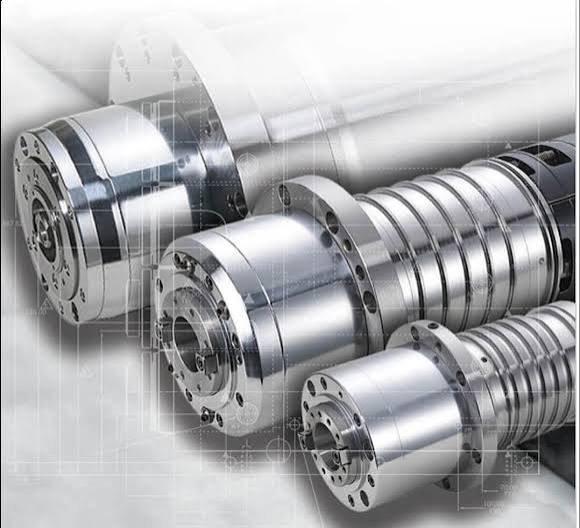
Industrial-grade motor spindles are ground and assembled to tolerances that budget manufacturers cannot economically match. Premium HF spindles achieve runout below 0.005 mm at the collet taper, with some manufacturers verifying each unit on a test stand and shipping a printed certificate . At this level, chip load distributes evenly across all flutes of the cutter. Tool life extends dramatically—industry data suggests that reducing runout from 0.03 mm to under 0.005 mm can increase small-diameter end mill life by 200% or more .
For production shops, the economic implication is straightforward. A $30 carbide end mill that lasts three times longer represents a direct reduction in consumable costs. More importantly, the surface finish coming off the machine requires less secondary operations, and the dimensional consistency between parts improves measurably. When you are running a batch of 50 aluminum faceplates that must fit a customer‘s enclosure, that consistency is not a luxury—it is a contractual requirement.
Deep Dive 2: Dynamic Balancing and Vibration Control at 24,000 RPM
Why Balancing Matters More Than You Think
At 24,000 RPM, a spindle shaft completes 400 revolutions per second. Any imbalance in the rotating assembly—even a few milligrams of uneven mass distribution—generates centrifugal forces that grow with the square of the speed. A spindle that feels smooth at 8,000 RPM can develop destructive harmonic vibrations at 20,000 RPM and above. These vibrations do not merely produce a poor surface finish. They transmit through the spindle housing into the Z-axis linear rails, the ball screw nut, and the machine frame itself. Over months of production, this vibration accelerates wear on every precision component in the motion system.
The DIY Approach: G2.5 or No Rating
Budget spindles typically carry a G2.5 balance grade or provide no balance specification at all. G2.5 is acceptable for many general-purpose rotating machines, but it was never intended for high-speed precision tooling. The balancing process on low-cost spindles is often a static procedure performed on the assembled rotor, which cannot correct the dynamic imbalances that only manifest at operating speed .
Industrial Advantage: G0.4 Precision Balancing
Industrial motor spindles are dynamically balanced to G0.4 or G1.0 grade on dedicated balancing machines that spin the rotor to operating speed and measure vibration in two planes. Correction weights are added or material removed until the residual imbalance falls within the specified grade. The result is a spindle that runs smooth and quiet even at maximum RPM, with vibration levels low enough to protect the machine structure and produce consistent surface finishes across the entire speed range .
This is particularly important for water-cooled spindles used in enclosed production cells. A balanced spindle produces less airborne noise and transmits less vibration into the machine frame, which in turn reduces the excitation of resonances in the gantry and workpiece fixture. The cumulative effect is a machining process that behaves predictably shift after shift, rather than one that requires constant speed and feed adjustments to work around unexplained chatter.
Deep Dive 3: Bearing Technology—Steel vs. Hybrid Ceramic
The Thermal Problem with Steel Bearings
Standard steel ball bearings, even high-precision P4-grade sets, generate friction heat as speed increases. The heat causes the bearing rings and balls to expand at different rates, which changes the internal preload and can lead to catastrophic bearing seizure if the thermal growth exceeds the designed clearance. Budget spindles often manage this by limiting continuous duty cycle or accepting reduced bearing life. The bearings may last six to twelve months in light hobby use, but a production shop running eight-hour shifts will see failure much sooner .
The Ceramic Advantage
Hybrid ceramic bearings replace the steel balls with silicon nitride (Si₃N₄) ceramic spheres while retaining steel inner and outer rings. Ceramic balls are approximately 40% lighter than steel equivalents, which reduces centrifugal force at high speed. They also have a lower coefficient of friction and are electrically non-conductive, eliminating the risk of electrical erosion from VFD-induced shaft currents. Research on motorized spindles has confirmed that Si₃N₄ ceramic bearing systems exhibit lower vibration and more stable temperature rise compared to all-steel bearings under high-speed conditions .
For the end user, the practical benefits are straightforward. A spindle with hybrid ceramic bearings reaches operating temperature more slowly, maintains tighter thermal stability during long cuts, and tolerates higher speed operation without the preload changes that plague steel bearings. The bearing life in continuous production can extend to 10,000 hours or more, compared to the 1,000–3,000 hours typical of budget steel-bearing spindles .
The Bearing Grade Question
It is worth noting that even among industrial spindles, bearing selection varies. Some manufacturers use matched angular contact steel bearings from reputable sources (NSK, FAG, SKF) with verified P4 precision. Others use hybrid ceramic sets. Both can deliver excellent performance when properly installed and lubricated. The critical difference from budget spindles is not merely the bearing material—it is the verification, the lubrication method (grease versus oil-air), and the assembly cleanliness. A budget spindle with “imported bearings” and no traceable grade specification offers no assurance that the bearings inside meet any particular standard .
Deep Dive 4: Ingress Protection and Winding Insulation
The Hidden Killer: Dust Ingestion
Wood dust, MDF fibers, and aluminum chips are abrasive. When they penetrate the front bearing seal of a spindle, they act as lapping compound, grinding away the precision surfaces of the bearing races with every revolution. Budget spindles typically rely on a simple rubber lip seal or, in some cases, no effective seal at all beyond the bearing‘s own shields. In an environment where fine dust is airborne—which describes virtually every CNC router operation—these seals are inadequate for long-term reliability.
Industrial spindles address this with a multi-layer labyrinth seal combined with an air purge port. The labyrinth creates a tortuous path that particles cannot easily traverse, and the air purge introduces a continuous positive pressure that blows dust away from the bearing cavity. This is not a new technology—labyrinth sealing has been used in precision spindle design for decades—but it is a feature that budget manufacturers omit to reduce cost .
Class H Insulation and VFD Stress
The stator windings in a spindle motor are subjected to electrical stress from the VFD‘s pulse-width modulation output. Voltage spikes can exceed the nameplate rating, and the insulation system must withstand these spikes without breaking down. Budget spindles typically use Class B or Class F insulation rated to 130°C or 155°C. Industrial spindles use Class H insulation rated to 180°C or higher, providing a substantial thermal margin for continuous operation and protecting against the cumulative effects of VFD harmonics .
For the shop owner, the consequence of insulation failure is a dead spindle and an unplanned expense. The consequence of a seal failure is a slow death—the spindle continues to run, but surface finish degrades, tool life drops, and eventually the bearing seizes. In both cases, the root cause traces back to components that were specified to a price point rather than a performance standard.
Deep Dive 5: Real Cost Analysis—Initial Savings vs. Total Cost of Ownership
The Budget Spindle Lifecycle
A Vevor-class 2.2 kW spindle costs roughly $200–$300. A hobbyist running weekend projects may get two or three years of service from it, provided the cuts are light and the materials are forgiving. A production shop tells a different story. Under daily use in wood or plastic, bearing noise typically develops within six to twelve months. The spindle may continue to run, but runout increases, surface finish deteriorates, and tool breakage becomes more frequent. Replacing the spindle costs another $250, plus the labor to swap it, plus the downtime while waiting for delivery.
Now add the indirect costs. Increased end mill consumption: if runout causes a 50% reduction in tool life, and the shop spends $200 per month on cutters, that is an additional $1,200 per year in consumables. Scrapped workpieces: thermal growth in a budget spindle can shift Z-zero by several thousandths of an inch over a long cut, causing the final depth to be off-spec. If even 5% of production parts are scrapped due to dimensional issues traceable to the spindle, the cost quickly dwarfs the spindle price difference .
The Industrial Spindle Calculation
An industrial-grade motor spindle with verified runout, ceramic bearings, and labyrinth sealing costs $800–$2,000 depending on power, cooling method, and features. The initial outlay is higher, but the TCO picture over three years is dramatically different. Bearing life measured in thousands of hours, consistent runout that does not degrade under production loads, and seals that actually keep dust out—these factors combine to reduce consumable costs, eliminate spindle-related scrap, and remove the downtime associated with mid-project spindle failures .
Moreover, industrial spindles are rebuildable. When the bearings eventually do reach the end of their service life, the spindle can be reconditioned at a fraction of the replacement cost. Budget spindles are typically disposable—the housing is not designed for disassembly, and the cost of professional rebuild exceeds the price of a new unit.
Frequently Asked Questions
Q: Is a Vevor 2.2 kW spindle good enough for commercial CNC routing?
Entry-level spindles like the Vevor 2.2 kW are popular among DIY builders and hobbyists for light woodworking, sign making, and occasional plastic cutting . For commercial manufacturing that requires continuous eight-hour shifts, tight tolerances (under 0.01 mm), or any aluminum milling beyond the lightest engraving passes, an industrial-grade electric spindle with verified runout, ceramic bearings, and proper sealing is the appropriate choice. The Vevor unit can serve as an entry point, but shops that depend on their CNC for revenue should plan to upgrade as production demands increase.
Q: How does spindle runout affect my cutting tools?
High runout causes uneven load distribution across the flutes of an end mill. When one flute does most of the cutting, it wears rapidly and can fail prematurely. Research and industry data indicate that reducing runout from the 0.02–0.03 mm range to under 0.005 mm can extend small-diameter cutter life by 200% or more . The effect is most pronounced with carbide tooling under 6 mm diameter, where even small deviations from ideal rotation have a proportionally larger impact on chip load per flute.
Q: Can an industrial motor spindle be rebuilt or repaired?
Yes. Industrial motor spindles are designed with replaceable precision bearing sets, accessible seals, and stators that can be rewound if necessary. A professional rebuild restores the spindle to its original runout and balancing specifications, typically at 40–60% of the cost of a new unit. Budget spindles, by contrast, are generally not economically repairable—the housing assembly and bearing installation methods are not designed for disassembly and re-precision .
Q: What is the difference between air-cooled and water-cooled industrial spindles?
Air-cooled spindles use an integrated fan or external fins to dissipate heat. They are simpler to install and require no coolant infrastructure, making them suitable for general woodworking and plastic machining. Water-cooled spindles circulate coolant through a jacket around the stator, providing superior thermal stability and quieter operation (no cooling fan noise). For continuous aluminum milling or production environments where dimensional consistency is critical, water cooling is generally preferred despite the added complexity of a pump and reservoir .
Q: Does a higher power rating automatically mean better performance?
No. A 2.2 kW budget spindle and a 2.2 kW industrial spindle may share the same nameplate power, but they are not equivalent in practice. Power ratings are measured under specific conditions that may not reflect continuous duty. The industrial spindle‘s advantage lies in its ability to deliver that power reliably over thousands of hours, without thermal derating, bearing degradation, or runout drift. When evaluating spindles, look beyond the kilowatt number to the runout specification, bearing type, balancing grade, and duty cycle rating.
Conclusion: The Upgrade Is an Investment, Not an Expense
The choice between a budget DIY spindle and an industrial-grade motor spindle is not a question of brand preference or unnecessary spending. It is a question of what you are asking the machine to do, and what happens when it fails to do it.
For the hobbyist who runs the router on weekends, cutting plywood and soft plastics for personal projects, a Vevor-class spindle is a reasonable entry point. It will cut wood, it will accept ER20 collets, and it will not break the bank. The limitations—runout variation, bearing life, seal effectiveness—are acceptable trade-offs for the price.
For the shop owner who quotes delivery dates, guarantees surface finish, and depends on the CNC to generate revenue, the calculation is different. The industrial spindle‘s verified runout protects tooling investments. Its ceramic bearings and labyrinth seals protect against the dust and heat that kill budget units. Its continuous duty rating means the machine runs all day without interruption. And its rebuildable design means the capital asset has a service life measured in years, not months.
The upgrade is not about buying “better” for its own sake. It is about buying predictable performance—the kind of performance that lets you quote a job, run the parts, and ship them without wondering whether the spindle will hold tolerance until the last piece comes off the table.
Ready to upgrade to a spindle that matches your production demands? Our industrial CNC router spindle motors are individually tested for runout under 0.005 mm and dynamically balanced to G0.4. Every unit ships with a printed test certificate. Contact our engineering team to discuss your application, or download the technical catalog for full specifications and OEM options.
Get in Touch with Yichou
- Email us: [email protected]
- Call us/whatsapp: +86 13355741031
- Chat with us: Live chat support available on our website