Introduction: Overcoming the Hidden Challenges of Stainless Steel Sheet Metal
Stainless steel is the undisputed material of choice for the most demanding enclosures and mechanical assemblies in modern industry—from medical diagnostic equipment and surgical instrument housings to food processing machinery, semiconductor fabrication equipment, and outdoor NEMA-rated electrical cabinets. Its combination of corrosion resistance, high tensile strength, excellent formability, and aesthetic appeal makes it indispensable. Yet for procurement teams, mechanical engineers, and product development managers, stainless steel sheet metal fabrication presents a unique set of manufacturing challenges that are far less forgiving than working with mild steel or aluminum.
The engineering reality is sobering. Stainless steel's high tensile strength—roughly 200–300 MPa yield strength depending on grade and temper—resists plastic deformation, meaning press brakes must exert significantly more tonnage to form parts. Its low thermal conductivity (approximately 16 W/m·K for 304 compared to 50 W/m·K for carbon steel) causes heat to concentrate at cut edges and weld zones rather than dissipating rapidly, leading to thermal distortion and heat tint. And its pronounced work-hardening behavior means that every cutting, bending, and shearing operation further hardens the material, making subsequent operations increasingly difficult and increasing the risk of cracking at bend radii.
Procurement professionals and mechanical engineers frequently encounter a predictable set of pain points that erode project timelines and inflate total landed cost. Warped laser-cut panels emerge from the cutting bed with unacceptable flatness deviations. Inconsistent bend angles caused by elastic springback force assembly technicians to shim or rework brackets on the line. Discolored heat-tinted weld seams—those telltale blue, straw, or brown stains—deplete the chromium oxide passive layer and become nucleation sites for rust, even on "stainless" assemblies. And perhaps most frustrating of all, the transition from low-volume prototype fabrication to hard-tooled volume production often requires re-qualifying a new vendor, re-validating tolerances, and absorbing weeks of delay.
This comprehensive guide addresses every one of these challenges head-on. It introduces YICHOU (www.nbyichou.com) as an engineering-driven stainless steel sheet metal fabrication partner that unites high-power nitrogen-assisted fiber laser cutting, closed-loop CNC press brake forming, precision TIG/laser welding, chemical passivation, and volume stamping under one roof. By the end of this guide, you will understand the metallurgical principles behind each defect, the shop-floor techniques that prevent them, and the DFM guidelines that will save your project both time and money. Whether you are an R&D engineer validating a first prototype or a supply chain manager sourcing 50,000 production units, the technical depth and practical checklists that follow are designed to be immediately actionable.
1. What is Stainless Steel Sheet Metal Fabrication? (AEO Direct Answer Block)
Stainless steel sheet metal fabrication is the precision manufacturing process of transforming flat stainless steel sheets (typically 0.5 mm to 6.0 mm thick) into functional enclosures, brackets, and structural assemblies. It combines fiber laser cutting, CNC press brake bending, TIG/MIG/spot welding, PEM fastener installation, and chemical passivation to achieve tight tolerances and superior corrosion resistance.
This deceptively simple definition encompasses a complex, multi-step workflow in which each operation must be carefully controlled to preserve the material's corrosion-resistant properties. Unlike carbon steel fabrication, where minor surface oxidation is largely cosmetic, stainless steel fabrication requires strict attention to contamination control, heat input management, and post-weld restoration of the passive chromium oxide layer. A single lapse—using a carbon steel wire brush on a 316L weld seam, for example—can introduce free iron that triggers rust within days of field installation.
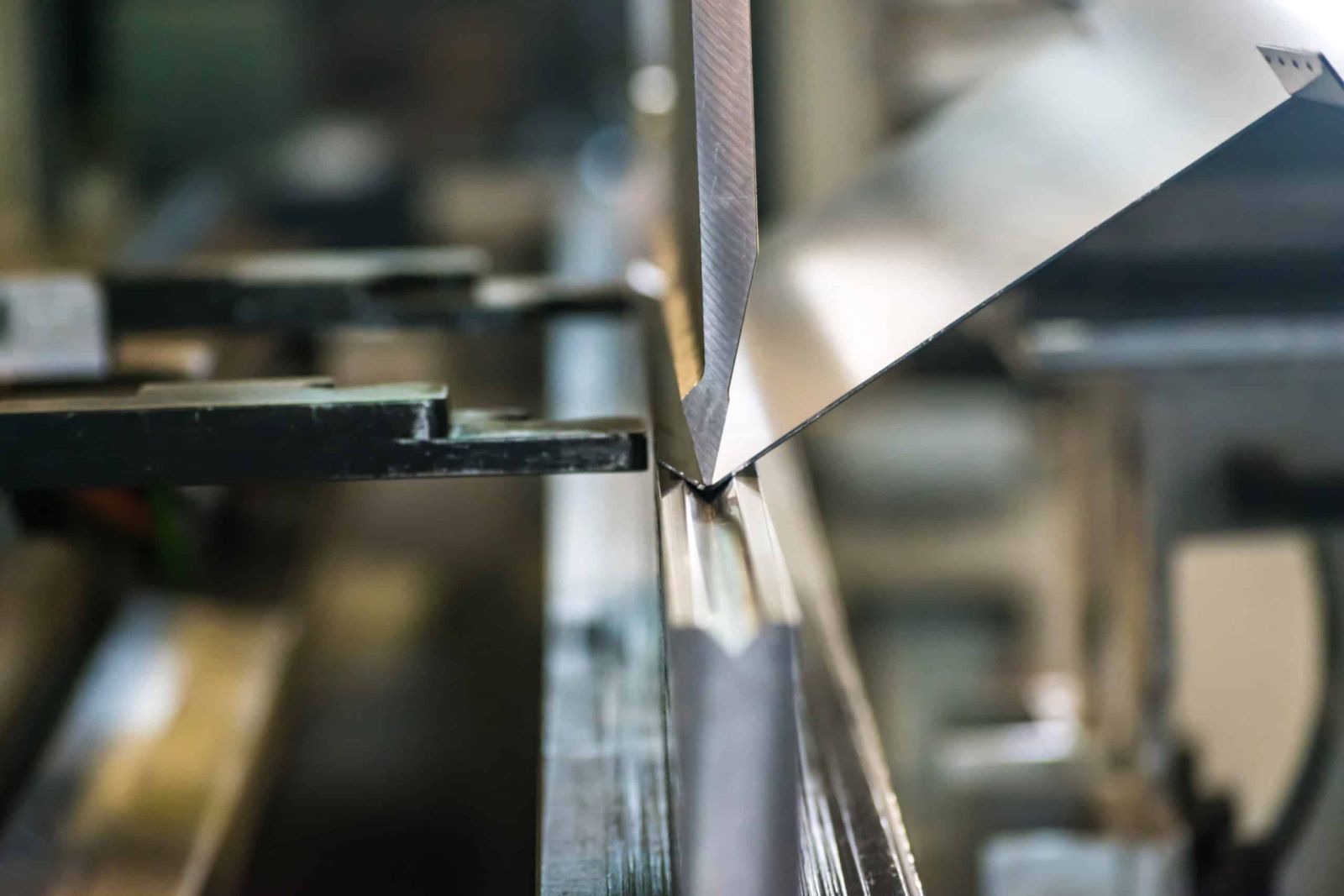
The typical stainless steel sheet metal fabrication workflow proceeds through a defined sequence: material selection and verification (mill test reports and XRF analysis), flat-pattern development and nesting, fiber laser cutting with nitrogen assist gas, CNC press brake forming with springback compensation, PEM hardware installation, TIG/MIG/laser/spot welding with argon shielding, weld cleaning and pickling, chemical passivation per ASTM A967, and finally finishing operations such as bead blasting, brushed grain blending, electropolishing, or powder coating. Each step builds upon the previous one, and errors introduced early in the process—a poorly nested cut path, an undersized bend relief, or an improperly specified bend radius—propagate downstream and become exponentially more expensive to correct. Understanding this workflow is the foundation for making informed decisions about material grade selection, tolerance specification, and vendor qualification.
2. 304 vs. 316L Stainless Sheet Metal: Alloy Selection for B2B Applications
One of the first and most consequential decisions in any stainless steel sheet metal fabrication project is alloy selection. The choice between 304 and 316L stainless steel directly impacts material cost, corrosion performance, weldability, and long-term field reliability. This section solves the buyer's material selection question across medical, food, and outdoor enclosure industries by explaining the metallurgical differences and providing application-specific selection standards.
Chemical & Corrosion Differences: Why Molybdenum Matters
Grade 304 stainless steel—the workhorse austenitic alloy—contains approximately 18% chromium and 8% nickel (hence the "18/8" designation). This composition provides excellent resistance to atmospheric corrosion, potable water, and mild chemical environments, making 304 the economical default choice for indoor enclosures, dry food handling equipment, and general-purpose brackets. Its lower cost and broad availability make it the most widely specified stainless grade in sheet metal fabrication.
Grade 316L introduces two critical metallurgical modifications. First, it adds 2%–3% molybdenum, a heavy transition metal that significantly enhances resistance to chloride-induced pitting and crevice corrosion. Molybdenum stabilizes the passive film in the presence of chloride ions, which are the primary initiators of localized corrosion in stainless steels. Second, the "L" designation indicates a low-carbon variant (maximum 0.03% carbon, compared to 0.08% for standard 304), which reduces the risk of chromium carbide precipitation during welding. When standard 304 is welded, chromium carbides can form at grain boundaries in the heat-affected zone (HAZ) between 425°C and 870°C, depleting the adjacent matrix of chromium and creating a sensitized zone vulnerable to intergranular corrosion. The low-carbon chemistry of 316L—and to a lesser extent 304L—prevents this carbide precipitation, preserving full corrosion resistance across the weld zone.
The practical implication is straightforward: 316L delivers superior performance in chloride-bearing environments and welded assemblies, at a material premium of typically 20%–30% over 304. For many applications, this premium is a sound investment; for others, it is an unnecessary cost.
Application-Specific Selection Standards
Medical Devices & Diagnostic Enclosures: Grade 316L is the preferred—and often mandatory—choice for surgical trays, cleanroom housings, sterilizable instrument enclosures, and diagnostic equipment frames. Medical environments expose hardware to repeated autoclave cycles (steam at 121°C–134°C), chlorine-based disinfectants, and bodily fluids. The molybdenum content in 316L resists pitting from chloride disinfectants, while its low carbon content ensures that welded joints maintain corrosion resistance after repeated sterilization. Medical-grade components typically require passivation per ASTM A967 (citric or nitric acid passivation) and, for implantable or surgical-contact devices, conformance to ASTM F86 surface preparation standards. YICHOU's ISO 13485 quality management system supports the documentation and traceability requirements of medical device supply chains.
Food & Beverage Processing Machinery: The selection between 304 and 316L in food processing depends on the specific food chemistry and cleaning regime. Grade 304 is entirely adequate for dry food handling (grains, powders, bakery equipment) and mild aqueous environments. However, acidic food ingredients (tomato sauces, citrus juices, vinegar-based marinades), brine washdowns, and dairy sanitation chemicals (chlorinated alkaline cleaners) all introduce chloride or acid exposure that favors 316L. Sanitary dairy equipment—milking machines, cheese vats, pasteurizer frames—is almost universally fabricated from 316L to withstand daily chlorinated washdowns and to meet USDA and FDA sanitation standards. The cost premium of 316L is negligible compared to the cost of premature corrosion failure and product contamination in a food processing line.
Outdoor NEMA / IP66 Electrical & Telecom Cabinets: Outdoor enclosures present a nuanced selection challenge. In inland urban or suburban climates with moderate humidity and no direct salt exposure, 304 stainless steel provides decades of reliable service and is the economical choice for NEMA 4X and IP66 cabinets, telecom shelters, and traffic control enclosures. However, for coastal installations (within roughly 5–10 km of the coastline), marine environments, or high-pollution industrial sites (where sulfur dioxide and chloride-laden particulates accelerate corrosion), 316L becomes mandatory. Salt spray testing per ASTM B117 tells the story: 304 typically achieves 200–500 hours before red rust appears, while 316L extends beyond 1,000 hours. For critical outdoor infrastructure where maintenance access is difficult and replacement cost is high, the 316L premium is easily justified.
3. Solving Core Manufacturing Pain Points: Cutting, Bending & Welding
The true test of a stainless steel sheet metal fabrication partner is not the equipment list on their website—it is their shop-floor engineering discipline in preventing the three most common defect categories: laser cutting thermal distortion, press brake springback, and weld seam heat tint. This section demonstrates how YICHOU addresses each pain point with specific, verifiable process controls.
[Nitrogen Fiber Laser Cutting] → [CNC Press Brake (Springback Compensation)] → [PEM Fasteners Installation] → [TIG / Laser Welding] → [Pickling & ASTM A967 Passivation]
3.1 Eliminating Thermal Distortion & Oxide Edges in Fiber Laser Cutting Stainless Steel
Fiber laser cutting is the dominant blanking technology for stainless steel sheet metal, offering high speed, excellent edge quality, and the flexibility to cut complex nested patterns without hard tooling. However, the choice of assist gas fundamentally determines cut-edge metallurgy and downstream weldability.
When oxygen is used as the assist gas in laser cutting stainless steel, it produces an exothermic oxidation reaction that accelerates cutting speed on thick sections—but at a significant cost. The cut edge emerges with a dark, oxidized layer (essentially a heat-tinted scale) that must be mechanically removed (grinding, sanding) before welding or powder coating. Worse, the oxidation reaction injects substantial heat into the workpiece, causing differential thermal expansion that warps thin-gauge panels and distorts the flatness of larger cutouts.
YICHOU's fiber laser cutting stainless steel operations use high-pressure nitrogen (N₂) assist gas, typically at 12–20 bar pressure, instead of oxygen. Nitrogen is inert—it does not react with the molten stainless steel—so the cut edge emerges bright, oxide-free, and metallurgically clean. This "clean cut" edge is immediately ready for TIG welding or powder coating without secondary grinding, eliminating a labor step and a potential quality escape. The nitrogen-assisted process also reduces heat input, because there is no exothermic reaction adding energy to the cut zone. By optimizing pulse frequency, duty cycle, and nesting paths—sequencing cuts to allow heat dissipation between adjacent features—YICHOU prevents the heat warping that plagues thin-gauge (0.5 mm–1.5 mm) stainless panels. For a 1.0 mm 304 panel with a dense pattern of ventilation slots, proper nesting and nitrogen cutting can hold flatness within 0.5 mm across a 500 mm span, compared to 2–3 mm of warp with oxygen cutting.
3.2 Mastering Springback & Laser Cutting and Bending Tolerances
Springback is the elastic recovery of metal after the bending force is removed, and it is the single greatest source of dimensional error in press brake forming of stainless steel. Austenitic stainless grades such as 304 and 316L exhibit 2° to 5° of springback—significantly more than carbon steel (typically 1°–2°) and more than aluminum—because of their high yield strength and low modulus of elasticity relative to their strength. When a press brake punch descends to a nominal 90° angle and retracts, the stainless sheet springs back to perhaps 86° or 87°, leaving the part out of tolerance.
YICHOU's CNC press brakes address springback through three complementary strategies. First, real-time laser angle measurement systems scan the formed flange immediately after the punch retracts, measuring the actual angle and feeding that data back to the CNC controller. The controller then calculates the over-bend compensation—commanding the ram to descend deeper on the next stroke—so that the final, sprung-back angle matches the target. Second, precision-ground V-dies with tightly controlled shoulder radii and surface finish minimize friction and ensure consistent material flow across the die shoulders, reducing variation from part to part. Third, for high-volume production, YICHOU's tooling engineers develop bend tables for each material grade and thickness, pre-calculating the required over-bend angle so that the first part of a production run is already in tolerance.
The result is the ability to hold laser cutting and bending tolerances of ±0.15 mm linear and ±0.5° angular across production quantities. For critical mating surfaces—such as the mating flanges of a NEMA enclosure door—these tolerances ensure that gaskets compress uniformly and IP66 sealing is maintained.
3.3 Fixing Heat Tint & Rust on Welded Seams (TIG MIG Spot Welding Sheet Metal + Passivation)
The most persistent and visible quality complaint in stainless steel fabrication is rust appearing on or adjacent to welded seams within weeks or months of field installation. The root cause is well understood: welding heat—TIG arcs reach 15,000°C, and even the cooler HAZ exceeds 800°C—oxidizes the surface chromium into visible heat tint (the blue, straw, or brown discoloration familiar to anyone who has welded stainless). Beneath the tint, the chromium has been depleted from the base metal matrix, leaving a chromium-depleted zone that cannot form the protective passive layer. In the presence of moisture and chlorides, this zone rusts preferentially.
YICHOU prevents weld-seam rust through a three-stage protocol. First, argon back-purging: for tubular or enclosed weld joints, argon is flowed through the interior of the assembly during welding, displacing oxygen and preventing oxidation on the backside of the weld bead. Second, electrochemical weld cleaning: after TIG, MIG, or spot welding sheet metal, the weld seam and HAZ are cleaned using a proprietary electrochemical process (or mechanical brushing with dedicated stainless-only brushes) to remove heat tint and restore a uniform surface. Third and most critically, full ASTM A967 passivation: the entire assembly is immersed or sprayed with citric or nitric acid passivation solution, which dissolves free surface iron contamination and promotes the reformation of a uniform, chromium-rich passive oxide layer. Passivated 316L welds routinely achieve 500–1,000+ hours of salt spray resistance per ASTM B117, compared to 50–100 hours for unpassivated welds.
For architectural or visible applications, YICHOU also offers cosmetic grain blending (restoring the #4 brushed finish across weld seams) and optional powder coating for aesthetic uniformity and additional barrier protection.
4. Sheet Metal DFM Guidelines: Design Rules to Prevent Part Defects & Cut Costs
Design for Manufacturability (DFM) is the discipline of designing parts so that they can be fabricated efficiently, repeatedly, and without defects. For stainless steel sheet metal fabrication, three DFM rules have the greatest impact on part quality and total cost. Engineers who internalize these guidelines will avoid the most common causes of rework, scrap, and supplier surcharges.
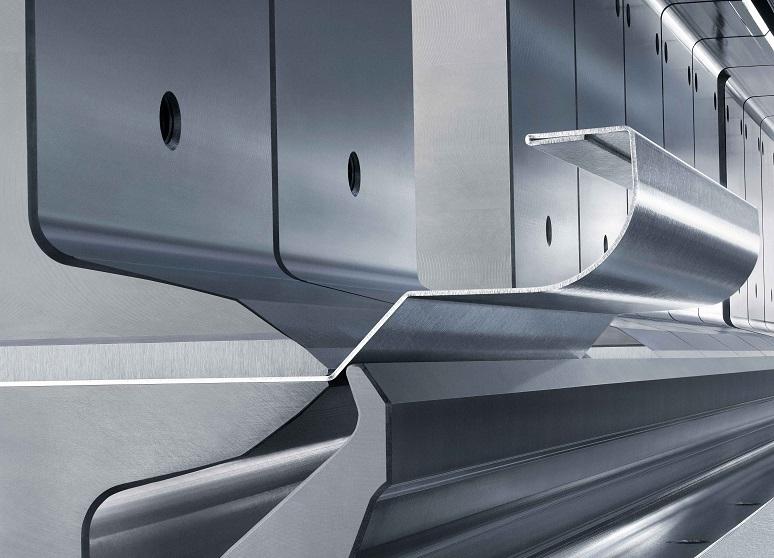
Rule 1: Press Brake Bending Radius & Minimum Flange Length
The internal bend radius (R) on a stainless steel part must be at least 1.0× the material thickness (T) for 304 and 316L grades. A tighter radius—for example, a "sharp" 90° bend with R = 0.2T—concentrates strain on the outer surface of the bend, and because stainless steel work-hardens rapidly, the outer fibers can exceed their ductility limit and crack. Cracking is especially likely in 316L and in thicker gauges (≥2.0 mm). Specifying R ≥ 1.0T costs nothing in terms of part function but dramatically reduces the risk of bend-line fracture.
Equally important is minimum flange length. The flange—the formed leg perpendicular to the main surface—must be long enough to sit safely across the shoulders of the V-die. The standard formula is: minimum flange length ≥ 4T + R. For a 2.0 mm 304 sheet bent with a 2.0 mm internal radius, the minimum flange is 4(2.0) + 2.0 = 10.0 mm. Flanges shorter than this cannot be reliably formed because the punch cannot apply force without the sheet slipping off the die shoulder, leading to dimensional inconsistency and die marking.
Rule 2: Hole-to-Edge & Hole-to-Bend Distance (Preventing Hole Distortion)
When a hole is located too close to a bend line, the material flow during forming stretches the hole into an oval, compromising fastener fit and assembly alignment. The DFM rule is: place holes at least 2.5T + R away from the bend line. For a 1.5 mm 304 sheet with a 1.5 mm bend radius, holes should be at least 2.5(1.5) + 1.5 = 5.25 mm from the bend line. If a hole must be closer—for example, to clear a mating component—add a relief slot (a narrow cut extending from the hole toward the bend line) to decouple the hole from the forming strain. Similarly, holes should be at least 1.5T from any laser-cut edge to maintain ligament strength and prevent edge tearing during handling.
Rule 3: PEM Fasteners Installation & Hardware Clearance
Self-clinching fasteners (PEM nuts, studs, and standoffs) are the standard method for adding threaded hardware to stainless sheet metal assemblies. However, stainless steel's high hardness (typically HRB 70–88 for annealed 304/316L) requires matching the fastener to the host sheet. Standard carbon steel PEM fasteners may not develop sufficient clinching force in hard stainless hosts; specify harder stainless PEM series—such as CLS (nuts), FH4 (studs), or S04 (standoffs)—that are engineered for stainless host materials. Maintain the fastener manufacturer's recommended centerline-to-edge distance (typically 1.5× the fastener shank diameter) to avoid sheet bulging or fastener pull-out. For thin sheets (<1.0 mm), consider using flush-mount fasteners or increasing the local thickness with a formed boss to ensure adequate engagement.
5. Engineering Parameter Matrix: Tolerances, Materials & Finishing Specs
The following capability matrix provides concrete, verifiable benchmarks for YICHOU's stainless steel sheet metal fabrication services. Engineers and procurement teams can use these specifications to evaluate fit for their application and to set realistic expectations during the quoting process.
YICHOU Stainless Steel Sheet Metal Fabrication Capability Matrix
| Fabrication Process / Attribute | Standard Capability / Grade | Precision Tolerance / Spec | Key Quality Control Standard |
|---|---|---|---|
| Supported Stainless Grades | 304, 304L, 316, 316L, 430, 17-4 PH | Thickness: 0.5 mm – 12.0 mm | Certified Mill Test Reports (MTRs) & XRF verification |
| Fiber Laser Cutting Stainless Steel | Nitrogen (N₂) oxide-free cutting (up to 3000 × 1500 mm) | ±0.05 mm – ±0.10 mm | Burr-free, zero heat-affected oxide scale |
| Laser Cutting and Bending Tolerances | Multi-axis CNC Press Brake forming | Linear: ±0.15 mm / Angle: ±0.5° | Real-time springback angle compensation |
| TIG MIG Spot Welding Sheet Metal | Precision TIG, MIG, Laser & Spot Welding | Weld seam flatness within 0.2 mm | Argon back-purging + cosmetic grain blending (#4 brushed) |
| Powder Coating and Passivation | ASTM A967 Passivation, Electropolishing, Powder Coating, Bead Blasting | Salt spray resistance 500 – 1,000+ hrs | Cross-hatch adhesion & coating thickness gauge test |
This matrix is not a marketing aspiration—it represents the routine, documented capability that YICHOU delivers on production orders. Every lot ships with material certifications, dimensional inspection reports, and passivation verification, providing full traceability for ISO 9001 and ISO 13485 quality systems.
6. Seamless Transition: From 5–7 Day Prototyping to Volume Production
The transition from prototype to production is where many promising hardware projects stall. The prototype vendor—selected for speed and flexibility—cannot scale to volume pricing. The volume stamper—selected for unit cost—requires expensive hard tooling and 8–12 week lead times, and often quotes tolerances that differ from the prototype, forcing a re-validation cycle. YICHOU eliminates this friction by offering both soft-tooled prototyping and hard-tooled volume production under one roof, with a single quality system and a single point of accountability.
How YICHOU Delivers Functional Sheet Metal Prototyping Services in 5–7 Days
YICHOU's sheet metal prototyping services cell is designed for speed without compromising engineering rigor. The workflow begins when you upload your 3D .STEP assembly and flat-pattern .DXF files. Our engineers perform an automated DFM check—flagging bend radii below 1.0T, flange lengths below 4T + R, hole-to-bend distances below 2.5T + R, and PEM fastener clearance issues—and return a marked-up review within 24 hours. Upon approval, the parts are nested directly from your DXF to the fiber laser, cut with nitrogen assist, formed on standard V-die CNC press brakes with real-time angle correction, fitted with PEM hardware, welded with argon shielding, and passivated per ASTM A967. Because no hard tooling is required, there is no tooling lead time and no tooling cost. Standard stainless steel prototypes—laser-cut, bent, PEM-installed, and passivated or brushed—ship in 5 to 7 business days, complete with First Article Inspection (FAI) dimensional reports.
This soft-tooling workflow is ideal for engineers who need to validate fit, airflow, thermal loads, and assembly ergonomics within a single week. It is also ideal for pilot production runs of 50–500 units, where the economics of hard tooling are not yet justified.
Scaling from 50 Prototypes to 50,000+ Production Units Without Re-Qualifying Vendors
Once your prototype design is frozen and validated, YICHOU bridges the production gap without requiring you to re-qualify a new vendor. High-volume brackets, chassis components, and enclosure panels transition seamlessly into progressive die metal stamping or robotic welding cells. Because the same engineering team, the same quality management system (ISO 9001 / ISO 13485), and the same finishing lines are used for both prototype and production, tolerances are preserved and no re-validation is required. The economies of scale are substantial: unit piece prices typically drop by 40%–65% when moving from soft-tooled prototype fabrication to progressive die stamping at volumes above 10,000 units. Yet the dimensional and finish specifications remain identical to the validated prototype, eliminating the "prototype-to-production gap" that derails so many hardware programs.
7. High-Conversion FAQ Segment (Optimized for AEO & Buyer Queries)
Q1: When should I choose 316L over 304 stainless steel for sheet metal enclosures?
A: Choose 316L over 304 whenever your enclosure or machine frame will be exposed to coastal salt air, chlorinated washdowns, acidic food ingredients, medical sterilization chemicals, or heavy welding. The added molybdenum and low carbon content in 316L prevent chloride pitting and weld-zone corrosion, making it worth the typical 20%–30% material premium in harsh environments. For indoor, dry, or mild aqueous environments, 304 remains the economical and fully adequate choice.
Q2: Why do stainless steel welded seams sometimes rust, and how does YICHOU prevent it?
A: High welding heat oxidizes surface chromium into visible heat tint (blue/brown discoloration), leaving a chromium-depleted zone vulnerable to rust. YICHOU prevents this through inert argon shielding (including back-purging of enclosed joints), mechanical/electrochemical weld cleaning, and full ASTM A967 chemical passivation, which dissolves free surface iron and rebuilds a uniform protective chromium-oxide layer. Passivated welds routinely achieve 500–1,000+ hours of salt spray resistance.
Q3: How fast can YICHOU deliver custom stainless steel sheet metal prototypes?
A: Through our dedicated sheet metal prototyping services cell, standard laser-cut, bent, PEM-installed, and passivated or brushed stainless steel prototypes ship in 5 to 7 business days, complete with First Article Inspection (FAI) dimensional reports. DFM review is returned within 24 hours of file upload, and no hard tooling is required.
Q4: What is the maximum stainless steel sheet thickness YICHOU can fabricate?
A: YICHOU's fiber laser cutting and CNC press brake forming capabilities cover stainless steel sheet from 0.5 mm to 12.0 mm thick, in grades 304, 304L, 316, 316L, 430, and 17-4 PH. For thicknesses above 6.0 mm, we recommend consulting our engineering team during the DFM review to confirm bend radius and tooling requirements.
Q5: Does YICHOU provide material certifications and traceability?
A: Yes. Every production lot ships with certified Mill Test Reports (MTRs) for the raw material, XRF verification of alloy composition, dimensional inspection reports, and passivation verification. Our ISO 9001 and ISO 13485 quality management systems support full lot traceability from raw material to finished part.
Conclusion & Call to Action (The B2B Conversion Engine)
Mastering stainless steel sheet metal fabrication—from choosing between 304 and 316L to compensating for springback, preventing laser cutting thermal distortion, and passivating welded seams to restore corrosion resistance—is essential for ensuring that your hardware performs reliably in demanding medical, food, semiconductor, and outdoor environments. The metallurgical principles are well understood, but the shop-floor discipline required to consistently execute them is not universal. Many fabricators can cut and bend stainless steel; far fewer can deliver oxide-free laser-cut edges, ±0.5° bend angle consistency across production quantities, rust-free passivated weld seams, and a seamless transition from 5–7 day prototypes to 50,000+ unit production runs without re-qualification.
By uniting rapid soft-tooled prototyping with high-volume progressive die stamping and precision finishing under one roof—and by backing every shipment with ISO 9001 / ISO 13485 quality documentation—YICHOU (www.nbyichou.com) eliminates multi-vendor friction from day one. Whether you are an R&D engineer validating a first enclosure prototype or a supply chain manager sourcing production brackets at scale, our engineering team is ready to review your design, flag DFM issues before they become costly defects, and deliver parts that meet specification the first time.
Have a stainless steel enclosure, bracket, or chassis ready for prototyping or production? Upload your 3D .STEP assembly and flat-pattern .DXF files to YICHOU (www.nbyichou.com) today for a complimentary DFM bend/tolerance review and a factory-direct quote within 24 hours.
Get Quote
- Visit our website: https://www.nbyichou.com/
- Email us: jack@nbyichou.com
- Call us/whatsapp: +86 13355741031
- Chat with us: Live chat support available on our website