Target Keywords: Inconel 718 machining, GH4169 properties, nickel superalloy supplier, high-temperature alloy applications, Inconel vs stainless steel, aerospace machining services, CNC machining superalloys, heat treatment of Inconel 718.
1. Introduction: The Superalloy That Powers the Modern World
In the hostile environment inside a jet engine, where temperatures soar beyond the melting point of aluminum and stresses would shatter conventional steel, one family of materials stands defiant: nickel-based superalloys. Among these, a single grade has achieved legendary status, accounting for over 50% of the structural weight of many modern turbine engines—Inconel 718.
Originally developed by Huntington Alloys in the 1960s, Inconel 718 (designated in China and across Asia as GH4169) is a precipitation-hardenable, nickel-chromium alloy that contains significant amounts of iron, niobium, and molybdenum. Its claim to fame is simple yet extraordinary: it retains high tensile, fatigue, and creep-rupture strength at temperatures up to 700°C (1300°F) while also exhibiting excellent cryogenic properties down to -250°C .
However, the metallurgical magic that gives Inconel 718 its strength is the same force that makes it one of the most difficult materials on earth to machine. The phrase "fighting chips" is literal here; its rapid work-hardening rate and low thermal conductivity present significant manufacturing challenges that have bankrupted inexperienced machine shops.
For over a decade, Ningbo Yichou has specialized in taming this beast. As a premier nickel superalloy supplier and precision machining house, we bridge the gap between raw metallurgical complexity and finished engineering perfection. This comprehensive guide will explore the science, the struggle, and the solutions surrounding Inconel 718 machining, providing engineers and procurement specialists with the knowledge needed to specify and source high-quality components for high-temperature alloy applications.
2. Metallurgy and Properties: Deconstructing GH4169
To successfully machine Inconel 718, one must first respect its metallurgy. It is not simply "tough steel"; it is a carefully engineered microstructure designed to resist deformation.
2.1 Chemical Composition Breakdown
The performance of Inconel 718 is dictated by a precise balance of alloying elements. Even minor deviations can significantly alter machinability and final mechanical properties .
| Element | Specification Range (%) | Typical Value (%) | Primary Function |
|---|---|---|---|
| Nickel (Ni) | 50.0 - 55.0 | 52.5 | Austenitic stabilizer; corrosion resistance; matrix base. |
| Chromium (Cr) | 17.0 - 21.0 | 18.5 | Oxidation resistance; high-temperature corrosion protection. |
| Niobium (Nb) | 4.75 - 5.50 | 5.1 | Primary strengthening agent (forms Gamma Double-Prime). |
| Molybdenum (Mo) | 2.80 - 3.30 | 3.0 | Solid-solution strengthener; enhances pitting resistance. |
| Titanium (Ti) | 0.65 - 1.15 | 0.9 | Secondary strengthener (forms Gamma Prime). |
| Aluminum (Al) | 0.20 - 0.80 | 0.5 | Secondary strengthener; deoxidizer. |
| Cobalt (Co) | ≤ 1.0 | 0.3 | Adds hot corrosion resistance (controlled element). |
| Carbon (C) | ≤ 0.08 | 0.04 | Grain boundary control; carbide formation. |
| Iron (Fe) | Balance | 17.0 | Structural stability; cost control. |
2.2 The Secret Sauce: Precipitation Hardening
Unlike pure metals or solid-solution alloys, Inconel 718 gains its immense strength from a post-processing heat treatment. The process involves three critical steps:
-
Solution Annealing: The material is heated to approximately 980°C (1800°F) to dissolve existing precipitates into a solid solution.
-
Rapid Quenching: The material is cooled quickly to "trap" the elements in a supersaturated state.
-
Aging: The alloy is reheated to 720°C (1325°F) for several hours, then again to 620°C (1150°F). This allows the precipitation of the metastable Gamma Double-Prime (γ’’) phase (Ni₃Nb). These tiny, coherent particles create massive lattice strain within the austenitic matrix, effectively blocking dislocation movement (plastic deformation).
2.3 Mechanical Properties at Various Temperatures
The result of this microstructure is a material with a remarkable strength-to-weight ratio at elevated temperatures .
-
Tensile Strength (Room Temp): 1350 MPa (196,000 psi) minimum
-
Yield Strength (Room Temp): 1100 MPa (160,000 psi) minimum
-
Elongation: 12-20%
-
Hardness: 36-45 HRC (Aged condition)
-
Modulus of Elasticity: 200 GPa at 20°C, dropping only to 170 GPa at 650°C .
-
Fatigue Strength: Exceptional; capable of surviving millions of cycles under high stress.
2.4 GH4169 vs. Inconel 718: Is There a Difference?
A common question in the Asian market regards the GH4169 properties versus Inconel 718. GH4169 is the Chinese Grade designation (from GB/T standards) that is chemically and mechanically equivalent to UNS N07718 / ASTM B637. Sourcing GH4169 locally often provides logistical advantages for Asian manufacturers, provided the supplier—like Ningbo Yichou—can provide mill test reports guaranteeing compliance with international standards.
3. The Machining Challenge: Why Inconel 718 Fights Back
According to machinability ratings, Inconel 718 scores only about 12% compared to AISI 1112 carbon steel (rated at 100%). This means it is nearly 8 times more difficult to cut . Understanding the specific mechanisms of tool wear is essential.
3.1 Rapid Work Hardening
During the cutting process, the intense pressure and heat cause the γ’’ phase to precipitate almost instantly on the surface being machined. If the cutting tool dwells, rubs, or takes too light of a cut, it will subsequently attempt to cut through a layer that is harder and more abrasive than the original material. This leads to rapid notching at the depth of cut line (DOC notching), which is the primary failure mode for tools cutting Inconel .
3.2 Low Thermal Conductivity
Inconel 718 has a thermal conductivity of approximately 11.4 W/m·K at room temperature—roughly 5% that of copper and 15% that of aluminum.
-
The Consequence: The heat generated by the cutting process (which can exceed 1000°C at the tool-chip interface) cannot dissipate into the workpiece or the chip fast enough.
-
The Result: The tool tip absorbs the vast majority of this heat. Carbide tools begin to soften and deform plastically above 800°C, leading to crater wear and rapid edge failure.
3.3 Abrasiveness and Built-Up Edge
Hard carbide and nitride particles within the microstructure act like sandpaper on the tool coating. Simultaneously, the high ductility of the material can cause the chip to weld itself to the tool tip under incorrect parameters, creating a "Built-Up Edge" (BUE). When this BUE breaks off, it takes fragments of the tool coating with it.
4. Expert Strategies for Successful Inconel 718 Machining
At Ningbo Yichou, we view these challenges not as barriers, but as parameters to be optimized. Our approach to CNC machining superalloys is rooted in scientific principles and years of hands-on experience.
4.1 Tooling Selection: The First Line of Defense
-
Substrate: We utilize micro-grain carbide substrates with high cobalt content, which provides the necessary toughness to resist fracturing under high cutting forces.
-
Coating: Physical Vapor Deposition (PVD) coatings such as AlTiN (Aluminum Titanium Nitride) or TiAlN are preferred. These coatings form a hard, heat-resistant aluminum oxide layer in-situ during cutting, which acts as a thermal barrier, pushing heat into the chip rather than the tool .
-
Geometry: Positive rake angles are mandatory. They reduce cutting forces and minimize the energy spent on plastically deforming the chip, which in turn reduces heat generation.
4.2 Machining Parameters
-
Cutting Speeds (Vc): For carbide tools, speeds must be kept low, typically in the range of 20-40 m/min (65-130 SFM) for roughing and slightly higher for finishing.
-
Feed Rates (f): Feeds must be aggressive enough to cut under the work-hardened layer from the previous pass. A feed rate of 0.1 - 0.25 mm/rev (0.004 - 0.010 IPR) is common.
-
Depth of Cut (ap): Avoid shallow cuts (< 0.5 mm / 0.020"). If a finishing cut is required to be shallow, a wiper insert geometry or a high positive rake insert must be used to prevent burnishing.
4.3 Rigidity and Coolant Strategy
-
Machine Tool: We utilize heavy-duty CNC lathes and milling centers with high-torque spindles. Any chatter or vibration will lead to micro-fracturing of the cutting edge.
-
High-Pressure Coolant: We deploy coolant pressures of 70-100 bar (1000-1500 psi) directed precisely at the tool-chip interface. This not only cools the zone but also acts hydraulically to break long, stringy chips, preventing them from wrapping around the workpiece or tool.
5. Key Application Industries: Where the Alloy Excels
The unique combination of high strength, corrosion resistance, and thermal stability makes Inconel 718 the default choice for mission-critical components across multiple sectors.
5.1 Aerospace: The Critical Market
Aerospace accounts for the largest consumption of Inconel 718. It is specified for rotating and static components in the hot section of gas turbine engines.
-
Turbine Discs (Rotors): These components must withstand extreme centrifugal forces at high temperatures. The alloy's high fatigue strength ensures they can endure thousands of takeoff and landing cycles.
-
Blades and Vanes: While single-crystal alloys are used for the most demanding first-stage blades, Inconel 718 is widely used for later stages, shrouds, and compressor blades.
-
Engine Casings and Rings: These large structural components require the alloy's strength to contain a blade failure (containment) and maintain tolerance under thermal expansion.
5.2 Oil & Gas and Petrochemical
In downhole and subsea environments, corrosion and high pressure are the enemies.
-
Downhole Tooling: Components like packers, hangers, and drill collars must resist H₂S (sour gas) cracking.
-
Valves and Pumps: Used in high-pressure, high-temperature (HPHT) wells where corrosion-resistant alloys (CRAs) are mandatory.
5.3 Nuclear and Power Generation
-
Reactor Core Internals: The alloy's resistance to radiation-induced swelling and stress corrosion cracking makes it suitable for fuel element spacers and control rod guide tubes.
-
Heat Exchangers: In advanced gas-cooled reactors, Inconel 718 is used for its high-temperature strength.
6. Why Ningbo Yichou is Your Trusted Partner
Sourcing and machining Inconel 718/GH4169 requires a partner with a specific infrastructure and metallurgical understanding, not just a machine shop with spare capacity.
6.1 Certified Material Supply
As a dedicated nickel superalloy supplier, we provide full material traceability from mill to finished part. We supply GH4169 in various forms—bar, forging, plate—certified to ASTM B637, AMS 5662, AMS 5663, and API 6A CRA standards. We understand the nuances of "dual-certified" materials and can advise on the optimal heat treat condition for your specific application.
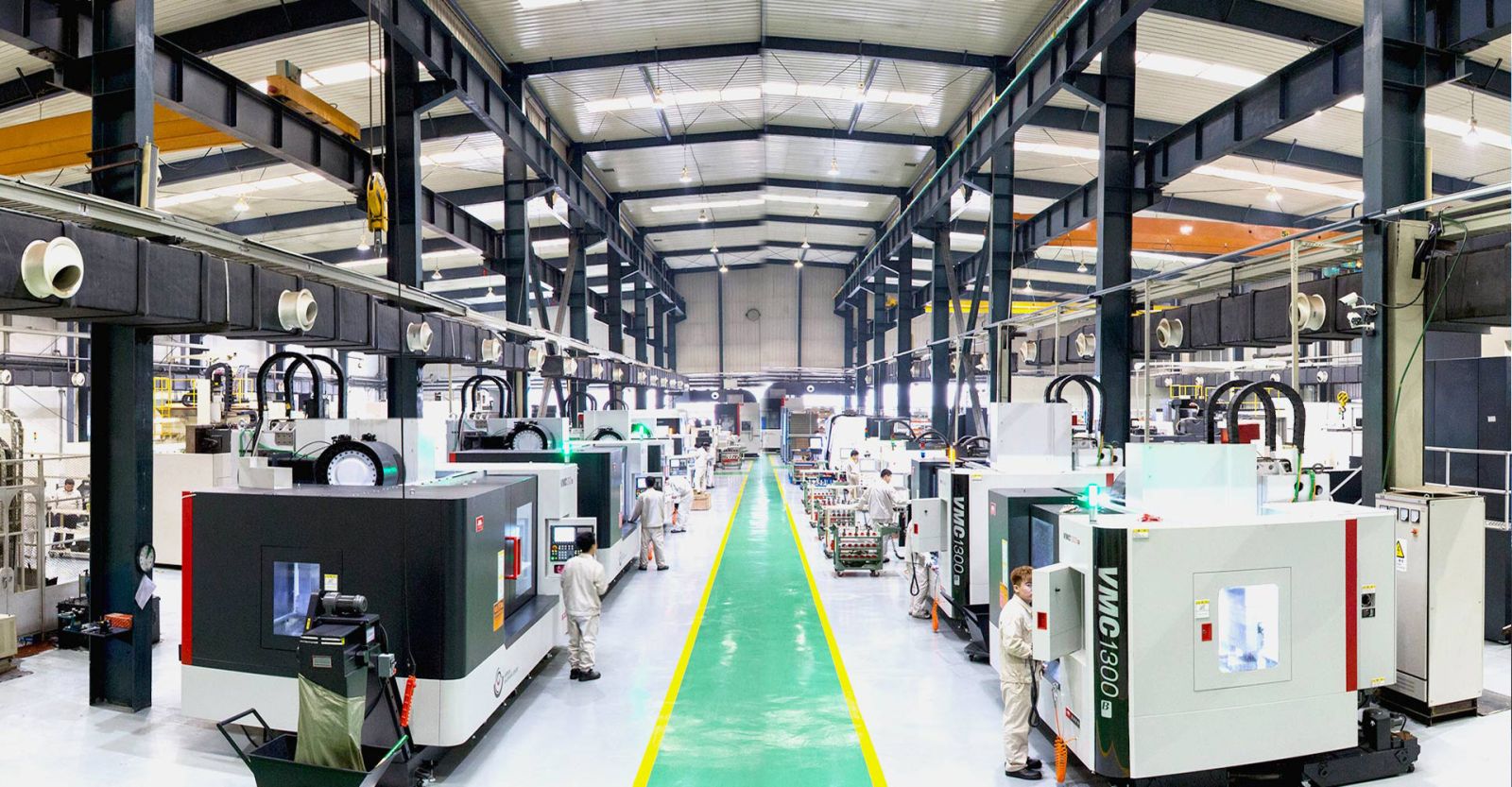
6.2 Advanced Machining Capabilities
Our facility is purpose-built for difficult materials.
-
Equipment: High-horsepower CNC turning centers and 5-axis machining centers capable of maintaining tight tolerances (±0.005±0.005 mm) on complex geometries.
-
Expertise: Our programmers utilize trochoidal milling paths and dynamic toolpaths that maintain a consistent chip load, preventing the tool from dwelling and work-hardening the surface.
6.3 Quality Assurance and Testing
When a part fails, it is not just a financial loss; it can be a safety catastrophe. We offer:
-
First Article Inspection Reports (FAIR): Detailed dimensional reports per AS9102 standards.
-
Material Test Reports (MTR): Full chemical and mechanical property traceability.
-
NDT: Coordination with certified labs for ultrasonic, dye penetrant, or radiographic inspection.
7. FAQs: Common Questions About Inconel 718
Q: Can Inconel 718 rust?
A: No. Due to its high chromium content (17-21%), it forms a passive oxide layer that protects it from oxidation and rust. It is highly resistant to general corrosion.
Q: What is the difference between Inconel 718 and 316 Stainless Steel?
A: Inconel 718 retains its strength at high temperatures (600°C+) and has a much higher yield strength. 316 Stainless loses strength rapidly above 400°C and is primarily used for corrosion resistance, not high-temperature strength. Inconel is significantly more expensive and harder to machine.
Q: Is Inconel 718 magnetic?
A: In its annealed and aged condition, it is generally considered non-magnetic. However, cold working can induce slight magnetic permeability.
Q: Why is GH4169 so popular in China for aerospace?
A: GH4169 offers the best combination of high-temperature strength, fabricability (compared to less ductile superalloys), and relative cost-effectiveness for the performance required. It is the standard material for many rotating parts in Chinese-made turbine engines.
8. Conclusion & Call-to-Action
From the fiery exhaust of a jet engine to the crushing pressure of a deep-sea wellhead, Inconel 718 (GH4169) remains the material of choice for engineers who refuse to compromise on performance. Its unique precipitation-hardened microstructure provides an unmatched combination of strength, stability, and resistance to extreme environments.
However, harnessing this power requires expertise. The challenges of Inconel 718 machining—work hardening, heat generation, and high cutting forces—demand not just tools, but a systematic engineering approach. At Ningbo Yichou, we have spent years perfecting this approach. We combine our capabilities as a reliable nickel superalloy supplier with state-of-the-art manufacturing to deliver components that meet the rigorous demands of aerospace, energy, and heavy industry.
Stop fighting the material. Partner with the experts who have mastered it.
If you have a project requiring complex components from Inconel 718, GH4169, or other high-temperature alloys, we are ready to help. Upload your technical drawings or contact our engineering team today for a comprehensive review and a competitive quotation.
Contact us today for a competitive quote and technical support!
Let Yichou help you achieve excellence in your next project. Whether you need raw materials, custom alloy solutions, or precision-manufactured components, our team is ready to assist.
- Email us: [email protected]
- Call us/whatsapp: +86 13355741031
- Chat with us: Live chat support available on our website