Meta Description
Discover everything about Stellite 6 cobalt-based alloy. Learn its exact chemical composition, high-temperature wear limits, machining & welding best practices, and how it compares to Inconel 718 and Stellite 12.
1. Introduction
In the demanding worlds of oil and gas, aerospace, and power generation, component failure is not an option. When valves seize, turbine blades erode, or pump shafts gall, the consequences range from costly downtime to catastrophic safety incidents. This is where Stellite 6 has earned its reputation as the global benchmark for severe wear, galling, and high-temperature erosion resistance.
Stellite 6 is a cobalt-chromium-tungsten (Co-Cr-W) superalloy that has been the industry standard for general-purpose wear resistance applications since its development in the early 20th century by Elwood Haynes . Its exceptional performance comes from a unique microstructure: hard carbide particles dispersed throughout a tough cobalt-chromium matrix . This combination delivers an unparalleled balance of hardness, toughness, and corrosion resistance that few other materials can match.
But selecting Stellite 6 is rarely straightforward. Engineers and procurement professionals consistently face critical questions: Which form—casting, powder, or hardfacing overlay—is right for my application? How does it compare to Stellite 12 or Inconel 718? And most critically, how do you machine or weld this notoriously difficult material without cracking or destroying expensive tooling?
This comprehensive guide addresses these questions and more. Drawing on technical data, industry standards, and practical engineering insights, we will explore the composition, properties, comparative performance, and fabrication challenges of Stellite 6—equipping you with the knowledge to make informed decisions and avoid costly mistakes.
2. Chemical Composition & Physical Properties
Understanding the chemistry of Stellite 6 is the first step to understanding its performance. The alloy's nominal composition is carefully balanced to deliver specific mechanical and thermal properties.
2.1 Chemical Breakdown
| Element | Weight % | Function |
|---|---|---|
| Cobalt (Co) | Balance (~58%) | Matrix base; provides heat and corrosion resistance, toughness |
| Chromium (Cr) | 27–31% | Oxidation resistance; primary carbide former (M₇C₃ carbides) |
| Tungsten (W) | 4.0–6.0% | Solid solution strengthening; high-temperature stability |
| Carbon (C) | 0.9–1.4% | Carbide driver; controls hardness through carbide precipitation |
| Nickel (Ni) | ≤ 3.0% | Austenite stabilizer; corrosion resistance |
| Iron (Fe) | ≤ 3.0% | Impurity limit; maintains matrix purity |
| Silicon (Si) | ~1.1% | Deoxidizer; improves fluidity in casting |
| Manganese (Mn) | ~1.0% | Deoxidizer; sulfur control |
Source:
This composition creates a microstructure primarily consisting of chromium-rich M₇C₃ carbides dispersed in a cobalt-rich solid solution . The hardening mechanism involves both solid-solution strengthening from tungsten and chromium, and precipitation hardening from the complex carbides . As a rule of thumb, higher carbon content in Stellites forms more carbides and consequently increases hardness .
2.2 Key Mechanical & Thermal Specifications
Hardness:
-
As-cast: 36–45 HRC (380–490 HV)
-
Conventionally welded overlay: ~400 HV (approx. 40–44 HRC)
-
Laser cladded: Can reach 550 HV (approx. 55 HRC) due to refined microstructure
-
Note: Overlay hardness often exceeds 48 HRC due to dilution with base metal
Tensile Properties (at room temperature):
-
Ultimate Tensile Strength: 700–900 MPa
-
Yield Strength (0.2% offset): 400–600 MPa
-
Fracture Elongation: 1–3% (as-cast), indicating limited ductility
Physical Properties:
-
Density: 8.44–8.46 g/cm³
-
Modulus of Elasticity: ~210–220 GPa
-
Melting Range: 1285–1410°C
-
Thermal Conductivity: ~14.8 W/m·K (at room temperature)
-
Thermal Expansion Coefficient: 12.6 μm/m·°C (20–100°C)
-
Electrical Resistivity: 105–110 μΩ·cm
-
Magnetic Properties: Generally non-magnetic at room temperature due to its face-centered cubic cobalt matrix
2.3 What Makes Stellite 6 Wear-Resistant?
The exceptional wear resistance of Stellite 6 stems from three synergistic mechanisms:
-
Hard Carbide Phase: The chromium-rich M₇C₃ carbides (and smaller amounts of M₂₃C₆ carbides and intermetallic phases like Co₇W₆) provide hard particles that resist abrasive wear and low-angle erosion .
-
Tough Cobalt Matrix: The cobalt-chromium matrix provides toughness and resists galling (adhesive wear) during metal-to-metal contact. The matrix also work-hardens under load, increasing surface hardness in service .
-
Thermal Stability: Unlike tool steels that soften above 500°C, Stellite 6 retains useful hardness at elevated temperatures—maintaining above 30 HRC at 600°C .
3. Material Comparisons: Making the Right Selection
Selection errors are among the most costly mistakes in engineering. Stellite 6 is often compared to several other alloys, but each serves distinct purposes. Here is a systematic breakdown to guide your decision.
3.1 Stellite 6 vs. Stellite 12
Stellite 12 is often considered an intermediate grade between Stellite 6 and Stellite 1 .
| Property | Stellite 6 | Stellite 12 |
|---|---|---|
| AWS Classification | ERCoCr-A | ERCoCr-B |
| Carbon Content | 0.9–1.4% | 1.4–1.7% (hardfacing) / 1.7–2.0% (casting) |
| Tungsten Content | 4.0–6.0% | 7.5–9.5% |
| Hardness (as-deposited) | 38–44 HRC | 42–50 HRC |
| Wear Resistance | Good all-round | Higher abrasion resistance |
| Impact Toughness | Better | Lower (more brittle) |
Selection Guide:
-
Choose Stellite 6 for general-purpose wear resistance, applications with impact loading, or where cracking risk must be minimized. Stellite 6 has less tendency to crack than Stellite 12 in multiple-layer overlays .
-
Choose Stellite 12 for severe abrasion, low-angle erosion, or when higher hardness is required and impact loads are minimal. It is widely used for industrial knives, saw tips, and cutting edges .
3.2 Stellite 6 vs. Stellite 21
Stellite 21 represents a fundamentally different alloy design, prioritizing toughness and corrosion resistance over maximum hardness .
| Property | Stellite 6 | Stellite 21 |
|---|---|---|
| AWS Classification | ERCoCr-A | ERCoCr-E |
| Carbon Content | 0.9–1.4% | 0.20–0.35% |
| Primary Strengthener | Tungsten (4–6%) | Molybdenum (4.5–6.5%) |
| Hardness (as-deposited) | 38–44 HRC | 28–34 HRC |
| Fracture Elongation | ~1% | ~9% (significantly tougher) |
| Carbide Content | High (M₇C₃ dominant) | Low (Co₃Mo, Co₇Mo₆ intermetallics) |
Selection Guide:
-
Choose Stellite 6 for sliding wear, galling resistance, and metal-to-metal contact applications where hardness is critical.
-
Choose Stellite 21 for applications involving thermal shock, impact loading, or where corrosion resistance in chemical environments is paramount . Its lower carbon content makes it more ductile and less prone to cracking.
3.3 Stellite 6 vs. Inconel 718
Comparing Stellite 6 to Inconel 718 is comparing apples to oranges—they serve fundamentally different engineering functions .
| Aspect | Stellite 6 | Inconel 718 |
|---|---|---|
| Base Metal | Cobalt | Nickel |
| Primary Strengthening | Carbide precipitation + solid solution | γ'' and γ' precipitation hardening |
| Hardness | 38–44 HRC | ~35–40 HRC (aged) |
| High-Temp Strength | Retains hardness to ~500°C | Retains tensile strength to ~650°C |
| Corrosion Resistance | Good (Cr carbides) | Excellent (acidic, chloride) |
| Wear Resistance | Superior (carbide phase) | Moderate |
| Ductility | Low (~1–3%) | High (~15–30%) |
| Typical Use | Wear surfaces, hardfacing | Structural components, fasteners, turbines |
Selection Guide:
-
Choose Stellite 6 for wear surfaces, metal-to-metal contact, galling resistance, and hardfacing overlays .
-
Choose Inconel 718 for structural components requiring high tensile strength, creep resistance, and corrosion resistance at elevated temperatures . Stellite 6 is not a structural material; it is a surface treatment .
3.4 Difference Between Stellite 6, 6B, and 6K
The suffixes denote different product forms with distinct processing histories:
-
Stellite 6 (Cast): The standard form, produced by investment casting or sand casting. Has the characteristic dendritic microstructure and hardness of 36–45 HRC. Elongation is typically 1–3% .
-
Stellite 6B (Wrought): Produced by hot working (rolling or forging) from cast material. The working process refines the grain structure and improves mechanical properties. It is the preferred form for bar stock and precision-machined components. Machining requires carbide tooling with specific geometries (5° negative rake angle, 30° or 45° lead angle) and can achieve surface finishes of 200–300 RMS . Not suitable for high-speed tapping; EDM is used for such operations .
-
Stellite 6K (Sheet/Strip): Primarily used for applications requiring thin sections—typically knives, saw blades, and cutting edges in timber and plastics industries. The sheet form allows for fabrication into complex cutting geometries.
Processing Method Comparison:
The manufacturing method significantly affects properties. Laser-consolidated Stellite 6 demonstrates remarkable improvements over conventional cast or powder metallurgy material :
| Property | Cast Stellite 6 | Powder Metallurgy | Laser-Consolidated |
|---|---|---|---|
| UTS | 793–834 MPa | 896 MPa | 1245–1362 MPa |
| Yield Strength | 541–662 MPa | – | 751–1023 MPa |
| Elongation | 1–3% | <1% | 3.1–3.2% |
| Hardness | 37–46 HRC | 40 HRC | 58–59 HRC |
This significant property enhancement is attributed to the refined dendritic arm spacing (DAS) of 1.2–3.3 μm achieved through rapid solidification in laser consolidation, compared to 50–500 μm in conventional casting .
4. Engineering Solutions: Machining & Fabrication Guide
Stellite 6 is notorious in machine shops for its difficulty to machine and weld. However, with the right approach, these challenges can be successfully managed.
4.1 Machining Challenges & Solutions
Why It's Difficult:
-
Extreme hardness (38–45 HRC) causes rapid tool wear
-
Work hardening during machining—the surface hardens further as you cut
-
Carbide particles act as abrasives, wearing cutting edges
-
Low thermal conductivity (14.8 W/m·K) concentrates heat at the cutting edge
Tooling Selection:
-
Primary Choice: Cubic Boron Nitride (CBN) tools offer the best wear resistance for Stellite 6 .
-
Alternative: Heavy carbide tooling (ISO K/M grades) with appropriate geometry .
-
Tool Geometry: Use 5° negative rake angle and 30° or 45° lead angle .
-
Surface Finish: For Ra < 1.6 μm (63 μin), semi-finish turning should be followed by precision grinding .
Cutting Parameters:
-
Cutting Speed: Low speeds are essential to prevent rapid tool failure.
-
Feed Rate: Continuous, consistent feed to avoid work hardening from interrupted cuts.
-
Coolant: Essential for cooling the machining zone, controlling chip formation, and extending tool life .
Process Recommendations:
-
Turning vs. Grinding: Use turning for semi-finish operations, followed by grinding for final precision. Stellite 6B is not suitable for high-speed tapping; EDM is recommended for such operations .
-
Grinding: Can be used to achieve high precision and improved surface finish. Avoid quenching after dry grinding, as this affects appearance .
4.2 Welding & Hardfacing Best Practices
Hardfacing with Stellite 6 is one of the most common applications—particularly for valve seats, gates, and pump components in the oil and gas industry .
Common Processes:
-
PTA (Plasma Transferred Arc): Preferred for its precise control of welding parameters and metallic powder, reducing post-weld machining requirements .
-
Laser Cladding: Produces refined microstructure with superior mechanical properties (58–59 HRC) .
-
TIG (GTAW): Common for manual applications.
-
SMAW (Stick Welding): Used for field repairs and less critical applications.
The Cracking Challenge:
Cracking is the single biggest challenge in Stellite 6 hardfacing . The primary cause is the difference in coefficient of thermal expansion between the cobalt alloy hardfacing layer and the steel substrate . This thermal mismatch creates residual stresses that can initiate cracks in the hardfacing layer, sometimes propagating into the base metal where no indication is permitted .
Critical Control Parameters:
-
Preheating: Required for most substrates, typically 250°C–500°C depending on the base metal composition and section thickness. Martensitic stainless steel substrates are particularly challenging and require careful preheat and post-weld heat treatment .
-
Interpass Temperature: Must be controlled to maintain the preheat temperature range.
-
Dilution Control: Dilution with the base metal increases hardness (often exceeding 48 HRC from a base powder hardness of 38–45 HRC) . Higher hardness increases cracking susceptibility. Control dilution through parameter optimization to achieve the desired overlay properties.
-
Post-Weld Heat Treatment (PWHT): Slow cooling following a controlled cooling cycle helps relieve residual stresses and prevents cracking .
-
Layer Thickness: Typical overlay thickness after machining is 1.5 mm to 3.2 mm to ensure pure alloy properties without substrate dilution.
Additional Considerations:
-
Base Metal Type: Carbon steel, alloy steel, and stainless steel are all weldable with Stellite 6, but each requires specific preheat and PWHT schedules .
-
Complex Parts: The sensitivity to cracking increases with part size and complexity . Finite element analysis may be helpful for large or critical components.
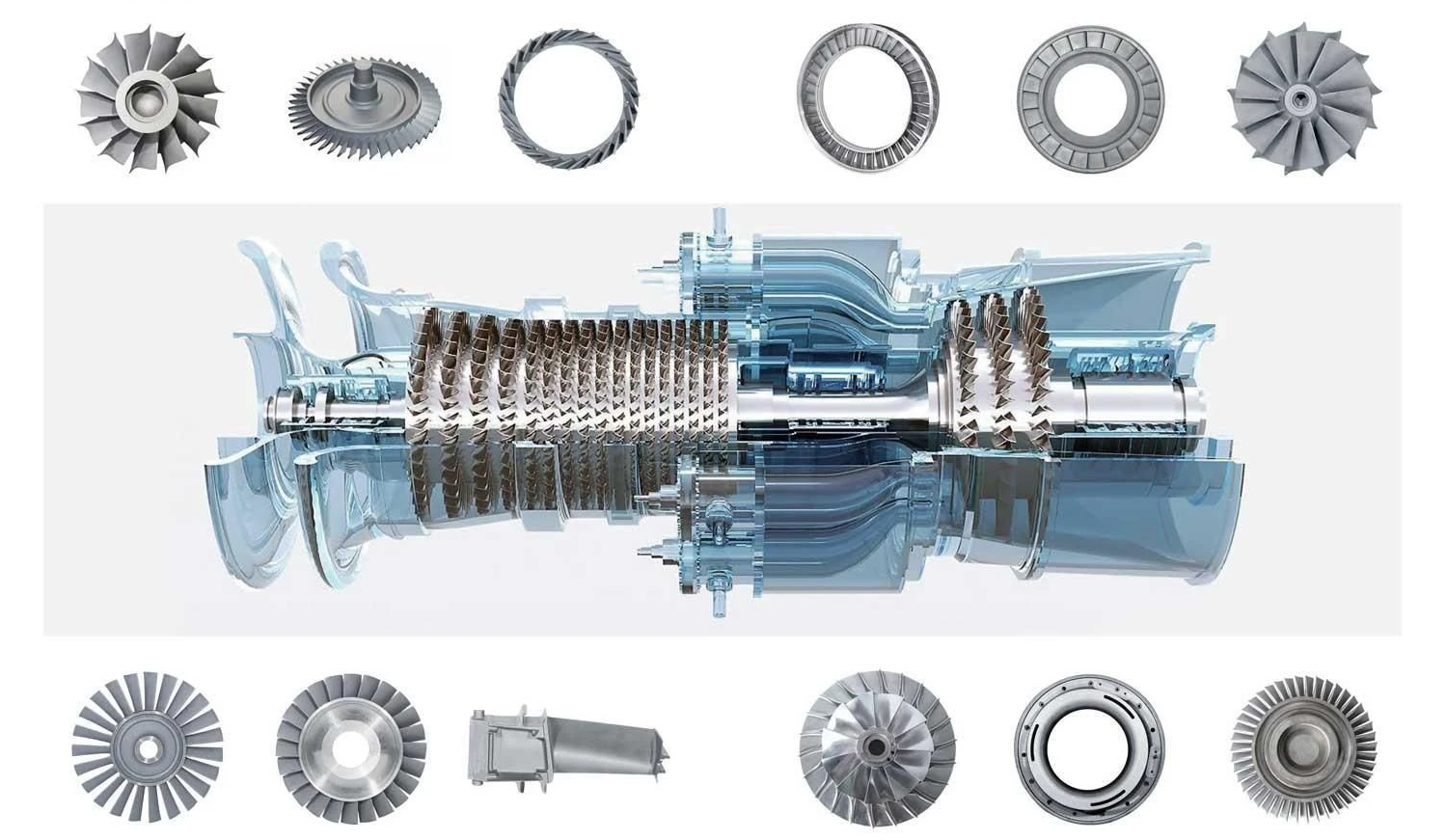
5. Primary Industry Applications
Stellite 6 finds application across industries where wear, galling, and corrosion threaten component reliability .
5.1 Oil & Gas
-
Valve Seats and Gates: Prevents galling under high-pressure steam and slurry flow. Stellite 6 is the default hardfacing for gate valve seats and wedges, globe valve discs and seats, check valve flappers and seats, and ball valve seats .
-
Pump Shafts and Bearings: Resists abrasive sands and corrosive drilling muds.
-
Downhole Tools: Wears surfaces resist the abrasive environment of drilling operations.
5.2 Power Generation
-
Steam Turbine Components: Seal rings and wear pads operating at elevated temperatures.
-
Poppet Valves: High-temperature valve components retaining hardness and oxidation resistance.
-
Control Valves: Critical components in power generation systems.
5.3 Aerospace & Gas Turbines
-
Turbine Blade Wear Pads: Resists fretting and galling at elevated temperatures (up to 870°C) .
-
Seal Rings: Maintains sealing integrity under thermal cycling and metal-to-metal contact.
5.4 Timber, Pulp & Plastics Industries
-
Saw Tips: Retains sharp cutting edges in abrasive wood and composite materials .
-
Industrial Knives: Cutting edges for carpets, plastics, paper, and synthetic fibers .
5.5 Chemical Processing
-
Valve Components: Resists corrosion in aggressive chemical environments.
-
Pump Impellers: Combines wear and corrosion resistance for slurry handling .
6. Frequently Asked Questions (FAQ)
Q1: Can Stellite 6 be hardened by heat treatment?
A: No. Stellite 6 gains its hardness from its carbide microstructure and cold working, not from classical quenching and tempering. The hardening involves both solid-solution strengthening and carbide precipitation that occurs during solidification, not through subsequent heat treatment cycles . In fact, heat treatment would likely reduce hardness by coarsening the carbide structure.
Q2: What is the maximum service temperature of Stellite 6?
A: Stellite 6 performs well at temperatures up to approximately 870°C (1600°F) . It retains reasonable hardness up to 500°C (930°F) , maintaining hot hardness above 30 HRC at 600°C . However, the specific maximum operating temperature depends on the application and required properties—for wear resistance, the effective useful limit is typically around 500–800°C.
Q3: How thick should a Stellite 6 overlay be applied?
A: The typical overlay thickness after final machining is 1.5 mm to 3.2 mm. This ensures the overlay retains pure alloy properties without significant dilution from the substrate. Dilution from the base metal generally increases hardness and may increase cracking susceptibility .
Q4: Is Stellite 6 magnetic?
A: Stellite 6 is generally non-magnetic at room temperature due to its face-centered cubic (FCC) cobalt matrix structure . Some variations or processed forms may exhibit slight magnetic properties depending on the specific microstructure.
Q5: What is the equivalent of Stellite 6?
A: Stellite 6 has several equivalents and standards designations:
-
UNS Designation: R30006
-
AWS Classification: ERCoCr-A (for welding consumables)
-
DIN/EN: 2.4771
-
Chinese Standard: GB/T 15025: CoCrW6
-
AMS: 5894
-
ASME: SB-75
-
NACE: MR0175 approved
Q6: Can Stellite 6 be machined, or is grinding the only option?
A: Stellite 6 can be machined, but it requires specialized techniques and tooling. Semi-finish turning is possible using CBN or carbide tools with appropriate geometry (5° negative rake, 30–45° lead angle), followed by precision grinding for the final surface finish . While challenging, machining is feasible with the right approach and equipment. Stellite 6B is not suitable for high-speed tapping; EDM is recommended instead .
Q7: Why does Stellite 6 crack during welding?
A: Cracking occurs primarily due to the difference in the coefficient of thermal expansion between the cobalt alloy hardfacing layer and the steel substrate . This thermal mismatch creates residual stresses. Dilution with the base metal increases hardness and cracking susceptibility . Proper preheating (250–500°C), interpass temperature control, and slow cooling are essential to prevent cracking . Laser cladding can produce a refined microstructure with better cracking resistance .
Q8: How does Stellite 6 compare to Stellite 21 for valve applications?
A: Stellite 6 is harder (38–44 HRC vs. 28–34 HRC) and more wear-resistant, making it the default for most valve applications requiring galling and erosion resistance. Stellite 21 is tougher (9% elongation vs. 1%) and may be preferred for applications with impact loading, thermal shock, or where higher corrosion resistance in chemical environments is required .
7. Conclusion & Call to Action
Stellite 6 has earned its position as the industry standard for severe wear, galling, and high-temperature erosion resistance. Its unique cobalt-chromium-tungsten matrix with dispersed hard carbides delivers an exceptional balance of hardness, toughness, and corrosion resistance that few materials can match. For valve seats, pump components, turbine parts, and cutting tools operating in demanding environments, Stellite 6 remains the proven solution.
However, success with Stellite 6 depends on understanding its limitations and processing requirements:
-
Selection must be application-specific: Consider Stellite 12 for more severe abrasion, Stellite 21 for impact and corrosion, and Inconel 718 for structural high-temperature applications.
-
Machining requires expertise: Use CBN or carbide tooling with appropriate geometry, low cutting speeds, and continuous feed. Grinding is essential for final precision.
-
Welding demands control: Preheat (250–500°C), manage interpass temperature, control dilution, and slow cool to prevent cracking.
-
Form matters: Cast, wrought (6B), sheet (6K), powder, or welding consumable—each form has distinct properties and applications.
Whether you are specifying Stellite 6 for a new valve design, troubleshooting a hardfacing cracking issue, or selecting a wear-resistant alloy for critical components, understanding these technical fundamentals is essential.
Need Custom Stellite 6 Components or Consumables?
Our engineering team specializes in Stellite 6 castings, precision-machined components, and welding consumables tailored to your specific requirements. From investment castings to PTA hardfacing overlays, we deliver quality that meets the most demanding industry standards.
Get Quote
- Visit our website: https://www.nbyichou.com/
- Email us: [email protected]
- Call us/whatsapp: +86 13355741031
- Chat with us: Live chat support available on our website