The Titanium Machining Masterclass: Processes, Challenges, and Partnering with Precision Experts
Executive Summary: Why This Guide Exists
For engineers, procurement specialists, and innovators across aerospace, medical, and advanced industrial sectors, titanium represents the pinnacle of material performance. Its legendary strength-to-weight ratio, corrosion resistance, and biocompatibility make it indispensable. Yet, its reputation for being notoriously difficult to machine is equally widespread. Online search data reveals a market actively seeking solutions: trending queries for "turning titanium" (+12%), "titanium milling" (+23%), and consistently high-cost keywords (CPC: $6.11) indicate this is a high-intent, high-value challenge. The ultimate question isn't "Can we machine titanium?" but "How can we machine it efficiently, precisely, and cost-effectively?"
This definitive guide, curated by the machining specialists at YICHOU, moves beyond basic tips. It is a comprehensive engineering resource that deconstructs the science of titanium machining, addresses your most pressing FAQs, and provides a framework for successful project execution. Our goal is to transform your understanding of titanium from a challenging material into a strategic asset.
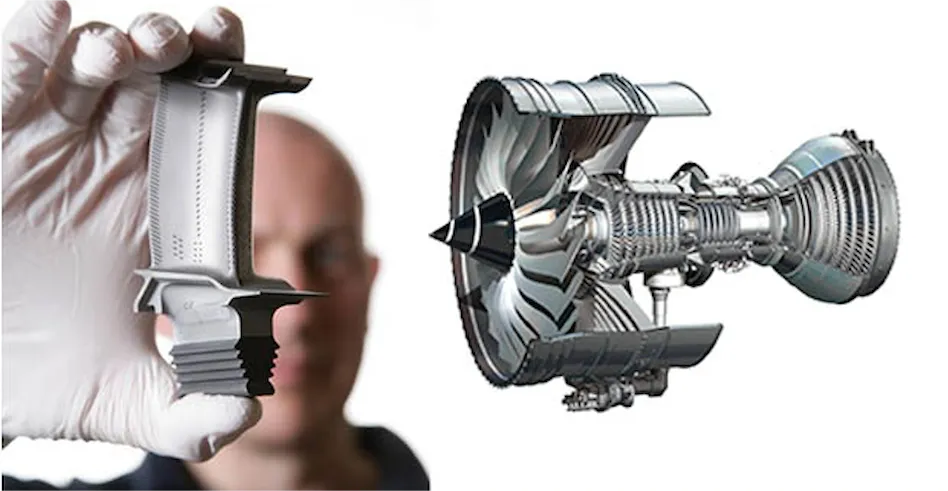
Part 1: The Titanium Conundrum – Anatomy of a "Difficult" Material
To master titanium machining, one must first understand the source of its challenges. Its superior in-service properties directly create unique manufacturing hurdles.
1.1 The Core Challenges:
-
Abysmal Thermal Conductivity (≈7 W/m·K): Compared to steel (50 W/m·K) or aluminum (250 W/m·K), titanium acts as a thermal insulator. Approximately 80% of the heat generated during cutting is conducted into the cutting tool, not the chip. This leads to extreme localized temperatures (often exceeding 1000°C at the tooltip), accelerating diffusion wear and plastic deformation of the tool edge.
-
High Chemical Reactivity and Galling: At elevated temperatures, titanium readily alloys with and welds to most tool materials, particularly carbides. This causes built-up edge (BUE), which subsequently breaks off, taking fragments of the tool coating with it and leading to catastrophic failure.
-
High Strength Retention at Temperature: While most steels soften as they heat up, titanium alloys retain a significant portion of their yield strength up to about 500°C. This means the cutting tool continues to fight a strong material, requiring exceptional machine tool rigidity and consistent power.
-
Low Modulus of Elasticity: Titanium's "springiness" means it deflects more under cutting forces than steel. Without proper fixturing and toolpath strategy, this leads to chatter, poor surface finish, dimensional inaccuracy, and accelerated tool wear due to varying engagement.
1.2 Decoding Titanium Alloys: A Machinability Spectrum
Not all titanium is created equal. Selecting the right grade is the first critical step in any project. Here is a breakdown of common alloys from a machinist's perspective:
| Alloy Grade | Common Name | Primary Phase | Key Characteristics | Relative Machinability | Primary Applications |
|---|---|---|---|---|---|
| CP Grades 1-4 | Commercially Pure | α | Excellent corrosion resistance, ductility, lowest strength. | Best | Chemical processing, marine hardware, medical implants (where strength is secondary). |
| Grade 5 | Ti-6Al-4V | α+β | The "workhorse" alloy. Excellent balance of strength, weight, fabricability. | Good | Aerospace structures, engine components, high-performance automotive, medical implants. |
| Grade 23 | Ti-6Al-4V ELI | α+β | Extra Low Interstitial (ELI) version of Grade 5. Higher fracture toughness. | Good | Critical medical implants (spinal, orthopedic), aerospace fracture-critical parts. |
| Grade 9 | Ti-3Al-2.5V | α+β | Similar to Grade 5 but with better cold formability. | Good | Aerospace hydraulic tubing, bicycle frames. |
| Ti-5Al-5V-5Mo-3Cr | Commonly known as "5553" | Near-β | Very high strength, deep hardenability. | Poor | Aerospace landing gear components, high-stress structural parts. |
| Ti-10V-2Fe-3Al | Commonly known as "10-2-3" | Near-β | High strength-to-weight, forgeable. | Poor | Aerospace forgings. |
Answering the FAQ: "What grade of titanium is easiest to machine?" For most applications, Grade 5 (Ti-6Al-4V) offers the best combination of properties and relative machinability, which is why it constitutes over 50% of all titanium usage.
Part 2: The Precision Machining Toolkit – Processes and Expert Methodologies
At YICHOU, we treat each machining process as a dedicated discipline, with strategies optimized for titanium's behavior.
2.1 Turning Titanium: Mastering the Cylindrical Form
Turning is the foundation. Success hinges on controlling the "sweet spot" between heat, force, and tool life.
-
Tooling Philosophy: We prioritize sharp, positive rake geometry PVD-coated carbide inserts (e.g., AlTiN, AlCrN). Sharp edges reduce cutting pressure and heat generation. For finishing, polycrystalline diamond (PCD) tools can offer exceptional life on non-ferrous alloys like CP titanium.
-
Parameters in Practice: The query "What speed and feed for turning titanium?" is answered not with a single number, but a principle: Prioritize feed over speed. A conservative surface speed (50-120 SFM for roughing, up to 200 SFM for finishing with ideal conditions) is combined with a consistent, deliberate feed rate (0.005-0.015 in/rev). This ensures the tool works ahead of the work-hardened layer created by the previous cut.
-
The Rigidity Imperative: We employ minimized overhang, premium tool holders (hydraulic or shrink-fit), and often use tailstock or steady rests to combat deflection, ensuring roundness and straightness.
2.2 Milling Titanium: Conquering Complex Geometries
Milling titanium is where strategy separates success from failure. The most common search—"What RPM is needed for milling titanium?"—focuses on the wrong variable. RPM is a result. The critical inputs are cutting speed (SFM) and tool diameter.
-
The High-Efficiency Machining (HEM) Paradigm: We utilize dynamic or trochoidal milling toolpaths. This involves using the full flute length of the tool with a small radial step-over (5-15% of tool diameter) and a high axial depth of cut. This strategy:
-
Spreads heat generation over the entire cutting edge.
-
Promotes consistent chip formation and evacuation.
-
Protects the vulnerable tool corner, the hottest part of the cut.
-
Allows for higher metal removal rates (MRR) within safe thermal limits.
-
-
Coolant as a Cutting Tool: For titanium, coolant is not just for cooling; it's for lubrication and chip evacuation. Our CNC centers are equipped with high-pressure through-spindle coolant (HPTSC) systems (≥1000 psi). This pressurized stream penetrates the cutting zone, breaks chips, prevents re-welding, and forcibly evacuates heat.
2.3 The CNC Advantage: Consistency and Complexity
CNC is non-negotiable for precision titanium work. At YICHOU, our CNC prowess is built on three pillars:
-
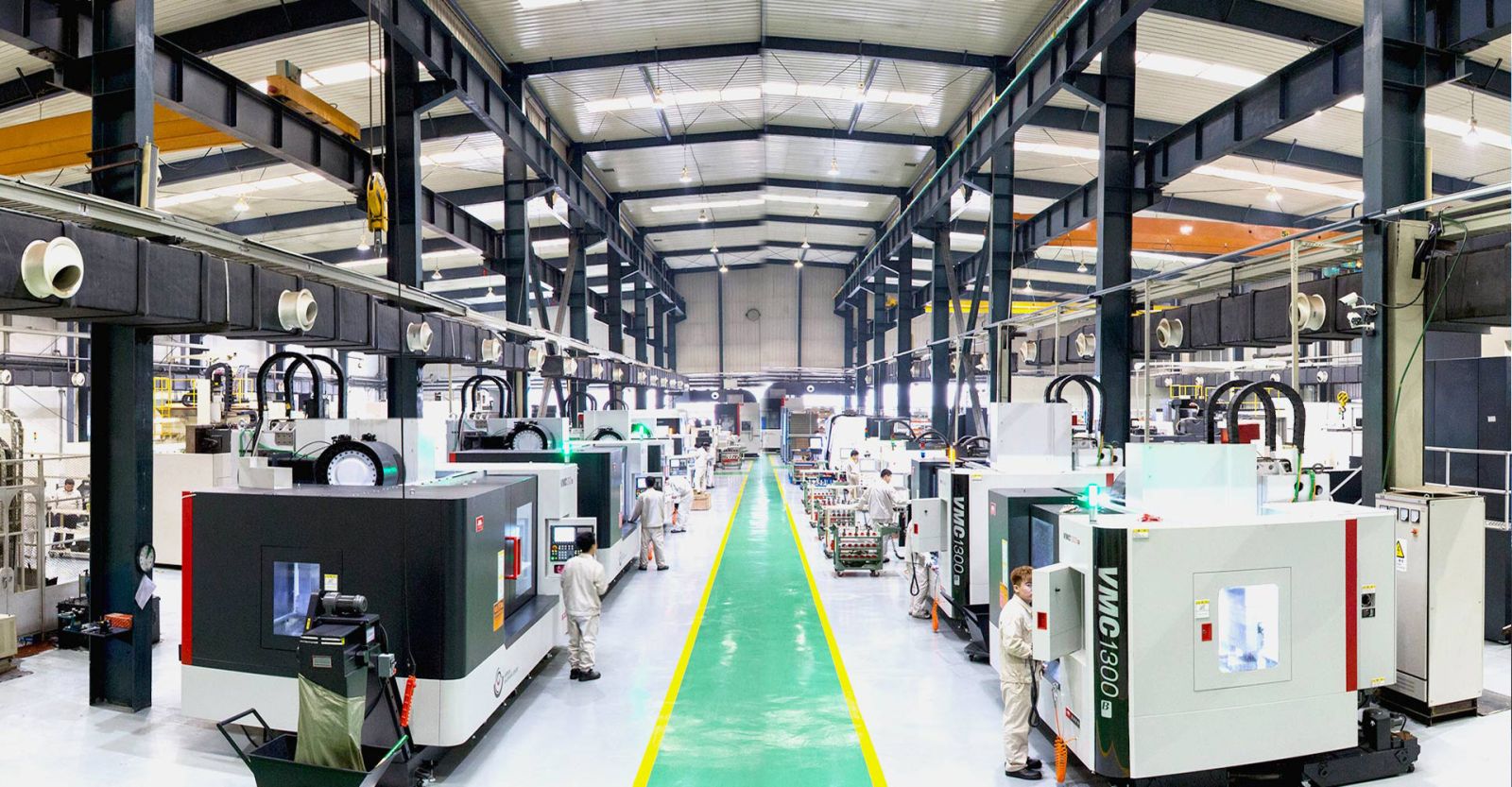
Machine Foundation: We invest in machines with cast iron polymer composite bases, direct-drive torque motors in the spindle, and linear guideways—all delivering the vibration-damping stability and power needed to push titanium without deflection.
-
Thermal Stability: Advanced spindle cooling and ambient temperature control in our shop ensure that a part machined at the beginning of a 20-hour cycle is identical to one at the end.
-
In-Process Assurance: Touch probes for automated workpiece setting and tool breakage detection, along with software for adaptive feed control, create a closed-loop system that guarantees quality and prevents costly errors.
Part 3: Beyond the Basics – The YICHOU Engineering Edge
Our differentiation lies in the synthesis of advanced technologies and deep-process knowledge.
-
Cutting Tool Tribology: We go beyond standard catalog choices. We collaborate with tooling partners to test and implement nano-layer and superlattice coatings that provide harder, smoother surfaces to resist adhesion. We optimize chipbreaker geometry specifically for titanium's stringy chips, ensuring they curl and break cleanly.
-
Fixture Engineering as a Science: For thin-walled or complex aerospace components, we design and build stress-free, kinematic clamping fixtures that support the part at strategic nodes, minimizing distortion under cutting forces and during the final unclamping.
-
Metallurgical Integrity Preservation: We understand that machining can affect the material's surface layer. We control parameters to avoid alpha-case formation (a brittle, oxygen-rich layer) and implement non-destructive testing (NDT) like fluorescent penetrant inspection (FPI) to verify surface integrity for critical applications.
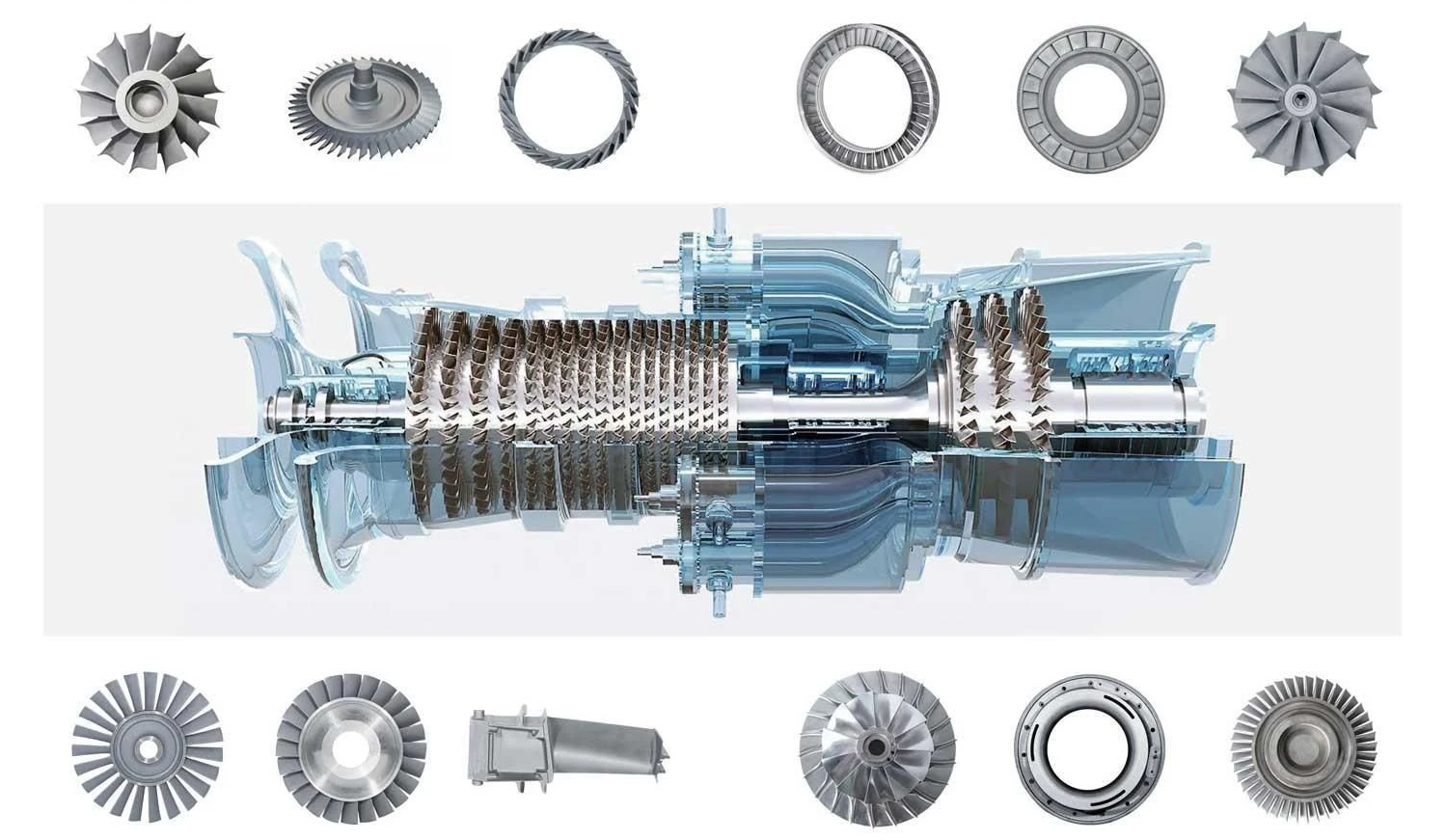
Part 4: Industry Applications – Where Theory Meets Reality
Aerospace & Defense: A turbine engine compressor blade is a classic challenge. It requires milling complex airfoil profiles in Ti-6Al-4V with a mirror-like surface finish to minimize aerodynamic drag. Any tool mark or micro-crack can become a fatigue initiation site. Our process combines 5-axis simultaneous machining, constant tool engagement programming, and final abrasive flow polishing to meet the stringent requirements of AMS 4928 and NADCAP accredited processes.
Medical & Life Sciences: A spinal fusion cage must be machined from Ti-6Al-4V ELI. Beyond precision, the entire process is governed by ISO 13485 standards for medical devices. Every step—from material traceability (lot number tracking) to machining under controlled cleanliness, to final cleaning and passivation—is documented. We utilize electrochemical machining (ECM) and vibratory finishing to remove all microscopic burrs without altering the critical dimensions or creating stress concentrations, ensuring biocompatibility and patient safety.
High-Performance Automotive: A titanium connecting rod for a Formula 1 engine saves critical grams. Machining it involves boring the large and small ends to extreme concentricity, milling the fracture-split cap interface, and achieving a specific surface texture for optimal bearing performance. Our expertise ensures the final part meets not only the print but also the unspoken requirement for absolute reliability under punishing G-forces and RPM.
Part 5: Addressing Cost and Value – A Transparent Discussion
The searches "How much is 1 lb of titanium worth?" and "Is titanium expensive to machine?" deserve direct answers.
-
Material Cost: As of [Current Year], aerospace-grade Ti-6Al-4V billet can range from $25 to $50+ per pound, depending on size, mill source, and certification. It is a premium raw material.
-
Machining Cost: Yes, machining titanium is significantly more expensive than machining aluminum or steel. This is driven by:
-
Slower cycle times (lower SFM).
-
Higher tooling costs (premium inserts, more frequent changes).
-
Investment in specialized, high-rigidity machinery.
-
The expertise required to program, fixture, and run jobs successfully.
-
The YICHOU Value Proposition: We combat these inherent costs through engineered efficiency. Our optimized toolpaths reduce cycle time. Our tool management extends insert life. Our first-pass success rate minimizes scrap. When you partner with YICHOU, you are not buying machine time; you are investing in guaranteed part performance, on-time delivery, and risk mitigation. The true cost is measured in the total cost of ownership, not just the purchase order.
Part 6: The Comprehensive Titanium Machining FAQ
-
Will a magnet stick to titanium?
No. Titanium is paramagnetic, meaning it is only very weakly attracted to magnets. This is a quick field test to distinguish it from some stainless steels. -
Can you CNC titanium?
Absolutely. CNC is the only viable method for producing precise, complex, and repeatable titanium components in a production environment. -
What is the hardest metal to machine?
This is subjective, but titanium is in the highest tier. Often, tungsten carbide, hardened tool steels (HRc > 60), and nickel-based superalloys (like Inconel 718) are considered more challenging due to even higher hardness or work-hardening rates. -
Why don't we use titanium instead of steel?
Primarily due to cost (10-30x more per volume) and machinability. Steel is superior for high-volume, low-cost components where its weight and corrosion limitations are acceptable. Titanium is a targeted solution for applications where its specific properties justify the investment. -
What is the best cutting oil for titanium?
Avoid chlorine-based additives. Use high-lubricity, synthetic or semi-synthetic coolants specifically formulated for "reactive metals." They should have extreme pressure (EP) additives and maintain stability at high temperatures.
Conclusion: Your Strategic Partnership for Titanium Success
Machining titanium is a journey that demands respect for the material, command of the technology, and relentless attention to detail. It is not a task for a general-purpose machine shop.
At YICHOU, we have dedicated our enterprise to mastering this journey. From the initial consultation where we help select the optimal alloy, through the engineering of fixtures and toolpaths, to the final inspection report, we act as an extension of your engineering team.
We invite you to move from searching for answers to implementing solutions.
Contact YICHOU today. Let's discuss your titanium challenge and transform it into your next competitive advantage.
Get Quote
- Visit our website: https://www.nbyichou.com/
- Email us: [email protected]
- Call us/whatsapp: +86 13355741031
- Chat with us: Live chat support available on our website