Titanium Ti-6Al-4V, commonly known as Grade 5 titanium or simply Ti-6Al-4V, represents the most widely used titanium alloy in the world today, accounting for approximately 50% of total titanium production. This alpha-beta titanium alloy has earned its reputation through an exceptional combination of strength, lightweight properties, corrosion resistance, and biocompatibility that makes it indispensable across aerospace, medical, marine, and high-performance industrial applications. Understanding the technical specifications, machining characteristics, and application considerations of Ti-6Al-4V is essential for engineers and procurement professionals seeking to leverage this remarkable material in their projects.
The aerospace industry relies heavily on Ti-6Al-4V for critical components including airframe structures, engine blades, discs, rings, and fasteners. In the medical field, its excellent biocompatibility has made it the material of choice for surgical implants, orthopedic devices, and dental applications. Marine engineers value its exceptional resistance to seawater corrosion, while high-performance automotive and sports equipment manufacturers appreciate its outstanding strength-to-weight ratio. This comprehensive guide will provide you with everything you need to know about specifying, sourcing, and machining Ti-6Al-4V for your applications.
Chemical Composition and Material Specifications
Ti-6Al-4V belongs to the alpha-beta class of titanium alloys, meaning its microstructure contains both alpha and beta phases at room temperature. The precise chemical composition of this alloy is tightly controlled by international specifications to ensure consistent properties. The nominal composition includes titanium as the base element, with 6% aluminum serving as the alpha stabilizer, 4% vanadium acting as the beta stabilizer, and controlled limits on impurity elements including iron, oxygen, carbon, nitrogen, and hydrogen.
The aluminum content contributes to solid solution strengthening while maintaining the alpha phase stability, which provides excellent elevated temperature performance and oxidation resistance. Vanadium addition stabilizes the beta phase, enabling heat treatment responsiveness and improving the alloy's overall mechanical properties. The strict control of interstitial elements, particularly oxygen and iron, is critical because these impurities significantly affect ductility and toughness. The maximum iron content is typically limited to 0.25% while oxygen is restricted to 0.20% in standard grades, though lower limits apply for the ELI (Extra Low Interstitial) variant intended for critical aerospace and medical applications.
Chemical Composition Table (ASTM Grade 5)
| Element | Content (%) | Purpose |
|---|---|---|
| Titanium (Ti) | Balance | Base element |
| Aluminum (Al) | 5.5 - 6.75 | Alpha stabilizer, strengthening |
| Vanadium (V) | 3.5 - 4.5 | Beta stabilizer, toughness |
| Iron (Fe) | ≤ 0.40 | Impurity |
| Oxygen (O) | ≤ 0.20 | Impurity (affects ductility) |
| Carbon (C) | ≤ 0.08 | Impurity |
| Nitrogen (N) | ≤ 0.05 | Impurity |
| Hydrogen (H) | ≤ 0.015 | Impurity |
Several international standards govern Ti-6Al-4V material specifications, each with slightly different requirements and designations. ASTM Grade 5 represents the most common specification in North America, while corresponding standards include AMS 4911 for aerospace applications, MIL-T-9047 for military use, ISO 5832-3 for medical implants, and various DIN and EN equivalents in European markets. Understanding these specification differences is important when sourcing material for applications with specific certification requirements.
International Standards Comparison
| Standard | Designation | Primary Application |
|---|---|---|
| ASTM B265 | Grade 5 | Sheet/Plate |
| ASTM B348 | Grade 5 | Bar/Billets |
| AMS 4911 | - | Aerospace Sheet |
| AMS 4928 | - | Aerospace Bar |
| MIL-T-9047 | - | Military Specifications |
| ISO 5832-3 | Grade 5 | Surgical Implants |
| DIN 3.7165 | TiAl6V4 | European Standards |
Mechanical and Physical Properties
The mechanical properties of Ti-6Al-4V in the annealed condition provide an excellent balance of strength and ductility that serves most application requirements. Ultimate tensile strength typically ranges from 895 to 1000 MPa (130,000 to 145,000 psi), while yield strength falls in the range of 820 to 880 MPa (119,000 to 128,000 psi). Elongation at break usually measures between 10% and 14%, indicating sufficient ductility for most forming and manufacturing operations. These values can be significantly enhanced through heat treatment, with solution treating and aging producing ultimate tensile strengths exceeding 1100 MPa in some product forms.
Mechanical Properties by Temper Condition
| Property | Annealed | Solution Treated | Solution Treated & Aged (STA) |
|---|---|---|---|
| Ultimate Tensile Strength | 895-1000 MPa | 930-1020 MPa | 1000-1100 MPa |
| Yield Strength (0.2%) | 820-880 MPa | 860-940 MPa | 910-990 MPa |
| Elongation (%) | 10-14 | 8-12 | 6-10 |
| Reduction of Area (%) | 25-40 | 20-35 | 15-25 |
| Hardness (HRC) | 36-39 | 38-42 | 40-44 |
| Elastic Modulus | 110 GPa | 110 GPa | 112 GPa |
The physical properties of Ti-6Al-4V contribute to its unique handling characteristics during manufacturing and service. The density of this alloy is approximately 4.43 g/cm³ (0.160 lb/in³), which is significantly lighter than steel (approximately 7.85 g/cm³) and provides the exceptional strength-to-weight ratio that makes titanium so valuable. The elastic modulus measures approximately 110 GPa (16,000 ksi), which is lower than steel but higher than aluminum, providing good stiffness combined with lightweight construction. Thermal conductivity is relatively low at about 6.7 W/m·K, which affects heat dissipation during machining and must be considered in thermal management applications.
Physical Properties Overview
| Property | Value | Comparison to Steel |
|---|---|---|
| Density | 4.43 g/cm³ | ~56% of steel (7.85) |
| Melting Point | 1604-1660°C | Similar to steel |
| Thermal Conductivity | 6.7 W/m·K | ~17% of steel (45) |
| Electrical Resistivity | 1.78 μΩ·m | Higher than steel |
| Coefficient of Expansion | 9.0 × 10⁻⁶/°C | ~67% of steel |
| Magnetic Permeability | 1.00005 | Non-magnetic |
The strength of Ti-6Al-4V can be substantially modified through heat treatment, offering designers flexibility in property optimization. The standard annealed condition provides the best combination of strength, ductility, and toughness for general applications. The solution-treated and aged (STA) condition, often designated as Ti-6Al-4V Grade 5 ELI in the aged condition, delivers higher strength for applications where maximum performance is required. Understanding these heat treatment options allows specification of the optimal condition for each application's specific requirements.
Applications Across Industries
The aerospace industry represents the largest consumer of Ti-6Al-4V, where its exceptional strength-to-weight ratio and high-temperature performance are leveraged throughout aircraft and spacecraft structures. Engine components including compressor blades, discs, and rings benefit from its ability to maintain strength at elevated temperatures while reducing overall engine weight. Airframe applications include structural fasteners, wing components, and landing gear elements where weight savings directly translate to fuel efficiency and payload capacity improvements. The defense sector similarly relies on Ti-6Al-4V for missile components, naval vessel hardware, and various military equipment applications.
Aerospace Application Examples
| Component | Application Benefit | Typical Specification |
|---|---|---|
| Engine Blades | High-temperature strength, fatigue resistance | AMS 4928 |
| Airframe Fasteners | Weight savings, corrosion resistance | MIL-T-9047 |
| Landing Gear | Strength-to-weight, wear resistance | AMS 4911 |
| Structural Brackets | Weight reduction, fatigue life | ASTM B348 |
| Hydraulic Components | Corrosion resistance, strength | AMS 5643 |
Medical device manufacturers have adopted Ti-6Al-4V extensively for implants and surgical instruments due to its excellent biocompatibility and osseointegration properties. Orthopedic implants including hip and knee replacements, spinal fusion devices, and fracture fixation plates commonly utilize this alloy because bone tissue naturally integrates with the titanium surface, creating stable, long-lasting connections. Dental implants represent another major application area, where the alloy's corrosion resistance in bodily fluids and favorable mechanical properties support successful long-term outcomes. Surgical instruments benefit from the material's strength, light weight, and resistance to sterilization procedures.
Medical Industry Applications
| Application | Key Requirements | Ti-6Al-4V Advantage |
|---|---|---|
| Hip Replacements | Biocompatibility, wear resistance, strength | Excellent osseointegration |
| Dental Implants | Corrosion resistance, biocompatibility | Resistant to body fluids |
| Spinal Fusion Devices | Strength, fatigue life, radiopacity | Maintains strength long-term |
| Surgical Instruments | Lightweight, sterilization resistance | Non-reactive, durable |
| Bone Screws | Biocompatibility, thread strength | Promotes bone healing |
Marine and offshore applications take advantage of Ti-6Al-4V's exceptional resistance to seawater corrosion, which far exceeds that of stainless steel in many environments. Propeller shafts, underwater fittings, seawater cooling systems, and hull components in high-performance vessels utilize this alloy to eliminate corrosion concerns and reduce maintenance requirements. The chemical processing industry employs Ti-6Al-4V for heat exchangers, reactor vessels, and piping systems handling corrosive chemicals where its corrosion resistance provides reliable long-term performance.
CNC Machining Challenges and Solutions
Machining Ti-6Al-4V presents distinct challenges that require specialized approaches and expertise to achieve optimal results. The material's low thermal conductivity creates heat buildup at the cutting zone, which accelerates tool wear and can damage workpiece surface properties. The material's tendency toward built-up edge formation and chemical reactivity with cutting tool materials at elevated temperatures further complicates successful machining. Additionally, the alloy's relatively low elastic modulus causes material springback during cutting, requiring careful consideration of setup rigidity and cutting parameters.
Machining Parameter Guidelines
| Operation | Cutting Speed (m/min) | Feed Rate (mm/rev) | Depth of Cut (mm) | Notes |
|---|---|---|---|---|
| Rough Milling | 30-50 | 0.15-0.30 | 2.0-6.0 | Use rigid setups |
| Finish Milling | 50-80 | 0.05-0.15 | 0.2-0.5 | Light cuts for surface |
| Rough Turning | 40-60 | 0.15-0.30 | 2.0-4.0 | Coolant essential |
| Finish Turning | 60-90 | 0.05-0.15 | 0.2-0.5 | Sharp tools required |
| Drilling | 20-35 | 0.05-0.15 | - | Peck drilling for deep holes |
| Tapping | 10-20 | - | - | Use specialized taps |
Tool selection represents a critical factor in successful Ti-6Al-4V machining. Premium grade carbide tooling with specialized coatings significantly outperforms standard grades in this application. PVD (Physical Vapor Deposition) coated tools, particularly those with AlTiN (Aluminum Titanium Nitride) coatings, provide excellent heat resistance and wear resistance for titanium machining. Coolant delivery is essential, with high-pressure coolant systems helping to flush chips from the cutting zone and dissipate heat. Some applications benefit from cryogenic cooling using liquid nitrogen or CO₂, though this adds complexity and cost to the operation.
Recommended Tool Materials and Coatings
| Tool Type | Recommended Coating | Surface Speed (m/min) | Application |
|---|---|---|---|
| Carbide (C2) | Uncoated | 25-45 | Roughing |
| Carbide (C3) | TiCN | 35-55 | General |
| Carbide | AlTiN (PVD) | 45-75 | High-performance |
| Carbide | TiAlN (PVD) | 50-80 | Finish machining |
| HSS | - | 15-25 | Low-volume only |
| CBN | - | 80-150 | Hardened material |
Cutting parameter optimization balances material removal rate against tool life and surface finish quality. Lower cutting speeds compared to steel machining are typically required, generally in the range of 30 to 60 surface meters per minute for roughing operations. Light cuts with generous feeds help maintain tool edge strength while avoiding excessive heat buildup. Depth of cut should be sufficient to maintain cutting edge engagement without causing chatter, while maintaining adequate rigidity in the workholding setup is essential for achieving tight tolerances and excellent surface finishes.
Surface Treatment and Finishing Options
Post-machining surface treatments enhance Ti-6Al-4V components for specific functional or aesthetic requirements. Anodizing creates a thick oxide layer that improves corrosion resistance and allows coloring for aesthetic or identification purposes. The anodized surface can achieve various colors including blue, purple, green, and gold depending on processing parameters, providing both functional benefits and visual appeal for consumer products and architectural applications.
Surface Treatment Options
| Treatment | Purpose | Typical Applications | Thickness |
|---|---|---|---|
| Anodizing | Corrosion resistance, coloring | Decorative, identification | 1-5 μm |
| Shot Peening | Fatigue life improvement | Aerospace components | Surface compression |
| Passivation | Enhanced corrosion resistance | Medical, marine | 5-20 nm |
| Electropolishing | Surface smoothness | Medical devices, optical | - |
| DLC Coating | Wear resistance | Sliding components | 1-5 μm |
| Nitriding | Surface hardening | Wear applications | 10-50 μm |
Shot peening introduces compressive residual stresses into the surface layer, significantly improving fatigue life for components subjected to cyclic loading. This treatment is particularly important for aerospace engine components and structural elements where fatigue failure represents a primary concern. The controlled peening process creates a work-hardened surface layer that resists crack initiation and propagation, extending service life under demanding conditions.
Passivation treatments enhance the natural oxide layer's thickness and uniformity, improving corrosion resistance for medical and marine applications. While titanium naturally forms a highly protective oxide layer, controlled passivation ensures optimal surface characteristics for applications requiring maximum corrosion resistance. Electropolishing produces exceptionally smooth, reflective surfaces suitable for medical devices, optical components, and high-visibility aesthetic applications.
Cost Considerations and Economics
Understanding the cost structure of Ti-6Al-4V components helps procurement professionals make informed decisions. Material costs for Ti-6Al-4V bar and plate typically range from $30-80 per kilogram depending on form, quantity, and supplier. This is significantly higher than aluminum ($2-5/kg) or stainless steel ($5-15/kg), but the performance benefits often justify the premium for critical applications.
Cost Comparison by Material
| Material | Approximate Cost ($/kg) | Strength-to-Weight Ratio | Cost per Unit Strength |
|---|---|---|---|
| Ti-6Al-4V | 40-80 | Excellent | Moderate |
| Aluminum 6061-T6 | 3-6 | Good | Low |
| Stainless Steel 304 | 6-15 | Fair | Low |
| Carbon Steel | 1-3 | Poor | Very Low |
Machining costs for titanium typically run 2-3 times higher than aluminum due to slower cutting speeds, increased tool wear, and specialized equipment requirements. However, the final component cost must consider the total system cost including weight savings, extended service life, and reduced maintenance. In aerospace applications where fuel savings from weight reduction exceed the component cost premium, Ti-6Al-4V becomes the economically optimal choice.
Sourcing and Quality Considerations
Qualifying Ti-6Al-4V suppliers requires attention to material certification, quality systems, and traceability documentation. Aerospace and medical applications typically require suppliers with AS9100 or ISO 13485 certification respectively, demonstrating implementation of quality management systems appropriate for these demanding industries. Material test reports should confirm chemical composition, mechanical properties, and dimensional specifications against the applicable standard.
Required Certifications by Industry
| Industry | Required Certifications | Documentation |
|---|---|---|
| Aerospace | AS9100, Nadcap | Material test reports, full traceability |
| Medical | ISO 13485, FDA compliance | Biocompatibility testing, validation |
| Marine | ABS, DNV classification | Type approval certificates |
| General Industrial | ISO 9001 | Material certificates |
Supply chain traceability has become increasingly important, particularly for aerospace applications where component history must be documented throughout the manufacturing process. Many programs now require complete material traceability from melt source through final component, requiring suppliers to maintain detailed records and provide certified documentation. Working with established suppliers who have demonstrated supply chain management capabilities helps ensure continuity and compliance.
Lead times for Ti-6Al-4V material and machined components typically exceed those for common materials due to limited supplier base and specialized processing requirements. Planning for extended lead times, typically 8 to 16 weeks for custom machined components depending on complexity and quantity, helps avoid schedule disruptions. Stocking common bar and plate sizes can reduce lead times for production programs, while prototype quantities may require premium pricing for expedited processing.
Frequently Asked Questions (FAQ)
Q: What is the difference between Ti-6Al-4V Grade 5 and Ti-6Al-4V ELI?
A: ELI (Extra Low Interstitial) grade has reduced oxygen (≤0.13%) and iron content limits, providing improved ductility and toughness, particularly at cryogenic temperatures. ELI is specified for critical aerospace and medical applications requiring maximum material reliability.
Q: Can Ti-6Al-4V be welded?
A: Yes, Ti-6Al-4V can be welded using GTAW (TIG) or GMAW (MIG) processes, but requires inert gas shielding (argon or helium) to prevent oxidation. Post-weld heat treatment is often required to restore mechanical properties in the heat-affected zone.
Q: What is the maximum service temperature for Ti-6Al-4V?
A: Ti-6Al-4V maintains useful strength up to approximately 400°C (750°F) for continuous service, with short-term capability to 540°C (1000°F). For higher temperature applications, specialized alloys like Ti-6242 should be considered.
Q: Why is Ti-6Al-4V more difficult to machine than aluminum?
A: The low thermal conductivity of titanium causes heat to concentrate at the cutting edge rather than dissipating into the chip or workpiece. Additionally, titanium's chemical reactivity with cutting tool materials at elevated temperatures causes built-up edge formation and rapid tool wear.
Q: What surface finish can be achieved on Ti-6Al-4V?
A: With proper machining parameters, surface finishes of Ra 0.8 μm (32 μin) or better can be achieved. Electropolishing can further improve surface finish to Ra 0.2 μm (8 μin) or better for specialized applications.
Partner with Yichou for Ti-6Al-4V Machining
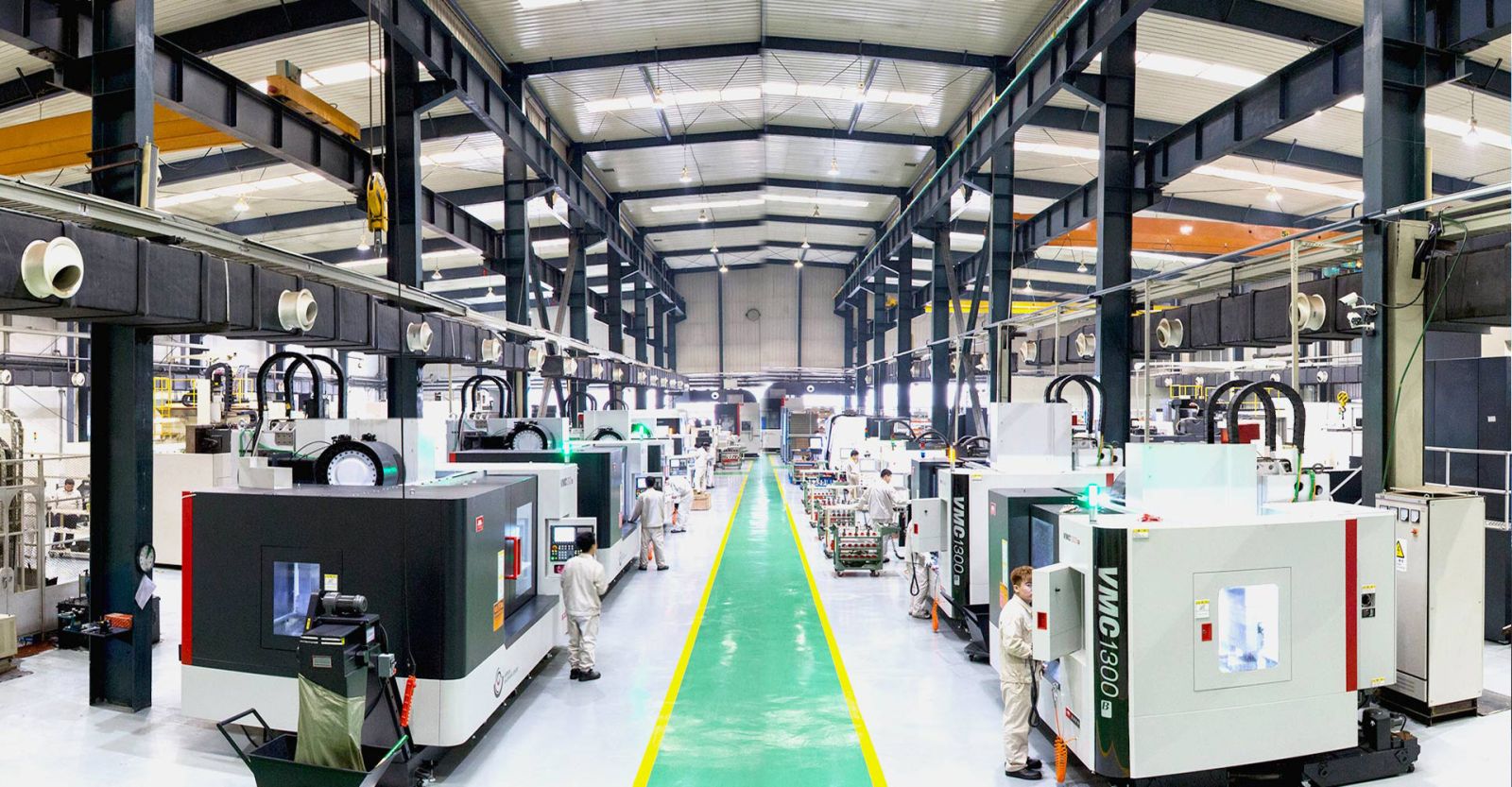
Ningbo Yichou Industrial Co., Ltd. offers comprehensive CNC machining capabilities for Ti-6Al-4V and other titanium alloys. With over 20 years of experience in precision manufacturing, their team understands the unique challenges of titanium machining and has developed optimized processes to deliver high-quality components efficiently. Their capabilities include 3, 4, and 5-axis CNC machining, precision grinding, and comprehensive secondary operations including heat treatment, surface finishing, and inspection.
Yichou's quality systems support aerospace, medical, and industrial applications with full inspection capabilities and comprehensive documentation. Their engineering team provides design for manufacturability feedback to optimize your Ti-6Al-4V components for production efficiency without compromising quality. Located in Ningbo, Zhejiang, they offer competitive pricing and efficient delivery for customers worldwide.
Contact Yichou today to discuss your Ti-6Al-4V machining requirements. Their experienced team will work with you to develop cost-effective manufacturing solutions that meet your exact specifications and quality requirements.
Contact us today for a competitive quote and technical support!
Let Yichou help you achieve excellence in your next project. Whether you need raw materials, custom alloy solutions, or precision-manufactured components, our team is ready to assist.
- Email us: [email protected]
- Call us/whatsapp: +86 13355741031
- Chat with us: Live chat support available on our website