1. Introduction
Aerospace CNC machining plays a vital role in the production of jet engine components, where precision, durability, and strict adherence to industry standards are non-negotiable. The aerospace sector demands parts that can withstand extreme temperatures, high stress, and long-term wear, making advanced CNC machining indispensable.
To meet these rigorous requirements, manufacturers must comply with aerospace certifications such as AS9100 and NADCAP, ensuring quality and reliability in every component. At YICHOU, we specialize in high-performance CNC machining for jet engines, delivering precision-engineered parts that meet the highest industry standards.
With cutting-edge technology and a commitment to excellence, YICHOU provides aerospace manufacturers with dependable CNC machining solutions tailored for critical jet engine applications.
2. What is Aerospace CNC Machining?
Aerospace CNC (Computer Numerical Control) machining is a precision manufacturing process that uses automated, computer-guided tools to shape high-performance materials into complex components for aircraft and jet engines. Unlike conventional machining, CNC ensures micron-level accuracy, repeatability, and compliance with strict aerospace tolerances.
Key Materials in Aerospace CNC Machining
-
Titanium – High strength-to-weight ratio, corrosion resistance (used in turbine blades, structural components).
-
Inconel (Nickel-based alloys) – Heat resistance for combustion chambers and exhaust systems.
-
Aluminum – Lightweight yet durable (common in housings and brackets).
-
Composites (CFRP, GFRP) – For weight-sensitive applications like ducts and fairings.
Why 5-Axis CNC Machining is Critical for Jet Engines
Jet engine components often feature intricate geometries (e.g., turbine blades with airfoil curves). 5-axis CNC machining allows simultaneous cutting from multiple angles, enabling:
-
Single-setup precision (reduces errors from repositioning).
-
Faster production of complex contours.
-
Tighter tolerances (±0.0001" or better) for aerodynamic efficiency.
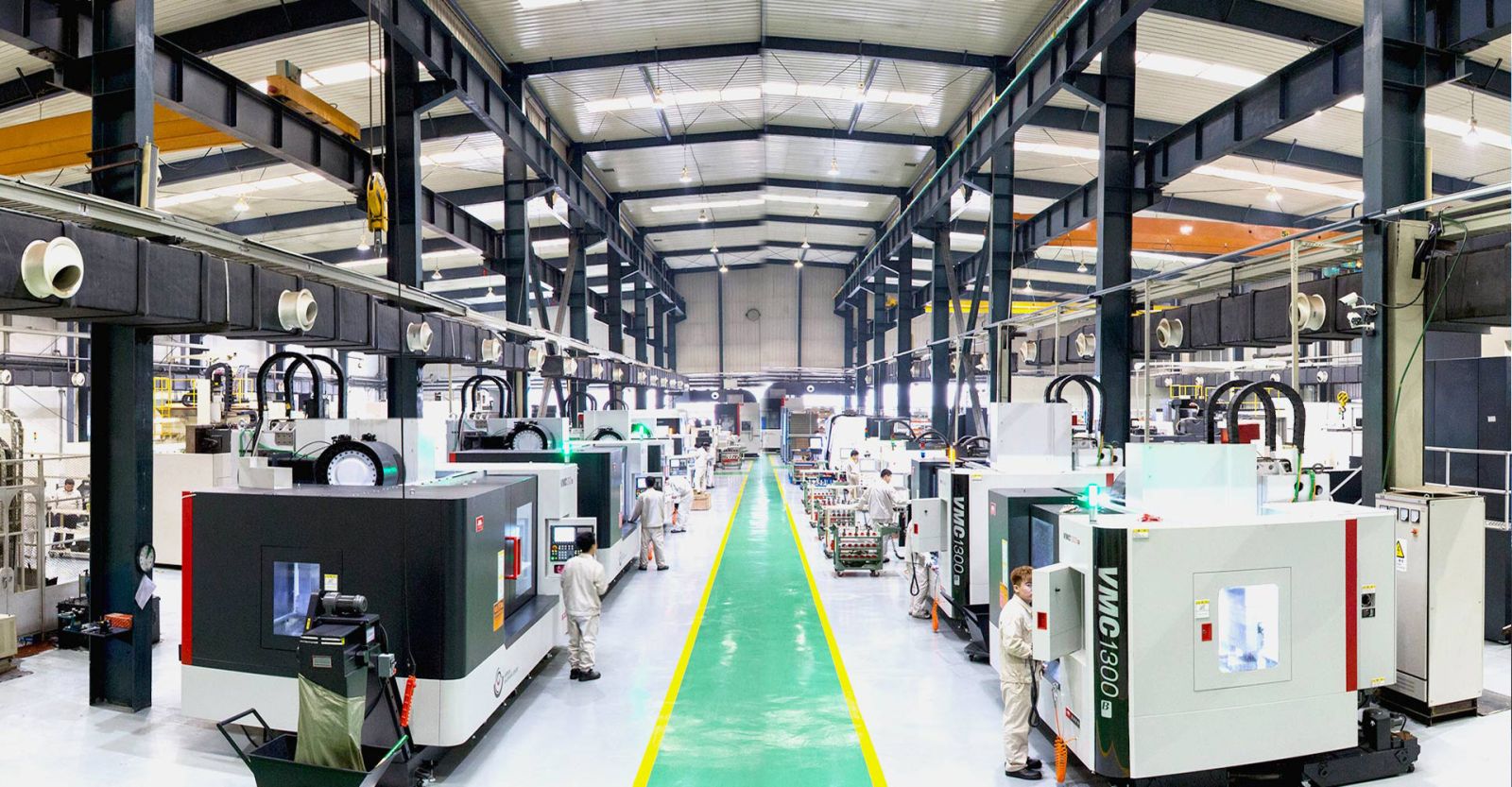
At YICHOU, our advanced 5-axis CNC centers are optimized for aerospace-grade materials, ensuring flawless performance in extreme conditions.
.jpg)
3. Why High-Speed Machining is Essential for Aerospace
High-speed machining (HSM) has become a game-changer in aerospace manufacturing, particularly for jet engine components that demand both precision and efficiency. Here's why leading aerospace manufacturers rely on HSM:
-
Faster Production Without Compromising Precision
HSM utilizes advanced toolpaths and spindle speeds (often exceeding 20,000 RPM) to remove material rapidly while maintaining tight tolerances (±0.0005" or better). This is crucial for meeting tight production schedules for parts like turbine disks and compressor blades. -
Reduced Heat Distortion in Critical Components
The high cutting speeds actually reduce heat buildup in the workpiece, minimizing thermal distortion that could affect the dimensional stability of temperature-sensitive alloys like Inconel and titanium. -
Cost-Efficiency for High-Volume Orders
By dramatically reducing cycle times, HSM lowers per-part costs significantly - often by 30-50% compared to conventional machining. This makes it ideal for large production runs of standardized jet engine components.
At YICHOU, our high-speed CNC centers combine cutting-edge spindle technology with optimized cooling systems to deliver these benefits for aerospace manufacturers worldwide.
4. CNC vs. Other Manufacturing Methods
CNC vs. 3D Printing for Jet Engine Parts
-
CNC Machining is preferred for:
-
High-strength, flight-critical metal components
-
Parts requiring superior surface finishes (Ra < 32 µin)
-
Components with tight dimensional tolerances
-
-
3D Printing is better suited for:
-
Complex internal geometries (cooling channels)
-
Rapid prototyping of non-critical parts
-
Lightweight structural components
-
CNC vs. Robotics in Aerospace Manufacturing
-
CNC Machines excel at:
-
Ultra-precise material removal (sub-micron accuracy)
-
Working with high-performance alloys
-
Complex 5-axis operations
-
-
Robotics are typically used for:
-
Assembly line automation
-
Handling and positioning large components
-
Repetitive tasks like drilling/riveting
-
CNC vs. VMC for Turbine Blades
-
5-Axis CNC is ideal for turbine blades because:
-
Can machine complex airfoil shapes in single setup
-
Provides better access to contoured surfaces
-
Maintains tighter tolerances across curved geometries
-
-
VMCs (Vertical Machining Centers) are better for:
-
Simpler, prismatic components
-
High-volume production of less complex parts
-
Applications where cost is more critical than complexity
-
YICHOU's Advantage: We specialize in 5-axis high-speed CNC machining specifically optimized for the most demanding jet engine components, combining the strengths of each technology for superior results.

5. Key Applications of CNC Machining in Jet Engines
Precision CNC machining is the backbone of modern jet engine manufacturing, enabling the production of mission-critical components that must perform flawlessly under extreme conditions. Here are the most demanding applications:
Turbine Blades & Housings
-
Challenge: Complex airfoil geometries that require perfect aerodynamic profiles
-
Solution: 5-axis CNC machining achieves:
-
Ultra-precise blade curvatures (±0.0001" tolerance)
-
Smooth surface finishes (Ra < 16 µin) for optimal airflow
-
Single-setup machining of monolithic designs
-
Combustion Chambers
-
Challenge: Withstanding 2,000°F+ temperatures while maintaining structural integrity
-
Solution: CNC machining of nickel superalloys (Inconel 718, Hastelloy X) with:
-
Precision cooling hole patterns
-
Stress-relieving features
-
Seamless assembly interfaces
-
Landing Gear Components
-
Challenge: Handling massive impact loads (up to 300% of aircraft weight)
-
Solution: CNC machining of high-strength materials:
-
Titanium forgings (Ti-6Al-4V) for strength-to-weight ratio
-
300M steel for shock absorption
-
Precision bearing surfaces with < 0.0002" runout
-
Fuel System Parts
-
Challenge: Preventing leaks in high-pressure systems (up to 5,000 psi)
-
Solution: CNC-machined components feature:
-
Hermetic sealing surfaces
-
Complex internal fuel passages
-
Corrosion-resistant coatings
-
6. Advantages of CNC Machining in Aerospace
CNC machining delivers unparalleled benefits for aerospace manufacturers:
✔ High Precision (tolerances within ±0.0001")
-
Achieves surface finishes to 4 µin for aerodynamic surfaces
-
Maintains positional accuracy better than 0.0005" across large components
-
Essential for interference-fit assemblies in jet engines
✔ Repeatability for Mass Production
-
99.9% part-to-part consistency across production runs
-
Automated quality control via in-machine probing
-
Scalable from prototypes to 10,000+ unit batches
✔ Material Versatility (Superalloys, Hardened Steels)
-
Machines all aerospace-grade materials:
-
Titanium (Ti-6Al-4V, CP-Ti)
-
Nickel alloys (Inconel 718, 625)
-
Stainless steels (15-5PH, 17-4PH)
-
Aluminum (7075, 2024)
-
-
Specialized tooling for difficult-to-machine materials
✔ Reduced Waste with Optimized Toolpaths
-
Advanced CAM software minimizes material removal
-
Nesting algorithms maximize raw material utilization
-
Dry machining techniques for eco-friendly production
YICHOU's Capabilities: Our CNC machining centers combine these advantages with aerospace-specific expertise, delivering components that meet or exceed AS9100 standards for your most critical applications.
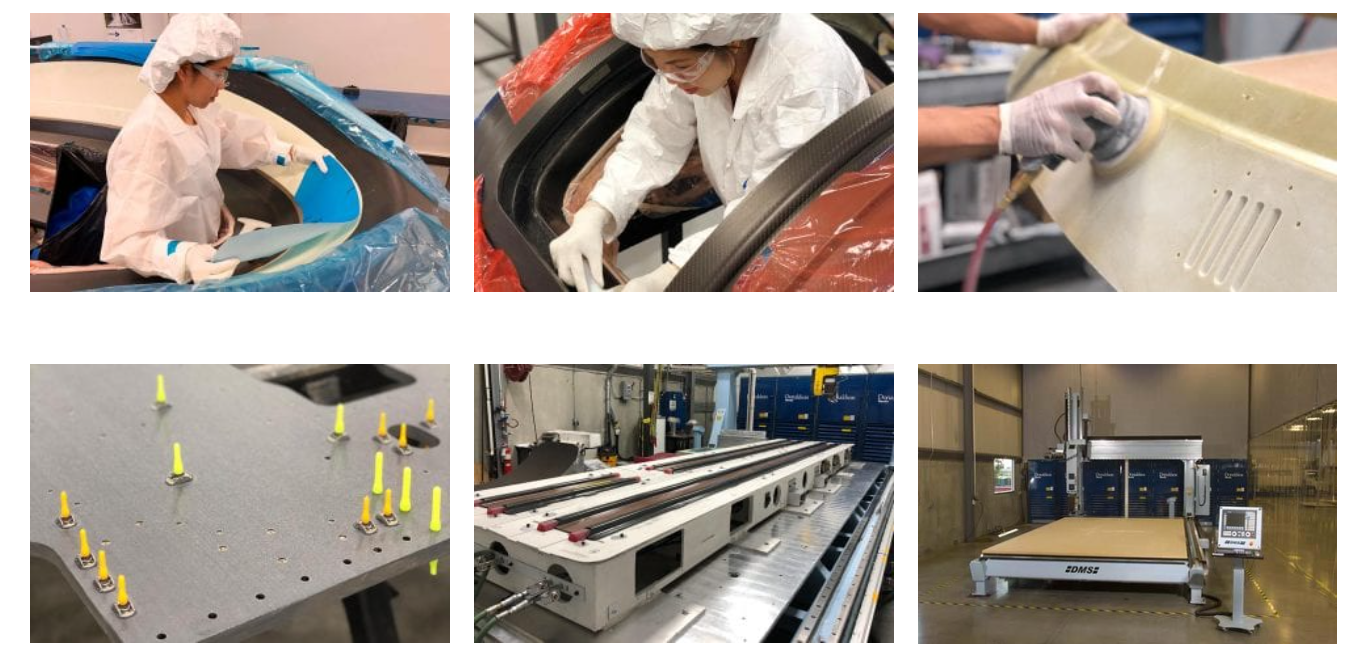
7. Choosing the Best Aerospace CNC Machining Supplier
Selecting the right CNC machining partner for aerospace components is critical to ensuring quality, compliance, and performance. Here are the key factors to consider:
✔ Certifications Matter (AS9100, ISO 9001, ITAR)
-
AS9100 – Ensures compliance with aerospace quality management systems.
-
NADCAP – Required for special processes like heat treatment and NDT.
-
ITAR Compliance – Essential for defense-related projects.
YICHOU is fully certified, meeting all aerospace industry standards for quality and security.
✔ Advanced Equipment (5-Axis, Swiss-Type CNC, High-Speed Machining)
-
5-Axis CNC – Essential for complex geometries like turbine blades.
-
Swiss-Type CNC – Ideal for high-precision, small-diameter components.
-
High-Speed Machining (HSM) – Reduces cycle times while maintaining accuracy.
YICHOU invests in cutting-edge CNC technology to deliver superior aerospace components.
✔ Quality Control (CMM Inspection, Surface Finish Testing, Material Certification)
-
CMM (Coordinate Measuring Machine) – Verifies micron-level accuracy.
-
Surface Finish Testing – Ensures aerodynamic efficiency (Ra < 16 µin).
-
Material Traceability – Full documentation from raw material to finished part.
YICHOU’s rigorous inspection process guarantees defect-free components.
✔ Why Choose YICHOU?
-
Competitive Pricing – Cost-effective without compromising quality.
-
Fast Lead Times – Rapid prototyping and production scaling.
-
Global Shipping – Reliable logistics for international clients.
8. Common CNC Machining Questions (FAQs)
Q: What does ATC stand for in CNC?
A: ATC stands for Automatic Tool Changer, allowing CNC machines to switch tools automatically for uninterrupted machining.
Q: Is CNC good for mass production?
A: Yes! CNC machining is ideal for high-volume aerospace parts due to its repeatability (±0.0001" tolerance).
Q: What are the disadvantages of CNC?
A: The main drawback is higher initial setup costs, but long-term ROI is excellent due to reduced waste and faster production.
Q: Is AutoCAD used in CNC?
A: Yes, AutoCAD is used for CAD modeling, while CAM software converts designs into CNC toolpaths.
9. Conclusion
Aerospace CNC machining is the backbone of jet engine manufacturing, delivering precision, durability, and compliance with industry standards. From turbine blades to combustion chambers, CNC technology ensures components meet the highest performance requirements.
Get Quote
- Visit our website: https://www.nbyichou.com/
- Email us: [email protected]
- Call us/whatsapp: +86 13355741031
- Chat with us: Live chat support available on our website