I. Introduction
The aero engine industry lies at the heart of modern aviation, powering everything from commercial airliners to advanced military aircraft. With constant demand for higher efficiency, greater reliability, and lower environmental impact, engine manufacturers face intense pressure to innovate and deliver superior propulsion systems. As a result, the supply chain behind every engine is just as critical as the engine itself.
Behind every successful aero engine program is a network of specialized suppliers that produce the high-precision components required to meet extreme operating conditions. From turbine blades to structural supports, these parts must meet strict aerospace standards for strength, temperature resistance, and dimensional accuracy. The manufacturing of such components is a cornerstone of the industry, ensuring safety, performance, and longevity in the skies.
At YICHOU, we specialize in the precision machining and manufacturing of advanced components for the aerospace sector. With capabilities in titanium alloys, high-temperature alloys, and stainless steels, we provide custom-engineered parts for aero engines that meet the exacting requirements of global manufacturers. Our commitment to quality, on-time delivery, and engineering support makes us a trusted partner in the aerospace supply chain.

II. Who Makes the Best Aero Engines?
When it comes to aero engines, a few key players dominate the global market—each known for their engineering excellence and technological innovation. General Electric (GE Aviation), Rolls-Royce, Pratt & Whitney, and Safran Aircraft Engines lead the way in designing and producing engines for both commercial and military aircraft.
GE Aviation is known for high-thrust engines such as the GE90 and GE9X, powering wide-body aircraft like the Boeing 777. Rolls-Royce has earned its reputation through innovations in high-bypass turbofan engines, particularly with the Trent engine series used on Airbus aircraft. Pratt & Whitney has revolutionized fuel efficiency with its geared turbofan (GTF) engine, while Safran, through its joint venture CFM International, co-develops the widely used CFM56 and LEAP engines—among the most common in the world.
But what exactly defines the "best" aero engine? It's a combination of multiple factors:
-
Fuel efficiency for reducing airline operating costs and emissions
-
Reliability and durability to minimize downtime and maintenance
-
Innovative design that enables lighter weight, better performance, and quieter operation
-
Ease of integration with airframes and adaptability to future technologies, including sustainable aviation fuels
As a critical part of this complex global supply chain, YICHOU supports these industry leaders by providing high-precision components that meet the stringent requirements of aerospace applications. Whether it’s machining parts from high-performance alloys or meeting AS9100 quality standards, we deliver components that integrate seamlessly into these world-class engine systems. Our advanced manufacturing capabilities, responsive engineering support, and rigorous testing processes make YICHOU a dependable partner for aero engine programs worldwide.
.jpg)
III. Who Makes Aircraft Engines in the US?
The United States is home to some of the most prominent aircraft engine manufacturers in the world. Companies like General Electric (GE Aviation) and Pratt & Whitney play a vital role in powering both commercial and military aircraft across the globe.
GE Aviation is known for its powerful and efficient jet engines such as the GE90, GEnx, and LEAP (via CFM International). Pratt & Whitney, part of Raytheon Technologies, is renowned for its Geared Turbofan (GTF) engines, the F135 for the F-35 fighter jet, and a range of auxiliary and regional aircraft engines.
Despite their scale and legacy, US aero engine manufacturers face a number of challenges:
-
High R&D costs and long development cycles
-
Increasing demands for fuel efficiency and emissions reduction
-
Complex supply chain management under tight regulatory control
-
Shortage of skilled labor and high-precision manufacturing capacity
To meet these challenges, YICHOU provides component manufacturing and machining services to support US clients. We offer precision parts made from advanced materials like titanium and high-temperature nickel alloys, produced under strict quality standards to align with AS, ASTM, and NADCAP requirements. Our responsiveness, competitive pricing, and consistent quality allow American engine manufacturers to expand their sourcing options without compromising on performance or compliance.
IV. Which Companies Make Airplane Engines?
The aero engine market is shaped by a small group of global players, often working through strategic partnerships. For example:
-
CFM International, a 50-50 joint venture between GE Aviation and Safran Aircraft Engines, produces the CFM56 and LEAP engines, widely used in the Airbus A320 and Boeing 737 families.
-
International Aero Engines (IAE), a consortium including Pratt & Whitney and MTU Aero Engines, developed the V2500 engine series.
-
Rolls-Royce supplies engines for long-haul aircraft like the Airbus A350 and Boeing 787, and also serves defense programs across NATO countries.
These companies support major aircraft programs, including:
-
Boeing: 737 (LEAP), 777 (GE90, GE9X), 787 (GEnx, Trent 1000)
-
Airbus: A320neo (LEAP, GTF), A350 (Trent XWB)
-
Military: F-15, F-35, B-52, and others using specialized turbofan and turbojet engines
As a global supplier, YICHOU ensures full compatibility with international quality standards and manufacturing protocols. We have experience producing components for multinational clients and understand the documentation, traceability, and precision required in aerospace contracts. Our production systems are designed to adapt to customer specifications, helping clients worldwide optimize performance and supply chain flexibility.
V. What Is the Most Common Aero Engine?
Among all aircraft engines in operation today, the CFM56 series is the most widely used jet engine in commercial aviation history. Developed by CFM International, the CFM56 powers aircraft such as the Boeing 737 Classic/NG and the Airbus A320ceo. Over 30,000 units have been delivered, earning it a reputation for exceptional reliability and performance.
Its successor, the LEAP (Leading Edge Aviation Propulsion) engine, continues this legacy. Designed with advanced materials and improved aerodynamics, the LEAP engine powers the latest generation of narrow-body jets like the Boeing 737 MAX, Airbus A320neo, and COMAC C919. It offers reduced fuel consumption, lower emissions, and longer on-wing time compared to earlier engines.
These engines are the backbone of global airline fleets, making the demand for high-quality, compatible components continuous and critical. YICHOU contributes to this ecosystem by manufacturing and supplying key components used in engines like the CFM56 and LEAP series. These include:
-
Blades and vanes
-
Turbine casings
-
Sealing and structural parts
-
Shafts and support housings
With deep expertise in working with aerospace-grade alloys and strict dimensional controls, we support the mass deployment and maintenance of these widely adopted engines.
VI. Why Are Jet Engines Hard to Manufacture?
Jet engines are among the most complex machines ever built. They operate under extreme conditions—very high temperatures, tremendous pressure differentials, and continuous rotational forces—demanding absolute precision in every component.
Several key factors contribute to the complexity of jet engine manufacturing:
-
Advanced materials: Components must withstand temperatures above 1,000°C. This requires the use of high-temperature alloys such as Inconel, titanium alloys, and ceramic matrix composites.
-
Tight tolerances: Even microscopic imperfections can lead to catastrophic failure. Tolerances are often within microns, and surface finishes must meet aerospace-grade standards.
-
Rigorous testing: Every component must pass stringent inspections, including X-ray, ultrasonic testing, and destructive testing in some cases, to ensure integrity and reliability.
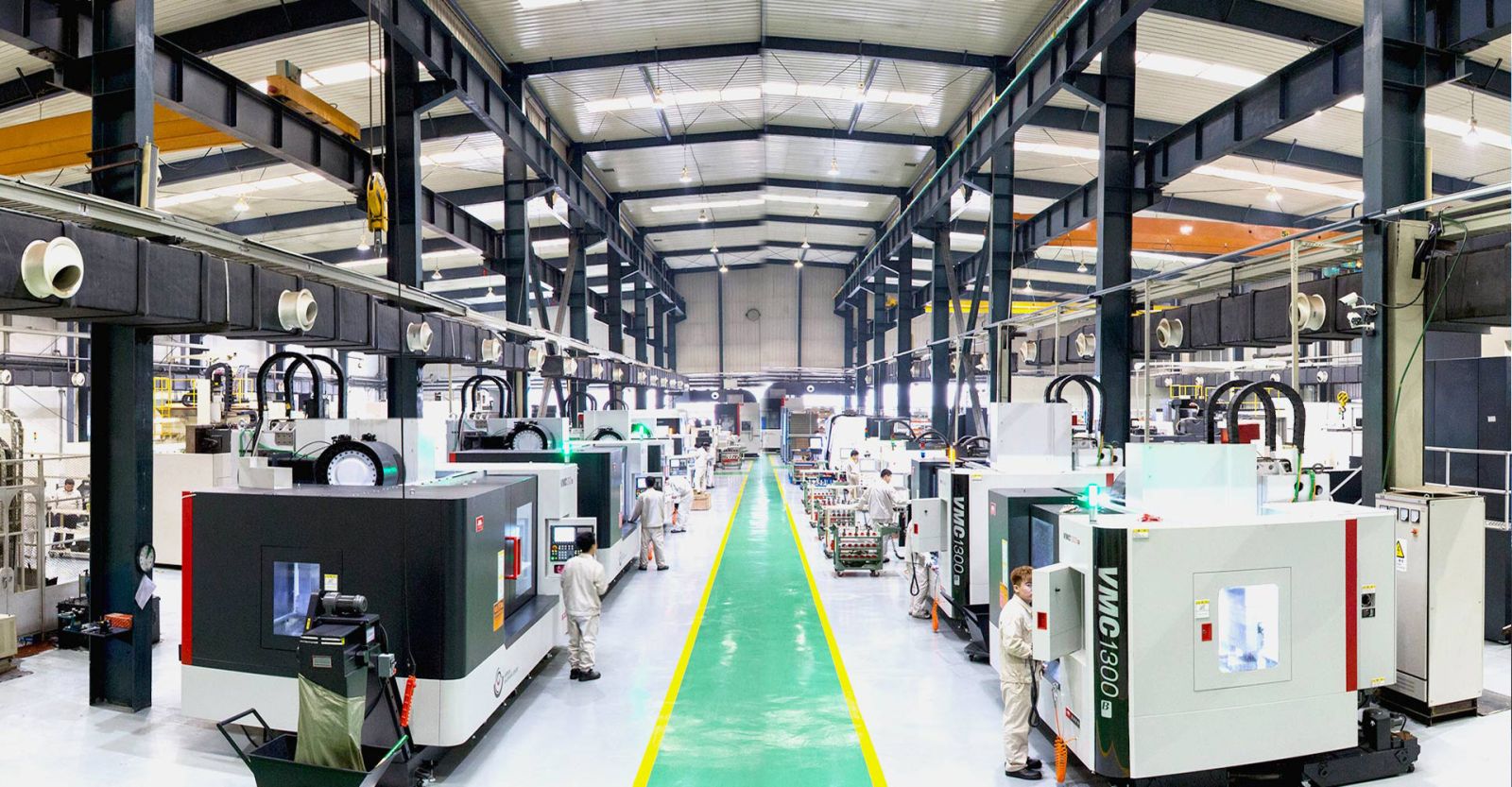
YICHOU has the capability and infrastructure to meet these challenges head-on. With our advanced CNC machining centers, thermal treatment expertise, and full in-house quality control systems, we consistently deliver parts that meet or exceed aerospace specifications. Our facility is equipped for:
-
Precision machining of high-temperature alloys
-
Close-tolerance grinding, turning, and milling
-
Surface and structural inspections aligned with NADCAP and international standards
By combining technical knowledge with quality-focused manufacturing, YICHOU helps engine OEMs and Tier 1 suppliers meet production targets and maintain safety across the skies.
VII. What Do Companies Like Pratt & Whitney, Rolls-Royce, and GE Make?
The world’s leading engine OEMs—Pratt & Whitney, Rolls-Royce, and GE Aviation—are known for producing advanced propulsion systems across civil and military markets.
-
Pratt & Whitney manufactures the Geared Turbofan (GTF) engine, which powers the Airbus A220 and A320neo families. It also produces military engines like the F135 for the F-35 Lightning II.
-
Rolls-Royce is recognized for its Trent engine series, used in wide-body aircraft like the Airbus A330, A350, and Boeing 787. It also supplies engines for business jets and defense programs.
-
GE Aviation is a leader in engines such as the GE90 and GE9X for Boeing 777 models, as well as the GEnx for the 787. It is also a major contributor to military engines and helicopter turbines.
These OEMs expect their suppliers to deliver not just components, but consistent quality, full traceability, and compliance with global aerospace standards (such as AS9100, ISO9001, and NADCAP).
YICHOU is fully aligned with these expectations. We provide:
-
Certified materials traceable to origin
-
Tight-tolerance machining
-
Complete inspection reports with every batch
-
Collaborative engineering support to optimize design for manufacturability
This positions us as a reliable partner in the supply chains of the world’s most demanding aerospace manufacturers.
VIII. How Much Does an Aero Engine Cost and Why?
An aero engine can cost anywhere from $10 million to over $40 million, depending on the type, thrust class, and aircraft it powers. For instance:
-
A CFM LEAP engine may cost around $12–14 million
-
A Rolls-Royce Trent 1000 can exceed $30 million
-
Military engines like the F135 are priced even higher due to specialized capabilities
Several factors drive these costs:
-
Material selection, including costly high-temperature superalloys and composites
-
Engineering complexity, involving thousands of parts and years of R&D
-
Certification and testing, which are both time- and cost-intensive
-
Production volume, where economies of scale vary greatly by engine type
Component manufacturers like YICHOU play a critical role in managing these costs. By offering competitive pricing, scalable production, and on-time delivery, we help engine OEMs control their manufacturing budgets without compromising on quality.
Additionally, YICHOU offers value-added services such as:
-
In-house nondestructive testing (NDT)
-
Rapid prototyping and small-lot manufacturing
-
End-to-end quality documentation and export compliance
IX. Conclusion: Why Choose YICHOU as Your Aerospace Component Partner
At YICHOU, we understand that aerospace manufacturing demands absolute precision, advanced materials expertise, and uncompromising quality control. Our experience in supplying components for aero engines—backed by modern equipment and rigorous standards—makes us the ideal partner for engine OEMs and Tier 1 suppliers.
Our strengths:
-
Materials mastery: Titanium, nickel-based superalloys, stainless steel
-
Precision manufacturing: CNC, multi-axis machining, heat treatment
-
Proven experience: Serving aerospace, defense, and energy sectors
-
Global reach: Export-ready, documentation-compliant, and multilingual support
We are committed to supporting the global aerospace industry with reliable component supply and collaborative innovation.
Contact us today to discuss your next project or request a quote. Let YICHOU be part of your journey to the skies.
Get Quote
- Visit our website: https://www.nbyichou.com/
- Email us: [email protected]
- Call us/whatsapp: +86 13355741031
- Chat with us: Live chat support available on our website