Meta Description: A technical guide explaining what a piston engine is, how the four-stroke cycle works, and why piston engines remain critical for long-endurance UAVs and aviation. Includes component tolerances, heavy-fuel EFI considerations, and sourcing criteria for OEM buyers.
Primary Keywords: piston engine, how does a piston engine work, aviation piston engine manufacturer, UAV piston engine, heavy-fuel piston engine, CNC engine components.
Introduction: The Persistent Relevance of Reciprocating Power in an Era of Unmanned Flight
The piston engine is a deceptively mature technology. Patented in the nineteenth century and mass-produced throughout the twentieth, it would seem an unlikely candidate for relevance in an age of autonomous systems and electric propulsion. Yet for a specific and commercially vital class of aircraft—long-endurance unmanned aerial vehicles, general aviation platforms, and hybrid-electric range extenders—the reciprocating internal combustion engine remains without a peer on the metrics that matter most: specific fuel consumption, cost per kilowatt-hour, and logistical simplicity.
The physics behind this persistence are straightforward. A piston engine converts chemical energy into shaft power through controlled combustion acting directly on a reciprocating piston, with peak thermal efficiencies in the 25–35% range for spark-ignition aviation variants. A micro-turbojet, by contrast, trades efficiency for thrust-to-weight and speed, typically consuming 65–75% more fuel per unit of useful work at subsonic velocities. For a UAV loitering at 150 km/h for twelve hours, that difference is not marginal; it is the boundary between a viable mission and an aborted one.
This guide serves two purposes. For the engineer or technical buyer seeking a rigorous answer to the question what is a piston engine and how does it work, it provides a structured explanation grounded in thermodynamic and mechanical fundamentals. For the procurement specialist evaluating aviation piston engine manufacturers, it offers a framework for assessing component precision, fuel-system capability, and manufacturing quality—the variables that separate a reliable powerplant from a maintenance liability.
1. What Is a Piston Engine? A Direct Technical Definition
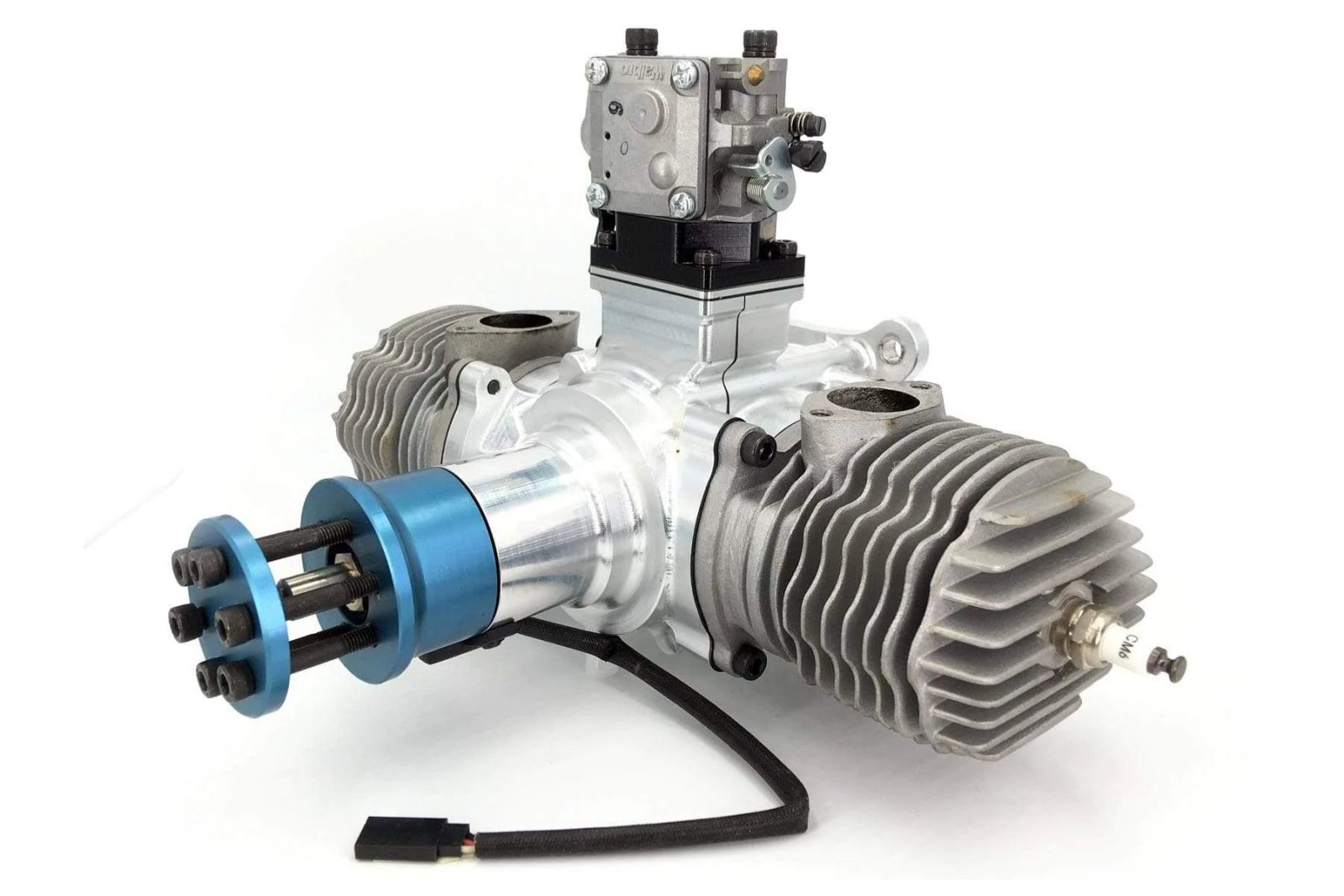
A piston engine, also called a reciprocating internal combustion engine, is a heat engine that converts the chemical energy of a fuel into mechanical work through the confined expansion of combustion gases acting on one or more pistons reciprocating within cylinders. The linear motion of each piston is transmitted through a connecting rod to a crankshaft, which converts it into rotational output suitable for driving a propeller, generator, or hybrid-electric powertrain.
The defining architectural feature is the piston-cylinder pair. Each piston forms a moving seal within a precision-bored cylinder, with piston rings maintaining gas tightness while allowing controlled lubrication. The volume swept by the piston between top dead center and bottom dead center defines the engine’s displacement, the fundamental scaling parameter for power output. Compression ratio—the ratio of cylinder volume at bottom dead center to that at top dead center—governs thermal efficiency and is typically 8:1 to 12:1 for spark-ignition aviation engines.
Two principal cycle architectures dominate practical applications. The four-stroke cycle, formalized by Nikolaus Otto, completes one power event per cylinder every two crankshaft revolutions. The two-stroke cycle produces a power event every revolution, at the cost of reduced thermal efficiency and greater challenges in scavenging and lubrication. For aviation and UAV applications, the choice between them is a trade between power density and endurance, discussed in Section 3.
2. How Does a Piston Engine Work? The Four-Stroke Cycle Disassembled
The four-stroke cycle remains the reference standard for understanding piston engine operation. Each cylinder executes four distinct piston strokes, corresponding to two complete rotations of the crankshaft and 720 degrees of angular travel .-2
2.1 Intake Stroke
The cycle begins with the piston at top dead center. As the crankshaft rotates, the piston descends toward bottom dead center, increasing cylinder volume and creating a pressure differential that draws a fresh air-fuel charge through the open intake valve. In a spark-ignition engine, fuel is typically introduced via port injection or, in modern aviation applications, closed-loop electronic fuel injection. The intake valve closes shortly after bottom dead center, trapping the charge. Volumetric efficiency—the ratio of actual charge mass to theoretical displacement mass—depends on valve timing, port geometry, and intake air density, the last of which becomes critically important at altitude .-13
2.2 Compression Stroke
With both valves closed, the piston reverses direction and ascends, compressing the trapped charge into the combustion chamber recess. Compression ratio directly determines the temperature and pressure at the end of this stroke: typical values for naturally aspirated spark-ignition engines are 0.6–1.2 MPa and approximately 700 K . Higher compression ratios improve theoretical efficiency but impose knock limits, particularly with low-octane fuels or at high manifold pressures in turbocharged configurations. For heavy-fuel compression-ignition variants, compression ratios of 15:1 to 22:1 are required to achieve autoignition temperatures without a spark.-13
2.3 Power (Combustion) Stroke
As the piston approaches top dead center, the spark plug initiates combustion in spark-ignition engines, or fuel is injected into the already-compressed hot air in compression-ignition engines. The rapid pressure rise—peak cylinder pressures of 5–9 MPa are typical —drives the piston downward with the only positive work-producing stroke of the cycle. The connecting rod transmits this force to the crankshaft, generating torque. The geometry of the crank-slider mechanism means that maximum torque delivery occurs not at top dead center but at a crank angle determined by connecting rod length and wrist pin offset, a detail relevant to both vibration analysis and structural design.-13
2.4 Exhaust Stroke
As the piston reaches bottom dead center, the exhaust valve opens, and the ascending piston displaces spent combustion gases through the exhaust port. Residual gas fraction—the proportion of burned gas remaining in the clearance volume—affects subsequent intake charge dilution and combustion stability. Valve overlap, during which both intake and exhaust valves are briefly open near top dead center, exploits exhaust gas inertia to improve scavenging at the cost of potential charge short-circuiting at low engine speeds.
The net result is one power stroke per cylinder per 720 degrees of crankshaft rotation. A four-cylinder engine therefore produces a power event every 180 degrees, a six-cylinder every 120 degrees . Firing interval uniformity directly influences torque smoothness and vibration signature, considerations of particular importance in UAV applications where payload sensors are sensitive to cyclic disturbances.-2
3. Two-Stroke vs. Four-Stroke: Architectural Trade-Offs for UAV Propulsion
The choice between two-stroke and four-stroke architectures is not a matter of technical superiority but of mission alignment. Each configuration occupies a distinct niche in the UAV propulsion landscape.
Two-stroke engines complete a power cycle in a single crankshaft revolution, using crankcase scavenging or uniflow scavenging to exchange gases. The result is approximately double the power density of a comparable four-stroke: specific output figures of 1.5–2.2 kW/kg are achievable with compact opposed-twin configurations. The trade-offs are reduced thermal efficiency (short-circuiting of fresh charge during scavenging), higher hydrocarbon emissions, and lubrication challenges, since oil must be premixed with fuel or delivered via a dedicated metering system. For tactical UAVs where power-to-weight ratio and volumetric compactness dominate, the two-stroke remains the pragmatic choice.
Four-stroke engines separate the scavenging and combustion processes, enabling higher compression ratios, more complete combustion, and dramatically improved fuel efficiency. The penalty is weight and complexity: a four-stroke of equivalent displacement is typically 40–60% heavier and requires valve train components, a pressurized lubrication system, and more sophisticated thermal management. For long-endurance missions—logistics drones, MALE surveillance platforms, and hybrid range extenders—the four-stroke’s fuel efficiency and extended time between overhauls (TBO of 800–1,500+ hours versus 150–500 hours for two-strokes) justify the mass penalty many times over.
A note on boxer architecture: horizontally opposed cylinder layouts, whether two-stroke or four-stroke, offer inherent advantages for aviation. Opposed pistons move in opposite directions, canceling primary reciprocating forces and reducing vibration amplitude by 60% or more compared to inline configurations. This matters not only for airframe fatigue life but for the integrity of sensitive optical and inertial sensors mounted in close proximity to the engine.
4. Core Components and the Precision Tolerances That Determine Reliability
The difference between a dependable aviation piston engine and a chronic maintenance burden lies less in the thermodynamic concept than in the execution of its components. Micron-level tolerances in the piston-cylinder interface, crankshaft journals, and valve train directly govern blow-by, oil consumption, vibration, and overhaul intervals.
4.1 Pistons and Ring Grooves
Aviation pistons are typically forged from 2618 aluminum alloy for high-temperature fatigue resistance or 4032 alloy for lower thermal expansion and tighter cold clearances. The piston skirt profile must maintain a controlled clearance against the cylinder bore across the full temperature range, while ring groove flatness—held to within ±0.003 mm in precision manufacturing—determines whether compression rings can maintain an effective gas seal without excessive friction. Groove wear from detonation or inadequate ring land hardness is a primary cause of premature blow-by and power loss.
4.2 Cylinder Bores and Surface Finish
The cylinder bore is the piston’s running surface, and its finish determines oil retention, ring seating, and wear rate. A multi-stage diamond plateau honing process produces a cross-hatch pattern with a surface roughness (Ra) of 0.25–0.50 μm, creating microscopic oil reservoirs while removing the torn and folded metal that would otherwise cause ring scuffing. Cylinder bore cylindricity is held within ±0.005 mm to prevent uneven ring loading and localized wear. Nikasil plating, a nickel-silicon carbide composite, is widely used in aluminum cylinders to provide a hard, low-friction wear surface that also improves heat transfer.
4.3 Crankshaft and Connecting Rods
The crankshaft converts reciprocating piston motion into rotation, and its journals must maintain oil film thickness under loads that vary from zero to several tonnes within milliseconds. Vacuum-carburized 4340 alloy steel, ground to ±0.003 mm journal tolerance and dynamically balanced across multiple planes, is the standard for aviation-grade crankshafts. Connecting rods, similarly forged from 4340 or 300M alloy steel, must withstand alternating tension-compression cycles without fatigue failure. Multi-plane dynamic balancing eliminates the primary and secondary vibration modes that would otherwise transmit through the airframe and degrade sensor performance.
4.4 Cylinder Heads and Valve Seats
In four-stroke engines, the cylinder head houses the combustion chamber, intake and exhaust ports, and valve seats. Five-axis CNC port profiling enables optimized swirl and volumetric efficiency, while multi-angle valve seat cutting held to ±0.002 mm concentricity ensures zero compression leakage and predictable valve face wear. The valve seat is the thermal and mechanical interface between the valve and the head; imperfect concentricity produces uneven seat pressure, hot spots, and eventual valve recession.
5. Solving the Buyer’s Real Problems: Heavy Fuel, Altitude, and Vibration
Procurement decisions for UAV piston engines are rarely driven by abstract performance metrics. They are driven by operational failures observed in the field. Three issues dominate buyer concerns, and each has a specific engineering resolution.
5.1 Heavy-Fuel Compatibility for Defense and Logistics
Gasoline is a logistical liability in military and naval contexts. Its high volatility and low flash point create fire hazards on ships and at forward operating bases; its separate supply chain duplicates the burden already imposed by diesel and jet fuel for vehicles and turbines. Heavy fuels—JP-8, Jet-A1, diesel—offer higher energy density per unit volume, safer handling characteristics, and compatibility with existing military fuel infrastructure .-9
Adapting a piston engine to heavy fuel is not simply a matter of changing injectors. Compression-ignition heavy-fuel engines require compression ratios of 15:1 or higher to achieve autoignition, which in turn demands stronger components and different combustion chamber geometry. Spark-assisted heavy-fuel engines offer an alternative path, using a spark plug to initiate combustion of a stratified heavy-fuel charge while maintaining lower compression ratios. The fuel injection strategy—whether direct injection into the cylinder or port injection with careful atomization—determines combustion stability, cold-start capability, and carbon deposition rates. Modern heavy-fuel UAV engines increasingly employ electronic fuel injection with high-pressure common rail or unit injector systems to achieve the atomization quality necessary for reliable ignition across the operating envelope.
5.2 Altitude Compensation and Carburetor Icing
As altitude increases, air density decreases, and a carbureted engine’s fuel-air mixture becomes progressively richer unless manually leaned. The consequences range from reduced power and elevated fuel consumption to spark plug fouling and combustion chamber deposits. More critically, carburetor icing—caused by the cooling effect of fuel vaporization in the venturi—can obstruct the intake and cause sudden power loss, a particularly dangerous failure mode in single-engine UAVs.
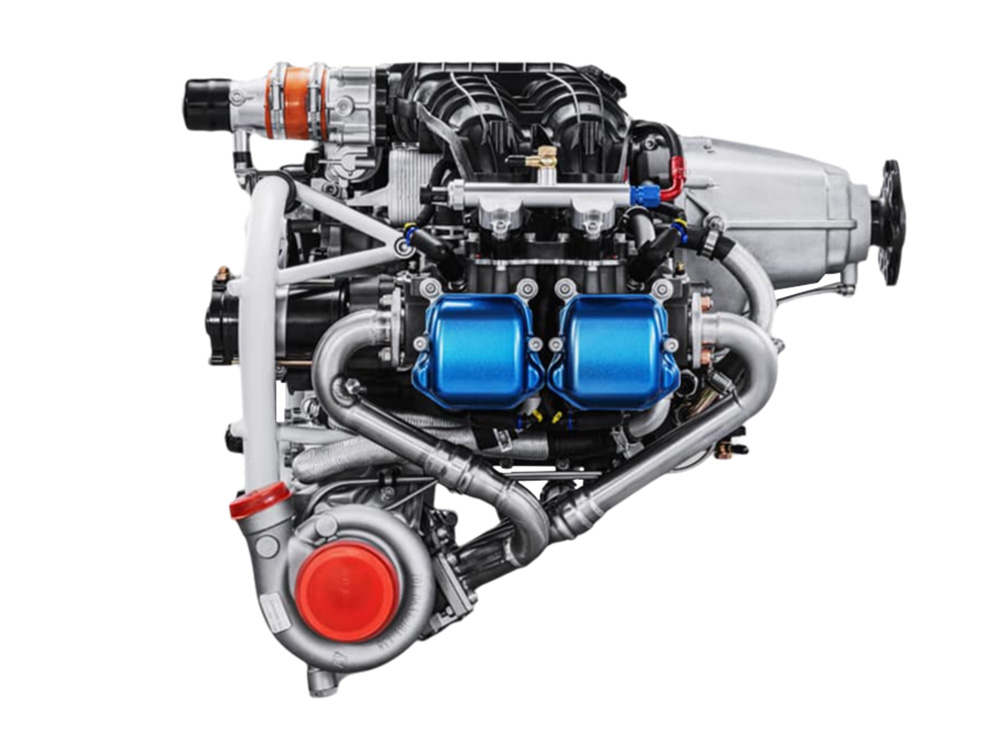
Closed-loop electronic fuel injection resolves both problems. By integrating barometric pressure, intake air temperature, and cylinder head temperature sensors, the engine control unit continuously adjusts injection duration to maintain stoichiometric or optimal-power fuel-air ratios from sea level to altitudes exceeding 5,000 meters. The elimination of the venturi and throttle body icing susceptibility removes a chronic failure mode entirely.
5.3 Vibration Control for Sensor Integrity
A single-cylinder engine produces one power pulse per revolution, with the resulting torque fluctuation transmitted as vibration through the airframe. For UAVs carrying gimbaled ISR cameras, LiDAR, or synthetic aperture radar, this vibration degrades image stability and can induce fatigue in sensor mounts. The opposed-twin boxer configuration addresses this by phasing the firing intervals such that the reciprocating forces of the two pistons partially cancel. The result is a vibration signature substantially reduced in amplitude, protecting both payload and airframe structure.
6. Specification Framework: Matching Engine Architecture to Mission Requirements
The following framework organizes the principal piston engine architectures by their performance envelopes and intended applications. This is not a product catalog but a decision matrix: the parameters listed are the variables that should drive specification discussions between UAV integrators and engine suppliers.
Single-Cylinder Two-Stroke (60–120 cc class): Power output 4.5–9.5 kW (6–13 HP) at dry weights of 2.2–3.8 kg. Fuel delivery via diaphragm carburetor or basic EFI, operating on gasoline-oil premix or automatic oil injection. TBO typically 150–300 hours. Best suited to compact fixed-wing UAVs, target drones, and attritable platforms where low unit cost and simplicity outweigh endurance requirements.
Twin-Cylinder Boxer Two-Stroke (150–300 cc class): Power output 12–24 kW (16–32 HP) at 5.5–8.8 kg. Closed-loop EFI enables operation on gasoline or heavy fuels (JP-8/Jet-A1) with appropriate injection strategy. TBO 300–500 hours. The vibration reduction of the boxer layout and the power density of the two-stroke cycle make this configuration well-matched to medium-altitude ISR drones and tactical VTOL platforms where both sensor stability and range are required.
Multi-Cylinder Four-Stroke Boxer (400–1,200+ cc class): Power output 25–75 kW (34–100 HP) at 16–38 kg. Dual-redundant EFI with turbocharging for altitude compensation, compatible with AvGas 100LL, Mogas, or heavy fuel. TBO 800–1,500 hours. This is the endurance architecture: heavy-lift cargo drones, light sport aircraft, and manned/unmanned MALE platforms where fuel efficiency, acoustic signature, and overhaul interval are the dominant economic variables.
Hybrid-Electric Range Extender Pod (5–30 kW electrical output): A piston engine coupled to a starter-generator, producing 24–400 VDC for battery charging or direct electric propulsion. Multi-fuel capability with automated throttle-by-wire. TBO 500–1,000 hours. Enables multi-rotor and hybrid VTOL configurations to achieve endurance impossible with batteries alone, while decoupling engine operating point from propulsion demand for optimized fuel consumption.
7. Sourcing Criteria: What Separates a Manufacturer from a Supplier
For OEM buyers, the critical question is not what the engine’s specification sheet says but whether the manufacturing system that produced it can deliver consistent conformance to that specification across production volumes and over the product lifecycle.
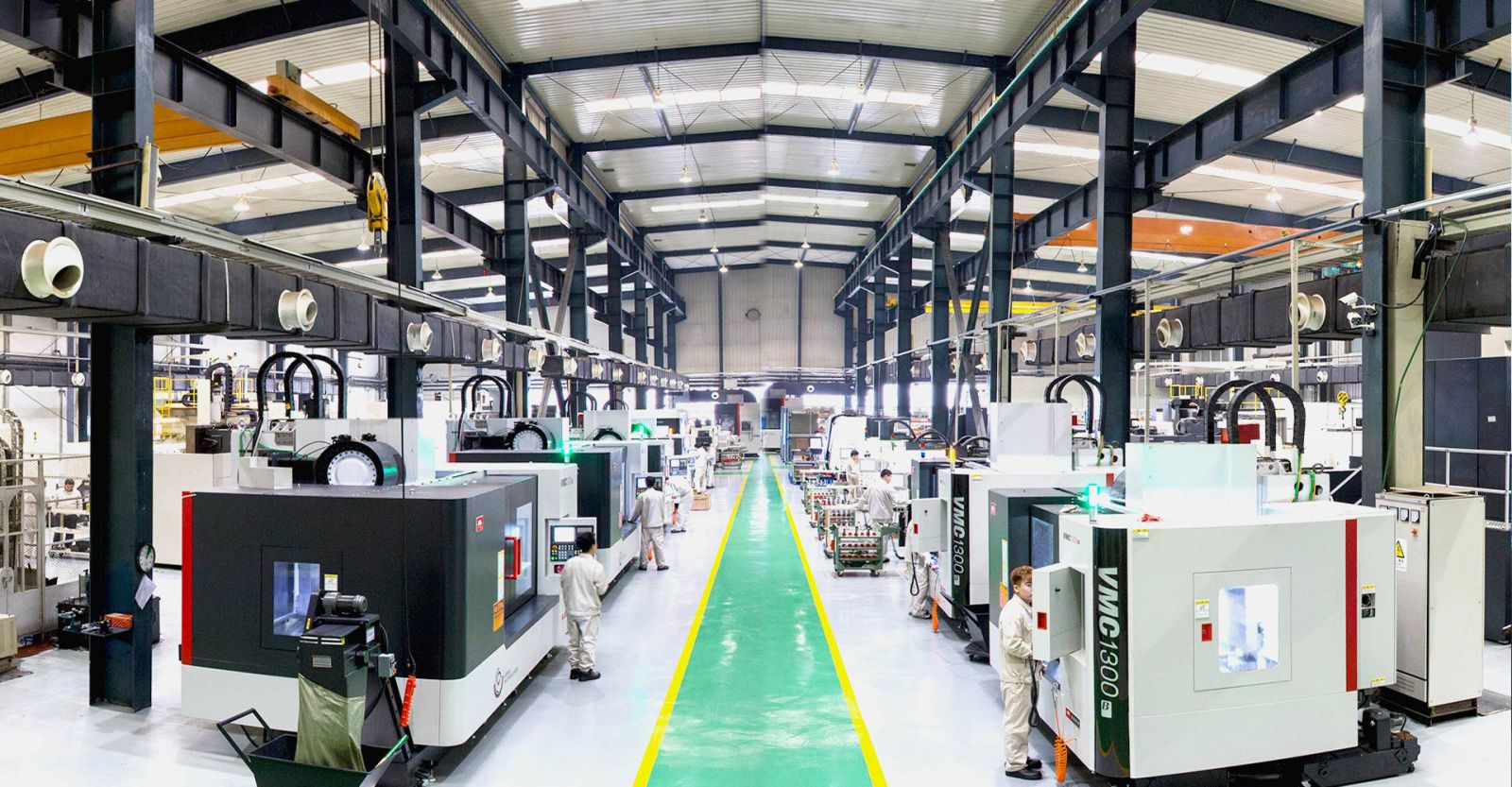
In-house machining capability is the first discriminator. A manufacturer that outsources crankcase machining, cylinder honing, or crankshaft grinding introduces quality variables it cannot directly control. Vertical integration—five-axis CNC machining of crankcases and cylinder heads, in-house piston forging and finishing, and crankshaft grinding under the same quality system—enables traceability and process control that are impossible to replicate through a distributed supply chain.
Metrology and inspection are the second. Dimensional conformance claims are meaningless without the measurement infrastructure to verify them. Coordinate measuring machine (CMM) inspection of critical features—piston skirt profiles, cylinder bore cylindricity, crankshaft journal roundness—should be documented and available for buyer review. Quality management certification to ISO 9001 provides a baseline; AS9100D, the aerospace-specific standard, adds requirements for risk management, configuration control, and special-process validation that are directly relevant to flight hardware.
Dynamometer testing is the third. Every engine should be run under load before shipment, with performance data—power, fuel consumption, oil pressure, vibration signature—recorded and traceable to the serial number. This is not a final inspection step but a validation of the entire manufacturing sequence: a cylinder with imperfect honing, a crankshaft with residual imbalance, or a fuel system with inconsistent delivery will reveal itself on the dyno before it reaches the customer.
Custom component capability is the fourth. Many UAV programs require proprietary engine configurations or replacement components matched to existing designs. A manufacturer capable of producing custom forged pistons to ±0.005 mm tolerance, vacuum-carburized 4340 crankshafts to ±0.003 mm, and Nikasil-plated cylinders from customer drawings or 3D STEP models provides a degree of supply-chain resilience that catalog-only suppliers cannot match.
Conclusion: The Engineering Discipline Behind Endurance
The piston engine’s continued relevance in aviation and unmanned systems is not a matter of nostalgia or inertia. It is a consequence of thermodynamics and manufacturing precision. The four-stroke cycle, executed with micron-level tolerances in piston fit, cylinder finish, and crankshaft balance, delivers fuel efficiency and overhaul intervals that no alternative propulsion technology matches at subsonic speeds. The two-stroke cycle, executed with modern EFI and vibration-canceling architectures, delivers power density and simplicity for platforms where endurance requirements are moderate and unit cost is paramount.
For the buyer, the implication is clear: the difference between a reliable powerplant and a persistent maintenance problem is not the concept but the execution. A piston engine is only as good as the tolerances held in its cylinder bores, the flatness of its ring grooves, the concentricity of its valve seats, and the rigor of its dynamometer validation. These are manufacturing variables, and they should be the focus of any sourcing evaluation.
YICHOU (www.nbyichou.com) operates as an integrated piston engine and precision powertrain manufacturer, combining in-house five-axis CNC machining of crankcases and cylinder heads, forged piston production, crankshaft grinding, and dynamometer-tested assembly under ISO 9001 and AS9100D quality systems. For UAV integrators and aviation OEMs requiring either turnkey heavy-fuel or gasoline piston engines, or custom CNC components to proprietary drawings, the company offers engineering consultation and factory-direct quotations based on power requirements or 3D STEP models.
Get in Touch with Yichou
- Email us: jack@nbyichou.com
- Call us/whatsapp: +86 13355741031
- Chat with us: Live chat support available on our website