Maximizing MTBF in Petrochemical, Nuclear, and Mining Pumps through Advanced Tribology.
1. Introduction: The High Cost of Seal Failure
In the world of industrial rotating equipment, the mechanical seal is often an unsung hero—until it fails. When a seal breaks in a petrochemical plant, a nuclear cooling facility, or a mining operation, the consequences cascade rapidly. A single $500 silicon carbide seal ring can fail, leading to $50,000 or more in unplanned downtime, environmental cleanup fees, and potential safety incidents.
For Maintenance Engineers and Procurement Managers, the calculation is simple: extending Mean Time Between Failures (MTBF) is the most direct path to reducing total operating costs. The choice of seal face material is the deciding factor in this equation. While Tungsten Carbide and Alumina have historically been used, Sintered Silicon Carbide (SSiC) has emerged as the gold standard for the most aggressive fluids and slurries.
At YICHOU, we engineer high-performance SiC seals designed for the "impossible" fluids—engineered to withstand dry running, thermal shock, and chemical attack so your operations never skip a beat.
2. SSiC vs. RBSiC: Selecting the Right Grade for Chemical Processing
Not all silicon carbide is created equal. When specifying a seal for chemical processing, understanding the distinction between Reaction-Bonded (RBSiC) and Sintered (SSiC) is critical to preventing premature corrosion.
Reaction-Bonded Silicon Carbide (RBSiC / SiSiC)
RBSiC is manufactured by infiltrating a carbon preform with molten silicon. This process leaves behind 8-15% free silicon within the material matrix. While this makes RBSiC cost-effective and excellent for large-diameter seals in abrasive slurries, it has a critical weakness: the free silicon phase is susceptible to chemical attack.
-
The Risk: In highly alkaline media (pH > 10), such as caustic soda or hydrofluoric acid, the free silicon leaches out, causing surface degradation and seal failure.
-
Best For: Hydrocarbon processing, water treatment, and general abrasive applications where chemical resistance is moderate.
Sintered Silicon Carbide (SSiC)
SSiC is produced by sintering high-purity powder at temperatures exceeding 2000°C, resulting in a dense, single-phase material with no free silicon.
-
The Advantage: It offers near-universal chemical resistance (pH 0-14). It remains inert even in oxidizing acids and strong bases that would dissolve the binder in other materials.
-
Best For: Chemical reactors, pharmaceutical CIP/SIP systems, and any environment requiring absolute purity and corrosion resistance.
| Property | Reaction-Bonded SiC (RBSiC) | Sintered SiC (SSiC) |
|---|---|---|
| Composition | 85-90% SiC, 10-15% Free Si | >98% SiC |
| Density (g/cm³) | 3.02 – 3.05 | 3.10 – 3.15 |
| Hardness (HV) | ~2500 | ~2800-3000 |
| Chemical Resistance | Good (Not for pH >10) | Excellent (pH 0-14) |
| Max Temp (Air) | ~1300°C | ~1600°C |
| Typical Application | Slurry Pumps, Oil & Gas | Chemical Reactors, HF Acid, Nuclear |
For maintenance engineers dealing with aggressive chemical cocktails, SSiC is the only safe choice.
3. Tribological Performance: Defeating Friction and Heat
The primary job of a mechanical seal is to maintain a fluid micro-film between the rotating and stationary faces. When that film collapses (due to vaporization or gas ingestion), friction soars, and heat builds. This is where SiC's tribological properties become paramount.
Thermal Conductivity: The Heat Sink Effect
Silicon carbide boasts a thermal conductivity rating often exceeding 100 W/m·K—comparable to some metals. This allows it to rapidly draw frictional heat away from the seal faces and into the surrounding fluid or hardware. By dissipating heat instantly, SiC prevents the formation of hot spots that lead to thermal cracking (heat checking) , a common failure mode in less conductive materials.
Low Friction Coefficient and Self-Lubrication
When paired with a compatible mating face (like carbon-graphite or another SiC ring), SiC exhibits a very low coefficient of friction. Furthermore, specific grades of SiC can be manufactured with micro-porosity or infused with graphite to enhance self-lubricating properties. This is vital during startup, shutdown, or momentary losses of fluid pressure.
At YICHOU, our precision lapping technology ensures that every SiC seal ring achieves a flatness within 1-2 helium light bands (0.0003 mm). This optical-level flatness ensures that the microscopic gap between faces is uniform, minimizing leakage and maximizing hydrodynamic lift.
4. SiC vs. Tungsten Carbide (TC): Which Wins in MTBF?
For decades, Tungsten Carbide (TC) was the go-to for tough applications. However, for engineers focused on extending MTBF in extreme environments, SiC offers distinct advantages.
Hardness and Abrasion
With a hardness of 2800 HV compared to TC's ~1500 HV, SiC is significantly more resistant to abrasive wear from sand, coke, or crystallized media. Hard particles that might embed in a softer TC face and act like grinding paste will simply be "polished" by a SiC face.
Corrosion Resistance
TC relies on a metallic binder (typically Cobalt or Nickel). In oxidizing acids or high-temperature water, this binder can corrode, leaving a weak, porous carbide skeleton. SiC, being a fully reacted ceramic, has no binder to leach out, offering superior performance in these corrosive environments.
Weight and Dynamics
SiC is approximately 70% lighter than Tungsten Carbide. In high-speed applications (such as compressors or high-RPM pumps), this reduced mass lowers the centrifugal forces on rotating components, leading to smoother operation and less stress on drive mechanisms.
Verdict: While TC remains a robust choice for heavy-impact or specific low-lubricity applications, SiC is the superior choice for maximizing MTBF in chemically aggressive or highly abrasive environments.
5. Case Studies: Heavy-Duty Applications
The theoretical advantages of SiC translate into real-world reliability across critical industries.
Nuclear Power: Ensuring Radiation Safety
In nuclear cooling pumps, zero leakage is non-negotiable. SiC seals are specified for their radiation resistance and ability to withstand thermal cycling without degradation. A seal failure here isn't just a maintenance cost—it's a safety risk.
Petrochemical: Containing VOCs
Handling Volatile Organic Compounds (VOCs) like benzene or propane requires seals that won't swell, degrade, or lose flatness. SSiC's inertness ensures that fugitive emissions are kept at near-zero levels, helping plants comply with strict EPA and safety regulations.
Mining: Surviving the Slurry
In mineral processing, pumps handle some of the most abrasive slurries on earth. Switching to harder, more wear-resistant materials (like SiC) is key to improving wear life by over 50% in such harsh conditions. For mechanical seals in these duties, the hardness of SiC prevents the "sliming" and erosion that plague softer materials.
6. Precision Manufacturing at YICHOU
The material is only half the story; the manufacturing precision determines the performance. At YICHOU, we treat every SiC ring as a precision component.
Quality Assurance
Every batch undergoes rigorous ultrasonic crack detection to ensure internal integrity. We utilize advanced surface finish testing to verify that the sealing face meets the required Ra values (often as low as 0.025 μm).
Customization
We understand that your pump isn't a generic unit. We offer extensive customization, tailoring seal geometries—including O-ring grooves, drive notches, and complex face profiles—to fit existing pump brands like Flowserve, EagleBurgmann, and John Crane perfectly.
7. FAQ: Expert Advice for Maintenance Engineers
Q: Can I swap my TC seal for a SiC seal without modifying the pump?
A: In most cases, yes. SiC seal rings are designed to standard dimensional envelopes. However, you must check the mating face material. Running SiC against SiC offers the best corrosion and wear resistance but requires excellent lubrication. Running SiC against Carbon is a forgiving, industry-standard combination suitable for most retrofits.
Q: Does SiC handle "Dry-Running" better than other ceramics?
A: Significantly better. While no seal is designed to run dry indefinitely, SiC's high thermal conductivity allows it to survive momentary dry-running incidents (like pump cavitation or loss of prime) much longer than materials like Alumina, which can crack instantly due to thermal shock.
Q: How do I identify if my SiC seal failed due to chemical attack or mechanical shock?
A:
-
Chemical Attack: Look for a "spongy" or etched surface texture. On RBSiC rings, this indicates the free silicon has been leached out by caustics.
-
Mechanical Shock/Thermal Cracking: Look for radial cracks (crazing) or chip-outs on the edges. This indicates rapid temperature change or pressure spikes.
Q: What is the maximum operating temperature for SiC seals?
A: In oxidizing atmospheres, SiC can operate up to about 1600°C, but in practical pump applications, the limit is usually set by the elastomer secondary seals (O-rings), which typically max out around 200-300°C depending on material (Viton, EPDM, etc.).
Q: Can SiC seals be used in seawater?
A: Absolutely. SiC is fully resistant to seawater corrosion and is widely used in marine pumps, desalination plants, and offshore platforms.
8. Conclusion: Reliability by Design
Investing in high-grade Sintered Silicon Carbide (SSiC) is more than a component purchase; it is an investment in operational safety, environmental compliance, and financial performance. By understanding the nuances between RBSiC and SSiC, and by partnering with a manufacturer committed to precision, you can eliminate the risk of unexpected seal failures and maximize your plant's MTBF.
Ready to eliminate your leakage risks?
Don't let a failed seal shut down your operation. Contact YICHOU today to find the perfect sealing solution for your toughest application.
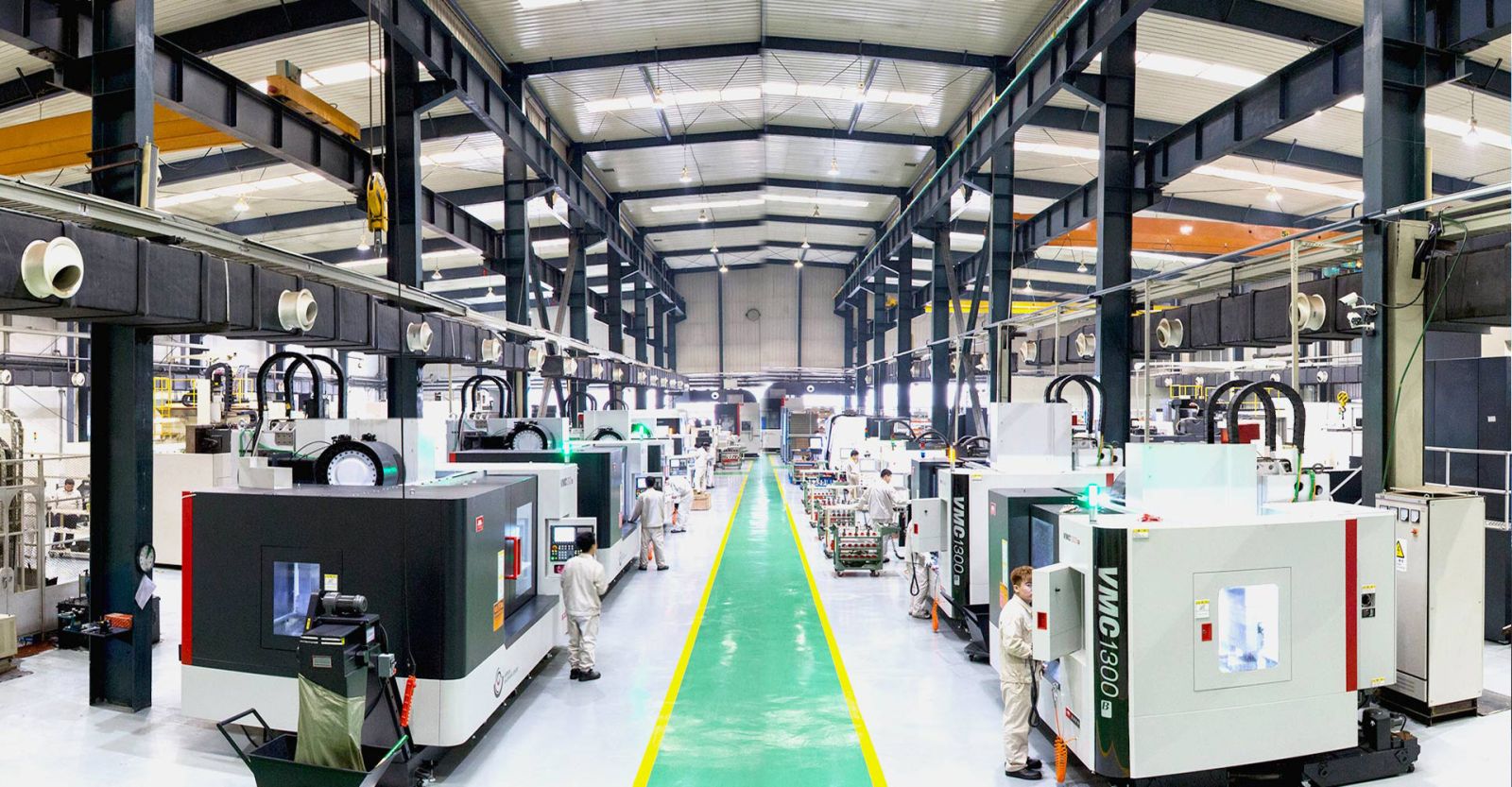
Contact us today for a competitive quote and technical support!
Let Yichou help you achieve excellence in your next project. Whether you need raw materials, custom alloy solutions, or precision-manufactured components, our team is ready to assist.
- Email us: [email protected]
- Call us/whatsapp: +86 13355741031
- Chat with us: Live chat support available on our website