1. Introduction to Ti-6Al-4V
What is Ti-6Al-4V?
Ti-6Al-4V, commonly referred to as Grade 5 titanium, is a high-strength, lightweight, and corrosion-resistant titanium alloy. It is renowned for its versatility and is used in a wide range of industries, including aerospace, medical, automotive, and marine. This alloy is celebrated for its excellent mechanical properties and exceptional performance in extreme environments.
Overview of Its Composition: 90% Titanium, 6% Aluminum, 4% Vanadium
- Titanium (90%): The base metal, known for its light weight and excellent strength-to-weight ratio.
- Aluminum (6%): Improves the alloy’s strength and heat resistance while maintaining its light weight.
- Vanadium (4%): Enhances toughness and corrosion resistance, ensuring durability under stress.
This unique combination of elements makes Ti-6Al-4V the "workhorse" of titanium alloys, combining superior performance with manageable manufacturing requirements.
Why Is Ti-6Al-4V One of the Most Widely Used Titanium Alloys?
- Exceptional Strength-to-Weight Ratio: Ti-6Al-4V offers remarkable strength while remaining lightweight, making it ideal for weight-sensitive applications such as aerospace components.
- Corrosion Resistance: Its excellent resistance to rust and degradation in harsh environments, such as marine or chemical settings, makes it highly durable.
- Biocompatibility: Non-toxic and biocompatible, Ti-6Al-4V is a top choice for medical implants and surgical devices.
- Versatile Applications: Used in aerospace for engine components, in automotive for performance parts, and in marine for underwater hardware.
- Ease of Fabrication: While titanium alloys can be challenging to process, Ti-6Al-4V is comparatively easier to machine and weld with the right expertise.
2. Chemical Composition and Properties of Ti-6Al-4V
Chemical Composition of Ti-6Al-4V
The name Ti-6Al-4V refers to its primary constituents:
- Titanium (90%): Forms the base of the alloy, providing exceptional strength, low density, and excellent corrosion resistance.
- Aluminum (6%): Enhances tensile strength, reduces density, and improves resistance to high temperatures.
- Vanadium (4%): Adds toughness and enhances corrosion resistance in challenging environments.
Trace elements like oxygen, nitrogen, carbon, hydrogen, and iron are tightly controlled to maintain optimal performance. This specific combination creates a balance of strength, weight, and durability.
Key Properties of Ti-6Al-4V
-
Corrosion Resistance
- Ti-6Al-4V exhibits excellent resistance to corrosion in a variety of environments, including:
- Marine: Protects against saltwater corrosion, making it ideal for seawater valves, propellers, and other underwater components.
- Chemical: Resists degradation from acids and alkalis in industrial and chemical processing industries.
- Industrial: Performs well in environments prone to rust and oxidation, extending the lifespan of critical components.
- Ti-6Al-4V exhibits excellent resistance to corrosion in a variety of environments, including:
-
High Strength-to-Weight Ratio
- Ti-6Al-4V delivers unparalleled strength while remaining lightweight, a key factor in industries where performance depends on reducing weight without sacrificing durability.
- Its strength-to-weight ratio surpasses that of stainless steel and aluminum, making it the alloy of choice for aerospace, automotive, and high-performance applications.
-
Heat Resistance
- The alloy retains its strength and resists deformation at extreme temperatures, making it suitable for:
- Aerospace applications, such as jet engine components.
- Industrial uses in heat exchangers and reactors.
- Operating temperature range: Up to 400°C (752°F) under typical conditions.
- The alloy retains its strength and resists deformation at extreme temperatures, making it suitable for:
-
Durability and Toughness
- With its ability to withstand extreme stresses and harsh conditions, Ti-6Al-4V is used in demanding environments like aerospace structures, medical implants, and deep-sea equipment.
-
Biocompatibility
- Its non-toxic nature and excellent compatibility with the human body make it a preferred material for medical implants, prosthetics, and surgical devices.
Advantages of Ti-6Al-4V’s Properties
- Industrial Benefits: Long service life reduces maintenance costs.
- Aerospace and Automotive: Lightweight and strong components improve efficiency and performance.
- Marine and Chemical: Exceptional corrosion resistance ensures durability in challenging environments.
3. Advantages of Ti-6Al-4V
Why Ti-6Al-4V Is Stronger Than Steel but Lighter
- Strength-to-Weight Ratio:
Ti-6Al-4V delivers exceptional strength at a fraction of the weight of steel.- Density: Titanium alloys are approximately 40% lighter than steel but maintain comparable or superior strength, making them ideal for applications where weight reduction is critical (e.g., aerospace, automotive, and medical).
- Strength: Despite its lightweight nature, Ti-6Al-4V can handle high stress loads, making it a preferred material in structural and performance-critical applications.
- Corrosion Resistance:
Unlike steel, which can corrode in harsh environments, Ti-6Al-4V maintains its integrity and performance, even in marine or chemically aggressive conditions.
Fatigue Strength and Long Lifespan Under Extreme Conditions
- Fatigue Resistance:
Ti-6Al-4V exhibits outstanding fatigue strength, meaning it can endure repeated stress cycles without cracking or failing.- This is especially valuable in aerospace, where parts like turbine blades and airframe components experience continuous mechanical stress.
- Its high fracture toughness allows it to absorb significant energy before failing, making it safe and reliable for critical applications.
- Performance in Extreme Conditions:
- Ti-6Al-4V remains stable under high pressures and temperatures, outperforming materials like aluminum alloys in extreme environments.
- Its heat resistance ensures durability in applications such as jet engines, heat exchangers, and automotive exhaust systems.
Comparison with Other Materials
-
Stainless Steel:
- Weight: Ti-6Al-4V is much lighter, making it more efficient for industries prioritizing weight savings.
- Corrosion Resistance: While stainless steel is corrosion-resistant, Ti-6Al-4V performs better in highly corrosive environments, such as seawater or acidic conditions.
- Cost: Titanium alloys are more expensive upfront but reduce costs over time due to lower maintenance and a longer lifespan.
-
Aluminum Alloys:
- Strength: Ti-6Al-4V is significantly stronger, especially in high-temperature environments where aluminum can weaken.
- Durability: Aluminum alloys are more prone to wear and deformation under stress, while Ti-6Al-4V maintains its shape and integrity.
- Applications: Titanium alloys are preferred for high-performance uses, whereas aluminum is better suited for less demanding applications.
-
Other Titanium Grades:
- Compared to commercially pure titanium (e.g., Grade 2), Ti-6Al-4V provides superior strength and toughness while still being highly corrosion-resistant.
- Ti-6Al-4V Grade 5 is a versatile choice, balancing cost and performance for a wide range of industries.
Advantages Across Industries
- Aerospace: Lightweight and strong for structural components and jet engine parts.
- Medical: Biocompatible and durable for implants and prosthetics.
- Marine: Long-lasting, corrosion-resistant material for subsea equipment.
- Automotive: Reduces vehicle weight, improving fuel efficiency and performance.
4. Applications of Ti-6Al-4V
Where Is Ti-6Al-4V Used?
Ti-6Al-4V, also known as Grade 5 titanium, is one of the most versatile titanium alloys, with applications across various industries. Its unique combination of lightweight, strength, corrosion resistance, and biocompatibility makes it an indispensable material in both high-performance and critical-use environments.
Key Industries and Examples
- Aerospace Industry
- Applications:
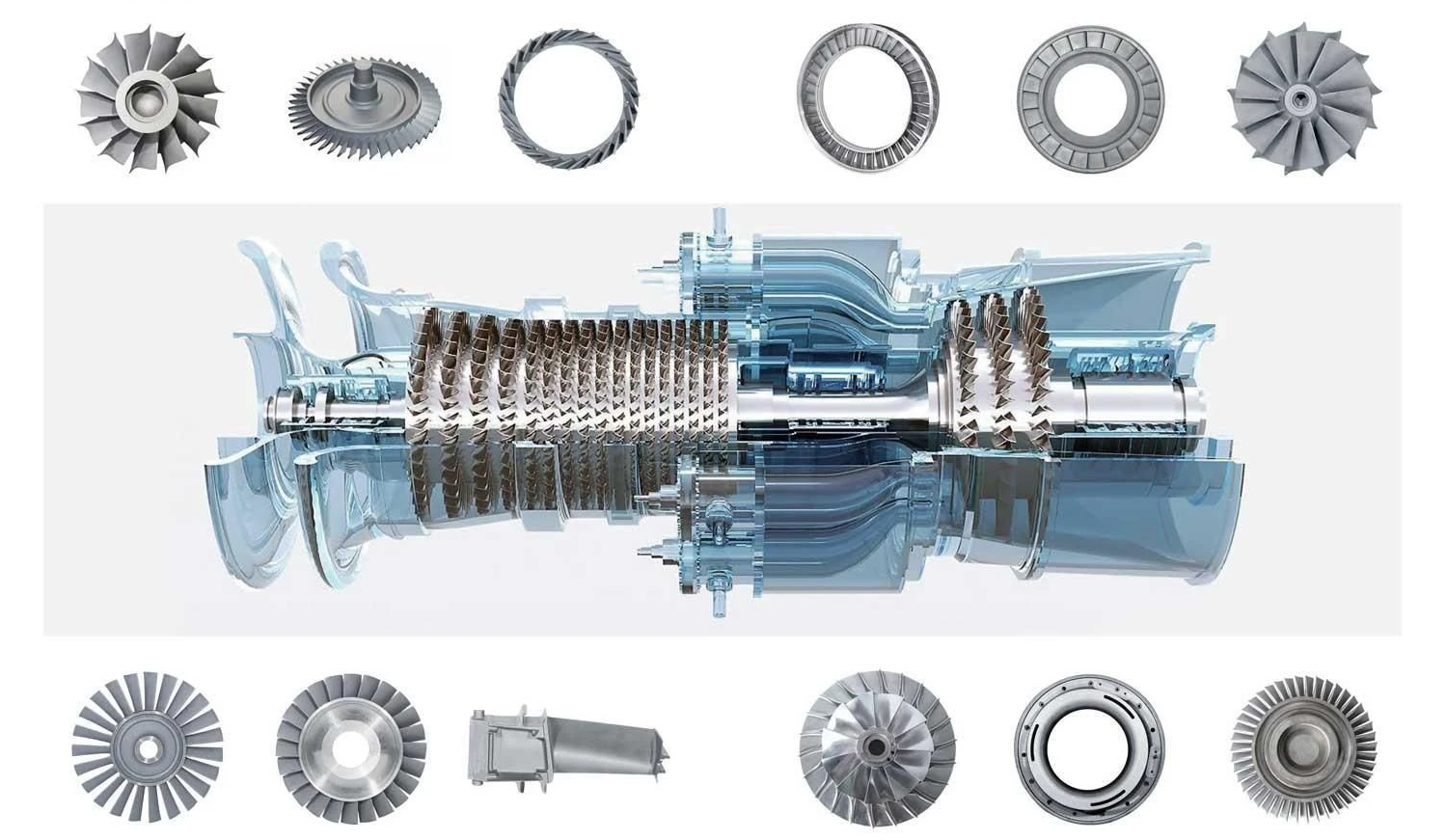
- Aircraft structural components (e.g., airframes, wings, and fuselage).
- Engine components (e.g., turbine blades, compressor discs, and casings).
- High-performance fasteners and landing gear parts.
- Why Ti-6Al-4V?
- Excellent strength-to-weight ratio, crucial for reducing aircraft weight while maintaining safety and durability.
- High-temperature resistance, essential for jet engines and other heat-intensive applications.
- Corrosion resistance against environmental factors, such as humidity and salt air.
- Applications:
- Medical Industry
- Applications:
- Orthopedic implants (e.g., hip and knee replacements, spinal implants).
- Prosthetics (e.g., artificial limbs).
- Surgical instruments and tools.
- Why Ti-6Al-4V?
- Biocompatibility: Non-toxic and compatible with human tissues, reducing the risk of rejection.
- Lightweight yet durable, ensuring patient comfort and long-lasting performance.
- Corrosion resistance ensures the material withstands bodily fluids without degradation.
- Applications:
- Marine Industry
- Applications:
- Propellers and shafts for boats and submarines.
- Pumps and valves for seawater systems.
- Underwater hardware and deep-sea exploration equipment.
- Why Ti-6Al-4V?
- Superior corrosion resistance in saltwater environments.
- High strength ensures performance in demanding conditions, such as deep-sea pressures.
- Long lifespan reduces maintenance costs in marine applications.
- Applications:
- Automotive and Racing Industry
- Applications:
- Performance parts (e.g., connecting rods, suspension components, and brake calipers).
- Lightweight exhaust systems for sports cars and motorcycles.
- Engine components for high-performance racing vehicles.
- Why Ti-6Al-4V?
- Reduces vehicle weight, improving speed, fuel efficiency, and overall performance.
- Heat resistance ensures durability in high-temperature areas like exhaust systems.
- Strong yet lightweight, essential for racing vehicles where every gram matters.
- Applications:
Emerging Applications
- Industrial: Used in heat exchangers, chemical processing equipment, and power plant components due to its ability to withstand high temperatures and corrosive environments.
- Sports Equipment: Utilized in golf clubs, bicycle frames, and tennis rackets for lightweight and high-strength performance.
- Energy: Increasingly used in renewable energy systems like wind turbines and in oil & gas for critical components such as pipelines and drill bits.
Ti-6Al-4V Grades: Standard and ELI
Understanding Standard Ti-6Al-4V and Its Uses
Ti-6Al-4V, commonly known as Grade 5 titanium, is one of the most widely used titanium alloys in the world. Renowned for its exceptional strength-to-weight ratio, corrosion resistance, and biocompatibility, this alloy finds applications in industries ranging from aerospace to automotive. Its versatility extends to high-performance components such as turbine blades, aerospace structures, and sporting goods.
What is Ti-6Al-4V ELI (Extra Low Interstitial)?
Ti-6Al-4V ELI, short for Extra Low Interstitial, is a specialized grade of Ti-6Al-4V. This version is engineered with reduced interstitial elements like oxygen, nitrogen, and carbon, resulting in improved ductility and fracture toughness. These characteristics make it an ideal choice for medical applications, including surgical implants and prosthetics, where precision and biocompatibility are paramount.
Comparison Between Grades for Medical and Industrial Applications
The primary difference between standard Ti-6Al-4V and Ti-6Al-4V ELI lies in their intended applications:
- Industrial Applications: Standard Ti-6Al-4V excels in environments requiring high strength and durability, such as aerospace, marine, and industrial equipment.
- Medical Applications: Ti-6Al-4V ELI, with its superior biocompatibility and resistance to fatigue, is preferred for medical devices and implants. The lower interstitial content ensures it meets strict medical-grade standards, reducing the risk of rejection or failure.
Why Choose the Right Grade?
Selecting the appropriate grade of Ti-6Al-4V is critical for ensuring the success and longevity of your application. Whether optimizing for industrial strength or medical safety, understanding the differences between these grades empowers you to make informed purchasing decisions.
Comparison: Ti-6Al-4V vs Other Alloys
Ti-6Al-4V vs Grade 5 Titanium
At first glance, Ti-6Al-4V and Grade 5 titanium may seem identical because Ti-6Al-4V is the composition of Grade 5 titanium. However, when comparing it to Ti-6Al-4V ELI (Extra Low Interstitial), differences emerge. While Grade 5 is the go-to alloy for high-strength industrial applications, Ti-6Al-4V ELI offers enhanced ductility and is often chosen for medical and critical applications due to its reduced interstitial impurities.
- Strength: Both share similar tensile strengths, making them equally capable in load-bearing scenarios.
- Applications: Grade 5 is better suited for industrial and aerospace use, whereas Ti-6Al-4V ELI is optimized for medical implants.
Ti-6Al-4V vs Aluminum Alloys
Aluminum alloys are widely used for their lightweight and cost-effectiveness, but how do they stack up against Ti-6Al-4V?
- Weight: Both materials are lightweight, but titanium’s density is higher, providing greater strength-to-weight advantages.
- Strength: Ti-6Al-4V is significantly stronger than aluminum alloys, making it a better choice for applications requiring durability.
- Corrosion Resistance: Titanium alloys outperform aluminum in harsh environments, including marine and chemical applications.
- Cost: Aluminum is more affordable, but titanium offers better long-term performance in critical conditions.
Ti-6Al-4V vs Stainless Steel and Hastelloy
Stainless steel and Hastelloy are known for their corrosion resistance and strength, but Ti-6Al-4V presents unique advantages in specific use cases.
- Strength: Ti-6Al-4V offers comparable or superior strength at a fraction of the weight of stainless steel.
- Corrosion Resistance: While stainless steel resists corrosion well, Ti-6Al-4V performs better in chloride-rich and extreme environments. Hastelloy, designed for chemical industries, surpasses both in corrosion resistance but is significantly heavier.
- Applications: Ti-6Al-4V is preferred in aerospace and biomedical fields where weight savings and biocompatibility are critical, while stainless steel is favored for structural and mechanical components. Hastelloy excels in chemical processing industries.
Strengths and Weaknesses of Ti-6Al-4V in Different Environments
- Strengths: Ti-6Al-4V stands out for its exceptional strength-to-weight ratio, corrosion resistance, and biocompatibility, making it a versatile choice for diverse industries.
- Weaknesses: Its higher cost and challenges in machining can limit its use in cost-sensitive or high-volume production scenarios.
By understanding these comparisons, you can better assess whether Ti-6Al-4V is the ideal material for your specific application.
Challenges in Ti-6Al-4V Processing
Difficulties in Machining and Welding Ti-6Al-4V
Ti-6Al-4V, while prized for its exceptional properties, presents significant challenges in processing due to its unique characteristics:
- Machining Challenges: The alloy's low thermal conductivity causes heat to concentrate on the cutting tool, leading to rapid tool wear. Its high strength further complicates cutting, increasing processing time and cost.
- Welding Challenges: Titanium alloys are highly reactive to oxygen and nitrogen at elevated temperatures, requiring an inert gas shielding environment during welding. Contamination can lead to weld defects, brittleness, and reduced performance.
Solutions to Overcome These Challenges
- Expertise and Experience: Skilled operators with specialized knowledge of titanium machining and welding ensure precision and efficiency.
- Advanced Tooling: Using cutting-edge tools like carbide inserts, PVD-coated cutters, and low cutting speeds minimizes heat buildup and extends tool life.
- Optimized Welding Techniques: Implementing advanced methods such as TIG (Tungsten Inert Gas) or electron beam welding in controlled environments prevents contamination and ensures strong, defect-free welds.
- Coolant Usage: High-pressure coolants and precise flow control help dissipate heat during machining, reducing tool wear and improving surface finish.
How Yichou Ensures High Precision in Processing
At Yichou, we understand the complexities of Ti-6Al-4V processing and have tailored our manufacturing practices to address these challenges:
- State-of-the-Art Equipment: Our advanced CNC machines and robotic welding systems are designed for precision and repeatability.
- Strict Quality Control: Every step of the process is closely monitored, from material selection to final inspection, ensuring compliance with global standards.
- Innovative Techniques: We continuously adopt new technologies and methods to enhance efficiency and quality in machining and welding.
- Experienced Team: Our team of experts has years of experience working with titanium alloys, ensuring that every product meets exact specifications.
By leveraging our expertise and cutting-edge tools, Yichou guarantees the highest quality in titanium alloy processing, delivering solutions that meet even the most demanding requirements.
Frequently Asked Questions (FAQs) About Ti-6Al-4V
Is Ti-6Al-4V Corrosion-Resistant?
Yes, Ti-6Al-4V is highly corrosion-resistant. Its natural oxide layer protects it from environmental damage, making it ideal for applications in marine, aerospace, and medical industries. It performs exceptionally well in environments with chlorides, saline water, and even in chemical processing conditions.
How Is Ti-6Al-4V Different from Grade 5 Titanium?
Ti-6Al-4V is the composition that defines Grade 5 titanium. The terms are often used interchangeably, but a distinction exists when comparing Ti-6Al-4V to its ELI (Extra Low Interstitial) variant. Ti-6Al-4V ELI has reduced impurities, giving it better ductility and making it suitable for medical implants and critical applications.
Can Ti-6Al-4V Be Welded or Machined?
Yes, but both processes require specialized techniques:
- Welding: Ti-6Al-4V is weldable using TIG or electron beam welding in inert environments to avoid contamination from oxygen or nitrogen. Proper shielding is essential for defect-free welds.
- Machining: Due to its high strength and low thermal conductivity, Ti-6Al-4V can be challenging to machine. Using advanced tooling, slow cutting speeds, and high-pressure coolants ensures optimal results.
Why Is Ti-6Al-4V So Strong?
Ti-6Al-4V's strength lies in its composition—6% aluminum and 4% vanadium in a titanium base. Aluminum enhances strength and reduces density, while vanadium improves toughness and thermal stability. This combination results in an alloy with outstanding strength-to-weight ratio and resistance to deformation under stress.
Real-Life Examples of Ti-6Al-4V Applications
Aircraft Engine Parts Lasting 20+ Years
Ti-6Al-4V is a cornerstone in the aerospace industry, particularly for critical components such as compressor blades, turbine discs, and structural parts in jet engines. Its exceptional strength-to-weight ratio and high resistance to fatigue and corrosion enable these parts to endure extreme conditions for over two decades. This durability reduces maintenance costs and enhances safety, making it indispensable in modern aviation.
Medical Implants with Excellent Biocompatibility
In the medical field, Ti-6Al-4V is the material of choice for implants such as hip joints, dental implants, and bone screws. Its biocompatibility, combined with its lightweight nature and ability to integrate with bone tissue, provides long-term comfort and reliability to patients. For example, orthopedic implants made from Ti-6Al-4V have shown outstanding success in improving mobility and quality of life for patients worldwide.
Racing Car Performance Enhanced by Ti-6Al-4V Components
High-performance racing cars leverage Ti-6Al-4V for critical components like engine valves, suspension springs, and connecting rods. The alloy's lightweight yet robust nature enhances vehicle acceleration, fuel efficiency, and overall performance. In Formula 1, for instance, teams consistently rely on Ti-6Al-4V components to maintain a competitive edge while ensuring reliability under extreme racing conditions.
Why Choose Yichou for Ti-6Al-4V Products
Yichou’s Expertise in Ti-6Al-4V Manufacturing and Processing
At Yichou, we bring decades of experience in manufacturing and processing titanium alloys, including Ti-6Al-4V. Our team of experts utilizes advanced techniques and state-of-the-art equipment to deliver precision-engineered products that meet the highest industry standards.
Custom Solutions for Aerospace, Medical, and Marine Industries
We understand that every project has unique requirements. Whether it’s lightweight components for aerospace, biocompatible implants for medical applications, or corrosion-resistant parts for marine environments, Yichou provides tailored solutions designed to excel in demanding conditions.
Competitive Pricing and Global Supply Capabilities
As a trusted titanium alloy supplier, Yichou combines quality with cost-efficiency. Our streamlined processes ensure competitive pricing without compromising on performance. Additionally, our global logistics network enables us to supply high-quality Ti-6Al-4V products to clients worldwide, on time and within budget.
Call-to-Action
Let Yichou Power Your Next Project
Partner with Yichou for reliable, high-performance Ti-6Al-4V solutions tailored to your industry needs. Contact us today to:
- Request a quote for your project.
- Order samples to evaluate our quality.
- Learn more about our titanium alloy products and services.
Our team is ready to collaborate with you and ensure the success of your project.
Get in Touch with Yichou
Let Yichou help you achieve excellence in your next project. Whether you need raw materials, custom alloy solutions, or precision-manufactured components, our team is ready to assist.
- Email us: [email protected]
- Call us/whatsapp: +86 13355741031
- Chat with us: Live chat support available on our website