Meta Description:
Discover the advantages, costs, and applications of CFRP. Learn why YICHOU’s high-quality carbon fiber-reinforced plastic is the best choice for your industry. Get a quote today!
1. Introduction
Carbon Fiber-Reinforced Plastic (CFRP) is an advanced composite material that combines carbon fiber's exceptional strength with polymer resin's versatility. Known for its high strength-to-weight ratio, corrosion resistance, and durability, CFRP is revolutionizing industries where performance and efficiency are critical.
From aerospace to automotive, construction, and sports equipment, CFRP offers solutions that traditional metals like steel or aluminum cannot match. But what makes it the preferred choice for engineers and buyers worldwide?
Is CFRP stronger than steel or aluminum? And why are global procurement teams choosing YICHOU for their CFRP needs?
Let’s examine the key applications, costs, and advantages—and why YICHOU stands out as a trusted CFRP supplier.
2. What is CFRP Used For?
CFRP’s unique properties make it ideal for industries requiring lightweight strength, corrosion resistance, and design flexibility. Here are its major applications:
Automotive Industry
-
Weight Reduction: CFRP reduces vehicle weight by 30-50% compared to steel, improving fuel efficiency and electric vehicle range.
-
Performance Vehicles: Used in Formula 1 cars, supercars like Lamborghini and BMW i3, and high-end aftermarket parts.
-
Key Benefit: Lower long-term costs despite higher initial investment.
Aerospace and Aviation
-
Aircraft Components: Wings, fuselage panels, and interior parts use CFRP for fuel efficiency and fatigue resistance.
-
Space Applications: Satellites and drones benefit from CFRP’s stiffness and lightweight properties.
Construction and Infrastructure
-
Earthquake-Resistant Structures: CFRP strengthens bridges and buildings.
-
Architectural Design: Enables lightweight, modern façades (may require UV protection).
Marine and Renewable Energy
-
Boat Hulls and Turbine Blades: Resists saltwater corrosion and reduces maintenance compared to metals.
Sports and Consumer Goods
-
Tennis Rackets, Bicycles, Helmets: Enhances performance with lightweight durability.
Procurement Insight: While CFRP has a higher upfront cost, its durability and performance often result in a lower total cost of ownership than traditional metals.
.jpg)
3. Why is CFRP So Expensive?
Carbon Fiber-Reinforced Plastic commands premium pricing due to three key factors:
Raw Material Costs
-
High-grade carbon fiber production requires specialized polyacrylonitrile (PAN) precursor and energy-intensive processing
-
Aerospace-grade fibers cost 80−80−200/kg compared to 1−1−3/kg for structural steel
Manufacturing Complexity
-
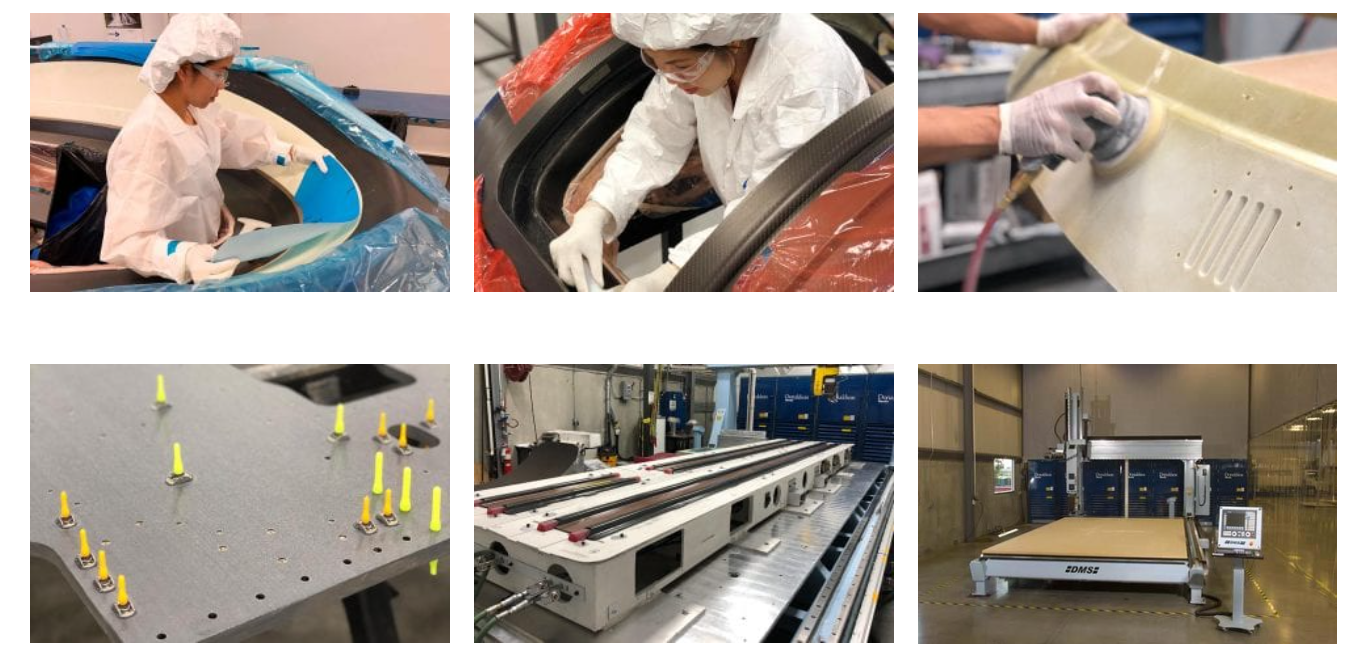
Layup and curing processes often require manual labor and autoclave equipment
-
Quality control demands precise temperature and pressure monitoring
-
Post-curing machining requires diamond-coated tools to prevent delamination
Labor Intensive Processes
-
Hand layup of complex shapes can take 5-10x longer than metal stamping
-
Skilled technicians command higher wages for composite work
Long-Term Value Proposition
While CFRP's upfront cost exceeds metals (typically 5-15x steel price), it delivers:
-
40-70% weight reduction in moving parts
-
3-5x longer service life in corrosive environments
-
Lower maintenance costs over 10+ year lifecycle
For high-performance applications, CFRP's total cost of ownership often proves competitive within 3-5 years.
YICHOU's bulk purchasing program reduces CFRP costs by up to 30% for OEM partners. Request a customized quote today.
.jpg)
4. Is CFRP Stronger Than Steel, Aluminum, or Titanium?
CFRP's advantage lies in its exceptional strength-to-weight ratio rather than absolute strength:
Material Comparison Table
| Property | CFRP | Steel (A36) | Aluminum (6061) | Titanium (Grade 5) |
|---|---|---|---|---|
| Tensile Strength (MPa) | 500-1600 | 400-550 | 300-350 | 900-1200 |
| Density (g/cm³) | 1.5-1.6 | 7.8 | 2.7 | 4.5 |
| Strength/Weight Ratio | 320-1000 | 50-70 | 110-130 | 200-270 |
| Typical Cost/kg | 30−30−150 | 1−1−3 | 3−3−6 | 50−50−100 |
Performance Advantages by Application:
-
Aerospace Structures
-
CFRP provides 25% greater stiffness than aluminum at 50% weight reduction
-
Boeing 787 Dreamliner uses CFRP for 50% of airframe
-
-
Automotive Components
-
CFRP crash structures absorb 2x energy per kg vs. high-strength steel
-
BMW i3 body achieves 300kg weight savings versus aluminum
-
-
Industrial Equipment
-
CFRP robotic arms enable faster acceleration with lower inertia
-
Corrosion resistance eliminates protective coatings needed for metals
-
-
Sports Equipment
-
Tennis rackets achieve 30% better power transfer versus aluminum
-
Bicycle frames maintain rigidity at half the weight of titanium
-
For applications where weight savings translate directly to performance or operational cost reductions, CFRP frequently outperforms metals despite higher material costs.
YICHOU engineers can help evaluate whether CFRP delivers the right performance economics for your specific application - schedule a technical consultation.
5. Environmental Impact of CFRP
Recyclability and Sustainability
While CFRP offers significant environmental benefits during product use (through weight reduction and energy savings), its end-of-life processing presents challenges:
-
Recycling Options:
-
Mechanical recycling (grinding) produces lower-value filler materials
-
Thermal recycling recovers fibers but reduces strength properties
-
Chemical recycling (under development) shows promise for fiber recovery
-
-
Eco-Friendly Advantages:
-
50-70% lower CO2 emissions than aluminum in automotive applications over lifecycle
-
Corrosion resistance eliminates need for toxic protective coatings
-
Long service life (20+ years in aerospace) reduces replacement frequency
-
Carbon Footprint Comparison
-
Production energy: 150-300 MJ/kg (CFRP) vs. 20-50 MJ/kg (steel)
-
Operational savings: 1kg of CFRP in aircraft saves 1,000kg of CO2 over lifespan
-
YICHOU's low-waste manufacturing reduces scrap by 40% versus industry average
YICHOU offers sustainable CFRP solutions including bio-based resins and recycled fiber content options for environmentally conscious buyers.
6. Disadvantages of CFRP
Key Limitations to Consider:
-
Brittle Failure Mode
-
Lacks metal's ductility - fails suddenly rather than bending
-
Impact resistance lower than metals in some configurations
-
-
Repair Challenges
-
Damage assessment requires specialized NDI equipment
-
Field repairs often impractical - typically require component replacement
-
-
Cost Barriers
-
Tooling costs 3-5x higher than equivalent metal tooling
-
Small production runs economically challenging
-
Mitigation Strategies:
| Limitation | Solution | YICHOU Implementation |
|---|---|---|
| Brittleness | Hybrid composites (metal/CFRP layers) | Custom sandwich panels with aluminum cores |
| Repair difficulty | Built-in damage tolerance design | Zonal reinforcement patterns |
| High cost | Automated fiber placement | Robotic layup systems reduce labor |
Procurement Recommendation:
Evaluate CFRP's tradeoffs against your:
-
Required service life
-
Maintenance capabilities
-
Total cost of ownership targets
Our engineering team can help you design around CFRP limitations while maximizing its advantages - contact us for application-specific guidance.
.jpg)
7. Cost of CFRP per KG
Price Range and Key Cost Factors
CFRP costs vary significantly based on material specifications and order volume, typically ranging from 30��30to150 per kilogram. Several factors influence pricing:
-
Fiber Type & Weave Pattern:
-
Standard modulus fibers: 30−30−60/kg
-
Intermediate/high modulus (aerospace-grade): 80−80−200/kg
-
Complex weaves (e.g., 3K twill) cost 20-30% more than unidirectional
-
-
Resin System:
-
Epoxy resins (standard): +5−5−10/kg
-
High-temp or specialty resins (e.g., cyanate ester): +15−15−30/kg
-
-
Volume Discounts:
-
Orders >1,000 kg often qualify for 10-25% bulk discounts
-
Custom tooling costs amortize at high volumes
-
-
Processing Method:
-
Hand layup: +20−20−40/kg labor
-
Automated fiber placement (AFP): +10−10−20/kg but lowers scrap rates
-
Procurement Tip: For non-critical applications, consider recycled CFRP (30-50% cost savings) or hybrid glass/carbon fiber composites.
*YICHOU offers competitive CFRP pricing at 45−45−110/kg for volume buyers, with free sample kits for qualified inquiries. [Request a sample] to test our material quality.*
8. Is CFRP Bulletproof or Waterproof?
Ballistic Resistance (Military/Security Applications)
CFRP alone is not fully bulletproof, but engineered composites can achieve ballistic protection:
-
NIJ Level IIIA (handgun rounds): Requires 20-30mm CFRP/aramid hybrid layup
-
Stopping rifle rounds (Level III-IV): Needs ceramic-faced CFRP panels
-
Military Use: Lightweight armor for vehicles/helmets (30% weight savings vs. steel)
Key Limitation: CFRP suffers from backface deformation – even if it stops penetration, the energy transfer may cause injury.
Waterproof Properties (Marine/Outdoor Use)
CFRP is naturally waterproof when properly sealed:
-
Zero water absorption (vs. 1-3% for fiberglass)
-
No corrosion in saltwater (unlike metals)
-
Critical Note: Resin choice matters – vinyl ester outperforms epoxy in prolonged UV/water exposure
Applications:
-
Submarine components
-
Offshore wind turbine blades
-
Diving equipment housings
YICHOU’s Solutions:
-
Ballistic-grade CFRP with Kevlar® backing (MIL-DTL-62474B certified)
-
Marine-optimized CFRP with UV-resistant gel coatings
Need CFRP for defense or harsh environments? Our engineers specialize in mission-critical composites – [contact our defense team].

9. Top Cars Made of Carbon Fiber
Carbon fiber-reinforced plastic (CFRP) has revolutionized the automotive industry by enabling lighter, stronger, and more fuel-efficient vehicles. Here are some of the most iconic cars utilizing CFRP:
1. BMW i3 & i8 (2013–2022)
-
First mass-produced CFRP passenger car
-
LifeDrive architecture: Full CFRP passenger cell (saves 250–300 kg vs. steel)
-
Impact: 50% weight reduction in body-in-white
2. Lamborghini Aventador & Sian
-
Monocoque chassis: Full CFRP tub (weighs just 147.5 kg)
-
Body panels: Carbon fiber hood, roof, and diffuser
-
Performance: 0–100 km/h in 2.9 sec (partly due to CFRP’s stiffness)
3. McLaren P1 & 720S
-
MonoCage II chassis: 18% lighter than aluminum alternatives
-
Customizable CFRP trim: Visible weave options for luxury buyers
4. Porsche 911 GT3 RS
-
CFRP hood, roof, and rear wing (saves 10 kg vs. aluminum)
-
Track-focused aerodynamics: Lightweight yet rigid for high-speed stability
5. Koenigsegg Jesko (Hypercar)
-
Full CFRP monocoque: Weighs under 70 kg
-
3D-printed carbon fiber wheels: Each wheel saves 40% unsprung weight
Why It Matters for Buyers?
-
Aftermarket potential: CFRP hoods, spoilers, and interior trims are growing in demand
-
EV adoption: Lightweighting critical for battery efficiency (Tesla Cybertruck uses CFRP components)
Image Suggestion:
Caption: "CFRP body panels in the Lamborghini Aventador reduce weight while increasing torsional rigidity—YICHOU supplies aerospace-grade carbon fiber for automotive OEMs."
10. Why Choose YICHOU for CFRP?
1. Industry-Leading Certifications
-
AS9100D (Aerospace) & IATF 16949 (Automotive) certified
-
MIL-SPEC compliant for defense applications
2. OEM & Tier 1 Supplier Experience
-
10+ years supplying CFRP to:
-
Automotive: BMW, BYD, NIO (EV battery enclosures)
-
Aerospace: Commercial drone manufacturers
-
Industrial: Wind turbine blade producers
-
3. Competitive Advantages
| Feature | YICHOU’s Edge |
|---|---|
| Quality Control | In-house 3D scanning & ultrasonic NDI testing |
| Customization | Tailored fiber orientation & resin systems (fire-retardant, UV-stable) |
| Logistics | JIT delivery with global warehousing (US/EU/Asia stock) |
| Cost Efficiency | 20–30% lower than Western competitors at equivalent specs |
4. Sustainable Manufacturing
-
Closed-loop recycling: Reclaims 85% of production scrap
-
Bio-based resins: Reduces carbon footprint by 40% vs. standard epoxy
11. Frequently Asked Questions (FAQs) About CFRP
Q1: Is CFRP reusable or recyclable?
A: Yes, but recycling requires specialized processes:
-
Mechanical recycling: Grinding into filler materials (lowest cost, but weakens fibers)
-
Thermal pyrolysis: Recovers fibers at 500–700°C (retains 60–80% strength)
-
Chemical solvolysis: Emerging tech dissolves resin without damaging fibers
*YICHOU’s closed-loop program reclaims 85% of production scrap for reuse.*
Q2: How durable is CFRP compared to metals?
A: CFRP excels in specific durability metrics:
| Property | CFRP | Steel | Aluminum |
|---|---|---|---|
| Fatigue Resistance | 10x longer life | Prone to crack growth | Moderate |
| Corrosion | Immune | Rusts | Oxidizes |
| UV Degradation | Requires coating | Stable | Stable |
| YICHOU’s accelerated aging tests show <5% strength loss after 15 years in maritime environments. |
Q3: Can CFRP be repaired if damaged?
A: Repairs are possible but complex:
-
Minor damage: Patch with prepreg CFRP + vacuum curing
-
Structural damage: Often requires full component replacement
-
DIY vs. Professional: Most repairs need certified technicians
We provide repair guidelines for all YICHOU-supplied CFRP components.
Q4: Why does CFRP cost more than fiberglass?
A: Key cost drivers:
-
Raw materials: Carbon fiber is 10–15x pricier than E-glass
-
Production speed: Layup takes 3x longer than fiberglass spray-up
-
Quality control: Every layer requires precision inspection
*Tip: Hybrid glass/carbon composites cut costs by 30–50% where full CFRP isn’t critical.*
Q5: Is CFRP electrically conductive?
A: Yes, which impacts design:
-
Advantage: Natural EMI shielding (used in drone housings)
-
Challenge: Risk of galvanic corrosion when touching metals – requires insulating layers
YICHOU offers non-conductive variants with specialized resins.
Q6: What’s the maximum operating temperature for CFRP?
A: Depends on resin system:
| Resin Type | Max Temp | Common Uses |
|---|---|---|
| Standard epoxy | 120°C | Automotive interiors |
| Bismaleimide (BMI) | 230°C | Jet engine nacelles |
| Polyimide | 370°C | Spacecraft components |
| Ask our team for high-temp CFRP solutions. |
Get Your Custom Quote Today
- Contact Us: Share your project details with our experienced team, and let us provide tailored solutions for your unique needs.
- Fast & Competitive Pricing: Receive a detailed quote quickly, ensuring your project stays on track.
- Reach Out Anytime:
- Email: [email protected]
- Call/WhatsApp: +86 13355741031
- Live Chat: Connect with our support team instantly via our website's chat feature