Introduction: Where Failure Is Not an Option
In the most unforgiving environments on—and beneath—the planet, failure is not a calculated risk; it is an unacceptable outcome. For nuclear reactor internals exposed to relentless neutron flux and thermal cycling, or for subsea valve bodies operating under crushing hydrostatic pressure at depths of 3,000 meters, the performance requirements verge on the absolute. A single material flaw, a micro-crack in a seal face, or an out-of-tolerance dimensional deviation can precipitate catastrophic environmental, economic, or defense-related failure.
The stakes could not be higher. When a subsea blowout preventer fails or a nuclear coolant valve develops a stress-corrosion crack, the consequences ripple across ecosystems, financial markets, and national security. This is why international procurement managers, naval engineers, and defense contractors operate with zero tolerance for component failure.
However, identifying a contract manufacturing partner capable of executing heavy-duty precision CNC turning and nuclear reactor internals precision machining for these high-stakes applications is a formidable challenge. It demands not just advanced machinery, but a profound understanding of metallurgy, thermal dynamics, and the intricate physics of metal cutting. The barrier to entry in this sector is extraordinarily high, separating true heavy-industry specialists from conventional machine shops.
In this comprehensive technical guide, we analyze the manufacturing breakthroughs necessary to deliver flawless, high-integrity hardware for the world's most punishing environments, from the nuclear core to the abyssal plain. We will explore the machinery, materials, methodologies, and quality protocols that define excellence in extreme-environment component manufacturing.
Section 1: The Foundation of Reliability – Heavy-Duty CNC Turning and Boring for Large-Scale Pressure Vessels
The manufacturing journey for subsea pressure vessel components or nuclear reactor enclosures begins with a foundation of mass: solid forging blocks or heavy-walled castings that weigh several tons. Unlike commercial machining, where workpieces are relatively small and manageable, transforming these immense workpieces into components with tolerances measured in micrometers requires specialized heavy industrial capabilities. This is the exclusive domain of vertical turning lathes (VTLs), horizontal boring mills, and equipment engineered with the rigidity to absorb and dampen the immense cutting forces involved.
The Machinery of Heavy Industry
To machine components that may weigh upwards of 10,000 kilograms, manufacturers must invest in capital equipment that is itself monumental in scale. Heavy-duty precision CNC machining for nuclear engineering and subsea applications typically relies on:
-
Vertical Turning Lathes (VTLs) with Tables Exceeding 3 Meters in Diameter: These machines allow for the stable rotation of massive, asymmetrical forgings, enabling precise turning of external diameters and internal bores. The vertical orientation is critical because it eliminates the sagging and deflection that would occur if such heavy parts were mounted horizontally.
-
Heavy-Duty Horizontal Boring Mills (HBMs): For deep-hole drilling, boring, and milling of large-scale valve bodies and pressure housings, HBMs with hydrostatic guideways are indispensable. These guideways use pressurized oil films to eliminate metal-to-metal contact, absorbing massive cutting vibrations and ensuring positional accuracy over long travel distances.
-
High-Torque, Low-Speed Spindles: Machining exotic alloys at large diameters requires immense torque at relatively low rotational speeds. Spindles capable of delivering over 1,000 Nm of torque are common in this sector, allowing for heavy depths of cut (DOC) and feed rates that make the machining of these massive components economically viable.
The Challenge of Scale and Concentricity
One of the most significant hurdles in manufacturing large-scale subsea and nuclear components is maintaining absolute straightness, concentricity, and geometric integrity over long distances. When performing deep-hole boring and turning into large cylinders for subsea enclosures, even the slightest tool deflection—caused by gravity, thermal expansion, or machine misalignment—will ruin the component.
Consider the geometry of a subsea valve body: it may be over 2 meters in length, with a central bore that must maintain a straightness tolerance of less than 0.05 mm over its entire length. The walls of this bore may be less than 50 mm thick, making them susceptible to distortion. Achieving this requires:
-
Hydrostatic Guideways: As mentioned, these eliminate stick-slip and vibration, providing the smooth, consistent motion required for precision boring.
-
Balanced Tooling: Deep-hole boring bars must be carefully designed and weighted to prevent deflection under their own mass. Active damping systems are sometimes employed to counteract harmonic vibrations.
-
Thermal Management: Heavy machining generates significant heat, which can cause the workpiece and machine structure to expand. Advanced facilities control ambient temperature and may use through-coolant systems to stabilize the cutting zone.
Perfect Structural Seal Faces
The true test of a subsea component manufacturer lies in its ability to produce perfect structural seal faces. Deep-sea environments, where pressures exceed 300 bar (approximately 4,350 PSI), rely heavily on metal-to-metal seals. These seals, such as the RTJ (Ring Type Joint) gaskets used in subsea wellheads and pipeline flanges, do not use elastomeric materials that degrade over time. Instead, they rely on the deformation of metallic surfaces to create a leak-tight barrier.
The groove profiles for these gaskets must be turned with flawless surface conformity. A surface finish that is too rough can allow micro-gaps where deep-sea pressure could force a breach, leading to catastrophic leakage. Conversely, a finish that is too smooth may not allow for the necessary "bite" that creates the seal.
Achieving this requires:
-
Precision Turning with Advanced Insert Geometries: Using ceramic or CBN (Cubic Boron Nitride) inserts designed specifically for finishing operations on hardened materials.
-
Multi-Axis Contouring: Complex seal groove geometries often require 4- or 5-axis machining to achieve the necessary angles and radii.
-
On-Machine Probing: To verify that the seal face meets specifications before the part is removed from the machine.
The process flow for these components is often represented as:
text
[MASSIVE FORGING BLOCK]
    ➔
[HEAVY-DUTY TURNING & DEEP BORING]
    ➔
[MICRO-PRECISION SEAL MILLING]
    ➔
[FLAWLESS STRUCTURAL ENCLOSURE]
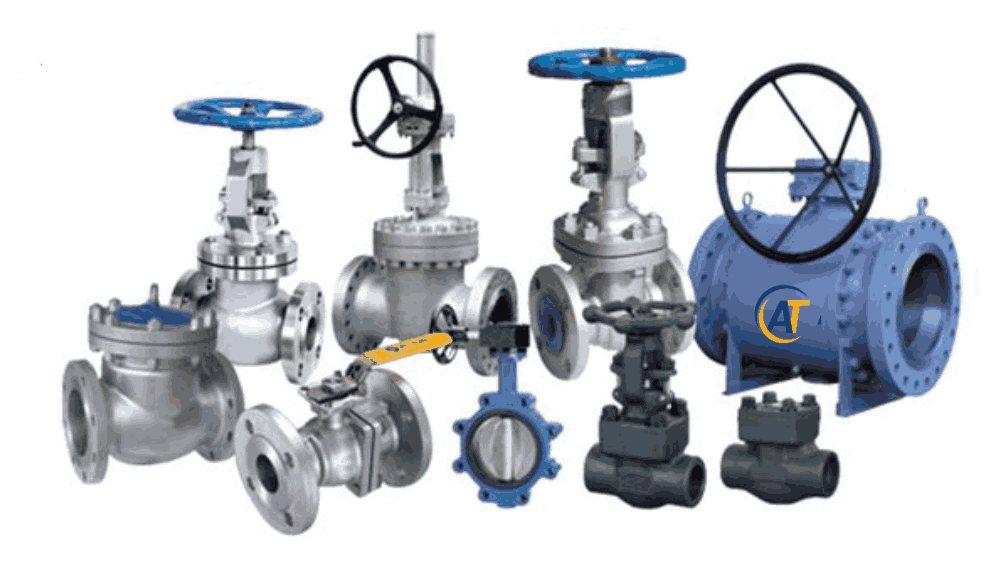
Section 2: Mastering the Unmachinable – Exotic Alloys for Extreme Environments
Material selection for deep-sea defense and nuclear coolant loops is governed entirely by environmental survival. This demands the use of exotic, highly resilient alloys that are notoriously difficult to machine. The very properties that make these materials excellent in the field—strength, corrosion resistance, and thermal stability—make them a significant challenge to cut.
The selection of the correct alloy is a complex engineering decision that balances corrosion resistance, mechanical strength, cost, and weldability. For subsea applications, the primary threats are pitting corrosion, crevice corrosion, and stress-corrosion cracking (SCC) caused by seawater chlorides and, in some cases, hydrogen sulfide (H2S). For nuclear applications, the threats include radiation-induced embrittlement, intergranular corrosion, and the need to maintain low cobalt content to minimize activated corrosion products.
Marine-Grade Titanium (Grade 5 Ti-6Al-4V and Beyond)
Titanium and its alloys are the gold standard for subsea defense components, including remotely operated vehicle (ROV) pressure housings, subsea valve bodies, and fastener systems. Their exceptional strength-to-weight ratio and near-absolute immunity to saltwater corrosion make them indispensable for naval systems where weight reduction is as critical as reliability.
The Application Context
In naval defense, titanium is used in:
-
Subsea Valve Bodies: For hydraulics and process control in ROVs and unmanned underwater vehicles (UUVs).
-
Pressure Housings: Enclosures for sensitive electronics that must withstand 3,000-meter depths.
-
Propulsion Systems: Components that require high fatigue strength in seawater environments.
The Machining Strategy
Machining marine grade titanium subsea valve bodies is notoriously difficult due to the material's physical properties:
-
Low Thermal Conductivity: Titanium's thermal conductivity is approximately 7 W/m·K, compared to 50 W/m·K for steel. This means that heat generated during cutting does not dissipate through the chip or the workpiece; instead, it concentrates at the cutting edge. This leads to rapid tool wear, plastic deformation of the cutting insert, and, in extreme cases, the material welding to the tool.
-
High Chemical Reactivity: At elevated temperatures, titanium is highly reactive with many tool materials, leading to diffusion wear.
-
Work Hardening: Titanium work-hardens readily. If the tool rubs against the surface rather than shearing it cleanly, the surface layer becomes harder, making subsequent cuts more difficult and accelerating tool wear.
To successfully machine titanium for critical applications, manufacturers employ:
-
High-Pressure Through-Spindle Coolant: Flood coolant is insufficient. True success demands high-pressure through-spindle coolant, often exceeding 70 bar (1,000 PSI). This coolant is delivered directly to the cutting edge, where it rapidly evacuates heat, prevents chip recutting, and flushes chips away from the work zone.
-
Sharp, Positive Rake Angle Tooling: Tools with sharp edges and positive rake angles are essential to shear the material cleanly and avoid the rubbing that causes work hardening. However, these geometries must be balanced against the need for edge strength.
-
Rigid Setups and Vibration Damping: Titanium's modulus of elasticity is low, meaning it deflects easily. A machine with insufficient rigidity will experience chatter, resulting in poor surface finishes and catastrophic tool failure. This is why machines specifically designed for titanium machining, with wide guideways, high-torque spindles, and robust workholding, are a prerequisite.
Super Duplex Stainless Steel (UNS S32750 / SAF 2507)
Super Duplex Stainless Steel (SDSS) is widely used in subsea oil, gas, and defense applications due to its high yield strength and extreme resistance to pitting and stress-corrosion cracking, particularly in environments containing chlorides and sour gas (H2S). Its unique microstructure is a delicate, balanced 50:50 austenitic-ferritic grain structure, which provides both its mechanical strength and corrosion resistance.
The Metallurgical Challenge
This balanced structure is also the source of its machining difficulties:
-
Work Hardening Under Heat: Incorrect cutting speeds or excessive heat generation will alter this delicate balance. When heated above certain thresholds, the ferrite phase transforms, and the austenite phase can become unstable. This leads to severe work hardening at the surface, making the material brittle and incredibly difficult to cut. A surface that has been work-hardened by improper cutting can destroy a cutting tool in seconds.
-
Abrasive Nature: The high chromium and molybdenum content of SDSS makes it abrasive, leading to rapid flank wear on standard carbide tools. While ceramic inserts offer higher wear resistance at high speeds, they are brittle and prone to fracture in interrupted cuts.
Effective Cutting Strategy
Successfully machining Super Duplex requires a carefully optimized strategy:
-
"Low Speeds, High Feeds": This counterintuitive approach ensures that the cutting edge shears the material cleanly, minimizing the time it spends rubbing against the surface. High feed rates, combined with moderate cutting speeds, generate a chip that carries away heat, reducing the thermal load on the workpiece and the tool.
-
Positive Rake, Sharp Edges: Similar to titanium, sharp tools are essential to avoid work hardening.
-
Coolant Focus: As with titanium, high-pressure coolant is beneficial, though perhaps not as critical as it is for titanium. The primary goal is to cool the cutting zone and flush away chips.
Inconel and Nickel-Based Superalloys (Alloy 625, Alloy 718)
For both subsea and nuclear applications, Inconel and its derivatives are often the materials of choice when extreme corrosion resistance and high-temperature strength are required. Alloy 625, for example, is used extensively in subsea connectors, tubing hangers, and valve internals.
The Application Context
In nuclear applications, nickel-based alloys are used for:
-
Reactor Internals: Components that must withstand high temperatures, radiation, and corrosive coolant.
-
Control Rod Drive Mechanisms: Housings and bearings that require high wear resistance.
-
Steam Generator Tubing: Where resistance to caustic stress-corrosion cracking is critical.
The Machining Challenge
Nickel alloys are perhaps the most difficult materials to machine:
-
Extreme Work Hardening: Like titanium, they work-harden readily, and unlike titanium, they do so under even moderate cutting conditions.
-
High Strength at Temperature: Nickel alloys retain their strength at high temperatures, meaning the cutting tool must be able to withstand immense forces at the cutting edge.
-
Abrasive and Adhesive Wear: The high chromium content makes them abrasive, while the nickel matrix promotes adhesion to the tool, leading to built-up edge (BUE).
Specialized Strategies
Machining corrosion-resistant alloy machining for subsea defense components in nickel alloys requires:
-
Ceramic and Whisker-Reinforced Inserts: At high cutting speeds, ceramic inserts can be effective, though they require extremely rigid setups.
-
CBN (Cubic Boron Nitride) Tooling: For finishing operations, CBN offers superior wear resistance.
-
Aggressive Coolant Application: High-pressure coolant is essential for chip control and heat evacuation.
Section 3: Extending Fatigue Life – Post-Processing and Surface Enhancement
In critical infrastructure, the manufacturing process does not end when the CNC machine stops cutting. The ultimate operational lifespan of a component depends on post-machining treatment and rigorous testing to counter stress-corrosion cracking (SCC) and structural fatigue.
Understanding Residual Stress
The heavy mechanical forces exerted during heavy-duty precision CNC machining introduce residual tensile stresses into the surface of the metal. These stresses are the result of plastic deformation that occurs during cutting. As the cutting tool shears the material, it compresses the surface layer, and when the elastic deformation rebounds, it leaves behind tensile stresses.
These tensile stresses are dangerous for two reasons:
-
Crack Initiation: Tensile stress at the surface acts as a driving force for crack initiation. Micro-cracks, which may be microscopic, can nucleate at surface imperfections and, under the influence of tensile stress, grow into catastrophic failures.
-
Environmental Sensitivity: In corrosive environments like seawater, tensile stresses combined with the presence of chlorides lead to stress-corrosion cracking (SCC). A component that is otherwise corrosion-resistant can fail rapidly if it has high surface tensile stresses.
Stress Relieving: Thermal and Mechanical Methods
To manage residual stresses, manufacturers employ both thermal and mechanical methods.
Controlled Thermal Stress Relief
Components are gradually baked to a specific temperature, below their recrystallization temperature, and held for a prescribed period. This process:
-
Reduces Internal Stresses: The elevated temperature allows the crystalline lattice to relax and realign, relieving the locked-in stresses.
-
Stabilizes Dimensionality: Parts that have been stress-relieved are less likely to warp or distort during subsequent operations or in service.
-
Requires Careful Control: The temperature, ramp rate, hold time, and cooling rate must be carefully controlled. If the part is cooled too quickly, new thermal stresses are introduced. If the temperature is too high, the material's mechanical properties may be compromised.
Controlled Shot Peening
To combat the negative effects of tensile stresses, shot peening is often employed on critical components. This process bombards the surface with micro-spheres (shot) at high velocity. Each impact creates a tiny indentation, which induces a localized compressive residual stress.
The benefits of controlled shot peening are profound:
-
Compressive Layer: The compressive layer acts as a barrier, preventing crack initiation and propagation. For a crack to grow, it must overcome the compressive stress, which effectively increases the energy required for failure.
-
Extended Fatigue Life: Shot peening can increase fatigue life by up to 10 times or more, making it an essential process for components that will experience cyclic loading in service.
-
Mitigation of Micro-Cracks: The plastic deformation from shot peening can also "heal" microscopic surface defects, further improving reliability.
Surface Coating and Passivation
For corrosion resistance, some subsea components receive additional surface treatments:
-
Passivation: For stainless steels, passivation involves treating the surface with an acid solution to remove free iron and promote the formation of a protective chromium oxide layer.
-
Hard Coating: In applications where wear resistance is paramount, coatings such as chromium carbide or tungsten carbide may be applied via thermal spray techniques.
Section 4: The Gatekeeper of Quality – Rigorous Non-Destructive Testing (NDT) Protocols
To guarantee absolute internal integrity, components undergo exhaustive verification before shipping. This is where the reputation of a contract manufacturer is truly solidified. For manufacturers approved for offshore oil, nuclear valves, and naval submarines, rigorous inspection is a non-negotiable part of the process.
Ultrasonic Testing (UT) – Scanning for Internal Volumetric Defects
Ultrasonic Testing is one of the most critical NDT methods for large-scale forgings. High-frequency sound waves are introduced into the material, and the time it takes for the waves to reflect back from internal discontinuities (such as voids, inclusions, or micro-fissures) is measured.
The application of Ultrasonic Testing to heavy forgings ensures:
-
Volumetric Integrity: It verifies that the core of the forging is free from the porosity or internal tears that can occur during the forging process.
-
Detection of Embedded Defects: Defects that are invisible to the naked eye and undetectable by surface inspection methods are identified.
-
Quantifiable Results: The size and location of any detected defect can be accurately plotted and assessed against stringent acceptance criteria.
Radiographic Testing (X-Ray/RT) – X-Ray Vision for the Nuclear Age
Radiographic Testing uses high-energy X-rays or gamma rays to create images of the internal structure of the component. It is particularly useful for inspecting welding density and deep internal geometry anomalies.
In the context of nuclear and subsea components, RT is often used to:
-
Verify Weld Quality: For large assemblies, welds must be completely dense and free of porosity, inclusions, or lack of fusion. RT provides a permanent record of the weld's integrity.
-
Inspect Complex Geometries: In areas where access for UT is limited, RT offers a complementary method for verification.
Dye Penetrant Testing (DPT) and Magnetic Particle Inspection (MPI)
These surface inspection methods are the first line of defense against surface-breaking defects. Dye Penetrant Testing involves applying a liquid dye to the surface of the component, allowing it to seep into any surface-breaking cracks, and then removing the excess dye with a developer that "pulls" the dye out of the crack, making it visible.
Magnetic Particle Inspection, applicable only to ferromagnetic materials, involves magnetizing the part and applying ferrous particles. Any surface-breaking defect will disrupt the magnetic field, causing the particles to cluster around the defect, making it visible under UV light.
For critical seal faces, these inspections are mandatory:
-
Seal Integrity: Dye penetrant testing on turned threads and seal seats ensures that there are no microscopic cracks or porosity that could serve as leak paths under high pressure.
-
Total Confidence: The combination of these methods provides total sealing integrity, ensuring that the component will perform flawlessly in service.
The NDT Matrix
| NDT Inspection Method | Target Hazard Detected | Quality Guarantee |
|---|---|---|
| Ultrasonic Testing (UT) | Internal volumetric defects, voids, micro-fissures deep within forged blocks. | 100% defect-free core structural density. |
| Radiographic Testing (X-Ray/RT) | Structural welding density and deep internal geometry anomalies. | Complete structural uniformity and verification of internal features. |
| Dye Penetrant / Magnetic Particle | Microscopic surface cracks or porosity along turned threads and seal seats. | Total sealing integrity and confidence in high-pressure environments. |
Section 5: Finding the Right Partner – The Human and Organizational Factor
When engineering components for nuclear infrastructure or deep-sea naval defense, there is no margin for error. You need a contract manufacturing partner with the heavy machinery, metallurgy expertise, and strict quality certifications required to operate in this high-barrier sector.
The Hallmarks of a World-Class Manufacturer
The ideal partner will not simply execute a print; they will be a collaborator with a deep understanding of the physics and metallurgy involved. Key attributes include:
-
Vertical Integration: The ability to manage the entire process from raw material qualification and machining through to assembly, testing, and surface treatment ensures quality control at every stage.
-
Full Material Traceability: In nuclear and defense, complete traceability of every component of the material (from the melt source to the final part) is non-negotiable.
-
Robust Quality Management System: Certifications such as ISO 9001:2015 are a baseline, but for the nuclear and subsea sectors, ASME NQA-1 (nuclear) and API Q1 (oil & gas) are often required.
-
Engineering Support: The ability to work on design for manufacturability (DFM) and to optimize the component design for the specific machining process is a major asset.
What to Look For in Your Supplier
-
Proven Track Record: Case studies and references from other clients in the nuclear or defense sectors.
-
Investment in Capability: Recent investment in the machinery and metrology required for high-precision work.
-
Transparency: A willingness to open their facilities for audits and to share their quality data with you.
Section 6: The Future of Extreme-Environment Manufacturing
The manufacturing of components for 3,000-meter depths and nuclear cores is not static. It is an evolving field driven by new materials, new designs, and new requirements.
Digital Twins and Process Simulation
Manufacturers are increasingly using digital twin technology to simulate the machining process before a single chip is cut. This allows them to:
-
Predict Deflection: To adjust tool paths to compensate for tool and workpiece deflection.
-
Optimize Tool Paths: To reduce cycle times and improve surface finish.
-
Verify Collision-Free Operation: To ensure that the tool and machine components do not collide during complex operations.
Additive Manufacturing (AM) for High-Value Components
While not a replacement for traditional forging, additive manufacturing is making inroads for complex, low-volume components, particularly those in Inconel or titanium. The ability to create near-net shapes with complex internal cooling channels or lattice structures can reduce material waste and improve component performance.
Advanced Materials and Coatings
The search for even more resistant alloys continues. Research into ceramic matrix composites (CMCs) and advanced coatings promises to push the boundaries of what is possible in extreme environments.
Conclusion: The Sum of All Fears – And Their Mitigation
The manufacturing of subsea valve bodies and nuclear reactor internals is a discipline of extremes. It combines the largest machines with the tightest tolerances; the strongest alloys with the most delicate cutting strategies; and the most rigorous inspection protocols with an absolute commitment to quality.
The stakes are high, but the rewards—both in terms of operational safety and long-term asset reliability—are immense. By partnering with a manufacturer that has mastered these techniques, you are not just buying a part; you are buying the peace of mind that comes with knowing that your critical infrastructure is protected by the best engineering and manufacturing the industry has to offer.
Call to Action
Looking for a heavy-industry manufacturing partner?
Partner with a manufacturer equipped for heavy-industry and extreme environments. We specialize in providing high-tier corrosion-resistant alloy machining for subsea defense and nuclear energy projects, backed by complete material traceability and rigorous NDT verification.
Contact our engineering desk today to request a secure quote or book a technical consultation for your heavy-duty industrial components. Let us show you how our commitment to precision and reliability can help you achieve your mission-critical objectives.
About the Author: This technical guide was prepared by the engineering and marketing team at our heavy-industry manufacturing facility. With decades of combined experience in the oil & gas, defense, and nuclear sectors, we are committed to providing the highest quality components for the world's most challenging applications.
Disclaimer: This content is for informational purposes only. Engineering designs, material specifications, and manufacturing processes must be validated by qualified engineers for each specific application.
Get Quote
- Visit our website: https://www.nbyichou.com/
- Email us: [email protected]
- Call us/whatsapp: +86 13355741031
- Chat with us: Live chat support available on our website