The Hardware Behind the Surgeon: Micro-Machining Next-Gen Surgical Robot Joints
The intersection of healthcare and advanced robotics is transforming modern medicine. Minimally invasive surgeries (MIS) now rely heavily on robotic assistance, allowing surgeons to execute complex procedures with unmatched stability and dexterity. However, a surgical robot is only as capable as its underlying hardware. For international medical device OEMs, translating complex robotic designs into functional, flawless reality presents immense engineering hurdles. Surgical automation demands absolute dimensional tracking, incredibly lightweight materials, and virtually zero joint friction. When a machine operates within millimeters of critical human tissue, there is absolutely zero room for mechanical error, backlash, or component degradation.
Achieving this standard requires an elite manufacturing partner capable of executing ultra-precise Surgical robot arm joints CNC micro-machining alongside agile, high-mix low-volume precision machining for medical robotics.
In this article, we break down the specialized manufacturing techniques and strict quality standards required to produce micro-precision components for the next generation of medical devices.
Section 1: Micro-Machining and Swiss-Type Turning for Intricate Joints
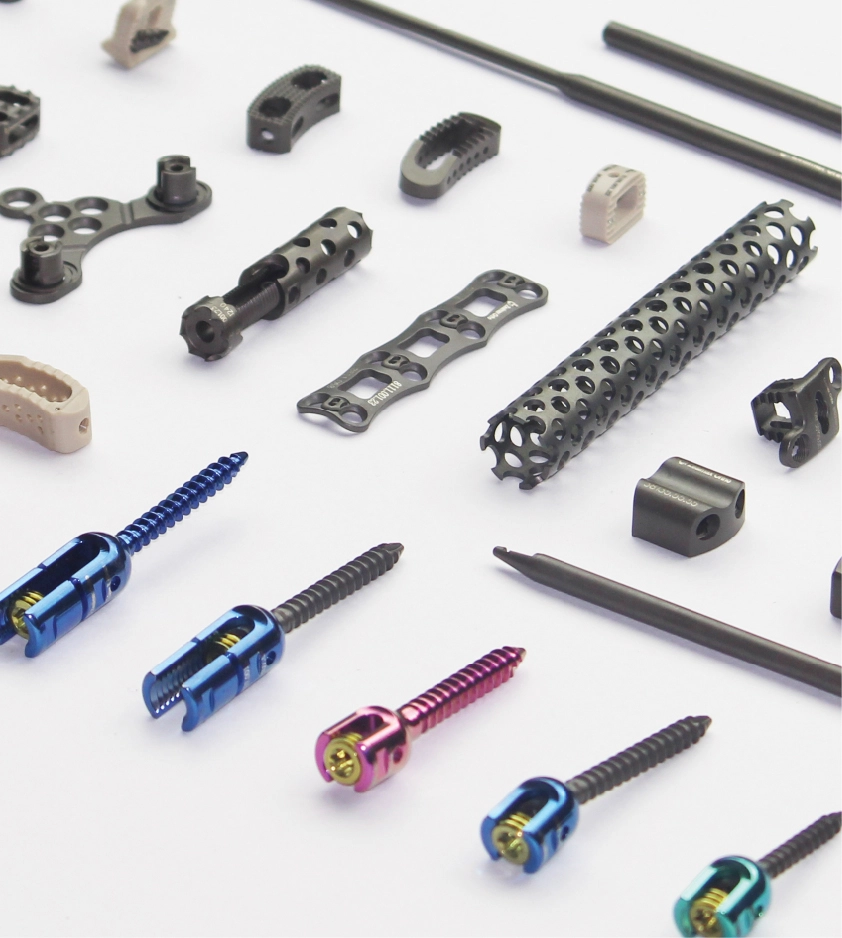
Surgical robotic arms require multiple degrees of freedom to mimic—and exceed—the fluid movements of a human wrist. This requires an array of complex miniature linkages, ultra-miniature gears, and specialized swivels. Behind every articulated joint and sub-millimeter incision lies a critical layer of physical hardware: precision CNC-machined mechanical components that must simultaneously manage high-cycle fatigue, biocompatibility or sterilization demands, and geometric complexities that conventional manufacturing cannot reliably achieve.
To manufacture these incredibly small, intricate components, contract manufacturers must deploy advanced Swiss-type lathe micro-machining. Swiss-type turning centers provide rigid workpiece support right next to the cutting tool, allowing for the stable production of long, slender, or highly detailed micro-parts without deflection.
text
[Sliding Headstock / Guide Bushing] ➔ [Rigid Tool Support] ➔ [Zero Deflection] ➔ [Sub-Micron Tolerances]
CNC machining—specifically 5-axis simultaneous milling, Swiss-type precision turning, and micro-machining—delivers the geometric freedom, surface integrity, and lot-to-lot repeatability required to produce these parts at production scale. Unlike additive manufacturing, precision CNC achieves the tight tolerances and smooth surface finishes necessary for bearing seats, sealing surfaces, and sterile instrument docking without lengthy secondary processing.
The Battle Against Micro-Burrs
When dealing with micron-level tolerances, a microscopic burr left behind by a cutting tool isn't just an aesthetic flaw—it is a critical failure point. A loose burr migrating into a robotic joint can cause mechanical jamming, friction spikes, or patient contamination. Stringent deburring is mandatory in medical robotics; metallic burrs can compromise sterilization efficacy, damage sterile packaging, or present direct patient hazards.
To eliminate post-processing risks, top-tier CNC labs focus on achieving pristine surface finishes directly off the machine by:
-
Utilizing custom-ground, razor-sharp solid carbide and diamond-tipped tooling: The demands on tools for micromachining with Swiss-type lathes are exceptionally high. Due to the sometimes very small cutting depths, the tool edges must be extremely sharp to keep cutting force as low as possible. Surface quality of the rake face also plays a critical role in preventing built-up edges.
-
Optimizing high-speed spindle paths to cleanly shear material rather than tearing it: In micromachining, cutting depths can be as low as 0.01mm, placing very high demands on tools to achieve shiny surfaces and high dimensional accuracy through the use of low cutting force.
-
Employing automated, high-pressure oil filtration systems to continuously flush micro-chips away from the cutting zone: Titanium's low thermal conductivity and rapid work-hardening tendency demand rigid machine setups, high-pressure coolant delivery, and sharp carbide or PVD-coated cutting tools. Heat buildup must be aggressively managed to prevent surface integrity loss.
Micro-Machining Precision Capabilities
Leading manufacturers specializing in micro-machining can produce components with remarkable precision. For example, micro-milling expertise enables the crafting of micro-grippers, surgical robot parts, and medical-grade plastic gears ranging in size from 5 to 10mm, with precision tolerances as tight as ±0.005mm. Some facilities achieve machining accuracy up to ±0.001mm, meeting the manufacturing needs of high-difficulty parts such as medical components and robot joint components.
Section 2: Materials That Matter: Titanium, PEEK, and Medical-Grade Alloys
Surgical robotic joints and medical imaging equipment structural components must balance extreme structural strength-to-weight ratios with strict biocompatibility. If a robotic arm is too heavy, its motors suffer from inertia, compromising smooth tracking. If it is too weak, it lacks the rigidity needed for precise cutting or suturing.
Elite machine shops rely on a carefully selected matrix of high-performance materials:
1. Titanium (Grade 5 / Ti-6Al-4V ELI)
-
Why it's used: The dominant material for implantable and long-term reusable surgical robot components. Its high strength-to-weight ratio, exceptional corrosion resistance, and established biocompatibility (conforming to ISO 5832-3) make it ideal for end effectors, structural arms, and sterilizable instrument holders.
-
The Challenge: Titanium's low thermal conductivity and rapid work-hardening tendency demand rigid machine setups, high-pressure coolant delivery, and sharp carbide or PVD-coated cutting tools. Heat buildup must be aggressively managed to prevent surface integrity loss and premature tool failure.
2. PEEK (Polyetheretherketone)
-
Why it's used: PEEK is increasingly specified for robotic components requiring radiolucency (invisible under intraoperative fluoroscopy), electrical isolation, or minimal artifact in MRI/CT environments. Applications include instrument insulation sleeves, robotic targeting guides in radiotherapy, and non-metallic structural spacers.
-
The Challenge: PEEK's low thermal conductivity makes it prone to localized melting, crystallinity disruption, and burr adhesion. Precision CNC of PEEK requires optimized feeds and speeds, controlled annealing cycles to relieve stress, and dedicated non-metallic tooling to prevent particulate contamination that could compromise biocompatibility.
3. Medical-Grade Stainless Steel (316L, 17-4 PH)
-
Why it's used: Vacuum-melted 316L stainless steel offers superior machinability relative to titanium, combined with excellent passivation characteristics and sterilization resistance. It serves as the preferred choice for disposable or limited-use surgical robot instruments, drive shafts, fastening hardware, and cost-sensitive applications where magnetic tolerance is acceptable.
-
The Challenge: Stainless steel is notorious for galling—a form of wear caused by adhesion between sliding surfaces. Manufacturing engineers combat this by using CNC milling to create relief zones or by applying specialized coatings like DLC (Diamond-Like Carbon) after machining.
4. Aluminum Alloys (6061-T6, 7075-T6)
For non-implant, non-sterilizable structural frames, transport arms, and laboratory automation gantry systems, aluminum delivers an outstanding strength-to-weight ratio at lower material and machining cost. Hard-anodized aluminum can also function as a wear-resistant guide rail or housing shell in non-patient-contact automation modules.
Machining Considerations by Material
| Material | Application | Key Challenge |
|---|---|---|
| Titanium Ti-6Al-4V ELI | End effectors, structural arms, sterilizable holders | Low thermal conductivity, rapid work-hardening |
| PEEK (PEEK-OPTIMA™) | Insulation sleeves, targeting guides, spacers | Low thermal conductivity, prone to melting and burrs |
| 316LVM Stainless Steel | Disposable instruments, drive shafts, hardware | Galling, internal stress from work hardening |
| Aluminum Alloys | Structural frames, transport arms, gantry systems | Lower strength, requires hard anodizing for wear |
Section 3: Tolerance, Surface Finish, and Metrology Standards
Medical robotics components frequently require tolerances an order of magnitude tighter than general industrial automation:
-
Dimensional tolerances: ±0.005 mm to ±0.025 mm for bearing bores, gear centers, and instrument docking interfaces.
-
Geometric tolerances: True position, concentricity, perpendicularity, and runout callouts are standard for multi-axis assemblies.
-
Surface roughness: Ra 0.4–0.8 μm for general mating surfaces; Ra ≤ 0.2 μm for sliding, sealing, or drug-contact surfaces.
Achieving and proving these specifications requires in-process CMM (Coordinate Measuring Machine) verification, First Article Inspection (FAI), and SPC (Statistical Process Control) for production volumes. Every critical feature must be measurable, documented, and traceable to the raw material heat lot and machining parameter log.
Top-tier facilities employ advanced metrology equipment, including:
-
Automated Zeiss Coordinate Measuring Machines (CMM)
-
Optical non-contact measurement systems
-
Visual inspection machines with high-magnification capabilities
-
Handheld XRF analyzers for incoming material verification
Section 4: Strict Quality Documentation & ISO 13485 Standards
For global medical procurement teams and regulatory bodies (such as the FDA or CE), physical precision is only half of the equation. The other half is unconditional compliance and documentation.
When looking for ISO 13485 medical device machining partners, international buyers are evaluating your quality ecosystem just as much as your machinery. Every single component must be accompanied by an airtight paper trail:
-
Full Lot Traceability: Upstream tracking of raw material melt batches back to the original foundry mill certificate. Leading suppliers maintain dual-sourced raw materials (ASTM F136 titanium, ASTM F562 cobalt-chrome), holding local inventory of certified stock with full material traceability down to heat lot and mill test reports.
-
Validation Protocols (IQ/OQ/PQ): Standardized Installation, Operational, and Performance Qualification processes ensuring that the machining environment yields consistent results every single run.
-
Digital Measurement Logs: Non-contact optical metrology and high-magnification CMM inspection data capturing every critical micro-dimension.
-
PPAP, FAI, and FPQ Compliance: Comprehensive documentation meeting industry standards for production part approval and first article inspection.
-
PMI (Positive Material Identification) Procedures: Verification of material composition throughout the production process.
The Regulatory Landscape
China has transformed from a general-purpose contract manufacturer into a globally trusted hub for high-mix, low-volume, and ultra-precision components. Leading Chinese CNC facilities now routinely operate ISO 13485-certified quality management systems specifically designed for medical device manufacturers, and many maintain FDA-registered facilities or have successfully passed MDSAP audits.
A growing cohort of engineers and quality professionals in China have trained in Western regulatory frameworks, speak fluent technical English, and understand the documentation rigor demanded by EU MDR, FDA 21 CFR Part 820, and ISO 14971 risk management standards.
Section 5: Critical CNC-Machined Components in Medical Robotic Systems
Surgical End Effectors and Instrument Holders
The "hand" of a surgical robot—end effectors, trocar interfaces, quick-coupling instrument holders—must balance absolute rigidity with delicate tissue interaction. CNC machining produces these components from titanium or stainless steel with internal cooling channels, threaded autoclave-resistant couplings, and complex grasping geometries that casting or MIM cannot replicate at equivalent precision.
Joint Housings, Gearboxes, and Drive Transmissions
Robotic articulation depends on precision gearboxes and bearing housings with exact concentricity. CNC-turned and milled aluminum or titanium housings maintain the coaxial tolerances necessary to minimize backlash and ensure repeatable positioning. This precision is non-negotiable for master-slave surgical systems, where any mechanical hysteresis directly degrades haptic feedback accuracy for the operating surgeon.
Patient-Specific Attachment Interfaces
Orthopedic surgical robots frequently employ CNC-machined patient-specific docking guides or universal attachment plates that interface between the robot base and the patient anatomy. These interfaces require tight flatness and true-position hole tolerances—often ±0.025 mm or tighter—to prevent micro-motion during bone resection or implant placement.
Sensor Mounts and Haptic Feedback Mechanisms
Force-torque sensors, optical encoders, and strain-gauge arrays require ultra-stable mounting platforms machined from materials with low thermal expansion or tailored stiffness profiles. CNC machining enables the integration of mounting bores, cable routing channels, and thermal isolation pockets in a single setup, ensuring metrological stability across the robot's kinematic chain.
Section 6: High-Mix, Low-Volume Production Excellence
One of the defining characteristics of the medical robotics industry is the requirement for high-mix, low-volume production. Medical device OEMs often need specialized components in quantities ranging from hundreds to a few thousand pieces, with frequent design iterations and fast turnaround times.
The High-Mix Low-Volume Challenge
This production model presents unique challenges:
-
Efficient Lead Time Management: Rapid response requirements demand flexible scheduling and quick setup times.
-
Quality Consistency Across Batches: Each production run must maintain the same rigorous quality standards, regardless of volume.
-
Cost Control: Tooling and setup costs must be amortized over smaller quantities, requiring efficient process planning.
Solutions for Low-Volume Production
Leading manufacturers have developed specialized approaches for high-mix, low-volume production:
-
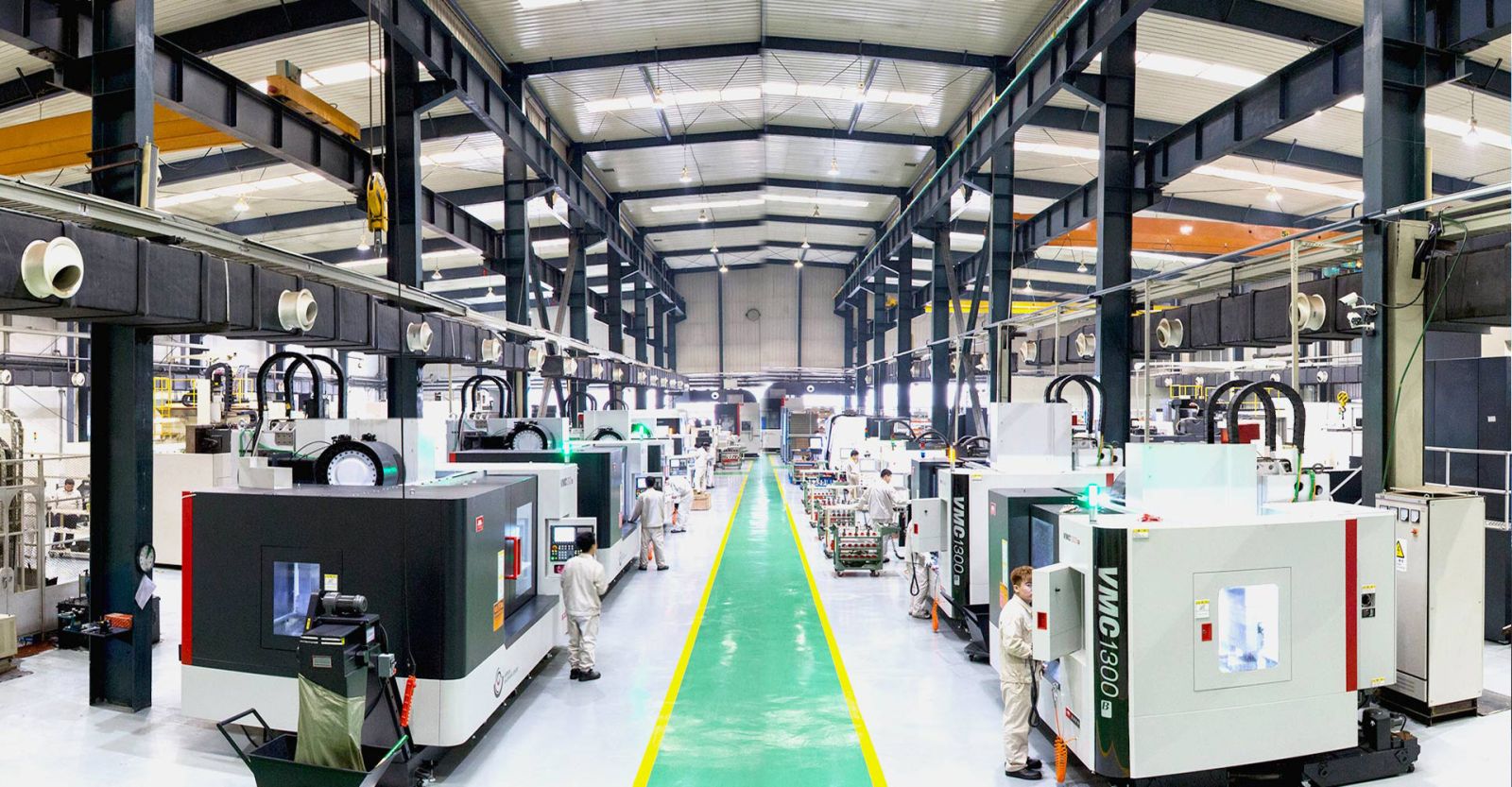
Flexible Production Systems: Facilities equipped with world-class precision processing equipment from leading brands such as Okuma, Mazak, FANUC, and Brother support multi-process collaboration and high-precision manufacturing.
-
Agile Supply Chains: Some manufacturers maintain three-hour supply networks in key manufacturing regions, supporting fast sample delivery and on-time delivery for mass production orders.
-
Dedicated Quality Systems: AS9102 international aerospace quality standards are sometimes applied to medical projects to ensure the highest level of quality control.
-
Comprehensive Process Control Plans (PCP): These include incoming material quality control, in-process quality control, and finished product appearance control for production and final shipment.
Quality Control Throughout Production
For low-volume medical robot parts, quality control is integrated throughout the entire production process:
Incoming Material Testing: Handheld XRF analyzers verify material authenticity and composition before production begins.
First Article Production: This step verifies process development accuracy by producing a complete set of parts and conducting full inspection. If any dimensions are out of tolerance, engineering teams quickly pinpoint the cause and adjust machine parameters.
In-Process Quality Control: Critical dimensions and inspection data for each production step are integrated into the process control plan. Any discrepancies trigger immediate root cause analysis and process adjustment.
Outgoing Quality Control: Sampling inspection criteria, inspection data and tools, and reporting formats are established before production begins, following standards such as MIL-STD-105E.
Section 7: Swiss-Type Turning: The Gold Standard for Medical Micro-Components
Swiss-type CNC lathes have become the gold standard for producing the small, complex components required in surgical robotics. These machines offer unique advantages for medical component manufacturing.
The Swiss-Type Advantage
Swiss-type turning centers provide rigid workpiece support immediately adjacent to the cutting tool through a guide bushing system. This arrangement allows for the stable production of long, slender, or highly detailed micro-parts without deflection—a critical requirement for components like surgical instrument shafts and miniature joint pins.
Key Capabilities:
-
Bar stock handling: Swiss-type machines can effectively handle bar stock diameters down to 2mm, with some systems accommodating stock as small as 1mm in diameter.
-
Unattended operation: With reliable bar feeders and proven processes, Swiss-type lathes can run unattended for 15+ hours, enabling lights-out production.
-
Complex geometries: Some Swiss-type machines feature B-axis capability, enabling the production of challenging part geometries without secondary operations.
-
Material versatility: Swiss-type lathes excel at machining both metals and plastics, including titanium, PEEK, and medical-grade stainless steel.
Low-Frequency Vibration Technology
Advanced Swiss-type lathes incorporate low-frequency vibration (LFV) technology, which is particularly effective for creating small chips in materials such as brass and plastics that otherwise tend to produce long, stringy chips that can birds-nest around parts and tools. The LFV process intentionally vibrates the cutting tool along a single axis, synchronizing the vibration with spindle rotation to move the cutting tool in and out of contact with the workpiece. When the cutter briefly breaks contact, the chips shear instead of forming long strands, improving process reliability and part quality.
Tool Changeover Precision
In micromachining, tool changeover accuracy is critical. Advanced tooling systems offer changeover accuracy of ±0.0025mm when indexing a double-edged insert, enabled by precise peripheral grinding of the insert in conjunction with a stable insert seat. This level of precision ensures consistent results across production runs and reduces setup time for low-volume production.
Bridge the Gap Between R&D and Clinical Production
Whether you are developing an experimental prototype for a surgical start-up or scaling up the assembly line for global diagnostic hardware, you need an agile manufacturing partner that understands medical rigor. Our facility specializes in high-mix, low-volume production runs, ensuring that your engineering team gets the exact design flexibility, material integrity, and precision data required to clear regulatory hurdles.
From engineering review to final inspection, we ensure low-volume production for medical robotic parts while maintaining strict quality processes, high standards, and efficiency. Our comprehensive services cover rapid prototyping, small-batch trial production, mass production, and dust-free assembly of precision components in a 10,000-class clean assembly workshop.
Ready to bring your medical innovation to life?
Accelerate your medical device or robotic prototype from R&D to clinical production. Securely upload your CAD data today for an instant, confidential engineering assessment and DFM review.
Get Quote
- Visit our website: https://www.nbyichou.com/
- Email us: [email protected]
- Call us/whatsapp: +86 13355741031
- Chat with us: Live chat support available on our website